Hot Tub Water Chemistry: The Complete Beginner’s Balancing Guide
Everything you need to go from zero to perfectly balanced water — without chemistry headaches, cloudy spa days, or wasted chemicals.
Here’s the thing nobody tells you when you buy a hot tub: the actual soaking part takes about thirty minutes. The water chemistry part — getting your spa safe, clear, and comfortable — takes real understanding. And most beginners learn it the hard way, dealing with cloudy green water, skin rashes, or equipment problems that stem directly from chemistry that drifted out of range.
This guide changes that. You’re going to learn exactly how to balance hot tub water chemistry from scratch — every parameter, in the right order, with the right target ranges and the tools to hit them. Whether you’ve just filled a new spa for the first time or you’ve been fighting a losing battle with murky water for months, these eight steps give you a repeatable system that actually works.
We’ll cover the science where it matters without drowning you in jargon, and we’ll flag every place where common mistakes are made. By the end, you’ll be able to look at a test result and know exactly what to adjust, in what order, and why.
Why Water Chemistry Actually Matters
Balanced hot tub water isn’t just about aesthetics — though clear, sparkling water is certainly more inviting than cloudy green soup. The chemistry of your spa water directly affects your health, your equipment lifespan, and the effectiveness of every chemical you add.
Water Out of Balance Causes Real Problems
When any parameter drifts outside its target range, the effects cascade. Low pH makes the water acidic, which corrodes your pump seals, heater element, and shell surface. High pH makes sanitizer drastically less effective — at a pH of 8.0, your chlorine is working at only about 20% efficiency, meaning you can have “enough” chlorine by the numbers but barely any actual sanitizing power. Low sanitizer allows bacteria and pathogens to multiply in the warm water. High calcium causes scale deposits that clog jets and coat heating elements. Understanding the relationship between water chemistry and safety is not optional — it’s foundational.
If you’re starting with a brand-new tub, our inflatable hot tub setup guide covers the initial fill process before you get to chemistry. For those who want the broader context of all the chemicals available, our complete hot tub chemicals guide is a useful companion to this step-by-step process.
Test Your Water Before Adding Anything
This step sounds obvious, but it’s where almost every chemistry problem begins — adding chemicals before knowing what your water actually needs. You cannot dose correctly without a baseline reading. Guessing wastes money, swings your chemistry further out of balance, and can make the water genuinely unsafe.
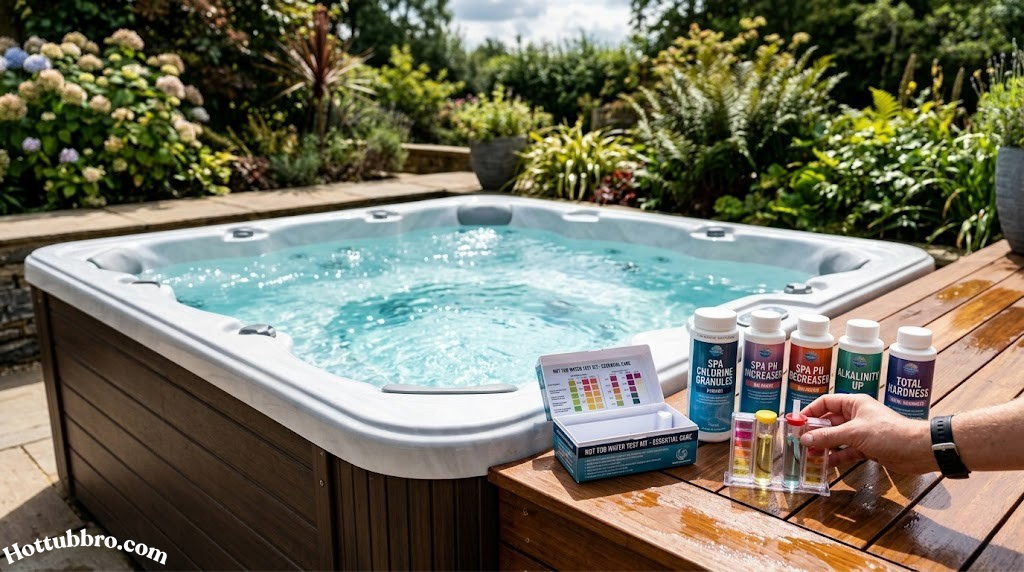
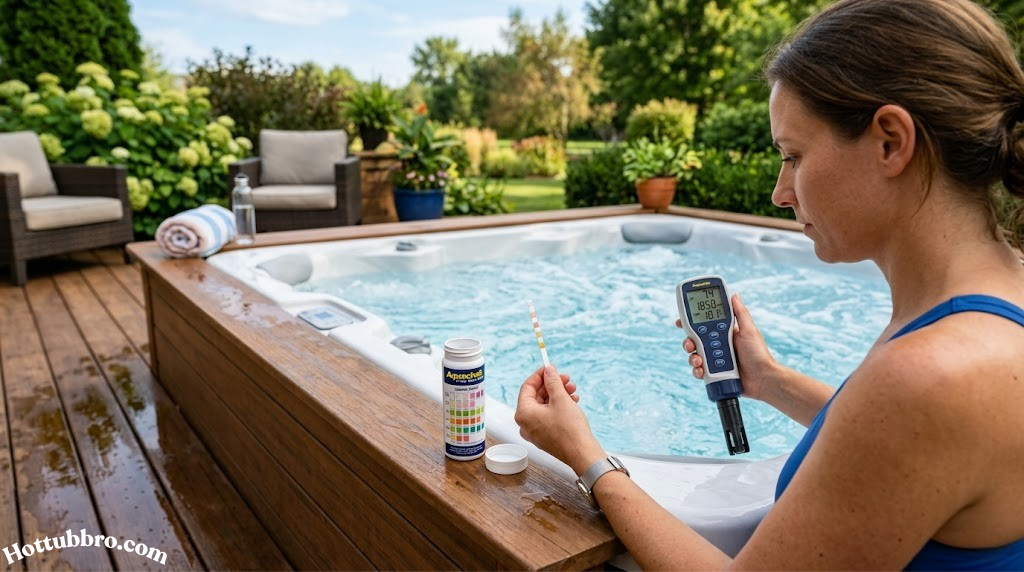
There are three types of testing tools, each with different accuracy levels and appropriate use cases:
| Testing Method | Accuracy | Cost | Best For |
|---|---|---|---|
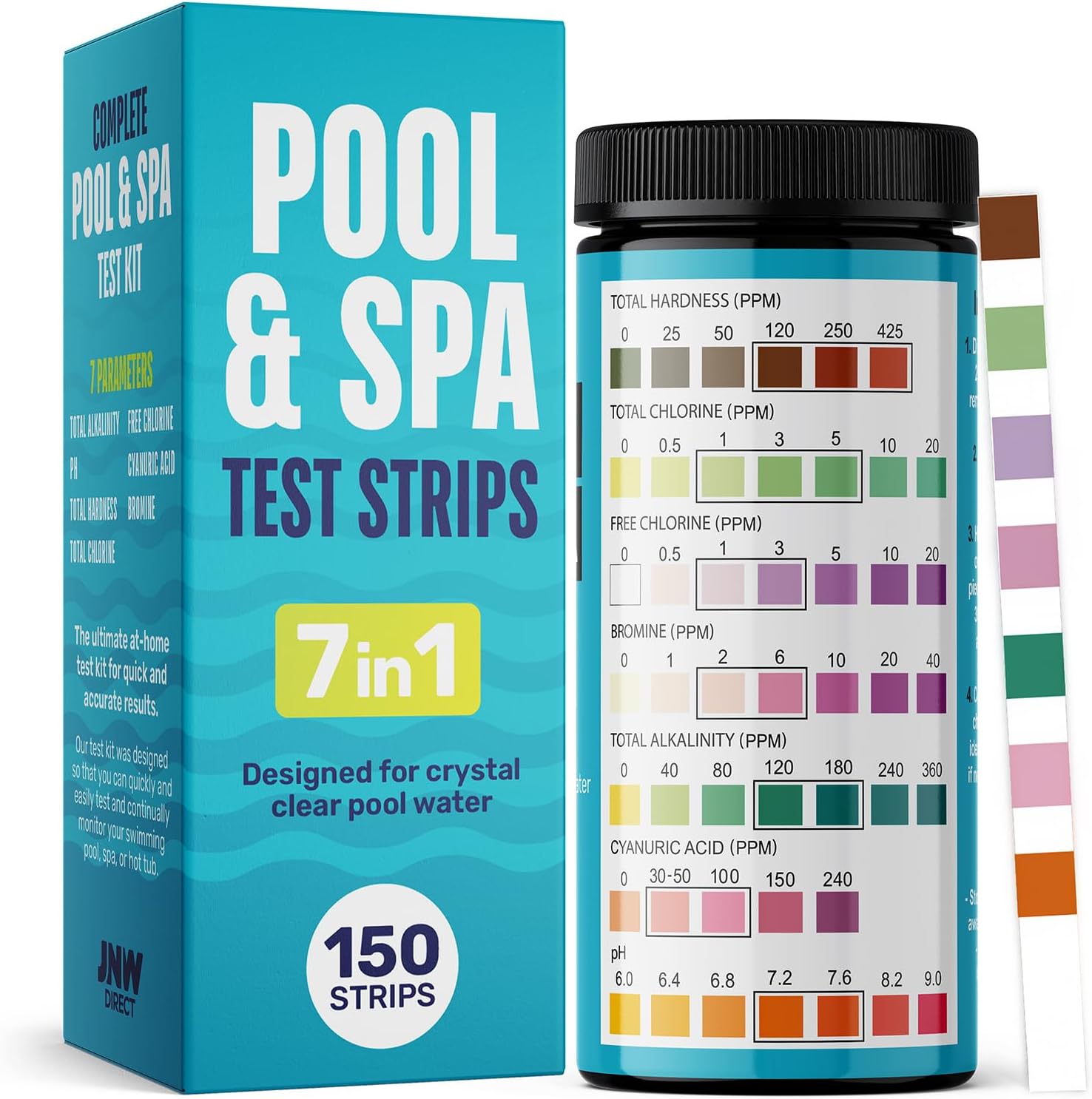
| Test Strips | Moderate — user technique matters | $8–$20 | Quick daily checks |
| Liquid Reagent Kit | Good — color matching required | $20–$40 | Weekly balancing sessions |
| Digital Tester | Excellent — objective readings | $30–$120 | Precise correction work |
For serious water management, a digital tester is worth the investment. Our roundup of the best hot tub water testers and the in-depth digital tester comparison will help you find the right fit. At minimum, use a fresh test strip kit — strips lose accuracy once the container has been open for several months.
What to Record
Write down every reading before you touch a single chemical bottle. You need baseline numbers for: total alkalinity (TA), pH, calcium hardness, free chlorine (or bromine), combined chlorine, and cyanuric acid (CYA). Some test kits also measure total dissolved solids (TDS), which tells you when a full water change is due. Knowing all your readings before you start means you can adjust them in the right order without guessing at your progress.

Digital Hot Tub Water Testing Kit
Multi-parameter digital tester for pH, chlorine, alkalinity, and more. Far more accurate than strip tests.
View on Amazon →Adjust Total Alkalinity First
Total alkalinity (TA) is the foundation of all your other chemistry. Think of it as a buffer: it resists pH from swinging wildly, which means that once TA is in range, pH becomes much easier to stabilize and maintain. Adjusting TA before pH is not optional — this is the correct order of operations that every professional spa technician follows.
Target range: 80–120 ppm. Most spa manufacturers recommend staying in the tighter band of 80–100 ppm for inflatable hot tubs, since their smaller volume makes chemistry changes more pronounced.
If TA Is Too Low (Below 80 ppm)
Add sodium bicarbonate (baking soda). This is the safest, most controllable way to raise alkalinity. The standard dose is roughly 1.5 tablespoons per 500 gallons of water to raise TA by 10 ppm. Add it with the jets running, in small increments. Wait 30–60 minutes between additions and retest. Our step-by-step guide to raising alkalinity with baking soda gives you the exact measurements for your tub size.
If TA Is Too High (Above 120 ppm)
Add muriatic acid (hydrochloric acid) or dry acid (sodium bisulfate) in small, measured doses with the jets running. High alkalinity causes pH to resist downward correction and can lead to scale formation. Our guide on how to lower alkalinity covers the process with safe handling instructions — acid requires more care than baking soda.
Balance pH — The Daily Driver of Water Chemistry
Once total alkalinity is in range, pH becomes the parameter you’ll watch most often. pH is the measure of how acidic or alkaline your water is on a scale from 0–14, where 7.0 is neutral. Hot tub water should sit between 7.2 and 7.6 — slightly alkaline, which is comfortable for human skin (your body’s natural pH is around 7.4) and optimal for chlorine activity.
What pH Out of Range Actually Means
⬇ pH Too Low (Below 7.2)
- Acidic water — irritates skin and eyes
- Corrodes metal parts, pump seals, heater
- Eats into acrylic or vinyl shell surface
- Reduces effectiveness of sanitizer slowly
- Water feels “biting” or causes redness
⬆ pH Too High (Above 7.6)
- Alkaline water — chlorine becomes inactive
- At pH 8.0, only ~20% of chlorine is active
- Causes calcium scale on heater and jets
- Water turns cloudy or milky
- Skin feels slimy or “slippery”
Raising pH (Too Low)
Add pH increaser (sodium carbonate or sodium bicarbonate). Sodium carbonate raises pH more aggressively; sodium bicarbonate raises both TA and pH together. Use pH increaser carefully — it’s easy to overshoot. Add small amounts (follow product instructions for your tub volume), wait 30 minutes, retest. Note: if your alkalinity is already in range, use pH increaser specifically rather than baking soda, to avoid raising TA further.
Lowering pH (Too High)
Add pH decreaser (sodium bisulfate, also called dry acid) or very carefully dosed muriatic acid. This is the same acid used to lower alkalinity — which is why you adjust TA before pH, because acid affects both parameters and you want to correct TA’s direction first. Dose slowly, wait, retest. Don’t add acid while people are in the tub.

Hot Tub pH Up & Down Balancing Kit
Includes pH increaser and decreaser — essential for daily pH management in any hot tub or spa.
Check Price on Amazon →Adjust Calcium Hardness
Calcium hardness (CH) measures the amount of dissolved calcium in your water. It’s the chemistry parameter that gets the least attention from beginners — and that neglect causes expensive problems. The target range is 150–250 ppm, though some manufacturers push up to 400 ppm for hard-shell spas with fiberglass surfaces.
If CH Is Too Low (Below 150 ppm)
Add calcium chloride (sold as calcium hardness increaser). Add it gradually with jets running, in increments that don’t raise hardness more than 50 ppm per treatment — large calcium additions can cause cloudy water as the calcium dissolves unevenly. Wait a couple of hours between additions. Never add calcium hardness increaser directly on top of other chemicals or when any other adjustment is still in progress.
If CH Is Too High (Above 400 ppm)
Unfortunately, there is no chemical that reliably lowers calcium hardness. The only effective solution is a partial or full water drain and refill with fresh water that has lower hardness. If your source water is very hard (common in many regions), consider mixing it with softened water or using a hose filter that reduces hardness on the fill. Regular water changes prevent hardness from creeping into the problem zone over time.
Establish Your Sanitizer Level
Sanitizer is the frontline defense against bacteria, viruses, and algae in your hot tub. No other parameter matters if your sanitizer is low — unsafe water is the result, regardless of how perfect your pH and alkalinity are. The most common sanitizers are chlorine and bromine, though alternative systems like saltwater generators and mineral cartridges also exist.
Adding Chlorine Correctly
For granule chlorine (dichlor — the standard for most hot tubs), pre-dissolve the dose in a small bucket of water before adding it to the spa with jets running. Never broadcast dry granules directly onto the shell surface — undissolved granules can bleach or etch the material. Add in the evening when the sun is down (if outdoor) to reduce UV degradation. For tablets in a floater, keep the floater floating freely and adjust the flow setting to maintain 1–3 ppm. Our comparison of chlorine granules vs tablets covers the tradeoffs in detail.
If you’re considering switching to a lower-maintenance approach, saltwater vs chlorine and bromine vs chlorine are worth reading before committing to a system. For alternative sanitizing approaches, FROG Ease vs chlorine and UV vs ozone sanitizers are also relevant comparisons.
When Chlorine Won’t Hold
If you’re adding chlorine but levels keep crashing, the most common culprits are: very high bather load (organic contamination overwhelming the sanitizer), high CYA preventing chlorine from being active, biofilm in the plumbing releasing contamination continuously, or a pH above 7.8 dramatically reducing chlorine efficiency. Hot tub biofilm is a frequently overlooked culprit that requires a dedicated line flush treatment to resolve.

Dichlor Chlorine Granules for Hot Tubs
Fast-dissolving, stabilized granules — the standard choice for most spa owners running a chlorine system.
Shop on Amazon →Shock the Water — And Know When to Do It
Shocking is not the same as chlorinating. When you shock a hot tub, you’re adding a large oxidizing dose of chemical that burns through the combined chloramines (the spent, ineffective chlorine compounds that cause irritation and odor) and destroys organic waste that regular sanitizer levels can’t fully address. Think of it as a deep clean for your water.
Two Types of Shock
Hot tub shock comes in two main forms, and choosing the right one matters:
Chlorine Shock (Cal-Hypo or Granular)
- Raises chlorine temporarily to 5–10 ppm
- Must wait 8–24 hours before entering
- Best for severe contamination or neglected water
- Can bleach cover or shell if splashed
Non-Chlorine Shock (MPS / Oxidizer)
- Oxidizes chloramines without spiking chlorine
- Can re-enter tub within 15–30 minutes
- Great for routine weekly shocking
- Doesn’t affect CYA levels
For routine use, non-chlorine oxidizing shock (potassium monopersulfate, or MPS) is the preferred choice because it oxidizes contamination without the waiting period. Use chlorine shock for periodic deep treatments or whenever the water looks visibly compromised. Our guide on how often to shock a hot tub helps you build the right schedule.
Check Cyanuric Acid (If You’re Outdoors)
Cyanuric acid (CYA), also called stabilizer or conditioner, protects chlorine from being degraded by UV sunlight. In an outdoor hot tub, unprotected chlorine can lose up to 90% of its potency within two hours of direct sunlight exposure. CYA acts like sunscreen for your sanitizer.
The target CYA range for an outdoor hot tub is 30–50 ppm. Indoor hot tubs typically don’t need CYA at all, since there’s no UV exposure. The complication: many popular chlorine products (particularly dichlor granules and trichlor tablets) are already stabilized — they contain CYA built in. Every time you add stabilized chlorine, you’re also adding a small amount of CYA.
The CYA Buildup Problem
Over time, if you exclusively use stabilized chlorine products without doing water changes, CYA levels accumulate and keep climbing. Above 80–100 ppm, a phenomenon sometimes called “chlorine lock” takes effect: chlorine becomes so “bound” by CYA that even adequate chlorine levels fail to sanitize effectively. The only way to lower CYA is a partial or full drain and refill — there is no chemical fix.
This is one reason why regular water changes on the correct schedule (every 2–4 months depending on use) matter beyond just freshness — they reset accumulated CYA, TDS, and other compounds that build up over time.

Complete Hot Tub Chemical Balancing Kit
Includes alkalinity increaser, pH up/down, and stabilizer. Everything a new hot tub owner needs to start right.
See Full Kit on Amazon →Final Test, Confirm, and Open for Soaking
After completing every adjustment — alkalinity, pH, calcium hardness, sanitizer, shock, and CYA — it’s time to do a comprehensive final test to confirm all parameters are in range before declaring victory and getting in. Don’t skip this step. Chemical adjustments interact with each other, and correcting one parameter sometimes nudges another in the wrong direction.
The 30-Minute Rule
After any chemical addition — including the final test corrections — wait at least 30 minutes with the jets running before getting in. This allows the chemical to fully distribute and any pH or chlorine fluctuation to stabilize. For shock, the waiting period is longer: 8–24 hours for chlorine shock, 15–30 minutes for MPS oxidizer shock. When in doubt, test again right before entering. If free chlorine is above 5 ppm, wait longer.
When Your Water Is “Perfect”
Perfect hot tub water is: clear with no cloudiness or tinting, no chemical odor (a slight fresh scent is fine, a sharp chemical or musty smell is not), free of visible debris or film, and comfortable to put your hands and eyes in without irritation. If you’ve followed all eight steps and your water meets these standards — you’re done. Time to enjoy it.
TA: 80–120 ppm | pH: 7.2–7.6 | Calcium Hardness: 150–250 ppm | Free Chlorine: 1–3 ppm | Bromine (if used): 3–5 ppm | CYA (outdoor): 30–50 ppm | TDS: below 1,500 ppm
Building Your Ongoing Maintenance Schedule
Water chemistry isn’t a one-and-done event. The warmth and agitation in a hot tub constantly work to shift parameters out of balance. Building a consistent maintenance routine is what separates owners who enjoy their tub effortlessly from those who fight water problems every week. Here’s a realistic schedule:
Sanitizer top-up if needed
Skim visible debris
Adjust pH if drifted
Add chlorine as needed
Rinse filter cartridge
Wipe waterline with pad
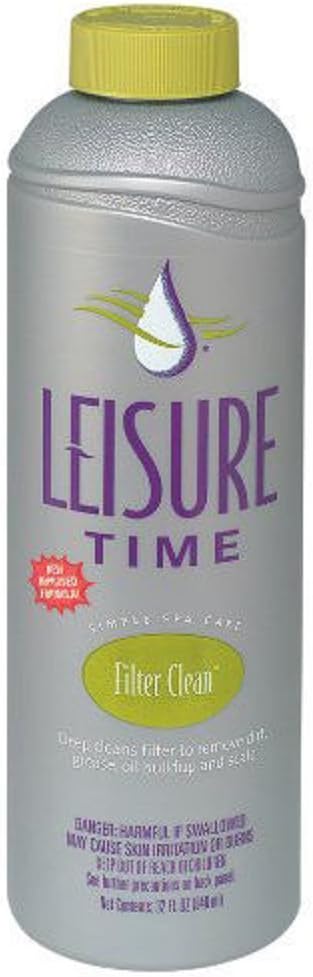
Clean filter with spray
Check salt level (if applicable)
Line flush treatment
Deep clean shell interior
Inspect pump and jets
Check cover integrity
The full detail on every element of this routine is in our inflatable hot tub maintenance guide. For filter care specifically — one of the highest-impact maintenance habits — see our guide on how often to replace hot tub filters and how hot tub filters actually work.
When to Do a Full Water Change
The rule of thumb: drain and refill every 90 days for a regularly used tub (3–4 times per week), or more frequently for heavy use or large numbers of bathers. A simpler formula: divide your tub’s volume in gallons by the number of daily users, then divide by three. The result is approximately the days until a water change is recommended. If your TDS reading climbs above 1,500 ppm over your source water’s baseline, that’s also a trigger for a full change regardless of usage level.
Before any water change, always run a dedicated line flush product through your jets and plumbing to clear out any developing biofilm. This is one of the most overlooked hot tub maintenance steps and one of the most impactful. See our guide on how to clean an inflatable hot tub for the full procedure.

Hot Tub Filter Cartridges (Multi-Pack)
Keep spare filters on hand for quick swaps. Fresh filters dramatically improve water clarity and chemical efficiency.
Browse Filter Options →Common Problems and How to Fix Them
Even with a good routine, things go wrong. Here are the most frequent water chemistry problems beginners encounter, with the actual cause and the correct fix for each:
If you’re dealing with persistent cloudy water, the underlying cause is usually one of three things: chemistry imbalance, filtration failure, or biofilm. Our dedicated article goes deep on diagnosing each scenario. Similarly, getting rid of hot tub foam explains the chemistry behind that frustrating foam problem and the steps to prevent recurrence.
Chemistry and the Hot Tub Health Benefits You’re Working Toward
All of this chemistry work has a purpose beyond clear water — it’s what enables you to safely enjoy the genuine health benefits that well-maintained hot tubs can provide. Improperly balanced water creates real health risks: bacterial infections, skin rashes, respiratory irritation, and in severe cases exposure to waterborne pathogens like Legionella. Properly balanced water, by contrast, is a medium for documented therapeutic benefits.
Regular hot tub use with clean, well-balanced water is associated with improved sleep quality, arthritis pain relief, post-workout muscle recovery, and blood pressure reduction. None of those benefits are accessible if the water is unsafe. Chemistry isn’t separate from the hot tub experience — it’s what makes the experience possible.
If you’re exploring the full picture of hot tub health, our guide to whether hot tubs are healthy covers the evidence honestly, alongside the risks that certain users should know about. And if you’re wondering how often to actually use your tub for maximum benefit without overdoing it, our piece on hot tub use frequency is the guide to read next.

6-Way Hot Tub Test Strips (100-Pack)
Tests pH, chlorine, bromine, alkalinity, hardness, and CYA simultaneously. Essential for quick routine checks.
Order on Amazon →Frequently Asked Questions
These are the questions we hear most often from beginners working through their first few months of hot tub water care:
Always: Total Alkalinity first → pH second → Calcium Hardness third → Sanitizer (chlorine/bromine) fourth → Shock last. This order is critical because TA is the buffer that makes pH stable. If you correct pH before TA, your pH will keep bouncing around. Each step builds on the stability created by the previous one. Don’t skip steps or reverse the order.
For most chemical adjustments (pH, alkalinity, calcium hardness), wait at least 30 minutes with jets running before testing again, and 30–60 minutes before entering. For non-chlorine shock (MPS/oxidizer), wait 15–30 minutes. For chlorine shock, wait until free chlorine drops back to 3 ppm or below — which can take 8–24 hours depending on the dose and conditions. When in doubt, test before getting in rather than guessing.
Test pH and free chlorine (or bromine) at least 2–3 times per week for a regularly used hot tub. Do a full parameter test (all six parameters) at least once a week. After heavy use sessions with multiple bathers, test and adjust before the next session. The more you use the tub, the more frequently you should test — heavy use generates more organic load and depletes sanitizer faster.
Persistent cloudiness usually indicates one of three underlying problems: a clogged or failing filter that’s no longer removing fine particles, calcium hardness too high (causing scale precipitation), or biofilm in the plumbing releasing contaminants faster than the sanitizer can handle them. Check your filter first — rinse or replace it. Then test calcium hardness. If those are both fine, do a line flush with a dedicated biofilm remover before your next water change. Cloudy water that doesn’t respond to shock almost always has a filtration or biofilm component.
Baking soda (sodium bicarbonate) primarily raises total alkalinity, with a smaller effect on pH. It’s the correct product to raise TA when it’s low. If you specifically need to raise pH (with TA already in range), use a dedicated pH increaser (sodium carbonate / pH Up), which raises pH more directly. Using baking soda to raise pH when TA is already high will push TA above the ideal range and create a new imbalance. Use the right product for the specific parameter you need to correct.
pH naturally rises in hot tubs due to outgassing of CO₂ driven by jet aeration — this is normal and expected. If it’s rising faster than usual, your total alkalinity may be too high (making pH very resistant to acidification and causing it to rebound toward 8.0), or you’re using an alkaline chlorine product that pushes pH upward. Lower alkalinity to 80–100 ppm if it’s above 120, and switch from trichlor tablets (which ironically raise pH over time through complex chemistry) to a neutral product if that’s what you’re using. Some pH drift is simply a maintenance fact of life in any hot tub.
There are four main triggers for a full drain and refill: (1) it’s been 90 days or longer since the last change with regular use, (2) total dissolved solids (TDS) are more than 1,500 ppm above your fill water baseline, (3) cyanuric acid (CYA) has climbed above 80–100 ppm and can’t be corrected any other way, or (4) the water has a persistent problem (odor, sliminess, discoloration) that doesn’t respond to chemical treatment. Fresh water is always the most reliable reset for water quality issues.
You should wait until chlorine drops to 3 ppm or below before entering. Levels above 5 ppm can cause skin and eye irritation, and at 10+ ppm (typical post-shock levels), it’s genuinely uncomfortable and potentially harmful with prolonged exposure. Most hot tubs return to safe levels within 8–24 hours after a chlorine shock dose, faster if the cover is left off (sunlight and outgassing accelerate chlorine dissipation). Test before every use — don’t assume.
pH measures how acidic or alkaline your water currently is (the position on the 0–14 scale). Total alkalinity measures how resistant your water is to pH changes — it’s the buffering capacity. Water with high alkalinity resists pH changes strongly; water with low alkalinity lets pH swing widely from small chemical additions. This is why you adjust alkalinity before pH: once alkalinity is correct, pH becomes much more stable and easier to manage. Think of TA as the suspension system and pH as the needle on the gauge — you need a good suspension to keep the needle steady.
Technically yes, in small quantities — unscented household bleach (sodium hypochlorite, 5–6% concentration) is the same active ingredient as liquid chlorine. The downsides: it’s not stabilized (no CYA protection from UV), the concentration varies by brand, it raises pH over time, and getting the dose right for a small hot tub volume is tricky. It’s commonly recommended as an emergency option only. For regular use, proper dichlor granules are far more controllable and appropriate for spa use. Never use scented bleach — the added chemicals create harmful reactions in hot water.
Conclusion: Chemistry Isn’t the Hard Part — Consistency Is
The eight steps in this guide are genuinely all you need to keep your hot tub water balanced, safe, and enjoyable. None of them require a chemistry degree. Most of them take less than five minutes once you’ve built the habit. The part that trips people up isn’t understanding the chemistry — it’s being consistent about testing and adjusting before problems compound.
Hot tubs that get checked regularly stay easy to balance. Hot tubs that get ignored for two weeks and then “fixed” in a panic cost more in chemicals, take longer to correct, and give you worse water quality overall. The single best piece of advice for any new hot tub owner: test twice a week, adjust in small increments, and keep notes. Within a month, you’ll know how your specific tub behaves, what it does to pH, how fast it burns through sanitizer, and exactly what it needs to stay in balance.
From there, chemistry becomes a ten-minute task you barely think about — which means more time in the water doing exactly what you got the tub for.
Ready to Go Deeper on Hot Tub Care?
Explore our full hot tub chemicals guide, water care walkthroughs, and product recommendations — everything you need to stay on top of your spa all year.
Read the Full Chemicals Guide →If you’re still shopping for a tub and weighing your options, our best inflatable hot tubs roundup and our guide to whether inflatable hot tubs are worth it will help you choose the right spa before you invest in chemistry supplies. And for the ongoing health context, inflatable hot tub safety and water chemistry risks is required reading for every new owner.