Best Inflatable Hot Tubs: Expert Picks, Real Reviews & What to Buy
Everything you need to make the right call — from jet power and heating speed to build quality, price, and long-term value.

Why People Are Choosing Inflatable Hot Tubs Over Hard-Shell Spas
Let’s be blunt: a real hard-shell hot tub costs somewhere between $5,000 and $20,000 before you factor in installation, electrical work, decking, and ongoing chemical bills. An inflatable hot tub sits in the $300–$900 range and plugs into any standard outdoor outlet. That’s not a minor difference — that’s a whole different financial category.
But price alone doesn’t explain why inflatable hot tubs have exploded in popularity. The practical advantages go deeper. You don’t need a structural engineer to assess your deck. You don’t need a professional plumber. You don’t need a permit in most states (though you should always confirm local permit requirements). Setup takes a weekend afternoon, not weeks of contractor work.
And if you move? You deflate it, box it up, and bring it along. Try doing that with a 900-lb fiberglass shell.
That said, inflatable hot tubs aren’t for everyone. They heat more slowly than hard-shell units. Their air bubble massage systems can’t replicate high-pressure hydrotherapy jets. They need chemical upkeep just like any spa. And they do require some discipline around maintenance and storage. If you’re wondering whether an inflatable hot tub is genuinely worth it, the honest answer is: for casual to moderate soakers, yes — overwhelmingly. For daily therapeutic jet users, a hard-shell may serve better.
Perspective check: At roughly $500 average, an inflatable hot tub costs about as much as a 3-night stay at a resort with a hot tub. Once it’s sitting in your backyard, the per-soak cost quickly becomes trivial.
What this guide covers is the full picture — which models actually hold up, which ones heat fastest, what you’re giving up, and what the smart money looks like at each price tier. We’ve examined the technical specs, combed through thousands of owner reviews, and benchmarked these tubs against the key quality metrics that separate good inflatable spas from great ones.
Quick Picks at a Glance
Not ready to read the full breakdown? Here’s the short version — our top picks by category:
Read on for the full picture behind each recommendation — including who each tub is actually built for and where each one falls short.
Top 5 Inflatable Hot Tubs: In-Depth Reviews
1. Bestway SaluSpa 28425EG — Best Saltwater Option

Bestway SaluSpa 28425EG
Energy-efficient, saltwater-compatible, 4-person portable spa
The Bestway 28425EG SaluSpa stands apart from the crowd for one compelling reason: it’s built to work with a saltwater chlorinator, meaning you can run it as a gentler, lower-chemical saltwater system rather than dumping chlorine granules every few days. For anyone with sensitive skin or an aversion to the chlorine smell, this is a significant quality-of-life upgrade.
Beyond the saltwater compatibility, this unit packs 180 air massage jets into its walls — considerably more than the standard 120-bubble setups found on most budget options. The heating pump is rated for quiet, efficient operation and holds temperature well once it’s at your target. Pair it with a dedicated insulated ground pad and you’ll notice noticeably better heat retention.
The 77-inch diameter comfortably seats four average-sized adults, with water depth reaching 28 inches — enough to cover shoulders for most people when seated on the integrated seating ring. Setup follows the standard Bestway pattern: inflate the inner ring, attach the liner, connect the pump, fill, and heat. Most owners report hitting target temperature (around 102°F) within 18–22 hours from cold water.
If you’ve been curious about converting to a saltwater hot tub system, this model removes the guesswork by coming built for it out of the box.
Pros
- Native saltwater chlorinator compatibility
- 180 air jets — above average coverage
- Energy-efficient heating pump
- 77″ diameter feels genuinely spacious
- Easy-to-use digital control panel
Cons
- Saltwater unit sold separately
- Heating from cold takes 18–24 hours
- Air jets, not pressure water jets
- Cover quality is basic — worth upgrading
Bestway SaluSpa 28425EG — Saltwater-Ready 4-Person Spa
View on Amazon →2. Coleman SaluSpa 4-Person — Best All-Around Value
Coleman SaluSpa 4-Person (Model 13804)
The classic, proven performer — consistent and reliable
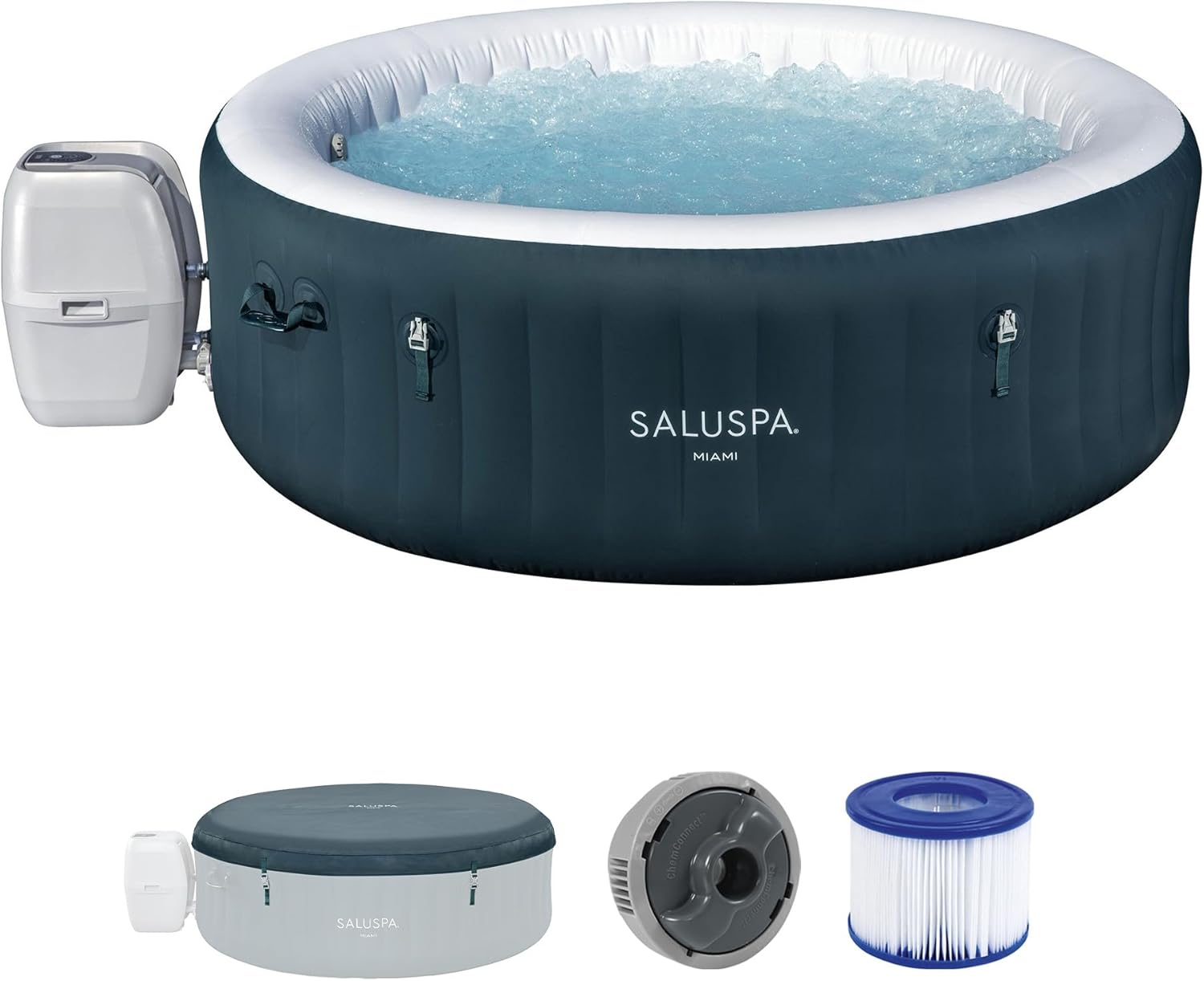
The Coleman SaluSpa 13804 has been the inflatable hot tub benchmark for good reason — it represents an almost ideal balance of price, reliability, and usability. At its price point, you’d struggle to find a tub with this level of consistent owner satisfaction across this many units sold.
The 120-bubble air jet system creates a full-body fizzy massage that feels genuinely relaxing after a long day. It’s not the targeted intensity of a water jet, but for decompression and muscle relaxation, it works well. The pump unit is straightforward to operate, with a simple digital display for temperature and bubble control. Heating from a 65°F start to 100°F takes approximately 14–18 hours under normal conditions.
The TriTech material (three-ply reinforced sidewalls) gives it more puncture resistance than cheaper single-layer alternatives. The cover that ships with the unit is functional if not exceptional — if you’re planning to use this through changing seasons, consider upgrading to a better-insulated hot tub cover to cut heating costs.
For a comprehensive breakdown of this model, our Coleman SaluSpa in-depth review covers build quality, durability, and value metrics in detail. We also break down how it stacks up in our Intex PureSpa vs Coleman SaluSpa comparison.
Pros
- Proven track record over many units/years
- TriTech reinforced sidewall material
- Simple, reliable digital controls
- Good parts availability for repairs
- Standard 110V plug — no electrician needed
Cons
- 120 jets is middle-of-the-road
- Included cover is thin and basic
- Slower to heat in ambient temps below 50°F
- No hard-side rigidity — requires careful inflation
Coleman SaluSpa 4-Person Inflatable Hot Tub — Reliable Classic
View on Amazon →3. Wxtkkom Upgraded 175-Gal Portable Bathtub — Best for Solo/Indoor Use

Wxtkkom Upgraded 175-Gal Portable Bathtub
Compact, collapsible, and ideal for small spaces or indoor setups
The Wxtkkom 175-gallon portable tub occupies a niche that most inflatable hot tub roundups skip: the compact, solo-or-duo soak that works indoors. If you live in an apartment, have a bathroom large enough for a foldable tub, or simply want a deep-soak personal bathing experience without a fixed installation, this model deserves serious attention.
At 175 gallons, it holds significantly less water than a 4-person spa — which means it heats up much faster and costs considerably less to run. The upgraded model features a thicker multi-layer sidewall compared to the original, reducing the sag that frustrated early buyers. The drainage port is conveniently located and compatible with standard shower drain adapters, making indoor use practical.
It won’t replicate the social hot tub experience or deliver air-jet massage. What it does deliver is a deep, hot soak in a private, comfortable enclosure — the kind your standard bathtub can’t provide due to shallow depth and heat loss. For people exploring creative inflatable hot tub placement ideas beyond the backyard, this format opens up real options.
Pros
- Works indoors — apartment friendly
- Heats quickly due to smaller volume
- Folds for easy storage
- Deep immersion design
- Lower water volume = lower chemical cost
Cons
- Not a hot tub — no jets or built-in heater
- Solo or tight-couple use only
- Requires external water heater or hot fill
- Not suitable for outdoor social soaking
Wxtkkom Upgraded 175-Gal Portable Bathtub — Compact Soak Solution
View on Amazon →4. Alaskey Portable Inflatable Bathtub — Best Freestanding Design

Alaskey® Portable Inflatable Bathtub
Freestanding, stylish, and surprisingly comfortable solo spa experience
The Alaskey® brings a different philosophy to the inflatable soak category — it’s designed to feel more like a proper freestanding bath than a camping tub. The contoured back support gives it a shaped sitting posture that flat-bottomed alternatives lack, and the high sidewalls create real immersion depth.
Lightweight enough that one adult can move it while folded, and compact enough to store in a closet when not in use, the Alaskey targets urban users who want a better bathing experience than a standard built-in tub provides. It pairs well with heated water from a tap or a submersible heater. The non-slip bottom is a thoughtful safety touch that matters more than it sounds — climbing in and out of a wet inflatable surface warrants serious attention, particularly for older users.
For anyone interested in the health benefits of regular hot soaking, this model makes a daily routine genuinely practical for those without outdoor space.
Alaskey® Portable Inflatable Freestanding Bathtub
View on Amazon →5. Coleman SaluSpa — The Dependable Second Unit
If you’ve already owned one Coleman SaluSpa and it served you well, the repeat-purchase pattern for this brand is strong for a reason. Parts are widely available, the pump units are easy to replace, and the company has maintained consistent quality across production runs. For households that want a spare tub for a cabin, a guest property, or seasonal rotation, a second Coleman unit is a low-risk choice.
The resale market for used Coleman units is also healthier than most brands — a testament to the perceived longevity. Our used hot tub buying guide walks through what to check before purchasing any secondhand spa.
Coleman SaluSpa — Reliable 4-Person Inflatable Spa (Great for Second Units)
View on Amazon →Side-by-Side Comparison: Key Specs at a Glance
Numbers make the differences clear. Here’s how the top picks stack up across the metrics that actually matter:
| Model | Capacity | Diameter | Jets | Max Temp | Saltwater | Best For |
|---|---|---|---|---|---|---|
| Bestway SaluSpa 28425EG | 4 Person | 77 in | 180 air | 104°F | ✔ | Low-chemical soakers |
| Coleman SaluSpa 13804 | 4 Person | 71 in | 120 air | 104°F | ✗ | Value seekers |
| Wxtkkom 175-Gal | 1–2 Person | Rectangular | None | N/A | ✗ | Indoor / apartment |
| Alaskey® Freestanding | 1 Person | Oval | None | N/A | ✗ | Solo soakers |
| Bestway Helsinki | 6 Person | 83 in | 140 air + jets | 104°F | ✔ | Groups, best overall |
For a deeper look at how heating efficiency and 4-person capacity compare across competing platforms, our 4-person hot tub heating and insulation comparison walks through the data in granular detail.
Buying Guide: What Actually Matters When Choosing an Inflatable Hot Tub
Most inflatable hot tub buying guides focus on price brackets. That’s useful but insufficient. The difference between a satisfying purchase and a frustrating one often comes down to matching specs to your specific use case. Here’s what deserves real scrutiny:
Build Material: What Holds Up Over Time
The single biggest predictor of longevity is the sidewall construction. Entry-level tubs use single-layer PVC, which is lighter and cheaper but prone to UV degradation and pinhole punctures within 12–18 months of outdoor exposure. Mid-range tubs use two or three-ply laminated material — the difference in tactile rigidity when you press on the wall is immediate and obvious.
Look specifically for terms like “TriTech,” “Fiber-Tech,” “I-Beam” reinforcement, or “laminated DuraPlus” on the product description. These indicate a structural layer between the inner and outer PVC, which substantially improves both rigidity and puncture resistance. The Bestway and Coleman SaluSpa lines use these constructions on their mid-range and premium models.
Seating Capacity: The Math Behind the Claim
Manufacturers rate capacity generously. A “4-person” tub comfortably fits 3 average adults or 2 adults who actually want space to stretch out. If you’re buying specifically for family soaks or social groups, go one size above your actual regular user count. The footprint jump from 4-person to 6-person isn’t dramatically larger, but the comfort difference is significant.
Heating Speed and Efficiency
All inflatable hot tubs use the same basic resistance heating element — there’s no proprietary magic here. The variables that affect heating speed are: starting water temperature, ambient air temperature, water volume, cover quality, and ground insulation. A 4-person tub with 250 gallons will naturally heat more slowly than a 2-person 150-gallon unit at the same wattage.
For context on running costs, our detailed explainer on how much electricity inflatable hot tubs use breaks down the numbers by tub size, ambient temperature, and usage frequency. It’s worth reading before you budget your first month.
Jet System: Air Bubbles vs Water Jets
The vast majority of inflatable hot tubs use an air pump to create bubble massage rather than high-pressure water jets. This is an important distinction. Air bubble systems feel diffuse and fizzy — pleasant, but not targeted. They’re great for general relaxation but won’t deliver the intense shoulder or lumbar pressure you get from a hard-shell spa’s directional water jets.
A handful of premium inflatable models are starting to include hybrid systems with some water-pressure jets, but these tend to cluster in the upper price range. If therapeutic jet pressure is a priority, our breakdown of blow-up hot tubs ranked by jet power will help you identify what’s available at each tier.
Water Chemistry Commitment
This is the most overlooked aspect of buying an inflatable hot tub. The difference between a tub that stays clean and inviting and one that turns green and foamy within two weeks is almost entirely chemistry discipline. You need to test and adjust pH and alkalinity every 2–3 days, sanitize consistently with chlorine or bromine, and shock weekly or after heavy use.
If that sounds like a burden, consider a saltwater system — they significantly reduce the daily chemical management overhead. Our complete hot tub chemicals guide is the place to start if you’re new to water care, and our breakdown of bromine versus chlorine for hot tubs helps you choose your sanitizer path upfront.
Portability Realities
Inflatable hot tubs are technically portable, but “portable” is relative. A 4-person unit full of water weighs 1,500–2,000 lbs. You’re not moving a full tub. What you can do is drain, deflate, and pack it into a storage bag — a process that takes 30–60 minutes. Moving it between locations seasonally or for travel is genuinely practical. Moving it weekly is not.
Heating Speed, Energy Costs & How to Reduce Your Bills
Heating is where inflatable hot tubs consistently disappoint owners who weren’t prepared. A hard-shell spa with a 4-kilowatt heater can bring water to temperature in 4–6 hours. A standard inflatable tub’s 1,400-watt heating element takes 12–24 hours from a cold start. That’s not a flaw — it’s physics — but knowing this changes how you plan your soaks.
The smart approach: run your tub on a timer or schedule setting that starts heating 12–18 hours before your planned soak. Most modern inflatable pump units include a programmable timer and temperature lock, so you set your target temperature and let the unit maintain it. The energy cost of maintaining temperature is much lower than repeatedly heating from cold, so keeping the tub warm between uses is often more economical than letting it cool and reheating.
Energy Cost Breakdown
| Scenario | Wattage | Hours/Month | Est. Monthly Cost |
|---|---|---|---|
| Heating from cold (weekly) | 1,400–1,600W | ~72 hrs | ~$12–$18 |
| Temperature maintenance (daily) | 800–1,000W | ~120 hrs | ~$14–$22 |
| Running bubble jets (1 hr/day) | 1,200W | ~30 hrs | ~$5–$8 |
| Total estimated (moderate use) | — | $30–$50/month | |
These estimates assume $0.15/kWh (U.S. average) and moderate seasonal conditions. Winter use in cold climates can push monthly costs higher. Our guide to winter inflatable hot tub use covers insulation strategies that meaningfully cut these numbers.
Three things that make the biggest difference to heating efficiency: a well-fitted thermal cover (not the flimsy stock cover), a foam or insulating ground pad for your inflatable spa, and positioning the tub in a sheltered spot away from prevailing wind. Together, these three upgrades can reduce heating time and maintenance energy by 20–35%.
Relative impact on reducing total monthly heating cost — scale is comparative, not absolute.
Setup, Placement & Maintenance: Getting It Right From Day One
A poorly set up inflatable hot tub is a perpetual headache. Most problems owners encounter — uneven water surface, pump strain, premature wear, recurring chemistry issues — trace back to setup decisions made on day one. Here’s how to get it right.
Choosing Your Location
Level ground is non-negotiable. Even a 1-inch slope across the tub’s diameter puts uneven pressure on the sidewalls and stresses the seam at the low side. Use a 4-foot spirit level across the planned footprint before inflating. Decking is fine if it’s structurally sound — our inflatable hot tub setup guide covers how to assess deck load capacity for this use case.
Ground surface matters too. Concrete and patio pavers are ideal. Grass works but creates moisture trapping underneath (which promotes mold and accelerates material degradation). Lay a ground pad or tarp as a minimum — a proper foam insulating pad as a preference.
First Fill and Initial Chemistry
Before your first soak, you need to establish baseline water chemistry. Test tap water pH (it’s often 7.5–8.0, which needs adjusting down toward 7.4–7.6 for a spa). Set alkalinity to 80–120 ppm, then adjust pH. Only then add your sanitizer. Skipping this order leads to chemical inefficiency and faster balancer consumption. Our complete hot tub water chemistry guide walks through this in sequence.
Filter Maintenance Schedule
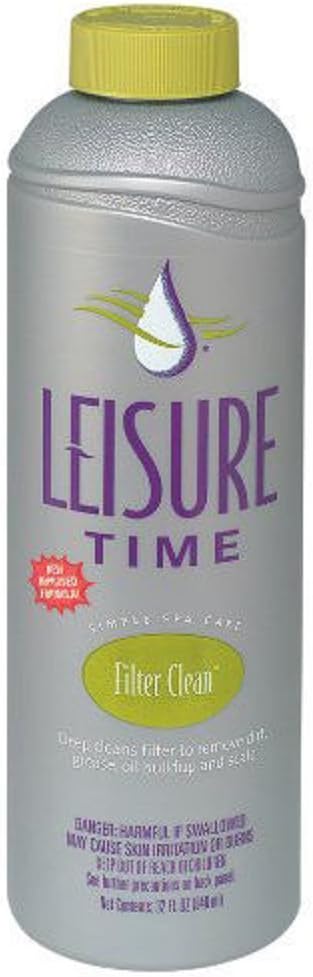
Inflatable hot tubs use cartridge filters — typically one or two per pump unit. These need rinsing with a garden hose every 1–2 weeks under normal use, and a chemical soak in filter cleaner monthly. Replace cartridges every 30–60 days depending on usage intensity. Running a clogged filter forces the pump to work harder, reducing its lifespan. Our guide on how often to replace hot tub filters has the timing breakdown. And if you need a deep-dive on the mechanics, how hot tub filters work explains the process from start to finish.
Water Replacement Intervals
Plan to drain and refill every 4–8 weeks under regular use. The water’s total dissolved solids (TDS) accumulate over time, making it progressively harder to maintain chemistry. A simple TDS meter tells you where you stand. Before draining, run a plumbing flush product through the system to clear biofilm from the internal tubing. Our detailed walkthrough on inflatable hot tub maintenance, water care, and filter cleaning covers the full schedule in one place.
Jet Systems Decoded: Air Bubbles, Water Jets & What Manufacturers Don’t Tell You
The word “jets” on an inflatable hot tub listing almost always means air-injection bubbles — not the targeted water pressure jets you’d find in a hard-shell spa. This distinction matters enormously if you’re buying for therapeutic reasons like muscle knots, back tension, or sports recovery.
Air bubble systems create a pleasant whole-body effervescent sensation. They’re genuinely enjoyable for relaxation, decompression, and general stress relief. But if you’re recovering from a sports injury, dealing with chronic back pain, or need targeted pressure on specific muscle groups, air bubbles won’t get you there.
For those use cases, look at the premium inflatable end (Lay-Z Spa Helsinki, MSpa series) or accept that an inflatable is supplementary to — not a replacement for — a hard-shell therapeutic spa. Our detailed review of the Lay-Z Spa Helsinki’s performance covers how close a premium inflatable can get to hard-shell jet quality.
For a broader look at how inflatable spas compare, our top inflatable spa picks for heating and runtime covers the full competitive landscape.
Using Your Inflatable Hot Tub in Cold Weather: What Works and What Doesn’t
Cold-weather inflatable hot tub use is possible, but it requires managing expectations and taking deliberate steps to support your tub’s heating system. Most inflatable hot tubs can operate in winter — but below 40°F, the heating element has to fight hard against rapid heat loss through the sidewalls, cover, and ground, and the pump may struggle to reach 104°F at all.
The three-layer system shown above — insulating ground pad, fitted thermal cover, and a windbreak — makes the biggest practical difference for cold-weather operation. Beyond these basics, consider our dedicated resource on the best inflatable hot tubs for winter based on insulation and heating power. Not all tubs are equal in cold performance; some models have better insulated side walls and more powerful heating elements that genuinely change the equation below 40°F.
One underappreciated tip: pre-fill with warm water from a garden hose splitter connected to your hot water tap. Starting at 90°F instead of 55°F saves 4–6 hours of heating time, which in cold ambient conditions is significant.
Health Benefits, Safety Considerations & Who Should Use Caution
The health case for regular hot soaking is genuinely substantial. Heat therapy — specifically immersive hydrotherapy at 100–104°F — has a documented record of benefit for muscle recovery, sleep quality, stress reduction, and certain chronic pain conditions. Hot tubs aren’t just a luxury; for many users, they’re a legitimate wellness tool.
Studies have consistently shown that soaking at elevated temperatures raises core body temperature, which triggers systemic vasodilation — blood vessel expansion that improves circulation and reduces cardiovascular load at rest. This is why a hot soak after a workout can accelerate muscle recovery. Our piece on hot tub use for workout recovery and muscle relief covers the physiology in detail.
For sleep, the body’s temperature drop following a hot soak (as you cool down post-soak) has been linked to faster sleep onset and deeper slow-wave sleep cycles — similar in mechanism to the benefits some people report from a warm bath before bed. Our guide on using a hot tub for insomnia breaks down optimal timing and temperature for this effect.
For arthritis sufferers specifically, hot tub use has shown meaningful benefits for joint mobility, pain reduction, and morning stiffness — with consistent use being the key variable. The warm water reduces joint load while the heat increases range of motion.
Who Should Use Caution or Avoid Hot Tubs
Despite the benefits, certain populations need to approach hot tubs carefully or avoid them entirely. High water temperatures elevate core body temperature and heart rate, which can be problematic for people with cardiovascular conditions, uncontrolled hypertension, or those on certain medications. Understanding who shouldn’t use a hot tub is important reading before your first soak if you have any preexisting conditions.
For pregnant women, hot tub use requires particular care — elevated core temperature in early pregnancy carries documented risks. Our detailed guide on pregnancy and hot tub safety covers the risk factors, timing guidelines, and what precautions make use safer if you choose to continue.
Alcohol and hot tubs are a combination worth treating carefully. Alcohol impairs thermoregulation and lowers blood pressure — both effects that compound the physiological stress of heat immersion. The inflatable hot tub safety guide addresses these interaction risks directly.
General rule: If you have any cardiovascular condition, hypertension, diabetes, or are taking prescription medication, check with your doctor before regular hot tub use. For most healthy adults, a 15–20 minute soak at 100–104°F is safe and beneficial.
Accessories That Make a Real Difference
The base purchase is just the beginning. The right accessories transform an inflatable hot tub from a basic soak to a genuinely comfortable outdoor spa experience. Here’s what’s worth the investment:
Non-Negotiable Upgrades
- Insulating Ground Pad: Stops heat loss through the base. Foam puzzle mats or purpose-built inflatable hot tub pads are both effective. Don’t skip this.
- Better Cover: The stock cover is basic. A higher-quality insulating cover reduces heating costs noticeably and keeps debris out more effectively.
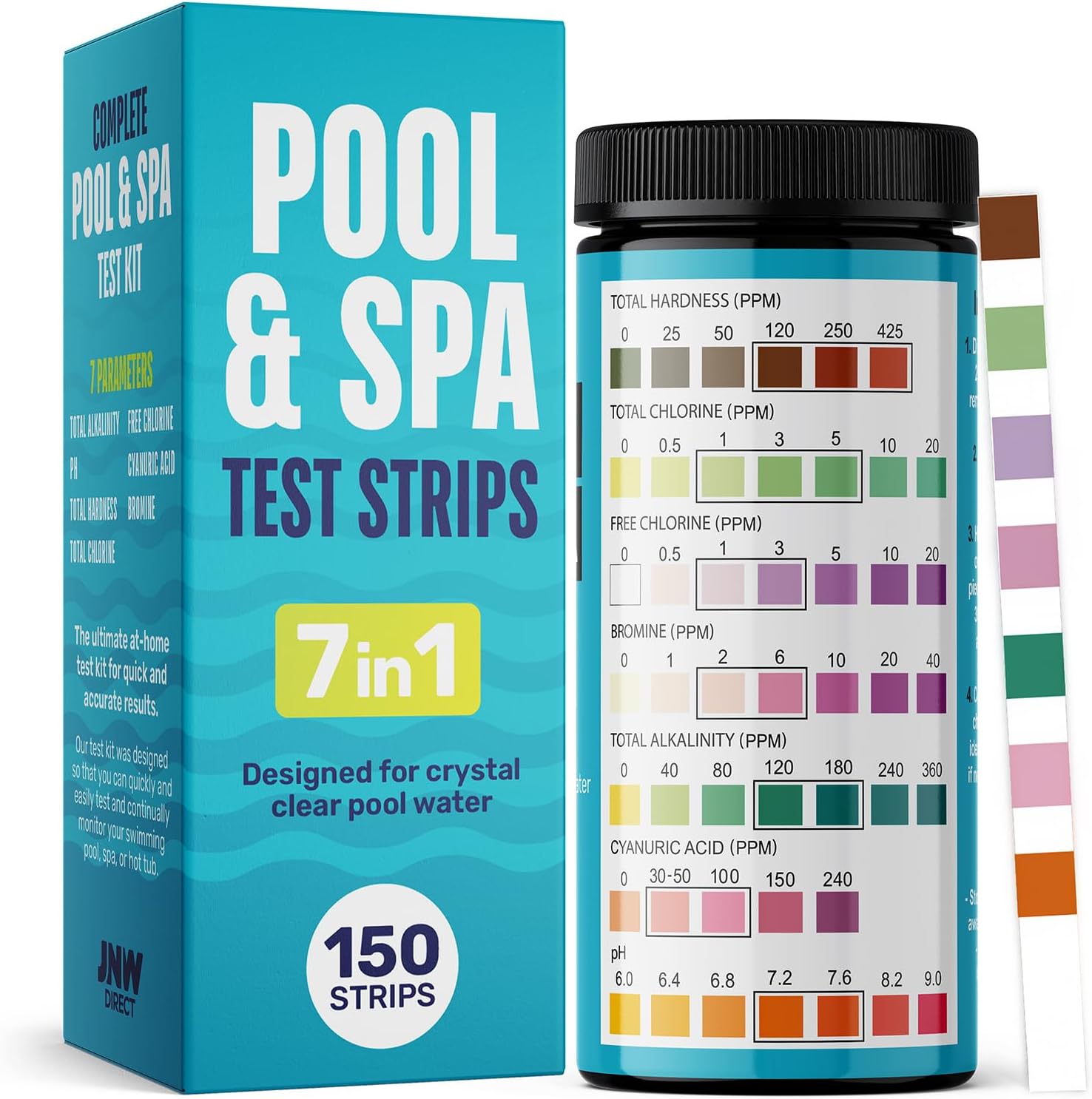
- Water Testing Kit: A reliable water tester takes the guesswork out of chemistry. Digital testers are more accurate than strips for pH and alkalinity precision.
- Steps/Handrail: Safer entry and exit, especially for older users. Hot tub steps and handrails make a meaningful safety difference.
Nice-to-Have Additions
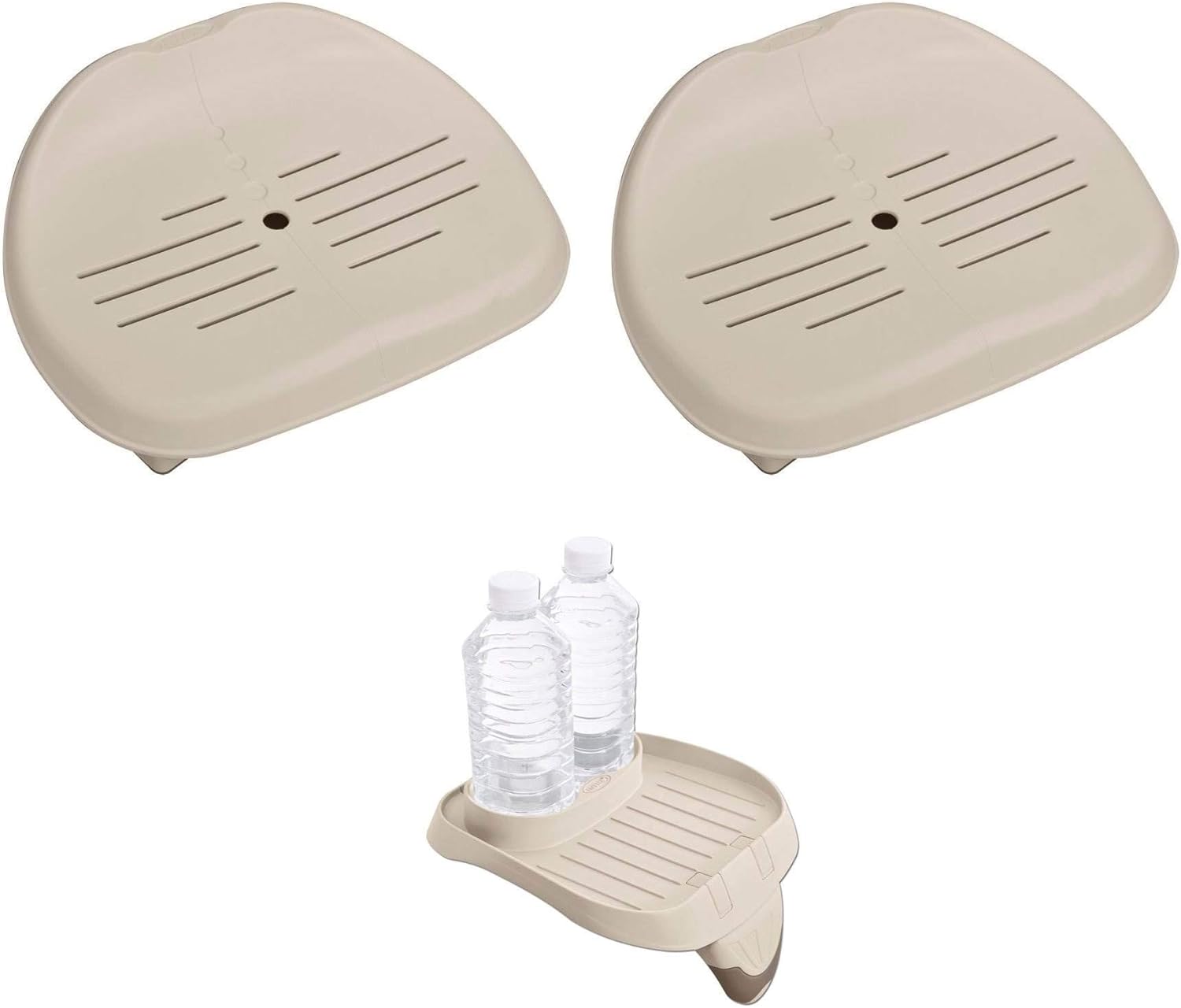
- Booster Seat: If shorter users struggle with depth, a hot tub booster seat raises the seated position without reducing immersion comfort.
- Scum Absorber: A spa scum ball or sponge absorber floats in the water and picks up oils, lotions, and organic matter before they cloud the water. Cheap and effective.
- Thermometer: A dedicated hot tub thermometer gives you a reading independent of the pump’s built-in sensor — useful for verifying accuracy.
- Aromatherapy Crystals: Some spa-safe aromatherapy products are specifically formulated not to interfere with water chemistry. Check compatibility with your sanitizer system before adding anything.
Maintenance Tools
- Hot Tub Vacuum: A corded or battery-operated hot tub vacuum makes bottom cleaning quick and effortless, especially for debris settling between water changes.
- Shock Treatments: Keep a supply of chlorine or non-chlorine shock. How often you shock depends on usage, but weekly shocking is standard for maintaining clear water.
Common Problems and How to Solve Them Fast
Cloudy Water
The most common complaint. Usually caused by pH imbalance (most often high), insufficient sanitizer, heavy bather load, or aging water with high TDS. Start by testing and correcting pH and alkalinity, then add shock. If cloudy water persists after chemistry correction, drain and refill — it’s often the fastest fix. Understanding why hot tub water turns cloudy helps you address root causes rather than symptoms.
Foam on the Surface
Foam indicates organic contamination — typically lotions, detergent residue from swimwear, body oils, or low calcium hardness. Use a foam reducer for a quick fix, but address the root cause. Rinsing swimsuits without detergent, showering before soaking, and maintaining calcium hardness prevent recurrence. Our guide on eliminating hot tub foam walks through the quick fixes and long-term causes.
Heating Problems
If the pump runs but the water won’t heat, check the flow sensor first — these clog in dirty-filter conditions and prevent the heater from activating as a safety measure. Clean or replace filters, run a quick purge cycle, and retest. For Intex-specific heating issues, our PureSpa troubleshooting guide covers the common error codes and fixes.
Leaks
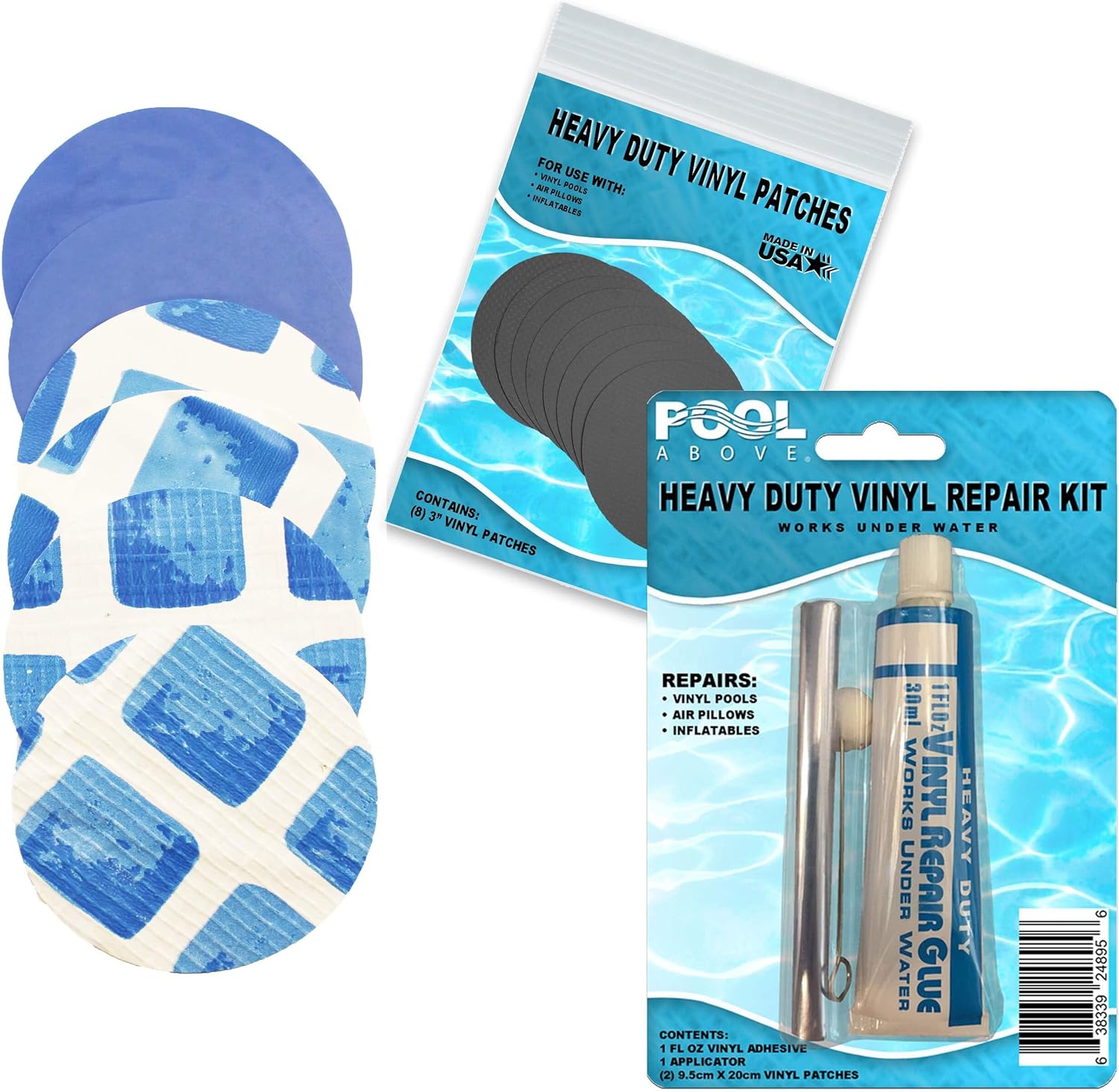
Slow deflation usually points to a valve issue rather than a liner puncture. Check all valve caps and tighten them. For actual liner leaks, inflate dry and apply soapy water around seams and the pump inlet connections. Once located, a vinyl repair kit handles most small punctures well. Our step-by-step leak detection guide covers the full process including hard-to-find pinhole leaks.
pH and Alkalinity Issues
If your pH keeps swinging despite adjustments, alkalinity is usually the culprit — alkalinity buffers pH, so unstable pH almost always means alkalinity is out of range. Fix alkalinity first using baking soda to raise it. Our walkthrough on raising hot tub alkalinity with baking soda is a DIY-friendly step-by-step, and our guide to lowering alkalinity in a hot tub covers the opposite scenario.
Frequently Asked Questions
The Bottom Line: Which Inflatable Hot Tub Should You Buy?
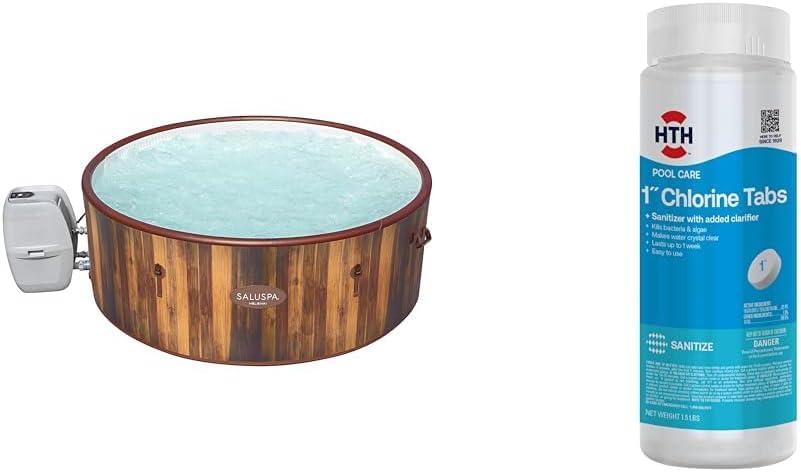
After looking at the full field, the recommendation structure is clear. If you want the best all-around inflatable hot tub for backyard use, the Bestway SaluSpa Helsinki delivers the strongest combination of capacity, heating efficiency, jet coverage, and build quality at the premium end. If budget is the primary constraint, the Coleman SaluSpa 13804 remains the most reliable value in the category — proven over thousands of units with good parts availability and consistent performance.
For compact or indoor use, the Wxtkkom 175-gallon portable tub and Alaskey freestanding model serve a different need — personal soaking without the footprint of a full spa. And if you want to minimize chemical management, the Bestway 28425EG’s saltwater compatibility is genuinely worth the price premium.
Whatever you choose: invest in a quality ground pad, treat the stock cover as a placeholder rather than a final solution, and commit to a basic chemistry schedule from day one. Those three things determine whether your inflatable hot tub experience is satisfying or frustrating more than the model you pick.
Want to dig deeper before deciding? Our resources on how good inflatable hot tubs actually are and whether an inflatable hot tub is worth the investment cover the cost-benefit question from every angle.
Shop Our Top Pick on Amazon →