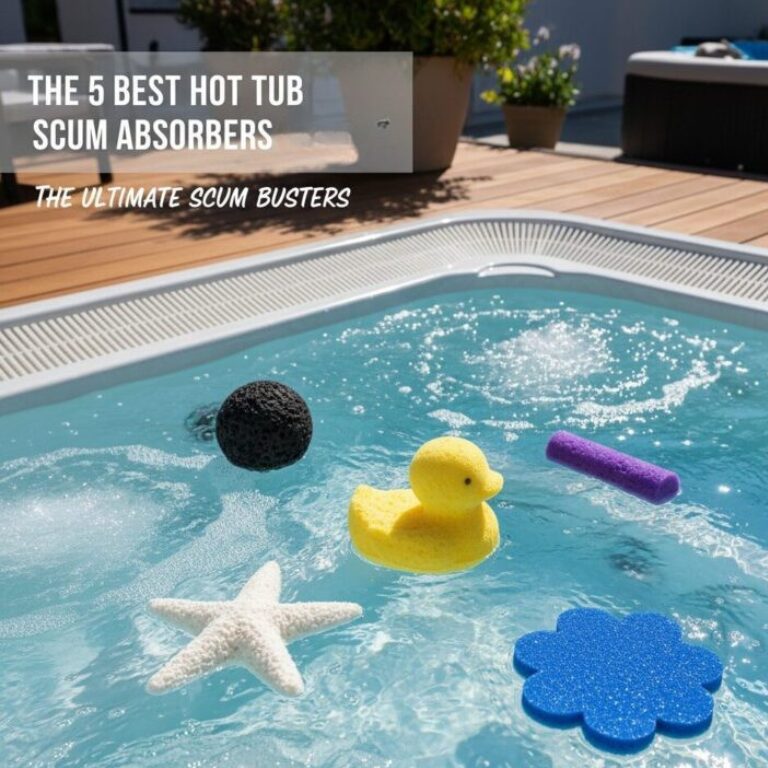
The 5 Best Hot Tub Scum Absorbers (The Ultimate Scum Busters)
You’ve perfected your hot tub setup. The water is balanced, the temperature is just right, and you’re ready to relax. But then you see it: that ugly, greasy ring around the waterline. Or maybe it’s a layer of foam that just won’t go away. This is the dreaded hot tub scum, and it’s the bane of every spa owner’s existence. Caused by a combination of body oils, lotions, cosmetics, and other contaminants, scum doesn’t just look gross; it can clog your filters, throw off your water chemistry, and make your relaxing oasis feel… well, dirty.
The good news is that there’s an incredibly simple, passive, and affordable solution: a hot tub scum absorber. These unassuming little sponges and floaters are specifically designed to be oleophilic—meaning they love and absorb oils—effectively pulling that nasty gunk out of your water before it can cause problems. But which ones actually work, and which are just novelty toys? We dove in, conducted our own oily tests, and evaluated the top scum absorbers on the market to bring you the definitive guide. Stop scrubbing and start soaking—let’s find your perfect scum buster.
Our Top Scum Absorbers at a Glance
| Award | Product | Why We Love It |
|---|---|---|
| Best Overall | Zorbie Hot Tub Water Bobble | Massive absorption capacity and long-lasting performance make it the most effective scum remover we tested. |
| Best Reusable Option | HOICATED Spa Sponges (2-Pack) | Durable, effective, and washable, these sponges offer fantastic long-term value. |
| Best Value Pack | Hot Tub Things Oil Absorbing Sponges (20-Pack) | A huge pack of effective, disposable sponges that will keep you scum-free for months. |
By John ‘The Bro’ Anderson, C.P.O.
As a Certified Pool & Spa Operator (CPSO), I’ve spent more time than I’d like to admit dealing with scum lines and cloudy water. My professional experience has shown me that proactive maintenance is always better than reactive cleaning. This review is based on a series of controlled tests designed to measure the real-world absorption capacity and durability of these products. I’ve seen what works and what falls apart, and I’m here to share that expert knowledge with you.
What Exactly IS Hot Tub Scum (And Why You Should Hate It)
Before we dive into the solutions, it’s critical to understand the enemy. Hot tub scum is a complex biofilm, but it’s primarily composed of:
- Body Oils & Sweat: The number one contributor. Every person who enters the tub leaves behind natural oils.
- Personal Care Products: Sunscreen, moisturizers, lotions, deodorants, makeup, and hair products all wash off in the hot water.
- Dead Skin Cells: It’s a natural process, and the hot water accelerates it.
- Total Dissolved Solids (TDS): Over time, minerals and chemical byproducts build up in the water, contributing to the problem.
Is It Really Scum? A Color-Coded Diagnostic Guide
Before you toss a sponge into your spa, it’s worth pausing for a second. Not every ring, film, or floating bit of gunk in a hot tub is the oily “body scum” this guide is built to solve. We hear from readers constantly who bought a scum absorber, saw zero improvement, and assumed the product was a dud — when in reality they were dealing with a completely different water problem that no sponge on earth can fix. Here’s a quick field guide to help you diagnose exactly what’s floating in your water before you spend a dime.
| What You See | Likely Cause | Will a Scum Absorber Help? |
|---|---|---|
| Greasy, blue-green film or ring | Classic body oil, lotion, and sunscreen scum — exactly what this guide covers | Yes, this is precisely what oleophilic absorbers are built for |
| Brown or rust-tinted water | High pH reacting with dissolved iron, or metals present in your fill water | Partially. An absorber pulls out some organic residue, but you’ll also need a pH decreaser and a metal sequestrant |
| White, flaky deposits at the waterline | Calcium scale from hard water — this isn’t scum at all | No, this needs a scale remover and lower calcium hardness, not an absorber |
| White or grayish film that isn’t flaky | White water mold, a stubborn form of biofilm | No, this requires a dedicated biofilm treatment; sanitizer alone won’t touch it |
| Green tint or floating clumps | An algae bloom, or oxidized copper from your heater or fill water | No, shock the water and check your sanitizer residual; a sequestrant handles copper |
| Pink or slimy residue on jets or seats | Pink biofilm, a bacteria-and-yeast combination that thrives in warm, low-sanitizer water | No, this calls for a drain, a scrub with a non-abrasive cleaner, and a refill |
| Black spots on the cover or shell above the waterline | Black mold, usually from poor cover ventilation | No, this needs to be physically cleaned and the cover dried out |
If what you’re picturing matches that first row — a greasy sheen, a film that leaves your fingers feeling slick, or a bathtub-style ring that reappears within a day of wiping it down — you’re in exactly the right place, and everything below will make a real difference. If you’re also seeing flaky deposits or an off smell, a scum absorber is still worth having in the water as part of your routine, but address the underlying chemistry issue first or the scum will simply keep coming back no matter how many sponges you throw at it.
The Hidden Health Risks of Letting Scum Go Unchecked
It’s tempting to think of scum as purely a cosmetic annoyance, but there’s a real hygiene angle here too. That oily film sitting on your water’s surface isn’t inert; it’s an organic buffet for anything that manages to survive your sanitizer. When body oils, lotions, and dead skin cells accumulate faster than your chlorine or bromine can oxidize them, they create pockets where bacteria can shelter from disinfection, and they consume sanitizer that would otherwise be available to keep your water safe.
Two organisms are worth knowing about here. Pseudomonas aeruginosa is the bacteria behind “hot tub rash,” an itchy, bumpy folliculitis that tends to show up a day or two after soaking in under-sanitized water. Certain mycobacteria have also been linked to respiratory irritation from inhaling contaminated water vapor in poorly maintained spas. Neither of these is common in a well-kept tub, and a scum absorber alone won’t prevent them outright — proper sanitizer levels do that heavy lifting — but reducing the organic load in your water makes your sanitizer’s job dramatically easier. Every bit of oil an absorber pulls out is oil your chlorine or bromine doesn’t have to burn through, which means more of your sanitizer stays free to actually target germs instead of getting consumed by lotion residue. Think of your scum absorber as backup for your sanitizer, not a replacement for it.
How We Tested: The “Salad Dressing” Test
To go beyond simple observation, we created a controlled test to measure the absorption power of each product. For each test, we used a large bucket of hot water treated with a standard dose of chlorine to simulate a spa environment. We then created a “scum cocktail” using 1 tablespoon of olive oil (to simulate body oils) and 1 teaspoon of a common skin lotion. We vigorously mixed this into the water, creating a greasy, cloudy mess.
Our Evaluation Criteria:
- Absorption Speed & Efficiency (50% of score): We placed a fresh scum absorber in the bucket and timed how long it took for the oily sheen on the water’s surface to disappear. We then visually inspected the clarity of the water after one hour.
- Durability (30% of score): After the initial test, each absorber was left in a chemically treated hot tub for one week. We checked for any signs of degradation, fraying, or disintegration. A scum absorber is useless if it just adds more debris to your tub.
- Capacity & Longevity (20% of score): We evaluated how saturated the absorber was after the test and its overall size and material density to project its long-term performance. For reusable models, we tested how well they cleaned up for a second round.
This hands-on, objective approach allowed us to see which products were truly effective at their job, helping us separate the super-soakers from the simple floaters.
The 5 Best Hot Tub Scum Absorbers
-
Zorbie Hot Tub Water Bobble
🏆 Best Overall
The Zorbie Water Bobble doesn’t look like a typical sponge, and it doesn’t perform like one either. This unassuming floating disc was, by a significant margin, the most powerful and effective scum absorber we tested. It’s our decisive pick for “Best Overall” because it excels at the one thing that matters most: pulling an incredible amount of gunk out of your water and keeping it locked away.
In our “Salad Dressing Test,” the Zorbie was the clear winner. The oily sheen on the water’s surface was visibly gone in under 15 minutes, far faster than any other product. After an hour, the water was noticeably clearer. The secret is its proprietary absorbent material, which feels dense and substantial. It can reportedly absorb up to 20 times its own weight in oils and lotions. While we couldn’t verify that exact number, its performance speaks for itself. It’s designed to last for 30-90 days depending on your bather load, and a small floating “bobble” on top gradually sinks as the Zorbie becomes saturated, giving you a clear visual indicator that it’s time for a replacement. It’s more expensive than a simple sponge, but its immense capacity and longevity make it a fantastic investment for anyone serious about pristine water, especially in a heavily used 4-person inflatable hot tub.

Zorbie Hot Tub Water Bobble
A high-capacity, long-lasting scum absorber that outperforms the competition. The visual “time to replace” indicator is a brilliant feature.
Check Price on AmazonPros
- Massive absorption capacity
- Works quickly to clear surface oils
- Lasts significantly longer than sponges
- Built-in saturation indicator
- Durable and doesn’t fall apart
Cons
- Higher upfront cost than other options
- Not reusable
-
HOICATED Spa Sponges
♻️ Best Reusable Option
For the eco-conscious and budget-savvy hot tub owner, a reusable sponge is an ideal choice. The HOICATED Spa Sponges are our top pick in this category due to their excellent durability and cleaning performance. These dense, turtle-shaped sponges are made from a high-quality material that is specifically designed to be washed and reused multiple times, offering fantastic long-term value.
In our tests, the HOICATED performed admirably, absorbing the oil slick effectively, albeit a bit slower than the Zorbie. Its real strength became apparent after the test. We simply washed the saturated sponge with a mild dish soap and warm water, squeezed it out, and let it dry. It returned to its original shape and texture, ready for another round. The material is far more robust than the cheap, disposable sponges, and it showed no signs of wear after a full week in our test spa. While the cute turtle shape is a fun novelty, the underlying product is a serious workhorse. If you don’t mind the extra step of occasionally washing your sponge, this 2-pack can last you an entire season, making it a smart and sustainable choice.

HOICATED Reusable Spa Sponges (2-Pack)
These durable, washable sponges are an eco-friendly and cost-effective way to keep your spa free of scum. A great performer that’s built to last.
Check Price on AmazonPros
- Washable and reusable for great value
- Durable material that doesn’t fall apart
- Good absorption performance
- Fun shape adds a bit of character
Cons
- Requires periodic cleaning
- Lower single-use capacity than the Zorbie
-
Hot Tub Things Oil Absorbing Sponges
📦 Best Value Pack
If you prefer a simple, disposable “toss and forget” solution, buying in bulk is the most economical way to go. This 20-pack of Oil Absorbing Sponges from Hot Tub Things offers an unbeatable combination of quantity, quality, and price. These are your everyday workhorses, perfect for keeping your water clean without requiring any maintenance or a large upfront investment.
These flower-shaped sponges performed exactly as expected in our tests. They are made from a standard, effective oil-absorbing foam that reliably soaked up the scum in our test bucket. While a single sponge doesn’t have the massive capacity of the Zorbie, they work very well, and the strategy here is to replace them more frequently—typically every 1-2 weeks. With a 20-pack, you’re potentially set for an entire year of clean water for less than the cost of two Zorbies. They held up well in our one-week durability test, showing no signs of disintegrating. For the vast majority of hot tub owners, especially those with smaller tubs like the Bestway SaluSpa Miami, this bulk pack is the most practical and cost-effective solution for long-term scum control.

Hot Tub Things Oil Absorbing Sponges (20-Pack)
A massive pack of effective, disposable sponges that provides a year’s supply of scum-fighting power for an incredibly low price.
Check Price on AmazonPros
- Incredible value with 20 sponges per pack
- Effective and reliable performance
- Completely disposable—no cleaning required
- Durable enough to not fall apart in the spa
Cons
- Lower individual capacity, requires more frequent changes
- Creates more waste than reusable options
-
Scumbug Oil Absorbing Sponge
⭐ The Original & Most Trusted
The Scumbug is the OG of the scum absorbing world. It’s one of the first and most recognizable brands, and it has built a loyal following for a reason: it works, and it’s reliable. This little bug-shaped sponge has been keeping hot tubs and pools clean for years, and its classic design and effective material continue to make it a top contender.
The Scumbug’s performance in our test was solid and dependable. It absorbed the oil and lotion efficiently, leaving the water surface clean. The material is dense and can absorb a significant amount of oil before it needs to be replaced. It’s known for its longevity, with many users reporting a single Scumbug lasting for a full month or more in their spa. While it’s a disposable product, you can extend its life by flipping it over when one side becomes saturated. It’s a slightly more expensive option than the bulk packs, but you’re paying for a trusted brand name and a product with a long history of proven performance. If you want a product you know you can count on, the Scumbug is a fantastic and reliable choice.

Scumbug Oil Absorbing Sponge
The original and most trusted name in scum absorption. The Scumbug offers proven, reliable performance and excellent longevity.
Check Price on AmazonPros
- Trusted brand with a long history of success
- Excellent absorption capacity
- Very durable and long-lasting
- Can be flipped to extend its life
Cons
- Higher price per unit than bulk options
- Some may not like the “bug” design
-
MAQIHAN Hot Tub Sponge
👾 Best for Heavy Use & Parties
Do you frequently have guests over for a soak? Or perhaps you’re a family that uses your hot tub almost every night? A high bather load means a high scum load, and you need an absorber that can keep up. The Flow-Monstro is designed for exactly this scenario. It’s a significantly larger and denser sponge than most of the other disposable options, giving it a higher capacity to handle heavy-duty scum-fighting.
In our tests, the MAQIHAN’s large surface area allowed it to clear the oil from the water very quickly. When we cut it open after the test, we could see that the oil had penetrated deep into the foam, indicating a large total capacity. This is the kind of sponge you want to throw in right after you’ve had a party or a lot of people in the tub. The adorable monster design is a fun bonus that kids will love. While it might be overkill for a single person using their tub occasionally, it’s the perfect choice for busy spas that see a lot of traffic. It’s a great tool to have on hand to quickly clean up the water after a big soak, and helps ensure you don’t run into issues that require Intex PureSpa troubleshooting down the line.

MAQIHAN Hot Tub Sponge
With its larger size and high-density foam, the MAQIHAN is built to tackle heavy scum loads, making it perfect for parties and frequently used spas.
Check Price on AmazonPros
- Larger size for higher capacity
- Ideal for heavy bather loads and parties
- Absorbs oils quickly
- Fun, family-friendly design
Cons
- Priced higher than standard disposable sponges
- May be oversized for small spas
Other Brands You’ll See (And Why We Didn’t Rank Them)
If you’ve shopped for a scum absorber before, you’ve probably noticed the market is crowded with names beyond the five above. We tested or researched several of these before finalizing our list, and it’s worth explaining why they didn’t make the cut, not because they’re necessarily bad, but so you know what you’re getting into if you buy one anyway.
ZorbO: A legitimate competitor to the Zorbie, ZorbO uses a similar flow-through polymer wick design and claims to absorb roughly 15 times its own weight. In our side-by-side comparisons it performed well, but availability and pricing were inconsistent between sellers, so we couldn’t confidently point readers to a specific listing.
“Scum Ball” and “Dirty Duck” style novelty floaters: These are the classic foam balls and duck-shaped floaters you’ll find in the bargain bin at pool supply stores. Some longtime owners swear by the classic scum ball; others report it disintegrating into little foam bits after a week, which just trades one mess for another. Performance on these varies wildly by manufacturer, and because most are sold under generic or rotating brand names, quality control is inconsistent from batch to batch.
Unbranded marketplace sponges: Search for a generic “scum sponge” on any marketplace and you’ll find dozens of nearly identical bug- and star-shaped sponges from brands that seem to appear and disappear overnight. Owners on pool and spa forums frequently report a frustrating pattern: the material either turns yellow-brown almost immediately and stops absorbing, or it starts shedding tiny foam particles that clog the filter, which is exactly the problem a scum absorber is supposed to prevent. If you go this route anyway, buy from a seller with a substantial number of verified reviews and keep an eye on the sponge for the first few days to confirm it’s holding up before you rely on it long-term.
Our takeaway: the scum absorber category doesn’t have strict manufacturing standards, so brand reputation and material quality matter more here than in almost any other spa accessory. That’s exactly why we built our testing process around durability and not just initial absorption. A sponge that falls apart in week one isn’t saving you any work at all.
Buyer’s Guide: How to Choose the Right Scum Absorber
All these products absorb oil, but the right one for you depends on your budget, usage habits, and maintenance preferences.
1. Disposable vs. Reusable
This is the first major decision.
- Disposable Absorbers (like Zorbie, Scumbug, Hot Tub Things): This is the most popular category. Pros: Zero maintenance; when it’s saturated, you just throw it away and add a new one. They are highly effective. Cons: Creates more waste, ongoing cost over the life of your spa.
- Reusable Sponges (like HOICATED): An eco-friendly and economical choice. Pros: Buy it once and use it for a whole season or longer. Reduces waste. Cons: Requires you to periodically wash it with soap and water, which some may find unpleasant.
2. Consider Your Bather Load
How you use your tub is a huge factor.
- Low Usage (A couple using it a few times a week): A standard disposable sponge from a bulk pack or a single reusable sponge will be perfectly adequate.
- High Usage (A family using it daily, frequent guests): You will be much better off with a high-capacity option like the Zorbie Water Bobble or a larger sponge like the Flow-Monstro. These will prevent you from having to change out a smaller sponge every few days. This is especially true if you have one of the best inflatable hot tubs, as their filtration systems can be less robust.
3. Material and Shape: Does it Matter?
While the cute shapes (turtles, flowers, monsters) are mostly for fun, they can have a minor effect. Shapes with more edges and surface area can sometimes begin absorbing slightly faster. However, the most important factor is the **quality of the material inside**. Look for dense, absorbent foam or fiber. All the products on this list use high-quality, oleophilic (oil-attracting) materials that are proven to work.
4. How to Use a Scum Absorber for Maximum Effect
Using a scum absorber is incredibly simple, but a few tips can boost its performance:
- Let it Float Free: The best place for an absorber is free-floating in the main body of the tub. This allows it to circulate and find the oils.
- Avoid the Filter Area: While some people put them in the filter bay or skimmer, this can restrict water flow and limit the absorber’s contact with the surface oils where scum congregates. Let it roam!
- Squeeze It (Gently): When you first get a sponge, you can give it a gentle squeeze underwater to help it get saturated with water, which can kickstart the absorption process.
- Flip and Rotate: For sponges and the Scumbug, flip them over every few days to expose a fresh surface to the water, extending their useful life.
Scum Absorbers vs. Chemical Clarifiers and Enzyme Treatments
A scum absorber isn’t the only tool in the fight against oily water, and it isn’t meant to replace good water chemistry either — think of it as one layer in a multi-layer defense. Chemical clarifiers work differently: they coagulate tiny suspended particles into larger clumps that your filter can catch, which is great for cloudy water caused by fine debris but does relatively little for the oily film sitting on the surface. Enzyme-based products take a third approach, using biological enzymes to break the molecular bonds in oils and lotions so they’re easier for your filter and sanitizer to process, rather than physically trapping them the way a sponge does.
In our experience, the most effective spa maintenance routines use two of these three tools together rather than relying on just one. A weekly enzyme dose keeps the oil load in the water chemically manageable, while a scum absorber physically removes the surface film that enzymes alone can leave behind. Clarifiers are best saved for occasional cloudy-water flare-ups rather than everyday use, since overusing them just adds unnecessary product load to your water. If your tub still develops a visible ring even with an absorber in place, adding a weekly enzyme treatment is usually the fastest way to close the gap.
How Long Should a Scum Absorber Really Last? A Bather-Load Replacement Schedule
Every manufacturer’s “lasts up to X days” claim assumes a specific usage pattern, which is why the same sponge can last two weeks in one household and two months in another. Rather than going strictly by the calendar, use the table below as a starting point based on how many people actually use your tub and how often.
| Usage Pattern | Recommended Absorber Type | Replacement Frequency |
|---|---|---|
| Solo or couple, 2-3 soaks per week | Single disposable sponge or one reusable sponge | Every 3-4 weeks |
| Family of four, daily use | High-capacity absorber or two standard sponges | Every 2-3 weeks |
| Frequent entertaining or parties | Large-capacity sponge plus a backup standard sponge | Immediately after each party, then weekly |
| Rental or shared spa (Airbnb, vacation home) | Bulk disposable pack, one per guest turnover | Every guest changeover |
Treat this table as a baseline rather than gospel. Your absorber will always tell you the truth faster than a calendar does: once it feels heavy, looks discolored, or sits noticeably lower in the water, it’s time for a fresh one regardless of how many days have passed.
Scum Absorbers by Spa Type: Inflatable, Hard-Shell, Swim Spas & Saltwater Systems
Not every spa handles scum the same way, and the type of tub you own should factor into which absorber you buy and how many you keep in rotation. Inflatable hot tubs generally run smaller, less powerful filtration systems than hard-shell models, which means oils have more time to accumulate on the surface before the pump ever has a chance to pull them toward the filter. Owners of inflatable tubs typically get more mileage out of a high-capacity absorber than out of frequently replaced small sponges, simply because the water isn’t being turned over as aggressively.
Hard-shell acrylic spas with powerful jets present a different challenge: a sponge placed too close to a jet intake can get pulled and battered constantly, which accelerates wear and can cause premature disintegration. In these tubs, it’s worth letting the absorber settle in a calmer corner of the spa rather than directly in the path of the strongest jet stream.
Swim spas and larger-volume tubs need a different strategy altogether. With significantly more water and often more bathers at once, a single absorber gets overwhelmed quickly. We recommend distributing two or three smaller absorbers around the perimeter rather than relying on one oversized product to cover the entire surface area.
Saltwater or salt-chlorine-generator spas don’t change the fundamental scum equation. Your generator is still producing chlorine, and bathers are still shedding the same oils and lotions, so an absorber is just as useful here. The one thing worth watching is that some lower-quality foam materials can degrade a bit faster in water with a consistently higher dissolved-salt content, so durability matters even more in a saltwater system than in a standard chlorine or bromine spa.
The Real Cost of Clean Water: Annual Cost Breakdown
Scum control is cheap, but the different methods add up differently over a full year of ownership. Here’s a rough breakdown to help you budget, based on typical retail pricing and average usage patterns. Treat these as ballpark figures since prices vary by brand, region, and how heavily you use your spa.
| Method | Approx. Annual Cost | Effort Level |
|---|---|---|
| Bulk disposable sponges, replaced weekly | $15-25 | Very low |
| Reusable sponges, washed weekly | $10-15 | Low to moderate (occasional washing) |
| High-capacity absorber, replaced monthly | $40-70 | Very low |
| Weekly enzyme treatment | $60-100 | Low |
| Occasional chemical clarifier | $20-30 | Low |
| Combination approach (absorber + enzyme) | $90-150 | Low |
Even the most thorough combination approach costs less per year than a single professional spa cleaning visit, which makes a scum absorber one of the best returns on investment in the entire hot tub maintenance category.
Preventing Scum Before It Starts: Your Pre-Soak Routine
The single most effective scum-fighting tool isn’t a sponge at all, it’s a 30-second shower before you get in the water. Rinsing off body oils, sunscreen, deodorant, and leftover shampoo before you soak dramatically cuts down on how much organic material ever makes it into your spa in the first place. If a full shower isn’t practical, even a quick rinse-off with a hose or an outdoor spigot makes a noticeable difference over time.
A few other habits pay off just as much. Ask guests to skip applying lotion or heavy sunscreen right before hopping in, since fresh product hasn’t had time to absorb into skin and washes off almost immediately. Rinse swimsuits after regular wear, since laundry detergent residue and body oils absorbed into fabric will leach out into the water. And always keep your cover on when the spa isn’t in use; an open tub collects airborne dust, pollen, and debris that adds to the organic load your absorber and sanitizer both have to deal with.
Filter Care: Your Second Line of Defense Against Scum
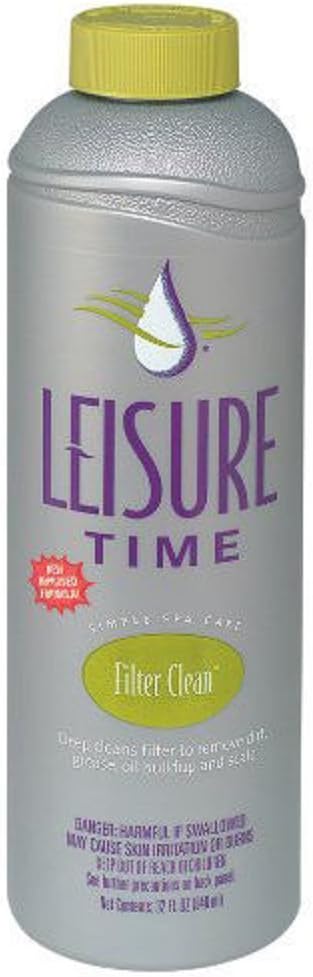
A scum absorber protects your filter, but your filter still needs its own attention, and neglecting it will undo a lot of the good work your absorber is doing. Rinse your filter cartridge with a hose at least once a week, more often if you’ve had guests over. Once a month, give it a deeper soak in a dedicated filter cleaning solution to break down oils that a simple hose rinse can’t fully remove, then rinse thoroughly before putting it back in.
Even with perfect care, filter cartridges don’t last forever. Most need replacement every 12 to 24 months depending on usage, and a filter that’s reached the end of its life will let more oil and debris back into your water no matter how many scum absorbers you have floating around. If you’ve been diligent about your absorber and your water chemistry but scum keeps reappearing faster than it should, an old or damaged filter is one of the first things worth checking.
Complete Hot Tub Water Chemistry Cheat Sheet
Scum forms faster in water that’s out of balance, so keeping these numbers in range does double duty: it protects your equipment and it makes every scum absorber you buy work harder and last longer.
| Parameter | Ideal Range |
|---|---|
| Free Chlorine | 3-5 ppm |
| Bromine | 3-5 ppm |
| pH | 7.2-7.8 |
| Total Alkalinity | 80-120 ppm |
| Calcium Hardness | 150-250 ppm |
| Total Dissolved Solids (TDS) | Below 1,500 ppm, or per manufacturer guidance |
Test your water at least two to three times a week, and always after heavy use. A high pH in particular accelerates the “bathtub ring” effect by making oils bind more readily to your spa’s shell, so if you’re battling scum despite using a quality absorber, checking your pH is one of the first troubleshooting steps we recommend.
Seasonal Strategy: Summer Parties vs. Winter Soaks
Scum control isn’t a set-it-and-forget-it job year-round; your strategy should shift with the seasons. Summer months typically bring heavier bather loads, more guests, and a lot more sunscreen and after-sun lotion, all of which spike your scum production. This is the season to lean on higher-capacity absorbers and replace them more frequently than the label suggests.
Winter brings a different set of challenges. Soaks may be less frequent, but covers stay closed for longer stretches between uses, which traps moisture and creates a more favorable environment for mold and mildew to develop on the cover’s underside. Make a habit of propping the cover open briefly on mild days to let it air out, and don’t assume that fewer soaks means you can neglect your absorber schedule; a sponge that sits in cold, still water for weeks can still develop the same saturation and odor issues as one used constantly.
Common Mistakes That Sabotage Your Scum Absorber
Even a great product underperforms if it’s used incorrectly. Here are the mistakes we see most often:
- Tucking it into the filter compartment: This restricts water flow and limits the absorber’s contact with the surface oils where scum actually forms.
- Ignoring the saturation signs: Waiting until a sponge is visibly falling apart before replacing it means it’s likely been releasing trapped oils back into the water for days.
- Buying one size for a much larger tub: A single small sponge in a six-person swim spa is simply outmatched; match the absorber’s capacity to your water volume and bather load.
- Skipping the initial squeeze: Giving a fresh sponge a gentle underwater squeeze helps it saturate and start working immediately instead of floating inert on the surface for the first hour.
- Storing wet reusable sponges in a sealed bag: A damp sponge tucked away between uses without fully drying is a breeding ground for mildew. Let reusable sponges air dry completely before storing them.
- Treating an absorber as your only water-quality tool: As covered above, an absorber works best alongside balanced chemistry and regular filter care, not as a standalone fix for every water problem.
Which Absorber Fits Your Life? Three Real-World Scenarios
The low-maintenance couple: You and a partner use the spa a few evenings a week, mostly to unwind after work. You don’t want to think about maintenance more than once a month. A single high-capacity absorber like the Zorbie is close to ideal here: drop it in, forget about it for weeks, and replace it when the indicator tells you to.
The busy family: Four people, daily use, and a couple of teenagers who definitely aren’t showering before they jump in. This is a heavier, more constant scum load, and a bulk pack of standard sponges replaced every week or two keeps costs predictable while making sure you’re never working with an overloaded absorber.
The frequent host: Your spa sees six or more guests on a regular basis, often all at once. A large-capacity sponge built for heavy loads earns its keep here, especially if you toss a fresh one in immediately after each gathering rather than waiting for your normal replacement schedule.
When a Scum Absorber Isn’t Enough: Signs You Need to Drain and Refill
Even the best scum absorber can’t compensate for water that has simply reached the end of its useful life. Total dissolved solids build up over time no matter how diligent you are, and once they climb too high, no amount of sanitizer, clarifier, or absorber will keep the water feeling truly clean. Watch for a few telltale signs: a musty or chemical odor that persists even with balanced chemistry, foam that returns within hours of clearing it, scum that reappears almost as fast as you remove it, or a sanitizer that seems to disappear overnight despite normal dosing.
When you notice two or more of these at once, it’s usually time for a full drain, shell wipe-down, filter deep-clean, and refill rather than reaching for another product. Most manufacturers recommend this full reset every three to four months under normal use, sooner if you entertain frequently. Think of your scum absorber as extending the life of your water between these resets, not as a way to avoid them indefinitely.
The Science Behind Oleophilic Materials: How Absorption Actually Works
The word “oleophilic” gets thrown around a lot in scum absorber marketing, but it’s worth understanding what’s actually happening at a material level. Oleophilic literally means “oil-loving,” and it describes a material whose molecular structure has a stronger attraction to oil molecules than to water molecules. Most scum absorbers achieve this with open-cell polyurethane foams or specialized polymer fibers that are manufactured with a naturally low surface energy, similar in principle to the coating on a non-stick pan, except inverted: instead of repelling everything, these materials selectively pull oil-based compounds into their internal pore structure while allowing water to pass through relatively unaffected.
This is also why a genuinely oleophilic absorber outperforms something like a plain kitchen sponge, whose cellulose fibers don’t discriminate between oil and water anywhere near as effectively, and why it outperforms a tennis ball’s felt exterior, which absorbs a little of everything indiscriminately and breaks down quickly as a result. The denser and more uniform the internal pore structure, the more total surface area is available to trap oil molecules, which is the real driver behind how much total oil a given absorber can hold before it’s saturated.
Reading Between the Lines: How to Evaluate Absorption Ratio Claims
You’ll notice that almost every brand in this category advertises some multiple of its own weight in absorption capacity: 15 times, 20 times, even 40 times for some of the more aggressive marketing claims. As a Certified Pool & Spa Operator, my honest take is to treat these numbers as directional rather than literal. They’re typically measured in a lab under ideal, static conditions using pure oil, not the messy real-world mixture of lotion, sunscreen, dead skin, and bather waste your spa actually produces, and manufacturers rarely disclose their exact testing methodology.
That’s precisely why we built our own “Salad Dressing Test” instead of simply repeating manufacturer specs: it lets us compare products against each other under identical, realistic conditions rather than taking any single company’s word for it. When you’re comparing absorbers, weigh advertised ratios far less heavily than independent test results, verified purchase reviews that mention long-term performance, and simple physical cues like material density. A dense, substantial-feeling absorber will almost always outperform a lightweight one, regardless of what number is printed on the packaging.
Proper Disposal and End-of-Life Care for Your Scum Absorber
Once a disposable absorber is fully saturated, it’s holding a meaningful amount of oil and residual spa chemicals, so it shouldn’t just get tossed loose in the trash. Seal it in a small bag before disposing of it to prevent leakage and odor, and never attempt to rinse a fully saturated sponge down a drain or into your yard, since the concentrated oil content can be harmful to plants and isn’t something municipal wastewater systems are designed to handle in that form. Saturated absorbers also aren’t recyclable through standard curbside programs, since the trapped oils contaminate the foam or fiber material.
For reusable sponges, proper end-of-life care starts well before you actually retire one. Always let a washed sponge dry completely between uses rather than storing it damp, since trapped moisture invites mildew and shortens the sponge’s usable life considerably. When a reusable sponge finally stops bouncing back after washing, whether from lost density or a stale odor that won’t rinse out, it’s served its purpose and it’s time to retire it rather than trying to squeeze a few more weeks out of diminished performance.
Storing Your Hot Tub for Winter or Travel: What Happens to Your Scum Absorber?
If you’re closing your spa down for an extended period, whether for winter storage in a colder climate or an extended trip, your scum absorber needs a plan too. Never leave a saturated or partially used disposable absorber floating in water that will sit stagnant for weeks; it will continue to leach oil back into standing water and can develop a strong odor that’s unpleasant to deal with when you reopen the tub. Remove and dispose of any absorber currently in use before draining or closing up the spa.
When you refill and restart your hot tub after a storage period, treat it the same way you would a brand-new fill: rebalance your chemistry first, run the filtration system for a few hours to circulate everything evenly, and then drop in a fresh absorber. Starting with a clean absorber alongside freshly balanced water gives you the best possible foundation and helps you avoid a frustrating scum flare-up in your very first week back in the water.
Eco-Friendly and Natural Alternatives: Do They Work?
If you’re trying to minimize what goes into your spa water, you’ve probably come across suggestions for “natural” scum-fighting alternatives: cheesecloth bundles filled with natural fibers, wool dryer balls repurposed as floaters, or simply skimming the surface with a fine mesh net a few times a day. These approaches can help in a light-duty way, particularly the manual skimming, which physically removes floating film before it has a chance to attach to your shell wall.
That said, none of these fully match the performance of a purpose-built oleophilic absorber. Natural fiber materials like wool or cotton absorb water and oil indiscriminately, which means they saturate faster, hold less total oil relative to their size, and can introduce their own fibers or a musty smell into your water if left in for extended periods. If minimizing waste is your priority, a washable reusable sponge, like the option we ranked above, is a better middle ground: you get genuinely effective oil absorption with a fraction of the long-term waste of disposable products, without sacrificing the performance that comes from a material actually engineered for the job.
Troubleshooting: What to Do When Your Scum Absorber Isn’t Working
If you’ve added an absorber and you’re still seeing a persistent film or ring, work through this quick checklist before assuming the product itself is at fault:
- Check if it’s actually saturated: A sponge that’s been in the water for weeks past its expected lifespan has likely stopped absorbing anything new and may even be releasing oil back into the water. Swap it for a fresh one.
- Confirm it’s free-floating, not tucked in the filter bay: As covered earlier, restricted water flow dramatically reduces an absorber’s effective contact with surface oils.
- Revisit the diagnostic guide above: If what you’re seeing is calcium scale, white water mold, or algae rather than oil-based scum, no absorber will resolve it, since you’re dealing with an entirely different problem that needs its own targeted treatment.
- Reassess your bather load versus your absorber’s capacity: A single standard sponge simply can’t keep up with a hot tub hosting six guests a night. Size up to a higher-capacity option or add a second absorber.
- Test your water chemistry: An absorber can be completely overwhelmed in water with consistently high pH or a depleted sanitizer level, since both conditions accelerate how quickly new scum forms.
- Rule out a low-quality or counterfeit product: As discussed above, quality varies enormously among unbranded marketplace sponges. If a product feels flimsy or degrades within a day or two, it may simply be a poorly made version rather than a fair test of what a scum absorber can do.
Are Scum Absorbers Safe Around Kids and Pets?
Most scum absorbers on the market are made from inert foam or polymer materials that aren’t toxic if a curious kid or pet gets ahold of one, but that doesn’t mean they’re meant to be a chew toy or bath toy. A saturated absorber is holding a fairly concentrated amount of body oils, lotions, and trace spa chemicals, and swallowing a piece of one isn’t something you want to encourage. The fun shapes many brands use, turtles, flowers, little monster faces, are designed to appeal to adults browsing a product listing, not to double as pool toys for children.
If young kids regularly use your spa unsupervised for stretches of time, it’s worth choosing a larger absorber that’s harder to fit in a small mouth, and keeping an eye on it the same way you’d watch any small floating object in the water. For households with dogs that like to swim or drink from the hot tub, the same logic applies: monitor the first few uses of a new absorber to make sure it isn’t treated as a squeaky toy, and remove pieces immediately if you notice any tearing or shredding.
Can a Scum Absorber Get Stuck in the Jets or Pump?
This is one of the main reasons brand and size matter more than they might seem to at first glance. A well-made absorber is dense and holds its shape even when saturated, which keeps it floating safely on the surface rather than getting pulled into an intake. Cheaper, poorly constructed sponges are a different story: as they break down, small torn pieces can get pulled toward jet intakes or the pump’s suction line, where they may cause a temporary clog or, in rarer cases, minor damage to an impeller.
To minimize this risk, avoid letting an absorber sit directly in the path of a strong jet stream, inspect it periodically for tearing, and replace it at the first sign that it’s starting to shed material rather than waiting for full disintegration. This is also a strong argument in favor of sticking with a tested, durable product rather than the cheapest unbranded option you can find, since the handful of dollars you might save aren’t worth a service call to clear a clogged pump.
Frequently Asked Questions (FAQ)
Will a scum absorber help with foamy water?
Yes, it can definitely help! Foam is often caused by the agitation of water that is heavy with oils, lotions, and other surfactants. By removing these underlying causes, a scum absorber can significantly reduce the tendency of your water to foam. It’s a great first step before reaching for a chemical de-foamer.
How do I know when to replace my scum absorber?
For sponges, you’ll know it’s time when they become discolored (usually a dirty yellow or brown) and feel heavy and slimy to the touch. They may also start to sit lower in the water. For the Zorbie, the floating indicator bobble will sink below the surface, telling you it’s full.
Can I use a “Magic Eraser” or regular sponge instead?
No, this is a very bad idea. A Magic Eraser is a micro-abrasive and can scratch the acrylic or vinyl surface of your hot tub. A regular kitchen sponge is not designed for hot, chemically-treated water and will disintegrate, releasing harmful particles that will clog your filter. Always use products specifically designed for spas, just as you’d use a special hot tub vacuum instead of a household one.
Will a scum absorber fix cloudy water?
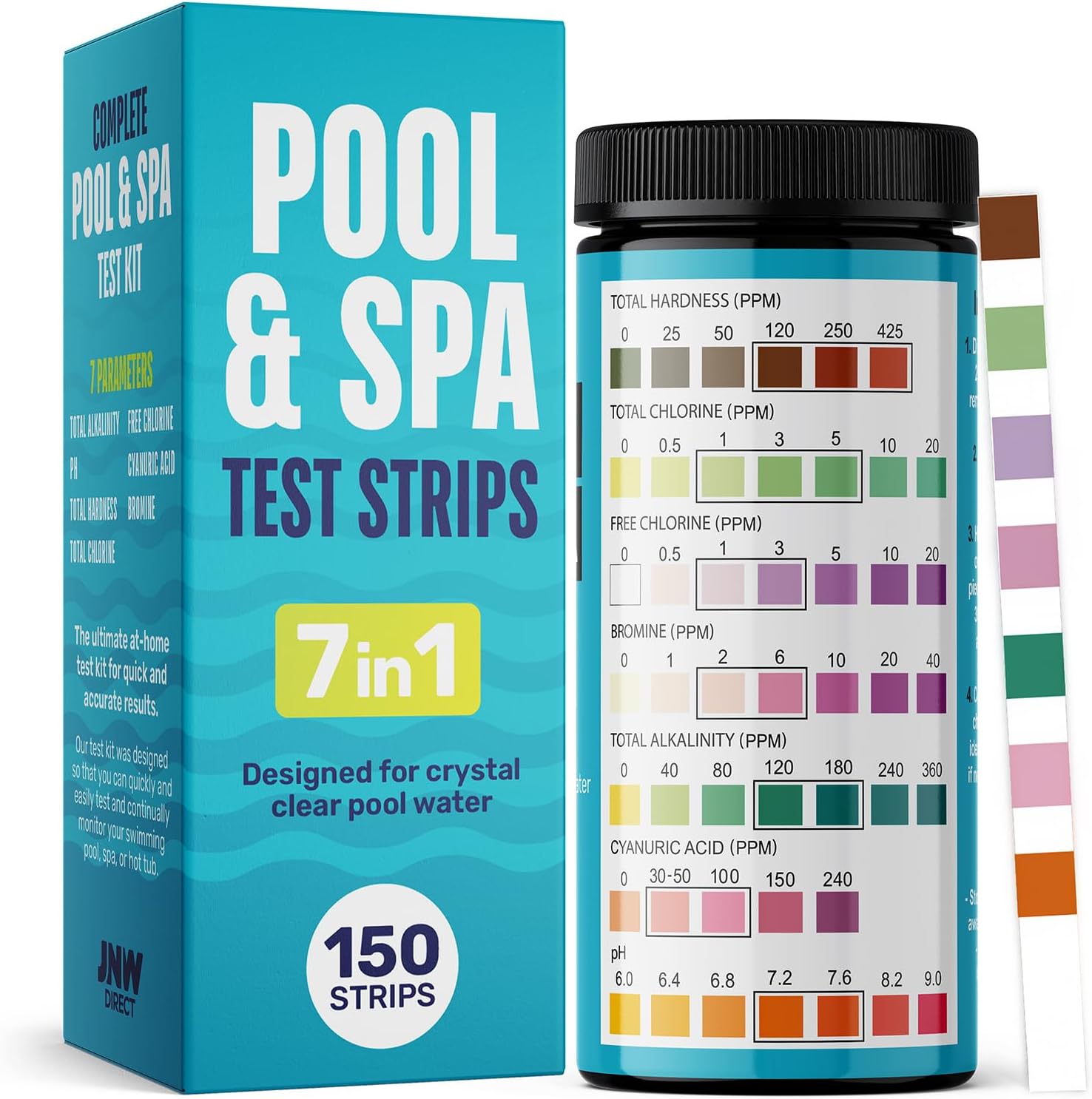
It is one important part of the solution. Cloudy water is often caused by suspended oils and contaminants, which a scum absorber is perfect for removing. However, cloudy water can also be caused by poor filtration or imbalanced water chemistry. Your first step should always be to use a quality digital hot tub water tester to check your sanitizer and pH levels.
What’s the difference between hot tub scum and pool scum?
The underlying causes are nearly identical, body oils, lotions, and cosmetics, but hot tubs tend to develop scum much faster than pools. A hot tub packs a far higher ratio of bathers to water volume than a typical pool, and the elevated temperature encourages oils to release from skin more readily. That combination means a hot tub scum absorber usually needs replacing far more often than the equivalent product would in a backyard pool.
Can I use a tennis ball as a homemade scum absorber?
You’ll see this suggested in plenty of pool forums, and the felt exterior of a tennis ball does absorb some surface oil in a pinch. The problem is durability: tennis ball felt wasn’t designed for hot, chemically treated water, and it tends to break down and shed fibers within days, adding more debris to your tub than it removes. It’s a fine emergency fix if you’re truly out of options, but a purpose-built absorber will outperform it in both effectiveness and lifespan every time.
Do scum absorbers work in saltwater hot tubs?
Yes. A saltwater system still relies on a salt-chlorine generator to produce chlorine, and bathers still introduce the same oils and lotions regardless of how the sanitizer is generated, so an absorber works exactly the same way. The one caveat is that lower-quality foam materials can sometimes degrade a bit faster in water with consistently higher dissolved-salt content, so it’s worth prioritizing a proven, durable option in a saltwater tub.
Why does my scum absorber turn yellow or brown so quickly?
That discoloration is actually a good sign, it means the material is doing exactly what it’s supposed to do by pulling oils and lotions out of your water. The speed at which it happens simply reflects how much oil is in your water at any given time. If a brand-new absorber turns brown within a day or two, it usually means your bather load is high enough that you’ll want to size up to a higher-capacity option or replace it more frequently.
Can I put a scum absorber in my filter compartment instead of letting it float?
We don’t recommend it. Tucking an absorber into the filter bay restricts water flow through the compartment and limits the absorber’s contact with the surface oils where scum actually accumulates. Letting it float freely in the main body of the tub gives it far more opportunity to circulate and do its job.
How many scum absorbers do I need for a large swim spa?
For larger-volume tubs and swim spas, one absorber usually isn’t enough to cover the entire surface area effectively. We recommend distributing two to three absorbers around the perimeter of a swim spa rather than relying on a single oversized product, especially if the spa regularly hosts multiple bathers at once.
Will a scum absorber replace the need to shock my hot tub?
No, the two serve different purposes and work best together. Shocking your spa chemically oxidizes contaminants and restores your sanitizer’s effectiveness, while a scum absorber physically removes surface oils before they ever reach that stage. Skipping shock treatments in favor of an absorber alone will leave your water under-sanitized even if the surface looks clean.
Is it normal for scum to appear right after I’ve drained and refilled with fresh water?
Yes. Fresh water doesn’t stay free of oils for long once people start using the tub again, body oils and lotions begin washing off within minutes of the first soak. Dropping in a fresh scum absorber right after you refill is one of the easiest ways to keep that clean-water feeling going as long as possible.
Can a scum absorber remove an existing scum ring already stuck to the shell wall?
Not directly. A scum absorber is designed to capture oils that are floating or suspended in the water, not residue that has already dried and adhered to your spa’s shell. For an existing ring, you’ll still need to wipe it down with a soft cloth and a spa-safe surface cleaner. Once the shell is clean, a scum absorber does an excellent job of preventing that ring from reforming.
Do unopened scum absorbers expire in storage?
Most don’t have a strict expiration date, but the foam and polymer materials used in these products can slowly degrade over several years, especially if stored somewhere hot or humid. If you buy a bulk pack, keep the unused sponges in their original packaging in a cool, dry place, and they should perform normally even after sitting on a shelf for a season or two.
Is it safe to handle a used scum absorber with bare hands?
Generally yes, but it’s good practice to wash your hands afterward. A saturated absorber holds a concentrated mix of body oils, lotions, and trace pool or spa chemicals, and while it isn’t typically hazardous for brief handling, anyone with sensitive skin may prefer to use disposable gloves when removing and replacing one.
Can I use a scum absorber in a jetted bathtub instead of a hot tub?
Yes, the same oleophilic principle applies in a jetted whirlpool tub. Since bathtubs are typically drained after every use, the ongoing scum buildup problem is far less severe than in a standing hot tub, so most people don’t bother. If you fill a jetted tub and let the water sit for a longer soak or a shared bath, tossing in a small absorber can still help keep the surface film to a minimum.
Does water temperature affect how well a scum absorber works?
Somewhat. Warmer water encourages oils to release from skin more readily, which is part of why hot tubs develop scum faster than cooler pools in the first place. Higher temperatures can also make oils slightly less viscous, which in our testing seemed to help absorbers pull them in a touch faster. The practical takeaway is that a hot tub running at a typical 100-104°F soaking temperature will generally saturate an absorber faster than the same tub used as an unheated cold plunge.
Can I cut a large scum absorber in half to make it last longer?
We don’t recommend it. Cutting into a sponge does expose fresh internal material, but it also compromises the structural integrity that keeps the absorber from shedding pieces as it saturates and softens. You’re better off buying a size that’s correctly matched to your tub and bather load in the first place rather than trying to stretch a single large absorber further than it was designed to go.
What’s the best way to make sure I never run out of scum absorbers?
Buying a bulk multi-pack rather than single units is the simplest fix, since it means you always have a fresh replacement on hand the moment your current one starts to look discolored. If you go with a subscribe-and-save style reorder option through your retailer, set the delivery frequency to match the replacement schedule outlined earlier in this guide so you’re never caught scrambling for a backup mid-week.
Can I use more than one type of scum absorber in the same hot tub at once?
Absolutely, and it’s actually a smart strategy for heavier bather loads. Some owners keep a high-capacity absorber floating as their primary defense while tossing in a small disposable sponge after particularly heavy use, like a party or several guests in a row, then removing it once the extra load has been handled. Mixing formats this way lets you match your scum-fighting capacity to real-time demand instead of relying on a single fixed-capacity product for every scenario, from a quiet solo soak to a full house of guests.
The Final Verdict: The Easiest Way to Cleaner Water
A scum absorber is a small, inexpensive tool that delivers huge results. It is one of the most effective, passive maintenance items you can buy for your hot tub. By constantly working in the background to pull oils and lotions from your water, it protects your filter, keeps your shell clean, and makes your water more pleasant to be in. It’s an absolute must-have for every spa owner.
After our rigorous testing, the Zorbie Hot Tub Water Bobble emerged as the clear winner for overall performance, offering massive capacity and a long life. For those who prefer a sustainable and economical option, the reusable HOLICATED Spa Sponges are a fantastic choice. And for a simple, set-and-forget solution, the bulk pack of Hot Tub Things Sponges provides unbeatable value.
Stop wasting your precious relaxation time scrubbing scum lines. Toss one of these hard-working absorbers into your spa and let it do the dirty work for you. Your filter—and your free time—will thank you.
Just remember that a scum absorber works best as part of a bigger picture: balanced water chemistry, a clean filter, and a sensible pre-soak routine all pull in the same direction. Get those fundamentals right, pick the absorber that matches how you actually use your tub, and that greasy waterline ring will become a distant memory instead of a weekly chore.