THE 5 BEST DIGITAL HOT TUB WATER TESTERS: A GUIDE TO PERFECT WATER
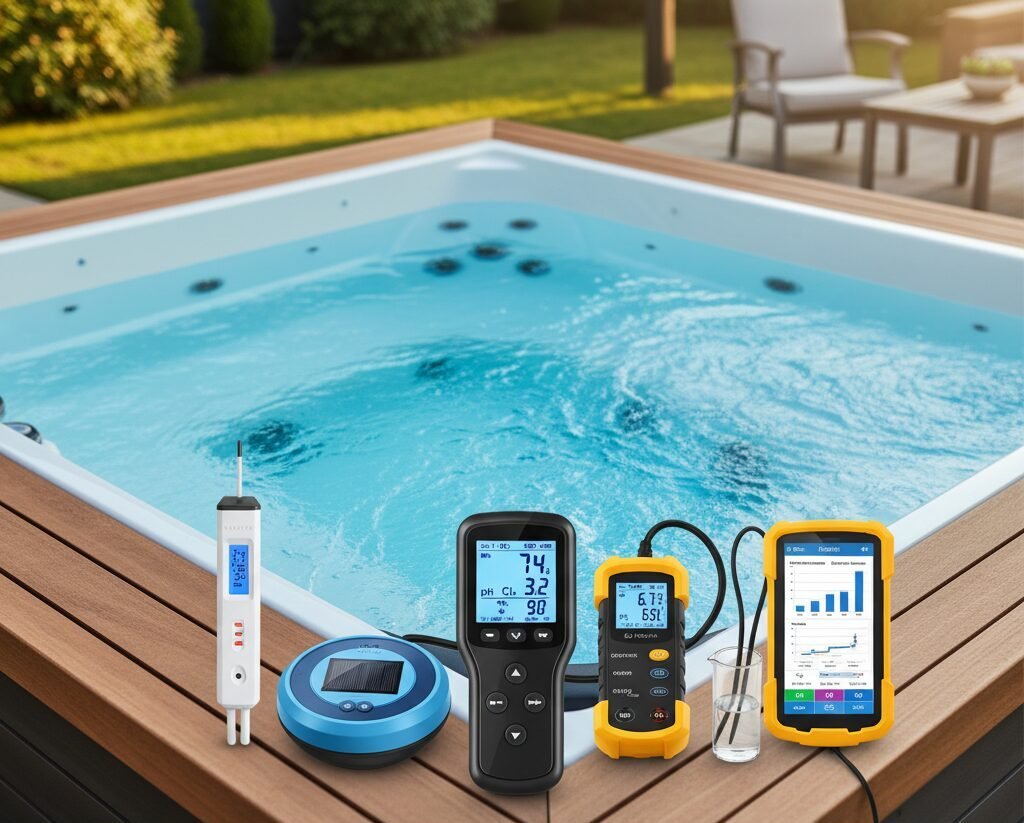
Upgrade your maintenance routine with the pinpoint accuracy of a digital water tester.
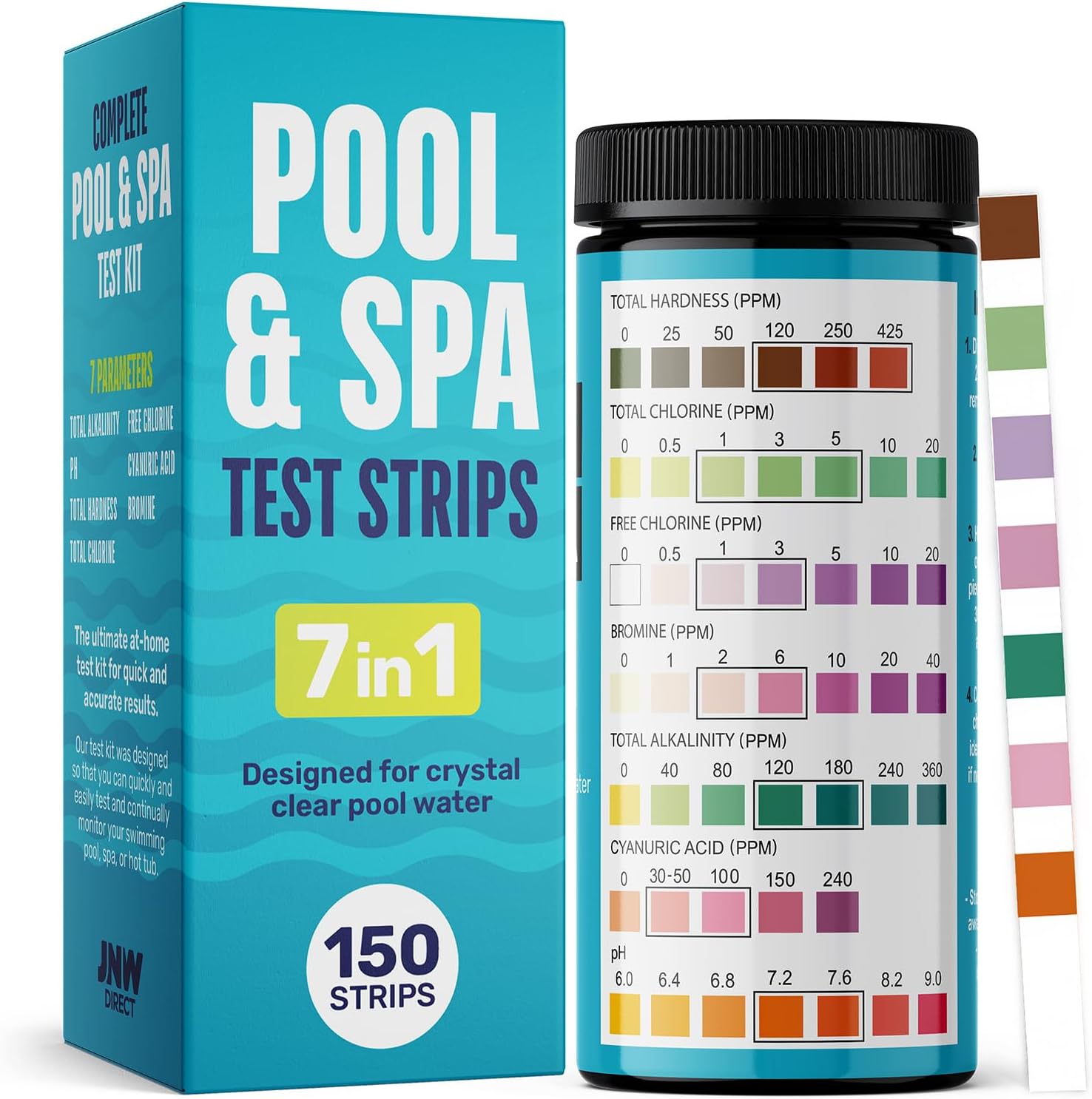
Maintaining the perfect water in your hot tub is a delicate science. Unlike a swimming pool, a spa has a much smaller volume of water, a significantly higher temperature, and a heavy bather load, all of which cause the water chemistry to change rapidly. One day your water is crystal clear; the next, it’s cloudy and uninviting. The key to stopping this frustrating cycle is frequent, *accurate* testing. While traditional test strips are convenient, their subjective color-matching can leave you guessing. This is where a digital hot tub water tester becomes an indispensable tool, transforming your maintenance routine from guesswork to a precise science.
A digital tester replaces your eyes with a scientific instrument, providing a clear, numerical reading that eliminates ambiguity. This precision allows you to add the exact amount of chemicals your water needs—no more, no less. The result? Safer water, less skin and eye irritation, reduced chemical costs, and a longer life for your spa’s expensive components. For any serious hot tub owner, from those with the best inflatable hot tub to those with a high-end acrylic spa, upgrading to digital is a game-changer.
It’s worth pausing on just how differently a hot tub behaves compared to the swimming pool most water-testing advice was originally written for. A typical residential pool holds somewhere between 15,000 and 30,000 gallons of relatively cool water, which dilutes contaminants, chemical additions, and small measurement errors alike into something close to insignificance. A hot tub, by contrast, typically holds just 300 to 500 gallons, kept at a temperature more than 30 degrees warmer than a pool. That combination of a tiny water volume, high heat, and a bather load that’s often proportionally much heavier than a pool’s, means every single testing decision carries far more weight. A pH reading off by even half a point, or a sanitizer level misjudged by a few parts per million, translates into a much larger percentage swing in a spa than it ever would in a full-sized pool. This is the underlying reason digital testing has moved from a “nice to have” upgrade to something many experienced spa owners consider essential.
There’s also a practical, everyday dimension to this upgrade that’s easy to overlook until you’ve actually made the switch. Traditional test strips ask you to make a judgment call under whatever lighting happens to be available, whether that’s the harsh midday sun bouncing off the water’s surface or a dim porch light after an evening soak, and then to translate that judgment into a chemical dosing decision. Digital testers remove that judgment call entirely, replacing it with a number that means the same thing regardless of who is testing, what time of day it is, or how tired you are after a long day. For households where more than one person handles spa maintenance, that consistency alone often eliminates a surprising amount of confusion and repeated, unnecessary chemical dosing.
This is your comprehensive guide to the world of digital hot tub testing. We will demystify the key parameters you need to measure, explore the different types of digital technologies, and provide in-depth, expert reviews of the 5 best digital testers on the market. This guide will give you the confidence to choose the right technology for your needs and finally achieve that perpetually perfect, crystal-clear water you’ve been dreaming of. For a broader look at all testing methods, our guide to the best hot tub water tester is an excellent starting point.
HOT TUB CHEMISTRY 101: WHY IT’S DIFFERENT FROM A POOL
The high temperature of a hot tub (up to 104°F) dramatically accelerates chemical reactions. Sanitizers are consumed faster, pH levels can fluctuate more wildly, and the environment is more hospitable to certain bacteria. This makes regular, accurate testing even more critical. Here’s what you need to be measuring:
- Sanitizer (Chlorine or Bromine): The active disinfectant. The ideal range is 3-5 ppm. High temperatures cause sanitizer to break down quickly, so you must test this frequently.
- pH: The measure of acidity. The ideal range is 7.4 to 7.6. High temps cause pH to rise naturally, so you’ll often be adding “pH decreaser.”
- Total Alkalinity (TA): The buffer for your pH. The ideal range is 80-120 ppm. A stable TA is the secret to a stable pH.
- Calcium Hardness (CH): The amount of dissolved calcium. The ideal range is 150-250 ppm. Low hardness can cause foaming and corrode equipment; high hardness can cause scale buildup on your heater.
- Oxidation-Reduction Potential (ORP): A measure of your water’s actual sanitizing power, expressed in millivolts. The ideal range for a hot tub is 650-750 mV. ORP tells you not just how much sanitizer is present, but how effectively it is working right now, which is why serious owners increasingly track it alongside ppm readings.
- Total Dissolved Solids (TDS): Everything that has dissolved into your water over time—minerals, lotions, sweat, and spent chemical byproducts. Rising TDS is the single biggest reason water starts to look dull and feel “heavy” even when every other number looks perfect.
- Cyanuric Acid (CYA): Rarely relevant for spas using bromine or unstabilized chlorine, but important if you use dichlor or trichlor tablets. Excess CYA can lock up your sanitizer and make it far less effective, even if your ppm reading looks fine.
Because a spa holds so little water compared to a pool—often just 300 to 500 gallons versus 15,000 gallons or more—a testing mistake that would be a rounding error in a pool becomes a significant chemical imbalance in a hot tub. Overshoot your pH adjustment by what seems like a small margin, and you can swing from acidic to scale-forming alkaline in a single dose. This is the central reason digital testing pays for itself so quickly in a spa environment: the smaller the water volume, the more a testing error costs you in wasted chemicals, irritated skin, or a damaged heater element.
WHY GO DIGITAL? THE ACCURACY ADVANTAGE
The core benefit of a digital tester is eliminating the guesswork. When a test strip shows a color somewhere between the blocks for pH 7.2 and 7.8, what do you do? Add a little “pH Up”? A lot? A digital tester tells you the pH is exactly 7.9, allowing you to make a small, precise adjustment. This prevents the “chemical rollercoaster” of over-correcting back and forth, which is a common problem for new owners of popular models from Intex and Coleman.
Independent accuracy testing across the three main methods generally shows a consistent pattern. Basic test strips tend to vary by roughly 10 to 20 percent from a lab-verified sample, simply because human color perception is imprecise and strip pads degrade with age and light exposure. Liquid titration kits tighten that variance to somewhere in the 3 to 8 percent range, since they rely on a drop-counting reaction rather than a visual color match. Digital meters and photometers, by contrast, typically deliver 1 to 3 percent accuracy, depending on the model and how recently it was calibrated. For a hot tub owner managing a small volume of hot, heavily used water, that difference in precision is not a luxury—it is the difference between water that stays balanced for days and water that swings wildly after every adjustment.
UNDERSTANDING THE TECHNOLOGY BEHIND DIGITAL TESTERS
Not all “digital” testers work the same way. Before you choose a device, it helps to understand the four distinct technologies on the market, since each has a different accuracy profile, cost structure, and learning curve.
DIGITAL TEST STRIP READERS
These devices, like the AquaChek TruTest, don’t replace test strips—they replace your eyes. You still dip a chemically treated strip into your water sample, but instead of holding it up to a printed color chart and guessing which block it most closely matches, you insert the strip into a small optical scanner. The reader uses a calibrated light sensor to analyze the strip’s colors against a database of millions of reference shades, then displays a precise numerical result. This approach keeps the cost and simplicity of strips while removing almost all of the subjectivity that makes traditional strip reading unreliable. It’s the easiest on-ramp to digital accuracy for most hot tub owners.
ELECTRONIC PROBE METERS (ION-SELECTIVE ELECTRODES)
Pens like the Apera PH20 use a completely different principle. A glass or polymer electrode is submerged directly in the water sample, where it generates a tiny voltage that varies based on the concentration of hydrogen ions (for pH) or other target ions. That voltage is converted into a digital readout. This is the same core technology used in laboratory-grade pH meters, and it delivers extremely fast, extremely precise single-parameter results. The tradeoff is that the probe is a physical, somewhat delicate sensor that requires periodic calibration against known buffer solutions and correct storage in a moist environment to prevent the tip from drying out.
DIGITAL PHOTOMETERS AND COLORIMETERS
Kits like the LaMotte ColorQ Pro 7 and the Hanna Alkalinity Checker use liquid reagents to trigger a color-change reaction in your water sample, exactly like an old-fashioned liquid titration kit. The critical difference is what happens next: instead of you comparing the resulting color to a printed chart, the sample is placed inside the meter, which shines a calibrated light through it and measures exactly how much of that light is absorbed. This is converted into a precise numerical concentration. Because the device is measuring actual light absorption rather than relying on human perception, this method is widely considered the gold standard for residential water testing, and it’s the same underlying technology used by pool and spa service professionals.
SMART CONNECTED MONITORS
Devices like the Sutro Smart Monitor represent a newer category that combines photometer-level chemistry with automation. A floating or mounted unit automatically draws a water sample, runs it through a cartridge-based reagent system on a schedule you set, and transmits the results to a smartphone app. Some models can even track trends over time, alert you before a problem becomes visible, and calculate exact chemical dosing recommendations based on your specific spa volume. The convenience is unmatched, but it comes with two structural tradeoffs: a higher upfront cost, and an ongoing subscription for replacement reagent cartridges.
DIGITAL TESTERS VS. TEST STRIPS VS. LIQUID TITRATION KITS
If you’re trying to decide whether to upgrade at all, it helps to see all three approaches side by side. Each has a legitimate place in a hot tub owner’s routine, and many experienced owners actually use more than one method for different purposes.
| Testing Method | Typical Accuracy | Cost Range | Time Per Test | Best For |
|---|---|---|---|---|
| Traditional Test Strips | ±10-20% variance | $8-$15 per bottle | 15-30 seconds | Fast daily sanity checks |
| Digital Strip Readers | ±3-6% variance | $40-$70 device + strips | 30-60 seconds | Frequent, beginner-friendly testing |
| Liquid Titration Kits | ±3-8% variance | $25-$60 | 3-5 minutes | Careful manual balancing |
| Digital Photometers | ±1-3% variance | $50-$300+ | 2-4 minutes | Full-panel precision, multi-spa owners |
| Electronic Probe Pens | ±0.1 pH unit | $25-$80 | 10-20 seconds | Single-parameter precision (pH) |
| Smart Connected Monitors | ±1-3% variance | $150-$400 + subscription | Automatic | Hands-off, data-driven maintenance |
Most experienced hot tub owners eventually land on a hybrid approach: a fast digital method for frequent checks, and a more thorough, higher-precision method for a weekly deep-dive. That’s exactly the strategy we outline later in this guide.
HOW WE EVALUATED THESE DIGITAL TESTERS
Choosing five recommendations from a crowded and fast-growing category required a consistent set of evaluation criteria, applied the same way across every device we considered. Rather than simply ranking products by price or popularity, we weighed each one against the specific demands of hot tub water, which behaves quite differently from a swimming pool’s much larger, cooler, and more slowly changing volume.
ACCURACY AND REPEATABILITY
The first and most heavily weighted factor was how consistently a device produced the same result from the same water sample tested multiple times. A tester that’s accurate once but drifts on a second or third reading isn’t trustworthy for real-world use, so we prioritized technologies—photometers, calibrated probes, and optical strip readers—known for strong repeatability over methods that introduce more variability, such as unaided visual color matching.
RELEVANCE TO HOT TUB CHEMISTRY SPECIFICALLY
Not every water testing device sold for pools or aquariums translates well to a hot tub’s higher temperature, smaller volume, and heavier bather load. We gave preference to devices either purpose-built for spa use or clearly capable of delivering spa-relevant accuracy, even when, as with the Hanna Alkalinity Checker, the device was originally designed for a different application.
EASE OF USE FOR NON-PROFESSIONALS
A device that delivers laboratory-grade accuracy is only useful if an ordinary homeowner can operate it correctly and consistently. We considered how much setup, calibration, and technique each device demands, and how forgiving it is of small user errors, since a tool that’s technically more accurate but practically harder to use correctly often produces worse real-world results than a simpler alternative.
COST RELATIVE TO VALUE DELIVERED
Price alone tells you very little about whether a device is a good investment. We looked at the total cost of ownership, including any proprietary strips, reagents, or subscription fees required for ongoing use, and weighed that against how much accuracy improvement and time savings the device delivers compared to the testing method a typical owner is upgrading from.
DURABILITY AND LONG-TERM RELIABILITY
Finally, we considered how well each device holds up to the realities of poolside and spa-side use—splashes, humidity, temperature swings, and occasional drops—along with how available replacement parts, reagents, and probes are likely to be over the device’s expected lifespan. A tester that performs beautifully out of the box but becomes difficult to maintain after a year isn’t a good long-term investment, regardless of its initial accuracy.
THE 5 BEST DIGITAL HOT TUB WATER TESTERS
With those five criteria in mind, we’ve analyzed the market for accuracy, ease of use, and overall value to bring you the best digital testing solutions for the unique demands of a hot tub environment.
AQUACHEK TRUTEST DIGITAL TEST STRIP READER
Best for Convenience & Eliminating Guesswork
WHY IT’S #1
For the vast majority of hot tub owners, the AquaChek TruTest is the perfect upgrade from traditional test strips. It offers the ideal balance of convenience, affordability, and accuracy. The process is simple: dip a proprietary AquaChek test strip, insert it into the reader, and get a clear numerical reading for Free Chlorine/Bromine, pH, and Total Alkalinity—the three parameters you need to check most often. It completely eliminates the frustrating and often inaccurate task of matching colors by eye. This device makes it easy to perform quick, confident checks every other day, which is the key to stable water chemistry. For any owner of a 4-person inflatable hot tub or a larger acrylic spa, this is the most user-friendly entry into the world of digital testing.
REAL-WORLD PERFORMANCE
In day-to-day use, the appeal of this device is speed combined with confidence. Dip, insert, and within about 15 seconds the screen displays three clean numbers instead of three ambiguous colors. Because the optical scanner reads the strip against a library of reference shades rather than relying on ambient lighting the way your eyes would, results stay consistent whether you’re testing under bright patio lighting or in the dim glow of an evening soak. Owners who previously struggled to tell a “just fine” pH from a “slightly high” one on a paper chart consistently report that the transition to a numerical reading removes a surprising amount of everyday second-guessing from spa care.
WHO SHOULD BUY THIS
This is the right choice for anyone who wants a meaningful accuracy upgrade without a steep learning curve or a large upfront investment. It’s particularly well suited to households that test two to three times per week, families sharing spa duties who want a reading everyone can interpret the same way, and owners who found that print color charts never quite matched what they saw in real light. If you also want lab-level readings for the parameters this device doesn’t cover, such as calcium hardness, pairing it with an inexpensive standalone kit for occasional full-panel checks (see our weekly routine below) rounds out the picture nicely.
CALIBRATION AND CARE
Unlike probe-based meters, this reader requires no user calibration, since the internal optics are factory-set to read the AquaChek strip’s specific dye chemistry. The only maintenance is keeping the optical window clean and dry between uses and storing spare strips in their sealed foil pouch away from humidity, since strips absorb moisture from the air and will produce unreliable results once exposed for too long.
- Type: Digital Test Strip Reader
- Tests For: Free Chlorine/Bromine, pH, Total Alkalinity
- Method: Digital Analysis of Test Strip
- Typical Accuracy: Reads from a library of over 16 million reference colors
- Test Time: Approximately 15-20 seconds
PROS
- Combines the speed of strips with digital results
- Eliminates all subjective color-matching
- Very easy to use, even for beginners
- Affordable and widely available
CONS
- Requires proprietary AquaChek test strips to function
- Does not test for Calcium Hardness
APERA INSTRUMENTS AI209 PH20 PH POCKET TESTER
Best for Pinpoint pH Accuracy
WHY IT’S A TOP PICK
In a hot tub, pH is the most volatile and critical parameter to control. The Apera Instruments PH20 is a professional-grade digital pH pen that gives you instant, lab-quality readings. For hot tub owners who are constantly battling fluctuating pH levels, this tool is a revelation. It provides a reading accurate to 0.1 pH, allowing you to make tiny, precise adjustments. It’s far more accurate than any test strip and faster than a liquid kit. While it only measures pH, mastering this one parameter is half the battle in water chemistry. This pen, paired with simple test strips for sanitizer and alkalinity, creates a powerful and affordable testing combination. Regular calibration is required, but the kit comes with everything you need.
REAL-WORLD PERFORMANCE
The single biggest advantage of a probe-based pH pen shows up during troubleshooting. When your water suddenly clouds up or sanitizer stops working as expected, pH is almost always the first parameter to check, and a strip’s color-block resolution simply isn’t fine enough to tell you whether you’re at 7.6 or 7.9. This pen resolves that ambiguity instantly, and because it’s an electronic reading rather than a color comparison, two different people testing the same water sample will always get the exact same number—something that isn’t guaranteed with strips or even liquid titration.
WHO SHOULD BUY THIS
This device is best suited to owners who have struggled with pH swings that seem to defy explanation, anyone using a spa with sensitive equipment where a pH mistake is costly (such as a saltwater or mineral system), and hobbyists who enjoy dialing in their water with genuine precision rather than approximate ranges. If you only want a single number and don’t need a full panel, this is the most cost-effective way to get laboratory-grade pH data at home.
CALIBRATION AND CARE
Because it uses a glass or polymer sensing electrode, this pen needs to be calibrated against pH 4.0, 7.0, and 10.0 buffer solutions on a regular schedule—typically every one to two weeks with frequent use, or immediately if readings start to seem inconsistent with other testing methods. Between uses, the probe tip must stay moist in its storage solution or a cap filled with electrode storage fluid; allowing the tip to dry out is the single most common cause of a probe pen failing prematurely, and it’s not covered under most warranties.
- Type: Digital Probe / Pen
- Tests For: pH, Temperature
- Method: Direct Electronic Probe Reading
- Typical Accuracy: ±0.1 pH unit
- Test Time: 10-20 seconds after calibration
PROS
- Instant and extremely accurate pH readings
- Large, easy-to-read display
- High-quality, replaceable probe
- Comes with a complete calibration and storage kit
CONS
- Requires regular calibration to maintain accuracy
- Only tests for pH
- Probe must be stored properly in solution
LAMOTTE COLORQ PRO 7
The Ultimate Pro-Grade Digital Kit
WHY IT’S A TOP PICK
For the serious hot tub owner who demands the absolute best in accuracy across all parameters, the LaMotte ColorQ Pro 7 is the answer. This is a professional-grade photometer kit that uses liquid reagents but removes the human error of color-matching. You add the reagents to your water sample, and the digital meter reads the resulting color with a scientific light sensor, giving you a precise numerical result. It is the most accurate way a homeowner can test their water. It tests for Free Chlorine, Total Chlorine, Bromine, pH, Alkalinity, and Calcium Hardness. It’s a significant investment, but it’s the same technology used by professional service technicians. It will empower you to manage your water with unparalleled precision, which is especially important if you are trying to use your spa in cold weather, a topic we cover in our guide to the best inflatable hot tub for winter.
REAL-WORLD PERFORMANCE
Because this unit measures actual light absorption through your sample rather than approximating a color match, its readings are reproducible in a way that no strip or visual titration test can match. Two samples from the same water, tested minutes apart, will return essentially identical numbers—a level of consistency that matters enormously when you’re trying to track whether a chemical dose actually worked or whether your alkalinity is truly drifting over the course of a season. Owners managing more than one spa, or those who also maintain a swimming pool, find that having one unit capable of testing both environments to a professional standard justifies the higher price tag.
WHO SHOULD BUY THIS
This kit is the right call for owners who have been burned by inconsistent results from cheaper methods, anyone managing multiple spas or a spa-and-pool combination, and hobbyists who simply want the most accurate home water testing money can buy. It’s overkill for someone who just wants a quick twice-weekly sanitizer check, but indispensable for anyone troubleshooting a persistent water quality problem or trying to minimize chemical costs through precision dosing.
CALIBRATION AND CARE
The photometer itself is factory calibrated and typically only needs occasional verification against a standard solution, but each reagent test requires fresh, unexpired chemicals and a clean, scratch-free sample cuvette, since even minor scratches or fingerprints on the glass can skew the light reading. Reagents should be stored in a cool, dark place, and it’s worth checking expiration dates each season, since degraded reagents are the most common cause of inaccurate readings from an otherwise excellent instrument.
- Type: Digital Photometer
- Tests For: FC, TC, Bromine, pH, TA, CH
- Method: Liquid Reagents with Digital Reading
- Typical Accuracy: ±1-3% of true value
- Test Time: Approximately 2-4 minutes for a full panel
PROS
- The most accurate residential testing method
- Tests for all critical hot tub parameters
- Clear, unambiguous digital results
- Rugged case for organized storage
CONS
- Very high initial purchase price
- Testing process is more time-consuming
HANNA INSTRUMENTS MARINE ALKALINITY CHECKER
Best for Precision Alkalinity Testing
WHY IT’S A TOP PICK
This is a secret weapon for hot tub owners. While marketed for saltwater aquariums, the Hanna Alkalinity Checker is a phenomenal tool for spa maintenance. Total Alkalinity (TA) is the bedrock of stable pH, and this handheld colorimeter measures it with incredible precision. It’s far more accurate than a test strip and much faster and easier than a traditional liquid titration test. If you find your pH is constantly crashing or spiking, it’s almost always an alkalinity problem. This device gives you the precise data you need to lock in your TA and achieve rock-solid pH stability. For the owner who has been frustrated by pH swings, this specialty tester is a problem-solver.
REAL-WORLD PERFORMANCE
Total alkalinity is often the most neglected parameter in home spa care, largely because traditional test strips only offer a handful of coarse color blocks for it and liquid titration requires carefully counting drops while watching for a subtle color shift. This checker removes both of those pain points—press one button, and a few minutes later you have a precise ppm reading with none of the counting or squinting. Because alkalinity moves slowly compared to pH or sanitizer, testing it once a week with this device is usually enough to catch a drift before it turns into a full-blown pH problem.
WHO SHOULD BUY THIS
This is an ideal secondary device for owners who already have a fast method for sanitizer and pH but keep getting surprised by alkalinity-driven pH swings. It’s also a smart choice for anyone who finds counting titration drops tedious or error-prone, since a single misread drop count can throw off an entire alkalinity result.
CALIBRATION AND CARE
Like the LaMotte kit, this device relies on single-use reagent packets rather than a probe, so there’s no traditional buffer-solution calibration involved. The main care consideration is keeping the sample cuvette clean and scratch-free and storing unused reagent packets away from heat and direct sunlight, since both can shorten their shelf life and lead to inconsistent color development.
- Type: Digital Colorimeter (Single Parameter)
- Tests For: Total Alkalinity (dKH or ppm)
- Method: Liquid Reagent with Digital Reading
- Typical Accuracy: Laboratory-grade precision for TA
- Test Time: Approximately 3 minutes
PROS
- Lab-grade accuracy for a critical parameter
- Much easier than a multi-step titration test
- Compact, one-button operation
- The key to solving pH instability
CONS
- Only tests for a single parameter
- Requires proprietary reagent packets
SUTRO SMART MONITOR
The Future: Automated & Hands-Free Testing
WHY IT’S A TOP PICK
The Sutro Smart Monitor represents the next evolution in water care. This isn’t just a tester; it’s a floating robotic lab that automatically tests your spa’s water three times a day. It uses a sophisticated, lab-grade cartridge-based system to accurately measure Free Chlorine/Bromine, pH, and Alkalinity. The results are sent directly to an app on your phone, which then provides precise, easy-to-follow chemical dosing recommendations. It effectively eliminates the need for manual testing. While it comes with a high upfront cost and a monthly subscription for the test cartridges, for the tech-savvy, busy hot tub owner who wants the ultimate in convenience and data-driven advice, the Sutro is a revolutionary solution.
REAL-WORLD PERFORMANCE
The appeal here isn’t just automation for its own sake—it’s the trend data that comes with it. Because the monitor tests multiple times a day rather than whenever you happen to remember, the companion app can show you exactly how quickly sanitizer depletes after a soak, how pH drifts over the course of a week, and whether a recent chemical addition actually moved the needle in the direction you expected. That kind of longitudinal picture is almost impossible to build manually, and it turns spa maintenance from a series of isolated snapshots into a continuous, trackable process.
WHO SHOULD BUY THIS
This device suits busy households who want confidence that their water is being watched even when nobody has time to test it, tech-oriented owners who enjoy having historical data and trend graphs, and anyone managing a spa remotely, such as a vacation property, where in-person testing isn’t always practical. It’s a poor fit for anyone trying to minimize ongoing costs, since the subscription-based cartridge system adds a recurring expense on top of the initial purchase.
CALIBRATION AND CARE
Because the entire testing process is automated inside a sealed cartridge system, there is no manual calibration for the end user to perform. The main maintenance task is simply replacing the reagent cartridge on the schedule recommended by the app and keeping the flotation unit’s intake free of debris, filter fibers, or built-up biofilm, which can otherwise interfere with consistent sample draws.
- Type: Automated Floating Monitor
- Tests For: Free Chlorine/Bromine, pH, Alkalinity, Temperature
- Method: Automated Reagent Cartridge System
- Typical Accuracy: Photometer-grade, ±1-3%
- Testing Frequency: Up to 3 automatic tests per day
PROS
- Completely automates the testing process
- Provides 3 professional-grade tests per day
- App gives precise chemical dosing instructions
- The ultimate “set it and forget it” water care
CONS
- High upfront cost and requires a monthly subscription
- Cartridges need to be replaced monthly
- Does not test for Calcium Hardness
BEYOND THE TESTER: A STRATEGY FOR PERFECT WATER
Your new digital tester is a powerful diagnostic tool. Now you need a system to use that data effectively. A consistent routine is the key to minimizing chemical use and maximizing your enjoyment.
CREATING YOUR TESTING ROUTINE
A proactive approach is always better than a reactive one. Don’t wait for the water to get cloudy!
- Quick Check (Every 2-3 Days): Use a quick method like the AquaChek TruTest to check your sanitizer and pH. These are the levels that change the fastest. Make small adjustments as needed.
- Full Panel (Once a Week): Use a comprehensive method like the LaMotte kit to get a precise reading on all parameters, including Alkalinity and Calcium Hardness. This is your weekly “true-up” to ensure the foundations of your water chemistry are solid.
- After Heavy Use: If you have a party and several people use the tub, it’s always a good idea to test the sanitizer and pH levels afterward, as the bather load will have a significant impact on them.
This routine, combined with physical cleaning using the best hot tub vacuums, forms the core of a simple but effective maintenance plan.
HOW TO GET LAB-ACCURATE READINGS EVERY TIME
Even the best digital tester on the market will give you misleading numbers if the sample itself is flawed. The device is only ever as good as the water you feed it, and there are several common sampling mistakes that quietly undermine accuracy before the meter ever gets involved.
SAMPLE FROM THE RIGHT LOCATION
Always draw your test sample from elbow depth, roughly 12 to 18 inches below the surface, and well away from any jets, the skimmer, or a return fitting. Water near a jet is aerated and turbulent, which can artificially lower a sanitizer or pH reading, while water sitting stagnant right at the surface can show elevated pH due to off-gassing. A sample taken mid-depth, away from moving water, gives you the most representative picture of your spa’s actual chemistry.
LET HOT WATER COOL BEFORE TESTING
Because nearly every test reaction—whether a color-changing reagent, a dye on a test strip, or an electronic probe reading—is temperature-sensitive, testing water straight out of a 102°F spa can distort your results, especially for pH and alkalinity. Draw your sample into a small, clean cup or the device’s sample chamber and let it sit for several minutes until it reaches roughly room temperature before testing. This single habit eliminates one of the most common sources of “my tester gave me a weird reading” complaints.
WAIT AFTER ADDING CHEMICALS
Freshly added chemicals need time to fully dissolve and circulate before they’ll produce an accurate reading. As a general rule, run your jets for at least 15 to 20 minutes after adding any chemical, then wait an additional 15 minutes before testing. Testing too soon after a dose will almost always show a reading that doesn’t reflect where your water will actually settle once everything has mixed and reacted.
USE CLEAN, DRY HANDS AND EQUIPMENT
Lotion, sunscreen, and natural skin oils on your fingers can contaminate a test strip or sample cup enough to skew a reading, particularly for sanitizer tests. Rinse your hands and any reusable sample containers with clean water before testing, and avoid touching the reactive pad of a test strip directly.
KEEP A LOG
Whether you use a simple notebook or a spreadsheet, recording every reading alongside the date, time, and any chemicals added turns individual test results into a trend you can actually act on. A single reading tells you where you are right now; a logged history tells you whether your water is stable, drifting, or about to become a problem, which is exactly the kind of insight that separates reactive maintenance from proactive maintenance.
COMMON TESTING MISTAKES THAT SKEW YOUR RESULTS
Beyond sampling technique, there are a handful of recurring errors that even experienced owners make. Recognizing them is often the fastest way to solve a “chemistry that won’t behave” problem.
- Using expired reagents or strips: Test strips and liquid reagents both degrade over time, especially once exposed to humidity, heat, or direct sunlight. An expired or improperly stored strip can produce a reading that looks plausible but is meaningfully wrong. Always check the expiration date and store supplies in a cool, dry, dark location.
- Skipping calibration on probe-based devices: A pH pen or ORP probe that hasn’t been calibrated in weeks can drift significantly from true readings while still displaying a confident-looking number. Confident and correct are not the same thing—build a calibration reminder into your routine.
- Testing immediately after a shock treatment: A chlorine or non-chlorine shock treatment can temporarily overwhelm a sanitizer test, producing an artificially high or erratic reading. Wait until the shock has had time to fully react, typically several hours, before trusting a sanitizer test result.
- Ignoring the reagent-to-sample ratio: Photometer and colorimeter kits are calibrated for an exact sample volume and drop or reagent count. Eyeballing these amounts instead of measuring precisely is one of the most common reasons a “digital” test still produces an inconsistent result—the electronics can only be as accurate as the sample you feed them.
- Not accounting for cloudy or discolored water: Water that already has significant cloudiness, metal staining, or biofilm can interfere with the optical reading in a photometer or digital strip reader, since these devices rely on light passing through or reflecting off a clear sample. If your water looks visibly off, treat the underlying issue first, then retest once it clears.
ORP EXPLAINED: THE METRIC MOST OWNERS OVERLOOK
Free chlorine and bromine readings in parts per million tell you how much sanitizer is present, but they don’t fully capture how effectively that sanitizer is working. Oxidation-Reduction Potential, or ORP, measured in millivolts, is a more direct indicator of your water’s actual sanitizing strength at any given moment. Two samples with an identical ppm reading can have meaningfully different ORP values depending on pH, temperature, and the presence of contaminants like body oils or sunscreen residue that consume sanitizing power without showing up on a standard ppm test.
For a hot tub, the generally accepted target range is 650 to 750 millivolts. Readings below that range suggest your sanitizer, even if present in adequate ppm, isn’t actually killing pathogens effectively—often because pH has drifted high, or because organic contaminants are consuming sanitizing capacity faster than the ppm number suggests. Readings significantly above that range can indicate over-sanitization, which increases the risk of skin and eye irritation. Some higher-end digital photometers and smart monitors include ORP as a measured parameter, and for owners who have struggled with water that “should be fine on paper” but still smells off or causes irritation, adding ORP to your testing routine is often the missing piece of the puzzle.
TDS, DRAIN-AND-REFILL SCHEDULES, AND WATER LIFESPAN
Total Dissolved Solids is one of the least glamorous parameters in spa care, but it’s also one of the most important long-term indicators of when your water has simply run its course. Every time you add chemicals, every time a bather enters the water, and every time water evaporates and gets topped off with fresh fill water, dissolved solids accumulate. Unlike sanitizer or pH, TDS cannot be corrected with a chemical addition—the only fix is draining and refilling the spa.
A dedicated digital TDS meter is inexpensive and gives you an objective number to track over time. Most manufacturers recommend planning a drain and refill once your TDS climbs roughly 1,500 ppm above your starting fill water level, though spas with heavier bather loads or frequent chemical dosing may need it sooner. Practically speaking, this usually works out to a full drain and refill every three to four months for a spa in regular use, and potentially longer for a lightly used unit. Watching your TDS trend rather than testing it once and forgetting about it is the best way to know exactly when it’s time, rather than guessing based on how the water looks or smells.
It’s worth noting that TDS is a cumulative, one-way metric—it will only ever climb between drain-and-refill cycles. This makes it one of the easiest parameters to build into a monthly log, since you’re really just watching a single number trend upward until it crosses your refill threshold.
DIGITAL TESTING FOR SALTWATER AND MINERAL SPA SYSTEMS
Salt and mineral sanitizing systems have become increasingly popular for hot tub owners who want to reduce the harsh chemical smell and skin irritation associated with traditional chlorine or bromine dosing. These systems still rely on a generated or supplemented sanitizer, but the testing considerations are slightly different, and a digital tester remains just as valuable, if not more so.
A salt cell generates chlorine electrolytically from dissolved salt in the water, meaning the actual sanitizer you need to monitor is still free chlorine, exactly as it would be in a traditionally chlorinated spa. What changes is that salt level itself becomes a parameter worth tracking, since too little salt starves the cell’s chlorine output, while too much can accelerate corrosion of metal spa components over time. Many owners pair a standard digital sanitizer and pH tester with a separate, inexpensive salt level meter to keep both halves of the equation in view. Mineral systems, which typically use a cartridge containing silver and copper ions alongside a reduced dose of chlorine or bromine, still require the same core sanitizer and pH monitoring as any other spa—the minerals assist sanitization but don’t replace the need for an active, measurable sanitizer residual.
CALIBRATION, STORAGE, AND EXTENDING THE LIFE OF YOUR TESTER
A digital tester is a precision instrument, and like any precision instrument, it needs a bit of routine care to keep delivering accurate results year after year.
CALIBRATION SCHEDULES
Any device with an electronic probe—most notably pH and ORP pens—should be calibrated against fresh buffer solutions on a regular basis. A good rule of thumb is every one to two weeks with frequent use, immediately before any particularly important test (such as diagnosing a persistent problem), and any time a reading seems inconsistent with another testing method. Photometers and colorimeters generally hold their factory calibration much longer, since they aren’t relying on a physical sensor that degrades with exposure, but it’s still worth verifying against a known standard solution once or twice a season.
PROPER STORAGE
Probe-based devices must never be allowed to dry out; store them with the protective cap filled with storage solution, or at minimum a few drops of tap water, whenever the device isn’t in use. Reagent-based kits should be kept in their case, away from direct sunlight and temperature extremes, since heat accelerates reagent degradation. Digital strip readers should be kept dry and free of dust, with their optical scanning window protected from scratches, which can otherwise interfere with accurate strip reading.
BATTERY CARE AND ELECTRONICS LONGEVITY
Most digital testers run on standard replaceable batteries rather than a rechargeable cell, which is generally preferable for a device that may sit unused between test sessions, since it avoids the battery degradation that comes with a lithium cell trickle-discharging over months of storage. Removing batteries during long off-season storage, particularly if you close your spa for winter, will prevent corrosion from a leaking battery and extend the useful life of the device considerably.
WARRANTY CONSIDERATIONS
Because probes and optical sensors are the most failure-prone components in any digital tester, pay attention to whether a manufacturer’s warranty covers the sensor itself or only the electronic housing. Many manufacturers treat probes and reagent-reliant components as consumables with a shorter coverage window than the base unit, so it’s worth checking this detail before you buy if you plan to use the device heavily.
CHOOSING THE RIGHT DIGITAL TESTER FOR YOUR BUDGET AND USAGE
With several genuinely different technologies on the market, the “best” digital tester really depends on how you use your spa and what you’re trying to solve. Here’s a simple way to think through the decision.
IF YOU WANT THE EASIEST POSSIBLE UPGRADE FROM STRIPS
Choose a digital strip reader. You keep the familiar dip-and-read workflow you already know, but you replace the subjective color chart with an objective number. This is the lowest-friction path to meaningfully better accuracy, and it’s the right starting point for the majority of hot tub owners.
IF YOU’RE CHASING A SPECIFIC, HARD-TO-CONTROL PARAMETER
Choose a single-parameter probe or colorimeter, such as a dedicated pH pen or alkalinity checker. These specialty tools cost less than a full multiparameter photometer while delivering laboratory-level precision on exactly the parameter that’s been giving you trouble.
IF YOU WANT THE MOST ACCURATE POSSIBLE RESULTS ACROSS EVERY PARAMETER
Choose a digital photometer. It costs more and takes a few extra minutes per test, but it’s the closest a homeowner can get to the same equipment a professional pool and spa technician uses in the field.
IF YOUR PRIORITY IS CONVENIENCE OVER HANDS-ON INVOLVEMENT
Choose a smart connected monitor. You’ll pay more upfront and take on an ongoing subscription, but you’ll gain automatic testing, historical trend data, and dosing guidance without lifting a finger, which is worth the premium for busy households or vacation properties.
IF YOU MANAGE MORE THAN ONE SPA OR A SPA AND POOL TOGETHER
Choose a versatile photometer capable of testing both environments to a professional standard. The upfront cost is easily justified once you’re no longer buying separate testing supplies for each body of water.
FREQUENTLY ASKED QUESTIONS (FAQ)
ARE DIGITAL HOT TUB TESTERS ACCURATE IN HOT WATER?
This is an excellent question. Most chemical reactions are temperature-dependent. That’s why you should always take your water sample in a small, separate container and allow it to cool for a few minutes to room temperature before performing the test. Testing water that is still 104°F can lead to inaccurate readings, especially for pH. All reputable digital testers are calibrated for use at standard room temperature.
WHAT IS TDS AND DO I NEED A DIGITAL TESTER FOR IT?
TDS stands for Total Dissolved Solids. It’s a measure of everything dissolved in your water—minerals, salts, lotions, chemical residue, etc. Over time, TDS builds up and can make your water look dull and feel “heavy,” and it makes balancing chemicals more difficult. A dedicated digital TDS meter is an inexpensive and useful tool. When your TDS level gets too high (typically above 1500 ppm over your starting tap water level), it’s a clear sign that it’s time to drain and refill your hot tub.
CAN I USE A DIGITAL POOL TESTER FOR MY HOT TUB?
Yes, in most cases, you can. Testers like the LaMotte ColorQ Pro 7 are designed for both pools and spas. The key difference in testing is the ideal ranges for your chemical levels (e.g., hot tubs require a slightly higher sanitizer level). The testing devices and reagents are the same. Just be sure to compare your digital results to the recommended ranges specifically for hot tubs, not pools.
HOW OFTEN SHOULD I CALIBRATE A DIGITAL PH OR ORP PROBE?
For a spa tested a few times a week, calibrating every one to two weeks is a reasonable baseline, though heavy users or anyone running a commercial or shared spa should calibrate more frequently. The clearest sign that calibration is overdue is a reading that doesn’t match what you’d expect based on how the water looks, smells, or behaves, or one that disagrees noticeably with a second testing method like a strip or liquid kit.
WHAT IS ORP AND DO I REALLY NEED TO TEST FOR IT?
ORP, or Oxidation-Reduction Potential, measures how effectively your sanitizer is actually working right now, rather than simply how much of it is present. Most casual hot tub owners can get by without tracking it, relying instead on standard sanitizer ppm and pH readings. However, if you’ve ever had water that tested “fine” on paper but still smelled off or caused irritation, ORP is often the parameter that explains why, and it’s worth adding to your routine with a photometer or smart monitor capable of measuring it.
CAN DIGITAL TESTERS BE USED ON SALTWATER OR MINERAL SPA SYSTEMS?
Yes. Salt and mineral systems still rely on a measurable sanitizer residual and a stable pH, so a standard digital tester works exactly the same way. The one addition worth making is a dedicated salt level meter if you’re running a salt chlorine generator, since salt concentration affects how efficiently the cell produces chlorine and isn’t something a standard sanitizer or pH test will show you.
DO DIGITAL TESTERS WORK FOR MANAGING MULTIPLE SPAS OR A COMMERCIAL SETTING?
Yes, and this is actually one of the strongest use cases for a full-featured digital photometer. Managing several spas, a rental property, or a shared amenity space with test strips alone makes it difficult to maintain consistent standards across locations, since color-matching accuracy varies with lighting and the tester’s individual perception. A photometer gives every location the exact same objective standard, which is precisely why this technology is standard equipment for professional pool and spa service technicians.
WHY DOES MY DIGITAL TESTER SOMETIMES DISAGREE WITH MY TEST STRIPS?
Small discrepancies are normal, since strips and digital devices use different underlying chemistry and different accuracy tolerances. Larger disagreements usually point to one of three causes: an expired or improperly stored strip, a digital probe that’s overdue for calibration, or a sample that wasn’t given enough time to cool or mix after a chemical addition. If your digital reading and your strip reading are wildly different, trust the digital result, but double-check your sampling technique and calibration schedule before assuming the strip is simply wrong.
IS IT WORTH BUYING MORE THAN ONE TYPE OF DIGITAL TESTER?
For many owners, yes. A common and effective combination is a fast digital strip reader or pH pen for quick checks two to three times a week, paired with a more thorough photometer or liquid kit for a comprehensive weekly panel that includes alkalinity and calcium hardness. This mirrors the exact two-tier routine outlined earlier in this guide, and it balances everyday convenience against the deeper, occasional precision needed to keep your water’s foundations solid.
THE REAL COST OF INACCURATE WATER TESTING
It’s easy to think of a testing upgrade as a discretionary purchase, but the math tells a different story once you account for what inaccurate testing actually costs over time. Every time a sanitizer or pH reading is off by a meaningful margin, the typical response is to overcorrect—adding more chemical than necessary in an attempt to compensate, or adding a second dose because the first “didn’t seem to work.” That overcorrection cycle burns through chemicals far faster than a precisely dosed routine ever would, and spa chemicals are not inexpensive on a per-ounce basis.
Beyond the direct cost of wasted chemicals, imprecise water chemistry has a habit of shortening the life of expensive spa components. Water that runs persistently acidic, often the result of a pH misread that goes uncorrected, can etch acrylic shells, corrode heating elements, and degrade pump seals well before their expected lifespan. Water that runs persistently alkaline or high in calcium hardness, on the other hand, tends to deposit scale on the heater, reducing its efficiency and eventually causing it to fail outright. A heater replacement or a shell resurfacing job costs vastly more than any digital tester on this list, which is why so many experienced owners consider accurate testing a form of preventive maintenance rather than an optional convenience.
There’s also a comfort and safety dimension that’s harder to put a dollar figure on but matters just as much. Water that swings between under-sanitized and over-sanitized because of imprecise dosing is more likely to cause skin dryness, eye irritation, or an unpleasant chemical smell that makes a spa less enjoyable to use. Precise, digital-verified dosing keeps sanitizer and pH inside their ideal ranges far more consistently, which translates directly into a more comfortable, more inviting soak every time you use your hot tub.
SEASONAL TESTING CONSIDERATIONS
Water chemistry doesn’t behave identically year-round, and your testing routine should flex a little with the seasons.
SUMMER AND HEAVY-USE PERIODS
Warmer ambient temperatures and higher bather loads during summer months, holidays, and gatherings accelerate sanitizer consumption and push pH upward more quickly. Increasing your testing frequency during these stretches, and always testing after any gathering with multiple bathers, helps you catch and correct swings before they become visible problems.
WINTER AND COLD-WEATHER OPERATION
Owners running a spa through cold weather, including many with an inflatable hot tub built for winter use, often notice that chemical reactions slow down slightly in the surrounding cold air even though the water itself stays heated, which can make visual test strip color changes subtler and harder to read accurately in low outdoor light. This is precisely the scenario where a digital reader’s consistent, lighting-independent results provide the most value over a traditional strip.
OPENING AND CLOSING YOUR SPA
At the start of a new season, a full-panel test with a photometer or liquid kit is worth the extra few minutes, since fresh fill water can have a very different starting alkalinity and hardness profile than your previous fill, especially if your household is on well water or has recently had water softening equipment serviced. Before closing a spa for an extended period, a final full-panel check followed by properly balancing the water helps prevent scale, staining, or corrosion from developing while the spa sits unused.
BUILDING A COMPLETE SPA TESTING TOOLKIT
None of the five devices in this guide need to be purchased in isolation from one another. In fact, most experienced hot tub owners eventually assemble a small toolkit that plays to the strengths of two or three different technologies rather than relying on a single all-purpose device. Thinking of digital testing as a toolkit, rather than a single purchase decision, tends to produce better long-term results and often costs less overall than buying one expensive unit that tries to do everything.
THE ESSENTIAL PAIR
For most households, the foundation of a solid toolkit is a fast, everyday method paired with a slower, more comprehensive method used less often. A digital strip reader like the AquaChek TruTest handles the frequent sanitizer-and-pH checks that keep your water in range day to day, while a full-panel photometer like the LaMotte ColorQ Pro 7 handles a deeper weekly or biweekly check that also captures alkalinity and calcium hardness. This two-device approach mirrors exactly the routine outlined earlier in this guide, and it covers well over 90 percent of what a typical residential spa owner will ever need to know about their water.
ADDING SPECIALTY TOOLS FOR PERSISTENT PROBLEMS
If your spa has a specific recurring issue, a specialty tool aimed directly at that parameter is often more useful than upgrading your general-purpose tester. Persistent pH instability points toward adding a dedicated alkalinity checker, like the Hanna Marine Alkalinity Checker, to your toolkit, since alkalinity swings are the root cause of most stubborn pH problems. Chronic difficulty dialing in precise pH adjustments points toward a dedicated probe pen like the Apera PH20, which gives you a resolution ten times finer than most strips or liquid kits can manage.
WHEN AUTOMATION EARNS ITS KEEP
A smart connected monitor like the Sutro isn’t a replacement for the fundamentals above so much as a layer on top of them. It’s most valuable for owners who travel frequently, manage a vacation rental spa, or simply want a safety net that catches problems between manual tests. Many owners who add an automated monitor still keep a manual photometer or strip reader on hand for spot-checking a reading that seems off, or for testing immediately after a chemical addition rather than waiting for the monitor’s next scheduled cycle.
A SAMPLE TOOLKIT BY BUDGET TIER
- Starter Toolkit (under $100): A digital strip reader for frequent checks, supplemented by an inexpensive standalone liquid test kit for an occasional full-panel verification.
- Enthusiast Toolkit ($100-$250): A digital strip reader or pH pen for daily use, paired with a full photometer for weekly deep-dive testing and troubleshooting.
- Complete Toolkit ($250-$450): A photometer for full-panel precision, a dedicated pH or alkalinity probe for fast spot-checks on your most problematic parameter, and a simple TDS meter to track long-term water lifespan.
- Automated Toolkit ($400+ with subscription): A smart connected monitor for continuous background testing, backed up by a manual photometer or strip reader for verification and immediate post-chemical-addition checks.
USING DIGITAL DATA TO TROUBLESHOOT CLOUDY OR PROBLEM WATER
Cloudy, hazy, or foul-smelling water is one of the most common reasons hot tub owners reach for a tester in the first place, and having precise digital numbers rather than approximate colors dramatically speeds up the diagnostic process. Rather than guessing at what’s wrong, a full digital panel lets you rule causes in or out systematically.
CLOUDY BUT SANITIZER AND PH LOOK NORMAL
If your sanitizer and pH both read within range on a precise digital test, the cloudiness is more likely caused by elevated Total Dissolved Solids, a filter that needs cleaning or replacement, or an alkalinity or calcium hardness imbalance causing fine mineral precipitation. This is exactly the scenario where a full-panel photometer earns its keep, since it can rule out the parameters strips handle well and point you toward the ones they don’t.
WATER SMELLS STRONGLY OF CHEMICALS BUT SANITIZER READS LOW
A strong chemical odor paired with a low sanitizer reading is a classic sign of chloramines or bromamines—spent sanitizer byproducts that still smell strong but no longer effectively disinfect the water. This is precisely the situation where an ORP reading, if your device supports it, is more informative than a ppm reading alone, since it tells you how much active sanitizing power actually remains rather than just how much total sanitizer-related compound is present.
PH KEEPS DRIFTING NO MATTER HOW OFTEN YOU ADJUST IT
Chronic pH instability despite frequent correction is almost always an alkalinity problem underneath. A precise alkalinity reading from a colorimeter or photometer will usually reveal a Total Alkalinity level well outside the 80-120 ppm target range, and correcting alkalinity first, then re-testing and adjusting pH afterward, is the standard sequence professionals use to break this frustrating cycle.
WATER LOOKS CLEAR BUT CAUSES SKIN OR EYE IRRITATION
This combination often points to a pH that has drifted just outside the ideal range in either direction, or to elevated Total Dissolved Solids from an overdue drain and refill. A precise digital reading across your full panel, rather than a quick single-parameter strip check, is the fastest way to identify which of these is the actual culprit, since the water can look perfectly clear while still being chemically unbalanced enough to cause discomfort.
WHERE DIGITAL WATER TESTING IS HEADED NEXT
The gap between the AquaChek TruTest’s simple optical scanning and the Sutro Smart Monitor’s fully automated, app-connected cartridge system illustrates just how quickly this category has evolved, and it’s reasonable to expect that gap to keep widening. Sensor miniaturization continues to bring probe-based accuracy down in cost, which means the kind of multiparameter precision that once required a bulky benchtop photometer is increasingly available in smaller, more affordable handheld and even wearable-adjacent form factors. At the same time, connected monitors are getting better at using historical trend data not just to report a current reading, but to actually predict when a parameter is likely to drift out of range before it happens, shifting spa maintenance further from a reactive chore toward a genuinely predictive one.
For now, though, the fundamentals covered throughout this guide remain the foundation everything else builds on. Whichever generation of technology you choose, the goal is always the same: replace subjective guesswork with an objective number you can trust, sample that water correctly and consistently, and use what the numbers tell you to make small, precise corrections rather than large, reactive ones. Get those fundamentals right, and any of the five testers profiled here will serve you well for years of clear, comfortable, worry-free soaking.
THE FINAL VERDICT: INVESTING IN CERTAINTY
Upgrading to a digital water tester is one of the smartest investments a hot tub owner can make. It takes the single most important aspect of spa maintenance and removes the frustrating guesswork, giving you the confidence that your water is safe, balanced, and pristine.
For the perfect blend of convenience and accuracy that will suit the majority of homeowners, the AquaChek TruTest Digital Test Strip Reader is our top recommendation. For those who need to get a handle on volatile pH, the specialty Apera PH20 Pen is a powerful diagnostic tool. And for the data-driven owner who demands professional-grade precision, the LaMotte ColorQ Pro 7 is the undisputed king.
The Hanna Marine Alkalinity Checker remains the single best answer to a very specific and very common frustration: pH that refuses to hold steady no matter how carefully you dose it. And the Sutro Smart Monitor stands apart as the clearest glimpse of where residential water care is heading, trading a modest ongoing subscription cost for a level of hands-off, continuously tracked precision that simply wasn’t available to homeowners a decade ago.
MATCHING THE RIGHT TESTER TO YOUR OWNERSHIP STYLE
If you take away one idea from this guide, let it be this: the “best” digital tester isn’t a single universal answer, it’s the one that matches how you actually use and maintain your spa. A first-time owner who tests twice a week and just wants confidence that their numbers are accurate will get tremendous value from the AquaChek TruTest alone. A hands-on hobbyist who enjoys tracking every parameter with scientific precision will find the LaMotte ColorQ Pro 7 endlessly satisfying to use. And a busy professional who simply wants their spa to take care of itself will get the most genuine time savings from the Sutro monitor, even accounting for its subscription cost.
THE COMPOUNDING VALUE OF ACCURATE DATA
What all five of these devices share is a fundamental shift away from ambiguity. Every reading you take with a digital tester becomes a trustworthy data point rather than an educated guess, and trustworthy data points compound in value over time. A single accurate reading helps you make one good decision today. A season’s worth of accurate readings, logged and tracked, teaches you exactly how your specific spa, in your specific climate, with your specific bather load, actually behaves—information no generic chart or printed color guide could ever give you. That accumulated understanding is what ultimately turns hot tub ownership from a recurring chore into a routine you can run on autopilot, confident that small, precise corrections now will prevent bigger, more expensive problems later.
A FINAL WORD ON GETTING STARTED
If you’re feeling overwhelmed by the number of parameters, technologies, and product options covered in this guide, remember that you don’t need to solve every variable on day one. Start with a single reliable digital device that addresses your most immediate pain point, whether that’s frequent quick checks, stubborn pH, or a desire for full-panel precision. Build your testing routine around that one device first, get comfortable with reading and logging results, and expand your toolkit only as a specific, recurring problem reveals itself. This incremental approach mirrors exactly how most experienced hot tub owners actually built their own testing setups, and it keeps the upgrade from digital testing feeling like an achievable improvement rather than a complicated overhaul.
By choosing the right digital tool for your needs, you’re not just buying a gadget; you’re buying consistency, safety, and more time spent relaxing in your perfectly clear hot tub.