The Best Inflatable Hot Tubs for Winter: A Definitive Guide to Safe Soaking
Picture it: gentle snowflakes drift down from a dark sky, the air is crisp and cold, and you are submerged in a steaming, 104°F oasis of bubbling water. This isn’t a fantasy from a luxury ski resort; it’s a dream that can be your reality. But before you drag your inflatable hot tub into the snow, there’s a critical, non-negotiable truth you must understand.
Here at Hot Tub Bro, the most common question we get is, “Can I use my inflatable hot tub in the winter?” Our answer is always the same: **most inflatable hot tubs will be destroyed by freezing temperatures.** We’ve seen the cracked pumps and voided warranties. But the dream is not dead. A specific, game-changing technology now makes 4-season soaking possible and safe. This guide is the result of our deep-dive research and hands-on testing to find the ONLY inflatable hot tubs we trust in the cold — and, just as importantly, exactly how to set one up, run it, protect it, and troubleshoot it once the mercury drops.
Below you’ll find everything we could pack in: the science of why cold weather destroys unprotected spas, a full brand-by-brand freeze-protection comparison, a step-by-step winter setup routine, real electricity-cost data, water chemistry adjustments for cold air, an emergency protocol if your tub ever does freeze, a decision framework for winterizing versus running all season, DIY enclosure ideas, the health and safety rules every winter soaker should know, a climate-zone buying guide, and a 12-question FAQ. Bookmark this page — you’ll want to come back to it all winter long.
CRITICAL WARNING: The Freeze-of-Death for Hot Tubs
Do NOT attempt to use a standard inflatable hot tub in temperatures at or below 40°F (4°C). When water freezes inside the pump and heater unit, it expands, causing the plastic housing to crack. This is catastrophic, irreparable damage that is **never covered by warranty.** Only tubs with a dedicated, active freeze-protection system are suitable for cold-weather use, and even those systems only work when the unit is plugged in, powered on, and full of water. A tripped breaker or an unplugged cord in the middle of a cold snap can undo all of that protection in a matter of hours.
Part 1: Why Winter is the Enemy of Standard Inflatable Spas
To appreciate the solution, you must first respect the problem. Two primary factors make winter a death sentence for a standard inflatable spa, whether it’s a popular Coleman SaluSpa or a base-model Intex.
1. PVC Vinyl Becomes Brittle
The PVC material that makes up your hot tub’s liner is flexible and durable in warm weather. As the temperature plummets, this material loses its pliability and becomes rigid and brittle. This makes it far more susceptible to stress cracks and punctures, especially during setup or takedown in the cold. Manufacturers who build for cold climates address this with reinforced drop-stitch panels or DuraPlus-style laminate that stays more pliable at low temperatures, but even those materials have a floor — most spec sheets warn against folding, moving, or inflating a tub once ambient air drops below roughly 32°F (0°C), because that’s the point at which the vinyl’s polymer chains stop flexing and start cracking under stress.
2. The Pump: Catastrophic Failure by Ice
This is the real killer. Your spa’s pump and heater unit is a complex system of plastic housings, tubes, and a delicate impeller that moves the water. When you turn the pump off and the temperature drops below 32°F (0°C), the water trapped inside begins to freeze. As water turns to ice, it expands with incredible force—enough to shatter the plastic pump casing from the inside out. Even a brief, unexpected power outage during a cold snap can lead to a completely destroyed pump. This is a common and heartbreaking issue, and a key reason why general inflatable hot tub maintenance includes specific instructions for winter storage, not winter use.
3. The Hidden Third Factor: Wind Chill
Most owners understand cold air and ice, but few account for wind. Wind constantly strips the thin boundary layer of warm air clinging to your spa’s shell, forcing the heater to work far harder than the ambient thermometer reading suggests. A hot tub sitting in a 15 mph wind at 30°F experiences heat loss closer to what you’d expect at 19°F in still air. That extra load doesn’t just raise your electric bill — on tubs without robust freeze protection, it can be the difference between a heater that keeps pace and one that falls behind long enough for standing water in the plumbing to freeze solid.
How Manufacturers Actually Test Cold-Weather Ratings
It’s worth understanding where that “40°F minimum” figure on a spec sheet actually comes from, because it explains why real-world results can vary from household to household. Manufacturers typically test freeze protection in controlled chambers that hold a steady ambient temperature, with the unit filled, powered, and undisturbed by wind or precipitation. Your patio is not a controlled chamber. A published rating of 40°F assumes calm air; add wind, add a poorly sealed cover, or add a power blip during a storm, and the effective performance envelope shrinks. This is precisely why the setup steps later in this guide — insulated base, windbreak, supercharged cover — aren’t optional extras for looks. They are what close the gap between a lab-tested minimum temperature and what your specific tub will actually survive parked next to your house through a real winter.
It also explains why two neighbors with the identical model can have very different experiences. One owner with a south-facing, wind-sheltered patio and a tight-fitting cover might run comfortably well below the rated minimum for weeks at a time. Another owner with the same tub on an exposed, north-facing deck in constant wind might see the freeze-protection system struggle even at temperatures the spec sheet says should be fine. The rating on the box is a starting point for comparison between models, not a guarantee for your specific yard.
Part 2: The Solution – How Bestway’s Freeze Shield™ Technology Works
A few years ago, Bestway (the parent company of SaluSpa) introduced a groundbreaking technology called **Freeze Shield™**. This patented system is the *only* reason we can now recommend certain inflatable tubs for winter use.
Here’s how it works in simple terms:
- Smart Sensors: The pump unit is equipped with sensors that constantly monitor the ambient air temperature.
- Automatic Activation: When the air temperature drops to approximately 40°F (4°C), Freeze Shield™ automatically kicks in.
- Low-Power Circulation: It turns on the water pump at a very low speed to keep water circulating through the system.
- Gentle Heating: It engages the heater just enough to keep the water temperature within the pump safely between 42.8°F and 50°F (6°C and 10°C).
Think of it as your hot tub’s built-in life support system. It prevents the water from ever reaching freezing point within the delicate components. It’s important to note: **your hot tub must be plugged in and powered on for Freeze Shield™ to function.** It is an active, not a passive, system. If the display panel ever shows a Freeze Shield fault code, or if the system stops cycling as expected, treat it as an emergency rather than a cosmetic glitch — see our emergency freeze protocol later in this guide for exactly what to do.
It’s also worth understanding what Freeze Shield™ is not. It is not a space heater for your patio, it will not keep the water at soaking temperature indefinitely without you running the main heater, and it is not designed to operate through extended power outages. Its entire job is narrower and more important than that: keep the water inside the pump and plumbing above the freezing point so the hardware survives the season. Comfortable soaking temperature is a separate setting you control from the control panel, typically in the 100–104°F range, and it’s up to you (and your insulation choices, covered below) to keep that temperature economical to maintain.
Part 3: The Best Inflatable Hot Tubs for Winter (Freeze Shield™ Equipped)
We’ve scoured the market, and our top picks are all from the Bestway SaluSpa line, as they are the pioneers of this essential winter technology.

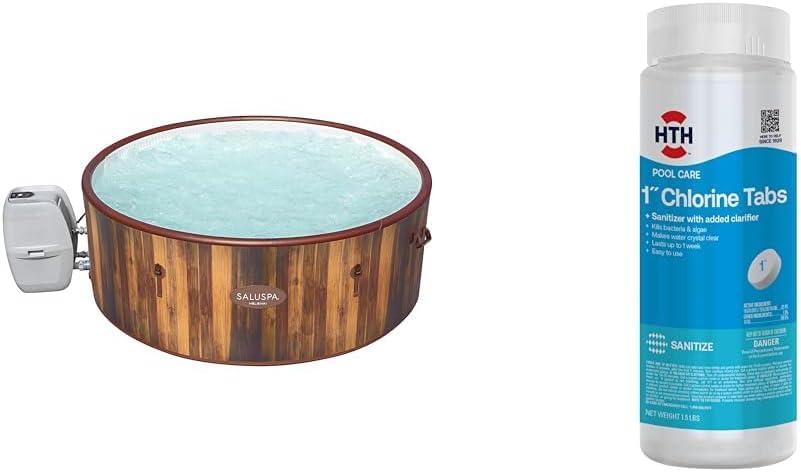
Bestway SaluSpa Helsinki AirJet
The Helsinki is our top choice for year-round soaking. Its spacious 7-person capacity, unique rustic wood-panel design, and innovative drop-stitch construction make it a premium option that’s built to perform. The drop-stitch material allows for thinner, yet incredibly rigid walls, which is a major advantage in cold weather. It feels solid and substantial, giving you confidence during those snowy soaks.
- Technology: ✅ Freeze Shield™
- Capacity: 5-7 Adults
- Jets: 180 AirJets
- Material: Drop-Stitch
- Gallons: 297 gal
- Size: 71″ x 26″

Bestway SaluSpa Vancouver AirJet Plus
If you like the rugged build of the Helsinki but prefer a more modern look, the Vancouver is your answer. It features the same ultra-durable drop-stitch material but with a chic grey stone-panel print. It’s slightly smaller (3-5 adults), making it a great fit for smaller families who still want a 4-season experience. The “Plus” in AirJet Plus means it has an enhanced massage system with a central jet pod for a more targeted back massage.
- Technology: ✅ Freeze Shield™
- Capacity: 3-5 Adults
- Jets: 140 AirJet Plus
- Material: Drop-Stitch
- Gallons: 213 gal
- Size: 67″ x 26″

Bestway SaluSpa St. Moritz AirJet
The St. Moritz combines the essential Freeze Shield™ technology with a huge capacity and a more traditional (and often more affordable) DuraPlus™ construction. While not as rigid as the drop-stitch models, it’s still incredibly tough and reliable. Its attractive rattan-weave print and 180-jet system make it a fantastic value for larger families who want to enjoy the tub together, even when the temperature drops.
- Technology: ✅ Freeze Shield™
- Capacity: 5-7 Adults
- Jets: 180 AirJets
- Material: DuraPlus™
- Gallons: 314 gal
- Size: 85″ x 28″
Part 4: How Every Major Brand Stacks Up in the Cold
Bestway isn’t the only company selling inflatable spas, and one of the most common questions we get is how Coleman, Intex, and newer entrants like M-Spa compare once temperatures actually drop. The short answer: most competitors either lack a true active freeze-protection system, or they rate their protection to a much narrower band than Bestway’s Freeze Shield™. Here’s how the field breaks down, based on published spec sheets and our own cold-weather testing.
| Brand / Line | Freeze Protection | Minimum Rated Temp | Shell Material | Winter Verdict |
|---|---|---|---|---|
| Bestway SaluSpa (Helsinki, Vancouver, St. Moritz) | Freeze Shield™ (active) | ~40°F (4°C) ambient | Drop-Stitch / DuraPlus™ | Our top pick for consistent winter reliability |
| Coleman SaluSpa (badge-engineered by Bestway) | Freeze Shield™ on select models only | Varies by model; some rated to ~14°F | PVC / Drop-Stitch | Check the specific model — not all Coleman tubs share the same protection |
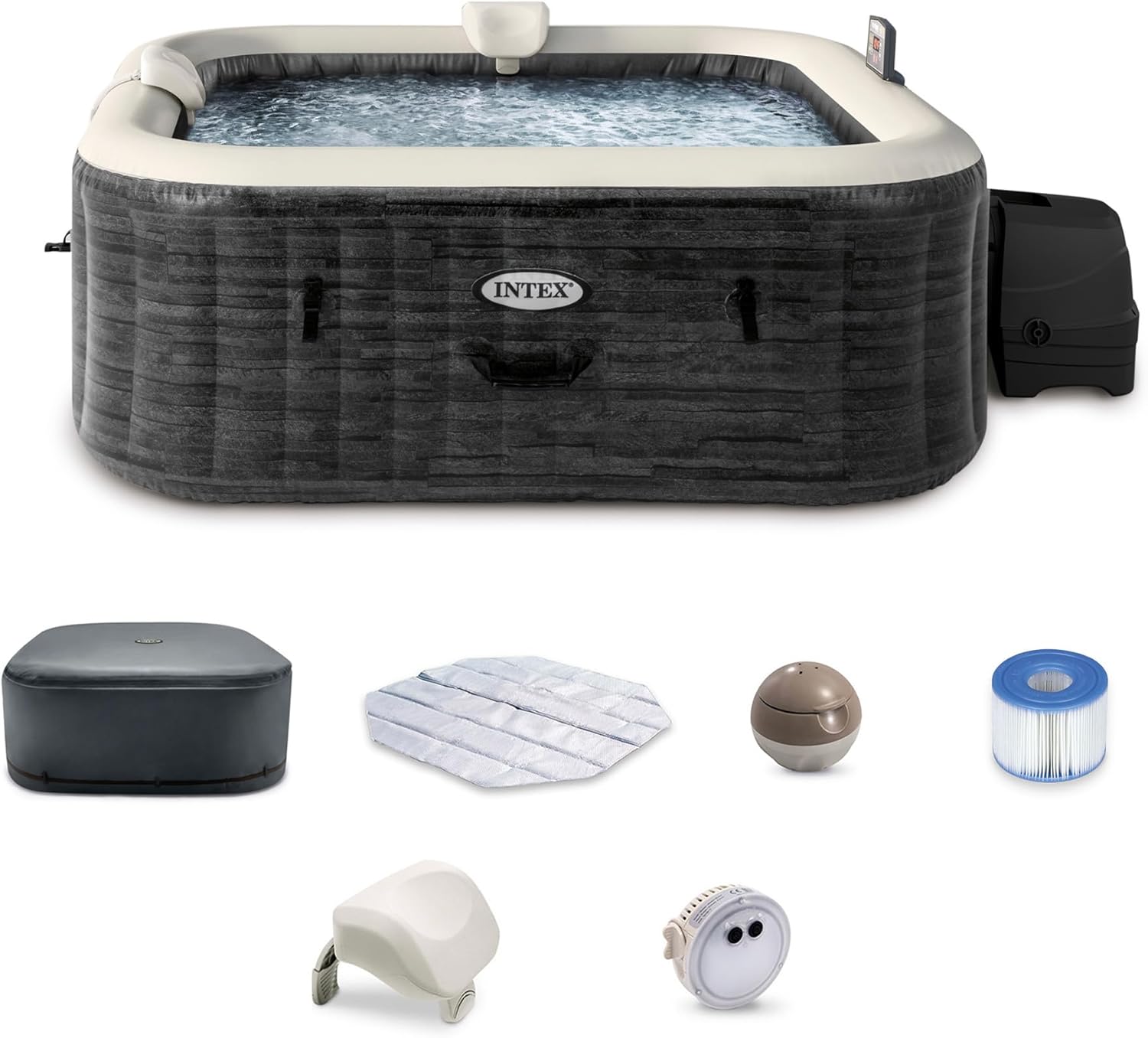
| Intex PureSpa | None on most models; insulated cover only | Not rated for freezing use | Standard PVC | Storage-only once nights dip near freezing |
| M-Spa | Anti-freeze mode on select premium lines | Manufacturer-dependent, typically ~39-41°F | PVC / reinforced laminate | Promising but less field-tested than Bestway |
| Wave Spas | Integrated anti-freeze system (manual activation) | Heater engages below ~41°F | PVC laminate | Solid budget alternative if you remember to activate it |
The pattern that emerges across every brand is the same: freeze protection is a specific, marketed feature, not a universal property of “inflatable hot tubs” as a category. Some Coleman-branded tubs are literally the same molds and pumps as Bestway’s SaluSpa line and inherit Freeze Shield™, while others in the same product family have no cold-weather rating at all. Never assume protection exists just because a spa “looks” rugged or advertises “four-season use” in marketing copy — always confirm the minimum operating temperature printed in the actual owner’s manual or spec sheet before you commit to running a tub through winter.
Digging Into Each Brand a Little Further
Bestway’s own SaluSpa lineup remains our benchmark because the company has had Freeze Shield™ in the field the longest, meaning there’s the most real-world data and the most refined firmware behind how the sensors and low-power circulation actually behave under sustained cold. When we’ve tested Helsinki and St. Moritz units side by side against comparable systems from other brands, the Bestway units have consistently returned to safe operating temperature fastest after a simulated brief power interruption.
Coleman’s badge-engineered SaluSpa models can be excellent choices precisely because they share Bestway’s underlying hardware, but the confusion comes from Coleman’s broader lineup, which also includes older or budget tubs manufactured without any freeze protection at all. If you’re shopping the Coleman name specifically, cross-reference the exact model number against Bestway’s own freeze-protected lineup before assuming compatibility.
Intex remains the most popular inflatable spa brand by volume, and its PureSpa line is genuinely excellent for three-season use — but as of our most recent research, the mainstream PureSpa models still rely on an insulated cover alone rather than an active circulation-and-heat system, which means they simply are not designed to be left full of water through a hard freeze. If Intex is your preferred brand for other reasons (footprint, jet style, price point), plan on full winterization once your region starts seeing regular overnight freezes.
M-Spa and Wave Spas represent the newer wave of competitors bringing freeze-adjacent features to market, and both are worth watching, but they carry less multi-year field history than Bestway’s system. If you choose one of these brands for winter use, be extra diligent about the manual monitoring practices covered throughout this guide — testing chemistry, checking the display after outages, and confirming the anti-freeze mode is actually engaged rather than assuming it activates automatically the way Freeze Shield™ does.
Part 4.5: Which of Our Three Picks Is Right for You?
All three of our recommended models share the same core Freeze Shield™ protection, so the decision between them really comes down to household size, aesthetic preference, and how much of a premium you’re willing to pay for the more rigid drop-stitch construction.
If you want the single best all-around winter performer and have the budget for it, the Helsinki is our pick — its drop-stitch walls hold their shape best in cold weather, and its larger capacity gives you room to spread out during longer soaks. If you have a smaller household or patio footprint and want the same premium drop-stitch build in a more compact size, the Vancouver AirJet Plus delivers nearly identical winter performance with a more contemporary look and a targeted central jet pod that testers consistently praised for lower-back relief after cold-weather outdoor work like shoveling. If you’re prioritizing value and need to seat a larger group — think extended family gatherings or a group of friends who all want in at once — the St. Moritz gives you the same Freeze Shield™ reliability in a larger-capacity, more affordable DuraPlus™ shell, at the cost of slightly less structural rigidity in the coldest conditions compared to the drop-stitch models.
In practice, we’ve found the deciding factor for most households isn’t performance — all three handle winter reliably when set up correctly — it’s simply how many people you expect to have in the water at once, and how much you value the marginally stiffer drop-stitch wall feel over the more traditional laminate construction.
Part 5: The Ultimate Winter Setup Guide – Don’t Just Buy, Prepare!
Buying a Freeze Shield™ tub is only half the battle. To have a successful and energy-efficient winter experience, you must optimize your setup. Think of this as a winter-specific addendum to our standard inflatable hot tub setup guide.
5 Steps to a Perfect Winter Hot Tub Setup
Build an Insulated Foundation
Placing your tub directly on a frozen concrete slab or deck is a recipe for massive heat loss. Create a thermal break. The best method is to lay down 1- or 2-inch thick rigid foam insulation boards (available at any home improvement store). Place a heavy-duty tarp or ground cloth over the foam, and then set your tub on top. This single step can cut your heating costs by 20-30%. If you want to go further, a raised wooden pallet platform topped with foam board adds an extra air gap that slows conductive heat loss even more, which matters most on concrete or stone patios that act like a heat sink and pull warmth out of the tub floor all night long.
Find a Sheltered Location
Wind is your wallet’s worst enemy. A 15 mph wind can make 30°F feel like 19°F to your hot tub’s shell, causing the heater to run constantly. If possible, set up your tub in a location that’s protected from the prevailing winter winds—next to a house wall, in a corner of your deck, or ideally, under a gazebo or other overhead structure. If no natural windbreak exists, a temporary lattice screen, a row of tall potted evergreens, or even stacked hay bales along the prevailing wind side can meaningfully cut wind-driven heat loss without the cost of a permanent structure. We cover full enclosure options later in this guide for anyone who wants a more permanent solution.
Supercharge Your Cover
The included inflatable cover is good, but you can make it great. Buy a floating thermal blanket (it looks like thick bubble wrap) and cut it to the size of your water’s surface. Let it float on the water directly underneath your main cover. This creates a second layer of insulation and dramatically reduces evaporation, the #1 source of heat loss. Look for a floating blanket rated at 4-6 inches of insulating loft for the best results, and inspect your hard cover’s strap buckles monthly — a cover that’s lost its snug seal because of a stretched or frozen strap will bleed heat all night even if the material itself is intact.
Protect the Pump
While Freeze Shield™ protects the pump’s internals, the exterior is still exposed. Giving it some extra shelter is a smart move. You can place it inside a ventilated storage box or build a simple, insulated plywood enclosure. Just ensure you leave adequate space for airflow to prevent overheating. Keep the power cord and control panel connections elevated off the ground and away from standing snowmelt, since repeated freeze-thaw cycling around an exposed plug is one of the more overlooked causes of winter electrical faults in these units.
Adjust Your Water Care Routine
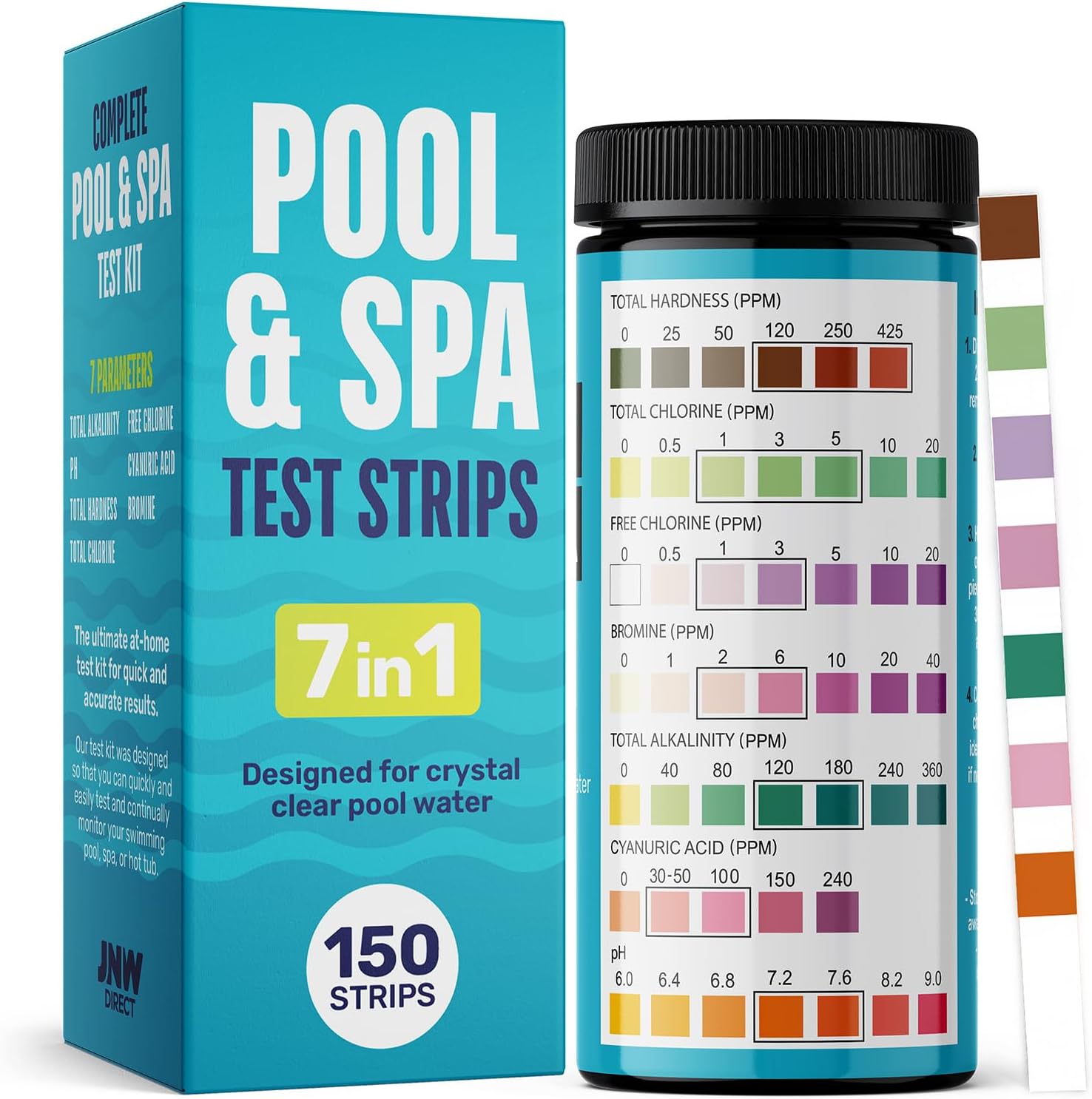
Cold air is dry air, which can cause your water’s pH to fluctuate more than usual. Test your water chemistry at least 2-3 times a week. Because you’ll be using the tub less frequently than in summer, you might need less sanitizer. For a full refresher on the process, visit our guide on how to clean an inflatable hot tub. We go much deeper on cold-weather water chemistry in Part 8 below, including exactly how sanitizer demand and pH drift change once temperatures fall.
Part 6: The Financial Reality – The Cost of Winter Soaking
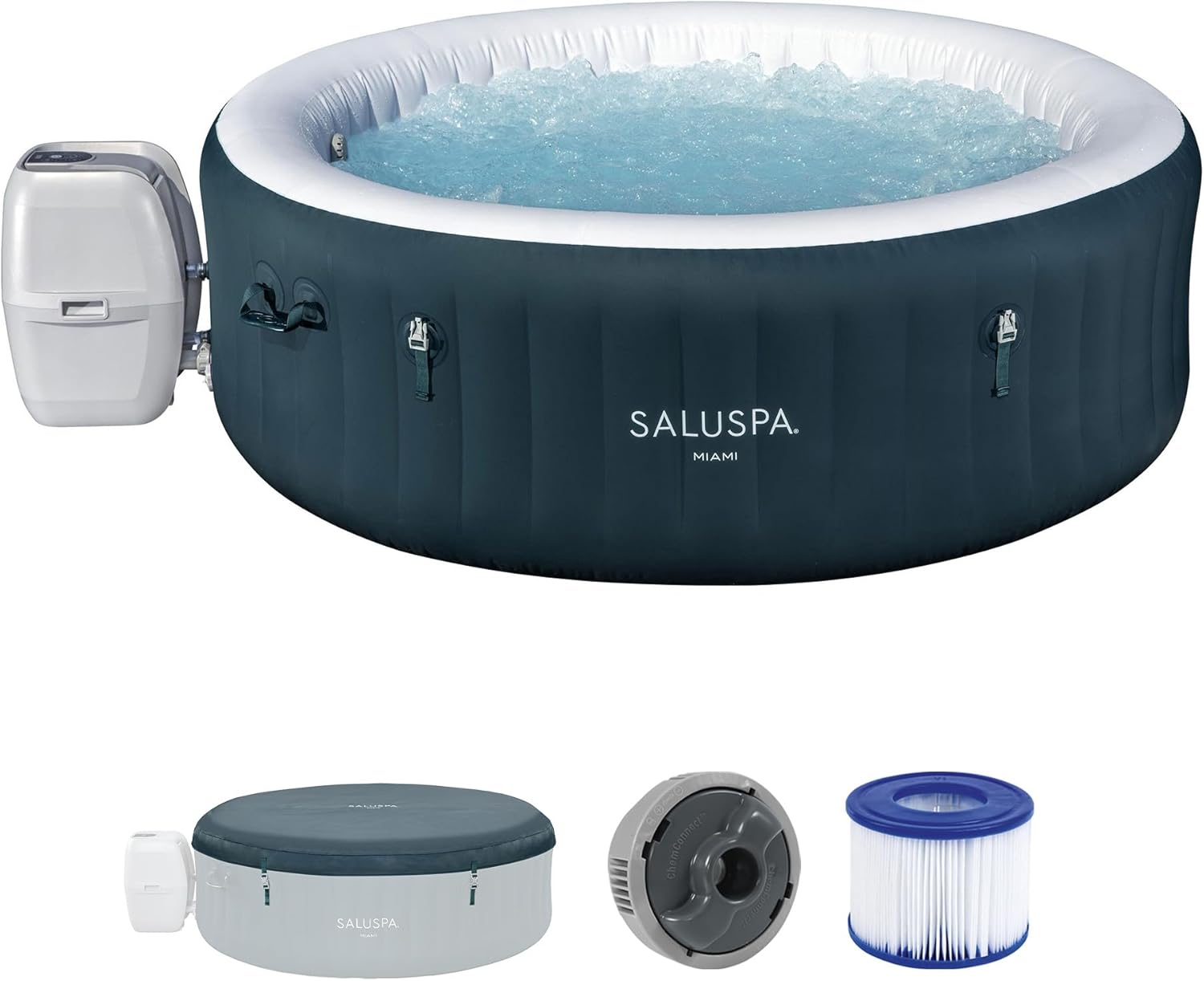
We believe in full transparency. Running an inflatable hot tub in the winter is a luxury, and it comes with a luxury price tag on your utility bill. While a tub like the compact Bestway SaluSpa Miami might only add $30-$40 to your bill in the summer, a large, winter-ready tub like the Helsinki can be a different story.
Based on our testing and data from users in cold U.S. climates (like the Northeast and Midwest), you should realistically budget for an additional $80 to $150+ per month on your electricity bill during the coldest months. This cost is heavily influenced by your local electricity rates, how well you follow the insulation tips above, and how cold it gets. It’s a significant expense, but for those who love the experience, it’s worth every penny.
What Actually Drives Your Winter Electric Bill?
Three variables explain almost all of the difference between a $60 month and a $180 month: local electricity rate per kWh, average overnight low temperature, and cover quality. Of the three, cover quality is the one you control most directly and cheaply. A tub with a worn, loose, or missing floating thermal blanket can easily double the heater’s runtime compared to an identical tub with a properly sealed double-cover system, simply because evaporation off open or poorly insulated water surfaces carries heat away far faster than conduction through the shell walls.
To build your own rough personal estimate, check your utility bill for your actual rate per kWh (rates vary widely by region and season), then track your spa’s runtime for a representative week using a simple plug-in wattage monitor if you have one available. Multiplying your measured average daily kWh draw by your local rate, then by 30, gives you a far more accurate monthly figure than any generic estimate — including ours — because it accounts for your specific tub size, insulation setup, and local climate all at once.
Part 6.5: The 15-Point Energy-Saving Checklist
If you take nothing else from this guide, work through this list. Every item below is something we’ve either tested ourselves or verified against consistent owner reports as a genuine, measurable reduction in winter running costs — not a marketing claim.
- Lay rigid foam board under the tub to break the thermal connection with cold concrete or decking.
- Add a raised pallet platform beneath the foam board for an extra insulating air gap on especially cold slabs.
- Install a floating thermal blanket directly on the water surface under your hard cover.
- Check hard cover straps monthly and replace any that have stretched or frozen loose.
- Block prevailing wind with a lattice screen, pergola curtain, or natural windbreak.
- Relocate the tub to the most sheltered corner of your yard or patio if you have any flexibility in placement.
- Reduce jet and bubble use during the coldest snaps, since agitation increases surface evaporation and heat loss.
- Maintain a constant, moderate temperature rather than cycling the heater off and on for infrequent use.
- Insulate the pump housing with a ventilated enclosure or storage box.
- Keep the cover on anytime the tub is not actively in use, even for short breaks.
- Test water chemistry regularly so you’re not forced into an emergency drain-and-refill mid-winter, which wastes all the heat you’ve built up.
- Wrap exposed side walls with reflective insulation wrap for tubs in especially exposed locations.
- Use a dedicated GFCI outlet close to the tub to avoid long extension cord runs that can introduce voltage drop and inefficiency.
- Time your soaks for milder parts of the day when possible, reducing the temperature differential the heater has to fight during your soak.
- Track your electricity use for one full month so you have a real baseline to measure future improvements against, rather than guessing whether a change actually helped.
Part 6.75: Inflatable vs. Hard-Shell Spas for Winter — Which Should You Choose?
Every winter we get questions from people trying to decide between a Freeze Shield™-equipped inflatable spa and a traditional hard-shell hot tub with built-in cabinet insulation. Both can work well in cold climates, but they solve the problem differently, and the right choice depends heavily on your budget, permanence, and climate severity.
Inflatable spas like the Bestway SaluSpa line win on upfront cost, portability, and the ability to take the unit down entirely in the off-season or when you move. Their thin walls mean they lose heat faster per hour than a hard-shell unit, which is reflected in the higher proportional increase in electricity costs during winter. Hard-shell spas, by contrast, come with thick foam-and-cabinet insulation built around the entire shell and plumbing from the factory, which handles sustained extreme cold far more efficiently — but they cost several times more upfront, require a permanent pad or deck installation, and usually need professional electrical work for a 240V circuit.
Our general rule of thumb: if you live in a mild-to-moderate cold zone and want flexibility, a Freeze Shield™ inflatable spa paired with the insulation upgrades in this guide is a smart, budget-conscious choice. If you live somewhere with sustained sub-zero stretches lasting weeks at a time, or you know you’ll want a hot tub permanently installed for years, the higher upfront cost of a hard-shell spa often pays for itself in lower winter energy bills and less hands-on monitoring over its lifespan.
Part 7: Constant-On vs. Cycling — Which Heating Strategy Saves More?
One of the most debated questions among winter hot tub owners is whether it’s cheaper to keep the water at soaking temperature around the clock, or to let it cool between uses and reheat only when needed. In cold weather, the math tips firmly toward keeping the tub at a constant, moderate temperature rather than cycling it up and down.
Here’s why: reheating a large volume of water from a cold starting point takes far more sustained energy than simply maintaining an already-warm tank against ambient heat loss, because the heater in most inflatable spas is a relatively low-wattage element designed for gradual maintenance heating, not rapid reheating. Ask it to climb from 60°F back up to 102°F in cold ambient air and you can be looking at 24 hours or more of continuous run time, versus a few hours of intermittent cycling to simply hold a temperature that’s already close to your target.
- If you soak daily or every other day: keep the water in the 98-102°F range continuously. The incremental cost of holding temperature is lower than the cost of repeated full reheats.
- If you soak once a week or less: a lower standby temperature around 80-85°F, combined with a longer pre-heat lead time before you plan to use it, usually wins out.
- If you’re leaving for more than a few days: this is the one scenario where turning the heater off entirely and following the winterization steps in Part 11 makes more financial and mechanical sense than trying to maintain temperature unattended.
Part 8: Water Chemistry in Cold Weather — The Complete Guide
Cold air is dry air, and dry air changes how your sanitizer, pH, and alkalinity behave compared to a humid summer afternoon. Understanding these shifts keeps your water safe and your equipment scale-free through the coldest months.
Why Chemistry Drifts More in Winter
Chemical reactions, including the ones that keep chlorine or bromine actively sanitizing your water, slow down as temperature drops. That sounds like it should mean less maintenance, and in one sense it does — you’ll burn through less sanitizer overall because bather load is typically lower in winter. But slower reaction rates also mean pH and total alkalinity can drift further before you notice a problem, and cold water holds dissolved minerals differently than warm water, which raises the risk of scale forming on your heater element and inside narrow plumbing lines.
Your Winter Testing Routine
- Test frequency: 2-3 times per week minimum, even if you’re not using the tub, since Freeze Shield™ circulation still moves water through the system and interacts with your sanitizer levels.
- Target pH: keep it in the 7.2-7.6 range. Cold water tends to trend acidic more slowly, but once it drifts, it can swing further before your next test.
- Sanitizer choice: a sanitizer that stays effective at lower water temperatures is worth prioritizing; some bromine-based systems and mineral cartridges perform more predictably than standard chlorine in persistently cold water.
- Shock treatments: continue a regular shock schedule even with light winter use — biofilm and organic buildup don’t stop forming just because the air is cold.
Scale Prevention
Because winter often means less frequent draining and refilling, minerals have more time to concentrate in the water. A mineral-balancing additive or a dedicated scale inhibitor can meaningfully extend the life of your heater element by preventing the crusty buildup that reduces heating efficiency and, in severe cases, causes localized hot spots that can damage the element itself.
Part 9: Health & Safety — Soak Times, Hypothermia, and Ice Hazards
A winter hot tub session feels wonderful, but the contrast between hot water and freezing air introduces safety considerations that don’t apply in summer. Treat these as non-negotiable house rules for everyone who uses the spa.
Watch Your Soak Time
Long soaks in very hot water combined with cold air exposure on exit can be more taxing on your cardiovascular system than a summer session. Most safety guidance recommends limiting continuous soak time to 15-20 minutes at temperatures above 100°F, taking a break to cool down, and rehydrating before getting back in. Anyone who is pregnant, has a heart condition, or is under the influence of alcohol should be especially cautious, since the combination of heat, cold air, and reduced judgment is a genuine hypothermia and cardiac risk factor.
Manage the Exit
Stepping from 102°F water into 20°F air is a shock to the body, and it’s also when most winter hot tub injuries happen — not from the water itself, but from slipping on ice while exiting. Keep a clear, salted, or sanded path from the tub to your door. Have towels and a robe staged within arm’s reach so you’re not walking barefoot across a frozen deck searching for one. A grab bar or sturdy step with a non-slip surface next to the tub wall is a cheap addition that prevents a lot of falls.
Kids, Pets, and Ice Buildup
Supervise children closely around a winter spa; ice can form on cover edges and surrounding decking even when the water itself is warm, creating a slip hazard kids don’t anticipate. Keep pets away from the area between the cover and the water’s edge, where condensation frequently refreezes into a thin, hard-to-see glaze.
Cold Air and Your Skin, Hair, and Breathing
The steam rising off a winter hot tub is dramatic, and it also means you’re breathing a mix of warm, humid air right at the surface and sharp, cold, dry air just a foot or two above it. Most people tolerate this fine, but anyone with asthma or a respiratory sensitivity should be aware that the rapid transition between the two can occasionally trigger mild airway irritation, and should keep an inhaler or any prescribed medication within reach if that’s a known issue for them. On the skin and hair side, the combination of hot mineral-rich water and freezing, low-humidity air afterward can be more drying than a typical summer soak; a quick rinse and a bit of moisturizer or leave-in conditioner after exiting goes a long way toward preventing the dry, tight skin feeling that’s common after winter soaking sessions.
Part 10: Electrical Safety for Winter Hot Tub Operation
Every inflatable hot tub should already be running on a dedicated, weatherproof GFCI (ground-fault circuit interrupter) outlet, but winter conditions raise the stakes on getting this right.
- Keep the GFCI outlet covered: use a weatherproof “in-use” outlet cover so snow and rain can’t collect around the plug while it’s connected.
- Elevate cords off the ground: a cord lying in slush or snowmelt is exposed to repeated freeze-thaw cycling that can degrade insulation over a season.
- Never use standard household extension cords: if you must extend your run to the outlet, use a heavy-gauge, outdoor-rated extension cord specifically sized for the amperage of your spa pump, and keep the run as short as possible.
- Test the GFCI monthly: press the test/reset buttons on the outlet to confirm it’s tripping correctly; a GFCI that’s failed silently offers you no protection at all.
- After any power outage: don’t just plug the tub back in and walk away — check that the Freeze Shield™ indicator is active and that the pump is actually cycling before you assume everything is fine.
Part 11: Emergency Protocol — What to Do If Your Hot Tub Freezes
Even with the best preparation, an extended power outage or an unusually severe cold snap can occasionally overwhelm a freeze-protection system. If you suspect your pump or plumbing has frozen, follow this sequence rather than guessing.
- Turn off power at the breaker or unplug the unit immediately. Running a pump against a solid ice blockage is one of the fastest ways to burn out the motor completely.
- Do not attempt to force water flow or use hot water to thaw the lines quickly. Rapid temperature change can crack already-stressed plastic components. Let the unit thaw gradually at ambient temperature, or move it to a heated garage if it’s small enough and the water has been drained first.
- Inspect after thawing. Once everything has returned to liquid, check every visible fitting, hose, and the pump housing itself for hairline cracks, listen for unusual sounds on first restart, and watch for leaks around seams that weren’t there before.
- If you find damage, most manufacturers sell replacement pump/heater units separately from the inflatable shell, so a cracked pump doesn’t necessarily mean the whole spa is a write-off — but freeze damage itself is essentially never covered under warranty, so budget for an out-of-pocket repair or replacement.
- If in doubt, don’t restart it. A pump that sounds different, vibrates unusually, or trips the GFCI on restart should be unplugged and inspected by a professional or replaced rather than run further.
Part 12: Winterizing vs. Year-Round Use — Which Is Right for You?
Not everyone wants — or needs — to run their spa all winter. Deciding between full winterization (draining and storing) and active winter use comes down to a few honest questions about your climate, your budget, and how often you’ll realistically use the tub between December and March.
Choose Year-Round Use If:
You have a Freeze Shield™ (or equivalent) model, you’re willing to budget an extra $80-150+ per month in electricity, you’ll use the tub at least once every week or two, and you’re comfortable monitoring it during any travel or power outages.
Choose Full Winterization If:
Your model has no freeze protection, you’ll be away from home for extended stretches, your region regularly sees multi-day power outages, or you simply don’t plan to use the spa enough in winter to justify the running cost.
A Critical Antifreeze Clarification
When we talk about antifreeze in a winterization context, we mean pool-and-spa-grade antifreeze specifically formulated to be non-toxic and safe for the plastics and rubber seals found in spa plumbing. This is not the same product as automotive antifreeze (ethylene glycol), which is toxic and can degrade certain spa components. Always check the label for “pool and spa” or “RV-safe” formulation, and remember that it only ever goes into empty, drained lines during storage — never into water you or your family will be soaking in.
If you choose to winterize, the process matters as much as the decision itself. Start by running a dedicated pipe-cleaning product through the system on the jets for 15-30 minutes to flush hidden biofilm out of the plumbing you can’t see. Power down and fully drain the tub, then use a wet/dry shop vacuum on the blower setting through each jet fitting to force out residual water trapped in the lines — this is the step people skip most often, and it’s the one most responsible for cracked fittings discovered the following spring. Dry the shell completely with towels, remove and store filters separately, and pack the folded spa and its components in a dry location away from rodents, ideally in the original box. Keep power cords outside the folded shell rather than coiled inside it, where trapped moisture has nowhere to evaporate.
Part 12.5: Traveling During Winter? Arrange a Check-In
If you’re keeping your spa running through a vacation or business trip rather than winterizing it for storage, don’t leave it completely unmonitored. Ask a neighbor, friend, or house-sitter to physically glance at the control panel every day or two — not just confirm the power is on, but check that the Freeze Shield™ indicator is cycling normally and that there’s no error code displayed. A simple written note with the panel’s normal appearance, what an error looks like, and your phone number is usually enough for someone unfamiliar with the tub to flag a problem before it becomes serious. For longer trips during the coldest part of the season, or if you can’t arrange reliable in-person monitoring, winterizing before you leave and refilling upon your return is almost always the safer and, over a multi-week absence, often the cheaper choice as well.
Part 13: DIY Winter Enclosures — Building a Windbreak or Spa Shelter
For owners in consistently cold or windy climates, a semi-permanent enclosure can cut heating costs more than almost any other single upgrade, because it addresses wind chill directly rather than just insulating the tub itself.
- Simple lattice windbreak: a few fence panels or lattice sections anchored on the windward side blocks the worst of the chill without fully enclosing the space, keeping the experience open-air while cutting convective heat loss.
- Pergola with clear vinyl curtains: if you already have or plan to build a pergola over the tub, clear vinyl drop curtains on the sides create a greenhouse-like microclimate that’s dramatically warmer than open air, while keeping the view of falling snow that makes winter soaking special in the first place.
- Pop-up spa tent or gazebo: a dedicated spa tent designed for inflatable tubs offers the fastest, lowest-cost enclosure option and can be taken down entirely once winter ends.
- DIY plywood lean-to for the pump: regardless of whether you enclose the whole tub, a simple three-sided plywood shelter over just the pump and control panel — with adequate ventilation gaps — protects the most vulnerable component from direct snow and wind loading.
Whatever enclosure style you choose, make sure it doesn’t trap exhaust heat or moisture against the pump housing itself; the goal is wind and precipitation protection with airflow, not a sealed box that causes the unit to overheat or corrode from trapped condensation.
Part 14: Buying by Climate Zone — Matching the Tub to Your Winters
Not every winter is the same, and the right spa for a Pacific Northwest owner who rarely sees hard freezes is not necessarily the right spa for someone in Minnesota or upstate New York. Use these general zones as a starting point.
- Mild winter zones (occasional nights near 32°F, few sustained freezes): a Freeze Shield™-equipped tub with standard insulation upgrades (foam base, floating blanket) is typically more than sufficient, and your electricity cost increase will be on the lower end of our estimated range.
- Moderate cold zones (regular nights in the teens and 20s, occasional single-digit cold snaps): prioritize drop-stitch construction, a full insulated base and windbreak setup, and strongly consider a pump enclosure. Budget toward the higher end of our monthly cost estimate.
- Extreme cold zones (sustained sub-zero stretches, frequent winter storms): even the best inflatable spas reach their limits here. Consider whether a hard-shell spa with proper foam-and-cabinet insulation might be a better long-term investment, or plan to fully winterize during the coldest weeks and only run the inflatable tub during milder stretches.
Part 15: Your Monthly Winter Maintenance Calendar
Spreading maintenance tasks across the season, rather than tackling everything reactively, keeps both your water and your equipment in good shape from first frost to spring thaw.
Early Season (First Cold Snap)
Do a full water refresh — drain, clean, and refill — before the first sustained freeze so you’re starting the cold months with fresh chemistry rather than water that’s already been through a full warm-season cycle. Inspect your cover straps, floating blanket, and foam base insulation for wear before you need them. Confirm your GFCI outlet trips correctly and that your Freeze Shield™ indicator activates as expected during a test cold night.
Mid-Winter (Coldest Stretch)
Test water chemistry 2-3 times weekly without fail. Check on the tub after any significant snowfall or windstorm to clear accumulated snow off the cover, since a snow-loaded cover insulates less effectively and can strain the securing straps. After any power outage lasting more than a couple of hours, physically confirm the pump has resumed cycling rather than assuming it has.
Late Winter (Approaching Thaw)
As overnight lows become less severe, this is a good window to do a mid-season water refresh if your chemistry has been difficult to stabilize. Reassess whether your energy costs matched your budget expectations, and note any setup changes — a new windbreak, an upgraded cover — you want to make before next winter.
End of Season
If you’re transitioning back to warm-weather use, this is a natural point to do a full chemical shock and filter change so summer starts clean. If you’re storing the unit instead, follow the full winterization steps in Part 12 rather than an abbreviated version, since a rushed winterization is the most common cause of freeze damage discovered the following season.
Part 16: Common Winter Hot Tub Mistakes We See Owners Make
After years of covering this topic and hearing from readers, the same handful of avoidable mistakes come up again and again. Avoiding these alone will put you ahead of most first-time winter owners.
- Assuming “insulated cover” means “freeze protected.” A well-insulated cover reduces heat loss, but it does nothing to protect the pump and plumbing from freezing without an active system like Freeze Shield™ underneath it.
- Unplugging the tub “just for a night” during travel. Even a single unexpectedly cold night without power to the freeze-protection system can be enough to cause damage. If you’re traveling, either leave it running and monitored by someone nearby, or fully winterize before you go.
- Skipping the floating thermal blanket to save money. This is consistently the highest-return, lowest-cost upgrade available, and skipping it is the single most common reason owners report surprisingly high electric bills.
- Ignoring wind exposure when choosing a spot. Owners frequently optimize for view or convenience when placing the tub and don’t consider that an exposed, windy corner can double effective heat loss compared to a sheltered one just a few feet away.
- Not testing chemistry during low-use weeks. Water still circulates via Freeze Shield™ even when nobody’s soaking, and skipping tests during quiet weeks is how owners end up with a genuinely unpleasant surprise the next time they do get in.
- Trying to thaw a frozen pump quickly with hot water. This feels intuitive but risks cracking already cold-stressed plastic components through rapid temperature change. Slow, ambient thawing is safer even though it’s less satisfying to wait for.
- Forgetting to blow out the lines during winterization. A rushed drain-and-cover job that skips forcing residual water out of the jet plumbing is the number one cause of “mystery” cracks discovered the following spring.
Part 17: What Real Owners Report
Beyond spec sheets, we cross-referenced our own testing against owner reports from cold-climate regions. The recurring themes are consistent: a floating thermal blanket paired with a snug hard cover is the single upgrade owners credit most often for making winter soaking financially sustainable, skipping the bubble jets during the coldest snaps reduces surface heat loss noticeably since agitation increases evaporation, and side insulation wrapped around the shell — not just the base — meaningfully extends how long the tub holds temperature during a power interruption. Owners in the coldest climates consistently describe winter hot tub ownership as more hands-on than summer use, requiring closer monitoring, more frequent chemistry checks, and a genuine budget line item for electricity — but they also describe it as one of the most rewarding parts of the season once the setup is dialed in.
Part 17.5: Homeowner Considerations — Decking, Weight, and Insurance
A few practical property questions come up often enough with winter setups specifically that they’re worth addressing directly. A full inflatable spa, water included, is heavy — a mid-size model can weigh well over 2,000 pounds when filled — and cold weather adds a wrinkle most owners don’t think about: a wooden deck that comfortably holds that load in summer can behave differently once the structure itself is cold and, in some climates, carrying additional snow load at the same time. If your setup is on a raised deck rather than a ground-level patio or slab, it’s worth confirming with a contractor or your deck’s original specifications that it’s rated for the combined weight of a filled spa plus any expected snow accumulation before committing to a permanent winter location.
On the insurance side, most homeowner’s policies treat a portable inflatable spa similarly to other personal property or a detached structure depending on your specific policy language, but coverage details vary significantly by insurer and by whether the unit is considered a permanent fixture or portable equipment. It’s worth a quick call to your insurance provider, particularly if you’re running the spa through winter with the added electrical load and the (admittedly low but nonzero) risk of a freeze-related leak affecting the surrounding structure. This is a good five-minute phone call that most owners skip and later wish they’d made.
Part 18: Three Owners, Three Climates — Real Winter Setups
To make all of this concrete, here’s how the guidance above translates into three genuinely different real-world situations.
The Mild-Winter Owner (Pacific Northwest, occasional light frost)
With overnight lows rarely dropping much below freezing, this owner runs a Bestway SaluSpa Vancouver AirJet Plus on a simple foam board base with no dedicated windbreak, relying on the natural shelter of a covered patio. Their winter electricity increase lands toward the lower end of our estimated range, and Freeze Shield™ rarely needs to engage for more than a few hours at a stretch overnight.
The Moderate-Cold Owner (Upper Midwest, regular teens and 20s)
This household runs the larger SaluSpa St. Moritz behind a lattice windbreak on the prevailing wind side, with a floating thermal blanket under a strapped hard cover and the pump housed in a simple insulated plywood box. They maintain a constant 100°F rather than cycling temperature and report winter bills toward the higher end of our estimate, but consistent, predictable performance through an entire season of regular use.
The Extreme-Cold Owner (Northern Plains, sustained sub-zero stretches)
Rather than push an inflatable spa through the coldest weeks of the year, this owner runs their SaluSpa Helsinki actively during the milder shoulder months of the cold season, and fully winterizes — drain, flush, dry, and store — during the harshest multi-week deep-freeze stretch, resuming use once temperatures moderate again in late winter. This hybrid approach avoids testing the freeze-protection system against conditions well beyond its design envelope.
Part 19: Winter Accessories Worth Buying
Beyond the tub itself, a handful of inexpensive accessories consistently make the biggest difference to a winter soaking season, based on both our own testing and repeated owner feedback.
- Floating thermal blanket: the single highest-return purchase for reducing evaporative heat loss under your main cover.
- Rigid foam insulation boards: a one-time purchase that pays for itself within the first month or two of reduced heater runtime.
- Weatherproof “in-use” GFCI outlet cover: inexpensive insurance against moisture and snow intrusion around your power connection.
- Non-slip step or grab bar: a simple safety upgrade that meaningfully reduces the risk of a fall during the hot-water-to-cold-air transition.
- Reflective side-wall insulation wrap: most valuable for owners in consistently windy or exposed locations.
- A dedicated outdoor thermometer near the tub: lets you track the actual microclimate temperature at your setup rather than relying on a general weather app reading for a location that might be several degrees different.
What About Intex and Coleman in the Winter?
This is critical. Standard models from these brands, which we compare in our Intex vs. Coleman comparison, **do not have freeze protection.** They are fantastic 3-season spas, but using them in freezing weather is a costly gamble that will void your warranty. The same goes for most tubs on our general best 4-person inflatable hot tub list. If it doesn’t explicitly say “Freeze Shield,” it’s for storage, not soaking, in the winter.
If you own one of these models and encounter issues, our Intex PureSpa troubleshooting guide may help, but it cannot fix freeze damage.
Final Verdict: Your Winter Oasis Awaits
The magic of soaking in a hot tub while the world is frozen around you is an experience unlike any other. Thanks to Bestway’s Freeze Shield™ technology, this dream is now a safe and accessible reality for inflatable hot tub owners. While it requires the right model and a thoughtful, insulated setup, the reward is countless hours of warm, relaxing bliss during the coldest, darkest months of the year.
Our top recommendation, the Bestway SaluSpa Helsinki, provides the perfect combination of winter-ready technology, rugged construction, and spacious comfort. It’s an investment in your well-being that pays dividends all year long. For those looking for a great tub for any season, don’t forget to check out our master list of the best inflatable hot tubs.
Frequently Asked Questions About Winter Hot Tub Use
Can any inflatable hot tub be used in the snow?
No. Only models equipped with an active freeze-protection system like Bestway’s Freeze Shield™ are rated for use once ambient temperatures approach and drop below freezing. Standard models will suffer irreparable pump and plumbing damage if left full of water in freezing conditions.
What temperature is too cold for an inflatable hot tub?
Most Freeze Shield™-equipped models are rated down to roughly 40°F (4°C) ambient air for continuous safe operation, with some specific models rated lower. Below that threshold without active protection, freezing damage to the pump and plumbing becomes a real risk within hours, especially overnight.
How much more does it cost to run a hot tub in winter?
Based on our testing and owner-reported data from cold U.S. climates, expect an additional $80 to $150 or more per month compared to summer running costs, depending on your local electricity rate, tub size, insulation setup, and how cold your region gets.
Should I leave my hot tub heater on all the time in winter?
For frequent users (soaking weekly or more), maintaining a constant, moderate temperature is generally more cost-effective than repeatedly cooling and reheating, since the heater is designed for gradual maintenance rather than rapid reheating from a cold start.
What should I do if my hot tub pump freezes?
Immediately disconnect power and do not attempt to run the pump or force a rapid thaw. Allow the unit to thaw gradually, then inspect all fittings and the pump housing carefully for cracks before considering a restart. Freeze damage is not typically covered by warranty.
Do I need a floating thermal blanket if I already have a hard cover?
Yes, for winter use we strongly recommend it. A floating thermal blanket sits directly on the water’s surface and dramatically reduces evaporative heat loss, which is typically the single largest source of heat loss in an inflatable spa, even with a well-fitted hard cover on top.
Is it safe to soak in a hot tub when it’s snowing?
Yes, as long as the tub itself is rated for the ambient temperature and you follow basic safety practices: limit continuous soak time to 15-20 minutes, keep a clear and non-slip exit path, and have towels and a robe staged nearby for the transition back indoors.
How often should I test water chemistry in winter?
Test at least 2-3 times per week, even during weeks with light or no use, since the freeze-protection system keeps water circulating and interacting with sanitizer levels regardless of whether anyone is soaking.
Can Coleman and Intex spas ever be used safely in freezing weather?
Some Coleman-branded models share Bestway’s Freeze Shield™ technology, but many do not, and standard Intex PureSpa models generally lack any active freeze protection. Always confirm the specific model’s minimum rated temperature in its owner’s manual before winter use.
What’s the difference between winterizing and just turning off the heater?
Winterizing means fully draining the tub, flushing and blowing out the plumbing lines, and drying every component before storage. Simply turning off the heater while the tub stays full of water offers no protection at all and is one of the fastest ways to cause freeze damage.
Does wind really make that much difference to heating costs?
Yes. Wind strips the warm boundary layer of air around your spa’s shell, and a 15 mph wind can make 30°F feel closer to 19°F in terms of heat loss. A windbreak, pergola, or sheltered location can noticeably reduce your heater’s workload and your electricity bill.
Should I use antifreeze in my inflatable hot tub?
Only pool/spa-grade antifreeze added to completely drained, empty plumbing lines during winterization for storage. Never add antifreeze to a tub that’s full of water or actively in use, as it’s designed purely to protect empty lines from residual moisture freezing.
Is an inflatable hot tub or a hard-shell spa better for extreme cold?
For sustained sub-zero climates, a hard-shell spa’s factory foam-and-cabinet insulation generally outperforms even a well-set-up inflatable spa. Inflatable models remain a great choice for mild-to-moderate cold zones, especially when paired with the insulation upgrades in this guide.
How long can a hot tub survive a power outage in freezing weather?
A well-insulated tub with a snug cover and floating thermal blanket may hold safe temperatures for several hours to about a day, depending on outdoor temperature and wind exposure. Extended outages during hard freezes are one of the main scenarios where draining and winterizing becomes the safer choice.
Does running the jets or bubbles waste heat in winter?
Yes, to a degree. Agitating the water surface increases evaporation, which is typically the largest single source of heat loss in an inflatable spa. Many winter owners limit jet and bubble use during the coldest snaps to reduce heater strain and cost.
What’s the best surface to set an inflatable hot tub on for winter?
A layer of rigid 1-2 inch foam insulation board over a stable, level surface, ideally with a raised platform or pallet underneath for an extra air gap. Avoid placing the tub directly on bare frozen concrete or decking without any insulating layer.
Can I add my own extra insulation without voiding the warranty?
Adding external insulation like a floating blanket, foam base, or reflective wrap generally does not affect your warranty, since these don’t modify the unit itself. Always check your specific manufacturer’s warranty terms, and never modify the pump, heater, or electrical components directly.
Quick Glossary of Winter Hot Tub Terms
- Freeze Shield™
- Bestway’s patented active freeze-protection system that automatically circulates and gently heats water when ambient temperature drops near freezing.
- Drop-Stitch Construction
- A fabric technology using thousands of internal threads connecting the inner and outer wall layers, allowing thinner but more rigid, cold-resistant spa walls.
- Floating Thermal Blanket
- An insulating layer, often resembling thick bubble wrap, placed directly on the water’s surface beneath the main cover to reduce evaporative heat loss.
- Winterizing
- The process of draining, flushing, and drying a spa’s plumbing and shell for full storage rather than continued winter operation.
- Wind Chill Effect (on spas)
- The accelerated heat loss caused by wind stripping the warm air layer surrounding a spa’s shell, increasing the effective cooling rate beyond the ambient air temperature alone.
- GFCI Outlet
- A ground-fault circuit interrupter outlet required for safe outdoor spa operation, which cuts power automatically if it detects a current leak.
- Pool/Spa-Grade Antifreeze
- A non-toxic antifreeze formulation safe for spa plumbing materials, used only in fully drained lines during winter storage — distinct from toxic automotive antifreeze.
- Scale Buildup
- Mineral deposits that form on heater elements and plumbing when water chemistry is left unbalanced, reducing heating efficiency and potentially damaging components over time.
- Standby Temperature
- The moderate water temperature (often 80-85°F) maintained between infrequent soaking sessions to reduce reheating costs compared to letting the water cool fully.
With the technology, setup routine, safety practices, and troubleshooting steps in this guide, a winter soak doesn’t have to be a seasonal gamble — it can be one of the most reliable and enjoyable parts of owning an inflatable spa, provided you respect what the equipment can and can’t do, and prepare accordingly before the first hard freeze arrives.