The Ultimate Inflatable Hot Tub Maintenance Guide
You bought an inflatable hot tub for one reason: relaxation. But the fear of complex maintenance can cast a shadow over that dream, turning your vision of a personal oasis into a source of stress. What if we told you that with a simple, repeatable system, you could spend just 15-20 minutes a week to guarantee a sparkling clean, safe, and perpetually ready-to-use spa?
Here at Hot Tub Bro, we’ve managed a whole fleet of inflatable spas over the years—from the ever-popular Coleman SaluSpa to various Intex models. We’ve battled cloudy water, fought foam, and perfected the science of simple spa care. We’ve distilled all that hands-on experience into this single, definitive guide. This is not just a checklist; it’s a complete maintenance philosophy designed to make ownership an effortless joy.
The 15-Minute Weekly Maintenance Plan
This is the core of your routine. Do this once a week to prevent 99% of all hot tub problems.
- Rinse Filter: Take out the cartridge and give it a thorough 2-minute rinse with a hose.
- Test Water: Use a test strip to check Chlorine/Bromine, pH, and Alkalinity levels.
- Balance Chemicals: Add chemicals in order: 1st Alkalinity, 2nd pH, 3rd Sanitizer.
- Shock Water: Add a dose of non-chlorine shock to eliminate contaminants and keep water fresh.
Part 1: Your Essential Maintenance & Water Care Toolkit
Success in spa care begins with having the right tools on hand. You don’t need a lab coat or a chemistry degree, just a few key products. This is our recommended “must-have” starter kit for any new inflatable hot tub owner.

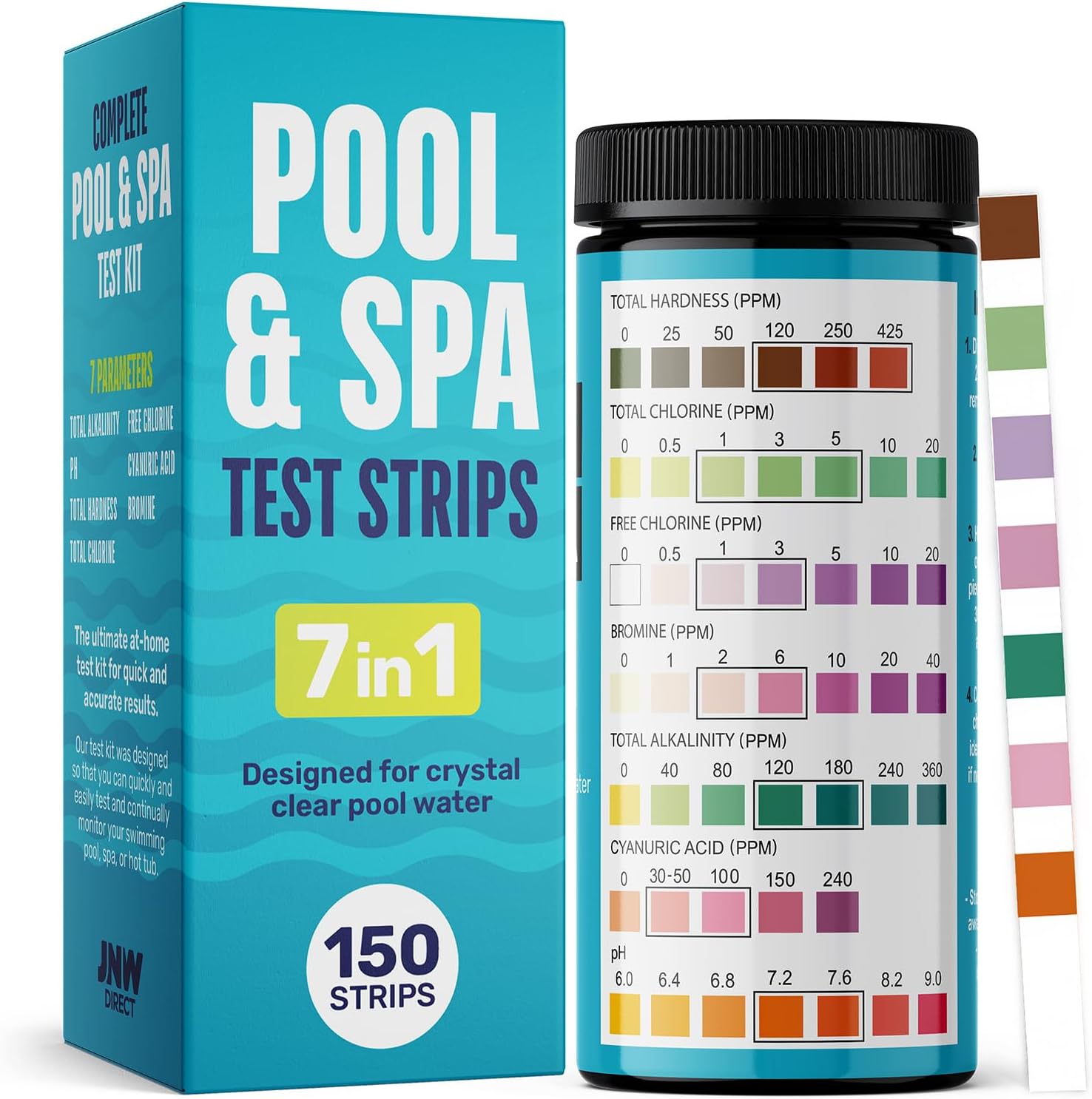
5-in-1 Test Strips
Your spa’s “dashboard.” These are non-negotiable for reading the 3 key levels: Sanitizer, pH, and Alkalinity.
See on Amazon
Spa Sanitizer (Chlorine)
We recommend Dichlor chlorine granules for beginners. It’s effective, fast-acting, and dissolves easily.
See on Amazon
Balancing Chemicals
The core trio: pH Up, pH Down, and Alkalinity Up. These adjust the comfort and safety of your water.
See on Amazon
Non-Chlorine Shock
Your weekly secret weapon. It oxidizes oils and lotions, clarifying the water without adding more chlorine.
See on Amazon
Replacement Filters
Filters are the kidneys of your spa. Have a few on hand. (Type VI shown for SaluSpas; check your model).
See on Amazon
Filter Cleaning Wand
This hose attachment makes rinsing your filter 10x more effective and faster than a standard nozzle.
See on AmazonPart 2: Water Chemistry Made Simple – The Balancing Act
This is the part that intimidates new owners, but it’s actually very simple once you understand the “why.” There are only three things you need to manage on a weekly basis.
Pillar 1: Total Alkalinity (The Anchor)
What it is: A measure of carbonates and other alkaline substances in the water.
What it does: It acts as a buffer or an “anchor” for your pH. If your alkalinity is stable, your pH will be stable.
Ideal Range: 80 – 120 ppm (parts per million).
Rule of Thumb: Always adjust your Alkalinity FIRST. Use “Alkalinity Up” to raise it. It’s rare to need to lower it.
Pillar 2: pH (The Comfort Level)
What it is: A measure of how acidic or basic your water is.
What it does: It affects bather comfort (wrong pH stings the eyes) and, crucially, how effective your sanitizer is.
Ideal Range: 7.4 – 7.6 (slightly basic).
Rule of Thumb: Adjust your pH SECOND, after Alkalinity is in range. Use “pH Up” (soda ash) or “pH Down” (dry acid) to adjust.
Pillar 3: Sanitizer (The Protector)
What it is: Chlorine or Bromine. Its job is to kill bacteria, viruses, and other nasty microorganisms.
What it does: Keeps the water safe and prevents it from turning into a swamp.
Ideal Range (Chlorine): 1 – 3 ppm.
Rule of Thumb: Adjust your sanitizer LAST. Your sanitizer works best when pH is balanced. If your pH is too high, your chlorine could be up to 80% ineffective!
The Two Overlooked Pillars: Calcium Hardness and Cyanuric Acid
Most beginner guides stop at the three pillars above, and for the first few months of ownership that’s genuinely all you need to think about. But if you keep your spa running past a single season, two more numbers start to matter, and ignoring them is the single biggest reason long-term owners end up fighting scale buildup, pump failures, or chlorine that “just won’t hold” no matter how much they add. Understanding these two pillars is what separates someone who merely owns a hot tub from someone who has actually mastered it.
Pillar 4: Calcium Hardness (The Structure Guard)
What it is: A measure of how much dissolved calcium and magnesium is in your fill water. Every municipal water supply and well has some baseline hardness, and it varies enormously from one neighborhood to the next.
What it does: Water is naturally “hungry” for calcium. If your hardness is too low, the water will pull calcium out of anything it can, including the rubber seals, gaskets, and heating element in your pump — this is called “aggressive water” and it slowly eats away at your equipment. If hardness is too high, the excess calcium precipitates out of solution and deposits itself as a white, chalky scale on your heater element, the interior liner, and the inside of your plumbing.
Ideal Range: 100 – 250 ppm for most inflatable spas, though always check your specific owner’s manual, since some manufacturers specify a narrower band.
Rule of Thumb: Test hardness with a dedicated calcium hardness strip or a liquid drop test kit once a month, or any time you notice a chalky white film on the waterline or your heating element seems to be losing efficiency. If hardness is too low, a calcium hardness increaser product will bring it up. If it’s too high, the most reliable fix is a partial or full drain and refill with fresh water, since there’s no practical way to chemically lower calcium once it’s dissolved in a small volume of water.
Pillar 5: Cyanuric Acid / Stabilizer (The Sunscreen)
What it is: Cyanuric acid, often abbreviated CYA and sometimes called “stabilizer” or “conditioner,” is a chemical that binds loosely with chlorine molecules and shields them from being broken down by ultraviolet light.
What it does: For outdoor pools sitting in direct sun all day, CYA is essential, because unprotected chlorine can burn off in under two hours of sunlight. For most inflatable hot tubs, which are covered the vast majority of the time and used for shorter sessions, CYA matters far less — and if you’re using Dichlor granules (the beginner-friendly sanitizer we recommend in Part 1), you’re already adding a small amount of CYA with every dose, since Dichlor is chemically bonded to a cyanurate molecule.
Ideal Range: 30 – 50 ppm for uncovered or frequently sun-exposed spas; many covered inflatable tubs run comfortably near zero and simply compensate by adding chlorine slightly more often.
Rule of Thumb: If you exclusively use Dichlor and never see chlorine readings sticking around, CYA is probably building up in the background even though you haven’t added it directly — this is one of the lesser-known causes of “chlorine lock,” where your sanitizer reading looks fine on a strip but the water still isn’t sanitizing effectively. If you suspect chlorine lock after months of Dichlor use, a partial drain and refill resets the CYA level along with everything else.
Pro Tip: Total Dissolved Solids (TDS)
There’s technically a sixth number serious spa owners track: Total Dissolved Solids, or TDS. This is a catch-all measurement of everything dissolved in your water — minerals, chemical byproducts, body oils, sweat, and residue from lotions and sunscreen. TDS doesn’t have a strict “ideal range” the way pH does, but as a general rule, once TDS climbs above roughly 1,500 ppm in a small spa volume, water starts to feel “tired” — it looks slightly dull, chemicals become harder to balance, and foam becomes more persistent. TDS is also the main reason quarterly drain-and-refill schedules exist. There’s no chemical fix for high TDS in a hot tub; the only cure is fresh water. A basic TDS meter is inexpensive and can help you decide if your quarterly drain schedule needs to move up a few weeks during periods of heavy use, like holidays with lots of guests.
Part 3: The Foolproof Maintenance Schedule
Now let’s put the chemistry and tools into a simple, repeatable schedule. This is the exact system we use, and it has never failed us.
The 15-Minute Weekly Ritual
This is the cornerstone of your entire maintenance plan. Do these four things once a week.
Step 1: Clean the Filter (5 Minutes)
Your filter is the hardest working part of your spa. Show it some love. Turn off the pump, remove the filter cartridge, and give it a very thorough rinse with your filter cleaning wand or a high-pressure hose nozzle. Get deep between the pleats to dislodge all the trapped gunk. A clean filter means clearer water and a healthier pump.
Step 2: Test & Balance the Water (5 Minutes)
Dip a test strip for 2 seconds, remove it without shaking, and wait 15 seconds. Compare the colors to the chart on the bottle. Now, add chemicals based on what you see, following this exact order:
- If Total Alkalinity is low: Add Alkalinity Up as directed on the package. Let the jets run for 15-20 minutes.
- If pH is low or high: After adjusting alkalinity, add pH Up or pH Down. Let jets run.
- If Chlorine is low: Add your chlorine granules.
Step 3: Shock the Water (2 Minutes)
With the cover off and jets running, broadcast one dose of non-chlorine shock across the water’s surface. This will oxidize (burn off) all the invisible contaminants like sweat, oils, and lotions, freeing up your chlorine to focus on killing germs. It’s like giving your water a fresh start for the week.
Step 4: Tidy Up (3 Minutes)
While the shock works its magic with the cover off, use a soft sponge to wipe down the waterline inside the tub to prevent a scum line. Also, wipe down the inside of your cover. Once 20-30 minutes have passed, put the cover back on.
The Monthly and Quarterly Resets
These less frequent tasks keep your spa in peak condition long-term.
Monthly Task: Deep Clean the Filter
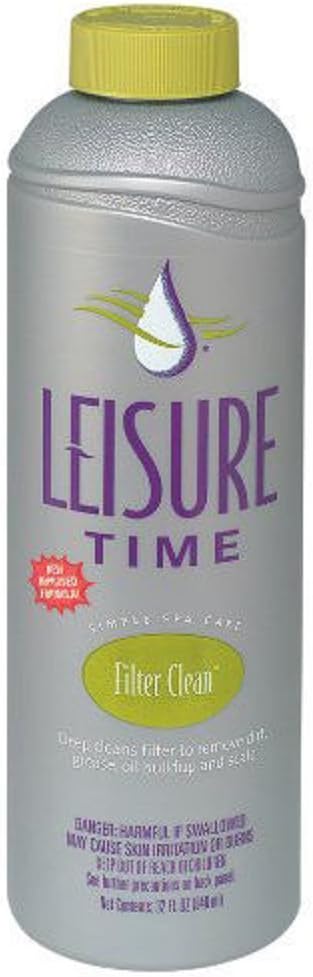
Rinsing is great, but once a month, your filter needs a chemical deep clean to remove oils and minerals that water alone can’t. Simply soak the filter overnight in a bucket with a specialized filter cleaning solution. Many owners keep two filters and rotate them, so the spa never has any downtime.
Quarterly Task: The Drain and Refill
Over time, your water absorbs so many chemicals and dissolved solids that it becomes hard to balance. A fresh start every 3-4 months is the ultimate solution. This is the single biggest task in hot tub ownership, but it’s also the most rewarding. For a complete, step-by-step walkthrough of this process, from purging the pipes to scrubbing the shell, you should consult our definitive guide on how to clean your inflatable hot tub. It turns this big job into a simple checklist.
Monthly Task: Check Calcium Hardness and Inspect for Scale
While you have your monthly deep-clean routine going, this is also the ideal time to run a calcium hardness test and do a visual inspection of your heating element (if accessible) and the waterline for the chalky white deposits that signal scale is starting to form. Catching scale early, while it’s still a light dusting, means a quick wipe-down with a vinegar-dampened cloth solves the problem. Left for months, scale can restrict water flow around the heating element and contribute to premature heater failure.
Monthly Task: Rotate or Replace Your Sanitizer Stock
Chlorine granules and non-chlorine shock both lose potency over time, especially if stored somewhere warm or humid, like a garage in summer. Once a month, give your chemical containers a quick check: if granules have clumped into a solid brick or the container has been open for more than a season, it’s time to replace it. Using degraded chemicals is a sneaky cause of “I added chlorine but the reading didn’t move” problems that owners often mistake for a testing error.
Part 4: Diagnosing and Fixing Common Water Problems
Even with a perfect weekly routine, every inflatable hot tub owner eventually opens the cover to find water that doesn’t look quite right. The good news is that nearly every visual water problem has a specific, well-understood cause and a straightforward fix. This section is your diagnostic manual — find the symptom that matches what you’re seeing, and work through the fix in order.
Cloudy or Hazy Water
Cloudy water is, by a wide margin, the most common complaint from inflatable hot tub owners, and it almost always comes down to one of four causes.
- Dirty or undersized filtration: If your filter hasn’t been rinsed recently, or if it’s been in service for months without a deep clean, it simply can’t keep up with the fine particles suspended in the water. This is the first thing to check because it’s the easiest to fix — pull the filter and inspect it. If it looks gray, slimy, or matted down, that’s your answer.
- Chemical imbalance: pH or alkalinity that’s drifted well outside the ideal range can cause dissolved minerals to come out of solution as microscopic particles, giving the water a milky appearance. Test and rebalance following the Alkalinity-then-pH-then-sanitizer order from Part 2.
- Insufficient sanitizer: If chlorine or bromine has been allowed to hit zero for even a day or two, bacteria and organic material can bloom fast enough to visibly cloud the water. A shock treatment combined with running the jets for a few hours usually clears this within 24 hours.
- Total Dissolved Solids buildup: If you’ve balanced everything perfectly and the cloudiness persists, especially in water that’s more than two or three months old, high TDS is often the underlying culprit, and the only real fix is a partial or full drain and refill.
A useful diagnostic trick: shine a flashlight through the water at night. If you see fine particles suspended and swirling, it’s usually a filtration issue. If the water looks uniformly milky with no visible particles, it’s more often a chemical or mineral issue.
Foamy or Sudsy Water
Foam that gathers around the jets or along the surface is almost always caused by one thing: surfactants. These are the oils, lotions, sunscreens, deodorants, and detergent residues (from swimsuits that weren’t rinsed after washing) that build up in the water and reduce its surface tension, allowing air from the jets to form persistent bubbles instead of simply dispersing.
- Immediate fix: A dedicated anti-foam or “defoamer” product will knock down existing foam within minutes, though it’s a cosmetic fix rather than a root-cause solution.
- Root-cause fix: Increase your non-chlorine shock frequency temporarily to oxidize the organic oils causing the problem, and ask bathers to rinse off in a shower before entering the spa, since this single habit change eliminates the majority of oils and lotions that cause foam in the first place.
- Long-term fix: If foam is a recurring, chronic problem despite regular shocking, your TDS is likely elevated and a drain and refill is the more permanent solution.
Green, Yellow, or Discolored Water (Algae)
Algae is far less common in a well-maintained inflatable spa than in an outdoor pool, since the smaller water volume, regular sanitizer dosing, and frequent covering make it hard for algae spores to establish. That said, it can happen, particularly if the spa sits with low or zero sanitizer for an extended period, like during a vacation.
If You See Green or Yellow Water
Do not get in. Algae blooms are frequently accompanied by bacteria that can cause skin, ear, or eye infections. Instead: (1) rinse and inspect your filter, replacing it if it’s heavily fouled, (2) add a substantial “shock” dose of chlorine granules — often called a super-chlorination — well above your normal weekly amount, following your product’s shock-dosing instructions, and (3) run the jets and pump continuously with the cover off for several hours to circulate the chlorine through every part of the water. Retest after a few hours; you may need a second shock dose before the water clears completely. If the tub has been green for more than a day or two, or if you can’t get a reading of any chlorine after shocking, the more reliable path is simply to drain, wipe down the shell with a mild cleanser, rinse thoroughly, and refill.
Musty, Sulfur, or “Rotten Egg” Smells
Contrary to popular belief, a strong chemical smell coming from your spa is a sign of too little sanitizer, not too much. That “hot tub smell” people associate with chlorine is actually the odor of chloramines — compounds formed when chlorine binds with ammonia from sweat, urine, and other organic contaminants, and it means your sanitizer is exhausted and needs to be replenished with a shock dose, not reduced.
A true sulfur or “rotten egg” smell, on the other hand, usually points to either well water with naturally occurring sulfur compounds in your fill source, or biofilm building up inside the plumbing lines themselves, in places a surface-level filter rinse can’t reach. If a fresh drain-and-refill doesn’t resolve a persistent sulfur smell, a specialized pipe/plumbing flush product designed to purge biofilm from the internal jets and hoses is the next step, followed by a full drain and refill.
Skin Irritation, Itchy Skin, and Red Eyes
If bathers report itchy skin or stinging eyes after a soak, the most common cause by far is pH that’s drifted too low or too high, rather than “too much chlorine” as many people assume. Low pH makes water acidic and irritating to eyes and mucous membranes; high pH does the same while also making chlorine far less effective at the same time, creating a frustrating cycle where the water feels irritating and isn’t even properly sanitized. Retest pH immediately after any irritation complaint and adjust toward the 7.4–7.6 range before assuming you need more sanitizer.
Part 5: Choosing and Understanding Your Sanitizer System
We recommend Dichlor chlorine granules as the default choice for new owners because they’re forgiving, widely available, and simple to dose. But as you grow more comfortable with spa care, it’s worth understanding the full landscape of sanitizer options, since each has real tradeoffs in cost, convenience, and water feel.
| Sanitizer Type | Best For | Pros | Cons |
|---|---|---|---|
| Dichlor Granules | Beginners, most inflatable spas | Fast-dissolving, stable, easy to dose precisely | Adds cyanuric acid over time; needs weekly refresh |
| Trichlor Tablets/Sticks | Larger pools more than small spas | Slow-release, low maintenance | Very acidic, can crash pH quickly, not ideal for small spa volumes |
| Bromine | Bathers sensitive to chlorine smell | Gentler odor, stable across a wider pH range, works well in warm water | Generally costs more, slower to dissolve, needs an activator to “start” a new batch |
| Mineral Sanitizer Systems | Owners who want to minimize chemical additions | Reduces (but doesn’t eliminate) required chlorine/bromine dosing; softer feeling water | Higher upfront cost for the cartridge; still requires some residual sanitizer |
| Saltwater / Salt Chlorine Generator | Owners wanting the softest water feel and least manual dosing | Continuously generates chlorine from dissolved salt; very soft on skin | Higher equipment cost; not all inflatable spa pumps support add-on salt systems; still needs balancing |
| Ozonators / UV Sanitizers | Supplementing (not replacing) a primary sanitizer | Reduces required chlorine/bromine levels, helps oxidize contaminants | Add-on equipment cost; still requires a low residual level of chemical sanitizer for safety |
Bromine In Depth
Bromine is the classic alternative to chlorine and remains popular with spa owners who find the chlorine smell unpleasant or who have sensitive skin. Unlike chlorine, bromine doesn’t form the same irritating chloramine compounds, so bromine spas tend to have less of a chemical odor even when working hard. Bromine is also more stable at the warmer temperatures typical of a hot tub (chlorine breaks down faster as water temperature rises), which is part of why it’s the traditional choice for hard-shell spas.
The tradeoff is convenience and cost. Bromine tablets dissolve slowly through a floating dispenser rather than mixing in instantly like granules, and you typically need to “activate” a bromine bank at the start of a fresh fill using a larger initial dose before switching to smaller maintenance doses. If you’ve been using chlorine and want to switch to bromine, plan the changeover around your next quarterly drain and refill rather than trying to convert mid-cycle.
Mineral Sanitizer Systems In Depth
Mineral systems use a cartridge containing silver and/or copper ions, which have natural antimicrobial properties, to reduce the amount of chlorine or bromine your spa needs to maintain a safe sanitizer level — often by as much as half. They don’t eliminate the need for a chemical sanitizer entirely (a small residual is still required by most health guidelines and by the mineral cartridge manufacturers themselves), but many owners find the water feels noticeably softer and requires less frequent chemical dosing. The main consideration is that mineral cartridges are a recurring cost, typically replaced every few months, and the ion output is fixed, so it doesn’t respond to spikes in bather load the way manual dosing can.
Do You Need an Ozonator or UV Sanitizer?
Many higher-end inflatable spa models now ship with a built-in ozonator, a small device that generates ozone gas and injects it into the water stream to help oxidize contaminants. Ozone is a genuinely powerful oxidizer, but in a residential inflatable spa it should be thought of as a helper to your chlorine or bromine routine, not a replacement for it — ozone dissipates from the water quickly and provides no lasting residual protection the way chlorine does. If your spa has a built-in ozonator, you can generally get away with slightly lower chlorine doses, but you should still test and maintain a measurable sanitizer reading at all times.
Part 6: Filter Deep Dive — Types, Lifespan, and Care
We touched on filters in the toolkit section, but because filtration is responsible for so much of your water clarity, it deserves a closer look. Not all inflatable spa filters are the same, and using the wrong type — or letting the right type go too long between changes — is behind a huge share of the cloudy water complaints we see.
Common Filter Type Naming Conventions
Manufacturers use different letter and number codes for filter types, and it’s easy to buy the wrong one if you’re not careful. Always check your spa’s manual or the sticker on your existing filter before ordering a replacement, since physically similar-looking filters can have different thread patterns or heights that won’t seal properly.
- Type A / A1: Common in many Intex models; typically has a flat cap and a coarser pleat spacing.
- Type B: Also common in select Intex models, slightly different housing dimensions than Type A.
- Type S1: A newer, larger Intex filter format found in more recent PureSpa models, generally rated for a longer service life than A or B.
- Type VI: Used across most Coleman SaluSpa and Bestway models; this is the filter shown in our toolkit list above.
- Type C / VI Twist Lock: A variant found on select Bestway models with a twist-to-lock cap rather than a friction-fit cap.
How Long Does a Filter Actually Last?
As a general guideline, a single cartridge filter used in a two-to-four person inflatable spa with regular weekly rinsing will typically need full replacement every four to six weeks under normal use, or roughly every two to three weeks if the spa sees heavy daily use or hosts frequent large groups. Owners who invest in two filters and rotate them — soaking one in filter cleaning solution while the other is in service — often stretch the effective lifespan of each individual cartridge because the deep-clean soak removes oils that a hose rinse alone can’t touch.
Signs Your Filter Needs Replacing (Not Just Rinsing)
Look for pleats that have visibly collapsed or matted together even after a thorough rinse, a gray or brown discoloration that doesn’t lighten with cleaning, a noticeably reduced water flow or weaker jet pressure, or a filter that’s developed small tears along the pleats. Any of these signs mean it’s time for a fresh cartridge rather than another cleaning cycle — a filter that’s structurally degraded can actually let debris pass straight through instead of trapping it.
Filter Cleaning Solution vs. Just Water
A hose rinse removes surface debris — leaves, hair, visible grime — but it does very little against the oily film that builds up from lotions, sunscreen, and body oils, which coats the pleats and gradually reduces the filter’s effective surface area even when it looks clean. This is why the monthly deep-soak in a dedicated filter cleaning solution matters: it chemically breaks down that oily film in a way a simple rinse cannot. Skipping this step is one of the most common reasons owners find themselves replacing filters more often than necessary, since a filter clogged with oil (rather than debris) looks deceptively clean to the eye while performing poorly.
Part 7: Pump, Heater & Electrical Troubleshooting
Chemical and filter care handles the water; this section handles the machine. Inflatable hot tub pumps are generally reliable, but a few issues come up often enough that it’s worth knowing the likely cause before you assume the worst.
The Spa Won’t Heat, or Heats Too Slowly
This is the single most common mechanical complaint, and the cause is very often not the heater itself.
- Check the filter first. A clogged filter restricts water flow, and most inflatable spa heaters have a flow-sensor safety switch that prevents the heating element from running at all if flow is too low. A filter that’s overdue for cleaning is the number one cause of “the heater won’t turn on.”
- Check for trapped air in the lines. After setup or a refill, air can get trapped in the plumbing and trip the same flow-sensor safeguard. Most manufacturers recommend a specific “priming” sequence — often disconnecting and reconnecting a hose fitting briefly while the pump runs — to purge trapped air. Check your owner’s manual for the exact priming steps for your model.
- Check the ambient temperature and cover fit. In cold weather, an inflatable spa loses heat through an ill-fitting or waterlogged cover far faster than the heater can compensate, especially on units with a modest heating wattage. Confirm the cover is fully dry, properly seated, and that any air-lock straps or clips are properly fastened.
- Check the water temperature setting itself. It sounds obvious, but a setting accidentally left low, or a display that’s stuck due to a control panel that got splashed, is a common and easy-to-miss cause.
Error Codes: A General Approach
Every manufacturer uses its own error code system, and codes vary meaningfully between an Intex PureSpa, a Coleman SaluSpa, and a Bestway model, so we won’t try to list universal codes here — always check your specific owner’s manual or manufacturer’s website for the exact meaning of a code shown on your display. That said, the overwhelming majority of error codes across all brands fall into one of three broad families: a water flow or low-water error (almost always filter, priming, or water-level related), a temperature sensor or overheat error (often related to blocked flow or an ambient temperature extreme), or a general system fault that typically calls for a full power cycle — unplugging the unit for several minutes — before you assume a hardware failure.
Pump Is Loud, Rattling, or Vibrating
A pump that’s suddenly noisier than usual is often sitting on an uneven surface, since the vibration from an unbalanced base amplifies through the frame. Confirm the spa is on a completely flat, firm surface (see Part 8 below). If the surface is fine, a rattle can also indicate the intake screen has partially loosened or that a small piece of debris, like a pebble or twig, has been drawn toward the impeller; powering down and inspecting the intake grate is worth doing before assuming the pump itself is failing.
Tripping the Breaker or GFCI
Electrical Safety Comes First
Inflatable hot tubs must always be plugged into a dedicated Ground Fault Circuit Interrupter (GFCI) outlet or a GFCI-protected extension setup rated for outdoor use, per virtually every manufacturer’s safety instructions. If your unit repeatedly trips the GFCI, do not keep resetting it and running the spa anyway — a tripping GFCI is specifically designed to detect a current leak, which can indicate a genuine electrical fault in the pump, heater, or a damaged cord, and repeatedly overriding that safety feature is a real shock hazard. If a reset works once but it trips again shortly after, or if it trips as soon as you plug the unit in with no other appliances running on the circuit, stop use and contact the manufacturer’s support line or a qualified technician rather than continuing to troubleshoot electrical components yourself.
That said, a single, occasional trip is sometimes caused by something more benign, like plugging too many other high-draw appliances into the same circuit, using a household extension cord that isn’t rated for the amperage (never use a standard indoor extension cord — only a manufacturer-approved outdoor-rated cord, and ideally none at all), or moisture having intruded into the plug connection itself during a heavy rain. Always ensure the plug and GFCI unit are kept dry and elevated off the ground.
Part 8: Setup, Placement & Running Costs
A surprising number of “maintenance” problems actually trace back to decisions made on day one — where the spa was placed and how it was set up. Getting this right from the start prevents headaches for the entire life of the spa.
Choosing the Right Surface
Every manufacturer is emphatic about one thing: the spa must sit on a flat, firm, debris-free surface. A finished concrete patio or paver surface is close to ideal. Grass and dirt are more problematic than they might seem, since the immense weight of a filled spa (often 1,000+ pounds with water and bathers) can cause uneven settling over just a few weeks, which in turn stresses the liner seams and can shorten the spa’s lifespan considerably. If you’re placing your spa on a wooden deck, confirm the deck’s load rating can handle the fully-filled weight, and always place a dedicated foam spa pad or interlocking foam tile base underneath, both for insulation and to protect the deck boards and the spa’s floor from puncture-causing debris.
Electrical Requirements and Extension Cord Safety
Most inflatable hot tub pumps draw somewhere in the range of 12 to 15 amps on a standard 120V household circuit, which is close to the maximum a typical 15-amp circuit can handle, especially if anything else is drawing power from the same circuit. Whenever possible, plug directly into a dedicated GFCI outlet with nothing else sharing that circuit. If a cord run is unavoidable, use only a heavy-gauge, outdoor-rated extension cord specifically approved by your manufacturer, kept as short as reasonably possible, since voltage drop over long, thin cords can cause the pump to underperform or overheat.
Estimating Your Running Costs
One of the most common questions from prospective owners is what an inflatable hot tub actually costs to run month to month. The honest answer is: it depends heavily on your climate, your electricity rate, and how often you use and heat the spa, but here’s a reasonable way to think about it. Most inflatable spa heaters draw somewhere around 1,300 to 1,500 watts while actively heating, and the heater cycles on and off to maintain your set temperature rather than running continuously (assuming the cover is on and sealing well). In a moderate climate with a well-fitted cover, many owners report the heater running a meaningful fraction of each day to hold temperature, with the heaviest energy draw coming during the initial heat-up from a cold fill, which can take upward of a full day depending on your target temperature and the ambient air temperature. The single biggest lever you have over running cost is simply keeping the cover on whenever the spa isn’t in use — a spa left uncovered loses heat dramatically faster than one that’s properly sealed, and this alone can be the difference between a modest monthly electric bill increase and a genuinely painful one.
Insulation Add-Ons Worth Considering
If you live somewhere with cold evenings or a genuine winter, a thermal ground cushion underneath the spa and a well-fitted, undamaged cover are the two highest-impact upgrades you can make for running costs, since most heat loss in an inflatable spa happens through the base and through any gaps in an ill-fitting cover, rather than through the inflatable side walls themselves.
Part 9: Health, Hygiene & Safety Considerations
Good water chemistry only does half the job of keeping a hot tub genuinely safe and pleasant to use. The other half comes down to a handful of simple habits and awareness points that are easy to overlook.
Shower Before You Soak
It’s a small habit, but it’s genuinely the single most effective thing bathers can do to keep water clear and sanitizer effective. A brief rinse-off shower before entering removes the majority of surface oils, lotions, deodorant, and sunscreen residue that would otherwise end up in the water, directly consuming your sanitizer and contributing to both cloudiness and foam. Many public and commercial spas require this by law for exactly this reason.
Hot Tubs, Pregnancy, and Certain Medical Conditions
Hot water immersion raises core body temperature, and elevated core temperature during pregnancy, particularly in the first trimester, is a recognized concern that health authorities generally advise pregnant individuals to discuss with their doctor before hot tub use, along with people managing cardiovascular conditions, low or high blood pressure, or who are pregnant, elderly, or accompanied by young children who may be more sensitive to heat. This guide is a maintenance resource, not medical advice — if you or a household member has a health condition that could be affected by hot water immersion, a conversation with a healthcare provider before regular use is the responsible step.
Children and Pets
Never leave children unsupervised near an open, filled spa, and always secure the cover with its locking clips or straps when the spa isn’t actively in use, both to prevent accidental drowning access and to prevent pets from walking across the inflatable cover and puncturing it with claws. Many owners also invest in a lockable cover strap kit specifically for households with young kids or curious pets, since it adds a meaningful extra barrier beyond the cover’s own weight.
Session Length and Water Temperature
Most manufacturers and health guidelines recommend keeping spa water at or below 104°F (40°C) and limiting continuous soak sessions to somewhere in the range of 15 to 20 minutes for adults, with shorter sessions for children, older adults, or anyone who feels lightheaded, overheated, or unwell. Always keep drinking water nearby during a soak, since the combination of heat and time can lead to dehydration faster than people expect.
Part 10: Advanced Maintenance & Seasonal Care
Once you’ve mastered the basics, these pro-level tips will take your spa care to the next level and help you navigate different seasons.
Long-Term Storage (Preparing for a Cold Winter)
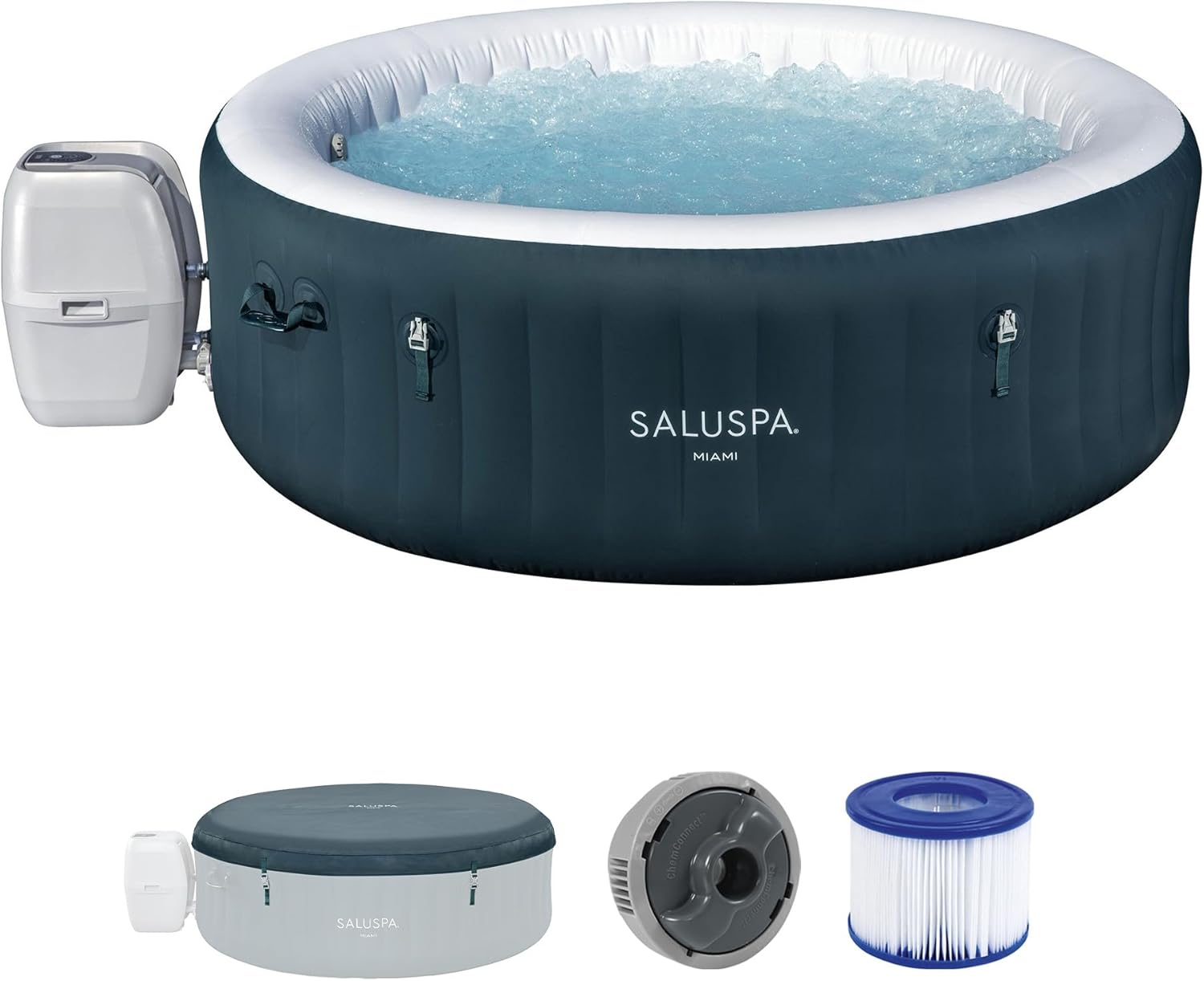
For most inflatable hot tubs, including popular models like the Bestway SaluSpa Miami, winter means it’s time to hibernate. Storing it properly is critical to ensure a quick and easy startup in the spring.
- Clean & Drain: Perform one final deep clean and drain the tub completely.
- DRY, DRY, DRY: This is the most important step. The tub, cover, and pump must be bone dry. Use towels and then let everything air dry for a day. Any trapped moisture will turn into a mildew nightmare in storage.
- Deflate & Store: Deflate the tub and fold it loosely. Store it in a dry, pest-free location that stays above freezing, like a garage or basement.
Want to Soak in the Snow?
While most tubs need to be stored, a new generation of spas with special freeze-protection technology can be used year-round. If the idea of soaking in a blizzard appeals to you, you absolutely must read our guide to the best inflatable hot tubs for winter to find a model that won’t be destroyed by the cold.
Summer Care: Managing Heat, Sun, and Higher Bather Loads
Summer brings its own set of maintenance quirks that are easy to overlook if you’re used to thinking about winterizing. Higher ambient temperatures mean chlorine burns off faster, especially if the spa is used with the cover off for extended periods in direct sun, so summer owners often find they need to test slightly more frequently, sometimes every three to four days rather than strictly weekly, particularly around holidays or gatherings with more bathers than usual. More bathers means more body oils, sweat, and sunscreen entering the water in a shorter window, which is exactly the scenario non-chlorine shock is designed for — don’t hesitate to add an extra shock dose the day after a big pool-party-style gathering rather than waiting for your normal weekly slot.
Direct, prolonged sun exposure on an uncovered spa can also accelerate fading and UV degradation of the vinyl liner over years of use, so where practical, keeping the cover on between uses (even during a single day of intermittent use) helps protect both your water chemistry and the physical material of the tub itself.
Maintenance for Different Models
While 90% of maintenance is universal, some models have unique features. For example, in our Intex vs. Coleman comparison, we note that many Intex models feature a built-in hard water treatment system. This is a huge maintenance advantage if you live in an area with hard water, as it helps prevent scale buildup—a common cause of pump failure we discuss in our Intex PureSpa troubleshooting guide. Likewise, maintaining a smaller 4-person inflatable hot tub is slightly easier as it requires fewer chemicals than a giant 8-person model.
Frequently Asked Questions
How often should I really change the water completely?
For most households, every 3 to 4 months is the sweet spot, though this shifts based on usage. A spa used daily by a large family may need a refresh closer to every 6 to 8 weeks, while a lightly used spa in a two-person household can sometimes stretch to 4 months comfortably. Watch for the practical signs rather than sticking rigidly to a calendar: water that won’t hold a sanitizer reading no matter how much you add, persistent cloudiness after balancing, or a noticeable odor are all signs it’s time, regardless of the date.
Can I use pool chemicals instead of spa-specific chemicals?
Generally, no. Pool chemicals are formulated for enormous water volumes and often come in concentrations or forms (like large tablets designed for slow-dissolving floaters) that are difficult to dose accurately and safely in the small water volume of an inflatable spa. Spa-specific granules and tablets are formulated for precise, small-volume dosing and are worth the modest price difference.
Is it normal for a brand-new spa to have cloudy water on first fill?
Yes, this is extremely common and usually harmless. Fresh tap water can contain trace minerals or air bubbles that create a temporary haze, and a brand-new filter cartridge sometimes carries manufacturing residue that clears up after its first cycle or two through the pump. Run the jets and filtration system for several hours, test and balance your alkalinity, pH, and sanitizer as usual, and the haze typically resolves within the first day.
How do I know if I’m adding too much chlorine?
Your test strips are the answer, not your nose. A strong chemical smell is actually a sign of insufficient chlorine (see the chloramines explanation in Part 4), not excess. True over-chlorination shows up as a chlorine reading well above the 1-3 ppm ideal range on your test strip. If that happens, simply stop adding chlorine and let the level drop naturally with normal use and evaporation, or run the jets uncovered in direct sunlight for a few hours to help burn off the excess faster.
Can I leave chemicals in the water while the cover is on and the spa isn’t in use?
Yes, and in fact this is exactly how the system is designed to work — sanitizer needs to remain in the water continuously, whether or not anyone is using the spa, to prevent bacteria and algae from establishing between sessions. The weekly routine in Part 3 assumes an always-covered, always-treated spa, not one that’s drained between uses.
What’s the difference between shock and regular sanitizer?
Regular sanitizer (chlorine or bromine) is meant to maintain a small, continuous residual level in the water to actively kill bacteria over time. Shock, whether chlorine-based or the non-chlorine variety we recommend weekly, is a larger, one-time dose meant to oxidize built-up organic contaminants (oils, sweat, lotions) all at once, essentially resetting the water’s cleanliness. Think of sanitizer as ongoing defense and shock as a periodic deep clean of the water itself.
Why does my chlorine reading disappear within a day of adding it?
This is almost always one of three things: pH sitting outside the ideal range and neutralizing chlorine’s effectiveness, a heavy bather load or a recent gathering that consumed sanitizer faster than normal, or elevated cyanuric acid from long-term Dichlor use causing “chlorine lock,” where chlorine is technically present but not free to sanitize effectively. Check pH first, since it’s the most common and easiest fix.
Do I need to run the pump and jets constantly, or just during maintenance?
Check your specific manufacturer’s guidance, since this varies by model, but most inflatable spas are designed with a filtration cycle setting that runs the pump for several hours a few times a day even when the spa isn’t in active use, in order to keep water circulating through the filter and heater continuously. Running filtration regularly (not just when you’re soaking) is important for even chemical distribution and consistent temperature.
My cover has a small tear — does it need to be replaced immediately?
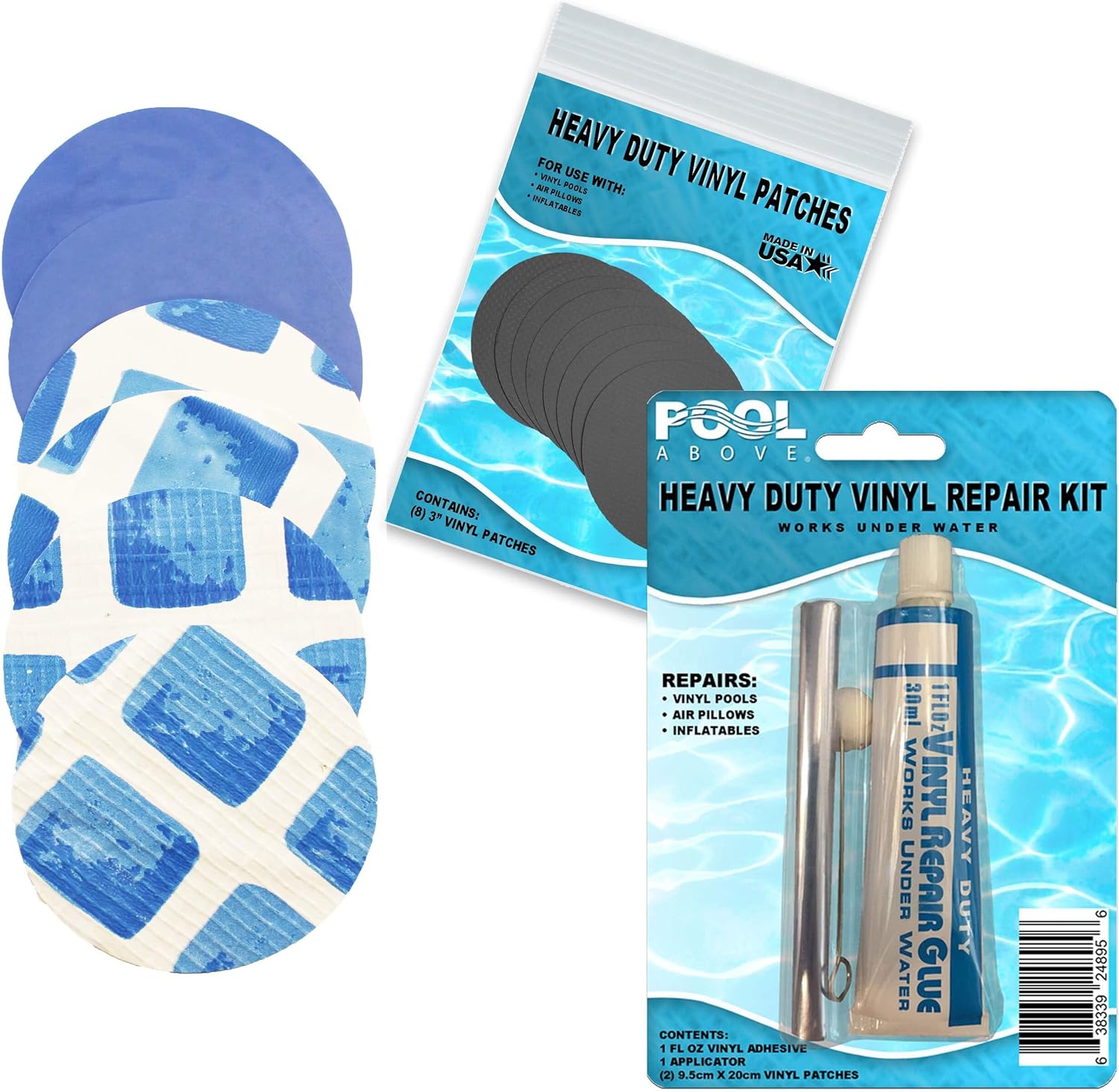
A small tear won’t cause an immediate problem, but it will steadily worsen and let heat and moisture escape, driving up running costs and potentially letting moisture seep into the foam core, adding weight and eventually promoting mildew. Waterproof vinyl repair tape can buy time for a small tear, but budget for a full cover replacement once tears become numerous or the foam core becomes noticeably heavier from trapped moisture.
Is a saltwater system worth adding to an inflatable hot tub?
It can be, particularly for owners who dislike the feel or smell of manually dosed chlorine and who use their spa often enough to justify the upfront cost of the generator unit. That said, not every inflatable spa pump is compatible with an add-on salt system, and the water will still need periodic testing and balancing, so it’s a comfort and convenience upgrade rather than a maintenance shortcut.
How do I remove a stubborn waterline ring or scum line?
A soft sponge with a small amount of a spa-safe surface cleaner (never a household all-purpose cleaner, which can leave residue that foams or reacts with your chemicals) usually removes it. If the waterline ring keeps returning quickly after cleaning, that’s a signal your TDS is elevated and it may be time to move up your drain-and-refill schedule.
Can hard water damage my inflatable hot tub over time?
Yes — persistently high calcium hardness is one of the more common long-term causes of scale buildup on the heating element, which reduces heating efficiency and can eventually contribute to premature heater failure. If you know your home has hard water, testing calcium hardness monthly and staying within the recommended range, or considering a model with a built-in hard water treatment feature, is a worthwhile precaution.
Quick Reference Glossary
- Alkalinity (Total Alkalinity)
- The water’s buffering capacity against pH swings; adjusted first in the balancing order.
- Bromine
- An alternative sanitizer to chlorine, gentler in odor and more stable at higher temperatures.
- Calcium Hardness
- The concentration of dissolved calcium and magnesium; too low corrodes equipment, too high causes scale.
- Chloramines
- Byproducts formed when chlorine binds with ammonia from sweat and organic waste; the source of “hot tub smell,” and a sign of insufficient, not excessive, chlorine.
- Cyanuric Acid (CYA) / Stabilizer
- A compound that shields chlorine from UV breakdown; can build up over time with repeated Dichlor use and contribute to “chlorine lock.”
- Dichlor
- A stabilized, fast-dissolving form of chlorine granules recommended for beginners.
- GFCI
- Ground Fault Circuit Interrupter; a required safety outlet type for all electric hot tubs.
- Non-Chlorine Shock
- An oxidizer used weekly to break down oils and organic contaminants without adding extra sanitizer.
- Ozonator
- A device that injects ozone gas into spa water to supplement (not replace) chemical sanitizer.
- pH
- A measure of acidity/basicity; affects bather comfort and sanitizer effectiveness. Balanced second, after alkalinity.
- Total Dissolved Solids (TDS)
- A catch-all measure of everything dissolved in the water; high TDS is resolved only by draining and refilling.
The Final Word: Maintenance is Freedom
Embracing a simple maintenance routine is the secret to unlocking the true freedom and relaxation your inflatable hot tub was designed to provide. It transforms your spa from a potential source of worry into a guaranteed escape. This 15-minute weekly investment pays you back with countless hours of stress-free soaking in crystal-clear water.
Now that you’re armed with the knowledge to maintain a spa like a pro, perhaps you’re ready to start your journey or upgrade your current model. Our comprehensive guide to the best inflatable hot tubs is the perfect place to explore your options. And for any new owners, don’t forget to bookmark our easy-to-follow inflatable hot tub setup guide. Happy soaking!