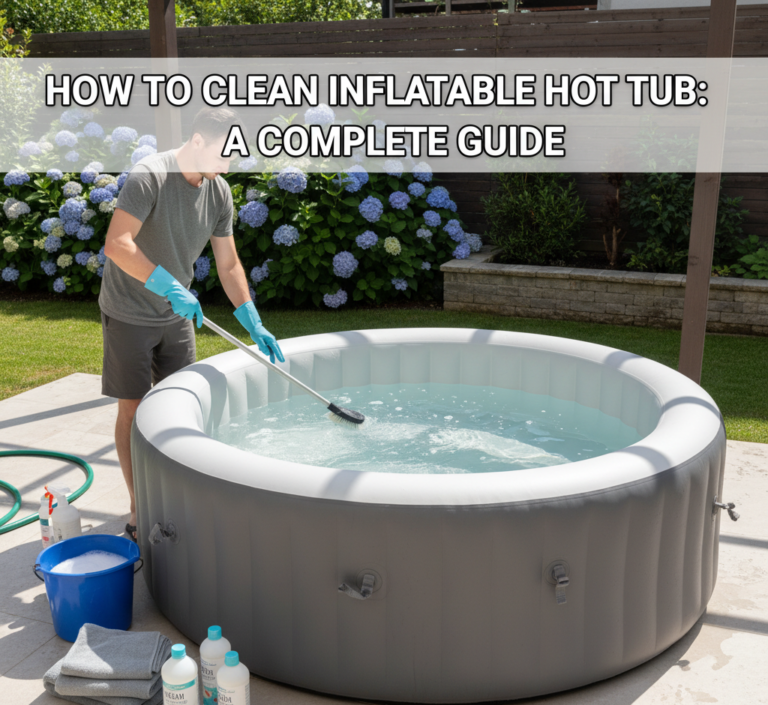
The Ultimate Guide: How to Clean Your Inflatable Hot Tub Like a Pro
There’s nothing quite like sinking into the warm, bubbling water of your own inflatable hot tub. It’s your personal oasis for relaxation and stress relief. But that crystal-clear paradise can quickly turn into a cloudy, slimy, or smelly swamp if not cared for properly. The secret to long-lasting hot tub happiness isn’t just about the initial setup; it’s about a simple, consistent cleaning routine.
Here at Hot Tub Bro, we’ve spent years maintaining all kinds of portable spas, from the rugged Coleman SaluSpa to various Intex models. We’ve seen the good, the bad, and the very, very green. This guide is the culmination of all that hands-on experience. We’re going to walk you through everything—from 5-minute daily tasks to a full quarterly deep clean, the science behind water balance, seasonal considerations, and every troubleshooting scenario we’ve encountered in the field—so you can keep your spa sparkling, safe, and ready for you to enjoy at a moment’s notice.
Affiliate Disclosure: Hot Tub Bro is reader-supported. When you buy through links on this page, we may earn an affiliate commission at no extra cost to you. We only recommend products we’ve personally tested or researched extensively. This helps us keep producing free, in-depth guides like this one.
The Quick Cleaning Checklist
Don’t have time for the full deep dive right now? Here’s the TL;DR version of a solid cleaning routine:
- After Each Use: Add a small dose of sanitizer.
- A Few Times a Week: Test the water and balance chemicals. Rinse the filter cartridge with a hose.
- Weekly: Shock the water to eliminate contaminants. Wipe down the waterline.
- Every 1-3 Months: Drain the tub completely, scrub the interior, deep clean the filter, and refill with fresh water.
Part 1: The “Why” – Understanding Hot Tub Grime
Before we get into the “how,” it’s crucial to understand the “why.” Your hot tub is a warm, wet environment—the perfect breeding ground for bacteria and other unwanted guests. The main culprits making your spa dirty are:
- Bathers: We bring in sweat, body oils, lotions, hair products, and dead skin cells. An adult can introduce billions of bacteria into the water in a single soak.
- Environment: Leaves, pollen, dust, and insects can all find their way into your tub.
- Biofilm: This is the enemy. Biofilm is a slimy, protective layer of bacteria that can form in your spa’s plumbing lines. It’s resistant to sanitizers and is the primary source of persistent water quality issues.
Proper cleaning isn’t just about aesthetics; it’s about health. A poorly maintained tub can lead to skin rashes (hot tub folliculitis) and other infections. It can also damage the most expensive part of your spa: the pump and heater. A little bit of consistent effort goes a long way in protecting both your health and your investment.
It also helps to think about your hot tub the way you’d think about a small, enclosed ecosystem rather than a bathtub you occasionally rinse out. Unlike a bath, the water in your spa is reused for days or weeks at a time, is kept at a warm temperature that accelerates bacterial reproduction, and is constantly being agitated by jets that can aerosolize contaminants into the air you breathe while soaking. Warmth, moisture, organic material, and agitation are precisely the four conditions microbiologists point to when describing ideal bacterial growth environments. That’s not meant to scare you away from your spa—it’s meant to explain why a “set it and forget it” approach to hot tub ownership almost always ends in frustration, cloudy water, and a drained tub sitting empty in the yard for a season. Understanding the underlying biology and chemistry is what separates hot tub owners who fight the same battles over and over from those who spend five minutes a day and enjoy trouble-free water year-round.
Part 2: Your Essential Cleaning & Maintenance Toolkit
Having the right tools makes any job easier. You don’t need a professional-grade setup, but a few key items are non-negotiable for keeping your hot tub in pristine condition. Here is our recommended “must-have” kit, with links to our top picks on Amazon.

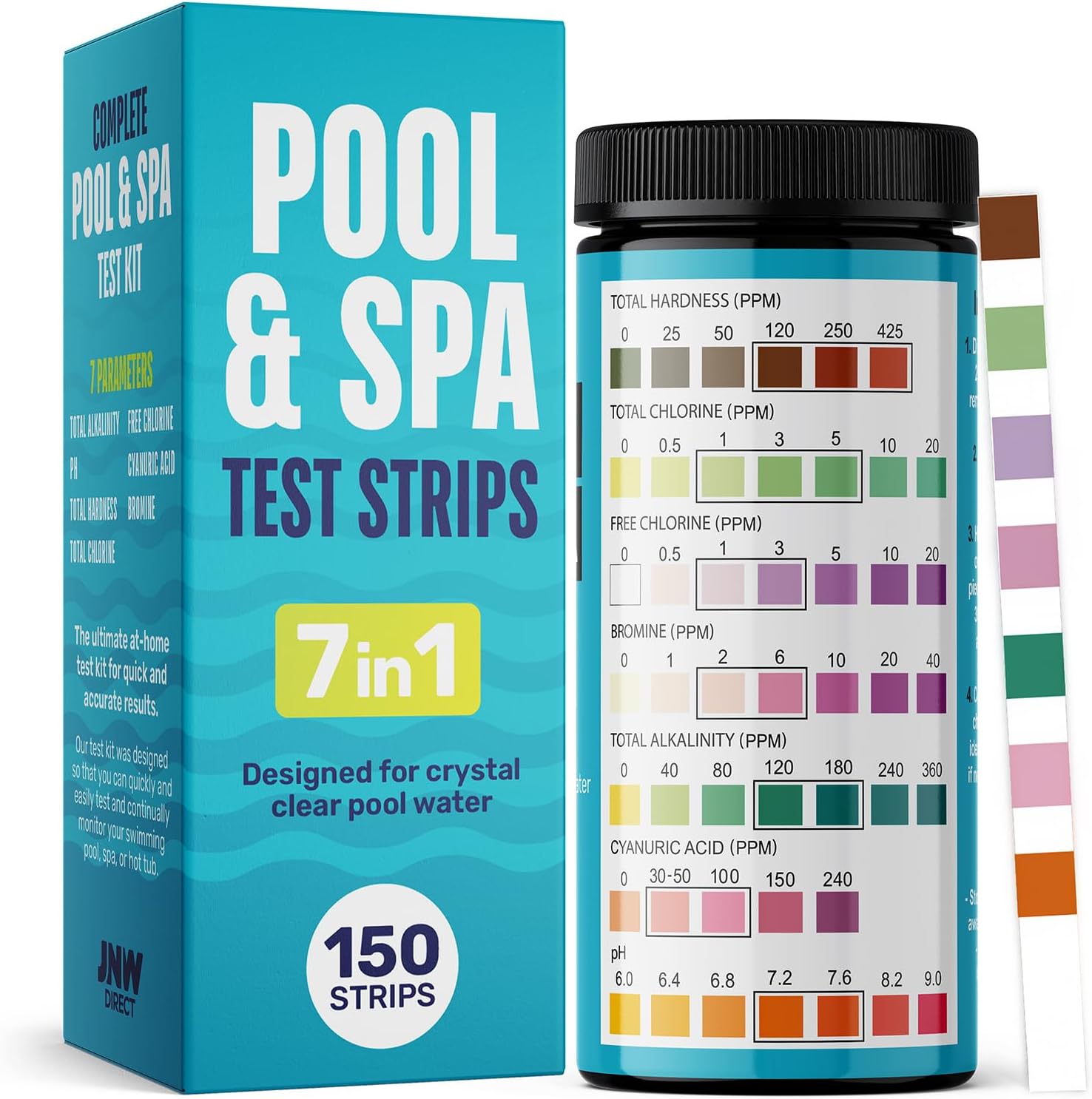
5-in-1 Test Strips
The foundation of water care. These instantly read your sanitizer, pH, alkalinity, and hardness levels.
See on Amazon
Spa Sanitizer
Your choice of chlorine or bromine granules/tablets to kill bacteria and keep the water safe.
See on Amazon
Balancing Chemicals
pH Increaser, pH Decreaser, and Alkalinity Increaser. Essential for water comfort and sanitizer effectiveness.
See on Amazon
Spa Shock
A non-chlorine or dichlor shock to oxidize contaminants, remove odors, and reactivate sanitizer.
See on Amazon
Scum Absorber
A simple sponge that floats in the water and absorbs oils and lotions, preventing waterline scum.
See on Amazon
Filter Flosser/Wand
A high-pressure nozzle for your garden hose that gets deep between filter pleats for a thorough rinse.
See on AmazonBeyond the six essentials pictured above, a handful of supporting supplies round out a well-stocked maintenance station. A dedicated storage tote or bucket keeps all your chemicals organized, off the ground, and out of direct sunlight, which degrades most sanitizers over time. A small handheld water thermometer helps you confirm your heater is behaving as expected, since a heater that’s struggling to reach temperature is often an early warning sign of scale buildup inside the plumbing. Finally, a soft microfiber cloth dedicated solely to spa cleaning (never one that’s been used with household cleaners or fabric softener, which can leave residue that causes foaming) rounds out the kit nicely. None of these extras need to be expensive, but having them on hand turns a “where did I put that” scramble into a smooth five-minute routine.
How Much Should You Budget for Ongoing Maintenance?
One of the most common questions new owners ask is how much it actually costs to keep an inflatable spa running properly. The honest answer is that it depends heavily on bather load, climate, and how diligently you stick to your routine, but most owners find their ongoing chemical costs settle into a predictable monthly rhythm once the initial setup purchases are out of the way.
These figures assume you’re already following the routine outlined in this guide. Owners who skip weekly testing often end up spending more in the long run, since neglected water frequently needs an emergency shock treatment, an extra bag of shock, or a full unplanned drain-and-refill—all of which cost more than staying ahead of the problem in the first place. Buying sanitizer and balancing chemicals in slightly larger containers when on sale, rather than repeatedly purchasing small quantities at full price, is a simple way many long-term owners trim this recurring cost without cutting any corners on their actual routine.
Part 3: The Science of Water Balance (Understanding What You’re Actually Testing)
Test strips are easy to use, but a lot of owners dip a strip, glance at the colors, and add chemicals without really understanding what each number means or why it matters. Understanding the “why” behind each parameter makes it dramatically easier to diagnose problems and keep your water balanced with confidence rather than guesswork.
Sanitizer Level (Chlorine or Bromine)
Your sanitizer is the frontline defense against bacteria, viruses, and algae. It works by oxidizing and destroying the cell walls of microorganisms. If your sanitizer level drops too low, contaminants are free to multiply unchecked; if it climbs too high, it can irritate skin, eyes, and swimsuits, and give off a harsh chemical odor. For chlorine, the sweet spot is typically 1-3 ppm (parts per million); for bromine, aim slightly higher, around 3-5 ppm, since bromine is a slower-acting sanitizer that needs a bit more concentration to do the same job.
pH
pH measures how acidic or basic your water is on a 0-14 scale, with 7 being neutral. Spa water should sit in a narrow band of about 7.4 to 7.6, which happens to be very close to the natural pH of human tears and mucous membranes—hence why properly balanced water feels comfortable on your skin and eyes. When pH drifts too low (acidic), it can corrode metal components like heater elements and pump seals, and it makes your sanitizer burn off much faster than normal. When pH climbs too high (basic), your sanitizer becomes far less effective at killing bacteria even if the test strip shows an acceptable chlorine or bromine reading, and it encourages cloudy water and scale formation.
Total Alkalinity (TA)
Total alkalinity is often called the “pH buffer” because it controls how resistant your water is to sudden pH swings. Think of alkalinity as the shock absorber and pH as the ride quality—if your alkalinity is too low, your pH will bounce around wildly every time you add a chemical or every time someone gets in the tub, making it nearly impossible to keep things balanced. The target range is generally 80-120 ppm. Always adjust total alkalinity before fine-tuning pH, since alkalinity changes will often shift your pH reading as a side effect.
Calcium Hardness
This measures the concentration of dissolved calcium and other minerals in your water. Water that’s too “soft” (low calcium hardness) can become corrosive and aggressively pull minerals out of your equipment, gaskets, and heater element to compensate, shortening the life of your pump. Water that’s too “hard” (high calcium hardness) tends to deposit those minerals instead, forming the scale and cloudy-white residue you might notice on the shell, jets, or filter. Most inflatable spas do best in the 100-250 ppm range, though always check your specific model’s owner’s manual, since some manufacturers publish tighter tolerances.
Total Dissolved Solids (TDS)
TDS is essentially a running tally of everything that’s been added to the water over time: sanitizer byproducts, minerals, body oils that couldn’t be fully oxidized, sunscreen residue, and dissolved skin cells. Unlike the other parameters, you can’t lower TDS by adding a chemical—the only fix is diluting the water through partial draining or performing a full drain and refill. As a rule of thumb, once your TDS creeps above roughly 1,500-2,000 ppm (or whatever your test kit manufacturer recommends as the ceiling), it’s time to start planning your next full reset, even if your other readings look fine on paper.
| Parameter | Ideal Range | Too Low | Too High |
|---|---|---|---|
| Chlorine | 1-3 ppm | Bacteria/algae growth risk | Skin/eye irritation, harsh odor |
| Bromine | 3-5 ppm | Bacteria/algae growth risk | Skin/eye irritation |
| pH | 7.4-7.6 | Corrosion, sanitizer burns off fast | Cloudy water, weak sanitizer, scale |
| Total Alkalinity | 80-120 ppm | pH swings wildly (“pH bounce”) | pH becomes hard to lower, cloudiness |
| Calcium Hardness | 100-250 ppm | Corrosive water, equipment wear | Scale buildup, cloudy residue |
Part 4: Choosing the Right Sanitizer System for Your Spa
Not every hot tub owner wants to use the same sanitizer, and the “best” choice really depends on your priorities around cost, smell, skin sensitivity, and how hands-on you want your routine to be.
Chlorine (Dichlor)
Dichlor granules are the most common sanitizer for inflatable spas because they’re inexpensive, fast-acting, and widely available. Chlorine dissolves quickly, stabilizes against UV breakdown reasonably well, and gives you an immediate, easy-to-read result on a test strip. The trade-off is a more noticeable chemical smell if levels drift too high, and some bathers report more skin or eye sensitivity compared to bromine.
Bromine
Bromine tablets are popular with owners who find chlorine’s odor too strong or who have sensitive skin. Bromine is more stable at higher water temperatures than chlorine, which makes it a favorite for hot tubs specifically (as opposed to swimming pools), since spas are typically run much hotter than pools. The downside is that bromine is slower to dissolve, generally costs a bit more per ounce, and takes longer to “reactivate” after shocking, so planning ahead matters more with a bromine-based routine.
Bromine-Free / Mineral & Salt Systems
A growing number of owners are moving toward mineral cartridge systems (often combined with a small amount of chlorine or an oxidizer) or compact saltwater chlorine generators designed for small spa volumes. These systems use silver and copper ions to suppress bacteria and algae growth, meaning you need much smaller doses of traditional sanitizer to finish the job. The appeal is softer-feeling water and less noticeable odor; the trade-off is a higher upfront cost for the mineral cartridge or salt cell, and you’ll still need to shock the water periodically and monitor pH and alkalinity just as closely as with a traditional system.
| System | Upfront Cost | Ongoing Cost | Odor Level | Best For |
|---|---|---|---|---|
| Chlorine (Dichlor) | Low | Low | Moderate | Budget-conscious owners, fast results |
| Bromine | Low-Moderate | Moderate | Low-Moderate | Sensitive skin, high heat use |
| Mineral/Salt System | Moderate-High | Low-Moderate | Low | Owners wanting a “softer” feel & less handling of chemicals |
Whichever system you choose, remember that a mineral or salt system doesn’t eliminate the need for the routine outlined in Part 5 below—it simply reduces how much traditional sanitizer you dose day to day. Filter cleaning, shocking, and surface skimming remain just as important no matter which sanitizer path you take.
Part 5: The Ultimate Cleaning Routine (Daily, Weekly, Quarterly)
Consistency is key. Instead of one massive, overwhelming cleaning day, we break it down into manageable chunks. This routine is the cornerstone of our general guide to inflatable hot tub maintenance.
The 5-Minute Tidy
These quick tasks prevent small issues from becoming big problems.
- Skim the Surface: Use a small skimmer net to remove any leaves, bugs, or floating debris.
- Wipe the Waterline: Use a soft cloth or a specialized spa sponge to wipe away any oils that have collected at the water’s edge. This prevents stubborn scum rings from forming.
- Dose After Soaking: After you get out of the tub, add a small, recommended dose of your sanitizer (about a teaspoon of chlorine granules). This replenishes the sanitizer that was used up during your soak.
The 20-Minute Refresh
This is your main event for water care. Pick a day and make it your “tub day.”
- Test and Balance: This is step one, always. Dip a test strip, compare it to the chart, and adjust your chemicals accordingly. Aim for these ranges:
- Chlorine: 1-3 ppm
- pH: 7.4 – 7.6
- Total Alkalinity: 80 – 120 ppm
- Clean the Filter: This is the most important weekly task. A dirty filter can’t keep your water clean.
- Turn off the pump completely.
- Unscrew the filter housing inside your tub.
- Remove the filter cartridge.
- Using a garden hose with a high-pressure nozzle (like a filter flosser), thoroughly rinse the filter, working from top to bottom and getting between each pleat.
- Screw the clean filter back in and turn the pump back on.
- Shock the Water: “Shocking” means adding a large dose of an oxidizer to break down oils, lotions, and other organic waste. With the jets running, add the recommended dose of a non-chlorine shock. Leave the cover off for at least 20-30 minutes.
- Wipe Down the Cover: Wipe the inside and outside of your hot tub cover with a mild cleaner or a vinegar-water solution to prevent mildew growth.
The Great Reset: Full Drain & Deep Clean
No matter how well you care for your water, eventually, it gets saturated with dissolved solids and becomes hard to manage. A full drain and refill is the ultimate refresh. This process is very similar to a new inflatable hot tub setup, but with a cleaning focus.
-
1
Purge the Pipes (Optional but Recommended)
Before you drain, add a dose of a spa pipe cleaner product to the old water. Run the jets for the recommended time (usually 20-30 minutes). This will dislodge all the hidden biofilm and gunk from the plumbing. You might be shocked (and disgusted) by what comes out!
-
2
Drain the Tub
Turn off and unplug the pump. Connect a garden hose to the drain valve and let gravity do the work. To speed things up, you can use a submersible sump pump. As the water level drops, use a soft cloth to guide debris towards the drain.
-
3
Scrub the Interior Shell
With the tub empty, it’s time to scrub. Use a non-abrasive sponge or cloth. For a cleaning solution, you can use a simple 50/50 mix of water and white vinegar, a paste of baking soda and water for stubborn spots, or a specialized inflatable hot tub surface cleaner. Rinse thoroughly with your hose when you’re done.
Warning: Cleaners to Avoid
NEVER use abrasive cleaners like Comet, bleach-based products, or harsh household detergents on your inflatable tub’s vinyl liner. They can damage, discolor, and weaken the material.
-
4
Deep Clean the Filter & Pump
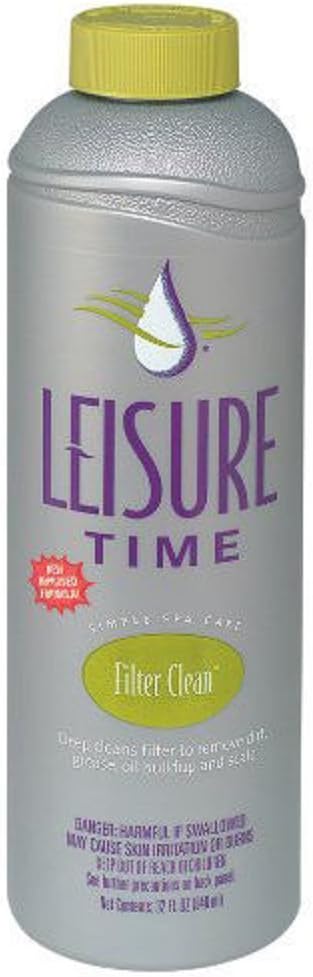
While the tub is empty, give your filter a chemical bath. Soak it for several hours in a bucket with a filter cleaner solution. This will break down oils and minerals that rinsing can’t remove. Also, take a moment to wipe down the pump unit and check that all connections are secure—a common issue we cover in our Intex PureSpa troubleshooting guide.
-
5
Refill & Rebalance
Once clean, close the drain valve and refill the tub with fresh water. If your tap water has a lot of metals or minerals, consider using a hose-end filter. Once full, turn the pump on, start the heater, and begin balancing your water chemistry from scratch. It’s ready to enjoy once it reaches your desired temperature!
How do you know whether you should be draining every three months, or sooner? The honest answer is that “3-4 months” is a general guideline for moderate use, not a hard rule. A helpful way to think about it is in terms of “gallon-soaks”—the total number of person-soaks your water has absorbed relative to its total volume. A small two-person inflatable tub used daily by a family of four will accumulate contaminants far faster than a larger six-person spa used only on weekends by a couple. If you notice your sanitizer demand climbing (you’re adding more and more chlorine just to hold the same reading), your water starts to feel slippery or slightly cloudy even right after shocking, or your TDS reading creeps toward the top of its scale, treat those as signs to drain early rather than waiting for the calendar to catch up.
Part 6: A Deeper Look at Filters—Types, Lifespan, and Replacement
If your sanitizer is the frontline defense against bacteria, your filter is the unsung hero quietly removing the physical debris, oils, and particulates that would otherwise cloud your water and clog your jets. Yet filters are also the most commonly neglected component in a home spa maintenance routine.
Common Filter Types
Most inflatable hot tubs ship with a pleated paper or polyester cartridge filter, rated by micron size—the smaller the micron rating, the finer the debris it can capture, though finer filters also clog faster and may need more frequent rinsing. Some higher-end inflatable models use a dual-filter system, running two cartridges simultaneously to extend the interval between cleanings and reduce strain on the pump motor.
How Long Does a Filter Actually Last?
As a general guideline, expect to rinse your filter weekly, deep-clean it (soaking in filter cleaner solution) monthly, and fully replace the cartridge every 3-4 months under normal use—sooner if you notice the pleats staying discolored even after a deep clean, if water flow from the jets seems weaker than usual, or if your filter housing shows visible tearing or mineral crusting that won’t rinse away. A filter that’s past its usable life forces your pump to work harder to push water through clogged pleats, which can shorten the lifespan of the motor itself, turning a small $10-15 filter purchase into a much more expensive pump repair or replacement down the road.
Rotating Two Filters
One trick many experienced owners swear by is keeping two filter cartridges in rotation. While one is installed and running, the other soaks in a filter cleaner solution or simply air-dries completely. Swapping them weekly means your spa is never running on a filter, that’s still damp from a rushed rinse, and it dramatically extends the effective life of each cartridge since they each get more complete drying and cleaning time between uses.
Part 7: Seasonal Maintenance Considerations
Your cleaning routine shouldn’t stay static all year. Heat, sunlight, and cold each introduce their own unique challenges.
Summer: Fighting Heat and Algae
Warmer ambient temperatures and stronger sunlight both accelerate sanitizer breakdown and create ideal conditions for algae growth, especially if your tub sits anywhere that gets direct sun for part of the day. During the hottest months, consider testing your water every other day instead of a couple times a week, and keep the cover on whenever the tub isn’t in use to block UV exposure. If you know guests will be visiting frequently, pre-emptively shocking the water the evening before a gathering (rather than after) gives the oxidizer time to fully work through the water before bathers get in.
Winter: Freeze Protection and Cover Care
If you’re using your spa through the colder months, a topic we cover in more depth in our guide to the best inflatable hot tub for winter, freeze protection becomes the priority. Never let the pump sit idle for extended periods in freezing temperatures, since standing water in the lines can freeze, expand, and crack fittings or damage the pump housing. Most inflatable spa heaters include a freeze-protection mode that automatically cycles the pump periodically in cold weather—make sure this feature is enabled and that the unit stays plugged in and powered throughout winter, even on days you don’t plan to soak. If you’re closing the tub down for the season entirely, follow the manufacturer’s winterizing instructions closely, which typically involve fully draining every line, using a wet/dry vacuum to clear residual water from the pump and plumbing, and storing the shell somewhere dry.
Spring and Fall Transition
The shoulder seasons are a great time to schedule your quarterly deep clean if you haven’t already, since ambient temperatures make it more comfortable to work around an empty, uncovered tub than during the height of summer or the depths of winter. It’s also a smart time to inspect your cover for wear, check that zippers and clips on any thermal blanket are still functioning, and replace your filter cartridge fresh ahead of the season where you’ll likely be using the tub most.
Many owners also use the transition seasons to reassess their overall setup based on the past several months of experience—relocating the tub slightly if sun exposure or falling debris turned out to be worse than expected, upgrading to a better-insulated cover if winter heating costs ran higher than anticipated, or reconsidering sanitizer systems if the one they started with hasn’t been a great fit for their household’s bather load and sensitivity needs.
Part 7b: Calculating Bather Load and What It Means for Your Routine
“Bather load” is simply a way of describing how much contaminant demand your water is under relative to its total volume. A useful mental model is to think in terms of person-minutes per gallon: a 300-gallon two-person tub used for a 30-minute soak by two people represents a meaningfully different load than the same tub used by four people for an hour, even though both scenarios might happen on the same day.
As a rough planning guide, each bather-soak of moderate length (20-40 minutes) uses up a noticeable amount of your available sanitizer, and the effect compounds with more people or longer soaks. If you regularly host larger groups or extended soaking sessions, it’s worth testing immediately after those sessions rather than waiting for your normal weekly check, since a single heavy-use evening can temporarily push your sanitizer level to the bottom of its range even if your routine has been consistent all week. Owners who frequently entertain guests often find it worthwhile to keep a small reserve of sanitizer specifically for this kind of “recovery dose” after a busy session, separate from their normal weekly maintenance supply.
It’s also worth noting that bather load isn’t just about headcount—body size, how much lotion or sunscreen someone is wearing, and even how recently they showered all affect how much of a contaminant “dose” each person brings into the water. This is why the shower rule mentioned throughout this guide has an outsized effect: a household that consistently rinses off before soaking can often stretch their sanitizer and filter-cleaning intervals noticeably compared to a household that skips this step. Frequent-use households with several regular bathers may find it worthwhile to test more often than the standard weekly schedule described earlier, simply because their baseline bather load sits meaningfully higher than the moderate-use assumptions most general guidelines, including this one, are built around, and adjusting your personal schedule accordingly is always smarter than following a generic timetable blindly.
Part 7c: Eco-Friendly and Lower-Chemical Approaches
Some owners want to minimize the amount of traditional chemical sanitizer they’re using, whether for cost, sensitivity, or environmental reasons. While no inflatable spa can be run completely chemical-free and remain safe to soak in, there are a few approaches that can reduce your overall chemical footprint.
Mineral cartridge systems, mentioned earlier in the sanitizer comparison, are the most common “lower-chemical” path, since they allow a much smaller ongoing dose of chlorine or an alternative oxidizer to do the same job a full-strength chemical routine would otherwise require. Enzyme-based, non-chlorine “oil and scum eliminator” products are another popular add-on; these work by breaking down organic oils and lotions directly, which in turn reduces how hard your sanitizer has to work and can extend the interval between full shock treatments.
Beyond product choices, the single most effective “eco-friendly” lever available to any owner, regardless of sanitizer system, is simply reducing the contaminant load entering the water in the first place. The pre-soak shower rule, a foot bath at the entrance, and a scum-absorbing sponge left floating in the water all reduce how much work your sanitizer needs to do, which in turn means you can often use somewhat less of it while still hitting your target readings. Combined with disciplined filter maintenance, these habits let many owners run comfortably at the lower end of the recommended sanitizer range rather than the higher end, without sacrificing water safety or noticeably increasing their overall workload.
Part 8: Troubleshooting Common Water Problems
Even with a great routine, issues can pop up. Here’s how to diagnose and fix the most common problems.
Problem: Cloudy or Milky Water
Common Causes: Dirty filter, high pH or alkalinity, not enough sanitizer, or an excess of contaminants.
The Fix:
- Start by cleaning your filter thoroughly.
- Test and balance your pH and alkalinity.
- Shock the water with a non-chlorine shock.
- If it’s still cloudy, your Total Dissolved Solids (TDS) might be too high. It’s time for a full drain and refill.
Problem: Excessive Foam or Bubbles
Common Causes: Soaps, detergents, lotions, or hair products introduced by bathers. Very low calcium hardness can also contribute.
The Fix:
- Use a small amount of a “Foam Down” product for a quick fix.
- For a long-term solution, shock the water to break down the organic contaminants.
- If the problem persists, it’s a sign that the water is saturated with soap residue and needs to be drained and refilled.
Problem: Green Tint in the Water
Common Cause: Algae. This happens when sanitizer levels drop too low for too long, especially in sunlight.
The Fix:
- Manually remove as much algae as you can by scrubbing the walls.
- Clean your filter thoroughly to remove any algae spores.
- “Super-chlorinate” or “slam” the tub. This means shocking it with a large dose of chlorine shock to bring the level up to 10-20 ppm and holding it there until the water is clear.
- Run the filter continuously during this process. This may take a day or two.
Problem: Slimy or Slick-Feeling Water
Common Causes: Biofilm buildup inside the plumbing lines, or a heavy load of body oils and lotions that have overwhelmed your sanitizer’s oxidizing capacity.
The Fix:
- Run a dedicated spa pipe cleaner product through the jets for the recommended cycle time before your next drain—this is the only reliable way to dislodge biofilm hiding inside the plumbing where sanitizer can’t reach.
- Shock the water heavily and let the filter run continuously for several hours.
- If slickness returns quickly after a shock, plan an earlier-than-usual full drain and refill, and commit to running a pipe cleaner treatment every time you drain going forward.
- Encourage a pre-soak rinse-off shower for all bathers to reduce the oil load entering the water in the first place.
Problem: White, Crusty Scale on the Shell, Jets, or Filter
Common Causes: Calcium hardness too high, pH or alkalinity running on the high end for an extended period, or hard tap water used to fill the tub.
The Fix:
- Wipe accessible scale off the shell using a soft cloth soaked in a 50/50 vinegar-water solution.
- Soak affected filter cartridges in a dedicated calcium/scale filter cleaner rather than plain water.
- Use a pH/alkalinity decreaser to bring both readings back toward the middle of their ideal ranges.
- On your next refill, consider a hose-end inline filter designed to reduce hardness and metals in your fill water, especially if you know your local tap water is “hard.”
Problem: Brownish or Rust-Colored Staining
Common Causes: Metals (iron, copper, or manganese) present in your fill water, or corrosion from metal fixtures, coins, or jewelry accidentally left in the tub.
The Fix:
- Use a metal sequestrant/stain-and-scale preventer product, added according to label directions, which binds to dissolved metals and keeps them suspended so your filter can capture them rather than letting them oxidize and stain the shell.
- Avoid shocking heavily right after noticing rust staining, since a strong oxidizer can actually cause dissolved metals to “fall out” of solution and stain more visibly—add the sequestrant first, then shock a day or two later once it’s had time to bind the metals.
- Remove any obvious metal objects from the water and check that no fixtures are corroding.
- If staining is severe, a full drain, shell scrub, and refill using pre-filtered water is the most reliable reset.
Problem: Musty or Moldy Smell (Especially from the Cover)
Common Causes: Moisture trapped under the cover, mildew growing on the underside of the cover or thermal blanket, or a damp storage area for accessories.
The Fix:
- Remove the cover and let both sides air out fully in the sun for a few hours, which naturally helps kill mildew spores.
- Wipe the underside of the cover with a vinegar-water solution or a mild, spa-safe cleaner—never a harsh household mold remover, which can degrade the cover’s foam core or vinyl.
- Make sure the cover is fully dry before locking it back down, and avoid leaving the tub covered for long stretches while damp after rain.
- If the smell persists and seems to be coming from the water itself rather than the cover, treat it as a sanitizer-demand issue and shock the water as described in the cloudy water section above.
Problem: pH Won’t Stay Balanced (“pH Bounce”)
Common Cause: Total alkalinity is out of range, meaning your water has little to no buffering capacity and every small addition of chemicals or every bather session swings the pH dramatically.
The Fix:
- Test and correct total alkalinity first, before touching pH at all—bring it into the 80-120 ppm range using an alkalinity increaser if needed.
- Wait several hours (or overnight, with the pump running) and retest pH; it will often have settled closer to range on its own once alkalinity is corrected.
- Make small, incremental adjustments to pH from that point forward rather than large doses, retesting between each addition.
- If bounce continues even with alkalinity in range, consider whether your fill water source itself has unusually low buffering capacity and may need a specialized start-up balancing product.
Part 9: Health, Safety, and Chemical Handling
A well-balanced hot tub is a genuinely relaxing, low-risk part of a wellness routine. That said, a few health and safety basics are worth understanding so that both your body and your equipment stay protected.
Hot Tub Folliculitis and Skin Irritation
Hot tub folliculitis is a mild skin infection caused by bacteria (most often Pseudomonas aeruginosa) that thrives specifically in warm, under-sanitized water. It typically shows up as small, itchy, red bumps, sometimes with a tiny pustule at the center, appearing anywhere from a few hours to a couple of days after a soak. The single best prevention is maintaining a consistent sanitizer level and never soaking in water that’s tested outside the recommended range. If a rash does appear, it typically resolves on its own within a few days once you’re out of the contaminated water; persistent or worsening symptoms warrant a visit to a healthcare provider rather than home remedies.
Eye and Respiratory Irritation
Contrary to popular belief, the sharp “chemical” smell and stinging eyes people associate with “too much chlorine” are actually usually a sign of the opposite problem: not enough free sanitizer relative to the contaminant load, which allows chloramines (the combined byproduct of chlorine reacting with sweat, oils, and urine) to build up. Chloramines are what cause that harsh smell and irritation, not properly balanced free chlorine itself. Shocking the water regularly prevents chloramine buildup and is usually the fix for a tub that “smells too strongly of chemicals.”
Safe Chemical Storage and Handling
Always store pool and spa chemicals in their original, labeled containers, in a cool, dry location out of direct sunlight and away from children and pets. Never mix different chemical types together directly (for example, never combine chlorine and a separate shock product in the same scoop or container before adding them to the water) since some combinations can react dangerously. Always add chemicals to water, never water to concentrated chemicals, and wash your hands after handling any spa chemical. Keep the area around your chemical storage well-ventilated, and never store chemicals in a fully sealed container that’s shown any sign of bulging, which can indicate an internal reaction already underway.
Special Considerations for Children, Pregnant Bathers, and Immunocompromised Users
Young children, pregnant individuals, and anyone with a compromised immune system are generally more sensitive to both water temperature and water quality issues. It’s worth double-checking your specific spa’s guidance on maximum safe soak temperature and duration for these groups, testing water quality more conservatively (erring toward the lower end of the sanitizer range rather than the upper end) before they soak, and never allowing supervision to lapse around an inflatable spa, since the soft, sometimes slippery sides differ from a rigid in-ground pool’s edge.
Part 10: Water Testing Methods Compared
Not all testing methods are created equal, and choosing the right one for your habits can make balancing your water noticeably easier.
Test Strips
The most popular option for home spa owners, test strips are dipped briefly in the water and compared to a color chart. They’re fast, inexpensive, and require no extra equipment, which is why our recommended toolkit above leads with them. Their main limitation is that color-matching is somewhat subjective and can be affected by lighting conditions, so results are best treated as a solid ballpark rather than a laboratory-precise reading.
Liquid Reagent Kits
Liquid test kits use drop-by-drop reagents and a color-comparison block, similar to what many professional pool stores use. They’re generally considered more accurate than strips, particularly for chlorine and pH, but take longer to perform and require careful handling of the reagent bottles, which do have a shelf life and can degrade in heat.
Digital Testers
Digital and photometric testers use a small sensor or light-based reading to eliminate the subjectivity of color-matching altogether. They tend to be the most consistent and precise option, which makes them appealing for owners who want repeatable, trustworthy numbers, but they carry a higher upfront cost and still require occasional calibration or reagent replacement depending on the model.
For most inflatable hot tub owners, a combination approach works best: keep a supply of test strips on hand for quick daily or every-other-day checks, and consider a liquid or digital kit if you want a more precise cross-check whenever you’re troubleshooting a persistent problem like the pH bounce or cloudiness issues described above.
Part 11: Does Your Water Source Matter? City, Well, and Softened Water
Most owners fill their spa from whatever hose is closest and never think twice about where that water actually comes from. But your fill water’s starting characteristics can meaningfully shape how much work your maintenance routine requires from day one.
City (Municipal) Water
Municipal water is generally the most predictable option, since it’s already treated and typically arrives with a mild chlorine or chloramine residual and moderate mineral content. That said, municipal water quality varies significantly by region and season, and some cities periodically increase disinfectant levels or adjust their own treatment process in ways that can shift your starting pH or alkalinity more than you’d expect. It’s worth testing your fill water straight from the tap occasionally, just to know your local baseline.
Well Water
Well water is far more variable and is the most common culprit behind the rust-staining and scale problems covered in Part 8. Depending on your local geology, well water can carry elevated iron, manganese, or calcium content, plus a starting pH that’s meaningfully different from neutral. If you’re on a well, it’s worth testing your fill water for metals and hardness before your very first fill, and strongly consider using a hose-end inline filter every time you refill, not just when problems appear.
Water Softener Systems
If your home uses a water softener, be cautious about filling your spa directly from a softened line. Softeners typically work by exchanging calcium and magnesium for sodium, which can leave your spa water with unusually low calcium hardness—potentially corrosive to metal components over time, as discussed earlier in the water balance section. Where possible, fill from an unsoftened outdoor spigot, or plan to test and adjust calcium hardness upward immediately after filling from a softened source.
Part 12: How Setup Location Affects Your Cleaning Workload
Where you place your inflatable hot tub has a bigger impact on your ongoing cleaning burden than most first-time owners expect, and it’s worth thinking through before you settle on a permanent spot.
Sun Exposure
A tub placed in full, direct sun for most of the day will burn through sanitizer noticeably faster than one that’s partially shaded, since UV light breaks down chlorine in particular. If relocating isn’t an option, compensate with a slightly more frequent testing schedule during peak sun months and make sure the cover goes on immediately after each use rather than being left off “for later.”
Overhanging Trees and Landscaping
A beautiful shaded spot under a tree can dramatically cut down on sun-driven sanitizer loss, but it introduces its own tradeoff: falling leaves, pollen, seed pods, and sap dropping directly into the water or onto the cover. If your tub sits under trees, plan on more frequent surface skimming and more frequent cover wipe-downs, and consider a simple floating debris net that can be left in place between uses to intercept material before it sinks and decomposes.
Ground Surface and Drainage
The surface underneath your tub also matters for cleaning purposes. A tub set up on grass or bare soil is much more likely to have dirt, grass clippings, and mud tracked in around the base, which bathers can carry into the water on their feet even with reasonable care. A hard, level surface such as a deck, patio, or a dedicated foam or interlocking-tile spa pad both protects the tub’s floor from punctures and meaningfully reduces the amount of debris entering the water. It’s also worth thinking about drainage before your first quarterly reset—choose a location where several hundred gallons of drained water has somewhere sensible to go without pooling against a foundation or flooding a garden bed.
Part 13: Cleaning Quirks Across Different Inflatable Spa Brands
While the core chemistry and routine in this guide apply universally, a few brand-specific design differences are worth knowing about, since they can change small details of your cleaning process.
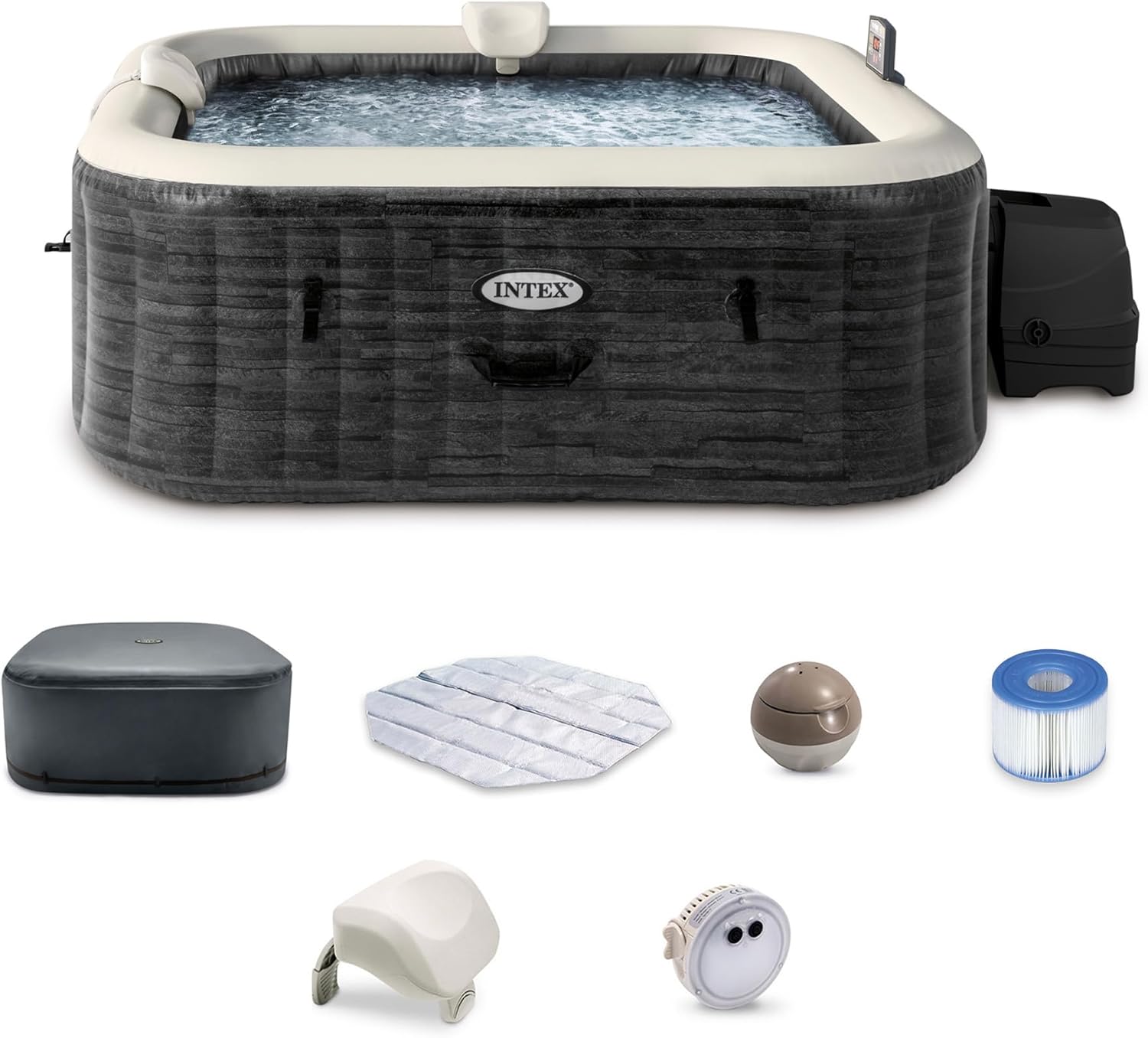
Intex PureSpa Models
Many Intex models feature a built-in hard water system or a secondary filtration cartridge alongside the main paper filter, designed to help manage mineral content automatically. If your model includes this feature, check it during your weekly routine alongside your primary filter, since it can become just as clogged with scale and debris over time. Our dedicated Intex PureSpa troubleshooting guide covers model-specific quirks in more detail.
Coleman SaluSpa Models
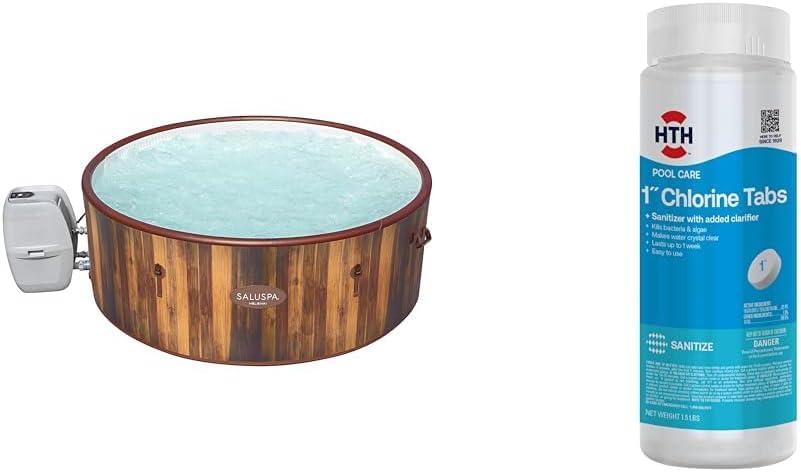
Coleman SaluSpa tubs, reviewed in depth in our Coleman SaluSpa review, generally use a single-stage cartridge filter and tend to have slightly smaller water volumes than comparable Intex models of the same seating capacity. Because of that smaller volume, contaminant concentration climbs faster per bather, which means the “smaller tubs, bigger impact” principle mentioned in our pro-tips applies especially strongly here—stick closely to the weekly schedule rather than stretching it out.
Bestway SaluSpa Models
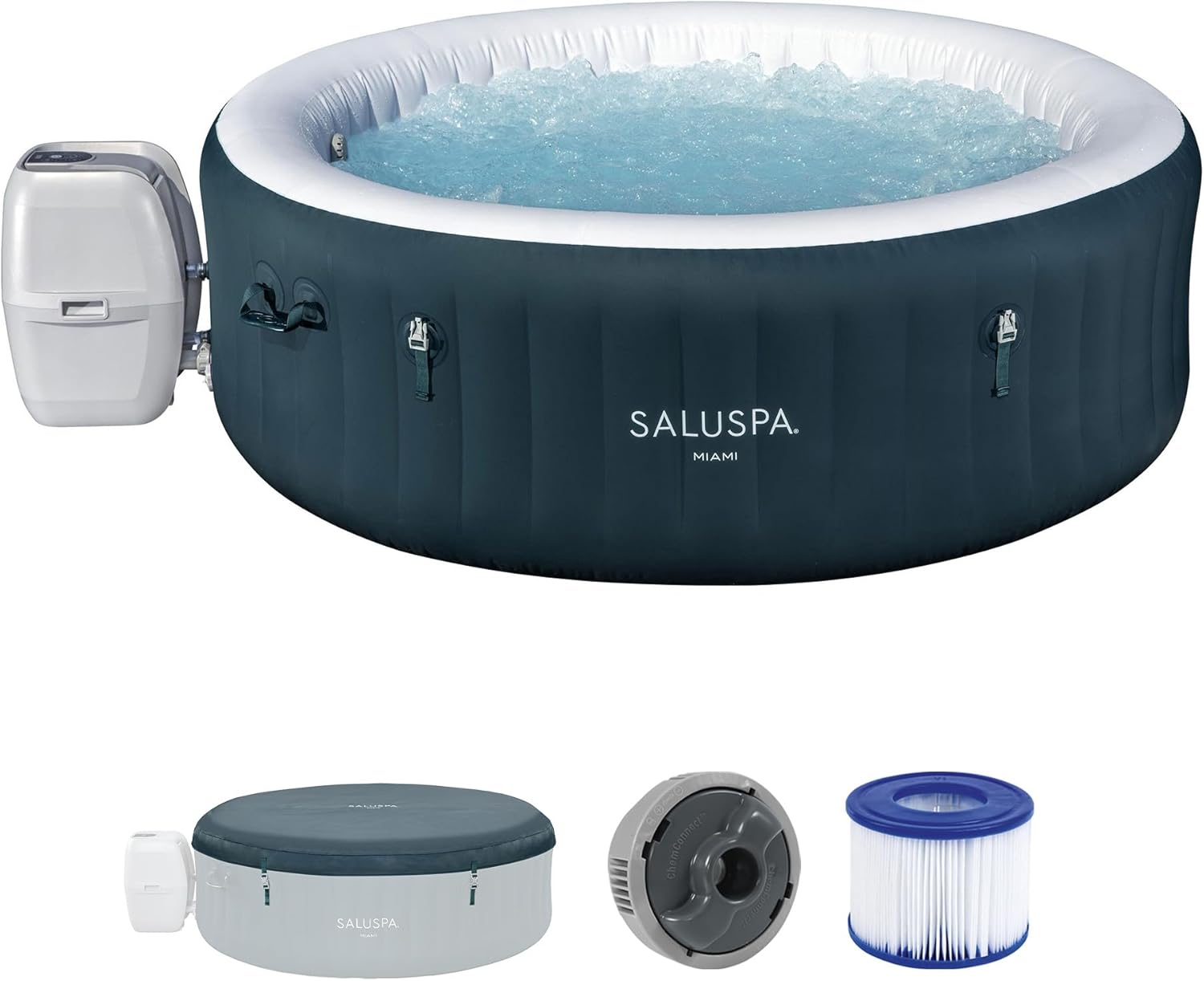
Compact models like the Bestway SaluSpa Miami prioritize portability and a smaller footprint, which again means less total water volume diluting whatever bathers bring in. These compact models benefit noticeably from the pre-soak shower rule and a scum absorber sponge, since there’s simply less water available to dilute oils and lotions before they show up as a visible waterline ring.
Our full Intex vs. Coleman comparison goes further into feature-by-feature differences if you’re deciding between brands or simply want to understand your existing tub’s design choices a little better.
Part 13b: Building a Simple Maintenance Log
One habit that separates owners who rarely have water problems from those who fight recurring issues is keeping some form of maintenance log, even an informal one. You don’t need specialized software or a fancy app; a simple notebook kept near your chemical storage tote, or a recurring note on your phone, is enough to capture the handful of data points that matter.
At minimum, record the date, your sanitizer reading, pH, total alkalinity, and any chemicals you added that session. Over a few weeks, patterns become obvious that are easy to miss day-to-day: maybe your alkalinity always seems to drift down by the time your weekly test rolls around, suggesting you should nudge your target slightly higher after each refill. Maybe your sanitizer demand spikes predictably after weekend gatherings, which tells you to plan an extra dose Sunday evening rather than waiting until your normal Wednesday check. A log also makes it dramatically easier to diagnose a new problem, since you can look back and see exactly when a reading started drifting rather than guessing.
| Date | Sanitizer (ppm) | pH | Alkalinity (ppm) | Action Taken |
|---|---|---|---|---|
| Example: Mon | 1.5 | 7.4 | 90 | Added 1 tsp sanitizer, filter rinsed |
| Example: Wed | 0.5 | 7.6 | 85 | Shocked water, ran filter overnight |
| Example: Sat | 2.0 | 7.5 | 95 | No action needed |
Feel free to copy this simple format into your own notebook or spreadsheet. Even three or four columns tracked consistently will teach you more about your specific tub’s behavior in a single season than any general guide, including this one, ever could—because every setup, climate, and household is a little different.
Part 14: Quick Glossary of Hot Tub Water Terms
If you’ve made it this far, you’ve encountered a lot of terminology. Here’s a quick-reference glossary of the terms covered throughout this guide.
- Alkalinity (Total Alkalinity, TA): A measure of your water’s ability to resist pH swings; acts as a buffer.
- Biguanide: A less common, chlorine-free sanitizer chemistry sometimes used as an alternative system; not covered in depth here since it’s rare in inflatable spas but occasionally seen in specialty kits.
- Biofilm: A slimy layer of bacteria that can colonize plumbing lines, resistant to normal sanitizer levels.
- Calcium Hardness: The concentration of dissolved calcium and other minerals in the water.
- Chloramines: Byproducts formed when chlorine reacts with contaminants like sweat and oils; responsible for the sharp “chemical” smell.
- Dichlor: A stabilized granular chlorine sanitizer commonly used in spas.
- pH: A measure of acidity/basicity on a 0-14 scale; spa water targets 7.4-7.6.
- ppm: Parts per million, the standard unit for measuring chemical concentration in water.
- Sequestrant: A chemical that binds to dissolved metals to prevent staining.
- Shocking: Adding a large dose of oxidizer to break down organic contaminants and chloramines.
- Total Dissolved Solids (TDS): A cumulative measure of everything dissolved in the water over time; the main reason water eventually needs to be drained.
Part 15: Common Mistakes That Undermine a Good Routine
Even diligent owners can fall into a few common traps that quietly sabotage their water quality. Watch out for these:
- Adding sanitizer without testing first. Dosing “on a schedule” rather than based on an actual reading is one of the fastest ways to end up with wildly inconsistent levels—sometimes too high, sometimes too low.
- Skipping the pre-soak rinse. It sounds minor, but body oils, lotions, sunscreen, and deodorant are consistently the single biggest contributor to cloudy water, foam, and rapid sanitizer demand.
- Running the filter only while soaking. Your filtration system needs regular run-time even when nobody’s using the tub to keep water circulating and sanitizer distributed evenly; check your owner’s manual for the recommended daily filter cycle and don’t shorten it to save on electricity.
- Neglecting the cover. A cracked, waterlogged, or moldy cover doesn’t just look bad—it lets in debris and sunlight that accelerate every water problem in this guide.
- Over-correcting chemical doses. Adding a huge dose of pH decreaser or increaser in one shot, rather than smaller incremental amounts with retesting in between, is a common cause of the “pH bounce” problem covered earlier.
- Using household cleaning products on the shell or filter. Dish soap, all-purpose cleaners, and especially anything bleach-based can introduce foaming agents and residues that are extremely difficult to fully rinse out of a filter’s pleats.
- Waiting too long between filter cleanings. A clogged filter doesn’t just reduce water clarity; it strains the pump motor and can shorten its lifespan considerably.
- Ignoring the fill water source. Filling from a well or a softened line without testing first, as covered earlier, can set up scale, staining, or corrosion problems that no amount of routine maintenance fully solves after the fact.
- Treating the cover as an afterthought. A cover that’s cracked, waterlogged, or growing mildew undermines nearly every other part of a good routine, since it’s meant to be your first line of defense against sun, debris, and heat loss.
- Chasing a single “bad” reading in isolation. Because alkalinity, pH, and sanitizer levels interact with one another, adjusting only the number that looks “off” on a test strip without considering the others often creates a new imbalance elsewhere. Always work through parameters in the order recommended earlier—alkalinity, then pH, then sanitizer—rather than fixating on whichever number looks most alarming.
None of these mistakes are complicated to avoid once you know what to watch for, which is really the whole point of building a routine rather than reacting to problems as they arise. A few consistent minutes of attention, guided by an understanding of what’s actually happening chemically and biologically in your water, will save you far more time and money than any single “miracle” product ever could.
Pro-Tips for a Cleaner, Happier Hot Tub
- The Shower Rule: The #1 way to keep your water clean longer is to have everyone take a quick rinse-off shower with no soap before getting in. This removes most of the lotions, deodorants, and oils that contaminate the water.
- Use a Foot Bath: Place a small tub of water next to your spa for people to rinse their feet before stepping in. This keeps grass, dirt, and sand out of your tub and filter.
- Love Your Cover: Keep your cover on and locked whenever the tub isn’t in use. This not only saves energy but also keeps out debris and sunlight (which degrades chlorine). This is especially important if you plan on using your tub in colder months, a topic we cover in our guide to the best inflatable hot tub for winter.
- Smaller Tubs, Bigger Impact: Remember that smaller tubs, like many popular 4-person inflatable hot tubs (including the compact Bestway SaluSpa Miami), have less water volume. This means that contaminants from one person have a much bigger impact on the water chemistry, making a consistent cleaning routine even more vital.
- Know Your Model: While these rules apply universally, it’s good to know your tub’s quirks. Our Intex vs. Coleman comparison highlights features like Intex’s hard water system that can make maintenance easier.
- Keep a Simple Log: Jotting down your weekly test readings, even in a basic notebook or phone note, makes it much easier to spot slow trends—like alkalinity gradually drifting down—before they turn into a full-blown problem.
- Time Your Shock Right: Shocking works best when the water isn’t actively being used for several hours afterward, so plan your weekly shock for a time when the tub will sit undisturbed overnight or during a workday.
Frequently Asked Questions
How often should I completely drain my inflatable hot tub?
Most owners should plan a full drain and refill every 3-4 months under moderate use. Heavier use (daily soaking, multiple bathers, or a smaller tub with less total water volume) can shrink that window to as little as 6-8 weeks, while light, occasional use might comfortably stretch closer to 4 months. Watch your TDS reading and how quickly your sanitizer demand climbs as your best real-world indicators, rather than relying purely on the calendar.
Can I use regular pool chlorine in my inflatable hot tub?
It’s best to stick with sanitizer products specifically labeled for spas and hot tubs. Spa-specific dichlor granules are formulated to dissolve at the lower water volumes and higher temperatures typical of a hot tub, whereas some pool chlorine products are formulated differently and may not perform as predictably or could affect pH and stabilizer levels in ways that are harder to manage in a small water volume.
Why does my hot tub water smell strongly of chemicals?
A strong chemical smell is almost always a sign of chloramines—the byproduct of sanitizer reacting with body oils, sweat, and other contaminants—rather than too much sanitizer itself. Shocking the water to break down these chloramines, and making sure your baseline sanitizer level is actually in the correct range rather than depleted, typically resolves the smell.
Is it safe to use my hot tub while the water is being treated with shock?
No. Always wait until your sanitizer level has settled back into the normal recommended range before getting back in, and follow the specific product’s label instructions for wait time, which is often at least 20-30 minutes with the cover off and jets running, though some products recommend longer.
What’s the difference between shocking and sanitizing?
Sanitizing (with chlorine, bromine, or a mineral system) is the ongoing, lower-dose process of killing bacteria and preventing new growth. Shocking is a periodic, larger dose of an oxidizer used to break down the buildup of organic waste like oils, lotions, and chloramines that routine sanitizing alone can’t fully clear. Both are necessary parts of a complete routine, not substitutes for one another.
My filter looks clean after rinsing, but the water is still cloudy. What’s wrong?
A filter can look visually clean while still being clogged at a microscopic level with oils and fine particulate that a simple hose rinse can’t remove. Try a proper chemical soak using a dedicated filter cleaner solution for several hours, and if the cartridge is more than a few months old, it may simply be time to replace it rather than continuing to clean it.
Can I use a saltwater system in any inflatable hot tub?
Not every inflatable spa is compatible with a saltwater or mineral cartridge system out of the box, and adding salt to a tub not designed for it can affect components not rated for the added corrosivity. Check your specific model’s manual, or look for compact spa-rated salt systems designed for small water volumes, before converting.
How long can I leave my hot tub water sitting without anyone using it?
Even with nobody soaking, water left stagnant can still develop algae or bacterial growth if the filtration system isn’t running on its normal cycle and sanitizer isn’t periodically checked. If you’ll be away for an extended period, keep the pump’s automatic filtration cycle running as normal, maintain sanitizer levels before you leave, and consider asking someone to check the water and add sanitizer if you’ll be gone longer than a week or two.
Does rain affect my hot tub’s water chemistry?
Yes. Rainwater is typically slightly acidic and can dilute your sanitizer and alkalinity levels if a meaningful amount gets into an uncovered tub. After a heavy rain, it’s worth retesting your water sooner than your normal schedule and adjusting as needed, and it’s another good reason to keep the cover locked down whenever the tub isn’t in use.
What should I do if I’m going on vacation for two weeks?
For trips longer than a week, most owners either arrange for someone to check chemical levels periodically, or perform a full drain, clean, and leave the tub empty and covered until they return, then refill just before use. Leaving a fully filled, unmonitored spa for an extended stretch significantly raises the odds of coming home to an algae bloom or a heavily contaminated filter.
Do I need to shock my hot tub if nobody has used it recently?
Generally, if the water hasn’t been used and your filtration system has continued running its normal cycle with sanitizer maintained, you can skip an unnecessary shock. However, if the tub has sat idle for more than a week or two without monitoring, it’s safest to test thoroughly and shock before use resumes, since stagnant conditions can allow contaminant levels to drift even without active bathing.
Why is my heater struggling to reach temperature?
A heater that runs constantly but can’t quite reach or hold your set temperature is often a sign of scale buildup coating the heating element, which insulates it and reduces efficiency, or a clogged filter restricting water flow across the heater. Start by cleaning or replacing your filter and addressing any scale issues as described in the troubleshooting section above; if the problem persists after both are ruled out, the heating element itself may need professional inspection.
My jets seem weaker than when the tub was new. What’s going on?
Weakening jet pressure is most commonly caused by a clogged or overdue filter restricting flow, air trapped in the lines, or scale buildup narrowing the internal plumbing diameter over time. Check and clean your filter first, then consult your owner’s manual for the correct priming procedure to clear trapped air, and consider a pipe cleaner treatment at your next drain if scale is suspected.
Is it normal for the water to look slightly different right after adding chemicals?
A brief, light haziness for a few minutes right after adding chemicals like a pH adjuster or shock is normal, especially with the jets running to help disperse the product. If the haziness doesn’t clear within 20-30 minutes with continued filtration, treat it as the cloudy water issue described earlier and work through that troubleshooting sequence.
Can pets get in the hot tub, and does that affect cleaning?
Small pets occasionally getting in the water introduce a significantly higher contaminant load than a human bather, due to fur, dander, and typically no pre-rinse. If pets do use the tub, plan on a more aggressive shock treatment and filter check afterward, and consider a dedicated skimmer pass to remove loose fur before it reaches the filter.
Should I cover the tub while chemicals are dissolving?
Most manufacturers and chemical product labels recommend leaving the cover off while shock or other fast-acting chemicals dissolve and off-gas, both to allow proper dispersal with the jets running and to avoid trapping fumes under the cover. Always check your specific product’s label instructions, since recommended times can vary between brands.
Is a mineral cartridge system worth the extra upfront cost for a small household?
For a small household using the tub occasionally, the ongoing chemical savings from a mineral system are usually modest, so the decision often comes down to preference around odor and skin feel rather than pure cost savings. Larger households or frequent users tend to see the payback more clearly, since they’re replacing more traditional sanitizer to begin with.
What’s the very first thing I should do if I inherit or buy a used inflatable hot tub?
Before ever filling a used tub, thoroughly inspect and clean the shell, replace the filter cartridge entirely rather than trying to clean whatever came with it, and run a full pipe cleaner treatment through an initial fill before draining and refilling fresh. Treat the first fill as a deep-clean cycle rather than a normal fill, since you have no reliable history of how the previous owner maintained it. It’s also worth inspecting the liner carefully for small punctures or thinning seams before committing to a full fill, since a used tub’s shell has already been through at least one full lifecycle of wear, and catching a small weak spot early is far easier than dealing with a slow leak later.
Final Thoughts: A Sparkling Reward
Cleaning your inflatable hot tub might seem like a complex chore, but it’s really just a series of simple, repeatable tasks. By investing just a few minutes each week, you ensure every soak is a safe, healthy, and blissful experience. You protect your investment, prevent frustrating problems, and keep your backyard oasis sparkling and ready for action.
Understanding the science behind pH, alkalinity, and sanitizer levels turns what can feel like guesswork into a confident, repeatable system. Combine that knowledge with the daily, weekly, and quarterly routine outlined above, stay alert to the seasonal shifts your climate brings, keep half an eye on where your fill water comes from and where your tub is positioned, and you’ll spend far more time soaking and far less time troubleshooting.
Every section in this guide traces back to the same underlying idea: a hot tub is a small, living ecosystem that rewards a little consistent attention and punishes neglect quickly. The good news is that once the routine becomes habit—skim and dose after each soak, test and clean the filter weekly, shock on schedule, and drain quarterly—it stops feeling like a chore at all and simply becomes part of enjoying the tub itself.
Now that you’re an expert on maintenance, if you’re ever in the market for a new spa or an upgrade, be sure to check out our comprehensive review of the best inflatable hot tubs of 2026 to see the latest and greatest models available. Happy soaking!