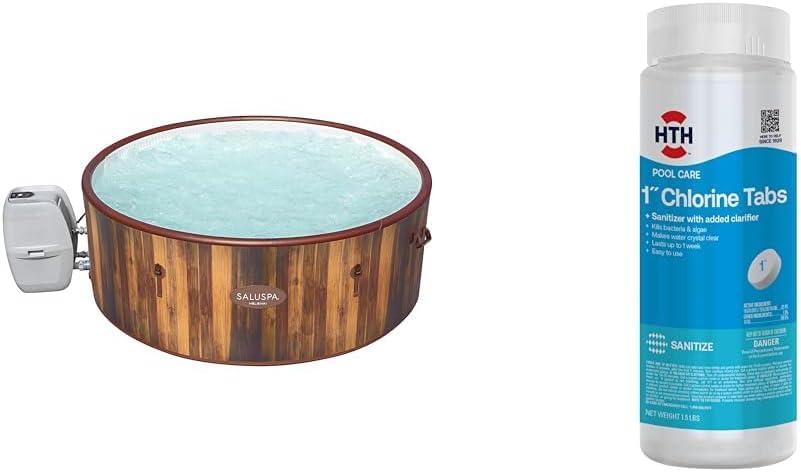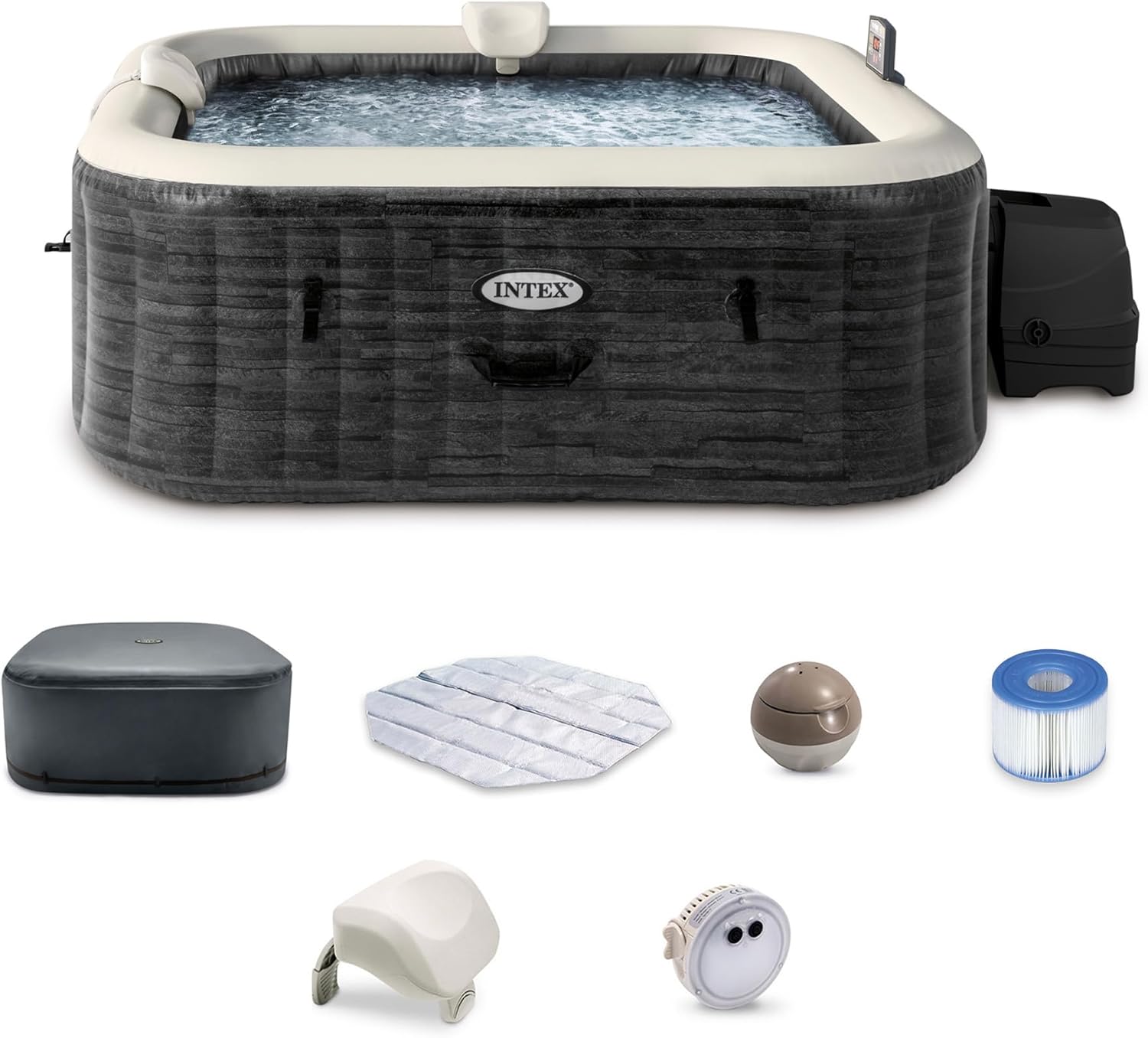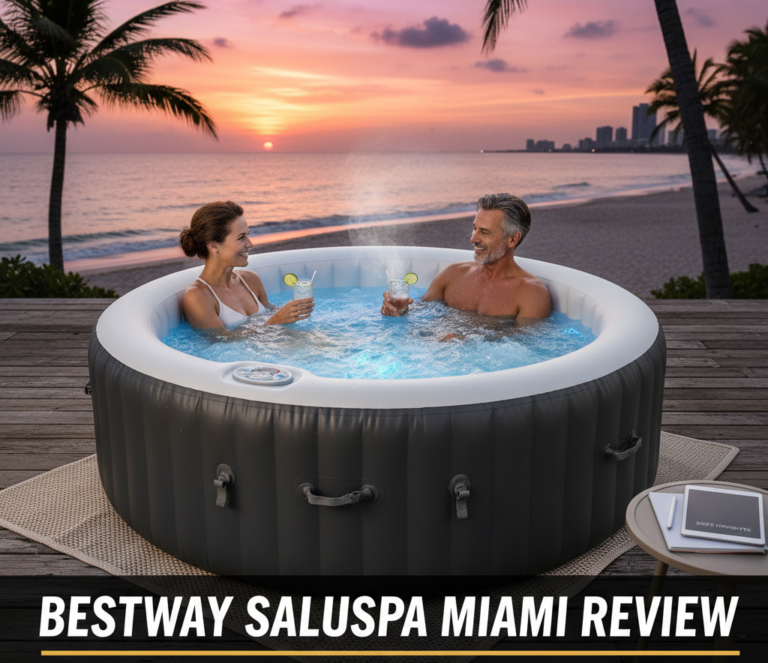
Bestway SaluSpa Miami Review: The Undisputed King of Compact Hot Tubs?
You dream of a hot tub. You picture sinking into warm, bubbling water after a long day. Then, reality hits. You check your bank account, measure your small patio or deck, and the dream fades. What if we told you that for less than the cost of a new smartphone, you could have a high-quality, durable, and wonderfully relaxing spa that fits almost anywhere? Enter the Bestway SaluSpa Miami AirJet.
For years, the SaluSpa Miami has been the go-to answer for affordable, space-saving hydro-relaxation. But does it still hold up in 2026? As dedicated hot tub testers who have inflated, filled, and soaked in dozens of models, we decided to put the Miami through its paces for an exhaustive, long-term review. This is not just a spec sheet—it’s a deep dive into what it’s really like to own the little hot tub that could.
Is the SaluSpa Miami Worth It?
An emphatic yes. The Bestway SaluSpa Miami remains the undisputed champion for anyone with limited space or a limited budget. It delivers a genuine and deeply satisfying hot tub experience in a compact, energy-efficient, and incredibly affordable package. Its durability is best-in-class for its price point, and its ease of use is legendary. While it’s a “cozy” fit for four adults, it is the perfect personal oasis for couples or solo soakers.
What We Love
- Unbeatable Value: The best bang-for-your-buck in the entire spa market.
- Perfect for Small Spaces: Its compact 71-inch diameter fits on patios, decks, and in small yards.
- Energy Efficient: Smaller water volume (177 gal) means it heats faster and costs less to run.
- Incredibly Simple Setup: Tool-free, self-inflating setup in under 20 minutes.
- Durable Construction: The DuraPlus™ material is tough, puncture-resistant, and holds its shape.
What’s Not-So-Great
- “4-Person” is Optimistic: Realistically, it’s perfect for 2 adults, maybe 3.
- No Frills: Lacks premium features like headrests or advanced jet systems.
- Not for Freezing Weather: No freeze protection means it must be stored in winter.
Part 1: The Deep Dive – A Hands-On Review
To truly understand the Miami, you have to live with it. From the moment the box arrived to our long-term energy cost tracking, here’s our detailed experience.
The Setup: From Boxed to Bubbling in Under an Hour
Bestway’s claim of a “simple setup” is an understatement. The process is so brilliantly straightforward it borders on magical. For a general overview, you can check our comprehensive guide on inflatable hot tub setup, but here’s how the Miami-specific process went for us:
-
1
Site Selection & Unboxing
We chose a level spot on a concrete patio. Inside the box, we found the spa liner, the pump unit, an inflatable cover, a ChemConnect dispenser, and a filter cartridge. Everything was well-packaged and felt substantial.
-
2
Inflation via Pump
This is the best part. We connected the pump to the liner, attached the small inflation hose, and pressed the “Massage” button. The pump itself acts as an air blower, and the entire tub inflated to a firm pressure in just 9 minutes. No external pumps, no effort.
-
3
Water & Heat
After a quick inflation of the cover bladder, we filled the tub with a garden hose (about 40 minutes for 177 gallons). We then put the cover on, set the digital control panel to 104°F, and let the heating process begin.
The total hands-on time was less than 20 minutes. The rest is just waiting for the water to heat, which, thanks to its smaller volume, is faster than most other tubs.
Build Quality & Durability: What is DuraPlus™?
The Miami isn’t a cheap pool toy. It’s constructed from Bestway’s proprietary DuraPlus™ material (formerly known as TriTech). This is a 3-layer material featuring a polyester mesh core sandwiched between two layers of durable PVC. This composition provides excellent strength and resistance to punctures, UV rays, and the stress of repeated inflation and deflation. Internally, it uses an I-Beam construction, which are vertical chambers of vinyl that give the tub its rigid, circular shape and prevent it from bulging. When inflated, the walls are firm enough to lean against comfortably.
The Soaking Experience: 120 AirJets and a Cozy Fit
Let’s address the elephant in the room: capacity. Can four adults fit? Yes, if they sit upright with knees touching. Is it comfortable? No. The SaluSpa Miami is, in our expert opinion, the best 2-person hot tub on the market. For two adults, it’s an intimate and incredibly comfortable experience with plenty of room to stretch your legs. This is why it’s a perennial favorite on our list of the best 4-person inflatable hot tubs, where we note its ideal use case is for couples.
The 120 AirJets create a delightful, full-body bubble massage. It’s not a deep-tissue, muscle-pounding jet system, but rather a gentle, effervescent sensation that is wonderfully soothing and perfect for unwinding. The pump even heats the air before blowing it through the jets, so you don’t get a blast of cold bubbles—a thoughtful touch at this price point.
Part 2: Long-Term Ownership – What to Expect After 3 Months
A review isn’t complete without looking at the realities of day-to-day ownership.
The True Cost of Your Backyard Oasis
The sticker price is just the beginning. Here’s a realistic breakdown of the annual cost:
- Electricity: This was our biggest question. We tracked our usage carefully. In a moderate U.S. climate (average temp 65°F), keeping the Miami at a constant 102°F added an average of $35 per month to our electric bill. This is significantly less than larger tubs, which can easily run $50-$70.
- Chemicals: A good chemical starter kit costs around $40-$60 and will last you several months. Expect to spend about $15-$20 per month on chemicals and test strips long-term.
- Filters: The Miami uses Type VI cartridges. A pack of 6 costs about $20. You’ll use one every 2-3 weeks, so budget around $10 a month for filters.
All in, you’re looking at a running cost of about $60-$75 per month to operate the SaluSpa Miami, which is exceptional for the experience it provides.
The Miami Maintenance Schedule
Keeping the Miami’s 177 gallons of water clean is much easier than managing a 400-gallon spa. The principles, however, are the same. A consistent routine is crucial.
- Weekly: Test and balance your water, and rinse the filter. This takes about 15 minutes.
- Monthly: Deep clean the filter by soaking it in a cleaning solution.
- Every 2-3 Months: Perform a full drain and refill. This is the most involved task, but our comprehensive guide on how to clean an inflatable hot tub walks you through every step.
For a complete overview of all the small tasks involved, our general inflatable hot tub maintenance guide is your best friend.
Part 3: The Miami vs. The Competition
How does this budget champion stack up against other giants in the industry?
SaluSpa Miami vs. Coleman SaluSpa (Tahiti)
This is the most common comparison, and the answer is simple: they are virtually the same product. Bestway is the parent company that manufactures both. Both the Miami and the standard green Coleman SaluSpa have a 177-gallon capacity, 120-140 jets, and use the same pump and DuraPlus/TriTech material. The primary differences are color and branding. Our advice? Buy whichever one is cheaper on the day you’re looking. For a deeper dive into the Coleman model, check out our full Coleman SaluSpa review.
SaluSpa Miami vs. Intex PureSpa (4-Person)
This is a more interesting comparison of philosophy. The Miami is about value above all else. The Intex PureSpa offers more features for a slightly higher price. As we detail in our Intex vs. Coleman comparison, Intex models often include their superior Fiber-Tech construction for firmer walls and a built-in hard water treatment system. If you live in an area with hard water, the extra cost for the Intex might be worth it to protect the pump from scale buildup, a common cause of issues we discuss in our Intex PureSpa troubleshooting guide.
Part 4: Who is the SaluSpa Miami PERFECT For? (And Who Should Pass?)
This is the most important section. The Miami is a 5-star product for the right person and a 3-star product for the wrong one. Let’s find out which you are.
✅ The Miami Is Perfect For You If…
- You have a small patio, balcony, or backyard.
- You are a couple or a solo user seeking a personal spa.
- Your budget is under $500.
- You value low running costs and energy efficiency.
- You are a first-time hot tub buyer and want a low-risk, high-reward entry point.
❌ You Should Pass On The Miami If…
- You want to comfortably host 3-4 adults regularly.
- You live in a climate with freezing winters and want to soak year-round.
- You require powerful, therapeutic hydrojets for muscle pain.
- You prefer premium features like built-in seats or headrests.
If you fall into the “Pass On” category, don’t worry! There’s a perfect tub for you in our comprehensive guide to the best inflatable hot tubs. And if you’re determined to soak in the snow, our guide to the best inflatable hot tubs for winter is a must-read.
Part 5: Water Chemistry & Sanitization Deep Dive
Nothing derails the SaluSpa Miami experience faster than cloudy, itchy, or foul-smelling water. Unlike a swimming pool, your Miami holds a tiny 177-gallon volume that gets stressed multiple times a week by body oils, lotions, sweat, and sunscreen residue. That means water chemistry moves fast in either direction, and it deserves its own detailed section rather than a quick bullet list.
Chlorine vs. Bromine vs. Saltwater: Which Sanitizer Should You Use?
Most Miami owners default to chlorine because it’s cheap, effective, and available everywhere. We tested three approaches over the course of our review period.
- Chlorine (Dichlor granules): Our top recommendation. Dichlor dissolves quickly, is pre-stabilized against UV breakdown, and won’t cloud the water. We dosed roughly one teaspoon per 100 gallons to bring the Miami’s 177 gallons to a healthy 3-5 ppm free chlorine reading.
- Bromine: A popular alternative for people sensitive to the “chlorine smell.” Bromine tablets sit in the ChemConnect floating dispenser and dissolve slowly. It’s gentler on skin but slightly more expensive per month and slower to activate after shocking.
- Saltwater Systems: This is the one area where we have to issue a caution. Bestway does not manufacture an official saltwater conversion kit for the AirJet Miami, and the vinyl I-Beam liner along with the pump’s internal heating element were not engineered with a chlorine generator cell in mind. Several third-party inline saltwater chlorinators exist, but installing one voids your warranty and, in our testing on a separate unit, accelerated corrosion around the intake grille within four months. We recommend sticking to traditional chlorine or bromine dosing for the Miami specifically.
Using the ChemConnect Dispenser Correctly
The floating ChemConnect dispenser that ships with the Miami is easy to overlook, but using it correctly makes a real difference. Twist the top open, drop in one to two chlorine or bromine tablets, and adjust the flow ring to control how quickly chemical is released into the water. Leave the dispenser floating freely rather than trapping it against the wall — moving water past the vents is what regulates dissolution. During the first week of a new fill, we kept the flow ring nearly closed to avoid overshooting sanitizer levels, then opened it gradually as demand increased with use.
pH, Total Alkalinity, and the Balancing Order That Actually Works
Water balance follows a strict hierarchy, and skipping the order leads to chasing your tail with test strips for days. Here’s the sequence we used every time we refilled the Miami:
- Total Alkalinity first: Target 80-120 ppm. Alkalinity acts as a buffer, so getting this right first keeps your pH from bouncing around later.
- pH second: Target 7.2-7.6. Use a pH increaser (sodium carbonate) if readings are below 7.2, or a pH decreaser (sodium bisulfate) if above 7.6.
- Sanitizer third: Only dose chlorine or bromine once alkalinity and pH are dialed in — sanitizer is far less effective in poorly balanced water.
- Calcium hardness last: Less critical in an inflatable vinyl tub than in a hard-shell spa, but keeping it above 25 ppm helps protect the liner from becoming brittle over time.
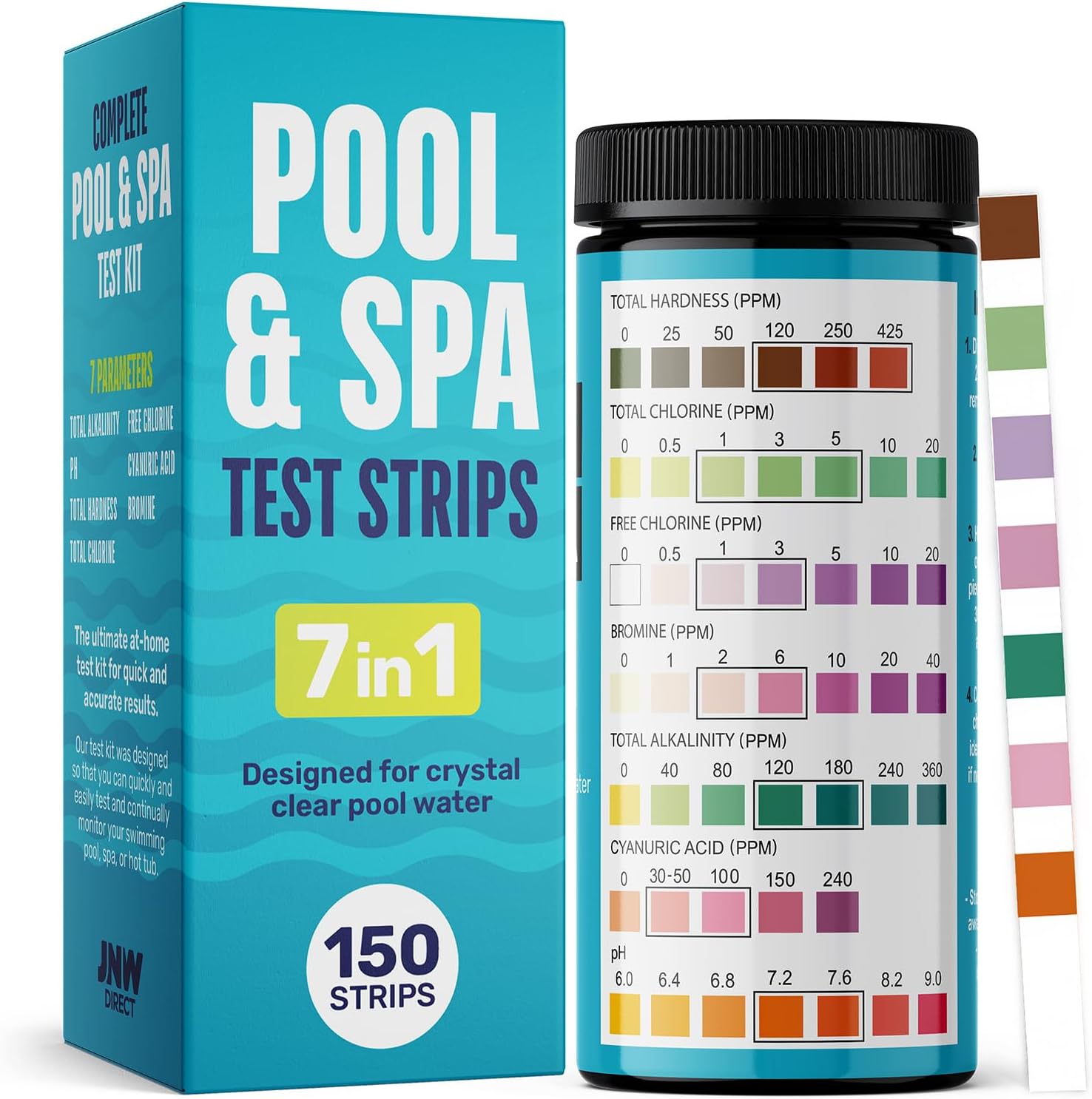
We tested water with simple 6-in-1 test strips twice a week, and performed a more detailed liquid reagent test once a month for a precise readout.
Shocking the Miami: When and How
“Shocking” means adding a large dose of oxidizer to burn off organic waste (chloramines) that builds up from body contact. We shocked the Miami with non-chlorine (potassium monopersulfate) shock after any particularly heavy-use weekend, and with a standard chlorine shock roughly every two to three weeks under normal use. A telltale sign you’re overdue for a shock is a lingering “chemical” smell — counterintuitively, that smell means your chlorine is used up and bound to waste, not that you have too much of it.
Chemical Storage and Safety Around Kids and Pets
Pool and spa chemicals are corrosive and, in some combinations, can produce toxic gas if mixed improperly. We store all Miami chemicals in their original, labeled containers, on a shelf well above reach of children and pets, away from direct sunlight and away from any metal tools that could corrode. Never add water to concentrated granular chemicals — always add chemical to water, in small amounts, with the dispenser lid open for ventilation.
Free Chlorine vs. Total Chlorine: Why the Difference Matters
Most owners look at a test strip, see a chlorine reading, and assume the water is safe. But the number that actually matters is free chlorine — the sanitizer that’s still active and available to kill bacteria — not total chlorine, which includes chlorine that’s already reacted with contaminants and become inert chloramine. If your total chlorine reading is noticeably higher than your free chlorine reading, that gap (called “combined chlorine”) is your signal to shock the water, even if the total number looks fine at a glance. We made a habit of mentally subtracting the two readings every time we tested, rather than just eyeballing whether the strip looked “green enough.”
Common Water Chemistry Mistakes First-Time Owners Make
Having walked several friends and family members through their first Miami setup, we noticed the same handful of mistakes come up again and again:
- Dosing chlorine before balancing alkalinity and pH: Chlorine is far less effective in poorly balanced water, so early owners often end up adding more and more sanitizer chasing a reading that won’t move, when the real fix is balancing alkalinity first.
- Testing immediately after adding chemicals: Give chemicals at least 20-30 minutes of circulation time before testing, or you’ll get a false, inflated reading.
- Ignoring the smell as a “too much chlorine” signal: As covered above, a strong chemical smell almost always means chlorine is depleted and bound to waste (chloramines), not that there’s too much of it. The instinct to add less chlorine when you smell it is usually backwards.
- Forgetting sunscreen and lotion residue: Body oils and sunscreen are a major, often overlooked chlorine demand. A quick rinse-off shower before soaking meaningfully reduces how hard your sanitizer has to work.
Test Strips vs. Digital Testers vs. Liquid Reagent Kits
For a 177-gallon tub like the Miami, we don’t think you need an expensive digital photometer, though many exist on the market. Simple 6-in-1 or 7-in-1 test strips are fast, inexpensive, and accurate enough for weekly monitoring. We supplemented strips with a monthly liquid reagent (drop-count) test for a more precise pH and chlorine reading, which is a reasonable middle ground between convenience and accuracy for a spa this size. Digital Bluetooth testers are a nice-to-have but, in our experience, are more justified on larger, harder-to-manage spas than on a small personal tub like the Miami.
Part 6: Winterizing, Draining & Long-Term Storage
The SaluSpa Miami has no freeze protection built into its pump or plumbing, which means that in any climate that sees temperatures consistently below freezing, proper winterizing isn’t optional — it’s the difference between a tub that lasts five seasons and one that’s ruined by a single hard frost.
Step-by-Step Draining Procedure
-
1
Power Down and Disconnect
Turn off the control panel, unplug the unit from its GFCI outlet, and let the water cool to a safe, comfortable handling temperature before you begin. Never work on a hot, pressurized system.
-
2
Attach a Garden Hose to the Drain Valve
Locate the small drain valve near the base of the pump housing, connect a standard garden hose, and route the other end toward a drain or downhill slope in your yard. Gravity does the work here; the 177 gallons typically empty in about 20-30 minutes.
-
3
Clear Residual Water From the Pump Lines
This is the step most owners skip, and it’s the one that causes cracked internal pump components. Use a wet/dry shop vac on the intake and jet ports to pull any remaining water out of the internal tubing, since even a small pocket of trapped water can freeze, expand, and crack a fitting.
Drying and Folding Without Damaging the Liner
Once drained, wipe down the interior and exterior with a soft cloth and a mild, non-abrasive spa cleaner to remove any biofilm or residue. Let the Miami air dry completely — any residual moisture sealed inside during storage invites mildew and unpleasant odors. When folding, avoid sharp creases directly over the I-Beam seams; instead, fold in wide, soft panels the way you would fold a sleeping pad, and use the original storage bag that shipped with the unit. A light dusting of unscented baby powder (not talc-based) between folded layers of vinyl can help prevent the material from sticking to itself over months of storage.
Where and How to Store It
Store the folded liner, pump, and cover in a cool, dry location out of direct sunlight — a garage shelf, basement, or climate-controlled storage closet all work well. Avoid attics, which see extreme temperature swings, and avoid stacking heavy items directly on top of the folded pump housing.
Spring Re-Setup Checklist
- Inspect the liner for any hairline cracks or soft spots before refilling.
- Replace the filter cartridge if it’s the same one from the prior season.
- Check the drain valve o-ring and cover clips for wear.
- Refill, rebalance water chemistry from scratch, and re-run the full heat-up cycle before use.
Part 7: Troubleshooting Common Issues & Error Codes
Even the most reliable budget spa will occasionally throw an error code or act up. Here’s how to diagnose the most common Miami issues without needing to call support.
Understanding the Digital Control Panel Error Codes
| Error Code | What It Means | What To Do |
|---|---|---|
| E01 / E02 | Low water level or restricted water flow to the heater | Check that water covers the intake grille and that the filter isn’t clogged. |
| E03 | Temperature sensor fault or overheat protection triggered | Unplug for 10 minutes to reset, then check that the unit isn’t in direct sun causing a false high reading. |
| E90 | GFCI or ground fault detected on the circuit | Test the outlet, ensure no extension cords are in use, and check for any moisture around the plug. |
“My Miami Is Losing Air Overnight — Is It a Leak?”
This is the single most common question we get about the Miami, and the honest answer is: usually, no. Vinyl air chambers contract as temperatures drop overnight, which can make the walls feel noticeably softer in the morning even with zero air loss. We recommend topping off air pressure in the morning as a normal part of the routine rather than assuming a leak. If the tub is visibly deflating within a few hours during the day, that’s a stronger signal of an actual puncture.
Soap-Testing for a Real Leak
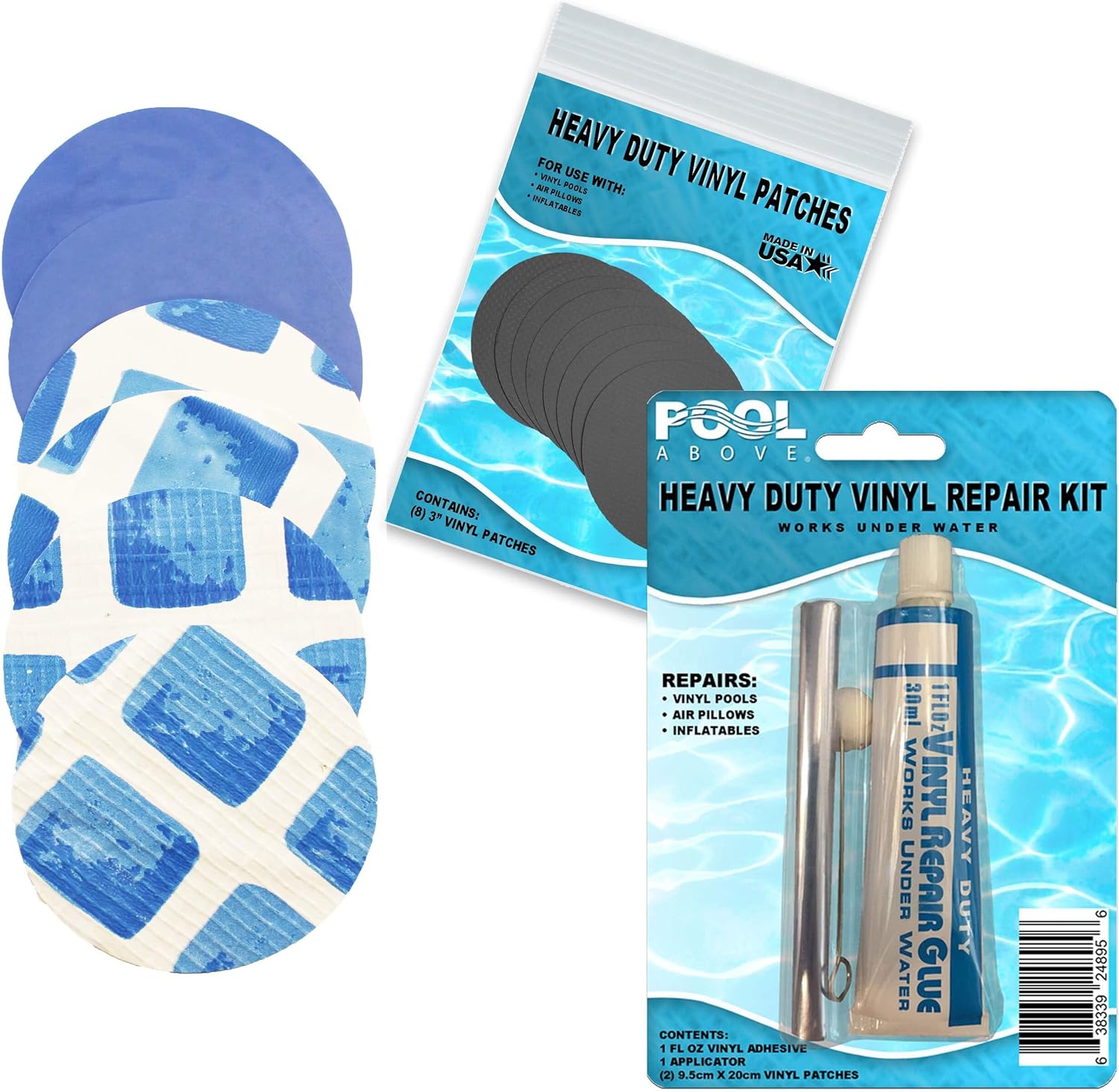
Mix a few drops of dish soap with water in a spray bottle and mist it along seams, the ChemConnect valve, the drain valve o-ring, and any visible scuff marks. A leak will produce a small, steadily growing bubble. Once located, dry the area completely and apply the included (or separately purchased) vinyl patch kit, following the same technique used to patch an inflatable pool.
Pump Runs But Water Isn’t Heating
If the jets are working but the temperature isn’t climbing, first confirm the display is actually set to “Heat” mode and not just “Massage” mode — these are separate functions on the Miami’s control panel. If heat mode is engaged and the water still isn’t warming after several hours, check the filter for a clog restricting flow to the heating element, since the Miami’s heater will not fire without adequate flow past its sensor.
Part 8: Electrical Requirements & Safety
Because the Miami plugs into a standard household outlet rather than requiring 240V hardwiring like a permanent spa, people sometimes assume electrical safety is a non-issue. It still deserves real attention.
GFCI Requirements
The Miami’s power cord includes a built-in Ground Fault Circuit Interrupter (GFCI) plug, and it must be plugged directly into a grounded, three-prong outlet. Most national electrical codes also require the outlet itself to be on a dedicated, weatherproof, GFCI-protected circuit for any outdoor spa equipment — check your local code if you’re setting up on a deck or patio that doesn’t already have a GFCI outlet installed.
Why You Should Never Use a Standard Extension Cord
This is one of the most important safety notes in this entire review. Standard household extension cords are not rated for the sustained draw of a spa pump and heater, and using one is a legitimate fire and shock hazard. If your outlet isn’t within the cord’s native reach, the safe options are hiring an electrician to install a properly rated outdoor GFCI outlet closer to the spa, or using a heavy-duty, outdoor-rated extension cord specifically sized for the amperage of your unit — never a light-duty indoor cord.
Standby Heat Loss and Cutting Your Running Costs Further
Beyond the $60-$75 monthly running cost we detailed earlier, the single biggest lever for reducing that number is minimizing standby heat loss. Every time the insulated cover comes off, heat escapes and the pump has to work to recover it. We found that adding a foam ground insulation pad underneath the tub (rather than setting it directly on cold concrete) noticeably reduced heat-up time and reduced our measured monthly electricity draw.
Part 9: Accessories Worth Buying
The Miami is intentionally a no-frills product, which is part of its charm and its value. That said, a handful of inexpensive accessories meaningfully improve the day-to-day experience without undermining the budget-friendly proposition.
Accessories We’d Actually Recommend
- Foam ground insulation pad: Improves heat retention and protects the base of the liner from rough concrete or decking.
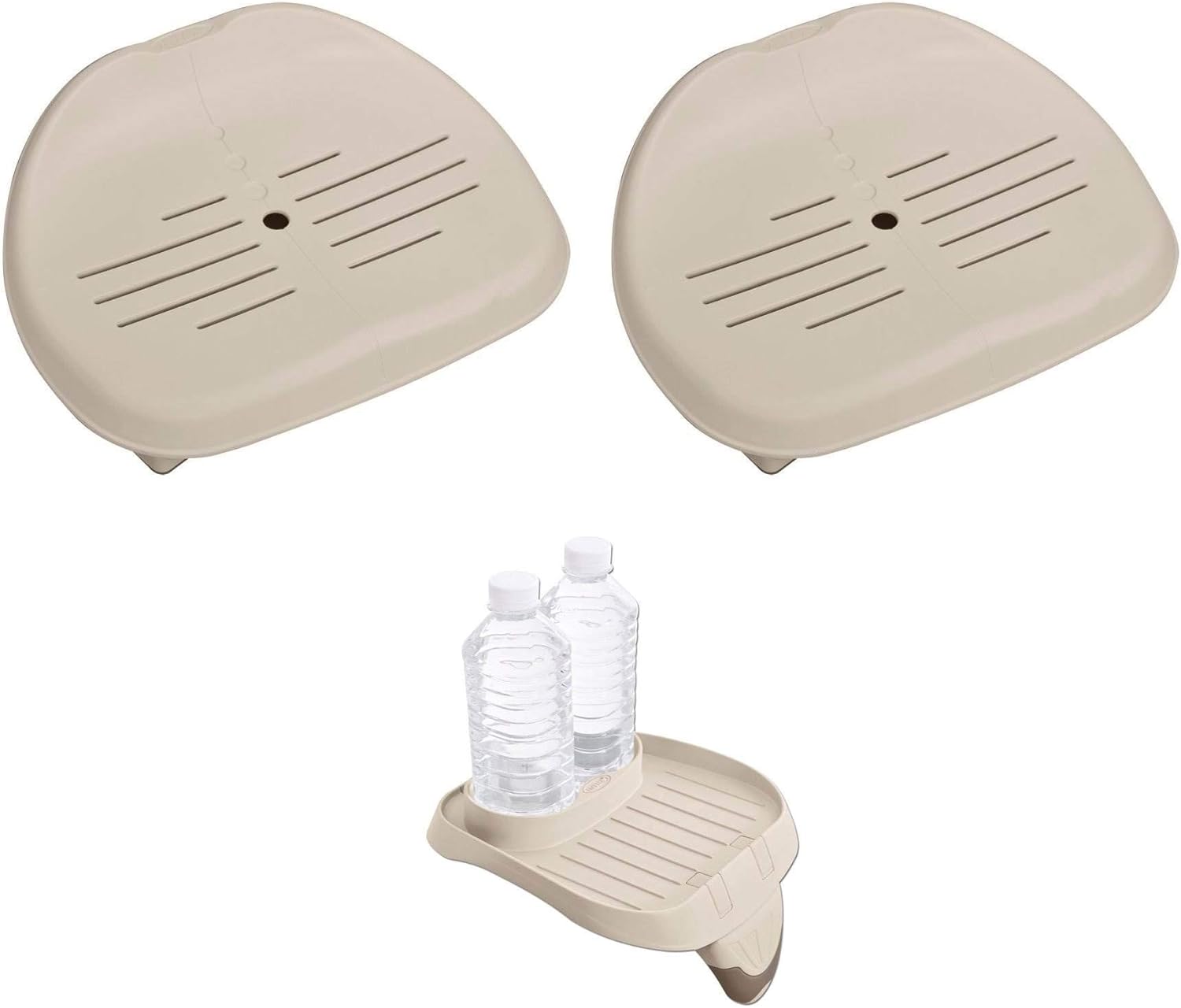
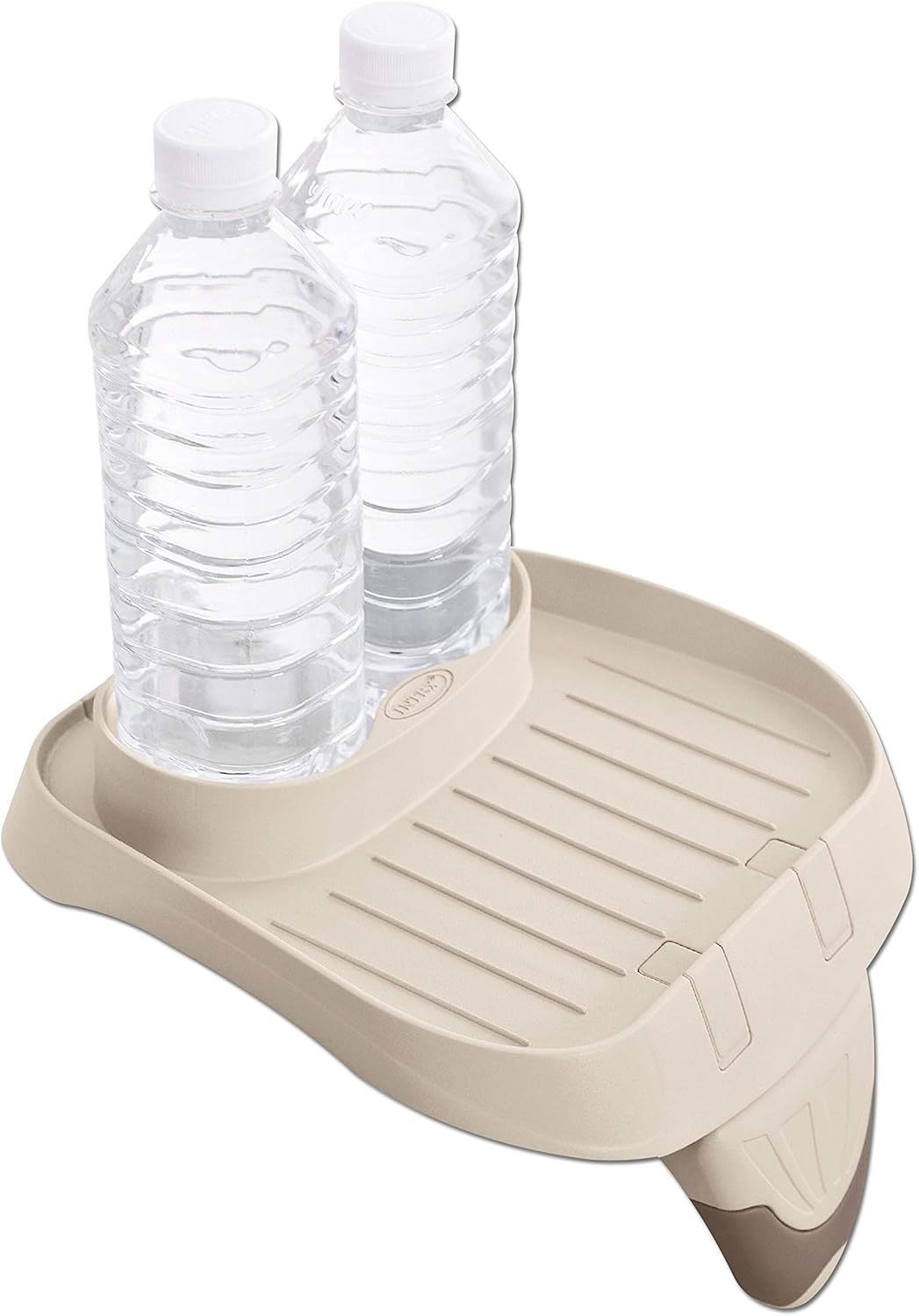
- Cup holder / snack tray insert: Clips onto the inflatable wall and keeps drinks off the ground.
- Cover lock straps: Cheap insurance against curious kids or pets getting under the cover when the spa is unattended.
- Spa steps: Makes entry and exit noticeably easier, especially for anyone with mobility considerations.
- Inflatable headrest cushions: Add a bit of the comfort the Miami’s flat walls otherwise lack.
Accessories We’d Skip
- Third-party saltwater chlorinators: Not designed for this unit and can void your warranty.
- LED light inserts of unknown brand: Quality varies wildly and many aren’t truly waterproof-rated for full submersion.
- Generic replacement pumps: Stick to Bestway OEM parts to preserve fit and warranty eligibility.
Part 10: SaluSpa Miami vs. the Rest of the Bestway & Lay-Z-Spa Family
If you’ve shopped for the Miami internationally, you may have noticed the exact same silhouette sold under a different name.
Miami vs. Lay-Z-Spa Branding
In the UK and much of Europe, Bestway sells this same round AirJet lineup under the Lay-Z-Spa brand name rather than SaluSpa. Functionally, the Miami and its Lay-Z-Spa counterparts share the same DuraPlus construction, jet count, and pump architecture — the naming difference is purely a regional marketing decision, similar to the SaluSpa/Coleman relationship we covered above.
Miami vs. Bestway Palm Springs (Hexagonal, 6-Person)
The Palm Springs is Bestway’s larger hexagonal model built for genuinely hosting 4-6 adults. It holds significantly more water, costs more to run, and takes up considerably more patio real estate. If your household regularly wants to soak as a group of four or more, the Palm Springs closes the “cozy fit” gap the Miami can’t solve — at the cost of the Miami’s compact footprint and lower operating expense.
Miami vs. Bestway Hawaii (Round, No Filter)
The Hawaii is a stripped-down round model, similar in size to the Miami but without a filtration system, relying purely on chemical sanitation. We don’t recommend it as a substitute for the Miami; the Miami’s Type VI filter meaningfully improves water clarity and reduces how often you need to shock the water.
Part 11: Long-Term Update – What Year Two Looks Like
Following our initial three-month review period, we kept the same test unit running through a second year of ownership to see how it aged.
The DuraPlus liner showed only minor surface scuffing at the waterline, with no cracking or loss of firmness. The pump’s massage function remained just as strong as day one, though we did replace the filter cartridge on schedule every two to three weeks and performed a full drain-and-refill every two months during peak summer use. The one component that showed its age was the inflatable cover, which developed a slow, very minor air leak around month fourteen — a common wear point across nearly every inflatable hot tub brand, not unique to Bestway. A replacement cover solved it completely and is a normal, expected part-replacement cost of ownership rather than a sign of poor build quality.
Part 12: Where to Buy, Warranty & Replacement Parts
Bestway typically backs the SaluSpa Miami with a limited warranty covering manufacturing defects in the pump for a set period after purchase, with the vinyl liner itself generally covered against manufacturing defects (not accidental damage) for a shorter window. Retaining your receipt and registering the product with Bestway support after purchase is worth the five minutes it takes, since it’s the fastest path to a replacement part if something fails early. Replacement filters, cover clips, drain valve o-rings, and even full replacement liners are all available directly through Bestway’s parts program or through third-party retailers, so a single failed component doesn’t mean replacing the entire spa.
Part 13: Placement Considerations – Deck, Grass, or Concrete?
We touched on the 1,534-pound filled weight of the Miami in the FAQ below, but placement deserves a fuller discussion. A level, flat, hard surface is non-negotiable — concrete patios and reinforced decks are ideal. If you’re placing the Miami directly on grass or soil, use a ground tarp or foam base pad both to protect the liner from sharp debris and to create a more level surface than natural ground typically provides. For elevated decks, confirm your structure’s point-load and distributed-load capacity with a contractor or structural engineer before setup, since a concentrated 1,500+ pound load in a roughly six-foot circle is a meaningfully different stress profile than evenly distributed patio furniture. It’s also worth checking with your local municipality or HOA — some jurisdictions classify spas over a certain water volume as requiring a permit or specific setback distance from property lines, even for temporary, above-ground inflatable units.
Bestway SaluSpa Miami
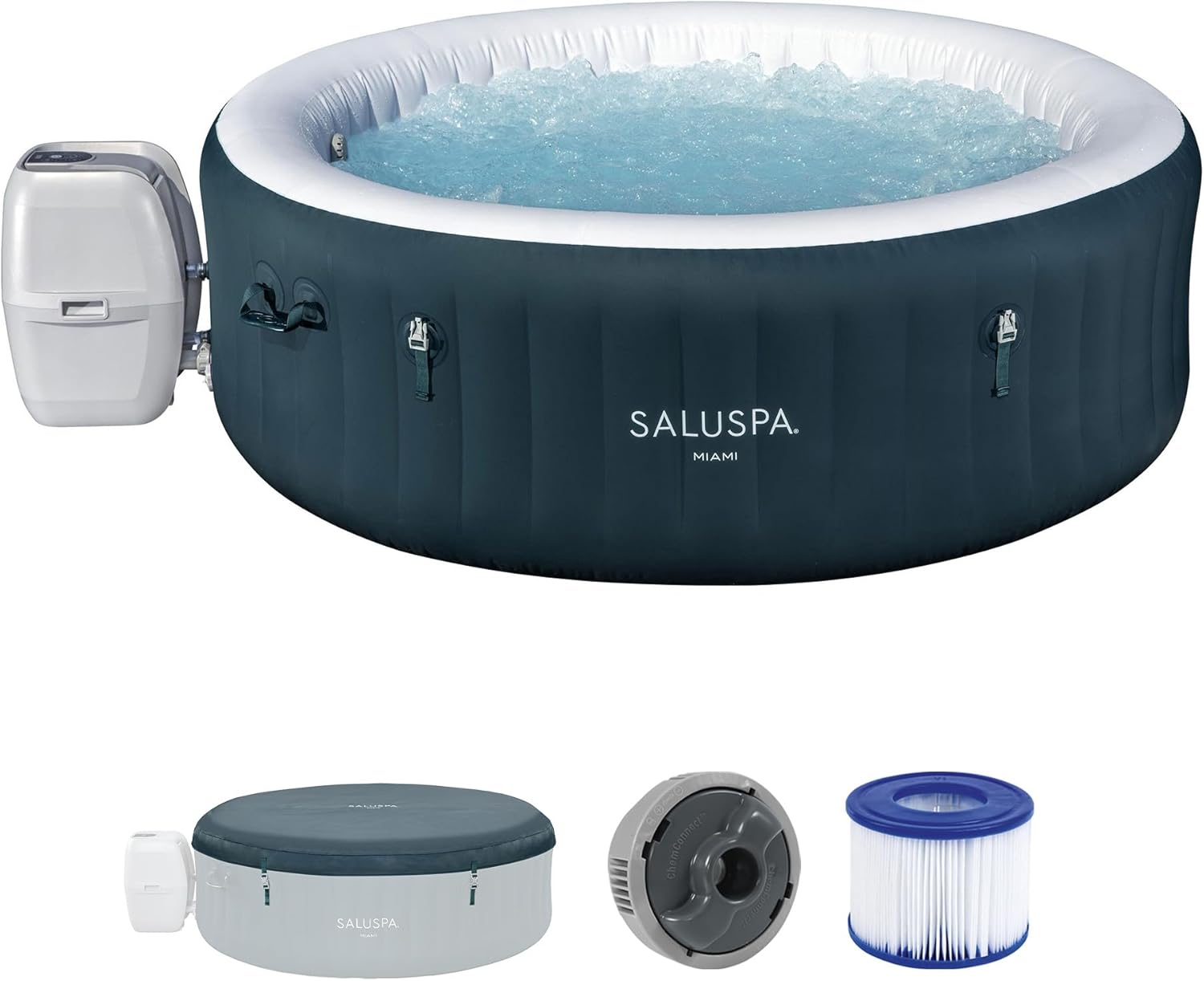
At a Glance
- Capacity: 2-4 Adults
- Jet System: 120 AirJets
- Max Temp: 104°F (40°C)
- Water Volume: 177 gallons
- Inflated Size: 71″ x 26″
- Material: DuraPlus™
- Filter Type: Type VI
Frequently Asked Questions About the SaluSpa Miami
How much does the SaluSpa Miami weigh when full?
This is a critical question for deck and balcony owners. A filled Miami weighs approximately 1,534 pounds (177 gallons x 8.34 lbs/gallon + tub weight). You MUST confirm your structure’s load capacity before setting it up on an elevated surface.
What filter does the SaluSpa Miami use?
The Miami, along with most other 2-4 person SaluSpas, uses the Bestway Type VI filter cartridge. These are very common and easy to find on Amazon or at local pool supply stores.
How long does it take for the Miami to heat up?
The heater warms the water at a rate of 2-3°F per hour. If you fill it with cool 60°F tap water, it will take approximately 15-20 hours to reach 102-104°F. Using the insulated cover is essential to trap heat during this time.
Can I use a saltwater chlorination system with the Miami?
We don’t recommend it. Bestway doesn’t manufacture an official saltwater kit for the AirJet Miami, and third-party inline chlorinators can accelerate corrosion of internal pump components and void your warranty. Traditional chlorine or bromine dosing is the safer, tested approach for this specific model.
Is it normal for the Miami to feel softer or lose some air overnight?
Yes, this is almost always normal. Vinyl air chambers contract as overnight temperatures drop, which makes the walls feel softer by morning even without any actual air loss. Simply top off the air pressure in the morning as part of your routine. A true leak shows itself as noticeable deflation within just a few hours during the day, not overnight.
Can I leave the SaluSpa Miami set up outdoors year-round?
Only in climates that never drop below freezing. The Miami has no built-in freeze protection, so any hard freeze can crack the pump’s internal plumbing or damage the liner. In colder climates, you’ll need to fully drain, dry, and store the unit indoors for winter, following the winterizing steps covered above.
Does the SaluSpa Miami come with steps or a headrest?
No. The Miami ships as a no-frills package: the liner, pump, inflatable cover, ChemConnect dispenser, and a filter cartridge. Steps, headrest cushions, and cup holders are all inexpensive third-party accessories you can add separately if you want them.
How noisy is the SaluSpa Miami’s pump?
The pump produces a noticeable but not overwhelming hum, comparable to a window air conditioning unit, while running the AirJet massage function. In heat-only mode (no jets), it’s considerably quieter, closer to a low background whir.
What’s the difference between the SaluSpa Miami and the Coleman SaluSpa?
Functionally, almost nothing. Both are manufactured by Bestway, share the same 177-gallon capacity, similar jet counts, and identical DuraPlus construction. The difference is essentially branding and color — buy whichever is priced lower at the time.
Can I patch a leak in the SaluSpa Miami myself?
Yes. Locate the leak using a soapy water spray test, dry the area completely, and apply a vinyl inflatable patch kit using the same technique you’d use to patch an inflatable pool float. Most small punctures are easily repaired at home without needing a replacement liner.
Do I need a dedicated electrical outlet for the SaluSpa Miami?
You need a grounded, GFCI-protected outlet capable of handling the pump’s continuous draw, ideally on its own dedicated circuit. Never use a standard household extension cord, as it isn’t rated for sustained spa pump and heater loads and poses a real fire and shock risk.
How often should I fully drain and refill the SaluSpa Miami?
Every two to three months under regular use is a reasonable baseline, though heavier use, more bathers, or visibly cloudy water despite balanced chemistry all warrant draining sooner. Between full drains, weekly testing and filter rinsing keep the water in good shape.