WHAT IS THE BEST BLOW UP HOT TUB? THE ULTIMATE 2026 BUYER’S GUIDE
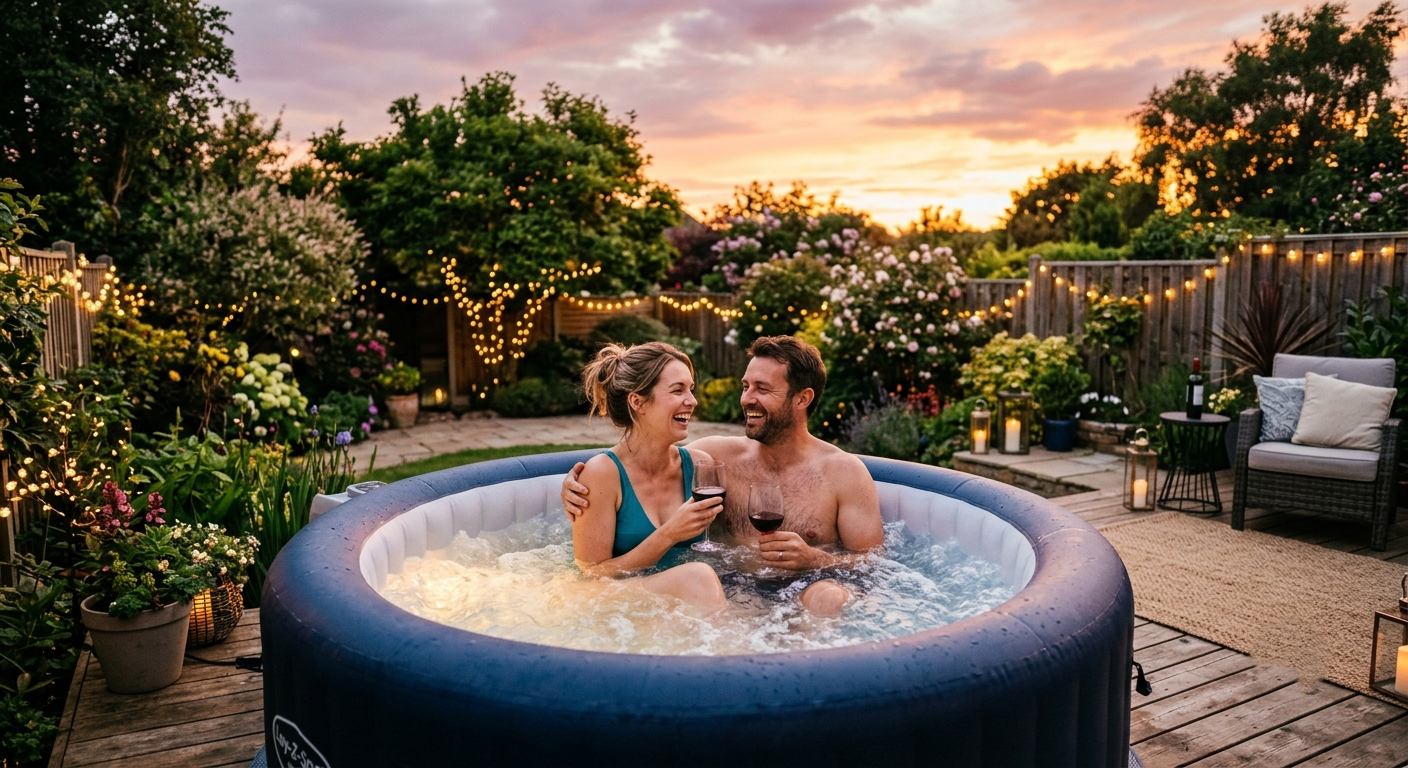
Experience the luxury of a personal spa without the cost and commitment of a traditional acrylic hot tub.
The dream of sinking into a hot, bubbling spa after a long day is a cornerstone of the American vision of relaxation. For years, this luxury was reserved for those with the space and budget for a permanent, acrylic hot tub—a commitment often running into thousands of dollars. But a revolution has been bubbling up in backyards across the country: the inflatable hot tub. These portable, affordable, and surprisingly durable spas have made the dream of a personal hot tub accessible to almost everyone.
But with this explosion in popularity comes a flood of options. Walking into the market, you’re hit with a wave of brands like Intex, Coleman, and Bestway, all offering different sizes, features, and jet technologies. What is the best blow up hot tub? Is it the one with the most jets? The most durable material? The smartest features? The answer isn’t a single product, but a choice based on your specific needs, climate, and budget.
This is your definitive guide to navigating this exciting market. We are going to immerse you in the world of inflatable spas, breaking down the key technologies, comparing the industry-leading brands, and providing in-depth reviews of the top models. By the end of this guide, you’ll have the expert knowledge to confidently select the perfect portable spa and transform your backyard into a personal oasis. This is a great starting point, and for those ready to explore further, our guide to the best inflatable hot tub offers even more insights.
THE INFLATABLE ADVANTAGE: WHY CHOOSE A BLOW UP HOT TUB?
Before diving into the models, it’s worth understanding why these products have become so popular. It’s more than just price.
- Affordability: This is the biggest draw. Inflatable hot tubs cost a fraction of the price of their hard-shell counterparts, often coming in between $400 and $1,200.
- Portability & Storage: Don’t want a hot tub taking up space all year? No problem. At the end of the season, you can drain it, deflate it, and store it in a closet or garage. You can even take it with you to a vacation home.
- Simple Setup: There’s no need for professional electricians or a prepared concrete slab. An inflatable hot tub can be set up on any flat, level surface, plugs into a standard 120V outlet, and often inflates using its own pump. A complete inflatable hot tub setup can typically be done in under an hour.
- Comfort: Many users find the soft, vinyl walls of an inflatable tub more comfortable to lean against than the hard, molded seats of an acrylic spa.
KEY FEATURES TO LOOK FOR: A BUYER’S CHECKLIST
When comparing models, keep these critical features in mind:
- Construction Material: Look for tubs made with 3-ply PVC and an internal support structure (often called “I-Beam” or “Fiber-Tech” construction). This provides the rigidity to sit on the edge without it collapsing.
- Pump & Heater Unit: This is the heart of the spa. It houses the heater, the air blower for the jets, and the water filtration system. Look for intuitive digital controls and check the heating rate (typically 1-3°F per hour).
- Bubble Jets vs. HydroJets: Most inflatable spas use “Bubble Jets,” which push air through a perforated ring at the bottom of the tub to create a vigorous, bubbly massage. Higher-end models may feature “HydroJets,” which are more powerful, directional water jets similar to those in traditional tubs.
- Capacity: Be realistic. A “4-person” tub is often comfortable for two adults. If you want to comfortably fit four adults, you should be looking at a “6-person” model. Our guide to the best 4-person inflatable hot tub dives deeper into this specific size category.
- Included Cover: A good, insulated cover is non-negotiable. It is the single most important factor in retaining heat, reducing your electricity bill, and keeping debris out of the water.
THE TOP 7: BEST BLOW UP HOT TUBS
We’ve analyzed the market and user reviews to bring you the best inflatable hot tubs across a range of categories, focusing on the two dominant players in the U.S. market: Coleman/Bestway (who make the SaluSpa line) and Intex (who make the PureSpa line).
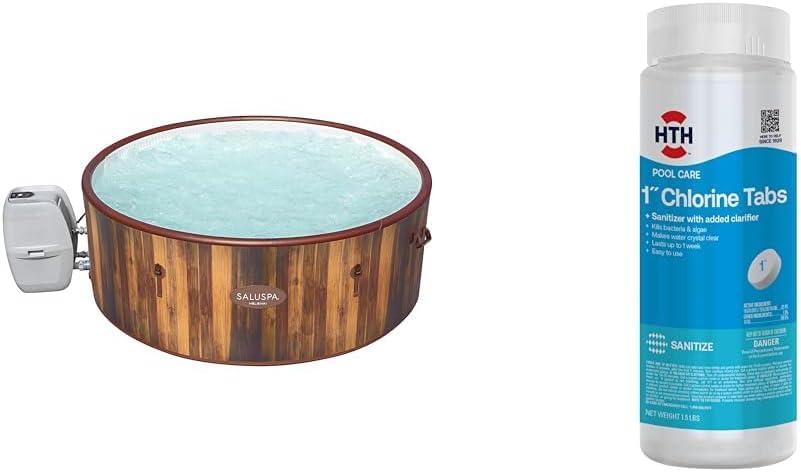
1. COLEMAN SALUSPA TAHITI AIRJET
Best Overall Value
WHY IT’S A TOP PICK
The Coleman SaluSpa Tahiti hits the absolute sweet spot of price, performance, and features, making it our top pick for overall value. Its durable TriTech material and I-Beam construction provide excellent stability. The digital control panel is incredibly easy to use, allowing you to control the 120 bubble jets, temperature, and filtration with the touch of a button. It includes a reinforced, insulated cover and a multi-color LED light for ambiance. For a first-time buyer or anyone looking for the most bang for their buck, the Tahiti is an unbeatable choice. Our complete Coleman SaluSpa review explores the brand in more detail.
- Capacity: 2-4 Adults
- Jets: 120 Bubble Jets
- Max Temp: 104°F
- Includes: Pump, Cover, LED Light, ChemConnect Dispenser
PROS
- Exceptional value for the price
- Durable and rigid construction
- Simple, user-friendly controls
- Includes a multi-color LED light
CONS
- “4-person” capacity is tight for four adults
- Heating can be slow in very cold weather
EXPERT TIP
Place a foam ground mat or interlocking gym floor tiles under your spa before setting it up. This adds an extra layer of insulation, which helps the tub retain heat more efficiently and reduces your energy costs.
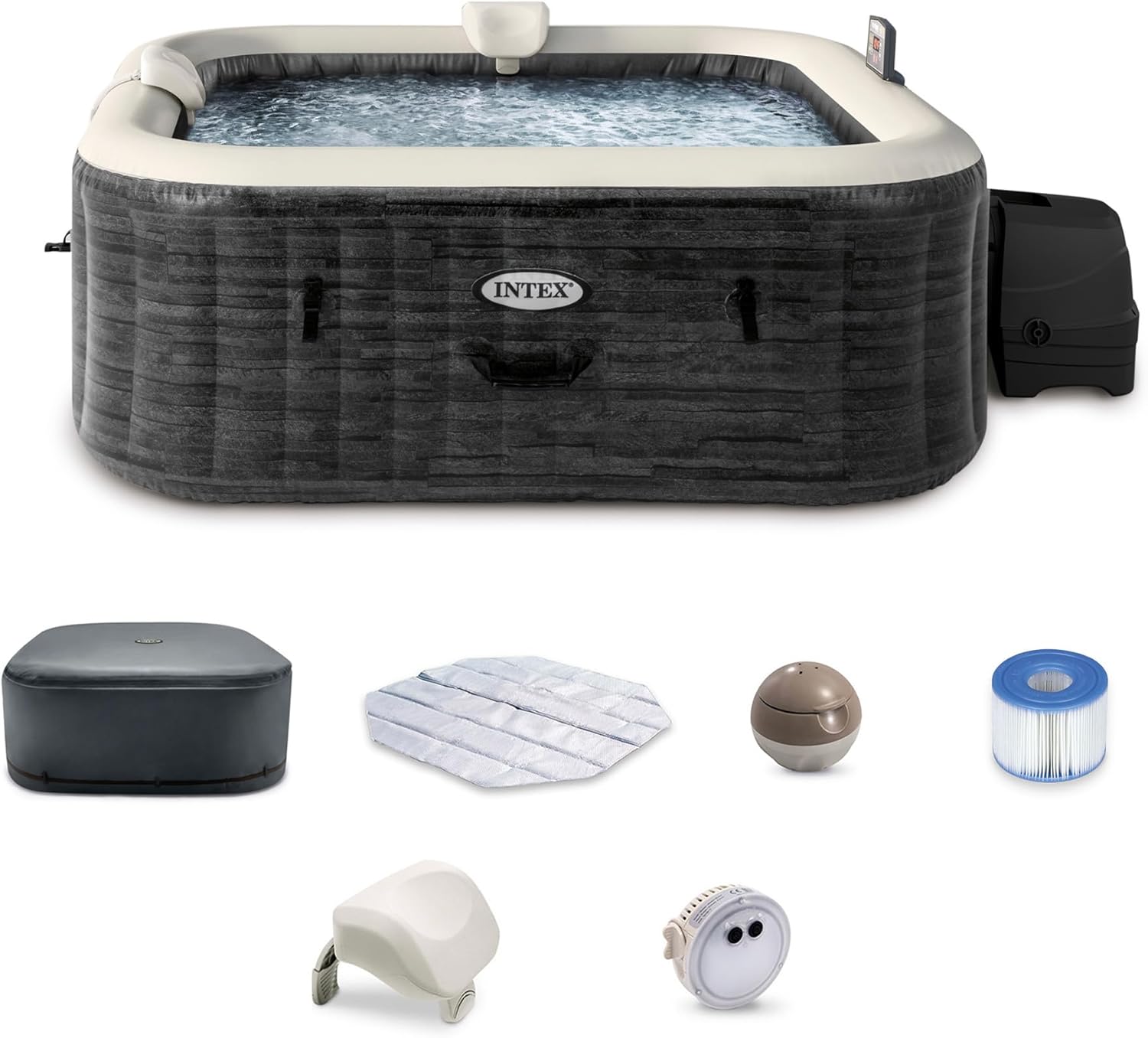
2. INTEX PURESPA GREYWOOD DELUXE
Best for Features & Comfort
WHY IT’S A TOP PICK
If you’re looking for a more premium experience with all the bells and whistles, the Intex PureSpa Greywood Deluxe is the answer. It features Intex’s proprietary Fiber-Tech construction for superior structural stability. What sets it apart are the included premium accessories: two comfortable foam headrests and a multi-color LED light. The wireless, removable touch-panel control is a fantastic feature, allowing you to adjust settings from inside the tub. With 140 high-powered bubble jets, it delivers a fantastic massage. For those who want comfort and convenience, the Greywood is worth the upgrade. See how it stacks up against its main rival in our Intex vs. Coleman comparison.
- Capacity: Up to 4 Adults
- Jets: 140 Bubble Jets
- Max Temp: 104°F
- Includes: Pump, Cover, 2 Headrests, LED Light, Ground Cloth
PROS
- Includes premium headrests for comfort
- Wireless, removable control panel
- Powerful 140-jet system
- Stylish wood-grain appearance
CONS
- Higher price point
- Wireless controller needs to be kept charged
EXPERT TIP
Proper water chemistry is key to a long-lasting spa. For any issues you encounter, our Intex PureSpa troubleshooting guide can help you diagnose and fix common water and pump problems.
3. BESTWAY SALUSPA MIAMI AIRJET
Best for Small Spaces & Budgets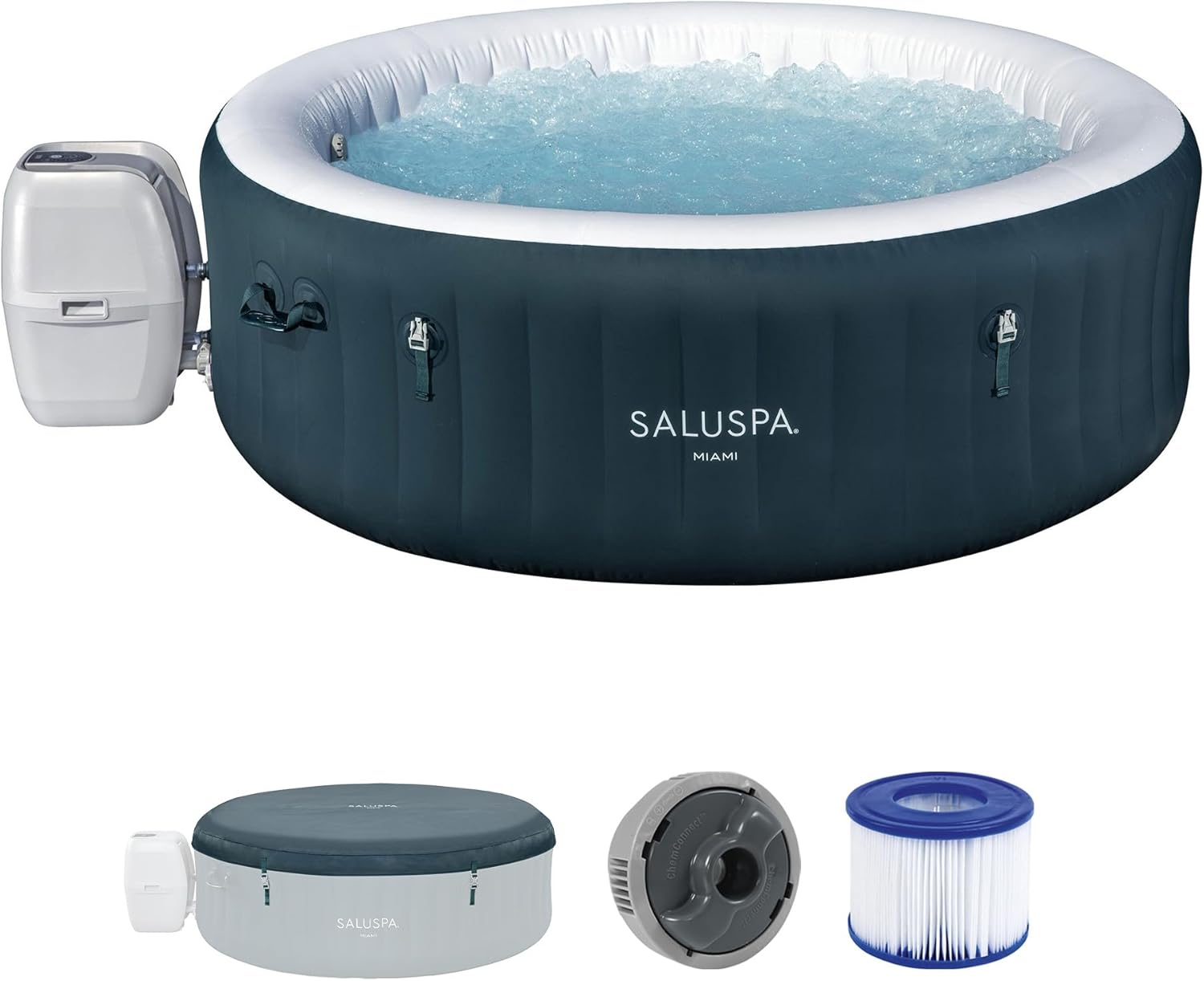
WHY IT’S A TOP PICK
For those with a small patio, a tight budget, or who only need a spa for 1-2 people, the Bestway SaluSpa Miami is the perfect solution. It’s one of the most compact and affordable models on the market from a major brand, but it doesn’t skimp on the core features. You still get the durable I-Beam construction, a 120-jet massage system, and the same reliable pump and heater found on more expensive models. It heats up quickly due to its smaller water volume and is incredibly easy to set up and maintain. It’s the ideal entry point into the world of hot tubs. Our in-depth Bestway SaluSpa Miami review covers every detail of this popular model.
- Capacity: 2-4 Adults (Ideal for 2)
- Jets: 120 Bubble Jets
- Max Temp: 104°F
- Includes: Pump, Cover, ChemConnect Dispenser
PROS
- Very affordable entry-level price
- Compact footprint fits almost anywhere
- Heats up faster than larger models
- Extremely easy to set up
CONS
- Very tight for more than two adults
- Fewer bells and whistles than premium models
EXPERT TIP
Because of its smaller size, water chemistry can change quickly. Test your water every 2-3 days and follow a regular inflatable hot tub maintenance schedule to keep it sparkling clean.
4. COLEMAN SALUSPA SAINT LUCIA HYDROJET PRO
Best with HydroJets
WHY IT’S A TOP PICK
Most inflatable spas rely entirely on bubble jets, which are relaxing but diffuse. The Saint Lucia HydroJet Pro is one of the few consumer models that pairs the usual bubble system with six dedicated HydroJets, directional water jets that push a focused stream against specific muscle groups the way a hard-shell spa would. If your primary reason for wanting a hot tub is genuine muscle recovery after workouts, gardening, or a physically demanding job, this is the category you should be shopping in rather than a standard bubble-only model. The trade-off is a noticeably higher price and a pump housing that runs a bit louder than bubble-only units, since it’s driving both systems simultaneously.
The tub also ships with a padded, cushioned interior liner, which is a small but meaningful comfort upgrade over the bare-vinyl floors most competitors use. Setup time is roughly the same as other SaluSpa models, and the digital control panel uses the same layout Coleman has used across its line for years, so if you’ve owned a Coleman spa before, the learning curve is nearly zero.
- Capacity: 4-6 Adults
- Jets: 114 Bubble Jets + 6 HydroJets
- Max Temp: 104°F
- Includes: Pump, Insulated Cover, Padded Floor Liner, ChemConnect Dispenser
PROS
- True directional hydrotherapy, not just bubbles
- Padded floor for extra comfort
- Larger capacity than entry-level models
- Familiar Coleman control layout
CONS
- Noticeably higher price than bubble-only models
- Pump runs louder with both systems active
- Heavier and bulkier to store
EXPERT TIP
Run the HydroJets in short 10-15 minute bursts rather than continuously. It gives your muscles a genuine hydrotherapy session without drawing down water temperature as quickly as constant use would.
5. BESTWAY SALUSPA HAWAII AIRJET
Best Large Capacity (6-Person)
WHY IT’S A TOP PICK
Families or groups who actually need to seat six adults at once should look here first. The Hawaii AirJet is built on the same reliable I-Beam construction as the smaller SaluSpa models but scales the diameter up considerably, adding a meaningful jump in both water volume and floor space. Because the extra water volume takes noticeably longer to heat from cold, this is a spa best suited to households that plan on keeping it running semi-continuously through the season rather than draining it after every use.
The square-ish rounded-corner shape (rather than a perfect circle) is a deliberate design choice that maximizes usable seating for a given footprint, which matters if your patio or deck space is limited. It’s still fully portable and drains down for winter storage exactly like its smaller siblings, but expect the packed-up tub and pump to be considerably heavier to carry.
- Capacity: 4-6 Adults
- Jets: 155 Bubble Jets
- Max Temp: 104°F
- Includes: Pump, Cover, Ground Cloth, ChemConnect Dispenser
PROS
- Genuinely seats six adults comfortably
- High jet count for a strong bubble massage
- Space-efficient rounded-square shape
CONS
- Much longer initial heat-up time
- Higher running cost due to water volume
- Heavier to move and store
EXPERT TIP
For larger tubs like this one, consider running the heater overnight on a lower target temperature rather than heating from cold each time you want to use it. It’s far more energy-efficient to maintain heat than to rebuild it.
6. COLEMAN SALUSPA CANCUN AIRJET SMART
Best Smart / Wi-Fi Model
WHY IT’S A TOP PICK
The Cancun AirJet Smart is aimed squarely at buyers who want app-based control: it connects to home Wi-Fi and lets you start heating, check current water temperature, and toggle the jets from a phone before you even walk outside. That’s a genuinely useful feature for anyone who wants the tub at the perfect temperature the moment they get home from work, rather than waiting an hour after arriving.
Beyond the connectivity layer, the core spa is a fairly standard mid-size SaluSpa: solid I-Beam construction, a respectable jet count, and the same insulated cover quality found across the Coleman range. The app also logs basic usage history, which can help you spot filtration schedule gaps or unusually high energy draw before they become bigger maintenance issues.
- Capacity: 4-6 Adults
- Jets: 130 Bubble Jets
- Max Temp: 104°F
- Includes: Pump, Cover, Wi-Fi Module, ChemConnect Dispenser
PROS
- Full app control and remote monitoring
- Usage history helps with maintenance timing
- Solid mid-size build quality
CONS
- Requires a stable home Wi-Fi signal outdoors
- App adds a layer that can occasionally need updates
- Smart features add to the retail price
EXPERT TIP
If your router signal is weak near the patio, a cheap Wi-Fi extender aimed at the tub’s location will save you a lot of frustration with dropped app connections.
7. BESTWAY SALUSPA ST. MORITZ AIRJET (ALL-WEATHER)
Best for Winter Use
WHY IT’S A TOP PICK
Owners in colder climates who want to use their spa well into fall and winter should prioritize this model. It ships with Freeze Shield technology built in as standard, a thicker multi-layer wall construction for better heat retention, and a heavier, more insulated cover than the brand’s warm-weather-focused models. None of that will make it cheap to run a hot tub outdoors in freezing air, but it meaningfully narrows the gap compared to standard inflatable spas, which struggle badly once ambient temperatures drop below freezing.
The rounded, low-profile design also sheds snow and rain more effectively than boxier models, reducing the weight load on the cover during winter storms. If you live somewhere with real winters and don’t want to fully winterize and store the tub for four to five months of the year, this is the SaluSpa variant built for that use case.
- Capacity: 2-4 Adults
- Jets: 120 Bubble Jets
- Max Temp: 104°F
- Includes: Pump, Reinforced Insulated Cover, Freeze Shield Technology, ChemConnect Dispenser
PROS
- Built-in Freeze Shield protects pipework
- Thicker walls retain heat better in cold air
- Heavier-duty cover sheds snow and rain
CONS
- Still costly to run in sub-freezing temperatures
- Heavier cover is harder to remove solo
- Not necessary if you live somewhere mild
EXPERT TIP
Even with Freeze Shield, never unplug the unit during a hard freeze. Freeze Shield only works while the pump has power, so a power outage during winter is the single biggest risk to a spa left set up outdoors.
INFLATABLE VS. TRADITIONAL HOT TUBS: A FULL COST & COMPARISON BREAKDOWN
One of the most common questions we get is whether it’s worth skipping the inflatable altogether and saving up for a permanent, hard-shell spa. The honest answer is that they solve different problems, and the right choice depends heavily on how long you plan to stay in your home, how much you’re willing to spend upfront, and how much day-to-day comfort you expect from the seating and jets.
| Factor | Inflatable Hot Tub | Traditional Acrylic Hot Tub |
|---|---|---|
| Typical Upfront Cost | $400 – $1,200 | $4,000 – $15,000+ |
| Installation | DIY, under an hour, standard outlet | Professional delivery, often a dedicated 220-240V circuit |
| Lifespan | 3-7 years with good care | 15-20+ years |
| Portability | Fully portable, can be moved or stored | Permanent fixture once installed |
| Jet Power | Gentle to moderate (bubble jets, some HydroJets) | Strong, targeted hydrotherapy jets |
| Seating Comfort | Soft vinyl floor, no molded seats | Ergonomic molded loungers and seats |
| Renter-Friendly | Yes | Rarely practical |
In practical terms, an inflatable spa is the right call for renters, first-time hot tub owners who want to “try before they buy” the lifestyle, anyone with a smaller budget, and people who move frequently enough that a permanent structure doesn’t make sense. A traditional acrylic spa becomes the better long-term value once you’re certain you’ll be in the same home for a decade or more and you want stronger hydrotherapy jets and true ergonomic seating. Many owners actually use an inflatable spa as a multi-year trial run before committing to a permanent install, which is a completely reasonable way to de-risk that larger purchase.
THE HEALTH & WELLNESS BENEFITS OF HYDROTHERAPY
Beyond simple relaxation, regular use of a hot tub has real, well-documented physiological effects, and understanding them can help you decide how to build a soak routine around your own goals.
- Muscle Recovery: The combination of heat and buoyancy reduces the load on joints and encourages blood flow to fatigued muscles, which is why many athletes and physically active people soak after workouts or physical labor.
- Stress Reduction: Warm water immersion is associated with lower cortisol levels and a calmer nervous system response, which is part of why a 15-20 minute evening soak is such a popular wind-down ritual.
- Improved Sleep Onset: Soaking an hour or two before bed raises your core body temperature slightly; the subsequent cool-down as you dry off and relax mimics the natural temperature drop that helps signal the body it’s time to sleep.
- Joint Mobility: The buoyancy of water takes weight off hips, knees, and lower backs, making gentle movement and stretching more comfortable for people managing stiffness or minor joint discomfort.
These benefits are well supported for general relaxation and mild muscle fatigue, but a hot tub is not a substitute for medical treatment. If you have a cardiovascular condition, are pregnant, or are managing a chronic health issue, it’s worth a quick conversation with your doctor about safe water temperature and soak duration before making hot tub use a regular habit.
CHOOSING THE RIGHT SIZE: A GUIDE BY HOUSEHOLD
Capacity ratings on the box are almost always optimistic. Here’s a more realistic breakdown of what each size category actually accommodates comfortably, adjusted for how people really sit and move in these spas.
2-PERSON AND SMALL “4-PERSON” MODELS
Marketed as 4-person, these compact tubs are genuinely comfortable for one or two adults who want to stretch out, or a snug fit for two people who don’t mind close quarters. They’re the right pick for couples, singles with a small patio, or anyone prioritizing fast heat-up times and a smaller footprint. Running costs are lower simply because there’s less water to heat and maintain.
4-6 PERSON MODELS
This is the true sweet spot for most households. A tub rated for 4-6 people realistically seats three to four adults with enough room to shift positions, which matters more than people expect during a 30-45 minute soak. If you regularly have a partner and one or two kids or friends joining, this size range removes the “elbows touching” problem smaller tubs create.
6-8 PERSON AND LARGE MODELS
Designed for genuine group use—entertaining, larger families, or frequent guests—these tubs trade a longer heat-up time and higher running cost for real capacity. Before buying at this size, confirm your deck or patio can bear the weight (a full large tub can weigh well over 2,000 lbs with water), and be honest with yourself about whether you’ll actually fill all those seats often enough to justify the extra electricity and water use.
QUICK SIZING RULE OF THUMB
Take the manufacturer’s stated capacity and subtract one or two people for genuine day-to-day comfort. A “6-person” tub that will realistically host four adults regularly is a better long-term fit than a “4-person” tub squeezed to its marketed limit every time.
WHERE TO PUT YOUR SPA: SURFACE PREP AND PLACEMENT
Placement mistakes are one of the most common (and most preventable) causes of early spa failure or homeowner headaches, so it’s worth slowing down on this step.
- Flat and Level: Even a slight slope concentrates thousands of pounds of water pressure unevenly on the tub walls, which can cause premature wear or seam stress. Use a standard level across multiple points before setup.
- Weight-Bearing Capacity: A filled 4-person spa can weigh around 2,000-2,500 lbs; larger models exceed 3,000-4,000 lbs. Wood decks should be checked against their rated load capacity, and older or aging decks may need reinforcement before hosting a filled tub.
- Surface Type: Concrete patios, paver stone, and compacted gravel with a ground mat all work well. Avoid placing directly on grass for extended periods, as trapped moisture will kill the lawn underneath and uneven ground can develop over a season.
- Distance from Structures: Keep the tub and its electrical cord a safe distance from the house exterior, away from downspouts that could flood the area, and clear of low tree branches that drop debris into open water.
- Electrical Access: You’ll need a dedicated, grounded outlet within reach of the power cord without using an extension cord long-term. Extension cords are a common cause of nuisance trips and, in worst cases, a fire risk under sustained load.
MUST-HAVE ACCESSORIES FOR YOUR INFLATABLE SPA
The base kit gets you soaking, but a handful of accessories meaningfully improve the day-to-day experience and protect your investment.
- Insulated Ground Mat or Floor Pad: Reduces heat loss through the tub floor and protects the vinyl base from rough or abrasive surfaces underneath.
- Thermal Spa Blanket: A floating, bubble-wrap-style blanket placed under the hard cover adds another layer of insulation, similar to a pool solar cover, and can meaningfully cut heating costs in cooler weather.
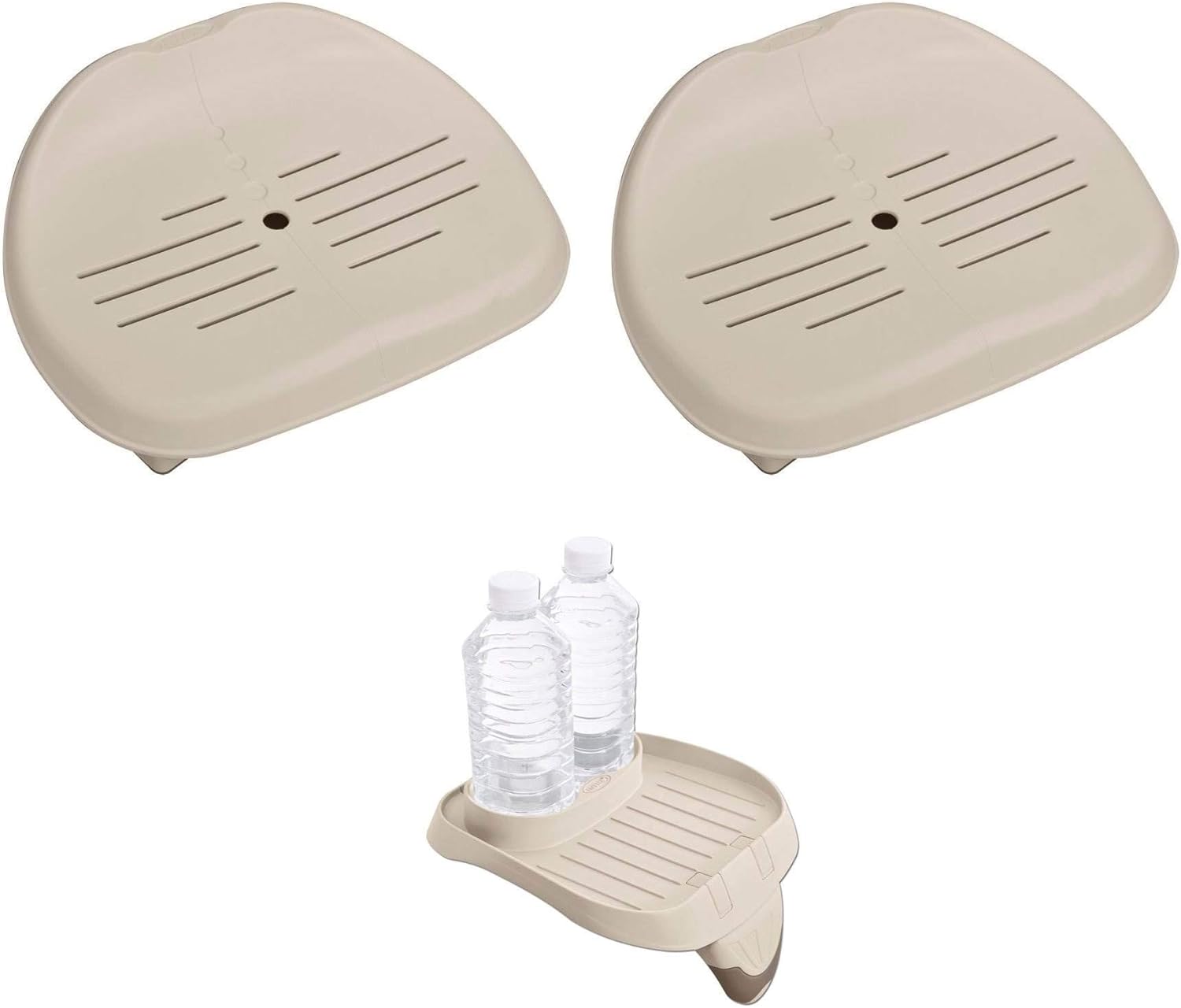
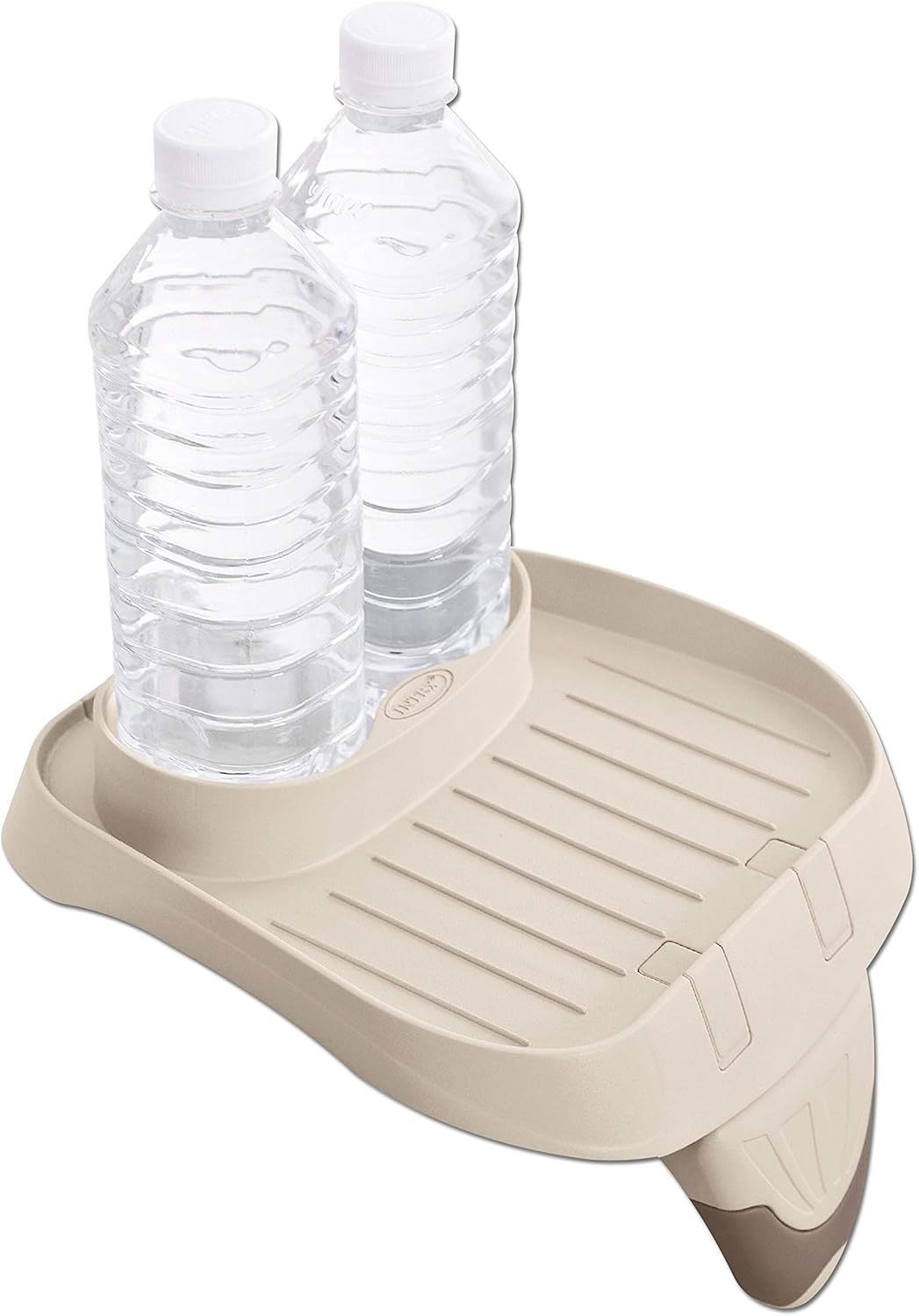
- Cup Holder / Drink Tray: An inflatable or clip-on tray keeps drinks, phones, and snacks off the tub’s inflatable rim, which isn’t a stable surface for anything you don’t want to end up in the water.
- Hot Tub Steps: A small set of steps makes entry and exit safer and easier, particularly for older adults, kids, or anyone with mobility concerns.
- Spa Umbrella or Canopy: Useful for sun protection during daytime use and can double as basic rain coverage when the tub is in use but the hard cover is off.
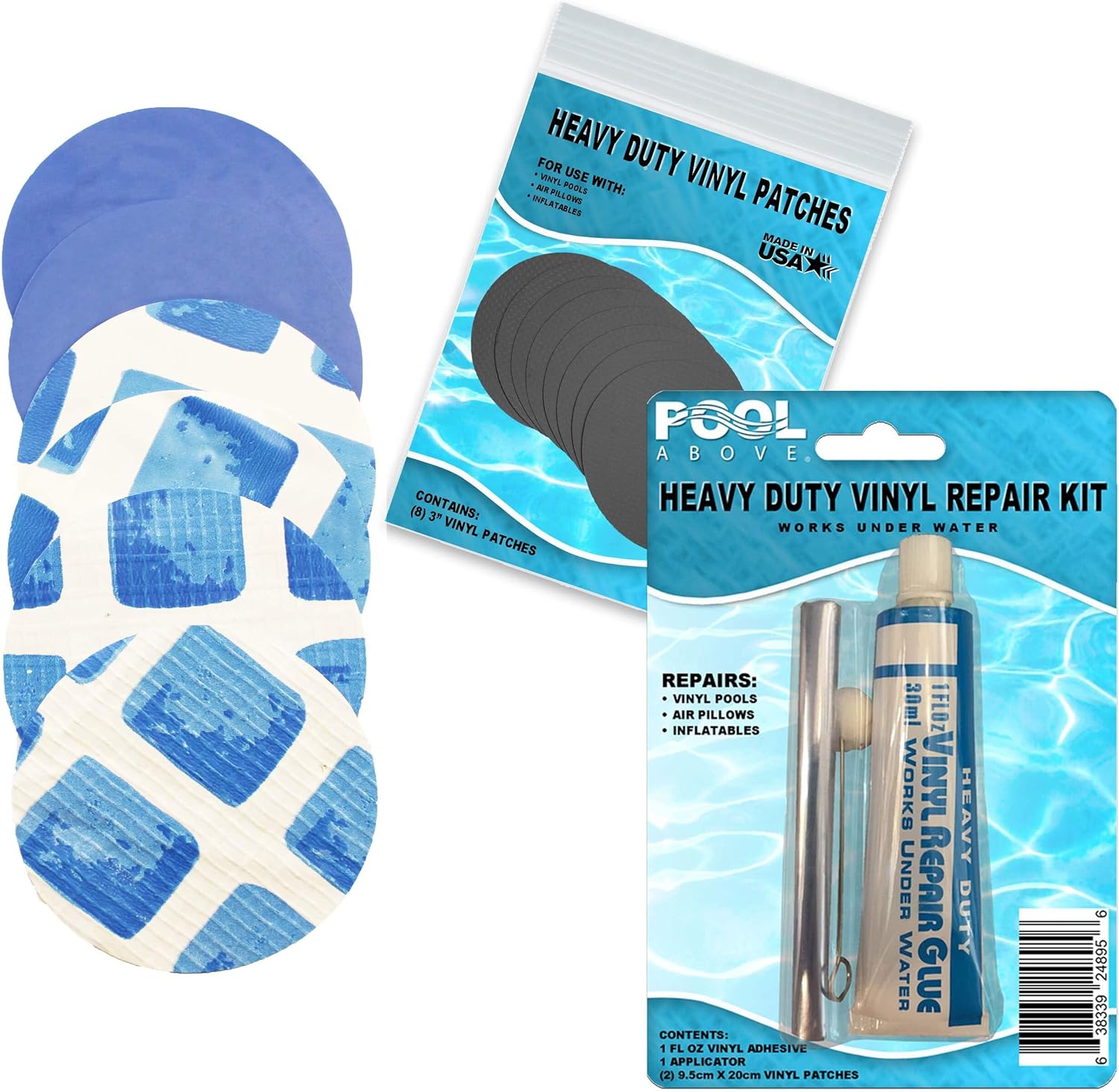
- Repair Patch Kit: Even if one isn’t included, buy a PVC repair kit matched to your tub’s material at the same time you buy the spa, so it’s on hand the moment you need it rather than during a slow-leak emergency.
- Floating Chemical Dispenser: If your model doesn’t already include one, a floating chlorine or bromine dispenser distributes sanitizer more evenly than dropping it directly into the water.
TROUBLESHOOTING COMMON PROBLEMS
Most inflatable hot tub issues fall into a short list of predictable categories. Here’s how to diagnose the most frequent complaints before assuming you need a replacement part.
LOW OR NO BUBBLE PRESSURE
This is almost always caused by a partially clogged filter cartridge restricting airflow, a kinked air hose between the pump and the tub, or water that’s simply too cold for the blower to push air efficiently through denser, cooler water. Start by rinsing or replacing the filter, then check hose connections for kinks or loose fittings.
ERROR CODES ON THE DIGITAL DISPLAY
Manufacturer error codes typically point to one of three issues: a low water level sensor triggering because the tub has evaporated or leaked below the minimum fill line, a temperature sensor fault from a loose connection, or an overheat protection trip if the unit has been run in direct sun with the cover on for too long. Always check water level first, since it’s the most common trigger.
CLOUDY OR FOAMY WATER
Cloudy water usually signals a sanitizer level that’s too low, allowing organic material and bather waste to accumulate, or a pH that’s drifted outside the 7.2-7.8 range, which reduces sanitizer effectiveness. Foaming is most often caused by residue from certain soaps, lotions, or hair products entering the water; a quick shower before soaking dramatically reduces this. A dose of the correct sanitizer followed by a pH test usually clears cloudiness within 24 hours of proper filtration.
THE TUB WON’T HOLD ITS SHAPE OR IS SLOWLY DEFLATING
Slow deflation is typically a small puncture or a loose valve cap rather than a major failure. Mix a small amount of dish soap with water in a spray bottle and mist the seams and valve area; a steady stream of tiny bubbles will reveal the exact leak location so you can patch it precisely rather than guessing.
REPAIRING LEAKS AND PUNCTURES: A STEP-BY-STEP GUIDE
Most small punctures are a five-minute fix with the right kit, and doing this properly can add years to the life of your spa.
- Locate the leak using the soapy water spray method described above, and mark it clearly with a dry-erase marker or piece of tape.
- Drain and dry the area around the puncture completely; adhesive patches will not bond to a damp surface.
- Clean the surface with rubbing alcohol to remove any oils, sunscreen residue, or dirt around the puncture site.
- Apply the patch from your PVC repair kit, following the manufacturer’s cure time exactly—rushing this step is the most common reason patches fail.
- Apply firm, even pressure across the entire patch, working from the center outward to push out any trapped air bubbles.
- Wait the full cure time, typically 12-24 hours, before refilling and re-pressurizing the tub.
For punctures near seams or valve housings, which are under more structural stress, it’s worth reaching out to the manufacturer’s customer support first, as some offer seam-specific repair kits or warranty coverage for factory seam defects.
END OF SEASON: WINTERIZING AND OFF-SEASON STORAGE
Properly winterizing your spa is the single biggest factor in whether it lasts three seasons or seven. Rushing this process is the most common cause of mildew, cracked fittings, and pump damage discovered the following spring.
- Drain completely using the built-in drain valve, tilting the tub slightly if needed to remove the last few inches of standing water.
- Run the pump briefly while empty (only if the manufacturer specifically permits this) to clear residual water from internal lines, or use a wet/dry vacuum on the air and water lines per your manual.
- Clean thoroughly with a mild, non-abrasive cleaner to remove any scale, body oil residue, or biofilm before it has a chance to set over winter storage.
- Dry completely before folding; any trapped moisture becomes a mildew problem in storage.
- Fold loosely rather than tightly creasing the same fold lines every year, which stresses the vinyl at consistent stress points over time.
- Store indoors in a climate-controlled space if possible—a garage, basement, or closet—away from direct sunlight and extreme temperature swings that degrade PVC over time.
- Store the pump/heater unit separately in its original packaging if available, keeping it upright to prevent any residual water from settling in unintended places.
RENTERS AND SMALL-SPACE OWNERS: SPECIAL CONSIDERATIONS
Inflatable hot tubs are a genuinely good fit for renters, but a few extra precautions apply that homeowners don’t need to think about as much.
- Check Your Lease: Some leases and HOA agreements restrict rooftop, balcony, or even ground-floor patio hot tub use due to weight or liability concerns. Confirm before purchasing rather than after.
- Balcony Weight Limits: Never place a filled tub on a balcony or elevated deck without confirming its load rating with your landlord or a structural professional—the weight of water alone can exceed typical balcony limits.
- Water Disposal: Renters should plan ahead for where drained water will go; check that your building allows draining into a floor drain, utility sink, or yard rather than assuming it’s fine.
- Noise and Neighbors: Pump and blower units run at a low hum, but in close apartment quarters or shared courtyards, it’s worth a quick heads-up conversation with neighbors, especially for late-evening use.
SAFETY FIRST: ELECTRICAL SAFETY AND CHILD SUPERVISION
Because these units combine water and electricity, a few non-negotiable safety habits matter regardless of which model you buy.
- Always Use a GFCI Outlet: Ground-fault circuit interrupter protection is essential for any outdoor electrical appliance near water and is required by electrical code in most jurisdictions for exactly this kind of application.
- Never Use an Extension Cord Long-Term: If the included cord doesn’t reach your outlet, relocate the tub or have a qualified electrician install a properly rated outdoor outlet closer to the site.
- Lock the Cover When Not Supervised: Most covers include tie-down straps or locking clips specifically to prevent small children or pets from lifting the cover and falling in unsupervised.
- Never Leave Children Unattended: Even shallow water is a drowning risk for small children; active adult supervision is non-negotiable any time kids are near an open tub.
- Mind Water Temperature for Kids and Pregnant Users: Pediatric and prenatal guidance generally recommends lower soak temperatures and shorter durations than a standard adult setting of 104°F.
INTEX VS. COLEMAN VS. BESTWAY: UNDERSTANDING THE BRANDS
It’s worth knowing that “Coleman” and “Bestway” branded spas both come from Bestway, which licenses the well-known Coleman camping brand name for its SaluSpa product line, while Intex is a fully separate manufacturer with its own PureSpa line. That’s why Coleman and Bestway models often share nearly identical construction, control panels, and parts, while Intex tends to differentiate itself more clearly with different accessory bundles like foam headrests and its Fiber-Tech wall construction.
| Brand | Known For | Typical Strengths |
|---|---|---|
| Coleman (by Bestway) | Widely available, value-driven SaluSpa line | Strong price-to-feature ratio, simple controls |
| Bestway SaluSpa | Same core engineering as Coleman-branded models | Broad size range, budget to mid-tier options |
| Intex PureSpa | Comfort-focused accessories, distinct build | Headrests, wireless controls, wood-grain styling |
In practice, this means comparing a Coleman and Bestway model of similar size and price often comes down to which retailer has the better deal that week, since they’re mechanically very close cousins. Comparing either against an equivalent Intex model is a more meaningful comparison, since the underlying engineering philosophy actually differs.
BUYING BY BUDGET: WHAT YOU GET AT EACH PRICE TIER
- Under $350 (Entry-Level): Compact 2-4 person tubs, basic bubble jets, simple analog or single-button digital controls, and a standard (non-insulated or lightly insulated) cover. Ideal for first-time buyers testing whether hot tub ownership fits their lifestyle.
- $350-$650 (Mid-Range): This is where most of the best-selling 4-6 person models land, typically with full digital control panels, 120-140 jets, ChemConnect-style chemical dispensers, and a properly insulated cover. Most buyers land in this tier and are well served by it.
- $650-$1,000 (Upper Mid-Range): Expect added comfort accessories like headrests, wireless controls, larger capacity, or early smart/Wi-Fi features, plus generally thicker wall construction.
- $1,000+ (Premium): HydroJet systems, full smart-home integration, all-weather/Freeze Shield construction, and the largest 6-8 person capacities live in this tier, aimed at buyers who want the closest experience to a hard-shell spa without the permanent installation.
ENERGY EFFICIENCY: KEEPING YOUR RUNNING COSTS DOWN
Because these spas run on standard household current rather than a dedicated high-voltage circuit, heating efficiency is largely a function of how well you retain heat rather than how powerful the heater is. A few habits make a measurable difference over a season:
- Keep the cover on whenever the tub isn’t in use. This is, by a wide margin, the single biggest factor in your monthly electricity bill.
- Add a floating thermal blanket under the hard cover for another meaningful layer of insulation, especially overnight or during cooler months.
- Maintain a consistent target temperature rather than letting the tub cool completely between uses and reheating from scratch each time, which uses considerably more energy than maintaining heat.
- Use a ground mat to reduce heat loss through the floor of the tub into cold concrete or ground beneath it.
- Shield the tub from wind with a fence, privacy screen, or strategic placement, since wind chill accelerates surface heat loss significantly.
CAN YOU USE AN INFLATABLE HOT TUB IN THE WINTER?
Yes, but with caveats! Many modern tubs, especially from Coleman and Bestway, come with “Freeze Shield” technology that automatically runs the pump to prevent water from freezing in the pipes. However, heating a tub in freezing ambient temperatures is an uphill battle. It will be slow, and your electricity bill will be high. For a successful winter experience, you need to invest in extra insulation, like a high-quality thermal cover and a ground mat. For a detailed breakdown of what to look for, check out our guide to the best inflatable hot tub for winter.
BEYOND THE BUBBLES: A GUIDE TO OWNERSHIP
Your journey doesn’t end after you buy the tub. Proper care and maintenance are essential for ensuring your spa lasts for years and is always clean and safe to use. This is where many new owners stumble, but with a simple routine, it’s easy to manage.
THE THREE C’S OF HOT TUB CARE: CIRCULATION, CLEANING, AND CHEMISTRY
Mastering these three areas is the key to a perfect spa experience.
- Circulation: Your pump’s filter is the kidney of your hot tub. You need to run the filter pump for several hours each day (many have timers) to ensure all the water passes through it. The filter cartridge itself needs to be removed and rinsed with a hose every few days and replaced entirely every 2-4 weeks, depending on use.
- Cleaning: A clean tub is a happy tub. Before each use, quickly skim any debris off the surface. Once a week, wipe down the waterline with a non-abrasive sponge to prevent scum buildup. Our complete guide on how to clean an inflatable hot tub provides a step-by-step process for deep cleaning.
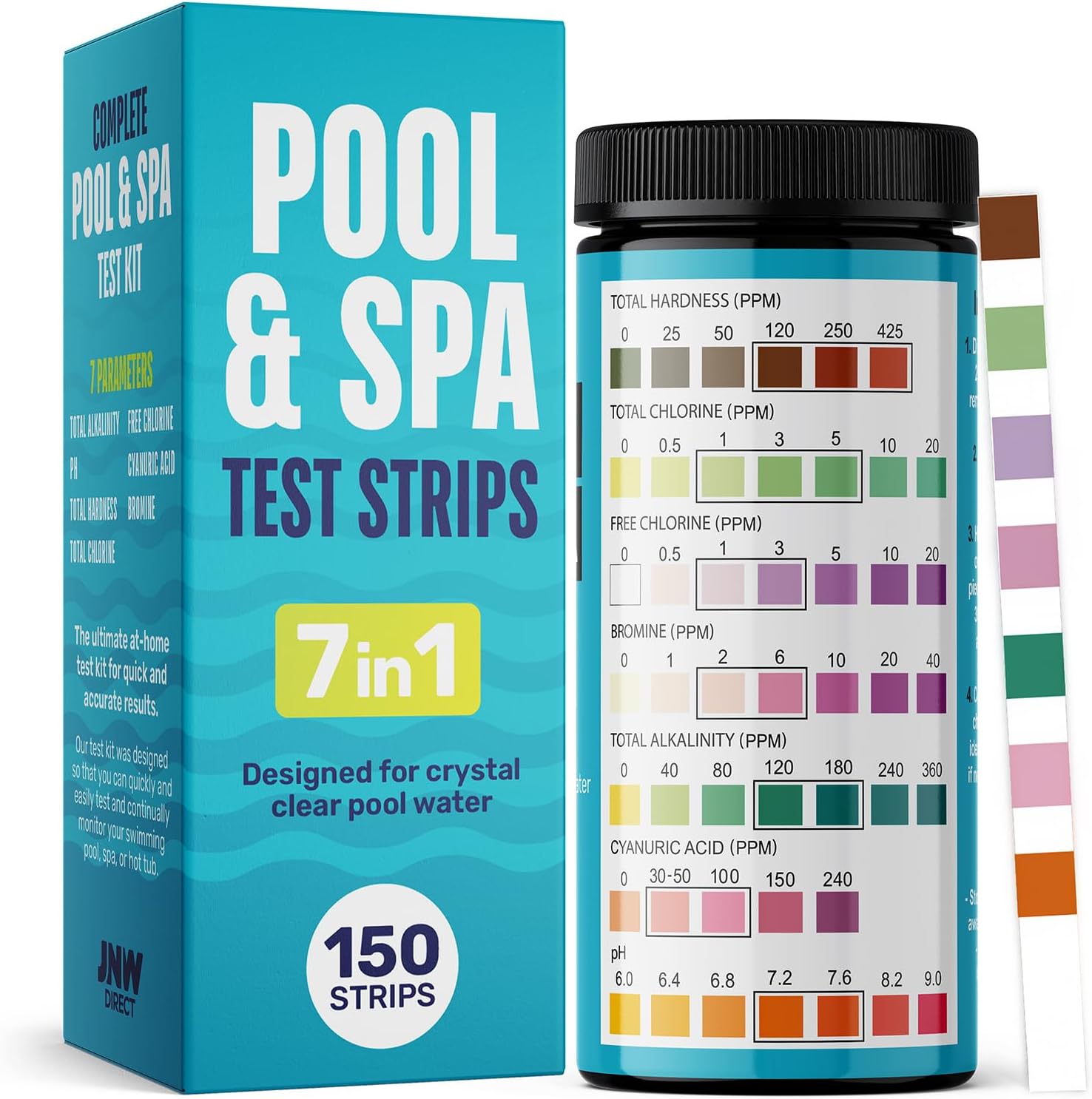
- Chemistry: This is the most intimidating part for new owners, but it’s simple once you learn the basics. You’ll need a good set of test strips and a few key chemicals: a sanitizer (like chlorine or bromine) to kill bacteria, and pH increaser/decreaser to keep the water balanced. Test the water 2-3 times a week and adjust as needed. The goal is to keep your sanitizer in the ideal range and your pH between 7.2 and 7.8.
FREQUENTLY ASKED QUESTIONS (FAQ)
HOW MUCH DOES IT COST TO RUN AN INFLATABLE HOT TUB?
This varies widely based on your climate, electricity rates, and how hot you keep the water. A rough estimate for most U.S. homeowners is between $30 and $60 per month in electricity costs. The biggest factor is heat loss, so keeping a good, insulated cover on whenever you’re not using it is the #1 way to keep costs down.
ARE THE BUBBLE JETS REALLY LIKE A MASSAGE?
The “AirJet” or “Bubble Jet” systems in most inflatable spas create a vigorous, effervescent, all-over bubbling sensation rather than the deep-tissue, targeted massage of a high-powered water jet in an acrylic spa. It’s very relaxing and soothing, but different from a true hydrotherapy massage. High-end inflatable models with “HydroJets” offer an experience much closer to a traditional spa.
HOW DURABLE ARE BLOW UP HOT TUBS? CAN I SIT ON THE SIDE?
You’ll be surprised! Modern, high-quality inflatable hot tubs from brands like Intex and Coleman are incredibly durable. They use puncture-resistant, 3-ply PVC material and internal I-Beam or Fiber-Tech construction. This makes the walls rigid enough for an adult to sit on the side without it collapsing, offering a sturdiness that defies their “inflatable” name.
HOW LONG DOES AN INFLATABLE HOT TUB TYPICALLY LAST?
With proper winterization, regular water chemistry maintenance, and correct placement on a flat, prepared surface, most quality inflatable spas last 3 to 7 years before the vinyl, seams, or pump components need replacing. Skipping winterization or leaving the tub exposed to harsh UV year-round is the most common reason owners see a shorter lifespan.
CAN I PUT AN INFLATABLE HOT TUB ON GRASS OR A WOODEN DECK?
Grass can work for short-term or occasional use with a ground mat underneath, but extended placement will kill the lawn beneath it and can lead to an uneven base as the ground settles unevenly. Wooden decks are fine as long as you’ve confirmed the deck’s weight rating can handle a fully filled tub, which can weigh well over 2,000 pounds depending on size.
DO I NEED A SPECIAL ELECTRICAL OUTLET?
Most inflatable hot tubs are designed to run on a standard 120V household outlet, but it must be a GFCI-protected outlet for safety, since you’re combining electricity and standing water. Avoid running the unit on a long-term extension cord; if the built-in cord doesn’t reach, it’s worth having a properly rated outdoor outlet installed closer to the tub’s location instead.
HOW OFTEN SHOULD I CHANGE THE WATER COMPLETELY?
Most manufacturers recommend a full drain and refill every 2 to 4 weeks with regular use, though this can stretch slightly longer with diligent filtration and chemical maintenance, or shorten if the tub sees heavy use from multiple bathers. Cloudy water, a persistent odor despite correct sanitizer levels, or visibly worn-out filtration are all signs it’s time for a full change regardless of the calendar.
THE FINAL VERDICT: YOUR PERSONAL OASIS AWAITS
The best blow up hot tub is the one that fits your space, your budget, and your lifestyle. For an unbeatable blend of value and features, the Coleman SaluSpa Tahiti is a fantastic choice for most people. For those craving premium comfort and convenience, the Intex PureSpa Greywood Deluxe delivers an elevated experience. And for small spaces, the Bestway SaluSpa Miami proves that luxury can come in a compact package. If genuine hydrotherapy, larger group capacity, smart controls, or true cold-weather performance matter more to you, the Saint Lucia HydroJet Pro, Hawaii AirJet, Cancun AirJet Smart, and St. Moritz All-Weather models round out the field for those more specific needs.
Ultimately, the inflatable hot tub is a gateway to a more relaxed and enjoyable life. It’s a place to unwind after work, to connect with a partner, and to create lasting memories. By choosing a quality model, prepping the site properly, and committing to a simple maintenance and winterization routine, you’re not just buying a product; you’re investing in your own well-being for years to come.