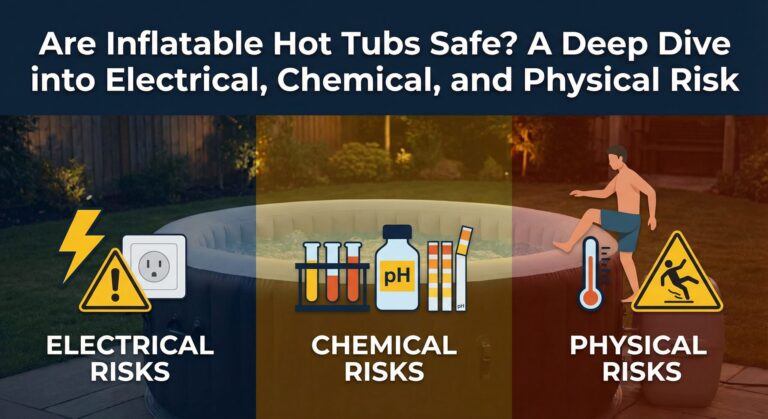
Are Inflatable Hot Tubs Safe? A Deep Dive into Electrical, Chemical, and Physical Risk
The rapid ascent of the inflatable hot tub—from niche gadget to backyard staple—has understandably brought questions of safety to the forefront. When dealing with water, electricity, and high temperatures in an outdoor environment, vigilance is paramount. While modern inflatable spas like the Intex PureSpa and Coleman SaluSpa models are engineered to meet stringent safety standards (such as UL/ETL certifications), their safety profile is ultimately a function of **user adherence** to critical electrical, chemical, and physical protocols.
This comprehensive guide dissects the three major categories of risk associated with portable spa ownership. We’ll examine the built-in safeguards (like the indispensable GFCI plug), the operational hazards that owners often overlook (like improper chemical dosing), and the crucial role that accessories and correct setup play in transforming a potential risk into a secure, relaxing oasis. The goal is to provide the technical knowledge necessary to mitigate every conceivable risk, ensuring your spa setup meets the highest standards of structural, sanitary, and electrical integrity. If you are considering adding a new inflatable hot tub to your home, understanding these safety pillars is the most important step you can take.
🔗 **Foundation for Safe Operation:**
The Ultimate Inflatable Hot Tub Setup Guide for BeginnersSafety Pillars: Mitigating Risk in Your Spa
- Pillar 1: Electrical Integrity (GFCI & Wiring)
- Pillar 2: Chemical & Water Health (Bacteria & pH Risk)
- Pillar 3: Physical & Structural Safety (Slipping & Weight)
- Pillar 4: Child & Drowning Prevention
- Pillar 5: Overheating & Health Risks
- Pillar 6: Chemical Storage & Interaction Hazards
- Pillar 7: Health Conditions, Medication & Alcohol Risk
- Pillar 8: Site Placement, Weather & Wiring Deep Dive
- Pillar 9: Hygiene Protocols & Pathogen-Specific Risks
- Pillar 10: Pets, Insurance & Multi-Household Safety
- Frequently Asked Questions
Pillar 1: Electrical Integrity (GFCI & Wiring Standards)
The most serious potential hazard involving any spa is electrical shock, as water and high-wattage electricity are combined. Reputable inflatable hot tub manufacturers prioritize robust safety measures, but user error remains the primary vulnerability.
1.1. The GFCI Plug: Your Non-Negotiable Lifeline
Every certified inflatable hot tub comes equipped with a **Ground Fault Circuit Interrupter (GFCI)** plug built directly onto the power cord. This is mandatory safety engineering. The GFCI constantly monitors the balance of electrical current flowing through the circuit. If even a tiny imbalance (as low as 5 milliamps, or 0.005 amps) is detected—indicating current leakage into the water or structure—the GFCI instantly trips the circuit, cutting power to the unit in milliseconds. This is the single most important safety feature.
**Safety Protocol:** You must test the GFCI before every use. Use the built-in “Test” and “Reset” buttons. If the plug fails the test, **do not use the spa** and consult the troubleshooting guide for your model. Never bypass the GFCI or plug the spa into an ungrounded extension cord. The spa must be plugged directly into a dedicated, weatherproof, grounded 120V outlet.
1.2. Wiring and Load Management
Inflatable spas operate on a low-amperage 120V system, meaning the heater is low-wattage (typically 1,300W). This low draw means the spa typically requires a **dedicated 15-amp circuit** and should not share power with other high-draw appliances (like refrigerators or large air conditioners). Overloading the circuit creates a fire risk, not just a tripping annoyance. Manufacturers build in safety protocols to prevent simultaneous running of the heater and the bubble jets (as detailed in our energy guide), further mitigating instantaneous overload risk.
Pillar 2: Chemical and Health Safety (Water Quality Management)
The primary health risk in any hot tub is the rapid growth of pathogenic bacteria (like Pseudomonas aeruginosa, which causes “hot tub rash”) due to the warm, small-volume water environment. Chemical safety is entirely the responsibility of the owner.
2.1. The Danger of Unbalanced Water Chemistry
The two biggest chemical risks are:
- **Low Sanitizer Levels:** Allows bacteria to proliferate.
- **High pH/Low Alkalinity:** Causes the sanitizer (chlorine/bromine) to become ineffective, even if the measured level seems sufficient. High pH also corrodes pump seals and heater elements, creating mechanical safety hazards (referencing the component breakdown).
Consistent, accurate testing is the only defense. You must test for Free Chlorine (or Bromine), pH, and Total Alkalinity before every use.
🧪 Essential Tool: Digital Water Tester for Precision
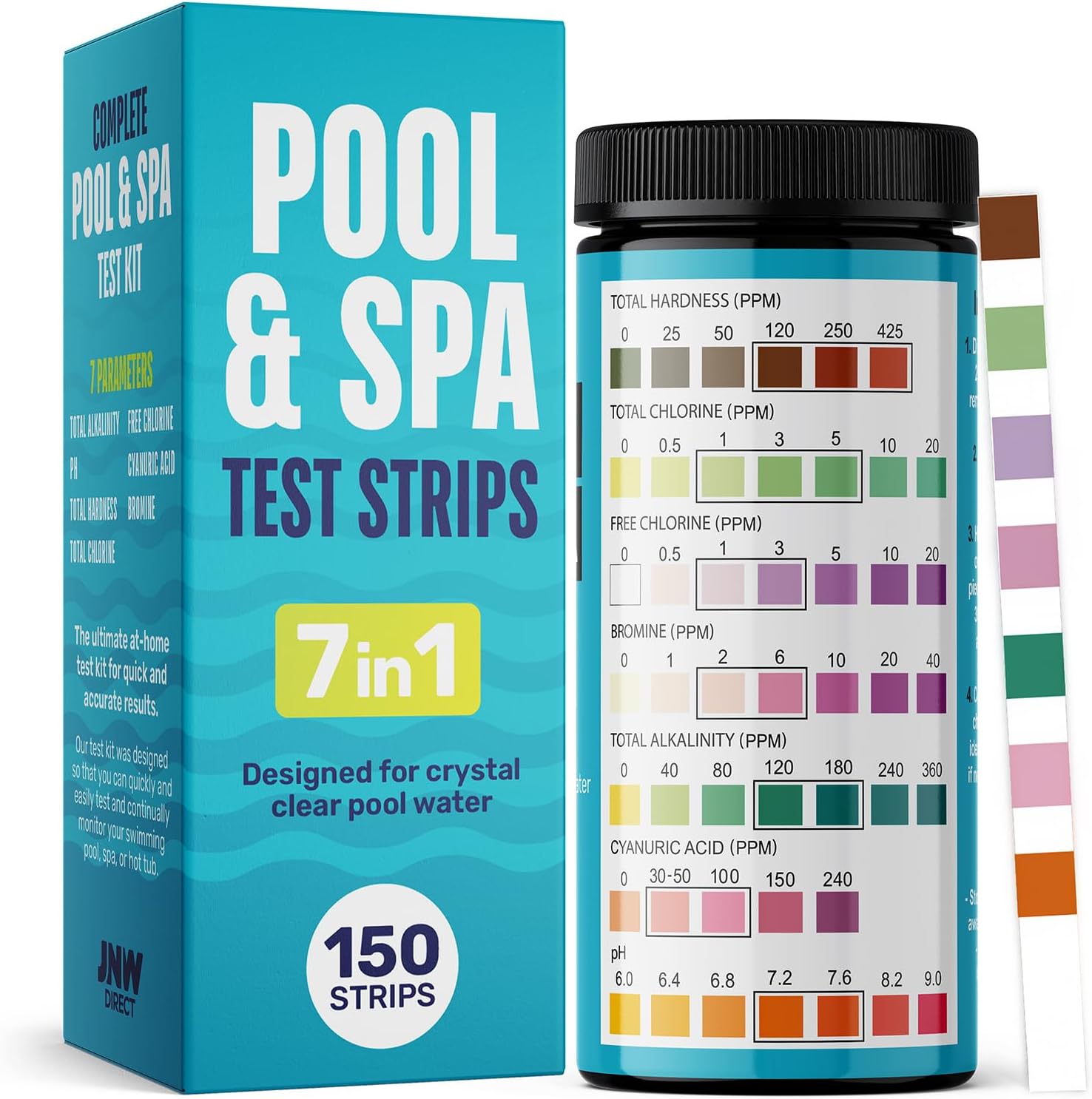
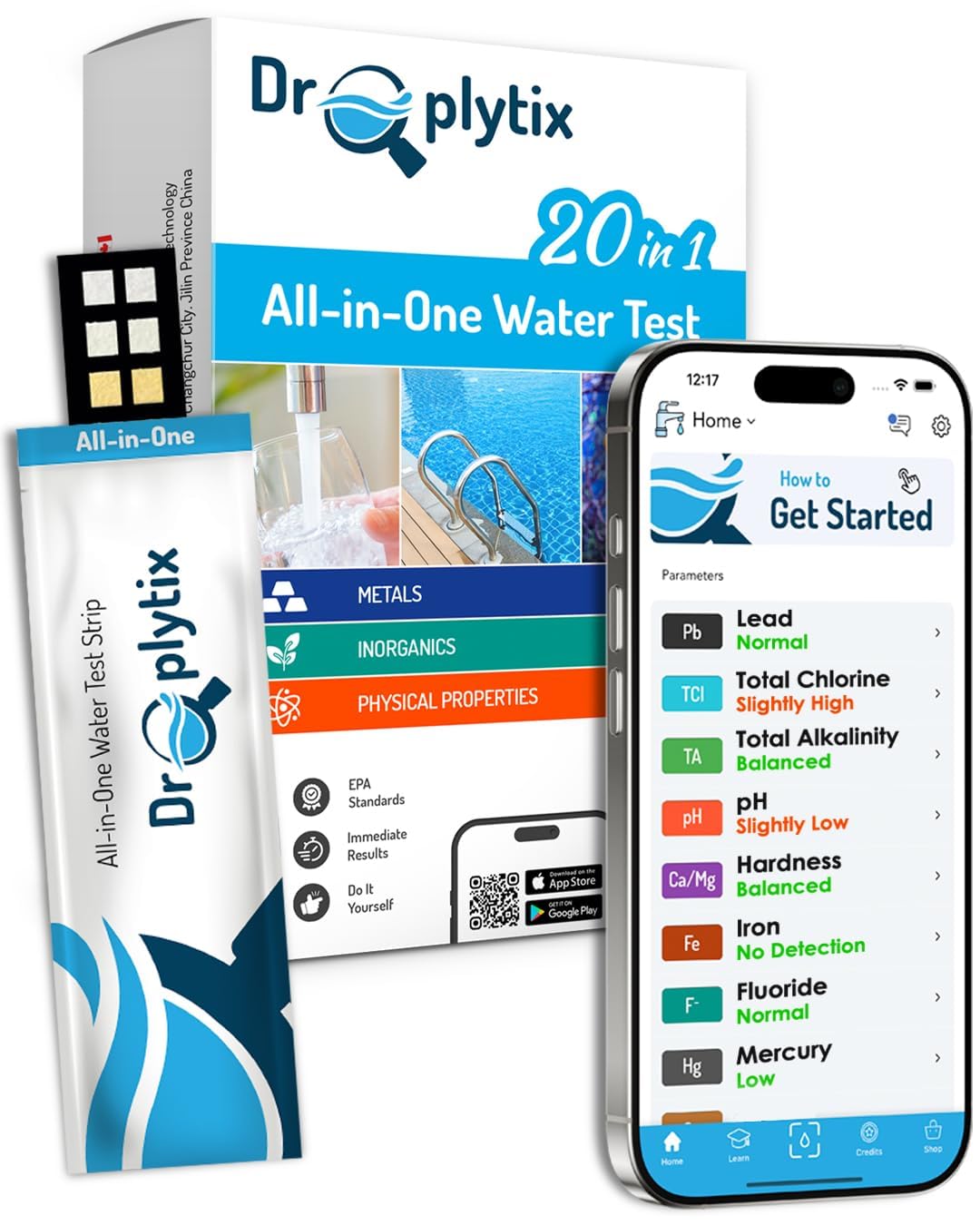 Relying on color-matching test strips is notoriously imprecise in the low-volume environment of a spa. Investing in a quality digital water tester (like a digital colorimeter or a high-end electronic meter) removes human error from chemical measurement, ensuring your spa is consistently within the safe, required parameters (pH 7.4–7.6).
2.2. Maintaining Water Clarity and Reducing TDS
Total Dissolved Solids (TDS)—accumulated oils, minerals, and chemicals—eventually interfere with sanitizer function, demanding a full water change. Proper maintenance greatly extends the useful life of the water and keeps it safe.
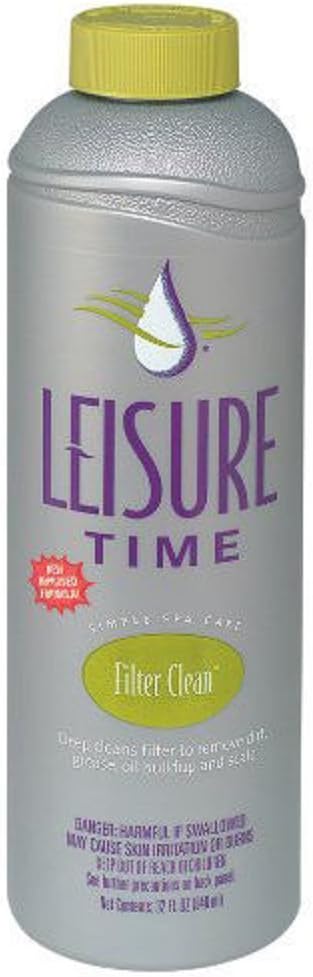
- **Filtration:** Ensure your filter cartridges are clean and functioning. Routine cleaning and replacement is mandatory.
- **Debris Removal:** Use a dedicated hot tub vacuum to remove heavy debris that settles on the floor, preventing organic matter from feeding bacteria.
- **Scum Absorption:** Utilizing specialized scum absorbers reduces oils and lotions that compromise water quality.
Pillar 3: Physical and Structural Safety (Slipping & Weight Load)
Physical safety risks primarily revolve around the entry/exit process and the enormous weight a filled tub imposes on its foundation.
3.1. Foundation Failure and Weight Load
A typical 4-person inflatable spa holds 200–300 gallons of water. One gallon weighs 8.34 pounds. Add the weight of the tub itself and four occupants, and the total operational load can exceed **2,500 to 3,000 pounds**.
**The Safety Risk:** If this weight is not evenly distributed or the foundation is compromised (e.g., uneven grass or an improperly rated deck), the resulting pressure can cause structural damage to the spa or, worse, collapse the deck. This is why proper site preparation is critical. Consult our Hot Tub Pads Guide to ensure your base meets the necessary structural requirements.
🪜 Mitigating Slip Risk: Non-Slip Steps and Treads
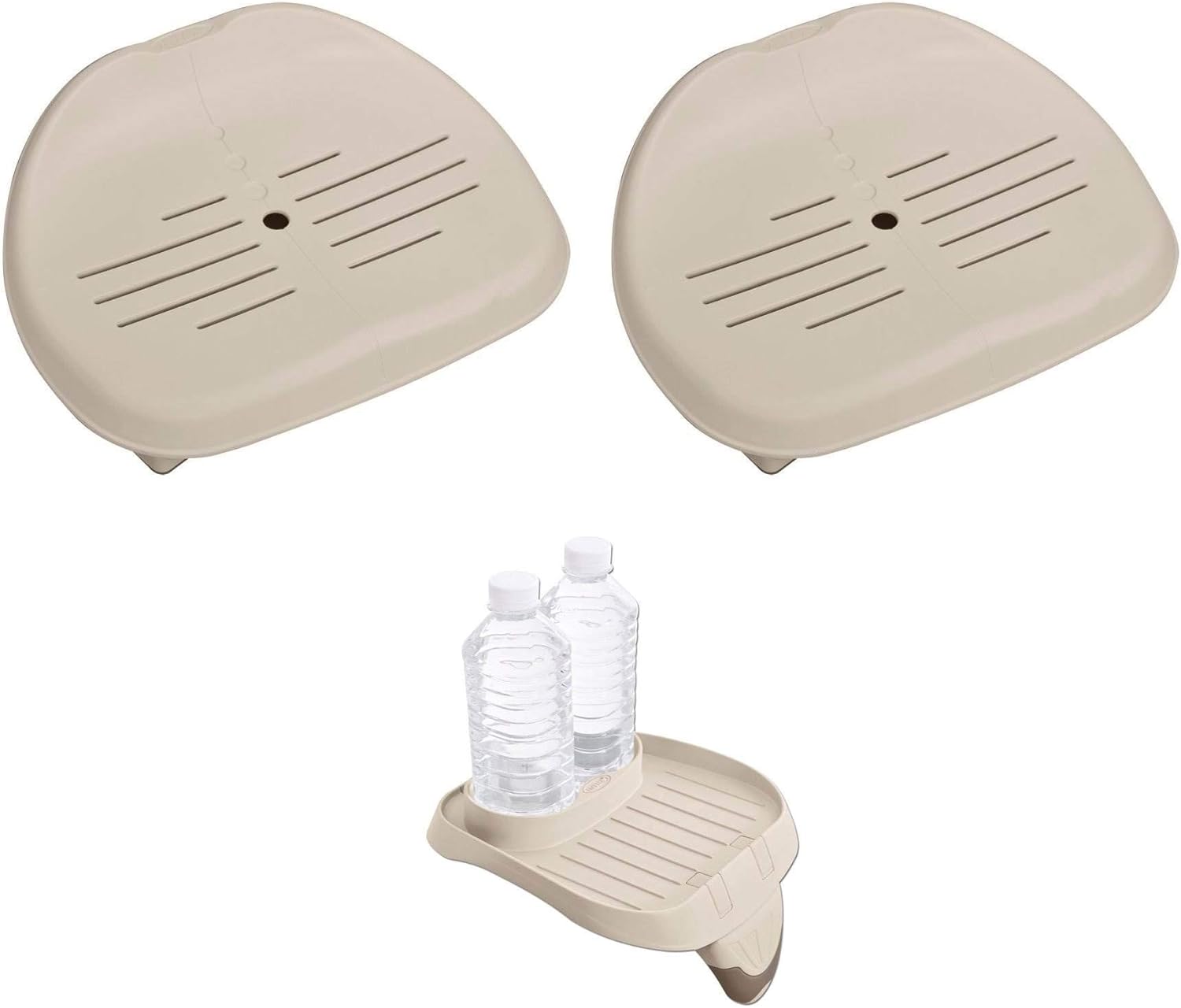
 The transition from dry land to wet vinyl is inherently slippery. Dedicated non-slip hot tub steps or highly textured, specialized step treads (available on Amazon) are vital for safe entry and exit, especially for children or users with limited mobility. The instability of an inflatable wall means users should step directly into the tub, not over the side.
3.2. Reducing Drowning Risk (Cover & Access Control)
Drowning, particularly concerning children, is the most tragic risk. Inflatable spa covers are designed with locking safety clips that meet many regional safety standards (though often not the strict codes for in-ground pools).
**The Rule:** Whenever the spa is not in active use, the safety cover must be securely locked. Consult our guide on choosing the best hot tub covers, ensuring the selected cover’s locking mechanisms are always functional and engaged. This is non-negotiable for family homes.
Pillar 4: Child, Over-immersion, and Drowning Prevention
Beyond the physical barriers, safety relies on strict behavioral rules, especially concerning children and temperature exposure.
4.1. Temperature Control and Health Limits
While the spa is safe for adults at 104°F (40°C), this temperature is hazardous for children, pregnant women, and individuals with heart conditions. Inflatable spa manuals strictly recommend:
- **Maximum Adult Temperature:** 104°F (Limit immersion time to 20 minutes).
- **Maximum Children’s Temperature (Ages 5-12):** 100°F (38°C).
- **Pregnant Women:** Should consult a doctor and generally limit temperature to 100°F or below to prevent hyperthermia.
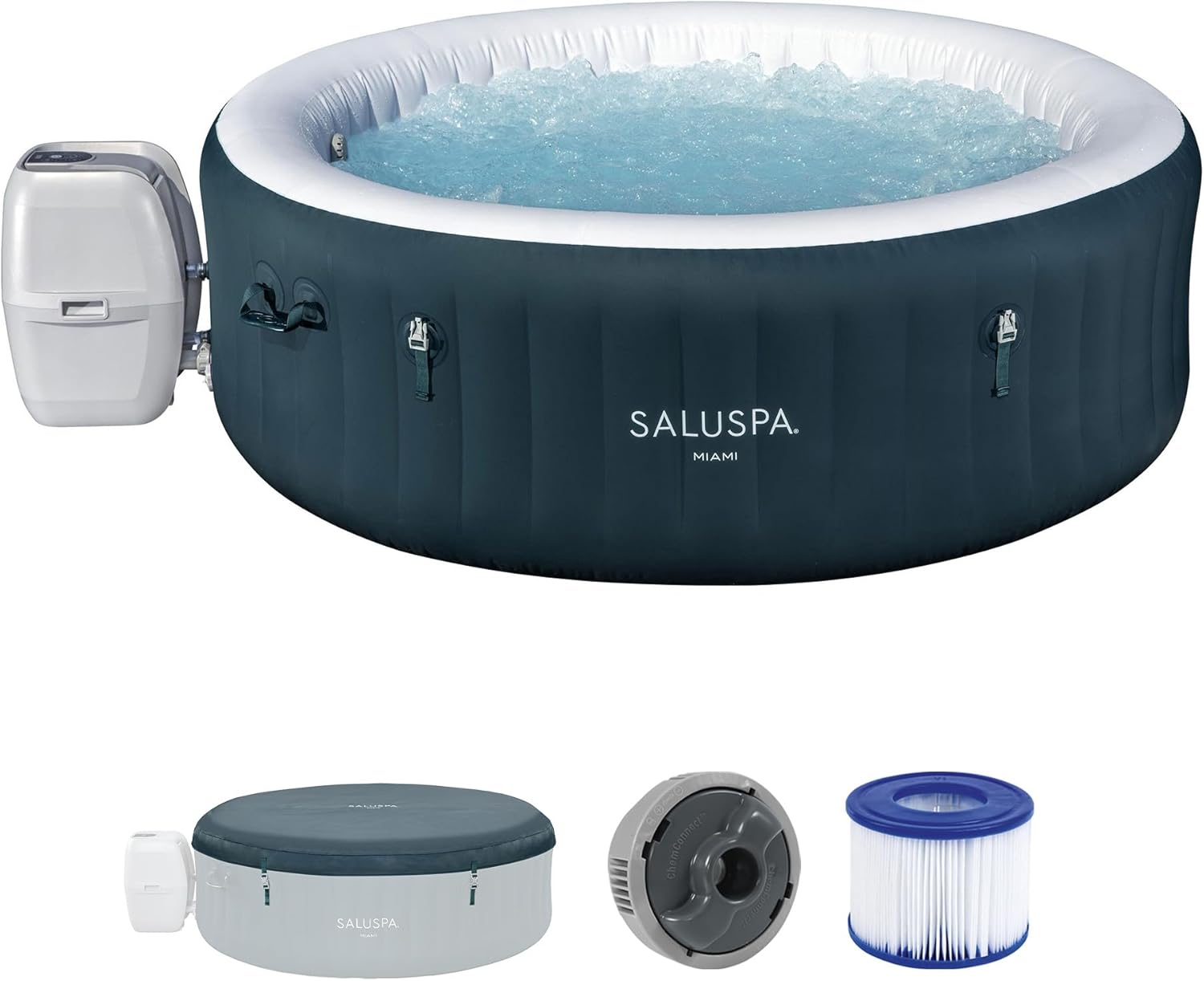
Modern tubs, like the Bestway SaluSpa Miami, have precise digital controls, making it easy to comply with these rules.
🔒 Chemical Security: Child-Proof Floater Dispenser
 Never let chemical tablets or granules sit unprotected. Use a chemical dispenser (floater) with a secure, child-resistant locking top to prevent accidental ingestion or contact with concentrated sanitizer. This simple step prevents a serious poisoning risk for small children who are naturally curious about bright colors and objects floating in the water.
Pillar 5: Preventative Maintenance and Longevity
A well-maintained spa is a safe spa. Neglect increases the risk of component failure (electrical) and water contamination (health).
5.1. Cold Weather Hazards and Winterizing
Operating an inflatable spa in cold climates (see our winter guide) introduces the risk of **Freezing Damage**. If the pipes or pump freeze, the structural failure (cracked housing) can lead to leaks and serious electrical risks when the system thaws and water mixes with the electrical components.
If using the spa in winter, ensure the anti-icing function (if available) is active. If storing, follow the manufacturer’s strict guidelines for draining, drying, and winterizing, including using a specialized pipe maintenance protocol.
5.2. Dealing with Errors and Leak Prevention
Do not ignore control panel error codes. A code like “E90” (low flow) is a safety warning that the heater is struggling and potentially overheating. Address these issues immediately using the Intex PureSpa Troubleshooting guide or equivalent documentation. Furthermore, ensure the spa is placed on an appropriate foundation to prevent punctures, minimizing the risk of a leak that could damage the pump housing and introduce electrical danger.
Pillar 6: Chemical Storage and Interaction Hazards
Water chemistry mistakes are not limited to what happens inside the tub. Many of the most serious incidents involving spa chemicals actually occur during storage, handling, and mixing, long before a single tablet touches the water. Understanding how sanitizing chemicals behave in concentrated form is just as important as understanding how to dose them correctly.
6.1. Never Mix Chlorine and Bromine (Or Old and New Product)
One of the most dangerous and least understood risks in spa ownership is chemical cross-contamination. Mixing chlorine-based and bromine-based sanitizers directly, or combining old, degraded granules with a fresh container of the same product, can trigger an exothermic reaction. In enclosed storage containers this can produce heat, off-gassing, and in rare but documented cases, small combustion events. The same danger applies to mixing pH increaser and pH decreaser in the same scoop, or allowing calcium hypochlorite (“cal-hypo” shock) to come into contact with organic material like spilled fuel, oil, or even a stray leaf inside the storage tub.
**Safety Protocol:** Always use a clean, dry scoop dedicated to a single chemical. Never return unused chemical to the original container after it has been exposed to water or a wet scoop. Store each chemical type in its own sealed, original container—never transfer chlorine or bromine into an unlabeled bottle, and never store chemicals in a repurposed food or beverage container where a family member could mistake it for something else.
6.2. Ventilation and Storage Location
Chlorine and bromine granules off-gas small amounts of chemical vapor even when sealed properly, and this off-gassing accelerates in heat. Storing spa chemicals in a hot garage, a direct-sun shed, or near a furnace or water heater pilot light increases both degradation of the product and the risk of vapor buildup in an unventilated space. Ideally, chemicals should be stored in a cool, dry, ventilated location, off the ground, and away from direct sunlight—separate from pool chemicals, gasoline, fertilizer, or any other reactive household product. A locked chemical storage tote placed on a shelf, not the floor, reduces both moisture exposure and the chance of a curious child or pet gaining access.
6.3. Shock Treatment Safety
Shocking a spa—adding a large dose of oxidizer to rapidly eliminate contaminants and combined chlorine (chloramines)—is a routine part of ownership, but it briefly creates a much higher chemical concentration in the water. After shocking, the spa must not be used until chlorine or bromine levels have dropped back into the safe range (typically indicated by both time elapsed, usually a minimum of several hours to overnight depending on the product, and a clean test reading). Always add shock to water, never water to concentrated shock, and always shock with the cover open and jets running briefly to circulate the chemical evenly, which also helps off-gas chloramine odor safely into the open air rather than trapping it under a closed cover.
6.4. Shelf Life, Degradation, and Household Cross-Contamination
Spa chemicals do not last indefinitely, and their degradation is not always visible. Chlorine and bromine granules gradually lose potency when exposed to humidity, heat, or repeated opening of the container, which means a bather relying on last summer’s leftover shock may be dosing at a fraction of the labeled strength without realizing it—leading to a false sense of security about sanitizer levels even when the correct amount, by weight, has been added. As a general rule, unopened chemical containers are good for one to two seasons if stored correctly, while opened containers should be used within the season they were opened and discarded rather than carried over for multiple years.
Cross-contamination with unrelated household products is a separate but related risk. Spa chemicals should never be stored on the same shelf as household cleaning products, particularly anything containing ammonia or bleach, since a leak or spill that mixes an oxidizing pool or spa shock with an ammonia-based cleaner can produce hazardous chloramine gas in an enclosed space such as a garage or shed. Dedicating a single, clearly labeled storage tote exclusively to spa chemicals, physically separated from cleaning supplies, fuel, and fertilizer, removes this risk entirely and also makes it far easier to notice at a glance if a container has been opened, spilled, or tampered with.
Pillar 7: Health Conditions, Medication, and Alcohol Risk
A significant share of hot tub–related medical incidents are not caused by equipment failure at all, but by a mismatch between the user’s health status and the physiological demands of prolonged heat exposure. This is a keyword-rich area of concern that deserves the same rigor as the electrical and chemical pillars.
7.1. Cardiovascular Conditions and Blood Pressure Medication
Hot water immersion causes peripheral blood vessels to dilate, which lowers blood pressure and increases heart rate as the body works to maintain circulation. For most healthy adults this is a pleasant, harmless sensation. But for individuals with hypertension, hypotension, arrhythmia, or a history of heart attack or stroke, the combination of vasodilation and medication (particularly beta-blockers, ACE inhibitors, diuretics, and other blood pressure medications) can cause a sudden drop in blood pressure severe enough to trigger dizziness, fainting, or in rare cases loss of consciousness while still submerged. Anyone on cardiovascular medication should consult a physician before regular hot tub use and should never use the spa alone during the first several sessions after starting or changing a medication.
7.2. Diabetes, Blood Sugar, and Sensory Considerations
Individuals with diabetes face two compounding risks. First, heat exposure can affect blood sugar levels and how quickly insulin is absorbed if injected shortly before entering the spa. Second, diabetic neuropathy can reduce sensation in the feet and lower legs, meaning a person may not immediately feel that the water is too hot, increasing the risk of thermal burns from water at or near the 104°F maximum. Testing blood sugar before and after extended soaks, and physically checking water temperature with a hand before submerging the feet, are simple precautions that meaningfully reduce this risk.
7.3. Alcohol Consumption: The Most Underrated Drowning Risk Factor
Public health data on hot tub and spa fatalities consistently identifies alcohol consumption as a major contributing factor, more so than any single mechanical failure. Alcohol amplifies the blood-pressure-lowering effect of hot water, impairs judgment about how long is safe to remain submerged, and significantly increases the risk of slipping on wet steps or, in the worst cases, drowning due to impaired consciousness while alone in the water. Alcohol also accelerates dehydration, which compounds heat stress. The safest practice is to treat the spa the same way a lifeguarded pool treats alcohol: not while actively soaking, and never as a substitute for supervision if children or unsteady individuals are present.
7.4. Pregnancy, Immunocompromised Users, and Skin Conditions
Beyond the temperature limits already noted in Pillar 4, pregnant users should be aware that hyperthermia in early pregnancy has been associated with developmental risk in some studies, which is why most obstetric guidance recommends keeping soak temperatures conservative and durations short. Separately, individuals who are immunocompromised, have open wounds, active skin infections, or recent tattoos or piercings should avoid spa water entirely until fully healed, since warm, enclosed water is an efficient vector for opportunistic bacteria to enter broken skin.
7.5. Respiratory Sensitivity and Chemical Off-Gassing
Individuals with asthma or other reactive airway conditions can be sensitive to the low-level chloramine or bromamine off-gassing that occurs near freshly shocked spa water, particularly in still air or under a partially closed cover. While this is generally a mild irritant rather than a medical emergency, it is worth ventilating the area, keeping the cover open, and allowing the jets to circulate for a period after shocking before anyone with a known sensitivity approaches the water. Similarly, individuals with lightheadedness or a history of fainting in warm, humid environments should avoid leaning directly over the water surface immediately after a chemical addition, since the concentration of off-gassed vapor is highest right at the water’s surface.
A related, often-overlooked consideration is core body temperature regulation in older adults. Aging reduces the body’s ability to dissipate heat efficiently, meaning the same water temperature and soak duration that feels comfortable to a younger adult can push an older bather closer to hyperthermia. Shorter sessions, more frequent breaks to cool down outside the water, and keeping a glass of water nearby to counter dehydration are simple, low-effort precautions for older household members.
Pillar 8: Site Placement, Weather, and Wiring Deep Dive
Where you place the spa, and how you power it, introduces a category of risk that is frequently overlooked in favor of the more commonly discussed GFCI plug. Site selection and cord management deserve their own dedicated review.
8.1. Extension Cords: A Leading Cause of Spa-Related Electrical Fires
Manufacturer manuals near-universally prohibit the use of extension cords, yet it remains one of the most common user modifications, usually because the ideal outlet location is farther from the spa than the built-in cord reaches. A standard household extension cord is not rated for the sustained amperage draw of a spa heater and pump running for hours at a time. The thinner gauge wiring inside a typical extension cord heats up under sustained load, and that heat has nowhere to dissipate when the cord is coiled, buried under a deck skirt, or run through wet grass. This creates a genuine fire risk independent of the GFCI, since the GFCI protects against ground faults, not against a cord overheating due to resistive load. If the built-in cord cannot reach a suitable outlet, the correct solution is to hire a licensed electrician to install a new dedicated, weatherproof, GFCI-protected outlet closer to the spa—not to introduce an extension cord.
8.2. Weather Exposure: Lightning, Wind, and Storms
An inflatable spa is, in effect, a large body of water with metal heating elements sitting in an open-air environment, which means it should be treated the same way an in-ground pool is treated during severe weather. Water is an excellent conductor, and there is no design feature on a portable spa that protects a bather from a nearby lightning strike. As a firm rule, vacate and unplug the spa at the first sign of thunder or lightning, and do not resume use until at least 30 minutes after the last strike. High wind is a separate but related concern: inflatable side walls can act like a sail in gusty conditions, and an empty or partially filled tub can shift or tip, straining hoses and electrical connections at the pump housing.
8.3. Grounding, Bonding, and Proximity to Structures
Beyond the outlet itself, the spa should be positioned away from overhead power lines, at a safe clearance from the edge of a pool (to prevent cross-contamination of chemicals and confusion between two different water systems), and never directly beneath a roofline where runoff or icicles could fall into open water. Some regional electrical codes also require bonding of nearby metal structures (fencing, ladders) within a certain radius of a permanently plumbed spa; while most portable inflatable units are exempt from full bonding requirements due to their temporary nature, checking local code or asking an electrician during outlet installation is a worthwhile step for anyone keeping the spa set up seasonally or year-round.
8.4. Surface Selection and Seasonal Repositioning
The surface beneath the spa affects both structural and electrical safety in ways that are easy to underestimate. Bare grass or soil can shift, erode, or become uneven as it repeatedly bears thousands of pounds of concentrated weight, gradually tilting the spa and stressing seams that were designed to sit level. Concrete and pavers offer a stable, flat base, but concrete can retain and radiate summer heat directly into the floor of the spa, while also becoming extremely cold and potentially damaging the base material in freezing conditions if any residual moisture is trapped underneath. A purpose-built foam or interlocking foundation pad, discussed in more detail in the linked Hot Tub Pads Guide, addresses both concerns by providing a level, insulated, moisture-resistant base.
Seasonal repositioning is also worth planning for. A spa placed in full sun for a summer setup may need to move to a more sheltered, wind-protected location for winter use, both to reduce heat loss through the vinyl walls and to minimize the wind-loading risk on the inflatable structure discussed above. Each time the spa is relocated, the electrical connection, ground clearance, and drainage slope should be re-verified rather than assumed to still be adequate from the prior location.
Pillar 9: Hygiene Protocols and Pathogen-Specific Risks
The chemical pillar above addresses sanitizer levels, but hygiene behavior—what bathers do before and after entering the water—has an outsized effect on how hard the sanitizer has to work, and therefore on how safe the water actually stays between tests.
9.1. Shower Before You Soak
A one-minute rinse with soap before entering the spa removes the majority of skin oils, lotion, sunscreen, deodorant, and sweat that would otherwise immediately load the water with organic material. Because an inflatable spa holds a small fraction of the water volume of an in-ground pool, this organic load has a disproportionately large impact on sanitizer demand. Skipping the pre-soak shower is one of the single biggest contributors to cloudy water, rapid sanitizer depletion, and the “hot tub rash” risk discussed elsewhere in this guide.
9.2. Recreational Water Illness: Naming the Specific Risks
Beyond the general bacterial risk already covered, two specific organisms are worth understanding by name. Pseudomonas aeruginosa thrives in warm, under-chlorinated water and causes the itchy, red, bumpy rash known as “hot tub folliculitis,” typically appearing 12–48 hours after exposure and resolving on its own in healthy adults, though it can be more serious for immunocompromised users. Legionella, the bacteria responsible for Legionnaires’ disease, is a rarer but more serious risk; it thrives in warm water systems with inadequate disinfectant residual and can cause severe pneumonia-like illness if inhaled through aerosolized mist, such as from spa jets. Maintaining consistent sanitizer levels and never leaving the spa filled and unmaintained for extended stretches are the primary defenses against both organisms.
9.3. Swim Diapers, Contamination Events, and Fecal Incidents
Because of the small water volume, a fecal or vomit contamination event in an inflatable spa is a much more serious sanitation event than the same incident in a large pool. Young children should always wear a snug-fitting swim diaper, and any contamination event should trigger an immediate evacuation of all bathers, followed by a substantial shock treatment and, in many cases, a full water change rather than an attempt to simply “chemical treat around” the incident.
9.4. Filter, Cover, and Surface Biofilm Management
Even with perfect water chemistry, biofilm can accumulate in places sanitizer struggles to reach efficiently: the underside of the cover, the folds of the inflatable wall above the waterline, and inside filter housings that go too long between rinses. Biofilm is a thin, often invisible layer of bacteria that adheres to surfaces and can shield organisms from the sanitizer circulating in the bulk water, effectively creating a reservoir of contamination that reintroduces bacteria every time the cover is closed or the jets stir the water. Wiping down the waterline and the underside of the cover with a mild, spa-safe cleaner on a weekly basis, and rinsing filter cartridges thoroughly (not just knocking off visible debris) every one to two weeks, meaningfully reduces this hidden risk.
It is also worth rotating between two sets of filter cartridges where the manufacturer supports it, so that one set can dry completely between uses. A filter that never fully dries out provides an ideal environment for bacterial and mold growth inside the pleats, which then gets reintroduced to the water the next time that filter is installed, undermining even a carefully maintained chemical routine.
Pillar 10: Pets, Insurance, and Multi-Household Safety
The final safety category covers a handful of situational risks that are easy to overlook until they become a real problem: pets, rental or shared-use scenarios, and the liability side of spa ownership.
10.1. Pets and Inflatable Spas
Dog claws are a genuine puncture risk to the vinyl or PVC walls of an inflatable spa, and pets should be kept away from both the tub itself and the immediate deck area when the cover is off. Pets that fall or jump into hot spa water face a heightened risk of thermal injury and, unlike most humans, a much harder time climbing out over an inflated wall, which can lead to a real drowning hazard for a small dog left unsupervised near an uncovered spa.
10.2. Insurance, HOA Rules, and Local Code Considerations
Many homeowners insurance policies treat a filled hot tub, even a temporary inflatable one, as an “attractive nuisance” similar to a pool or trampoline, which can affect liability coverage in the event a neighbor’s child is injured on the property. It is worth confirming with your insurance provider whether a spa needs to be added as a rider, and whether local HOA rules or municipal code require fencing, a self-latching gate, or a locked cover clip specifically for portable spas, since some jurisdictions apply the same barrier requirements used for in-ground pools once a spa holds more than a specified volume of water.
10.3. Rental Properties and Guest Safety
For vacation rentals or multi-household use, posting a laminated safety card near the spa—covering maximum temperature, maximum session length, the “no alcohol while soaking” guidance, and an emergency shut-off location—significantly reduces risk for guests who are unfamiliar with the specific unit. Guests should never be left to assume that a inflatable spa is regulated the same way a commercial or hotel hot tub is; portable units rely entirely on the host’s diligence for chemical balance and equipment maintenance.
10.4. Emergency Preparedness and Shutoff Familiarity
Every household member who uses the spa, not just the primary owner, should know two things without hesitation: where the GFCI reset button is located, and how to fully unplug the unit at the outlet in an emergency. In a genuine incident—a suspected shock hazard, an unresponsive bather, or a sudden electrical smell—the instinct to reach into the water to help someone is dangerous if the power has not been cut first. Posting the breaker panel location and the outlet location somewhere visible, and running a brief “what would you do” conversation with family members or frequent guests, costs nothing and meaningfully shortens response time in a real emergency.
It is equally worth keeping the manufacturer’s customer support number and model number accessible, either printed near the spa or saved in a phone, since troubleshooting error codes correctly and quickly (as referenced in Pillar 5) often prevents a minor equipment fault from escalating into the kind of neglected, unmaintained condition that leads to the more serious electrical and biological risks covered throughout this guide.
Quick-Reference Safety Checklist by Season
With ten safety pillars covered in detail above, it helps to have a condensed, season-by-season checklist that ties the electrical, chemical, physical, and health considerations together into a routine rather than a one-time read.
Setup Day Checklist
- Confirm the outlet is a dedicated, grounded, weatherproof 120V circuit with a functioning GFCI, and test the GFCI before first fill.
- Verify the foundation is level, stable, and rated to support 2,500+ pounds without shifting.
- Position the spa away from overhead power lines, downspouts, rooflines, and low-hanging tree limbs.
- Check local HOA and code requirements for barriers, self-latching gates, or fencing before finalizing placement.
- Store all chemicals, sealed and labeled, in a cool, ventilated location separate from cleaning products and fuel.
Every-Use Checklist
- Test the GFCI “Test/Reset” function.
- Test Free Chlorine or Bromine, pH, and Total Alkalinity.
- Shower before entering to reduce organic load on the sanitizer.
- Confirm water temperature is appropriate for every bather present, especially children, older adults, and anyone with a cardiovascular condition.
- Skip alcohol before and during soaking.
- Lock the safety cover securely the moment the spa is unattended.
Weekly and Seasonal Checklist
- Rinse or rotate filter cartridges and allow them to fully dry between uses.
- Wipe the waterline and underside of the cover to disrupt biofilm buildup.
- Shock the water on a regular schedule, always adding chemical to water, never the reverse.
- Reassess surface, wind exposure, and drainage slope any time the spa is relocated seasonally.
- Before winter, follow manufacturer draining and winterizing steps, or confirm the anti-freeze function is active if the unit stays filled.
- Discard chemicals that are more than one season old or that have been exposed to significant humidity.
Frequently Asked Questions About Inflatable Hot Tub Safety
Is it safe to leave an inflatable hot tub plugged in all the time?
Yes, provided it is plugged into a dedicated, functioning GFCI outlet that is tested regularly. Most manufacturers design their units to run continuously to maintain temperature and filtration cycles, and leaving the unit plugged in is generally safer than repeatedly plugging and unplugging a wet cord.
Can I run my inflatable hot tub during a rainstorm?
Light rain is generally acceptable since the electronics are sealed and the GFCI provides a critical safety backstop, but the spa should always be vacated and unplugged during thunderstorms or lightning, as described in Pillar 8.
How often should I test the water for safety, not just clarity?
Test Free Chlorine or Bromine, pH, and Total Alkalinity before every single use, not just when the water looks cloudy. Clear water can still carry unsafe bacteria levels if the sanitizer has been depleted.
Is it dangerous to mix pool chemicals with hot tub chemicals?
Yes. Pool-grade chemicals are frequently formulated at different concentrations and should not be assumed interchangeable with spa-specific products. Always use chemicals labeled specifically for spas or hot tubs, and never combine leftover pool chemical with spa chemical in the same storage container.
Can drinking alcohol in a hot tub actually be dangerous?
Yes, and more so than many people realize. Alcohol compounds the blood-pressure-lowering effect of hot water and impairs judgment about safe soak duration, and is a recognized contributing factor in spa-related medical emergencies and drownings.
Do inflatable hot tubs need to be fenced in like a pool?
It depends on local code and water volume. Some jurisdictions apply pool-style barrier requirements once a portable spa holds more than a specified number of gallons, so checking with your local building department or HOA is worthwhile, as noted in Pillar 10.
What should I do if my pet falls into the spa?
Remove the pet immediately and check for signs of distress or thermal injury. Because inflatable walls are difficult for animals to climb, supervision is essential any time the cover is off and a pet has access to the area.
Is it safe to use an inflatable hot tub if I’m on blood pressure medication?
Consult a physician first. Hot water immersion combined with blood-pressure-lowering medication can cause a sudden drop in blood pressure, dizziness, or fainting, so caution and supervision are strongly recommended, especially during initial sessions.
Can an inflatable hot tub cause a house fire?
The spa itself is low risk when used as directed, but improper extension cord use is a documented fire hazard due to sustained heat buildup in undersized wiring, which is why manufacturers prohibit extension cords entirely.
How long can I safely stay in an inflatable hot tub?
Most manufacturers and health guidance recommend limiting adult soak time to around 20 minutes at the maximum 104°F setting, with shorter limits for children, pregnant users, and anyone with a cardiovascular condition.
What is the safest way to store leftover spa chemicals?
Keep each chemical sealed in its original, labeled container, stored in a cool, dry, ventilated space off the ground and away from direct sunlight, other reactive chemicals, and children or pets.
Is Legionnaires’ disease a real risk in a backyard inflatable spa?
It is a rare but documented risk in any warm-water system with inadequate sanitizer levels. Maintaining consistent chemical balance and avoiding extended periods where the spa sits filled and untreated are the most effective defenses.
⭐ Final Verdict: Safety by Design, Secured by the User
Inflatable hot tubs are safe because they are designed with multiple redundant safety layers, including the mandatory GFCI plug and temperature lockout controls. However, the system’s safety is directly proportional to the owner’s adherence to the three core responsibilities:
- **Electrical Compliance:** Always use a proper, grounded outlet and never bypass the GFCI.
- **Chemical Diligence:** Test and balance the water daily using accurate testing methods.
- **Physical Security:** Lock the cover and ensure the steps and foundation are stable.
With proper operation and accessory use, the portable spa provides a secure and relaxing environment for the whole family.
🔗 **Your Comprehensive Hot Tub Resources:**