Can You Use an Inflatable Hot Tub in the Winter? The Definitive Guide
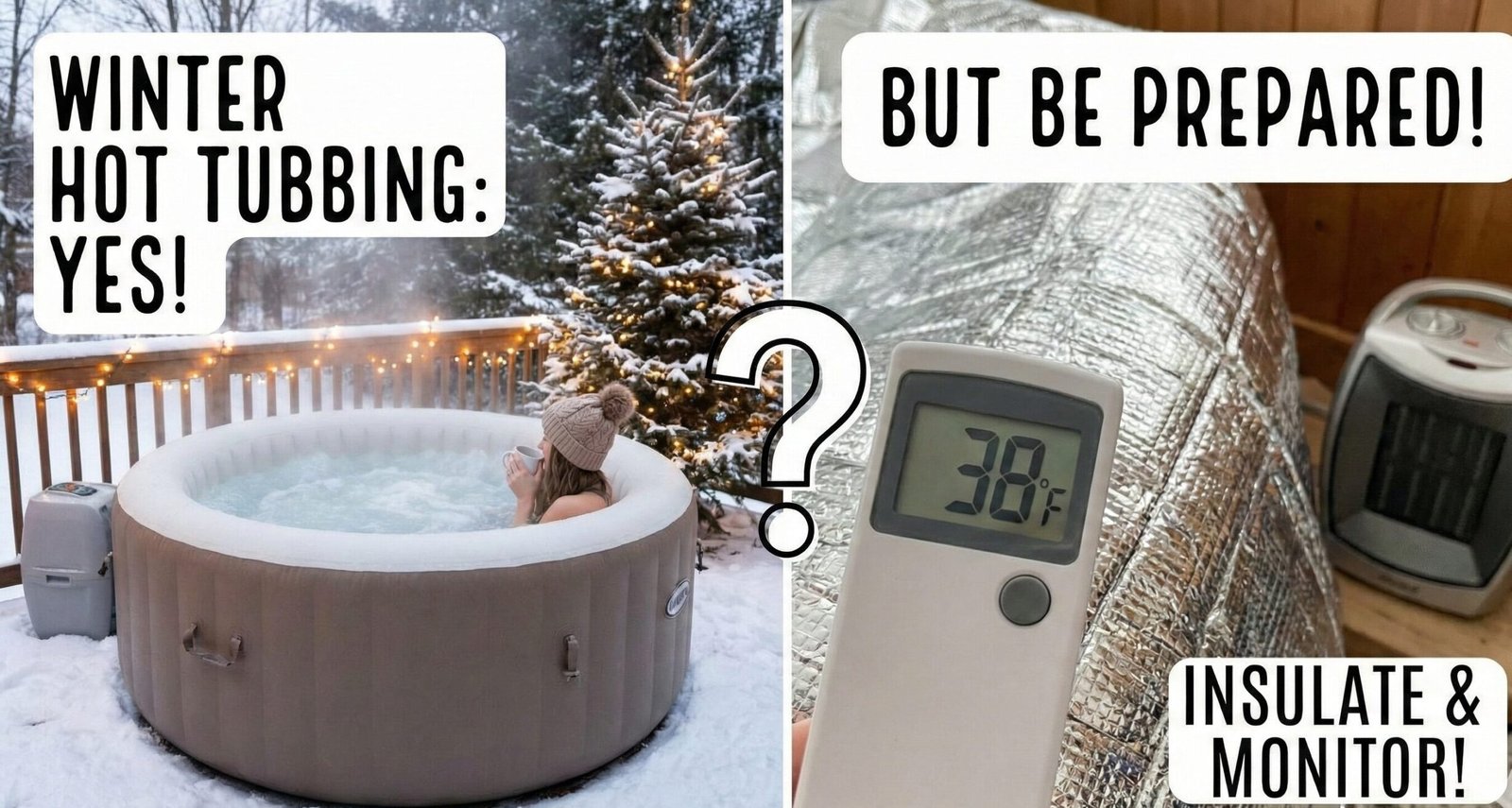
Picture this: steam rising into the crisp winter air, snowflakes gently melting as they hit the bubbling surface of the water, and you, perfectly warm, soaking in your backyard oasis. It is the ultimate winter fantasy. But for owners of portable spas, this fantasy often comes with a nagging question: Can you actually use an inflatable hot tub in the winter?
The short answer is yes, but with significant caveats. Unlike traditional acrylic spas with thick foam insulation, inflatable tubs are essentially large pockets of air and water exposed to the elements. Without the right equipment, preparation, and maintenance, attempting to use a standard inflatable tub in freezing temperatures can lead to cracked vinyl, frozen pumps, and a voided warranty.
In this comprehensive guide, we will break down exactly how to successfully run an inflatable spa during the colder months, the risks involved, and the specific technology—like Freeze Shield—that makes it all possible. If you are still shopping for a model that can handle the cold, start by checking out our curated list of the best inflatable hot tubs for winter.
The Challenge: Vinyl vs. Freezing Temperatures
To understand why winter use is tricky, you need to understand the anatomy of these tubs. Most are made of reinforced PVC or vinyl. When temperatures drop below 40°F (4°C), this material can become brittle. If you try to unfold and set up a cold tub in winter, you risk cracking the liner before you even add water.
The 40°F Safety Cut-Off
For years, older models of popular brands like Intex and Coleman had a built-in safety feature that was actually a nuisance for winter lovers: the pump would automatically shut off if the ambient air temperature dropped below 40°F. This was to prevent the internal water in the pump mechanism from freezing and expanding, which would crack the plastic housing.
However, technology has evolved. Newer models now feature systems designed specifically to combat this.
Understanding PVC Material Properties in Cold Weather
The molecular structure of PVC changes dramatically as temperatures drop. At room temperature, the polymer chains in vinyl have enough flexibility to stretch and conform under pressure. But as the thermometer falls toward freezing, these chains lose their mobility. The material transitions from ductile to brittle—a phenomenon materials scientists call the “glass transition temperature.” For standard PVC used in inflatable hot tubs, this critical threshold typically falls between 30°F and 40°F (-1°C to 4°C).
When PVC becomes brittle, any sudden stress—whether from unfolding the tub, tightening a valve connection, or even water pressure—can cause microfractures that quickly propagate into full-scale cracks. These cracks are nearly impossible to repair effectively, especially when they occur along seam lines or near fitting connections. The repair patches that work beautifully in summer often fail in winter because the adhesive cannot bond properly to cold, stiff vinyl.
Premium manufacturers combat this by adding plasticizers to their PVC formulations. These chemical additives work like lubricants between polymer chains, allowing them to slide past each other even at lower temperatures. However, plasticizers leach out over time, which is why older inflatable tubs become increasingly fragile with each passing year. This degradation accelerates if the tub is stored in hot attics during summer or exposed to direct UV radiation for extended periods.
The Science of Water Expansion and Ice Damage
Water is one of the few substances that expands when it freezes—by approximately 9% in volume. This expansion exerts tremendous pressure on whatever contains it. In the confined spaces of pump housings, heater chambers, and air jet tubing, even a small amount of trapped water can generate forces exceeding 30,000 pounds per square inch when it freezes. No consumer-grade pump housing can withstand these pressures.
The most vulnerable components are the small-diameter water lines that run between the tub wall and the pump unit. These lines often hold standing water even after draining the main tub body. If temperatures plummet unexpectedly, the water in these lines freezes first because of their small volume and high surface-area-to-volume ratio. The resulting ice plug can split the tubing or, worse, push into the pump impeller housing and crack the casing.
This is why winter-rated inflatable hot tubs incorporate freeze protection sensors at multiple points in the water circuit—not just in the main tub body. The system monitors temperature at the pump intake, the heater outlet, and sometimes even within the control board enclosure itself. When any of these sensors detect temperatures approaching freezing, the system activates circulation pumps and, if necessary, the heater element to maintain safe temperatures throughout the entire water path.
How to Successfully Use Your Inflatable Hot Tub in Winter
If you are determined to keep the bubbles going through December and January, you cannot simply set it and forget it. You need a proactive strategy. Here is the expert protocol for winter survival.
1. Location, Location, Location
Wind chill is the enemy. A steady winter breeze will strip heat away from your tub faster than the heater can replace it. Place your tub in a sheltered area—perhaps a corner of your patio protected by walls, or inside a gazebo. Just remember, if you are setting it up on a deck, you need to know how many amps the hot tub uses and ensure your outdoor wiring can handle the constant heater load.
2. Insulate from the Ground Up
The ground is a massive heat sink. If you place your tub directly on concrete or frozen earth, the cold will seep straight through the bottom. We highly recommend using thermal foam mats. Not only do they protect the liner from rough debris, but they also provide a thermal break.
Check out our recommendations for the best hot tub pads to ensure you have the right foundation before filling the tub.
3. Upgrade Your Cover
Heat rises. The standard cover that came with your inflatable tub is likely just a thin layer of vinyl with an inflatable bladder. In sub-zero temperatures, this might not be enough. Consider adding a floating thermal blanket underneath the main cover to reduce evaporation and heat loss. For superior options, read our guide on the best hot tub covers.
4. Leave the Heater ON
In the summer, you might turn the heater off to save money. In the winter, this is dangerous. You must keep the pump and heater running constantly to maintain water circulation. Moving water freezes much slower than stagnant water. Most modern pumps with freeze protection require the unit to be plugged in and active 24/7.

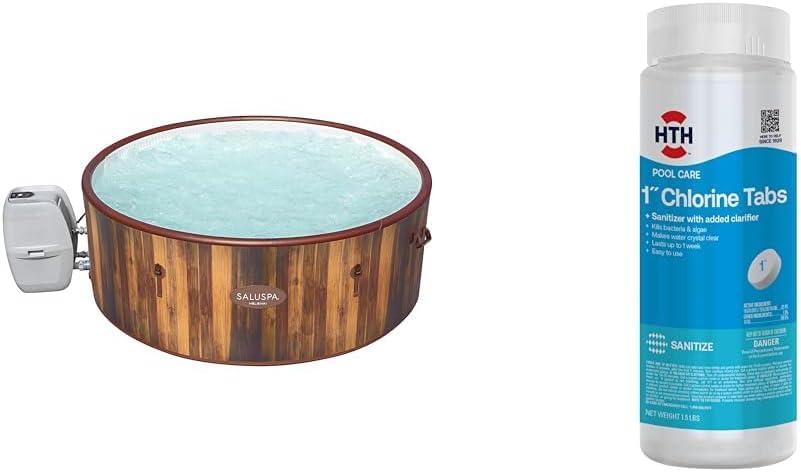
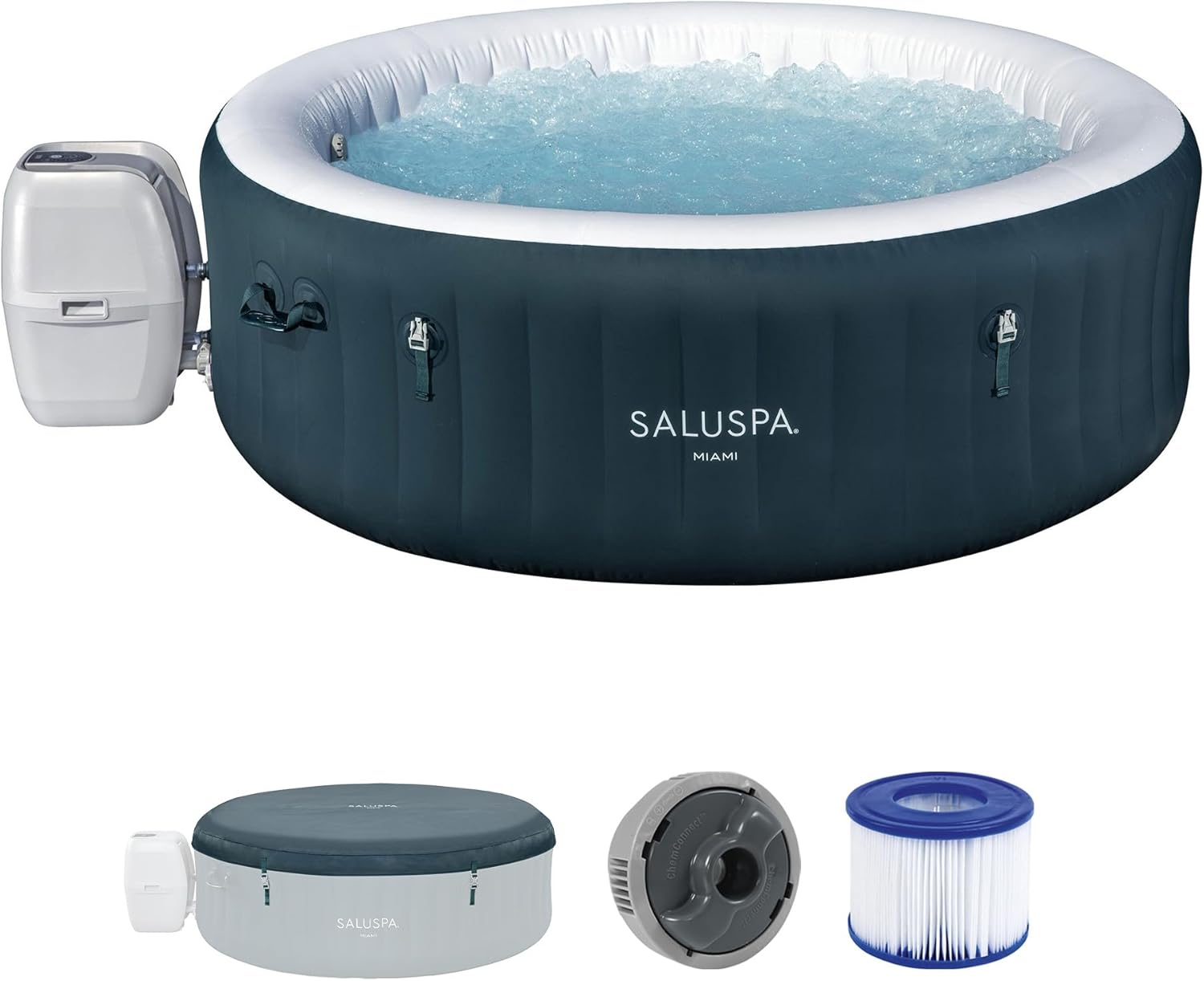
Winter Ready: Coleman SaluSpa Tahiti
Features Freeze Shield technology to prevent water from freezing in the internal components during colder months.
Check Price on Amazon5. Advanced Insulation Techniques for Maximum Heat Retention
Beyond the basic recommendations, serious winter tubbers employ multiple layers of insulation to create a thermal envelope around their inflatable spa. One of the most effective and affordable upgrades is reflective foil insulation. This material, commonly sold in rolls at hardware stores, consists of bubble wrap sandwiched between two layers of aluminum foil. When wrapped around the exterior walls of your inflatable tub, it reflects radiant heat back into the water while providing an additional air gap against cold ambient temperatures.
To install reflective insulation, measure the circumference of your tub and cut panels that fit snugly between the ground and the top rim. Use weatherproof tape to secure the panels together, creating a continuous jacket. Leave small gaps for the pump connections and air valves. Some users report that this simple modification reduces heat loss by 30-40%, which translates directly into lower electricity bills and more consistent water temperatures.
Another advanced technique involves building a custom insulated enclosure around the pump unit itself. The pump housing contains the heater element, control board, and water pathways—all critical components that must stay above freezing. Construct a simple box from rigid foam insulation boards, leaving ventilation gaps for the air blower intake and exhaust. This microclimate protection ensures that even if the main tub loses some heat, the pump mechanism remains operational.
6. The Importance of a Dedicated Electrical Circuit
Winter operation places maximum demand on your hot tub’s electrical system. The heater will run continuously during cold snaps, drawing its full rated amperage for hours on end. If this circuit is shared with other appliances—outdoor lights, garage door openers, or holiday decorations—you risk tripping the breaker. A tripped breaker in freezing weather means the heater stops, the pump stops, and within hours, your entire system could be destroyed by ice.
Consult with a licensed electrician to install a dedicated GFCI-protected circuit for your hot tub. The National Electrical Code requires outdoor hot tub receptacles to be GFCI-protected and located at least 6 feet from the water’s edge, but no closer than 10 feet from overhead power lines. For most inflatable models that plug into standard 120V outlets, a dedicated 20-amp circuit provides safe overhead capacity even during extended heating cycles.
Additionally, invest in a weatherproof outlet cover that can accommodate a plugged-in cord while protecting the connection from snow and ice. The “in-use” style covers feature a clear dome that closes over the plug, preventing moisture intrusion that could cause ground faults or corrosion. Apply dielectric grease to the plug prongs before inserting them into the outlet—this simple step prevents oxidation and ensures reliable electrical contact throughout the winter season.
7. Emergency Preparedness: Power Outage Protocols
Winter storms bring the double threat of extreme cold and power outages. If the electricity goes out while your inflatable hot tub is full of water, you have a limited window to prevent catastrophic freezing damage. The exact time depends on the ambient temperature, wind conditions, and how well your tub is insulated, but as a general rule, you should consider the water at risk within 4-6 hours when temperatures are below 25°F (-4°C).
Prepare an emergency kit before winter arrives. The most critical item is a portable generator capable of running at least 1500 watts continuously—enough to power the circulation pump and heater. Store the generator in a dry location with fresh fuel and test it monthly. If you cannot justify a generator purchase, have a contingency plan for draining the tub quickly. A manual bilge pump or drill-powered transfer pump can evacuate water in 30-45 minutes, which might save your tub during a prolonged outage.
Some experienced winter tubbers keep several gallons of RV antifreeze (the non-toxic propylene glycol variety) on hand. If power fails and temperatures are plummeting, adding antifreeze to the water can depress its freezing point enough to buy precious hours. However, this is a last-resort measure—you will need to thoroughly drain, flush, and refill the tub before using it again, and residual antifreeze can affect water chemistry for weeks afterward.
The Real Cost of Winter Tubbing
We need to be honest about the financials. Inflatable hot tubs are not known for their insulation properties. While a hard-shell tub has thick foam walls, an inflatable tub has air-filled walls. Air is a decent insulator, but it isn’t perfect.
When the air outside is 20°F and you want the water at 104°F, the heater will be working overtime. It is not uncommon for electricity bills to increase by $50 to $150 per month during the winter, depending on your local energy rates and how well you insulate the tub.
For a detailed breakdown of what to expect on your bill, read our analysis: Do inflatable hot tubs use a lot of electricity?.
Calculating Your Exact Winter Energy Costs
To estimate your monthly winter operating cost with precision, you need to understand the physics of heat loss and your local utility rates. The formula is straightforward but requires some gathering of data. Start with your hot tub’s heater wattage—most inflatable models use a 1,200 to 1,500-watt resistance heater. Convert this to kilowatts by dividing by 1,000, so a 1,500-watt heater is 1.5 kW.
Next, estimate how many hours per day the heater actively runs. In mild winter conditions (35°F-45°F), a well-insulated tub might run the heater 12-16 hours per day. During cold snaps below 20°F, the heater could run 20-22 hours daily. Multiply the kilowatt rating by the daily hours, then by your electricity rate (check your utility bill for the exact cents per kilowatt-hour). Finally, multiply by 30 days for the monthly estimate.
Example calculation: 1.5 kW × 18 hours × $0.14/kWh × 30 days = $113.40 per month. This represents the incremental cost above your normal electricity usage. Households in regions with high electricity rates—such as California, New England, or Hawaii—could see winter costs exceeding $200 monthly. Conversely, areas with abundant hydroelectric power often enjoy rates below $0.08/kWh, making winter tubbing surprisingly affordable.
Hidden Costs: Filter Replacements and Chemical Usage
Winter operation accelerates filter consumption. The constant circulation required to prevent freezing means your filter cartridges are processing water 24/7 instead of the intermittent schedule common in summer. Additionally, cold water holds more dissolved oxygen, which accelerates oxidation of organic contaminants. This means your sanitizer demand actually increases in winter despite lower bather loads.
Plan on replacing filter cartridges every 2-3 weeks during peak winter operation, compared to every 4-6 weeks in summer. At approximately $10-15 per cartridge, this adds $20-45 to your monthly maintenance budget. Chemical consumption for chlorine or bromine typically increases 25-40% in winter as the sanitizer works harder against contaminants in continuously circulated water.
You should also budget for supplemental products that become more critical in winter. A quality defoamer prevents foam buildup from winter clothing residues (fabric softener and detergent traces that enter the water). Scale inhibitors protect your heater element from mineral deposits that form more readily when water temperatures fluctuate. And enzyme treatments help break down organic compounds when shock treatments are less effective due to cold air inhibiting off-gassing.
Winter Maintenance: What Changes?
Chemistry behaves differently in cold weather, although since your water will be heated, the biological demand remains high. Bacteria love warm water regardless of the snow outside. You must stick to a strict schedule.
- Sanitizer: Continue using chlorine or bromine. If you are unsure which to use, consult our guide on blow-up hot tubs which covers basic chemical setups.
- Shocking: You still need to oxidize the water. Read how often should you shock a hot tub to keep the water crystal clear.
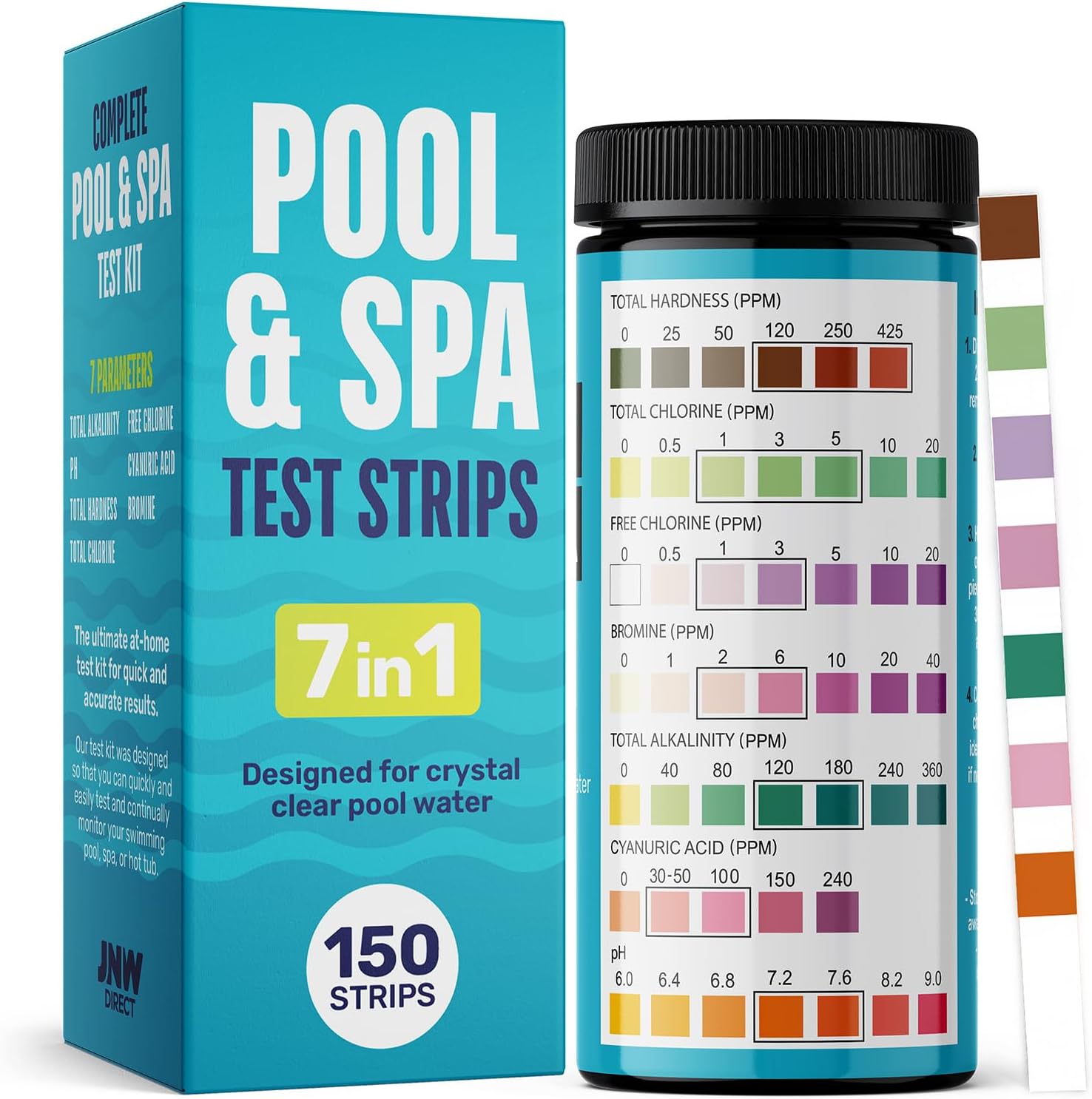
- Testing: Do not rely on guesswork. Cold air can make color-matching strips tricky to read if you are shivering. We suggest using digital readers for accuracy. See our top picks for best digital hot tub water testers.
Also, keep an eye on your filter. If it gets clogged, the water flow is restricted, which can cause the heater to shut down—a disaster in freezing weather. Know how often to replace hot tub filters and keep spares inside the house.
Understanding Winter Water Chemistry Dynamics
The most common mistake winter tubbers make is assuming that cold weather means slower bacterial growth. In reality, your hot tub water remains at 100-104°F regardless of the outside temperature, creating a perfect microbial incubator. The difference in winter is that you are likely using the tub less frequently, which means contaminants accumulate rather than being introduced in predictable spikes after each use.
This changes your sanitizer strategy. In summer, you might add chlorine after each use to oxidize the sudden influx of sweat, oils, and cosmetics. In winter, with fewer uses but constant warm temperatures, a steady-state sanitizer level becomes more important. Bromine often performs better in these conditions because it remains stable at higher temperatures and does not off-gas as readily as chlorine. If you use chlorine, consider switching to a slow-dissolving tablet system with a floating dispenser to maintain consistent levels between weekly maintenance sessions.
pH management also becomes trickier in winter. Cold air can hold less moisture, meaning evaporation rates are lower. This sounds beneficial, but it means that dissolved solids and pH-altering compounds concentrate in the water rather than being carried away with steam. Test your pH weekly without fail—cold fingers might make you want to skip this step, but a pH crash below 7.0 can corrode your heater element and damage pump seals within days.
Filter Maintenance: The Lifeblood of Winter Circulation
Your filter cartridge is the only barrier between your pump impeller and the debris that could jam it. In winter, a clogged filter doesn’t just mean cloudy water—it means reduced flow through the heater chamber, which can cause the high-limit safety switch to trip. When this switch trips, the heater shuts off completely, and if you don’t notice immediately, your water begins its dangerous descent toward freezing.
Establish a filter inspection routine every 3-4 days during winter operation. Remove the cartridge and examine it under good lighting. Dark discoloration in the pleats indicates organic loading. A slimy feel means biofilm is developing, which will quickly colonize your entire plumbing system if not addressed. Rinse the filter with a strong jet of water, working from the inside out to dislodge trapped particles from the pleat valleys.
Keep at least three filter cartridges in rotation during winter. One in the tub, one cleaned and drying, and one ready as a spare. This rotation ensures you always have a dry, debris-free filter to install when needed. Wet filters that freeze become useless—the ice crystals rupture the filter media’s microscopic pores, destroying its filtration capability. Store spare filters indoors where they stay warm and dry.
Water Level Management and Top-Off Procedures
Winter brings a paradox: you lose less water to evaporation but may lose more to splash-out during entry and exit. Stepping into a hot tub from freezing air often causes more vigorous splashing as you hurry to submerge yourself in warmth. Monitor water levels weekly—the water should remain at least 2 inches above the minimum fill line marked on your tub wall.
When topping off in winter, never add cold water directly to a steaming tub. The thermal shock can stress seams and potentially crack the vinyl. Instead, fill a clean bucket with hot tap water and let it cool to approximately bath temperature before adding it to the tub. This prevents sudden temperature differentials that stress the material while ensuring your heater doesn’t have to work overtime to bring the fresh water up to temperature.
If you need to add water during a severe cold snap, run the garden hose briefly to flush out any ice plugs before connecting it to your water source. A frozen hose connected to a faucet can burst when water pressure builds behind the ice blockage. Better yet, keep a dedicated winter hose stored indoors—a flexible, expandable hose that drains completely when depressurized eliminates the risk of internal ice formation.
Comparison: Summer vs. Winter Usage
| Feature | Summer Usage | Winter Usage |
|---|---|---|
| Pump Operation | Can be turned off/timer used | Must run 24/7 (or utilize Freeze Shield) |
| Heating Time | 1-2°F per hour (fast) | Slow recovery (may drop during use) |
| Electricity Cost | Low to Moderate | High (Heater works constantly) |
| Risk Factor | Low (Algae growth) | High (Freezing/Cracking components) |
| Setup/Takedown | Easy and flexible | Do not fold vinyl in freezing temps! |
Psychological Benefits: Why Winter Soaking Is Worth the Effort
Beyond the practical considerations, there is compelling evidence that winter hot tub use offers unique health benefits not available in warmer months. The contrast between cold air and hot water creates what physiologists call “contrast therapy”—a practice that has been studied extensively for its effects on circulation, inflammation, and mental health.
When your skin contacts cold air, peripheral blood vessels constrict rapidly, pushing blood toward your core to protect vital organs. When you then submerge in hot water, those same vessels dilate, creating a flushing effect that circulates freshly oxygenated blood through your extremities. This vascular workout strengthens the smooth muscle in your blood vessel walls, potentially improving overall cardiovascular function over time.
The mental health benefits are equally significant. Seasonal Affective Disorder affects millions of people during winter months when daylight hours are short and outdoor time is limited. The combination of warm water immersion—which naturally stimulates serotonin production—and the novelty of being outdoors in a beautiful winter landscape can dramatically improve mood. Many winter tubbers report that their evening soak becomes an essential ritual for combating the winter blues.
Cold Weather Contrast Therapy: Protocol and Safety
Some winter tubbers take the contrast effect further by intentionally alternating between the hot tub and the cold air (or even rolling in snow, a practice borrowed from Scandinavian sauna culture). If you choose to try this, follow strict safety protocols. Limit your initial hot soak to 10-15 minutes to prevent core temperature elevation. Exit the tub carefully—icy decks are slippery—and spend no more than 30-60 seconds in the cold before returning to the water.
Never attempt contrast therapy alone. The rapid blood pressure changes can cause lightheadedness or fainting, and a fall on icy ground while disoriented could be catastrophic. Always have a partner present who can assist if you become dizzy. Additionally, individuals with hypertension, heart conditions, or pregnancy should consult their physician before attempting any form of contrast therapy.
When Should You Pack It Up?
Sometimes, the weather is just too harsh. If your area frequently drops below -10°F (-23°C), even the best inflatable hot tub heater will struggle to keep up. The water temperature might drop while you are in it, leading to a lukewarm soak.
If you decide to store it, you must do so before the deep freeze sets in. Draining an inflatable tub in freezing weather is miserable and risky. Water trapped in the air jets can freeze and expand, ruining the liner.
Make sure you follow a strict maintenance routine to drain, dry, and fold the tub while the ambient temperature is still above 40°F. Ensure it is completely bone dry to prevent mold growth during storage. For cleaning tips before storage, refer to how to clean an inflatable hot tub.

Fast Draining: Submersible Pump
Don’t wait hours for gravity draining in the cold. Pump the water out in minutes.
Check Price on AmazonStep-by-Step Winter Storage Procedure
Proper storage is as critical as proper operation. A poorly stored inflatable tub will develop mold, mildew, and material degradation that shortens its lifespan dramatically. Begin the process on a day when temperatures are above 45°F and forecasted to remain above freezing for at least 24 hours.
Start by draining the tub completely using your submersible pump. Position the pump at the lowest point of the tub floor to capture as much water as possible. Once the pump starts sucking air, tilt the tub slightly to pool remaining water toward the pump intake. After the bulk water is removed, use absorbent towels to blot up the thin film of moisture that clings to the vinyl surface.
The air jets require special attention. These small tubes trap water easily and dry slowly. Use a wet/dry vacuum with a crevice tool attachment to suck water from each jet opening. Work systematically around the tub, holding the vacuum against each jet for 10-15 seconds. You will be surprised how much water emerges even after the main body appears dry.
Deflate the tub partially and allow it to sit in a warm, dry area (like a garage or basement) for 24-48 hours before final folding. This ensures that moisture trapped in seams and folds evaporates completely. Sprinkle the interior surfaces with a light dusting of talcum powder or cornstarch before folding—this prevents the vinyl from sticking to itself during storage and absorbs any residual moisture that might otherwise foster mold growth.
Store the folded tub in a sealed plastic tote or heavy-duty storage bag in a location that stays above freezing but below 80°F. Attics and unheated sheds are poor choices due to temperature extremes. A basement storage room or climate-controlled garage provides the stable conditions that preserve vinyl flexibility and prevent plasticizer migration.
Common Storage Mistakes That Ruin Tubs
The most frequent error is storing the tub damp. Even seemingly dry vinyl can harbor enough moisture in seam folds to support mold colonies. Within weeks, black spots appear that are nearly impossible to remove and permanently stain the material. Always err on the side of over-drying.
Another mistake is folding the tub in the same pattern every time. Repeated folding along the same crease lines concentrates stress and accelerates material fatigue. Vary your folding pattern each season, or better yet, loosely roll the tub rather than folding it. Rolling distributes stress across a broader area and eliminates the sharp creases that become failure points in cold weather.
Finally, never store the pump unit outdoors or in an unheated space. The pump contains small amounts of residual water in its internal chambers that will freeze and crack the housing. Even if you drained the pump according to manufacturer instructions, microscopic water droplets remain in the impeller cavity. Store the pump indoors where temperatures are consistently above 50°F.
Health and Safety in Winter
Soaking in winter is beneficial for circulation and mental health, especially given the lack of sunlight. Many users ask, are hot tubs healthy for you in the cold? Generally, yes. The contrast between cold air and hot water is invigorating.
However, safety is paramount. The pathway to your hot tub can become an ice rink due to splashing water. Keep the area salted or use heated mats. Furthermore, if you have specific health conditions, such as arthritis, the warm water is excellent therapy. Read more about hot tubs and arthritis here.
Note for pregnant women: Regulating body temperature is crucial. The risk of overheating is still present even if it is snowing. Please consult our guide: Can pregnant women use hot tubs?
Hypothermia Risk: The Danger You Don’t Expect
It sounds counterintuitive, but soaking in a hot tub during winter can increase your hypothermia risk under certain circumstances. The danger lies not in the water but in the exit. When you leave a 104°F tub, your skin is flushed with dilated blood vessels near the surface. This is your body’s mechanism for dumping excess heat. When that superheated skin contacts frigid air, the temperature differential can be 80°F or more.
Your body responds to this sudden cold exposure by shunting blood away from the skin to preserve core temperature. However, the vasodilation caused by the hot water temporarily impairs this response, meaning you lose heat faster than your body can compensate. The result is a rapid drop in skin temperature that can lead to numbness, loss of dexterity, and impaired judgment within minutes.
This becomes dangerous when combined with an icy pathway back to the house. Fumbling with frozen fingers to open a door or navigate steps can lead to falls and prolonged cold exposure. Always have a clear, well-lit, and ice-free path from the tub to your entrance. Keep a robe or towel warmer inside the house (never draped over the tub where it will freeze solid). And never soak alone at night during extreme cold—have someone who can check on you or assist if needed.
Carbon Monoxide Awareness for Enclosed Winter Setups
Many winter tubbers create wind shelters using tarps, pop-up canopies, or even partially enclosed gazebos. While these structures effectively block wind, they can also trap exhaust gases if you use any fuel-burning appliances nearby. Carbon monoxide is odorless, colorless, and deadly—and it can accumulate in enclosed or semi-enclosed spaces even when you think ventilation is adequate.
Never operate generators, patio heaters, or grills near an enclosed hot tub structure. If you use a portable generator for emergency power during outages, position it at least 20 feet from the tub and downwind. Install a battery-operated carbon monoxide detector in any semi-enclosed structure where you spend time. The symptoms of early CO poisoning—headache, dizziness, nausea—mimic the effects of alcohol consumption, making them easy to dismiss if you are enjoying a drink in the tub.
Product-Specific Winter Performance Analysis
Intex PureSpa Series: Winter Capabilities and Limitations
Intex inflatable hot tubs have historically been more sensitive to cold than their Coleman counterparts. Older PureSpa models featured a hard 40°F cutoff switch that frustrated many winter users. However, recent generations (2022 and newer) incorporate improved cold-weather firmware that allows operation down to approximately 32°F ambient temperature before safety shutdowns engage.
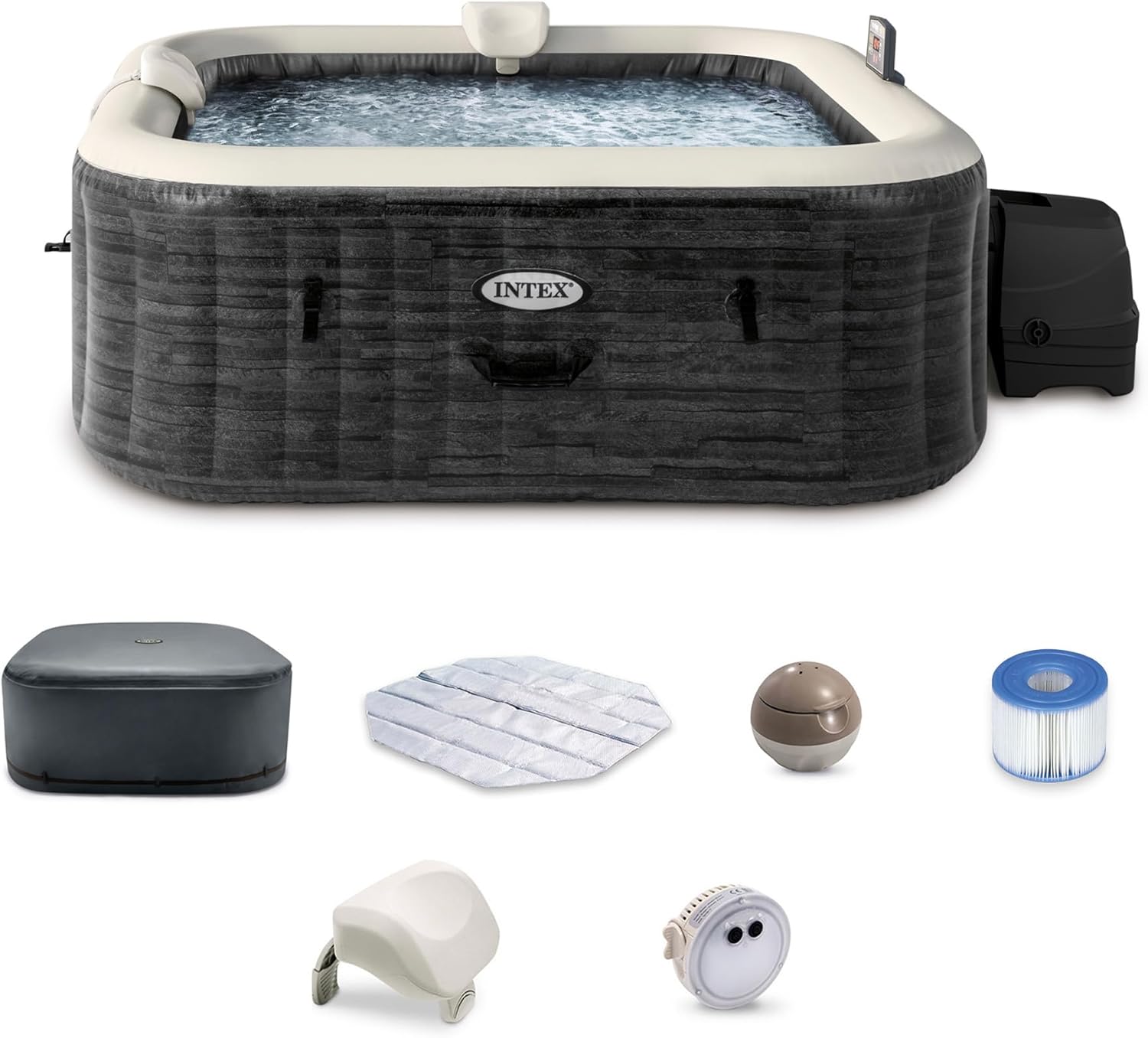
The PureSpa Greywood Deluxe represents Intex’s most winter-capable design to date. Its upgraded control panel includes a “Winter Mode” setting that modifies the heating algorithm for cold conditions. Rather than cycling the heater on and off based on water temperature alone, Winter Mode considers the rate of temperature change—if the system detects rapid heat loss indicating cold ambient conditions, it keeps the heater engaged continuously rather than allowing the typical 2-3 degree temperature swing.
However, Intex tubs lack a true freeze protection system comparable to Bestway’s Freeze Shield. The pump unit relies on water circulation through the heater chamber to prevent freezing, but if a clog or air lock disrupts flow, there is no backup sensor to detect the dangerous condition. Intex winter users must be vigilant about filter cleanliness and water level, and should consider adding an aftermarket temperature alarm as a fail-safe.
Bestway/Coleman SaluSpa: Freeze Shield Deep Dive
Bestway’s Freeze Shield technology represents the current gold standard for inflatable hot tub winterization. The system employs multiple temperature sensors positioned at critical points in the water circuit. When any sensor detects temperatures below 42°F, the control board automatically activates the circulation pump and, if needed, the heater to maintain safe temperatures.
What distinguishes Freeze Shield from simple low-temperature cutoffs is its graduated response. At 42°F, the pump begins circulating water periodically—perhaps 10 minutes every hour. If temperatures continue dropping to 38°F, circulation becomes continuous. Below 35°F, the heater activates regardless of the set temperature, even if you normally keep the tub at 95°F for economy mode. This graduated approach saves electricity during mild cold while providing aggressive protection when conditions become dangerous.
The system also monitors for faults that could compromise freeze protection. If the water level drops below the minimum fill line, exposing the temperature sensor to air, the control panel displays an error code rather than continuing to operate with inaccurate readings. Similarly, if the pump impeller becomes obstructed, preventing water circulation, the system shuts down and alerts you rather than running the heater in stagnant water—a condition that could damage the element and create a fire hazard.
Lay-Z-Spa (UK/European Market) Cold Weather Adaptations
For readers in the United Kingdom and Europe, Lay-Z-Spa models (also manufactured by Bestway) incorporate similar Freeze Shield technology but are designed for 220-240V electrical systems. The higher voltage allows more powerful heaters—typically 2,000-2,200 watts compared to the 1,200-1,500 watts common in North American 120V models. This additional heating capacity makes a significant difference in winter performance.
European winter tubbers benefit from the higher wattage when trying to maintain temperature during use. A 2,000-watt heater can add approximately 2-3°F per hour to a 250-gallon tub even with the cover removed, whereas a 1,200-watt unit struggles to gain 1°F per hour under the same conditions. This means Lay-Z-Spa users can enjoy longer soaks with less temperature drop—a meaningful quality-of-life advantage during winter.
DIY Winterization Projects for Inflatable Hot Tubs
Building a Thermal Enclosure from Insulation Boards
For the dedicated winter tubber willing to invest a weekend and about $100-150 in materials, a custom insulation enclosure dramatically improves heat retention and reduces operating costs. The concept is simple: surround the tub’s exterior walls with rigid foam insulation panels, creating an additional thermal barrier between the air-filled vinyl walls and the cold ambient environment.
Materials needed include 1-inch or 1.5-inch thick extruded polystyrene (XPS) foam boards (available at home improvement stores), weatherproof construction adhesive, aluminum foil tape, and a utility knife for cutting. XPS is preferred over expanded polystyrene (EPS) because it has higher compressive strength and better moisture resistance—important properties for outdoor use.
Measure the circumference of your filled tub at its widest point and the height from ground level to just below the top rim. Cut the foam boards into vertical panels that match these dimensions, allowing for the tub’s slight taper. Dry-fit the panels around the tub, marking cutouts for the pump connection and any protruding air valves. Once satisfied with the fit, join the panels using foil tape to create a continuous ring that can be lifted on and off as needed.
The enclosure should sit flush with the ground but remain removable for maintenance access. Some builders add hinges at one seam to create a clamshell opening. Others simply tape the panels into a circle that lifts straight up. Either approach works; choose based on how frequently you need to access the pump unit or adjust water chemistry.
Heated Mat Construction for Under-Tub Protection
Commercial hot tub heating mats exist, but they are expensive—often $200-400 for a spa-sized unit. A functional DIY alternative can be built using radiant floor heating cable intended for bathroom installations. These cables are designed to embed in mortar but work perfectly when sandwiched between layers of rigid foam insulation.
Start with a base layer of 1-inch XPS foam board cut to the footprint of your tub. Lay out the heating cable in a serpentine pattern across the surface, following the manufacturer’s minimum spacing guidelines (usually 2-3 inches between parallel runs). Cover with a second layer of thin plywood or cement backer board to distribute weight evenly and protect the cable from compression damage. Connect the cable to a GFCI-protected thermostat rated for outdoor use.
Set the thermostat to maintain 45-50°F at the mat surface. This provides a warm foundation that prevents ground cold from leaching through the tub floor while using minimal electricity—typically 100-200 watts, far less than the main tub heater. The thermostatic control means the mat only activates when needed, unlike a continuously running heat tape or pipe heating cable.
Regional Winter Tubing Guide
Northeast United States: Battling Nor’easters
Winter in the Northeast brings a unique combination of challenges: sustained cold, heavy snowfall, and frequent freeze-thaw cycles that create ice dams around tub bases. Tubbers in this region should prioritize roof-like cover structures that shed snow rather than letting it accumulate on the tub cover. A sloped canopy or gazebo roof prevents the weight of wet snow from collapsing the inflatable cover into the water.
Pay special attention to the pump unit during nor’easters. Blowing snow can pack into the air intake vents, starving the bubble blower of air and causing it to overheat. Construct a simple windbreak using plywood or heavy-duty plastic sheeting positioned upwind of the pump. Ensure adequate clearance for ventilation—the windbreak should redirect snow, not create an enclosed space that traps moisture around the electronics.
Midwest: Extreme Cold and Wind
Midwest winters feature the most brutal combination of low temperatures and persistent wind. Chicago, Minneapolis, and the Great Plains regularly experience wind chills of -20°F to -40°F. Under these conditions, even Freeze Shield-equipped tubs struggle. The wind strips heat from the tub walls faster than the heater can replace it, and the pump unit itself can become cold-soaked to the point where internal components approach freezing despite water circulation.
Midwest winter tubbers should consider building a fully enclosed, insulated housing for the pump unit. A plywood box lined with rigid foam insulation, with ventilation louvers that can be adjusted based on conditions, keeps the pump in a microclimate significantly warmer than ambient air. Monitor the pump housing temperature with a remote thermometer, and consider adding a small incandescent light bulb or ceramic heat emitter inside the enclosure as a supplemental heat source during extreme cold.
Pacific Northwest: Wet Cold vs. Dry Cold
The Pacific Northwest experiences a different type of winter—temperatures rarely drop below 25°F, but the persistent dampness and rain create challenges distinct from the dry cold of the interior states. The primary concern is electrical safety. GFCI breakers are more prone to nuisance tripping in wet conditions, and a tripped breaker is as dangerous as a power outage.
Install an “in-use” weatherproof outlet cover that provides a watertight seal around the plugged-in cord. Apply dielectric grease to all electrical connections, including where the pump cord plugs into the control unit. Inspect the cord regularly for cracking or abrasion that could admit moisture. Consider mounting the GFCI outlet under a small awning or eave to provide additional protection from direct rainfall.
The high humidity of the PNW also affects cover performance. A cover saturated with rainwater becomes heavy and loses insulating value. Ensure your cover has a slight crown or pitch so water runs off rather than pooling. After heavy rain, remove the cover carefully to avoid dumping accumulated water into the tub—this deluge carries dirt and contaminants that will cloud your water and spike sanitizer demand.
Southern States: Surprise Freezes
Southern winters present a different danger: unpredictability. A week of 60°F weather can be followed by a sudden hard freeze that catches tubbers off guard. The tub that has been running economically in mild conditions suddenly faces 20°F temperatures with no freeze protection active because the owner never anticipated needing it.
Southern tubbers should program their control panels with conservative settings throughout the winter months. Keep the heater set to maintain at least 80°F even when not planning to use the tub—this provides a thermal buffer that gives you hours of protection if temperatures plummet unexpectedly. Enable any automatic freeze protection features year-round in regions where freezes occur even sporadically.
Maintain a supply of winter chemicals and spare filters throughout the season, even if you typically only use the tub on weekends. A Monday morning freeze following a weekend of heavy use can catch you without the supplies needed to maintain water quality during an unexpected cold snap. It is better to have chemicals on hand than to scramble when roads are icy and stores are closed.
Frequently Asked Questions
If your tub does not have Freeze Shield technology, you should pack it away when nights consistently drop below 40°F (4°C). If you have a winter-ready model, it can usually handle temperatures down to 14°F (-10°C), but efficiency drops significantly.
No! Never put automotive antifreeze in a hot tub. It is toxic and will ruin the pump seals and the liner. If you need to winterize the plumbing (for storage, not usage), use non-toxic RV antifreeze, but this is for the pipes only, not for soaking water.
Yes, air contracts in the cold. You may notice your tub looks saggy. This isn’t necessarily a leak; it’s physics. You may need to add a little air, but be careful not to over-inflate, as the air will expand again if the sun comes out and warms the black vinyl. See Intex PureSpa troubleshooting for air loss tips.
Yes. The air blower pulls in ambient outside air. If it is 20°F outside, you are injecting freezing air into your 104°F water. The temperature will drop rapidly. In winter, it is best to use the bubbles for short bursts or just enjoy the soaking heat without the jets.
We recommend models with specific freeze-protection technology. The Coleman SaluSpa series and Intex PureSpa Greywood Deluxe are top contenders. See the full breakdown in our Best Inflatable Hot Tubs article.
No. The interior walls must remain smooth and cleanable to prevent bacteria harborage. Adding insulation inside the tub compromises the sanitary surface and may void your warranty. All insulation upgrades should be external—wrapping the outside, insulating underneath, and upgrading the cover are the proper approaches.
The same time limits apply as in summer: 15-30 minutes at 104°F is the general guideline, regardless of outside temperature. Your core body temperature rises at the same rate whether it’s snowing or sunny. The difference is that you may feel less aware of overheating because your exposed face and shoulders feel cold. Use a timer and exit when it sounds, even if you feel comfortable.
Act immediately. If you have a generator, connect the tub and keep it running. Without a generator, begin draining the tub using a manual pump or siphon. Do not wait to see if the power comes back—frozen pipes and pumps cannot be repaired; they must be replaced, often at a cost exceeding the tub’s value.
Salt water chlorination systems typically stop producing chlorine when water temperatures drop below about 60°F. Since your winter tub will be maintained at 95°F or higher, the generator should continue working. However, cold air temperatures can affect the control unit’s electronics. Ensure the salt system controller is protected from direct exposure to snow and freezing rain.
Generally yes, but with precautions. Wet snow accumulating on the cover can freeze into a heavy, dangerous slab that could injure you if it falls while you are entering or exiting. Clear snow from the cover before removing it. Also, heavy snowfall reduces visibility—ensure your path back to the house remains clearly marked and illuminated.
Final Verdict
Using an inflatable hot tub in the winter is possible, but it requires a shift in mindset. You are no longer just a “user”—you are a manager of heat. By investing in the right accessories like thermal pads and better covers, and by choosing a tub equipped with freeze protection, you can enjoy the magical experience of a snowy soak.
However, if you live in the Arctic Circle or an area with brutal, sustained sub-zero temperatures, an inflatable might not be up to the task. For moderate winters, though? It is absolutely worth the effort.
Ready to upgrade your backyard for the winter season?

Don’t Let Heat Escape!
The #1 upgrade for winter use is a thermal floating blanket. Save electricity and keep water hotter for longer.
Get Your Thermal Blanket on Amazon