How Many Amps Does a Hot Tub Use? (110v vs 220v Guide)
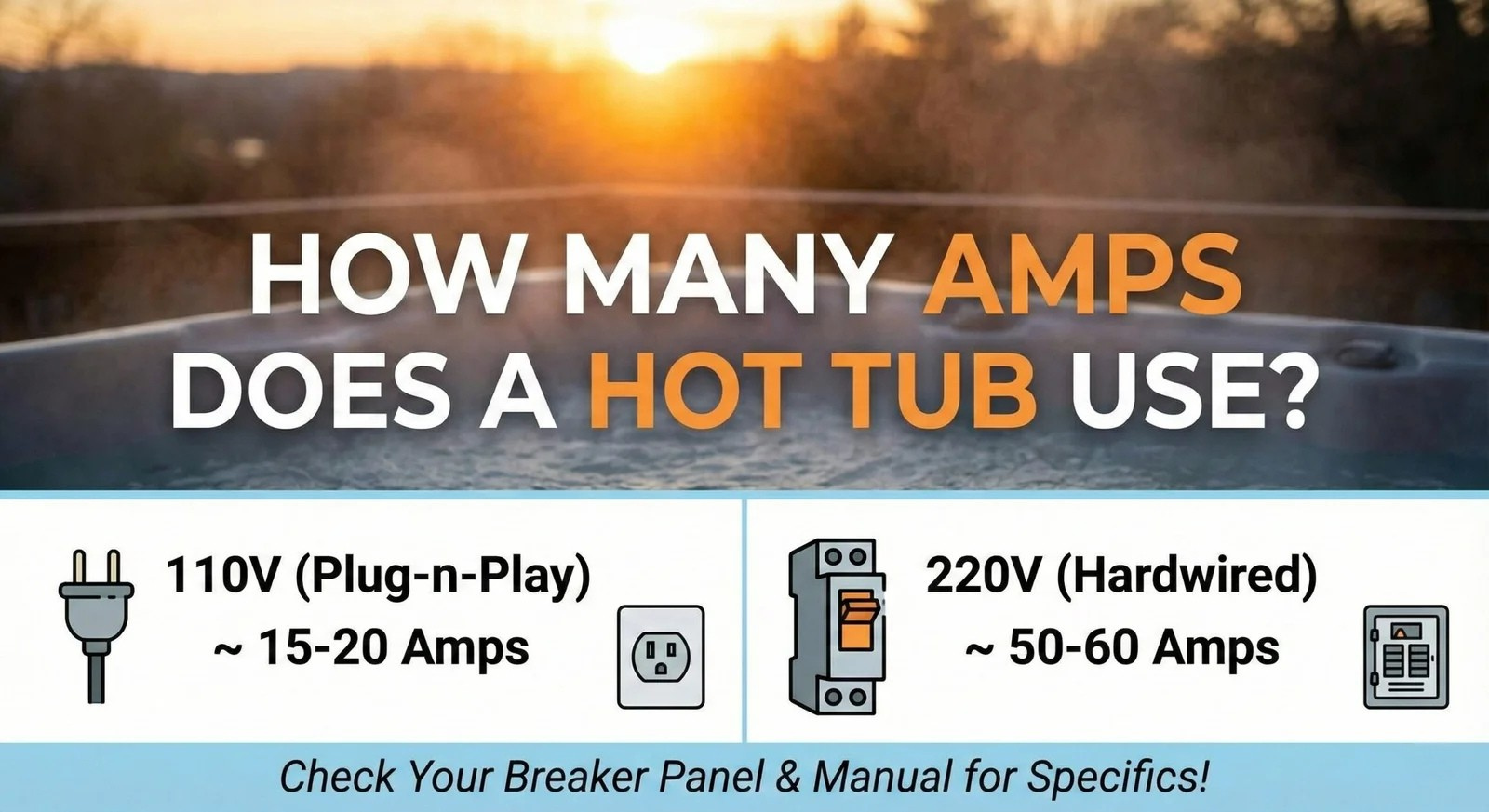
Before you click “Buy” on that dream hot tub, you need to answer one critical question: Can your home’s electrical panel handle it?
Understanding amperage isn’t just about avoiding a tripped breaker; it’s about understanding the performance of your spa. The amps dictate whether you can run the heater and the jets at the same time, or if you’ll be soaking in slowly cooling water.
Inflatable Hot Tubs (Plug-and-Play): Typically require 13 to 15 Amps and plug into a standard 110V household outlet.
Hard-Wired Hot Tubs (Acrylic): Typically require 40, 50, or 60 Amps and must be hard-wired into a 220V dedicated sub-panel by an electrician.
Understanding Electrical Basics: Amps, Volts, and Watts
Before diving into specific hot tub requirements, let’s clarify the fundamental relationship between amps, volts, and watts. This knowledge will help you make informed decisions about your hot tub installation and ongoing operational costs.
The relationship follows a simple formula: Watts = Volts × Amps. This equation, known as Ohm’s Law in practical application, governs everything about your hot tub’s power consumption. When we discuss amperage, we’re essentially measuring the flow rate of electricity through a conductor. Think of voltage as the pressure pushing electricity through wires, amperage as the volume of electricity flowing, and wattage as the total power being consumed.
For a typical 110V inflatable hot tub drawing 13 amps, the wattage calculation looks like this: 110 volts × 13 amps = 1,430 watts, or 1.43 kilowatts. For a 220V hard-wired spa pulling 50 amps, the math reveals: 220 volts × 50 amps = 11,000 watts, or 11 kilowatts. This dramatic difference explains why 220V systems heat water so much faster and can run multiple components simultaneously.
Amperage Calculator: Determine Your Hot Tub’s Draw
Use this simple formula to understand your specific hot tub’s power requirements:
Example 1: A 1,500-watt inflatable tub on 110V → 1,500 ÷ 110 = 13.6 Amps
Example 2: A 5,500-watt heater on 220V → 5,500 ÷ 220 = 25 Amps (heater only)
Example 3: Total spa with 11,000 watts on 220V → 11,000 ÷ 220 = 50 Amps
Understanding this relationship becomes crucial when evaluating your home’s electrical capacity. Most modern homes have 100-amp, 150-amp, or 200-amp main service panels. A 50-amp hot tub represents a significant portion of your total available power, which is why electricians always perform load calculations before installation.
GFCI Protection: Your First Line of Defense
Ground Fault Circuit Interrupter (GFCI) protection is not optional for hot tub installations—it’s a matter of life and death. The National Electrical Code (NEC) mandates GFCI protection for all hot tubs, regardless of whether they’re 110V plug-and-play models or 220V hard-wired installations. Understanding how GFCI works and why it’s essential will help you appreciate this critical safety feature.
A GFCI device constantly monitors the electrical current flowing through the hot and neutral wires. Under normal conditions, the current flowing out through the hot wire should exactly match the current returning through the neutral wire. If even a tiny difference occurs—as small as 4-6 milliamps—the GFCI assumes electricity is leaking somewhere (possibly through a person into the ground) and trips the circuit within 1/40th of a second.
⚠️ Critical GFCI Requirements
For 110V Plug-and-Play Tubs: Your outdoor outlet must be GFCI-protected. Most modern homes already have GFCI outlets in outdoor locations, but verify this before plugging in. The GFCI should be tested monthly by pressing the “Test” button and confirming the “Reset” button pops out.
For 220V Hard-Wired Tubs: A dedicated GFCI breaker must be installed in your main panel or in a separate disconnect box within sight of the hot tub (but at least 5 feet away). This breaker typically costs $80-$150 for the part alone and must be installed by a licensed electrician.
Many homeowners don’t realize that GFCI protection can sometimes cause nuisance tripping, especially with older hot tubs or in humid environments. If your GFCI trips repeatedly, don’t bypass it—this is a warning sign that something is wrong. Common causes include moisture in the heating element, degraded wiring insulation, or a failing pump motor that’s leaking current to ground.
Did You Know?
The NEC requires that 220V hot tub GFCI breakers be “listed” specifically for hot tub use. Standard GFCI breakers may not provide adequate protection due to the unique electrical characteristics of hot tub equipment. Always verify that your electrician uses a breaker rated for spa and hot tub applications.
Wire Gauge Requirements: Getting the Copper Right
One of the most common mistakes in hot tub installation is using undersized wiring. When wires are too thin for the amperage they’re carrying, they heat up—sometimes to dangerous levels. The National Electrical Code specifies minimum wire gauge sizes based on the circuit’s amperage rating, and these specifications exist to prevent electrical fires.
| Circuit Amperage | Minimum Wire Gauge (Copper) | Conduit Size (PVC) | Typical Application |
|---|---|---|---|
| 15 Amps | 14 AWG | 1/2 inch | 110V Inflatable Tubs |
| 20 Amps | 12 AWG | 1/2 inch | Larger Plug-and-Play Units |
| 30 Amps | 10 AWG | 3/4 inch | Small Acrylic Spas |
| 40 Amps | 8 AWG | 3/4 inch | Mid-Size Hot Tubs |
| 50 Amps | 6 AWG | 1 inch | Large Hot Tubs |
| 60 Amps | 4 AWG | 1 inch | Premium/Luxury Spas |
These specifications assume copper wiring, which is the standard for residential installations. If your home has aluminum wiring (common in houses built during the 1960s and 1970s), you’ll need larger gauge sizes and special connectors rated for aluminum-to-copper connections. However, most electricians recommend running new copper wire for hot tub installations rather than attempting to connect to existing aluminum circuits.
The distance between your electrical panel and the hot tub location also affects wire gauge requirements. For runs longer than 100 feet, you may need to increase wire size by one gauge to compensate for voltage drop. A 3% voltage drop is considered acceptable, but anything more can cause your hot tub equipment to operate inefficiently and potentially damage motors and heaters over time.
Real-World Operating Costs: What to Expect on Your Electric Bill
Understanding amperage directly translates to understanding costs. Let’s break down exactly what you can expect to pay based on your hot tub’s electrical configuration and usage patterns. These calculations assume average electricity rates of $0.14 per kilowatt-hour (kWh), which is the U.S. national average, though your actual rate may vary significantly by region.
110V Inflatable Hot Tub: Monthly Cost Breakdown
A typical 110V inflatable hot tub with a 1,300-watt heater will consume approximately 1.3 kWh when heating. However, the heater doesn’t run continuously—it cycles on and off based on your temperature setting and how well-insulated your tub is. In moderate weather (60-70°F), expect the heater to run about 4-6 hours per day during initial heating and 2-4 hours per day for temperature maintenance.
Initial Heat-Up (First 24 Hours): 1.3 kW × 18 hours = 23.4 kWh → $3.28 for the first day
Daily Maintenance (Warmer Months): 1.3 kW × 4 hours = 5.2 kWh → $0.73 per day
Daily Maintenance (Winter): 1.3 kW × 8 hours = 10.4 kWh → $1.46 per day
Estimated Monthly Cost (Summer): $22-$28 per month
Estimated Monthly Cost (Winter): $40-$50 per month
220V Hard-Wired Hot Tub: Monthly Cost Breakdown
A 220V spa with a 5.5 kW heater and multiple jet pumps presents a more complex calculation. These systems use significantly more power but heat water much faster and retain heat more efficiently due to superior insulation. The heater cycles are shorter but more intense.
Initial Heat-Up (First 8 Hours): 5.5 kW × 8 hours = 44 kWh → $6.16 for the first day
Daily Maintenance (Well-Insulated Spa): 5.5 kW × 2 hours = 11 kWh → $1.54 per day
With Daily Use (30-min soak + jets): Additional 2-3 kWh → $0.28-$0.42 per use
Estimated Monthly Cost (Year-Round Average): $50-$80 per month
While 220V tubs use more total electricity, they can actually be more energy-efficient per use because their superior insulation reduces heat loss. A poorly insulated 110V inflatable tub might cost the same to operate as a well-insulated 220V spa in winter conditions, despite the voltage difference.
Breaker Types and Panel Requirements: Is Your Home Ready?
Before purchasing any hot tub, you must verify your home’s electrical panel has adequate capacity. This isn’t just about having available slots—it’s about the total load your panel can safely handle. A licensed electrician performs what’s called a “load calculation” to determine if adding a hot tub circuit will exceed your panel’s rated capacity.
Understanding Your Home’s Electrical Service
Most homes built before 1960 have 60-amp service, which is completely inadequate for any hot tub installation. Homes from the 1960s-1980s typically have 100-amp service, which might accommodate a small 110V tub but cannot support a 50-amp 220V spa without a service upgrade. Modern homes (1990s-present) usually have 200-amp service, which can comfortably handle a 50 or 60-amp hot tub circuit alongside normal household loads.
If your panel needs upgrading from 100 amps to 200 amps, expect to pay $1,500 to $3,500 for the upgrade, depending on your location and the complexity of the installation. This cost includes the new panel, labor, permits, and inspection. While expensive, this upgrade adds value to your home and ensures safe operation of all your electrical devices.
⚠️ Warning Signs Your Panel Is Overloaded
• Breakers that trip frequently, especially when multiple appliances run
• Lights that dim when the air conditioner or other large appliances start
• A buzzing or crackling sound coming from the electrical panel
• Warm or hot breaker switches or panel cover
• Visible corrosion or rust on the panel or breakers
• Fuses that blow repeatedly (in older fuse-box systems)
Breaker Types: Standard vs. GFCI vs. AFCI
Your hot tub circuit requires specific breaker types. For 110V plug-and-play tubs, the outlet must be on a GFCI-protected circuit. This can be achieved with a GFCI outlet (the kind with “Test” and “Reset” buttons) or a GFCI breaker in the panel. For 220V hard-wired installations, you’ll need a double-pole GFCI breaker rated for the amperage your spa requires.
Some jurisdictions now require AFCI (Arc Fault Circuit Interrupter) protection in addition to GFCI for hot tub circuits. AFCI breakers detect dangerous electrical arcs that can cause fires—a different hazard than the ground faults that GFCI protects against. Combination AFCI/GFCI breakers are available but cost $50-$100 more than standard GFCI breakers alone.
International Voltage Considerations: UK, EU, and Beyond
While this guide focuses primarily on North American electrical systems (110V/220V), it’s important to understand how hot tub amperage works in other regions. The fundamental principles remain the same, but the numbers change based on standard household voltages in different countries.
United Kingdom and Ireland (230V Standard)
In the UK, standard household voltage is 230V at 50Hz. Plug-and-play inflatable hot tubs designed for the UK market typically draw 10-13 amps at 230V, consuming 2,000-2,800 watts. This is similar power consumption to North American 110V tubs, but achieved with lower amperage due to the higher voltage. Hard-wired spas in the UK commonly require 16, 20, or 32-amp dedicated circuits.
UK regulations require all outdoor electrical work to comply with Part P of the Building Regulations, meaning any new circuit installation or modification in a garden or outdoor area must be performed by a registered competent person or inspected by building control. RCD (Residual Current Device) protection is mandatory—this is the UK equivalent of GFCI protection.
European Union (230V Standard)
Most EU countries use 230V/50Hz power. Inflatable hot tubs sold in Europe typically draw 10-16 amps, while hard-wired units may require 20-32 amp circuits. Germany’s Schuko outlets are rated for 16 amps, making them suitable for most plug-and-play spas without any electrical modifications. France and Belgium use Type E outlets, also rated for 16 amps.
In Scandinavian countries where outdoor hot tub usage is extremely popular even in winter, many homes are equipped with 400V three-phase power, allowing for much higher-capacity installations. A three-phase 400V/16A circuit can deliver 11 kW of power—enough to heat a large spa rapidly even in sub-zero conditions.
Australia and New Zealand (230V Standard)
Australia’s AS/NZS 3000 wiring rules require all spa and hot tub installations to have RCD protection with a maximum rated residual current of 30mA. Standard household outlets are rated for 10 amps at 230V, which limits plug-and-play hot tubs to about 2,300 watts. Hard-wired spas typically require dedicated 15, 20, or 32-amp circuits installed by a licensed electrician.
Traveling With a Hot Tub?
If you’re moving between countries with different voltage standards, be aware that simply using a plug adapter is not sufficient and is extremely dangerous. Hot tubs with heating elements and motors are voltage-specific. A 110V North American hot tub will be destroyed instantly if plugged into a 230V European outlet. Conversely, a 230V hot tub will barely function on 110V power. The frequency difference (50Hz vs 60Hz) can also damage pump motors over time.
Amp Draw During Different Operations: Startup vs. Maintenance
Your hot tub doesn’t draw a constant amperage—the electrical demand varies significantly depending on what the tub is doing. Understanding these different operational states helps you anticipate electrical costs and troubleshoot performance issues.
Initial Startup: The Highest Demand Period
When you first fill your hot tub with cold water from the garden hose (typically 50-60°F), the heater will run continuously for 12-24 hours on a 110V system or 4-8 hours on a 220V system. During this period, amperage draw is at its maximum and constant. For a 110V inflatable tub, expect 12-13 amps continuous draw. For a 220V spa, the heater alone pulls 20-25 amps, and if the circulation pump runs simultaneously, total draw might reach 30-35 amps on a 50-amp circuit.
This initial heating period is the most expensive single event in hot tub ownership. A 350-gallon spa starting at 55°F and heating to 102°F requires approximately 135,000 BTUs of heat energy, which translates to about 40 kWh of electricity. At $0.14/kWh, that first heat-up costs roughly $5.60 regardless of your voltage—the 220V system just accomplishes it faster.
Maintenance Heating: The Day-to-Day Reality
Once your water reaches the set temperature, the heater cycles on and off to maintain it. The frequency and duration of these cycles depend on ambient temperature, wind conditions, cover quality, and how often you use the tub. A well-insulated spa with a quality cover might only need 1-2 hours of heater runtime per day in mild weather, while the same spa in freezing conditions might need 4-6 hours.
During maintenance heating, a 110V inflatable tub cycles between 0 amps (when the heater is off but the circulation pump still runs at about 1-2 amps) and 12-13 amps (when the heater activates). A 220V spa’s heater cycles between 0 and 20-25 amps, but the circulation pump adds a constant 2-5 amp draw.
Jet Operation: The Performance Trade-Off
This is where the critical difference between 110V and 220V systems becomes most apparent. When you activate the jets on a 110V inflatable tub, the heater typically shuts off to keep total amperage under 15 amps. The jet pump draws 10-12 amps on its own, so combining it with the heater’s 12-13 amp draw would trip the breaker. This means your water begins cooling the moment you turn on the bubbles.
On a 220V system with a 50-amp circuit, the jet pumps might draw 10-15 amps each (for multiple pumps), the heater draws 20-25 amps, and the circulation pump adds another 2-5 amps. Total draw might be 40-45 amps—still within the 50-amp circuit’s capacity. This allows you to enjoy a full hydrotherapy session while the heater continues maintaining (or even increasing) water temperature.
Generator Compatibility: Can You Run a Hot Tub During Power Outages?
For hot tub owners in areas prone to power outages, the question of generator compatibility often arises. The answer depends entirely on your hot tub’s amperage requirements and your generator’s capacity.
110V Inflatable Tubs on Generators
A 110V inflatable hot tub drawing 13 amps requires approximately 1,500 watts of continuous power. Most portable generators rated at 2,000 watts or higher can handle this load. However, there’s a critical consideration: many portable generators produce “dirty” power with significant voltage fluctuations and harmonic distortion. This can damage the sensitive electronic control boards in modern hot tubs.
If you plan to run your inflatable hot tub on a generator, invest in an inverter generator that produces clean, stable power similar to what you get from the grid. Honda, Yamaha, and Generac all make inverter generators in the 2,000-3,000 watt range that are suitable for this purpose. Expect to pay $500-$1,200 for a quality unit.
220V Hard-Wired Spas on Backup Power
Running a 50-amp 220V hot tub on generator power is a different challenge entirely. These systems require 11,000+ watts of capacity, which means a large portable generator (12,000-15,000 watts) or a whole-house standby generator. A typical 50-amp spa demands roughly 50% of a 20kW whole-house generator’s capacity.
The startup surge of pump motors adds another layer of complexity. When a jet pump first starts, it can draw 2-3 times its running amperage for a fraction of a second. Your generator must be able to handle this momentary surge without voltage sag that could damage equipment or trip breakers.
⚠️ Generator Safety Warning
Never operate a generator indoors, in a garage, or near windows and doors. Carbon monoxide poisoning kills hundreds of people annually. Additionally, never backfeed generator power into your home’s electrical system without a proper transfer switch—this creates a deadly electrocution hazard for utility workers repairing power lines.
Solar and Alternative Power Options for Hot Tubs
As renewable energy becomes more accessible, many homeowners wonder if solar power can offset or eliminate hot tub electricity costs. The short answer is yes—but with significant upfront investment and some practical limitations.
A 110V inflatable hot tub consuming 5-10 kWh per day could theoretically be powered by a solar array producing 1,500-2,000 watts, combined with battery storage for nighttime operation. A system of this size (including panels, inverter, charge controller, and batteries) typically costs $5,000-$8,000 installed. At $0.14/kWh savings, the payback period stretches beyond 10 years—making it more of an environmental choice than a financial one.
For 220V spas consuming 11-15 kWh daily, a solar solution becomes considerably more expensive. You’d need a 3,000-4,000 watt array plus substantial battery storage to handle the heavy electrical loads. Total system cost could reach $12,000-$18,000. However, if you’re installing solar for your entire home anyway, sizing the system to include hot tub consumption makes perfect sense.
A more practical approach for many homeowners is solar water heating. Solar thermal collectors can pre-heat water before it enters your hot tub’s electric heater, dramatically reducing the electrical load. A simple solar thermal system costs $2,000-$4,000 and can reduce hot tub heating costs by 40-60% in sunny climates.
Energy Efficiency Tip
The most cost-effective “alternative energy” strategy is simply reducing heat loss. A high-quality insulated cover, wind breaks around your spa, and a floating thermal blanket can cut heating costs by 50% or more—for a fraction of what solar panels cost. Always maximize efficiency before investing in generation capacity.
Smart Home Integration: Monitoring Amperage Remotely
Modern technology allows hot tub owners to monitor and control their spa’s electrical consumption from anywhere in the world. Smart monitoring systems can track real-time amperage draw, alert you to problems, and even automate heating schedules based on electricity rates.
Several products on the market connect to your electrical panel and provide granular data about each circuit’s power consumption. The Sense Energy Monitor and Emporia Vue are popular options that clamp onto your main service wires and use machine learning to identify individual appliances by their electrical signatures. These systems can tell you exactly how many kilowatt-hours your hot tub consumed yesterday, last week, or last month.

P3 P4400 Kill A Watt Electricity Usage Monitor
Curious if your 15-amp tub is maxing out your circuit? Plug this in between the wall and your tub. It tells you exactly how many amps and watts the tub is pulling in real-time, helping you calculate monthly costs.
Check Price on AmazonFor 220V hard-wired installations, whole-panel monitors are the better choice since you can’t simply plug in a Kill-A-Watt meter. The Emporia Vue system with 16 individual circuit sensors costs around $150 and provides second-by-second data on your hot tub’s power consumption through a smartphone app.
Some premium hot tub manufacturers now include WiFi-connected control systems that report energy usage directly. Brands like Jacuzzi, Hot Spring, and Bullfrog offer apps that show current water temperature, energy consumption patterns, and allow remote temperature adjustments. These systems can integrate with home automation platforms like Alexa and Google Home for voice control and scheduling.
Insurance Considerations: How Your Hot Tub Affects Coverage
Installing a hot tub—especially one requiring electrical modifications—can affect your homeowners insurance in several ways. Understanding these implications before installation can prevent unpleasant surprises and coverage gaps.
Most standard homeowners insurance policies cover hot tubs as “other structures” under Coverage B, similar to a shed or detached garage. However, coverage limits for other structures typically cap at 10% of your dwelling coverage. If your home is insured for $300,000, your hot tub might only have $30,000 in coverage—which is usually adequate, but worth verifying.
Liability coverage is arguably more important than property coverage when it comes to hot tubs. If a guest is injured in your spa, you could be sued for medical expenses, lost wages, and pain and suffering. Standard homeowners policies include $100,000 to $300,000 in liability coverage, but many insurance professionals recommend increasing this to $500,000 or adding an umbrella policy for an additional $1 million in coverage when you own a pool or hot tub.
Some insurance companies require specific safety features before they’ll cover a hot tub: a locking cover, fencing around the spa area, and GFCI protection are common requirements. If your hot tub installation doesn’t meet local building codes or wasn’t permitted and inspected, your insurer may deny coverage entirely if something goes wrong.
Insurance Checklist for Hot Tub Owners
✓ Verify your policy’s other structures coverage limit
✓ Confirm liability coverage is adequate (consider $500,000 minimum)
✓ Document that electrical work was performed by a licensed electrician
✓ Keep permits and inspection records on file
✓ Install required safety features (locking cover, GFCI, fencing)
✓ Consider an umbrella policy for additional protection
✓ Inform your insurance company of the installation
Professional Installation Costs: Budgeting for Electrical Work
While 110V inflatable hot tubs are truly DIY-friendly, 220V hard-wired installations require professional electrical work. Understanding what this costs and what factors influence pricing helps you budget realistically for your hot tub purchase.
Typical Electrical Installation Costs
The cost to run a dedicated 50-amp circuit for a hot tub varies dramatically based on the distance between your electrical panel and the spa location, the accessibility of the wire route, and local labor rates. Here are realistic ranges for common scenarios:
- Simple Installation (panel adjacent to spa, short run): $500-$800
- Average Installation (50-foot run through unfinished basement): $800-$1,200
- Complex Installation (100-foot run through finished spaces): $1,200-$2,000
- Panel Upgrade Required (100A to 200A service): Add $1,500-$3,500
- Outdoor Disconnect Box (required by code): $150-$300 for the part
- Permit and Inspection Fees: $100-$300 depending on jurisdiction
Always obtain at least three quotes from licensed electricians. Ask specifically about their experience with hot tub installations—this isn’t a standard circuit installation, and the GFCI requirements and outdoor disconnect specifications are unique to spa installations.
The 110V “Plug-and-Play” Experience (15 Amps)
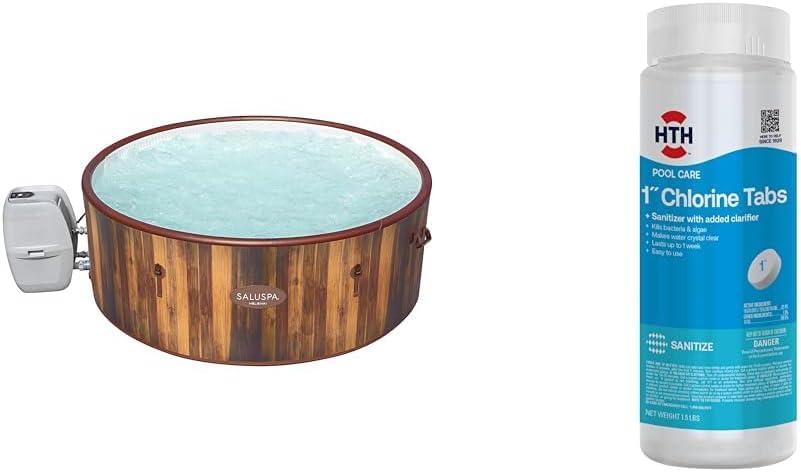
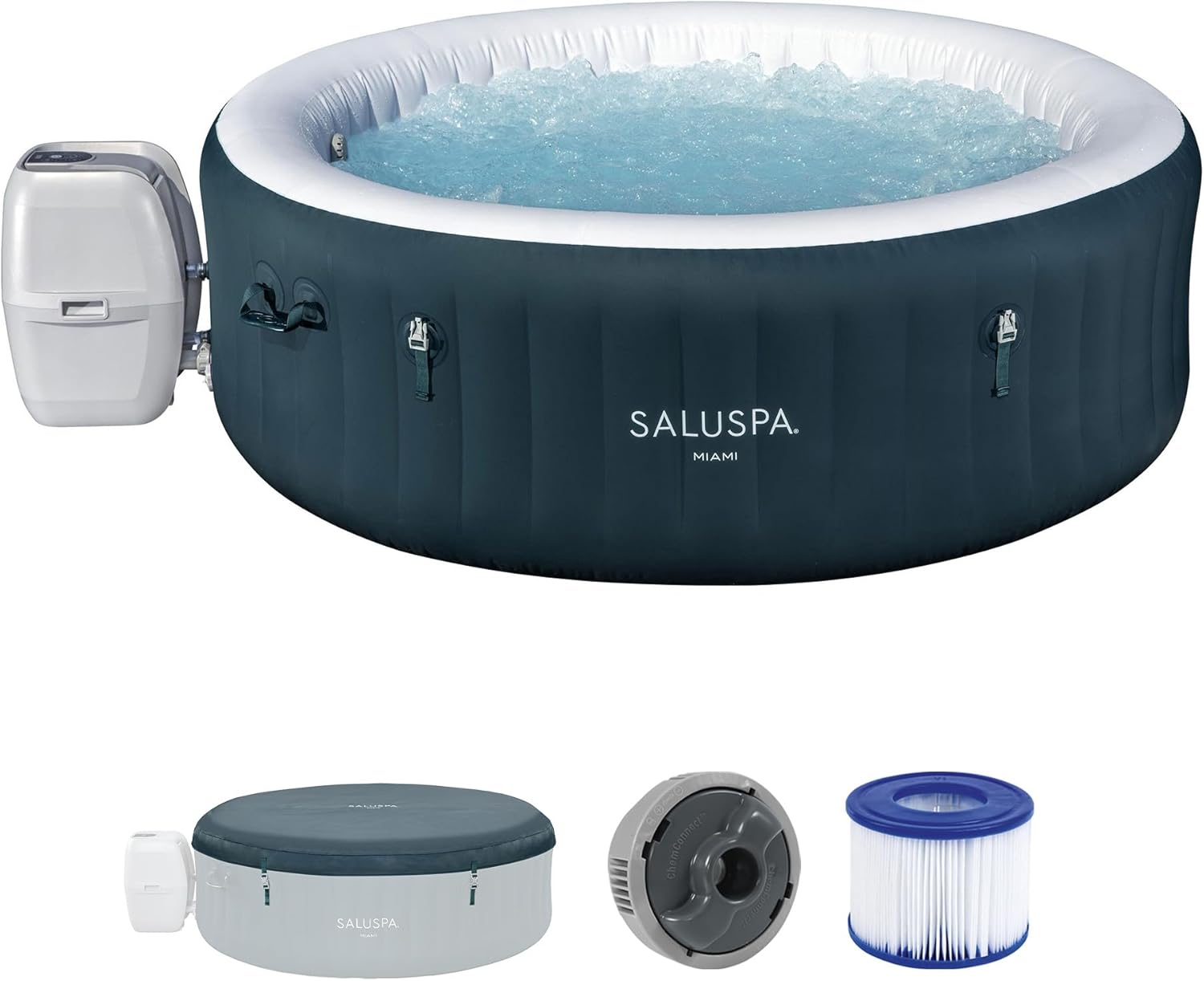
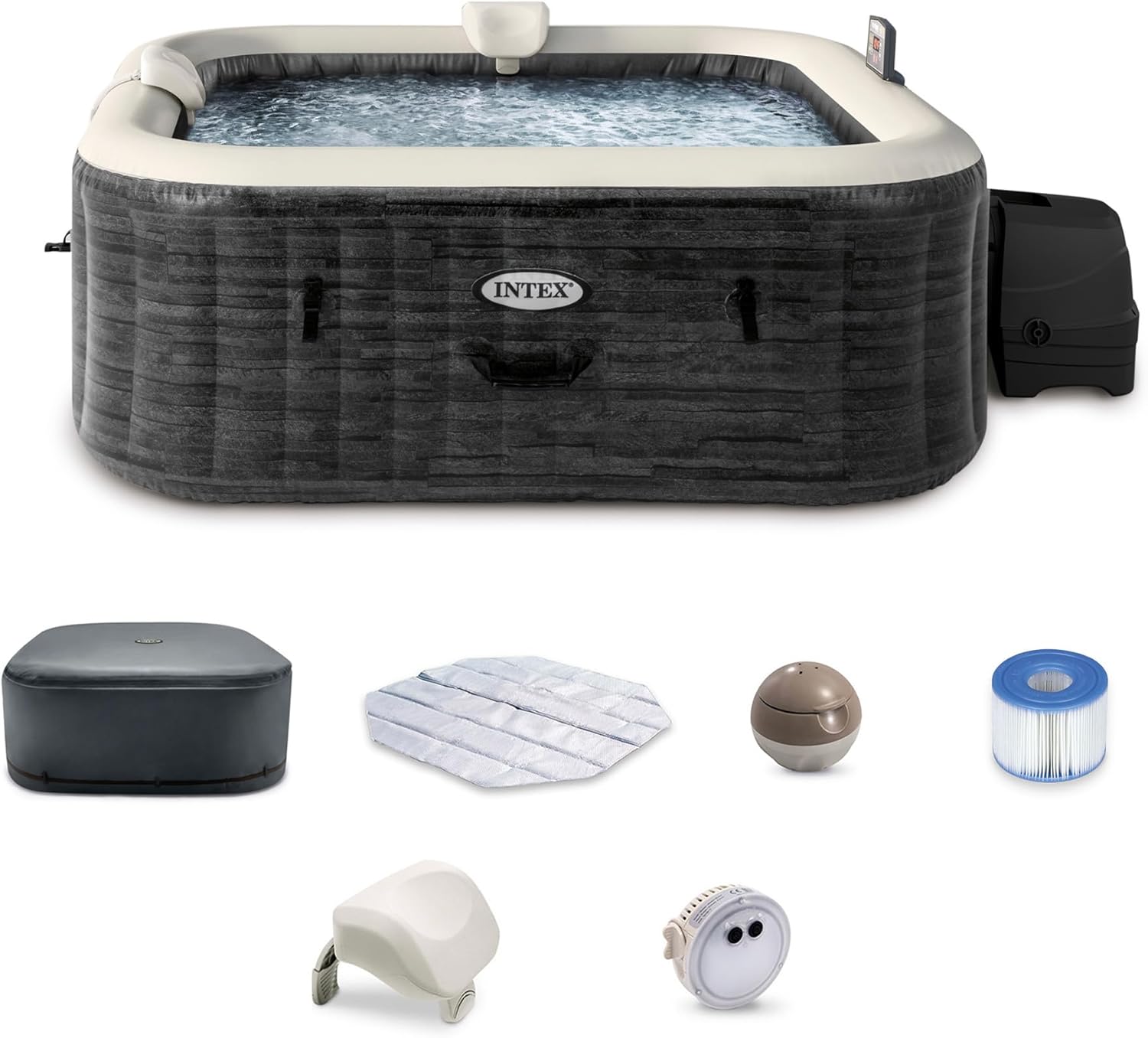
This category includes almost all inflatable models, such as the Coleman SaluSpa and the Intex PureSpa series.
These units are designed for convenience. They operate on a standard 15-amp household circuit. However, because 15 amps is limited power, the hot tub has to make a choice: Heater OR Jets. It rarely does both.
Detailed Look: How 110V Hot Tubs Manage Power
The control system in a 110V hot tub is essentially a power management computer. It constantly monitors the amperage being drawn and prioritizes electrical loads to stay under the 15-amp circuit limit. When you press the bubble button, a relay instantly cuts power to the heating element before energizing the blower motor. This all happens in milliseconds, but the consequence is significant: your water stops heating the moment you activate the jets.
In practice, this means a 30-minute soak with jets running in cold weather might drop your water temperature by 2-3 degrees. If you’re starting at 102°F, you’ll end at 99-100°F—still comfortable, but noticeably cooler. The tub will resume heating after you turn off the jets, but recovering those lost degrees takes 20-30 minutes of heater-only operation.
Some premium 110V “plug-and-play” acrylic spas (not inflatable) use a slightly different strategy. They might include a low-amperage circulation pump that runs continuously at 1-2 amps and a heater that draws 11-12 amps. When you activate the jets, the heater throttles back to a lower wattage rather than shutting off completely, maintaining some heating capacity while staying under 15 amps total.
Dedicated Circuit Requirements for 110V Tubs
While it’s physically possible to plug a 110V inflatable hot tub into any outdoor outlet, the manufacturer’s instructions almost universally require a dedicated circuit. “Dedicated” means nothing else is plugged into that circuit—no lights, no garage door opener, no refrigerator in the garage. The reason is simple: a 13-amp continuous load leaves only 2 amps of headroom on a 15-amp circuit before the breaker trips.
Many homeowners discover their outdoor outlet shares a circuit with bathroom outlets, garage lights, or basement receptacles. If anything else on that circuit draws power while the hot tub is heating, the total amperage exceeds 15 amps and the breaker trips. Finding and eliminating these shared loads often requires an electrician to trace the circuit.
| Specification | Inflatable (110V) | Hard-Wired (220V) |
|---|---|---|
| Amperage | 13 – 15 Amps | 40 – 60 Amps |
| Heater Size | 1.0 – 1.5 kW | 4.0 – 5.5 kW |
| Performance | Heater turns OFF when jets are ON | Heat + Jets run simultaneously |
| Installation | DIY (Plug in) | Electrician Required |
Popular Model Amperage Requirements: A Detailed Comparison
Different hot tub models within the same voltage category can have significantly different amperage requirements. Understanding these variations helps you choose a model that fits your existing electrical infrastructure—or plan appropriately for electrical upgrades.
110V Inflatable Hot Tub Specifications
| Model | Heater Wattage | Amp Draw | Requires Dedicated Circuit? |
|---|---|---|---|
| Coleman SaluSpa (Most Models) | 1,300W | 11.8 Amps | Yes |
| Intex PureSpa (4-Person) | 1,300W | 11.8 Amps | Yes |
| Intex PureSpa (6-Person) | 1,500W | 13.6 Amps | Yes (15A circuit maxed) |
| Bestway Lay-Z-Spa Milan | 1,350W | 12.3 Amps | Yes |
220V Hard-Wired Hot Tub Specifications
| Brand/Tier | Typical Amp Requirement | Heater Size | Number of Pumps |
|---|---|---|---|
| Entry-Level Acrylic | 40 Amps | 4.0 kW | 1 Pump |
| Mid-Range (Most Common) | 50 Amps | 5.5 kW | 1-2 Pumps |
| Premium/Luxury | 60 Amps | 5.5 kW | 2-3 Pumps |
| Swim Spa Combos | 60-100 Amps | 5.5-11 kW | 3+ Pumps |
Swim spas deserve special mention because they blur the line between hot tub and swimming pool. These massive units can require 100-amp circuits and may need a 400-amp residential service upgrade. The electrical installation alone can cost $3,000-$5,000, and monthly operating costs can exceed $150 in cold climates.
Seasonal Amperage Variations: Why Winter Costs More
Hot tub amperage draw isn’t constant throughout the year—it varies significantly with seasonal temperature changes. Understanding these patterns helps you anticipate costs and optimize your usage for efficiency.
During summer months with ambient temperatures of 70-85°F, the temperature differential between your 102°F water and the surrounding air is only 17-32 degrees. Heat loss is relatively slow, and your heater cycles infrequently. A well-insulated 220V spa might only run its heater 1-2 hours per day in these conditions, consuming 5-11 kWh daily.
Winter transforms the equation entirely. When outdoor temperatures drop to 20°F, the temperature differential jumps to 82 degrees. Heat loss accelerates dramatically, and your heater must work much harder to maintain temperature. The same spa that used 1-2 hours of heater runtime in summer might need 6-10 hours in winter—a 4-5x increase in electricity consumption.
Wind chill compounds this effect significantly. A 20°F day with 15 mph winds can strip heat from your spa as fast as a -10°F calm day. This is why wind breaks—fences, privacy screens, or purpose-built spa enclosures—can reduce winter operating costs by 20-30%.
Winter Efficiency Strategies
• Install a high-quality insulated cover with a tight seal (replace if waterlogged)
• Add a floating thermal blanket beneath the cover for additional insulation
• Create wind breaks around the spa area
• Lower the temperature 2-3 degrees when not in use
• Schedule filtration cycles during warmer daytime hours
• Ensure the cover is always secured when the spa isn’t in use
DIY Electrical Safety: What You Can and Cannot Do
The line between DIY-capable and electrician-required work is clearly drawn by electrical codes and common sense. Understanding this boundary protects you from electrical shock, fire hazards, and insurance complications.
Tasks Homeowners Can Safely Perform
- Plug a 110V inflatable hot tub into an existing GFCI-protected outdoor outlet
- Test GFCI outlets monthly using the Test/Reset buttons
- Inspect power cords for damage, fraying, or overheating
- Use a Kill-A-Watt meter to monitor power consumption
- Verify a circuit is dedicated by mapping breakers to outlets
- Install a pre-fabricated spa pad or foundation
Tasks Requiring a Licensed Electrician
- Running new circuits from the electrical panel
- Installing 220V GFCI breakers
- Installing outdoor disconnect boxes
- Upgrading electrical panels or service entrance
- Running conduit and pulling wire
- Any work requiring a permit and inspection
⚠️ The Permit Reality
Many homeowners are tempted to skip permits for electrical work to save money. This is a dangerous gamble. Unpermitted electrical work can void your homeowners insurance, create liability if someone is injured, and must be disclosed when selling your home. Most jurisdictions require permits for any new circuit installation, and the inspector’s job is to verify the work meets safety codes—protecting you and your family.
Troubleshooting Common Electrical Issues
Even properly installed hot tubs can develop electrical problems over time. Knowing how to diagnose common issues can save you expensive service calls and keep your spa running reliably.
GFCI Tripping Intermittently
This is the most common electrical complaint among hot tub owners. Intermittent GFCI trips usually indicate moisture somewhere in the electrical system. The heating element is the prime suspect—over time, the internal insulation can develop microscopic cracks that allow moisture penetration. When the heater energizes, current leaks to ground through the moisture path, and the GFCI trips.
Other causes include condensation in the control pack, degraded wire insulation inside the spa cabinet, or a failing pump motor seal that allows water to migrate along the shaft into the motor windings. A systematic diagnostic approach—disconnecting components one at a time to isolate the fault—is the standard troubleshooting method.
Breaker Trips When Jets Turn On
If your breaker trips specifically when you activate the jets, the pump motor is likely drawing excessive current. This could indicate a failing start capacitor (a relatively inexpensive repair), a seized pump impeller, or a motor winding that’s beginning to short. On 110V tubs, this can also happen if the heater doesn’t properly disengage when the jets activate, causing both loads to run simultaneously and exceed the circuit capacity.
Hot Tub Not Heating Despite Power
A tub that has power but won’t heat often has a failed heating element, a tripped high-limit switch, or a control board problem. Heating elements are essentially resistors that eventually burn out—they’re consumable components with a typical lifespan of 5-10 years. Testing a heating element requires a multimeter and involves checking for continuity and proper resistance values.
The Danger of Extension Cords
Since 110V tubs draw a continuous load of 12-13 amps, standard extension cords are a fire hazard. They create resistance, which generates heat, melting the plug and potentially causing a fire.
⚠️ Safety Warning
Never use a standard orange extension cord for a hot tub. If you absolutely must extend the reach (which manufacturers advise against), you must use a 10-Gauge or 12-Gauge Heavy Duty cord rated for 15+ amps, and keep it under 25 feet.
Why Extension Cords Are Dangerous for Hot Tubs
The physics behind extension cord dangers is straightforward but worth understanding. Every wire has inherent resistance—copper conducts electricity well, but not perfectly. When current flows through a wire, some energy is lost as heat due to this resistance. The amount of heat generated follows Joule’s Law: Heat = Current² × Resistance.
A standard 16-gauge extension cord has approximately 0.4 ohms of resistance per 100 feet. If you’re running 13 amps through a 50-foot cord, the power lost to heat is: 13² × 0.2 = 33.8 watts. That’s equivalent to a small soldering iron heating your extension cord continuously. Over hours of operation, this heat builds up, potentially melting insulation and exposing live wires.
The longer the cord and the thinner the wire, the worse the problem becomes. A 100-foot 16-gauge cord carrying 13 amps would dissipate 67.6 watts as heat—enough to start a fire in dry leaves or grass. Even if a fire doesn’t start, the voltage drop in the cord (which can be 5-10 volts or more) reduces the voltage reaching your hot tub, causing the heater to work less efficiently and the pump motor to run hotter.
If an extension cord is absolutely unavoidable, the 12-gauge option is the minimum safe choice for a 25-foot run, and 10-gauge is necessary for 50-foot runs. Even then, the connection points (plugs and receptacles) become weak links. Outdoor conditions accelerate corrosion at these connections, increasing resistance and heat generation over time.
P3 P4400 Kill A Watt Electricity Usage Monitor
Curious if your 15-amp tub is maxing out your circuit? Plug this in between the wall and your tub. It tells you exactly how many amps and watts the tub is pulling in real-time, helping you calculate monthly costs.
Check Price on AmazonThe 220V Hard-Wired Powerhouse (50-60 Amps)
According to Wellis Spa, traditional acrylic hot tubs require a dedicated 220V connection.
This extra power allows for:
- Faster Heating: A 220V heater warms water 3x faster than a 110V plug-in.
- Simultaneous Action: You can run multiple jet pumps and the heater at full blast without tripping a breaker.
- Cold Weather Resilience: The heater can keep up with heat loss even in freezing temperatures.
The Engineering Behind 220V Hot Tub Performance
The performance advantage of 220V systems comes from basic electrical engineering. Power (in watts) equals voltage multiplied by current. By doubling the voltage from 110V to 220V, you can deliver the same power with half the current—or, more commonly in hot tub design, deliver much more power with the same current.
A 110V system limited to 15 amps can deliver a maximum of 1,650 watts (and practically, 1,300-1,500 watts due to continuous load derating requirements). A 220V system on a 50-amp circuit can theoretically deliver 11,000 watts, though practical design limits it to about 9,000-10,000 watts to stay within the 80% continuous load rule. This is roughly 6-7 times more power available for heating and jet pumps.
The heater wattage difference tells the most dramatic story. A 1,300-watt 110V heater can raise 300 gallons of water about 1.5°F per hour. A 5,500-watt 220V heater can raise the same water about 6.5°F per hour. This means the 220V system can heat fresh cold water to soaking temperature in 5-7 hours versus 18-24 hours for the 110V system.
Beyond heating speed, the ability to run multiple high-amperage devices simultaneously transforms the user experience. A premium 220V spa might have:
- Circulation Pump: 1.5 amps continuous (330 watts)
- Heater: 25 amps when active (5,500 watts)
- Jet Pump 1: 12 amps (2,640 watts)
- Jet Pump 2: 12 amps (2,640 watts)
- Blower/Air Pump: 5 amps (1,100 watts)
- Total Potential Draw: 55.5 amps (just within a 60-amp circuit)
This configuration allows a bather to enjoy full-body hydrotherapy from multiple jet pumps while the heater maintains (or even increases) water temperature and a blower adds effervescent bubbles—all simultaneously. No 110V system can approach this capability.
Three-Phase Power: Commercial and Luxury Residential
At the highest end of the market, some luxury spas and commercial installations use three-phase power (typically 208V or 480V). Three-phase power delivers even more capacity and allows for more efficient motor designs. These installations are rare in residential settings but common in hotels, resorts, and fitness centers. A three-phase 208V/60A circuit can deliver approximately 21.6 kW—nearly double what a single-phase 220V/50A circuit can provide.
Future-Proofing Your Hot Tub Electrical Installation
When investing in electrical infrastructure for a hot tub, planning for future possibilities can save significant money and hassle down the road. Electrical work is expensive primarily due to labor, not materials—the incremental cost of installing slightly larger wire or conduit during initial installation is minimal compared to replacing everything later.
Oversize Your Conduit
The conduit carrying wires from your panel to the spa disconnect is difficult to access after landscaping, decking, or concrete work is complete. Installing 1-inch or even 1.25-inch conduit when code only requires 0.75-inch costs perhaps $20-30 extra in materials but allows you to pull larger wires later if you upgrade to a bigger spa. PVC conduit is inexpensive—labor to trench and install it is not.
Consider a Subpanel Near the Spa Area
If your spa is far from the main panel (100+ feet), installing a subpanel near the spa area can be a smart investment. A 100-amp subpanel costs $200-400 in materials and provides flexibility for future additions like outdoor kitchens, landscape lighting, pool equipment, or an EV charger. The main feeder wires to the subpanel handle the long voltage drop, and short branch circuits from the subpanel to individual devices are more efficient.
Plan for Electric Vehicle Charging
Many homeowners adding 220V service for a hot tub are also considering electric vehicles. A 50-amp EV charger draws similar power to a large hot tub. If you install a 100-amp subpanel for your spa area, you’ll have capacity for both a hot tub and an EV charger on the same feeder—avoiding a second expensive trenching and conduit installation later.
Load Sharing Devices: A Clever Solution
Products like the DCC-10 and SimpleSwitch allow two high-amperage devices (like a hot tub and EV charger) to share a single circuit. These devices monitor total current draw and automatically reduce or pause EV charging when the hot tub calls for heat, preventing overloads while avoiding the need for a service upgrade. They cost $500-$1,000 but can save $2,000-$5,000 on panel upgrades.
Troubleshooting: Why Does My Breaker Keep Tripping?
If your 15-amp inflatable tub keeps popping the breaker, it is usually due to Circuit Overload.
A standard household circuit shares power with other outlets. If you have your hot tub (13 amps) on the same circuit as a freezer, a hair dryer, or outdoor lights, the total draw will exceed 15 amps, and the safety breaker will trip.
The Fix: Ensure the hot tub is the only appliance on that specific circuit.
Beyond Simple Overload: Other Causes of Breaker Trips
While circuit overload is the most common cause of tripped breakers, several other issues can produce the same symptom. Distinguishing between these causes requires careful observation and sometimes professional diagnostic equipment.
Short Circuits: A short circuit occurs when a hot wire touches a neutral wire or ground wire. This creates a path of near-zero resistance, causing current to spike instantly to hundreds of amps. Breakers respond to short circuits by tripping magnetically—an instantaneous reaction. If your breaker trips the moment you plug in the tub or turn on a specific function, a short circuit is likely.
Ground Faults: On GFCI-protected circuits, even tiny leakage currents (4-6 milliamps) trigger a trip. This is different from overcurrent tripping and indicates electricity is finding an unintended path to ground—possibly through water, damaged insulation, or corroded connections. GFCI trips can be intermittent and maddeningly difficult to diagnose because the conditions causing them may come and go with temperature and humidity changes.
Aging Breakers: Circuit breakers have mechanical components that wear out over time. A breaker that’s tripped hundreds of times may become “weak” and trip at lower currents than its rating. If your tub was working fine on a circuit for years and suddenly starts tripping the breaker in conditions that previously worked, the breaker itself may be the culprit. Breakers cost $10-30 and are relatively easy for an electrician to replace.
Voltage Drop: The Hidden Performance Killer
Voltage drop is a phenomenon that affects all electrical circuits but becomes particularly significant for high-amperage devices like hot tubs. When electricity travels through wires, some voltage is “lost” due to the wire’s resistance. The longer the wire run and the higher the current, the more voltage is lost.
For hot tub installations, the National Electrical Code recommends keeping voltage drop under 3% for branch circuits. For a 220V circuit, that means no more than 6.6 volts lost between the panel and the spa. Why does this matter? Because your hot tub’s heater output is proportional to the square of the voltage. A 5% voltage drop results in roughly 10% less heating power—and proportionally longer heat-up times.
Consider a 50-amp spa installed 150 feet from the main panel. Using the minimum code-required 6 AWG copper wire, the voltage drop at full load would be approximately 4.5 volts, or about 2%. This is acceptable. But if an electrician incorrectly used 8 AWG wire (rated for 40 amps, not 50), the voltage drop would exceed 7 volts—over 3%—and the heater would produce noticeably less heat than its rating.
This is another reason to hire experienced, licensed electricians for hot tub installations. They understand voltage drop calculations and will upsize wire when necessary for long runs. The additional material cost for thicker wire is minimal compared to years of reduced spa performance.
Aluminum vs. Copper Wiring for Hot Tub Circuits
The choice between aluminum and copper wiring for your hot tub circuit involves trade-offs between cost, performance, and installation complexity. Understanding the differences helps you evaluate electricians’ proposals intelligently.
Copper has been the gold standard for residential wiring for decades. It’s an excellent conductor, resists corrosion, and maintains tight connections over time. For a typical 50-amp hot tub circuit with a 50-foot run, copper 6 AWG wire might cost $1.50-$2.00 per foot for the cable, totaling $75-$100 for the wire alone.
Aluminum wiring is significantly cheaper—perhaps 40-50% less expensive than copper for equivalent ampacity. However, aluminum requires larger gauge sizes to carry the same current (4 AWG aluminum vs. 6 AWG copper for 50 amps). Aluminum also expands and contracts more with temperature changes, which can loosen connections over time, and it’s prone to oxidation that increases resistance at connection points.
Modern aluminum alloys (AA-8000 series) and compression connectors rated for aluminum have largely solved these problems, and aluminum is widely used for service entrance cables and large feeder circuits. For hot tub installations, copper remains the more common choice simply because the cost difference on a 50-foot run is modest, and copper’s superior characteristics provide peace of mind.
If your home has older aluminum branch circuit wiring (common in 1960s-1970s construction), do not connect a hot tub to these circuits without professional evaluation. The connection between aluminum wiring and the hot tub’s copper terminations requires special anti-oxidant paste and connectors rated for dissimilar metals.
Energy Saving Tips for High-Amp Tubs
Electricity isn’t cheap. Whether you are pulling 15 amps or 50 amps, efficiency is key.
Advanced Energy Conservation Techniques
Beyond the obvious strategies like using a good cover and lowering the temperature when away, several less-known techniques can significantly reduce your hot tub’s energy consumption.
Programmable Thermostat Strategy: Many hot tub owners set their spa to 102°F and leave it there indefinitely. A more efficient approach uses setback temperatures during predictable non-use periods. If you only use your spa on weekends, drop the temperature to 95°F Monday through Thursday and raise it Friday morning. The energy saved during those four days of reduced heat loss far exceeds the cost of re-heating on Friday.
Filtration Cycle Optimization: Most spas run filtration cycles on a timer, typically 2-4 hours twice daily. These cycles run the circulation pump, which adds heat to the water (pump motors transfer about 80% of their electrical consumption as heat to the water). In summer, you might reduce filtration time to avoid overheating; in winter, you might schedule cycles during the warmest part of the day to reduce heater runtime.
Cover Condition Maintenance: A waterlogged cover loses most of its insulating value. If your cover feels unusually heavy when lifting, water has likely infiltrated the foam core through a torn vapor barrier. A waterlogged 4-inch foam core might have the insulating value of 1 inch of dry foam—dramatically increasing heat loss. Replace covers every 3-5 years, or immediately if they become heavy.
Off-Peak Heating: If your utility offers time-of-use pricing with cheaper electricity at night, program your spa to heat primarily during off-peak hours. A 220V spa can raise temperature quickly enough that you can set a lower temperature during expensive peak hours and schedule a heat-up just before your typical use time.

Floating Thermal Blanket
The heater is the biggest power consumer. By adding a thermal layer on top of the water, you trap the heat, meaning the high-amp heater turns on less frequently. It pays for itself in 2 months.
Check Price on AmazonRelated: Best Covers for Heat Retention
Understanding Wire Insulation Types and Temperature Ratings
The ampacity (current-carrying capacity) of a wire depends not only on its gauge but also on its insulation temperature rating. This is a detail often overlooked by DIYers but critical for code-compliant installations.
Common insulation types include:
- THHN/THWN: Rated for 90°C in dry locations, 75°C in wet locations. This is the most common wire type for residential conduit installations. At 75°C, 6 AWG THWN copper is rated for 65 amps—more than enough for a 50-amp hot tub circuit.
- UF-B (Underground Feeder): Rated for 60°C. This cable is designed for direct burial without conduit but has lower ampacity due to its temperature rating. At 60°C, 6 AWG UF-B copper is rated for only 55 amps—still acceptable for a 50-amp circuit but with less margin.
- NM-B (Romex): Rated for 90°C but must be sized using the 60°C column per NEC requirements. This means 6 AWG NM-B is rated for 55 amps. Romex cannot be used outdoors or in wet locations, limiting its application for hot tub installations.
For outdoor hot tub installations, the wire run from the panel to the outdoor disconnect typically uses individual THWN conductors in PVC conduit. From the disconnect to the spa, liquid-tight flexible conduit with THWN conductors is standard. The disconnect itself must be visible from the hot tub and located at least 5 feet away to prevent someone from reaching it while in the water.
Final Thoughts
Understanding amps is the first step to a safe installation. If you are renting or don’t want to hire an electrician, stick to the best 110V inflatable hot tubs. But if you want the full hydrotherapy experience in winter, a 50-amp hard-wired tub is the only way to go.
Decision Framework: Choosing the Right Electrical Setup for Your Situation
With all this information, making the final decision between 110V and 220V comes down to your specific circumstances. Here’s a framework to guide your choice:
Choose a 110V Plug-and-Play Hot Tub If:
- You rent your home and cannot make permanent electrical modifications
- Your electrical panel is already near capacity and an upgrade isn’t in the budget
- You primarily want a warm soaking experience rather than powerful hydrotherapy
- You live in a mild climate where heating demands are modest
- Budget is your primary concern, both for initial purchase and installation
- You need portability—the ability to take the tub with you when you move
Invest in a 220V Hard-Wired Hot Tub If:
- You own your home and plan to stay for many years
- You want therapeutic massage from powerful jets
- You live in a cold climate where winter heating is demanding
- You entertain frequently and need the tub to maintain temperature during use
- Your electrical panel has capacity or upgrading fits your renovation plans
- You want a permanent installation that adds value to your property
Amperage is the foundation of hot tub performance. A 110V/15-amp system offers convenience and low upfront cost but sacrifices heating speed and jet power. A 220V/50-amp system requires professional installation and higher initial investment but delivers the full spa experience with simultaneous heating and jet operation, even in freezing conditions.
Whichever path you choose, prioritize electrical safety: dedicated circuits, GFCI protection, proper wire sizing, and professional installation for hard-wired systems. The peace of mind from a safe, code-compliant installation is worth every penny.