How to Lower Alkalinity in Your Hot Tub (And Why It Keeps Rising)
You have tested your water, and the pH seems fine—maybe a little high—but your Total Alkalinity (TA) is off the charts. You add pH decreaser, but the levels bounce right back up the next day. The water is looking hazy, and your jets feel a little chalky.
This is the “Alkalinity Trap.” When your Total Alkalinity is too high, it acts as an over-protective bodyguard for your pH, making it impossible to balance the water.
In this guide, we are going to walk you through the precise chemistry of lowering alkalinity safely without crashing your pH levels, so you can get back to soaking in crystal-clear water.
We have expanded this guide well beyond the basic acid-and-aerate routine. Below you will find a full breakdown of why alkalinity climbs in the first place, dosing charts sized to common tub volumes, a side-by-side comparison of testing methods, guidance specific to inflatable, acrylic, and saltwater systems, and a troubleshooting section for the frustrating cases where alkalinity simply will not move no matter how much acid you add. Whether you own a two-person inflatable spa or a full-size six-person acrylic hot tub, the underlying chemistry is the same, but the practical steps differ slightly depending on your equipment, and we cover those differences in detail throughout.
What is Total Alkalinity (TA)?
Think of pH as the “boss” of water balance, and Total Alkalinity as the “bodyguard.”
- pH measures how acidic or basic the water is.
- Total Alkalinity measures the water’s ability to resist changes in pH.
When TA is perfect (80–120 ppm), it stabilizes pH. But when TA gets too high (above 150 ppm), it creates a phenomenon called “pH Lock.” The water becomes so resistant to change that your sanitizer stops working effectively, often leading to issues discussed in our guide on why hot tub water gets cloudy.
Total Alkalinity is technically a measurement of the concentration of alkaline substances dissolved in your water, primarily bicarbonates, carbonates, and to a lesser extent hydroxides. These compounds act as a chemical buffer, absorbing small shocks to the water’s acid-base balance so that a single splash of rainwater, a body of bather sweat, or a dose of chlorine doesn’t send your pH swinging wildly in either direction. In a properly balanced spa, this buffering capacity is a good thing. It is what keeps your pH from crashing every time you add sanitizer or every time a guest gets in the water.
The problem arises when the buffer becomes too strong. Once TA climbs above roughly 150 parts per million, the water resists change so aggressively that it also resists being corrected. You can add a full capful of pH decreaser, watch the pH number drop for a few hours, and then find it has crept right back up to 7.8 or higher by the next morning. This is not a sign that the product failed. It is a sign that the alkalinity buffer overpowered the correction before it could take hold long-term. Many spa owners chase this cycle for weeks, repeatedly dosing pH decreaser, without realizing that the actual variable they need to address is the alkalinity reading itself, not the pH reading.
It helps to think of the three major water balance numbers as a triangle, each one influencing the others:
- pH (7.2–7.8): The instantaneous acid/base reading.
- Total Alkalinity (80–120 ppm): The buffer that resists pH change.
- Calcium Hardness (150–250 ppm for hot tubs): The mineral content that, together with pH and TA, determines whether water is scale-forming or corrosive.
Adjusting any one of these three numbers can nudge the others, which is exactly why “just add more acid” is not always a complete answer. A truly balanced hot tub requires you to look at TA, pH, and calcium hardness together rather than chasing one number in isolation.
What Causes High Alkalinity in the First Place?
Before you can permanently fix a high alkalinity problem, it helps to understand where the excess bicarbonate and carbonate ions are actually coming from. In most cases, high TA is not a one-time fluke; it is the predictable result of an ongoing habit or a water source issue. Below are the most common culprits.
1. Fill Water Straight From the Tap
Municipal tap water in many regions is deliberately kept on the alkaline side to protect metal pipes from corrosion. If your local water utility targets a TA of 150 ppm or higher for infrastructure reasons, then every time you drain and refill your spa, you are starting from a position of already-elevated alkalinity before you have added a single chemical.
2. Overuse of pH Increaser or Alkalinity Increaser
Sodium bicarbonate, the active ingredient in most “Alkalinity Up” or “Total Alkalinity Increaser” products, is extremely effective at raising TA — sometimes too effective. Owners who overcorrect a low-alkalinity reading, or who add increaser without testing first “just to be safe,” frequently push TA well past the ideal range.
3. Certain Chlorine and Bromine Products
Some sanitizers, particularly cal-hypo (calcium hypochlorite) shock and certain bromine feeder tablets, leave alkaline residues behind as they dissolve. Over weeks of regular dosing, this residue accumulates and can slowly push TA upward even if you never touch an alkalinity increaser product directly.
4. Evaporation and Water Concentration
Hot tubs run warm and are frequently left uncovered or under-covered, which accelerates evaporation. As water evaporates, dissolved minerals and alkaline compounds do not evaporate with it — they become more concentrated in the remaining water. Over time, a spa that is topped off with fresh water rather than fully drained and refilled can see its TA creep upward purely through this concentration effect.
5. Aeration Features and Waterfalls Left Running Constantly
Ironically, the same aeration that helps raise pH without raising alkalinity (covered later in this guide) can, if a spa’s air blower or waterfall feature runs almost continuously, gradually offgas carbon dioxide and shift the carbonate/bicarbonate equilibrium in ways that nudge TA upward over the long run, especially in smaller water volumes.
6. Well Water and Hard Water Sources
Owners on well water or in regions with naturally hard, mineral-rich groundwater often start with a TA reading well above 120 ppm before any chemicals are added at all. If you have noticed that your tub seems to fight you on alkalinity every single time you refill, regardless of what chemicals you use, your water source itself may be the root cause, and a pre-fill filter is worth investigating (more on this in the Prevention section below).
Is Your Alkalinity Too High?
Before you start pouring acid into your tub, confirm the symptoms using the table below. Ideally, you should confirm this with a high-quality test kit—check our reviews of the best hot tub water testers for accuracy.
| Symptom | High Alkalinity (>150 ppm) | Low Alkalinity (<80 ppm) |
|---|---|---|
| pH Behavior | pH Lock: Difficult to lower; keeps drifting up. | pH Bounce: Swings wildly with small chemical additions. |
| Water Clarity | Cloudy, hazy water. | Clear, but aggressive. |
| Physical Feel | Scale formation (sandpaper feel) on shell. | Eye and skin irritation; equipment corrosion. |
Beyond the table above, there are a handful of subtler warning signs that experienced spa owners learn to recognize over time. Getting familiar with these will help you catch a rising TA problem before it becomes a full-blown pH Lock situation.
Reduced Sanitizer Efficiency
When alkalinity climbs, it typically drags pH upward with it. Chlorine and bromine are both dramatically less effective as sanitizers at higher pH levels. You may notice that you are burning through more chlorine or bromine than usual just to maintain the same free sanitizer reading, and that combined chlorine (chloramine) odors seem to build up faster between changes.
Scale on the Heater Element and Jets
High TA paired with high calcium hardness accelerates scale formation specifically on your heating element, which is the hottest surface in the system and the place where mineral precipitation happens fastest. Left unaddressed, scale buildup on the heater reduces heating efficiency, can trigger flow-sensor faults, and in severe cases contributes to premature heater failure.
A Persistently Chalky or Gritty Filter
If your cartridge filter feels gritty or develops a white, crusty residue that does not rinse away easily with a garden hose, scale deposits from high alkalinity and hardness are often the cause. A filter in this condition also cannot do its job properly, which compounds cloudiness problems.
Cloudy Water That Persists Despite Adequate Sanitizer
Cloudiness has several possible causes, but when your sanitizer levels test fine and you have ruled out filter and circulation issues, elevated TA and the associated high pH are one of the most common remaining explanations. Calcium carbonate can precipitate directly out of solution as fine white particulate when the water chemistry pushes past its saturation point, giving the water a persistent milky or hazy look.

This granular sodium bisulfate is the safest and most effective way to lower alkalinity in both acrylic and inflatable hot tubs.
Check Price on AmazonThe Chemistry Behind the Buffer (For the Curious)
You do not need a chemistry degree to lower your hot tub’s alkalinity, but understanding the mechanism makes the “why” behind every step in this guide click into place, and it explains why some shortcuts that sound reasonable actually make the problem worse.
Total Alkalinity in spa water is dominated by the bicarbonate ion (HCO₃⁻), with smaller contributions from carbonate (CO₃²⁻) and hydroxide (OH⁻) depending on the current pH. These three species exist in a dynamic equilibrium with dissolved carbon dioxide (CO₂) in the water. When you add an acid such as sodium bisulfate or muriatic acid, hydrogen ions flood the water and react with bicarbonate to form carbonic acid, which then breaks down into water and carbon dioxide gas. In simple terms: acid converts some of your bicarbonate buffer into CO₂ gas, which can escape into the air, permanently lowering TA rather than just temporarily masking it.
Here is the catch. That same acid addition also consumes free hydrogen-accepting capacity in the water, which is exactly what makes pH drop as well. In a low-TA situation, a small acid dose swings pH dramatically because there is little buffer left to resist the change. In a high-TA situation, the opposite happens: a large acid dose is needed to meaningfully reduce TA, and in the process, pH temporarily crashes far below the ideal 7.2–7.4 range, sometimes down toward 6.8 or lower.
This is where aeration becomes the clever second half of the process. Vigorously agitating the water, whether through air jets, a waterfall feature, or even briskly whisking the surface with a pool brush, drives dissolved CO₂ out of the water and into the atmosphere. As CO₂ leaves solution, the water’s own bicarbonate/carbonate equilibrium shifts to replace it, which pulls hydrogen ions out of the water and raises pH. Crucially, this reaction happens without adding any new bicarbonate or carbonate to the water, so your hard-won lower TA number stays put while pH climbs back to a comfortable, sanitizer-friendly range.
This is also why adding sodium bicarbonate (baking soda, the active ingredient in most “pH Up” or “Alkalinity Up” products) to fix a low pH reading is the wrong move when TA is already high: bicarbonate raises both pH and TA simultaneously, undoing the very separation you are trying to achieve between the two numbers.
How to Lower Alkalinity: The “Acid-Aeration” Method
The tricky part about lowering alkalinity is that anything that lowers alkalinity will also lower pH. To fix this, we use a process called “Aeration” to bring the pH back up without raising the alkalinity.
Step 1: Add pH Decreaser (Sodium Bisulfate)
Turn off your jets. Measure out the recommended amount of pH Decreaser (Sodium Bisulfate) or Muriatic Acid. Pour it into the center of the tub. This will drop both your TA and your pH.
Step 2: Allow Water to Circulate
Run the circulation pump (not the air jets) for 30 minutes to mix the acid.
Step 3: The “Aeration” Trick
At this point, your TA might be lower, but your pH is probably dangerously low. Do not add pH Up! Adding pH Up (Sodium Bicarbonate) will just raise your Alkalinity back up, undoing your work.
Instead, turn on all your air jets, bubbles, and waterfalls. Aerating the water introduces carbon dioxide, which naturally raises the pH without affecting alkalinity. Leave the jets on until the pH rises to 7.2–7.4.
Step 4: Retest and Repeat
This process is slow. You may need to repeat the “Add Acid -> Aerate” cycle over several days to bring TA down from 200+ ppm to the sweet spot of 100 ppm.
Step 5: A Detailed Walkthrough of the First 48 Hours
Because so many readers ask what this actually looks like day-to-day, here is a realistic timeline for bringing a badly out-of-range spa (TA of 220 ppm, pH of 7.8) back into balance using the acid-aeration method.
Hour 0: Test water and confirm TA of 220 ppm and pH of 7.8. Turn off jets and blower. Add the calculated dose of sodium bisulfate (see the dosing chart in the next section) directly into the deepest part of the water, away from the intake, avoiding contact with the shell or acrylic surface.
Hour 0 to 0.5: Run only the circulation pump, with jets and air blower off, to distribute the acid evenly without agitating the surface (agitation at this stage would start raising pH again before the acid has had a chance to react with the bicarbonate buffer).
Hour 0.5 to 1: Leave the water completely still, cover on, for another 30–60 minutes to let the chemical reaction fully complete.
Hour 1: Retest. Expect TA to have dropped by roughly 10–20 ppm and pH to have dropped noticeably, possibly to 7.0 or below. This is expected and desired.
Hour 1 to 3: Turn on all air jets, the waterfall, and any bubble features at full power. Leave the cover open a crack if your climate allows, to help CO₂ escape rather than simply recirculate under a sealed cover. Run for a minimum of 60–90 minutes.
Hour 3: Retest pH. If it has climbed back to the 7.2–7.4 range, TA should now sit somewhere around 190–200 ppm, still above target but meaningfully improved.
Day 2: Repeat the entire acid-aeration cycle. Most spa owners find that two to four cycles spread across two to four days are needed to bring a severely elevated TA reading (200+ ppm) down into the 80–120 ppm target zone, because each cycle only removes a modest amount of buffering capacity and pushing too hard in a single day risks crashing pH low enough to damage acrylic surfaces or irritate skin.
Dosing Charts by Tub Size
Exact dosing always depends on the specific product’s concentration, so always defer to the manufacturer’s label. That said, the following chart gives a general starting-point reference for sodium bisulfate (“dry acid”) dosing to lower TA by approximately 10 ppm, which is a commonly cited benchmark across spa chemical manufacturers for granular pH/alkalinity decreaser products.
| Spa Water Volume | Approx. Dry Acid Needed to Lower TA ~10 ppm | Common Tub Examples |
|---|---|---|
| 100–150 gallons | ~1 tablespoon | 2-person inflatable spas |
| 200–300 gallons | ~2 tablespoons | 4-person inflatable or compact acrylic spas |
| 300–400 gallons | ~3 tablespoons | Standard 5–6 person acrylic hot tubs |
| 400–500+ gallons | ~4 tablespoons | Large 6–8 person acrylic hot tubs, swim spas |
Muriatic Acid Dosing (Liquid Acid Alternative)
Some owners, particularly those with larger swim spas, prefer liquid muriatic acid because it is often cheaper per gallon of water treated and dissolves instantly. As a rough guideline, roughly 2 to 3 fluid ounces of standard 31.45% muriatic acid per 500 gallons of water will lower TA by approximately 10 ppm, but because muriatic acid is considerably more hazardous to handle than granular sodium bisulfate, we recommend dry acid for anyone without prior experience handling concentrated acids. See the Safety section below before working with either product.
Common Mistakes to Avoid
Even spa owners who understand the acid-aeration method in theory often trip up in practice. Here are the mistakes we see most frequently.
- Dumping the entire calculated dose in one shot. Large, severe TA problems should be corrected incrementally over several days rather than in one aggressive treatment, both for pH stability and for the safety of your acrylic shell and plumbing seals.
- Adding acid and pH increaser on the same day. This is the single most common reason people feel “stuck” — they lower TA with acid, panic when pH also drops, and immediately add pH increaser (sodium carbonate or sodium bicarbonate), which raises TA right back up and cancels out the work just completed.
- Testing too soon. The acid needs time to fully react with the bicarbonate buffer. Testing five minutes after dosing will give you an inaccurate, artificially low pH reading that does not reflect where the water will settle after circulation.
- Pouring acid directly onto a vinyl liner or acrylic surface. Granular acid that lands on the same spot on the shell without dissolving in a stream of moving water can cause localized surface etching or discoloration. Always pour into a moving, deep area of water, away from the shell and skimmer intake.
- Ignoring calcium hardness. If your calcium hardness is also elevated, lowering TA alone will not fully solve a scaling problem. See the Alkalinity vs. Calcium Hardness section below.
- Not retesting after aeration. Because aeration itself can very slightly affect TA readings over long, continuous run times, always retest both TA and pH after each aeration cycle rather than assuming your last reading still holds.
Can I Use Vinegar to Lower Alkalinity?
Many owners ask if they can use household white vinegar. While vinegar is an acid (acetic acid) and technically can lower alkalinity, it is not recommended.
Vinegar introduces organic waste into the water, which consumes your sanitizer (chlorine or bromine). This often leads to bacterial growth and foul odors. Stick to Sodium Bisulfate (Dry Acid) or Muriatic Acid for clean results.
What About Lemon Juice or Citric Acid?
Citric acid, whether from bottled lemon juice or a powdered citric acid product, has the same fundamental problem as vinegar: it is an organic acid that introduces carbon-based compounds into your spa water. Organic material is food for bacteria and algae, and it also reacts with chlorine in ways that reduce your sanitizer’s effective strength. While citric acid is sometimes used as a gentle pipe-cleaning agent during a full drain-and-refill (precisely because it is mild and organic), it is not an appropriate everyday tool for routine TA management.
Reverse Osmosis or Distilled Water Dilution
One genuinely effective “natural” method, though slower and more resource-intensive, is diluting your spa water with reverse osmosis (RO) or distilled water, both of which contain essentially zero alkalinity and zero hardness. Draining a portion of your existing water and replacing it with RO or distilled water will proportionally reduce TA (and calcium hardness) without any chemical dosing at all. This approach is popular among owners who have persistent, hard-to-manage source water and want to avoid the chemical acid-aeration cycle altogether, though it does require sourcing and hauling a meaningful volume of purified water, which can be impractical for larger spas.
Partial Drain and Refill
If your TA (or calcium hardness) has climbed so high that chemical correction would require an impractical volume of acid, sometimes the simplest and most cost-effective solution is a 25–50% partial water drain, followed by a refill with fresh, ideally pre-filtered, water. This “dilutes” the problem rather than chemically reversing it and can save considerable time and chemical expense compared to multiple acid-aeration cycles.
Alkalinity Management by Tub Type
While the core chemistry is identical regardless of what your hot tub is made of, the practical approach to testing and dosing does shift depending on your specific setup.
Inflatable and Portable Spas
Inflatable spas typically hold smaller water volumes (roughly 150–300 gallons), which means chemical doses are smaller and the water chemistry can shift more quickly and dramatically than in a larger acrylic tub. Because inflatable spas usually rely on a simple air-blower bubble jet system rather than powerful water jets, the aeration step of this guide is especially important and effective — running the bubble jets is often the primary aeration tool available to inflatable spa owners. Be extra cautious with dosing precision in these smaller volumes, since a dose sized for a 400-gallon acrylic tub can badly overcorrect a 150-gallon inflatable spa.
Acrylic Hard-Shell Hot Tubs
Larger acrylic tubs (400–500+ gallons) have more water to buffer chemical changes, meaning the acid-aeration cycle generally needs to be repeated more times, over more days, to bring a badly elevated TA down into range, simply because each dose affects a proportionally smaller percentage of the total water volume. These tubs typically have stronger dedicated jet pumps, which make for very effective aeration once the acid dose has been given time to react.
Saltwater and Salt-Chlorine Generator Spas
Saltwater systems use a salt cell to electrolytically generate chlorine from dissolved salt, and this electrolysis process naturally tends to raise pH over time as a byproduct of the reaction occurring at the cell’s cathode. Because of this, saltwater spa owners often find themselves fighting a slow, steady upward drift in both pH and, indirectly, TA, since many owners respond to rising pH by adding more acid than necessary, which can create a whipsaw effect between overcorrection and re-drift. If you run a salt system, test TA and pH more frequently (every 2–3 days rather than weekly) and make smaller, more frequent corrections rather than large infrequent ones.
Wood-Fired and Off-Grid Tubs
Wood-fired tubs are often filled from natural water sources such as wells, rain catchment, or nearby streams, which can have wildly variable starting alkalinity depending on the local geology. If you use one of these systems, it is worth testing your fill source water on its own, before it ever goes into the tub, so you know your true starting point each time you refill.
Alkalinity vs. Calcium Hardness: Don’t Confuse the Two
One of the most common points of confusion for new spa owners is mixing up Total Alkalinity with Calcium Hardness (CH). They sound similar, both are measured in parts per million, and both contribute to scale formation, but they measure entirely different things and are corrected with entirely different products.
| Property | Total Alkalinity (TA) | Calcium Hardness (CH) |
|---|---|---|
| What it measures | Bicarbonate/carbonate buffering capacity | Dissolved calcium mineral content |
| Ideal range (hot tub) | 80–120 ppm | 150–250 ppm |
| Raised by | Sodium bicarbonate | Calcium chloride |
| Lowered by | Acid (sodium bisulfate / muriatic acid) | Partial drain and refill, or a calcium hardness reducer/sequestrant |
| Primary risk if too high | pH Lock, cloudy water | Scale on heater, jets, and shell |
Both numbers, along with pH and water temperature, feed into a broader calculation called the Langelier Saturation Index (LSI), which pool and spa professionals use to predict whether water is scale-forming, balanced, or corrosive. You do not need to calculate LSI by hand for routine hot tub maintenance, but understanding that TA and CH work together, rather than as substitutes for one another, will help you diagnose scaling issues that acid alone cannot fix. If you have lowered TA into the ideal range but are still seeing scale formation, elevated calcium hardness is very likely the remaining culprit, and the fix is a partial drain and refill rather than more acid.

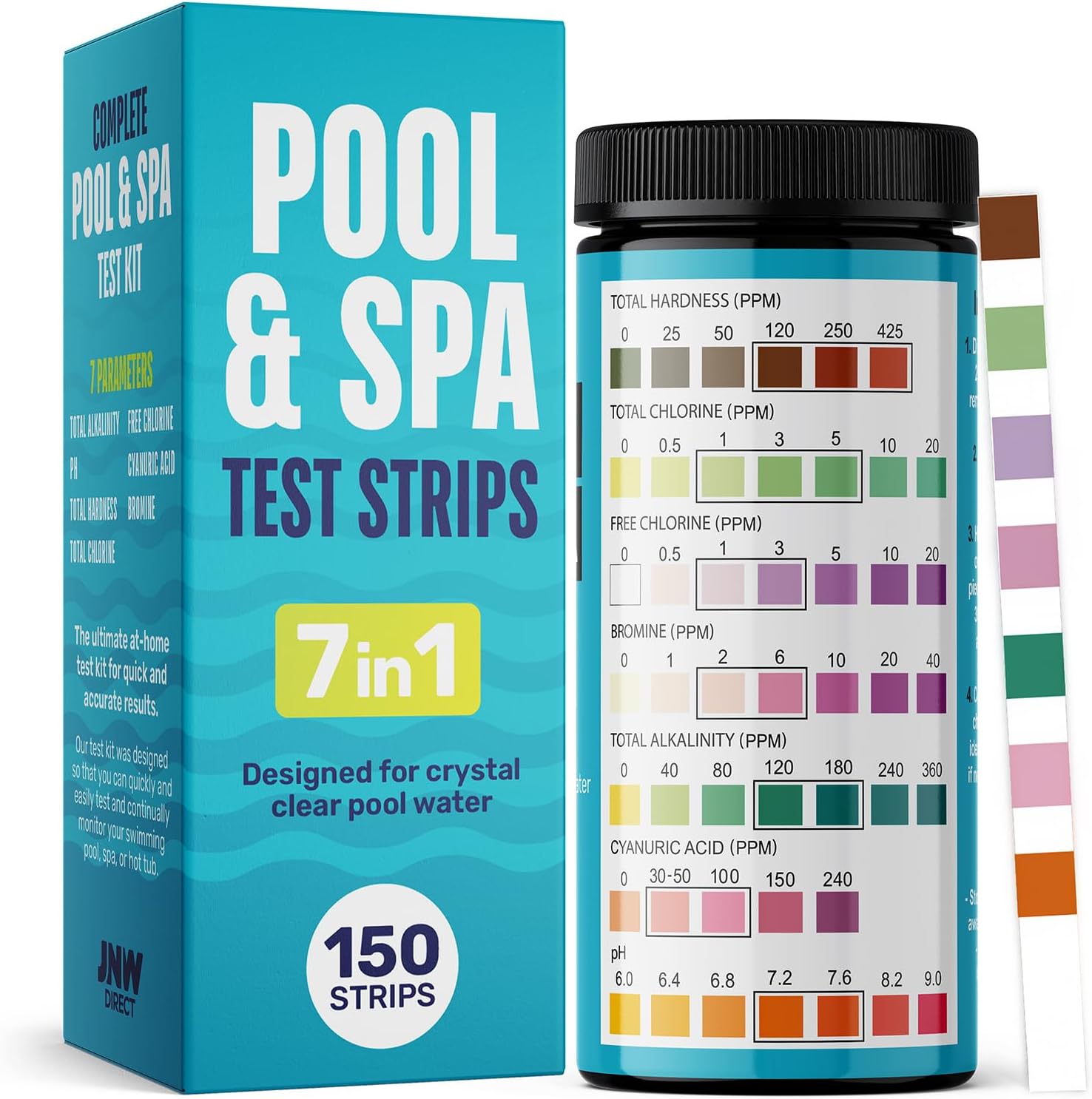
Test strips are notoriously hard to read for alkalinity. A digital meter gives you the exact number so you calculate the right chemical dose.
Check Price on AmazonOvercorrected? Here’s How to Raise Alkalinity Back Up
It happens to almost everyone eventually: an aggressive acid dose, or several cycles run too close together, and suddenly your TA reading has dropped below the 80 ppm floor. Low alkalinity brings its own set of problems, namely pH Bounce, where the water swings unpredictably with even small chemical additions, along with corrosive water that can irritate skin and eyes and gradually damage metal fittings, heater elements, and pump seals.
The fix here is much simpler than lowering TA. Sodium bicarbonate, sold as “Alkalinity Increaser” or “Total Alkalinity Up,” dissolves quickly and raises TA in a fairly predictable, linear fashion without the multi-day cycling required to lower it. As a general guideline, roughly 1.5 to 2 tablespoons of sodium bicarbonate per 500 gallons of water will raise TA by approximately 10 ppm, though you should always follow your specific product’s label instructions, since concentrations vary between brands.
Add the calculated dose with the pump running to help it dissolve and circulate evenly, wait at least an hour, and retest. Unlike lowering TA, raising it rarely requires multiple cycles unless the initial deficit is severe (well below 50 ppm), in which case splitting the correction across two applications a few hours apart is still good practice to avoid overshooting back into the high range.
Testing Methods Compared: Strips, Drop Kits, and Digital Meters
Accurate dosing depends entirely on accurate testing, and this is where many alkalinity problems actually begin. If your test result is wrong, your dose will be wrong too, no matter how carefully you follow the rest of this guide.
| Method | Accuracy | Speed | Best For |
|---|---|---|---|
| Test Strips | Low–Moderate (color-matching by eye, subjective) | Fast (under 1 minute) | Quick daily spot-checks |
| Liquid Drop Test Kits | High (titration-based, precise) | Moderate (2–5 minutes) | Confirming a strip reading before dosing |
| Digital Photometers/Meters | Very High | Fast (10–30 seconds) | Owners who want lab-grade precision without titration |
Test strips are convenient, but reading the color of a TA pad against a printed chart is inherently subjective, especially under artificial lighting, colorblindness, or when the strip has been exposed to humidity in storage. This subjectivity is a major reason so many owners report “chasing” an alkalinity number that never seems to settle — sometimes the water chemistry hasn’t actually changed at all, but the way two different people (or the same person under different lighting) read the same strip has.
Liquid drop titration kits, where you count the number of reagent drops needed to shift an indicator’s color, are considerably more precise because the result is a countable number rather than a color match. Digital meters go a step further, removing subjective color interpretation entirely. If you find yourself repeatedly frustrated by a TA reading that “won’t move” despite following the acid-aeration steps correctly, upgrading your testing method is often a more effective fix than adding more chemicals.
How to Get a More Accurate Test Result
- Always test at least 30 minutes after adding any chemical, and ideally after running the pump to circulate.
- Test water from mid-depth, roughly elbow-deep, rather than from the very surface, where recent chemical additions can be unevenly concentrated.
- Avoid testing immediately after the jets or blower have been running, as this can introduce tiny air bubbles that distort some test results.
- Store test strips in their original sealed container, away from humidity, and check the expiration date, since degraded strips give unreliable colors.
Troubleshooting: When Alkalinity Won’t Come Down
If you have run two or three full acid-aeration cycles and your TA reading genuinely refuses to drop, work through this checklist before assuming the product has failed.
- Confirm your test method. As covered above, an inaccurate test can make it look like nothing has changed when it actually has. Cross-check with a second test method if possible.
- Check that you are using enough acid. Severely high TA (200+ ppm) requires proportionally larger total doses than the standard “10 ppm per dose” guideline suggests, simply because you are trying to remove a larger amount of buffering capacity.
- Rule out a continuously replenishing source. If your fill water, a leaking pipe adding fresh tap water, or an automatic top-off system is constantly introducing new high-alkalinity water, you may be fighting a moving target. Check for slow leaks and disable any auto-fill features while correcting TA.
- Consider your sanitizer choice. If you use cal-hypo shock regularly, its alkaline residue may be replenishing TA about as fast as you are removing it. Consider switching to a non-alkaline shock alternative, such as a potassium-based non-chlorine shock, at least temporarily while you bring TA under control.
- Rule out old, degraded acid product. Granular sodium bisulfate can clump and lose potency if exposed to humidity. If your container has hardened into a solid block, its effective strength per scoop may be lower than the label assumes.
- When in doubt, drain and refill. If none of the above resolves the issue after a reasonable number of attempts, a partial or full drain and refill, ideally with pre-filtered source water, is often faster and cheaper than continuing to fight the water chemically.
Safety Precautions When Handling Acid
Both granular sodium bisulfate and liquid muriatic acid are effective, widely used spa chemicals, but they are still acids and deserve respect and careful handling.
- Wear rubber gloves and eye protection when handling any granular or liquid acid, especially muriatic acid, which produces fumes.
- Work in a well-ventilated outdoor area. Never handle muriatic acid in an enclosed space such as a garage or storage shed.
- Never mix pH decreaser with chlorine, shock, or any other pool chemical directly. Add chemicals separately, allowing time between additions, to avoid dangerous reactions.
- Store acid products away from direct sunlight, extreme heat, and out of reach of children and pets, in their original labeled container.
- If acid contacts skin or eyes, flush immediately with large amounts of clean water for at least 15 minutes and seek medical attention if irritation persists.
- Keep a dedicated, clearly labeled measuring scoop or cup for acid products only, never used for food or other household chemicals.
Prevention: Why Does It Keep Rising?
If you feel like you are fighting a losing battle, check your source water. Many municipal water sources have high alkalinity. If your fill water is high, use a hose filter when refilling.
Regular maintenance is key. As part of your weekly routine outlined in our inflatable hot tub maintenance guide, check TA first before adjusting pH. Also, ensure you know how often to shock a hot tub, as non-chlorine shock can sometimes help oxidize contaminants that mess with readings.
Test Your Fill Water Before You Refill
The single most effective long-term prevention strategy is simply knowing your starting point. Before your next drain and refill, fill a clean glass or cup directly from your garden hose or fill source and test it on its own, separate from your spa. If your fill water already reads above 120 ppm TA, you know from day one that you are starting in the danger zone, and you can plan your first week of maintenance accordingly, rather than being surprised a few days later.
Use an Inline Pre-Filter
A simple garden-hose-attached pre-filter, designed for pools and spas, can reduce hardness and, to a lesser extent, some alkaline mineral content in your fill water before it ever reaches the tub. These filters are inexpensive relative to the ongoing cost of chemicals and are one of the highest-leverage purchases a spa owner in a hard-water region can make.
Avoid “Just in Case” Chemical Additions
Never add pH increaser, alkalinity increaser, or any balancing chemical without testing first. A surprisingly large share of high-TA cases we hear about stem from well-meaning owners adding a scoop of “Alkalinity Up” preemptively, out of habit or because “it’s been a while,” rather than in response to an actual low reading.
Cover Your Spa When Not in Use
Reducing evaporation with a properly fitted, insulated spa cover slows the concentration effect described earlier in this guide, where minerals and alkaline compounds become more concentrated as water evaporates. A tight-fitting cover also reduces how much rainwater or debris enters the tub, both of which can affect your chemistry unpredictably.
Test More Often, Not Less
Many owners fall into a pattern of only testing when something looks or smells wrong. By that point, TA has often already drifted well outside the ideal range. Testing twice a week, even when everything seems fine, lets you catch small drifts early with small corrections, rather than needing multiple aggressive acid-aeration cycles later.
A Practical Weekly and Seasonal Maintenance Schedule
Consistency is the real long-term solution to alkalinity problems. Below is a simple schedule that most hot tub owners can follow to stay ahead of TA drift rather than constantly reacting to it.
| Frequency | Task |
|---|---|
| Every 2–3 days | Test free chlorine/bromine and pH with a quick strip. |
| Weekly | Full test panel: TA, pH, calcium hardness, and sanitizer. Adjust TA first if out of range, before touching pH. |
| Weekly | Rinse or inspect the filter cartridge for scale or debris buildup. |
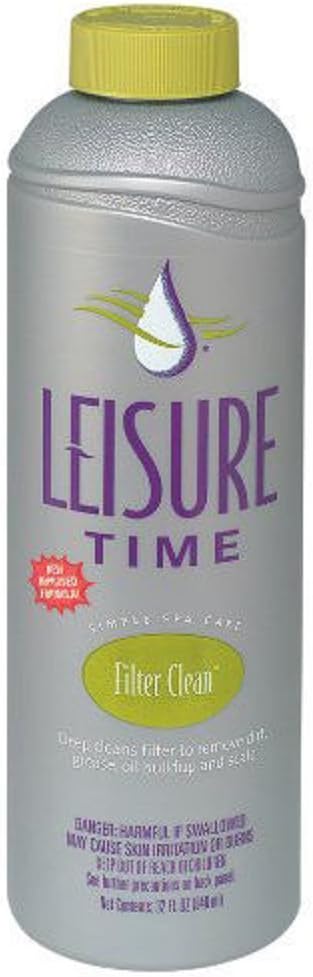
| Monthly | Deep-clean the filter with a dedicated filter cleaner solution to remove scale and oils. |
| Every 3–4 months | Full drain, shell wipe-down, and refill with fresh, ideally pre-filtered, water. |
| Before every refill | Test the fill source water on its own to know your true starting TA and hardness. |
| Seasonally | Inspect for scale on the heater element and jets during filter cleaning; descale if a chalky buildup is visible. |
Cost Comparison: What Will This Actually Cost You?
Spa chemical costs are modest compared to equipment repair costs, but it is still worth knowing roughly what you are budgeting for when managing alkalinity on an ongoing basis.
| Item | Typical Cost Range | Notes |
|---|---|---|
| Granular Sodium Bisulfate (2–4 lb container) | Low, typically lasts several months of routine dosing | Safer to handle than liquid muriatic acid |
| Liquid Muriatic Acid (1 gallon) | Generally cheaper per treatment than dry acid | Requires more careful handling and ventilation |
| Sodium Bicarbonate (“Alkalinity Up”) | Comparable to dry acid pricing | Also usable as a cheaper substitute is plain baking soda, chemically identical, though not necessarily tested to spa-grade purity standards by every brand |
| Digital pH/Meter Testing Device | One-time moderate cost | Pays for itself over time by reducing wasted or mis-dosed chemicals |
| Inline Pre-Fill Water Filter | Low one-time cost, replacement cartridges periodically | High-leverage for hard-water regions |
| Heater Element Replacement (if scale damage occurs) | Significantly higher than any routine chemical cost | The strongest financial argument for staying ahead of TA and hardness issues |
Framed this way, the modest ongoing cost of test strips, dry acid, and an occasional pre-fill filter cartridge is genuinely small compared to the cost of a replacement heater element or circulation pump damaged by long-term scale buildup. Preventive water balance management is, financially speaking, one of the best-value habits a hot tub owner can maintain.
Water Chemistry Glossary
Spa chemistry has its own vocabulary, and a lot of confusion among new owners comes from products and forum posts using these terms loosely or interchangeably. Here is a quick reference for the terms used throughout this guide.
- Total Alkalinity (TA): The measure of dissolved bicarbonate, carbonate, and hydroxide ions in water, expressed in parts per million (ppm). Functions as a buffer that resists changes to pH.
- pH: A logarithmic scale from 0 to 14 measuring how acidic or basic water is, with 7 being neutral. Spa water is kept slightly basic, between 7.2 and 7.8, to be gentle on skin and eyes while still allowing sanitizers to work effectively.
- Calcium Hardness (CH): The concentration of dissolved calcium in the water, separate from alkalinity, which contributes to scale formation when too high and corrosive water when too low.
- ppm (parts per million): A unit of concentration equivalent to milligrams of a substance per liter of water, used for TA, CH, and sanitizer readings.
- Sodium Bisulfate: A dry, granular acid (sometimes called “dry acid”) commonly sold as “pH Decreaser” or “Alkalinity Decreaser.” Considered safer and easier to handle than liquid muriatic acid.
- Muriatic Acid: A liquid form of hydrochloric acid used to lower pH and TA. More hazardous to handle than dry acid due to fumes and splash risk.
- Sodium Bicarbonate: Ordinary baking soda, sold as “Alkalinity Increaser” or “pH Increaser,” used to raise TA (and, to a lesser degree, pH).
- Aeration: The process of agitating water to increase its contact with air, driving off dissolved carbon dioxide and raising pH without affecting TA.
- pH Lock: A colloquial term for the situation where alkalinity is so high that pH becomes extremely resistant to correction.
- pH Bounce: The opposite problem, where alkalinity is too low and pH swings unpredictably with small chemical additions.
- Langelier Saturation Index (LSI): A formula combining pH, TA, CH, and temperature to predict whether water is scale-forming, balanced, or corrosive. Used mostly by pool and spa professionals rather than casual owners.
- Scale: Solid calcium carbonate deposits that form on spa surfaces, jets, and heating elements when water chemistry pushes past its saturation point.
- Cal-Hypo (Calcium Hypochlorite): A common granular chlorine shock product that can leave alkaline residue behind, contributing to rising TA over repeated use.
- Sequestrant: A chemical additive that binds to dissolved metals and minerals in water, helping to prevent them from precipitating out as scale or discoloration, without actually removing them from the water.
How High Alkalinity Affects Skin, Eyes, and Comfort
Beyond the equipment and clarity issues covered earlier, water chemistry has a direct, physical effect on the people actually using the tub. Because high TA drags pH upward, and human skin and the eye’s tear film both sit at a mildly acidic to neutral pH themselves, soaking in water with an elevated pH can noticeably affect comfort, even if the water looks perfectly clear.
Common complaints associated with soaking in high-pH, high-alkalinity water include a tight, dry, or slightly itchy feeling on the skin after getting out, mild eye redness or stinging, and in some cases a chalky or filmy residue left on the skin, particularly for bathers with naturally dry or sensitive skin. This residue is often fine calcium carbonate precipitate, the same substance responsible for the cloudy-water symptom discussed earlier, settling onto the skin as the water evaporates.
Bathers with pre-existing skin sensitivities, eczema, or contact dermatitis conditions are often more noticeably affected by water chemistry imbalances than the general population, since their skin’s barrier function is already compromised. If household members regularly report skin or eye discomfort after using the tub even though your sanitizer levels test normal, elevated TA and pH are worth investigating as the underlying cause before assuming a sanitizer or hygiene issue.
On the flip side, overcorrecting TA too low in an attempt to fix these symptoms can create the opposite problem: aggressive, corrosive water that strips natural oils from skin and can cause its own irritation, along with the equipment corrosion issues discussed earlier. This is one more reason the 80–120 ppm target range exists as a genuine sweet spot rather than an arbitrary number: it represents the balance point where the water is buffered enough to be gentle and stable, without being so buffered that it becomes uncomfortable or difficult to manage.
Why Hot Tub Chemistry Isn’t the Same as Pool Chemistry
Owners who previously managed an in-ground or above-ground swimming pool sometimes assume the same chemical routines and target ranges apply directly to their hot tub. While the underlying chemistry is the same, there are meaningful practical differences worth understanding.
Higher Temperature Accelerates Everything
Hot tubs typically run between 100 and 104°F, dramatically warmer than most swimming pools. Higher temperatures speed up chemical reactions, accelerate sanitizer breakdown, and make scale formation happen faster and at lower mineral concentrations than in a cooler pool. This is part of why hot tubs are generally kept at a slightly lower calcium hardness target than swimming pools.
Much Smaller Water Volume, Much Higher Bather Load
A typical hot tub holds a few hundred gallons of water and might host four to six bathers at once, whereas a pool holding tens of thousands of gallons might have a similar number of swimmers spread across a vastly larger volume. This means each bather in a hot tub contributes proportionally far more body oils, sweat, and cosmetic residue per gallon of water than in a pool, which places extra demand on both sanitizer levels and, indirectly, on water balance, since organic contamination and certain shock products both affect TA over time.
More Frequent Full Drains
Pools are typically balanced once and topped off for months or years without a full drain. Hot tubs, due to their smaller volume and heavier relative bather load, are generally recommended for a full drain and refill every three to four months. This more frequent refill cycle means hot tub owners deal with the “starting TA of fresh fill water” problem discussed earlier in this guide far more often than pool owners do, making the fill-water testing habit especially valuable for spa owners specifically.
Aeration Features Are More Accessible
Most hot tubs come equipped with air blowers, bubble jets, or waterfall features specifically for bather comfort, and these happen to double as convenient, built-in aeration tools for the acid-aeration TA correction method described in this guide. Pools generally lack this kind of built-in aeration equipment, so pool owners managing high TA often need to rely on slower natural aeration from wind and surface agitation, or on waiting longer between correction steps.
Choosing the Right Chemicals: A Quick Buying Guide
With so many similarly labeled products on shelves, it helps to know exactly what to look for when restocking your spa chemical supply.
What to Look for in a pH/Alkalinity Decreaser
Check the ingredient list for sodium bisulfate as the primary active ingredient if you want a granular, easier-to-handle option. Products labeled simply “pH Down,” “pH Decreaser,” or “Alkalinity Down” are almost always this same compound regardless of brand, so price and package size are usually the more relevant differentiators than the underlying chemistry.
What to Look for in an Alkalinity Increaser
Look for sodium bicarbonate as the active ingredient. Some brands market a separate “pH Increaser” containing sodium carbonate (soda ash) instead, which raises pH more aggressively relative to TA than sodium bicarbonate does. If your goal is specifically to raise TA without pushing pH too high too quickly, a bicarbonate-based product is the more predictable choice.
Test Kit Considerations
For casual, budget-conscious testing, a basic 5-in-1 or 6-in-1 test strip covering chlorine/bromine, pH, TA, and CH is sufficient for routine monitoring. If you find yourself needing to make precise corrections, especially when troubleshooting a stubborn TA problem, upgrading to a liquid titration kit or a digital meter, as discussed in the Testing Methods section above, will save both chemical cost and frustration over time by removing the guesswork of color-matching a strip.
Do You Need a Calcium Hardness Increaser or Reducer Too?
If your fill water is naturally soft (common with rainwater collection, RO, or distilled water sources), you may also need a calcium hardness increaser product to bring CH up into the 150–250 ppm target range, since water that is too soft can become corrosive to metal fittings and heater elements in its own right, independent of TA and pH. Conversely, if your source water is very hard, a calcium hardness reducer or sequestrant, or simply a more frequent drain-and-refill schedule, will be more relevant to your maintenance routine than any TA-specific product.
Frequently Asked Questions
No. Baking soda (Sodium Bicarbonate) actually raises alkalinity. It is the main ingredient in products labeled “Alkalinity Increaser.” Never use it if your levels are already high.
Generally, yes, it is not immediately dangerous. However, high alkalinity often leads to high pH, which can cause skin rashes, dry eyes, and reduce the effectiveness of chlorine, putting you at risk of bacterial infections.
It can take anywhere from 24 to 48 hours depending on how high the levels are. Because you have to lower it in stages (acid then aeration), it is not an instant fix.
They are usually the exact same chemical: Sodium Bisulfate. The difference lies in how you apply it. To lower alkalinity, you add it to the deep end with the pump off. To lower pH, you usually add it while the water is circulating.
This is almost always caused by one of a few things: high-alkalinity fill or top-off water continuously entering the tub, an alkaline sanitizer such as cal-hypo shock replenishing the buffer, or adding pH increaser shortly after lowering alkalinity, which reintroduces the very compounds you just removed. Test your fill water separately and review the Troubleshooting section above to identify the specific cause in your case.
A single acid dose will lower both TA and pH simultaneously, that part happens together automatically. The two-step nature of the process refers to the fact that pH typically overshoots too low after the acid dose, requiring a separate aeration step afterward to bring pH back up into range without re-raising TA. You cannot skip the aeration step if your pH has dropped below about 7.2.
A full test including TA, pH, and calcium hardness should be done at least once a week under normal use, and every 2–3 days if you have a saltwater system, use the tub heavily with multiple bathers, or have recently made a chemical correction and want to confirm it has held.
Both work through the same underlying chemistry and are equally effective at lowering TA and pH. Muriatic acid is typically cheaper per treatment and dissolves instantly, but it produces fumes and requires more careful handling, ideal outdoor ventilation, and more caution around splashing. Granular sodium bisulfate is generally considered the safer, more beginner-friendly option, especially for smaller inflatable spas or first-time users.
No. A filter removes physical debris and some organic material, but it has no effect on dissolved chemical compounds like bicarbonate and carbonate ions that make up Total Alkalinity. That said, a scaled or dirty filter is often a downstream symptom of a long-running high-TA and high-hardness problem, so cleaning or replacing it is still a good idea alongside correcting the underlying water chemistry.
Once TA is within the 80–120 ppm ideal range, pH becomes much easier to adjust independently with a smaller, standard dose of pH decreaser, without triggering the aeration cycle described in this guide. If pH still will not settle after a normal-sized dose and a few hours of circulation, double-check your calcium hardness and consider whether a recent cal-hypo shock treatment may be temporarily elevating both TA and pH together.
Yes, and for severely out-of-range water, a full or partial drain and refill is often the fastest practical fix, especially if your existing water is also high in calcium hardness or has accumulated other dissolved contaminants over months of use. The tradeoff is water and heating cost, since refilled water needs to be reheated from ambient temperature, and time, since you will need to rebalance sanitizer, TA, pH, and CH again from scratch on the fresh fill. For moderate imbalances, the acid-aeration method is usually more economical; for severe, long-neglected water, draining is frequently the more sensible option.
Yes, primarily in terms of dosing precision and how quickly the water responds. Smaller inflatable spas hold less water, so the same measuring error translates into a proportionally larger swing in TA and pH than it would in a large acrylic tub. Use the dosing chart in this guide as a starting point, always err toward the smaller end of a dose range in a small spa, and retest more frequently until you get a feel for how your specific tub responds.
There is no single product that permanently “locks” TA in place, since alkalinity naturally drifts due to fill water, sanitizer choice, evaporation, and bather load, all covered in the Causes and Prevention sections above. The closest thing to a permanent solution is addressing your specific root cause directly: installing a pre-fill water filter if your tap water is naturally high in alkalinity, switching to a lower-residue sanitizer if cal-hypo shock is the culprit, and maintaining a consistent weekly testing habit so that small drifts are corrected before they become large problems requiring multiple acid-aeration cycles.
Left unaddressed, persistently high TA and the associated high pH will generally lead to a gradual buildup of scale on the heater element, jets, and shell surfaces, reduced sanitizer effectiveness that increases the risk of cloudy or contaminated water, and skin and eye discomfort for bathers, as described in the Sensitive Skin section above. Over a period of months, untreated scale buildup on a heater element can also contribute to reduced heating efficiency or, in more severe cases, premature heater failure, making early correction considerably cheaper than the eventual repair.