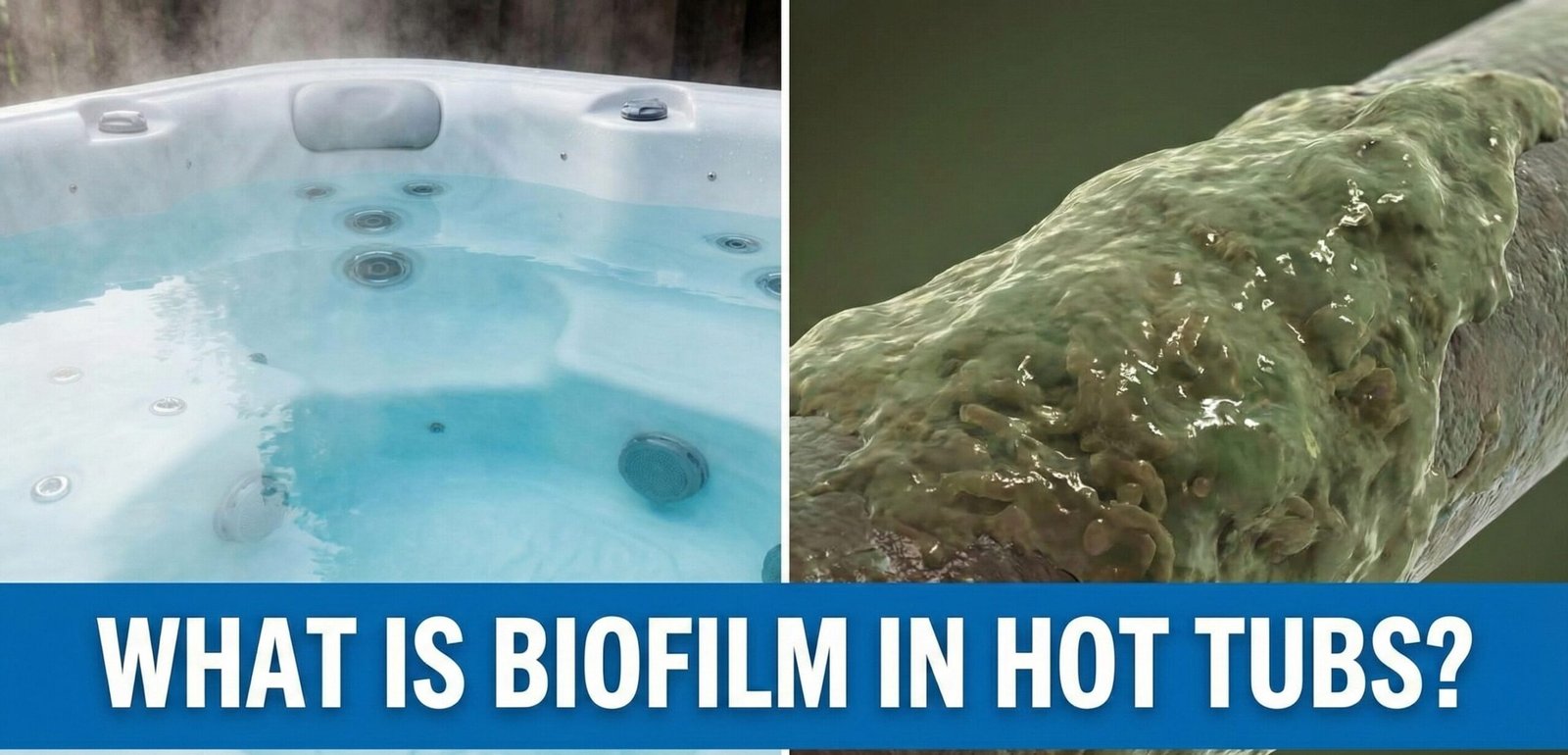
What is Biofilm in Hot Tubs? The Invisible Menace Ruining Your Water
You balance your pH perfectly. You add sanitizer regularly. You clean your filters. Yet, your hot tub water remains mysteriously cloudy, or worse, it develops a funky, musty odor that no amount of shock seems to fix.
The culprit is likely not in the water you can see, but hiding in the pipes you can’t. It is called Biofilm, and it is the number one enemy of clean hot tub water.
1. What Exactly IS Biofilm?
Biofilm is not just “dirt.” It is a complex, organized colony of bacteria. To truly defeat this enemy, you must understand its architecture. It isn’t a simple layer of slime; it is a sophisticated microbial city with a communication network and a defense system that has evolved over millions of years. The free-floating bacteria you might measure in a water test are merely scouts looking for a place to settle. Once they find a surface, they undergo a fundamental transformation, switching on a different set of genes that make them incredibly resilient.
Free-floating bacteria are easy for chlorine to kill. However, when bacteria adhere to a surface (like the inside of your Coleman SaluSpa plumbing), they excrete a sticky, slimy substance made of DNA, proteins, and polysaccharides. This substance is scientifically referred to as the Extracellular Polymeric Substance, or EPS matrix. The EPS matrix is the physical barrier that makes biofilm so stubborn. It is a tangled web of polymers that creates a maze for sanitizer molecules. By the time the chlorine navigates through the outer layers, it has lost its potency, chemically reacting with the matrix material itself rather than penetrating to the living cells within. This is why maintaining a standard 3-5 ppm chlorine level is often futile against a mature biofilm colony.
The “Slime City” Defense
Think of biofilm as a bunker. The bacteria build this slime layer to protect themselves from your sanitizer. Chlorine hits the outer layer of the slime and gets used up before it can penetrate deep enough to kill the bacteria inside. According to Spa Marvel, this protective layer can make bacteria up to 1,000 times more resistant to chlorine than free-floating bacteria. In some studies, the resistance factor has been shown to be even higher for specific pathogens like Pseudomonas. This resistance isn’t a mutation for antibiotic resistance; it is a physical, structural defense that is almost impossible to overcome with sanitizer alone. You are not just killing germs; you are trying to dissolve a polymer fortress.
The Life Cycle of a Bacterial Colony
Understanding how biofilm forms is critical to stopping it. The process is a five-stage cycle that can begin within hours of refilling your tub. Stage one is Conditioning: organic molecules, such as body oils and dead skin cells, coat the clean pipe surface, creating a nutrient-rich layer. Stage two is Initial Adhesion: free-floating planktonic bacteria attach to this conditioned surface. At this point, they are still vulnerable. Stage three is Irreversible Attachment and EPS Production: the attached cells begin producing the slime matrix, cementing themselves permanently. This is the point of no return. Stage four is Maturation: the colony develops a complex, three-dimensional structure with water channels that deliver nutrients and remove waste, much like a circulatory system. Finally, stage five is Dispersal: pieces of the mature biofilm break off to colonize other areas of the plumbing. These floating fragments are the “black flakes” hot tub owners dread. This entire cycle can complete in a single week if conditions are right, turning pristine pipes into a contaminated ecosystem before your first scheduled water change.
Quorum Sensing: How Bacteria Communicate
One of the most fascinating aspects of biofilm formation is a process called quorum sensing. Bacteria are not solitary organisms acting independently; they communicate with each other using chemical signal molecules called autoinducers. As the bacterial population density increases within a confined space like a hot tub pipe, the concentration of these signaling molecules rises. When a critical threshold is reached—essentially when enough bacteria are present to mount a collective defense—the entire population simultaneously activates the genes responsible for EPS production and biofilm maturation. This is a coordinated, community-wide decision to build the slime city. Understanding quorum sensing is crucial because it reveals that disrupting the early adhesion phase, before the quorum is reached, is infinitely easier than attacking a mature biofilm. This is why weekly enzyme treatments and consistent sanitizer levels are so critical; they prevent the bacterial population from ever reaching the density needed to trigger the biofilm-building cascade.
Biofilm vs. Mold vs. Algae: Knowing Your Enemy
A common point of confusion is mistaking biofilm for mold or algae. While all three can contribute to water quality issues, they are fundamentally different organisms requiring different approaches. Mold is a fungus that thrives on organic surfaces like a saturated headrest or the underside of a cover, often appearing as fuzzy, greenish-black or white spots. It doesn’t typically grow underwater in the plumbing. Algae is a photosynthetic plant-like organism that requires sunlight to grow; it is extremely rare in covered hot tub plumbing but can bloom in exposed water, turning it green and slimy. Biofilm, as we’ve detailed, is a bacterial colony encased in a self-produced polymer matrix. It grows underwater, in complete darkness, inside your pipes. The black flakes from biofilm are often mistaken for mold, but mold on a surface can be scrubbed off, while biofilm is a systemic plumbing infection. If you have black, tissue-like flakes coming from the jets and the water itself has a stale, musty odor without any visible surface growth, you are dealing with biofilm, not mold or algae. Treating biofilm with an algaecide will be completely ineffective.
The Biofilm-Water Chemistry Connection
Biofilm doesn’t just contaminate your water; it actively changes your water chemistry in ways that make balancing nearly impossible. A mature biofilm colony continuously releases acidic metabolic byproducts, which cause a slow but persistent downward drift in pH and total alkalinity. This is why some hot tub owners find themselves constantly adding pH increaser, fighting a battle they don’t realize is biological rather than chemical. The biofilm also consumes calcium and magnesium ions from the water, incorporating them into the EPS matrix structure. This can lead to mysterious calcium hardness drops and, paradoxically, can contribute to scale formation as the altered water chemistry causes minerals to precipitate out in other areas of the plumbing. Additionally, the biofilm’s consumption of sanitizer creates a high chlorine demand that looks, on a test strip, exactly like a combined chlorine problem or an organic load issue. Many tub owners mistakenly add more stabilizer or shock, which only masks the symptoms while the root cause thrives untouched. If your water chemistry seems to have a mind of its own, defying your best efforts to stabilize it, biofilm is the prime suspect.
2. How Do I Know If I Have It?
Since biofilm lives inside the plumbing lines of your tub, you usually won’t see it until it’s too late. However, there are tell-tale signs. The diagnostic process often involves eliminating other obvious causes of water trouble, such as high pH or low sanitizer, and looking for a pattern of persistent, unexplained issues. A hot tub with a biofilm infection behaves like it has an appetite for chemicals. The water can be perfectly balanced on paper, yet it refuses to stay clear, a phenomenon that confounds many new owners. This is because the biofilm is a living, respiring entity that continuously consumes the oxidation potential you are trying to maintain.
- Rapid Chlorine Loss: You add chlorine at 8:00 PM, and by 8:00 AM, the reading is zero. The biofilm is “eating” your sanitizer. This is often the first and most quantifiable sign. You might find yourself adding twice or three times the normal amount of shock just to keep a residual.
- The “Musty” Smell: Even if the water looks clear, it smells like a wet towel or an old basement. This odor comes from volatile organic compounds produced as metabolic byproducts by the anaerobic bacteria living deep within the biofilm, protected from oxygenated water.
- Black Flakes: If you turn on your jets and see bits of black or brown “tissue paper” floating out, that is pieces of the biofilm breaking off. These flakes will disintegrate if you try to grab them, confirming they are not dirt or sand but a biological matrix.
- Skin Irritation: This is the most dangerous sign. Biofilm often harbors Pseudomonas aeruginosa, the bacteria responsible for “Hot Tub Rash.” This folliculitis presents as itchy, red bumps that appear within hours or days of soaking, often concentrated in areas covered by a swimsuit where the contaminated water is held against the skin.
- Persistent Cloudiness: A fine, white haze that doesn’t filter out after running the pump continuously for 24 hours. This is often a bloom of bacteria released from the biofilm, suspended in the water, too small for the filter to capture effectively, and constantly replenished by the source colony in the pipes.
- Greasy Waterline Ring: A persistent, oily scum line that reforms within hours of wiping it away is a classic biofilm indicator. This is not just body oil; it’s the lipoprotein-rich outer layer of the biofilm matrix sloughing off and accumulating at the air-water interface.
- Unexplained pH Fluctuations: If your pH drops rapidly and consistently, even after adding pH increaser, the acidic waste products from a thriving biofilm colony could be the underlying cause.
The Inflatable Hot Tub Factor: Why Biofilm Hits Harder
Owners of inflatable hot tubs, like those from Intex, Coleman, or Bestway, are often more susceptible to aggressive biofilm outbreaks than owners of traditional hard-shell acrylic spas. The reason lies in the material and plumbing design. Inflatable tubs use flexible PVC vinyl for their walls and plumbing. This surface, while smooth to the eye, is microscopically porous, providing far more “anchor points” for bacteria to attach and begin forming the EPS matrix. Furthermore, the plumbing in inflatable tubs is typically narrower in diameter and has more tight bends and pinch points, especially where the inflation bladder and water lines connect. These low-flow, dead-leg areas are perfect incubators for biofilm. The integrated heating and pump units on inflatable tubs also run at lower flow rates (gpm) than a dedicated hard-shell spa pump, meaning the sheer mechanical scouring action of water flow is reduced, allowing colonies to mature undisturbed. If you own an inflatable tub, you are fighting an uphill battle against a surface that is inherently more biofilm-friendly, necessitating a more aggressive purge schedule, sometimes every 4-6 weeks instead of every 3-4 months.
Diagnostic Tools: The “Toilet Paper” Test
Before you buy a purge product, you can perform a simple verification. Remove your filter and place a clean, white, unscented piece of toilet paper across the skimmer basket opening or tie it over a running jet with the jets on high for 15 minutes. If the paper collects grey, brown, or black specks that look like wet tissue, you are looking at a biofilm positive test. This is an undeniable sign that a purge is overdue.
Advanced Testing: ATP Meters and Professional Analysis
For those who want a definitive, scientific answer without waiting for visible symptoms, there are more advanced diagnostic tools. ATP (Adenosine Triphosphate) meters are handheld devices used commercially to measure biological contamination on surfaces. An ATP meter detects the energy molecule present in all living cells. By swabbing the inside of a jet fitting or filter housing and inserting the swab into the meter, you get a numeric Relative Light Unit (RLU) reading in seconds. A reading above 300 RLU in a hot tub setting indicates significant biological contamination requiring immediate remediation. While these meters cost between $500 and $2,000, some pool and spa stores offer ATP testing as a service. Additionally, you can send a water sample to a laboratory for heterotrophic plate count (HPC) testing, which quantifies the total bacterial load. An HPC count exceeding 500 CFU/mL (colony-forming units per milliliter) in a sanitized hot tub is a strong indicator of a biofilm reservoir continuously seeding the water with bacteria. These advanced methods remove the guesswork and provide hard data to guide your treatment decisions.
The “Biofilm Diary”: Tracking the Invisible Enemy
Because biofilm develops gradually, its symptoms can be subtle enough to miss until a crisis point. A practical diagnostic tool is a biofilm diary. For two weeks, record the following daily: Free Chlorine (FC) level at the same time each morning before adding any chemicals, Combined Chlorine (CC) if your test kit allows, water clarity on a 1-5 scale, any odor on a 1-5 scale, and the exact amount of chlorine added to reach your target FC. After two weeks, look for trends. A healthy tub will show stable FC loss of 1-2 ppm per day with low combined chlorine. A biofilm-infected tub will show accelerating FC loss, rising CC levels (indicating the sanitizer is reacting with the biofilm), and a gradual decline in clarity and odor scores. This quantitative record is far more reliable than memory and can help you decide when a purge is truly necessary, rather than purging on a calendar schedule alone.
3. The Solution: The “Line Flush” Protocol
If you have biofilm, draining your tub will not fix it. The bacteria are stuck to the walls of the pipes. When you refill with fresh water, they will simply contaminate the new water immediately. Draining without purging is like taking a shower while wearing a dirty shirt. The water is clean, but the problem is attached to you. A line flush is a targeted chemical scrub that breaks down the EPS matrix, the glue holding the city together. Without this step, any sanitizer you add to the fresh water is starting from a deficit, immediately fighting a mature colony. The goal of a line flush is not just to disinfect but to physically remove the biomass so there is nothing left for bacteria to recolonize.
You need a “Line Flush” cleaner designed to scrub the inside of the pipes. There are two main categories of effective purge products: surfactant-based degreasers and enzyme-based digesters. Surfactant products, like the one featured below, work by reducing the surface tension of the water and emulsifying the lipids and proteins in the EPS matrix, causing the biofilm mass to detach in clumps and sheets. Enzyme-based purges use specific types of proteins that catalyze the breakdown of the polysaccharide chains and proteins into smaller, water-soluble fragments, effectively digesting the matrix over a longer period, often 24 hours. A combination approach, using a surfactant cleaner for a heavy initial purge followed by a maintenance enzyme regimen, is the most comprehensive strategy.

Ahh-Some Hot Tub/Jetted Bath Plumbing & Jet Cleaner
This is widely considered the “Nuclear Option” for biofilm. It is not a sanitizer; it is a scrubbing agent. You add it to the old water before you drain. It dislodges the slime, often resulting in a shocking amount of brown foam rising to the surface. The foam is a positive confirmation: if you see it, you’ve just removed a significant biological hazard that was living in your plumbing.
Check Price on AmazonStep-by-Step Removal Guide
- Remove Filters: Take out your filter cartridges so they don’t get clogged with the gunk you are about to release. However, do not throw them away. Place them in the tub during the purge cycle, or in a bucket of the purge solution, to deep clean them simultaneously. The biofilm that’s in your plumbing is also deep within the filter fibers, and a standard hose rinse won’t remove it.
- Add Purge Product: With the old water still in the tub, add the recommended amount of Ahh-Some or line flush cleaner. Measure carefully based on the manufacturer’s dosage for your specific gallonage. For inflatable tubs, which hold less water, overdosing can create excessive foam that is difficult to manage.
- Run Jets: Turn the jets on high for 20-30 minutes. Be prepared: sticky, brown foam will likely form. This is the biofilm leaving the pipes. The color can range from yellowish-tan for body oil sludge to dark brown or greenish-black for established bacterial colonies. If the foam is extremely thick and threatens to overflow, you can mist the surface with a spray bottle of cold water to break the surface tension.
- Wipe the Scum Line: As the jets run, a thick, greasy ring of released contaminants will form on the waterline. Use a clean, non-abrasive cloth or sponge to continuously wipe this away. If it dries, it turns into a cement-like residue. This step is critical for preventing the released biofilm from simply re-adhering to the tub shell when the water is drained.
- Drain & Wipe: Drain the tub. As the water level drops, wipe the sticky residue off the acrylic/vinyl immediately. If it dries, it bonds like superglue. Pay special attention to the areas behind pillows and around the filter housing.
- Rinse & Refill: Rinse the tub thoroughly and refill with fresh water. A quick, partial fill and drain rinse can help remove any remaining purge solution before the final fill.
The “Double Purge” for Neglected Tubs
If your tub has a severe, long-standing biofilm infection—characterized by a strong odor that persists after a standard purge, or a massive release of black flakes—a single purge is often insufficient. The first purge removes the outer, aerobic layers of the biofilm city. However, it may not fully penetrate the deeper, anaerobic layers of a very thick, established matrix. A double purge protocol involves performing the complete Ahh-Some process, refilling the tub with fresh water, and then immediately performing a second purge with a half-dose of the same product. This second application attacks the newly exposed inner layers of the biofilm before they have a chance to regenerate their protective EPS coating. You should also replace or chemically decontaminate your filters after a double purge, as they will be saturated with organic waste that is nearly impossible to rinse away completely.
Natural and Alternative Purge Methods: Vinegar, Hydrogen Peroxide, and Bleach
For those seeking a more natural or readily available approach, there are alternatives to commercial purge products, though each comes with important caveats. White distilled vinegar is a mild acid (acetic acid) that can help dissolve calcium-based scale and has some antimicrobial properties. However, vinegar is ineffective at breaking down the polysaccharide bonds in the EPS matrix. It may clean mineral deposits but will not remove biofilm. Hydrogen peroxide (3% solution) is a stronger oxidizing agent that can penetrate biofilm to some degree and is often used in “biguanide” or peroxide-based sanitation systems. For a purge, you would need a significantly higher concentration (27% or more, sold as “shock” peroxide), and even then, it works best as a maintenance preventative rather than a one-time cure for established biofilm. Unscented liquid chlorine bleach (sodium hypochlorite) can be used in a high-dose shock (superchlorination) to attempt to burn through biofilm. A dose of 50-100 ppm free chlorine, held for several hours with the jets running, can be effective against thin biofilms. The danger is that this high chlorine level can damage seals, gaskets, and covers, and it still may not reach the deepest layers of a mature biofilm. The commercial surfactant-based purges like Ahh-Some remain the gold standard because they are specifically formulated to detach and emulsify the entire matrix without damaging equipment.
The Bleach Purge: A Calculated Risk
If you choose to attempt a bleach purge, the protocol is as follows: Remove your cover entirely to prevent off-gassing damage. Add 1 gallon of 6% unscented household bleach per 400 gallons of water (this achieves roughly 100-150 ppm FC). Run jets for a full 60-minute cycle, then let the water sit for another 2 hours with periodic jet runs. The water must then be completely drained, and the tub refilled and drained a second time to remove all residual chlorine before refilling for use. This method is harsh on equipment and is not recommended as a routine practice, but it can be an emergency measure when commercial products are unavailable. Always neutralize the drained water with a chlorine neutralizer before releasing it onto landscaping.
Commercial vs. DIY Purge Products: A Cost-Benefit Analysis
| Purge Method | Cost per Purge (400 gal tub) | Effectiveness Against Mature Biofilm | Risk to Equipment | Time Required |
|---|---|---|---|---|
| Ahh-Some (Surfactant) | $8-12 | Excellent – removes entire matrix | Minimal | 30 min + drain time |
| Enzyme Purge (e.g., Spa Marvel) | $10-15 | Good – requires 24-hour soak | None | 24 hours + drain time |
| Bleach Superchlorination | $3-5 | Moderate – may not penetrate deep layers | High – gasket and cover damage possible | 3-4 hours + double drain |
| White Vinegar Soak | $5-8 | Poor – only removes mineral scale | Low | Overnight + drain |
| Hydrogen Peroxide (27%) | $15-20 | Fair – better as prevention than cure | Low-Moderate | 4-6 hours + drain |
4. The Hidden Danger: Plumbing Oxidation and Pipe Degradation
Beyond the immediate threat to water quality and bather health, a chronic biofilm infection has a destructive long-term effect on the hot tub itself: Microbiologically Influenced Corrosion (MIC). The bacteria deep within the biofilm create a unique chemical microenvironment on the pipe wall. Their metabolic processes can produce acids, such as sulfuric acid from sulfate-reducing bacteria, which lowers the pH at the pipe surface to extremely corrosive levels. Simultaneously, the differential oxygen concentration—high in the flowing water, near zero at the pipe wall under the biofilm—creates a corrosion cell. The metal components in your heater element, pump seal, and any metal fittings become anodic, actively dissolving in a process that can accelerate pitting and rust by a factor of 10 or more compared to normal water exposure. For inflatable tubs, while there is no metal plumbing, the acidic byproducts can still degrade the plasticizers in the PVC, leading to premature embrittlement and cracking of the liner and hoses. Every biofilm outbreak you ignore is literally shaving years off the lifespan of your investment.
The Heater Element: Biofilm’s Primary Victim
The most expensive component that biofilm silently destroys is the heating element. In most portable spas and inflatable tubs, the heater is a flow-through design: water passes directly over a metallic heating coil or element. This surface, operating at an elevated temperature (often 104°F to 140°F at the element surface), is a thermal paradise for biofilm-forming bacteria. The combination of warmth, constant nutrient flow, and a rough metallic surface creates the perfect adhesion conditions. Once established, the biofilm acts as an insulating layer, forcing the heater to work harder and cycle on more frequently to maintain water temperature. This increases your electricity bill. Worse, the acids produced by the biofilm directly corrode the metal element, leading to pinhole leaks, ground fault circuit interrupter (GFCI) trips, and ultimately, a complete heater failure. A replacement heater for a portable spa can cost $150-$400. The $10 bottle of Ahh-Some used every three months is an insurance policy against this predictable, expensive failure mode.
The Pump Seal and Impeller Connection
The pump’s mechanical seal is a precision component designed to prevent water from leaking along the motor shaft. This seal consists of two ultra-flat surfaces—one ceramic, one carbon—pressed together by a spring. When biofilm fragments, black flakes, and gritty scale particles (often bound together by the EPS matrix) circulate through the pump, they become embedded between these precision surfaces. The result is accelerated wear, micro-scoring, and eventual seal failure, characterized by a slow drip from the pump housing. Once water bypasses the seal, it travels down the shaft and destroys the motor bearings. A pump seal replacement requires disassembling the entire wet end of the pump, a job that costs $200-$400 at a spa repair shop. The debris field from a neglected biofilm colony is directly responsible for this type of mechanical damage.
5. The Complete Chemical Arsenal: Beyond Chlorine and Shock
Maintaining a biofilm-free hot tub requires a layered chemical strategy. Relying on chlorine alone is like defending a castle with only archers and no walls. You need multiple, complementary systems that address biofilm at different stages of its lifecycle. Here is the complete chemical toolkit, organized by function rather than brand, so you understand what each component actually does in the fight against biofilm.
Primary Sanitizer: The Frontline Soldier
Your primary sanitizer (chlorine, bromine, or biguanide) is responsible for killing planktonic bacteria—the free-floating cells that have not yet attached to a surface. This is your first line of defense, preventing the initial adhesion stage of biofilm formation. The key metric is ORP (Oxidation-Reduction Potential), measured in millivolts (mV). An ORP of 650-750 mV is the target range where bacteria are killed on contact within seconds. Simply hitting a 3-5 ppm free chlorine reading does not guarantee adequate ORP if your cyanuric acid (CYA) levels are high. As CYA rises above 50 ppm, the ORP drops even when FC is within range, because the CYA molecule holds the chlorine in a less active chemical state. This is the fundamental flaw in relying solely on stabilized chlorine products for biofilm prevention.
Oxidizing Shock: The Weekly Assault
Shock is not a sanitizer; it is an oxidizer that burns up organic waste, combined chlorine (chloramines), and the outer layers of nascent biofilm. Non-chlorine shock (potassium monopersulfate, or MPS) is preferred for weekly maintenance because it does not add CYA and does not produce the harsh chloramine odors associated with chlorine shock. MPS works by breaking carbon-carbon bonds in organic molecules, literally tearing apart the proteins, oils, and polysaccharides that form the conditioning layer for biofilm. A weekly shock dose of 1-2 ounces per 400 gallons, with the cover off for 30 minutes afterward to allow off-gassing, is a non-negotiable biofilm prevention step.
Enzyme Clarifiers: The Silent Cleanup Crew
Enzymes are biological catalysts that accelerate the breakdown of specific organic compounds. Unlike shock, which burns everything indiscriminately, enzymes are substrate-specific: protease enzymes target proteins, lipase enzymes target fats and oils, and amylase enzymes target starches and polysaccharides. This targeted approach means they can work continuously in the background at normal sanitizer levels, digesting the biofilm food supply piece by piece. The most effective enzyme products for hot tubs combine multiple enzyme types and include bacterial spores that remain dormant until they encounter organic waste, at which point they activate and begin producing more enzymes in situ. Adding a weekly enzyme dose is equivalent to deploying millions of microscopic workers that scrub the pipes 24/7, preventing the conditioning layer from ever forming.
Spa Marvel Water Treatment & Conditioner
An enzyme-based, natural approach to ongoing biofilm prevention. Unlike harsh purge products used only at draining, Spa Marvel is added weekly to continuously digest the organic waste and oils that feed biofilm. It works in tandem with your sanitizer, reducing the overall chemical demand and making water feel noticeably softer. Many users report being able to reduce chlorine usage by 30-50% when using this product consistently.
Check Price on AmazonClarifiers and Flocculants: Mechanical Water Polishing
While not directly attacking biofilm, clarifiers and flocculants play a supporting role by removing the suspended particles that bacteria feed on and that shield planktonic bacteria from sanitizer contact. Clarifiers are positively charged polymers that attract negatively charged organic particles, causing them to clump together into larger aggregates that are then captured by the filter. Flocculants are stronger agents that cause particles to sink to the bottom of the tub for vacuum removal. In the context of biofilm prevention, a weekly clarifier dose reduces the organic load in the water, meaning less food is available for conditioning the pipe surfaces. However, clarifiers should be used sparingly—overuse can create a gummy residue on filter cartridges that actually reduces filtration efficiency, ironically contributing to the conditions biofilm needs to thrive.
6. Filtration: The Mechanical Kidney of Your Hot Tub
All the chemicals in the world cannot compensate for inadequate filtration. Your filter cartridge is the physical barrier that removes particles, dead bacteria, and organic debris from the water column. A neglected filter becomes a biofilm reservoir itself, continuously seeding the water with bacteria even as you add sanitizer. The filter is not just a passive screen; it is an active biological interface that must be maintained as rigorously as the water chemistry.
The Filter Biofilm Cycle: How a Dirty Filter Re-Contaminates Your Tub
When a filter cartridge becomes loaded with organic debris—oils, skin cells, hair, and lotions—it creates exactly the conditions biofilm needs: a porous surface with trapped nutrients in a high-oxygen, flowing water environment. Within days of being placed in service, a thin biofilm layer begins to form on the filter fabric. This is normal and manageable with routine cleaning. The problem arises when the filter is only surface-rinsed with a garden hose. The high-pressure spray removes the outer layer of debris but does not penetrate into the deep folds of the pleated fabric where the biofilm matrix has anchored itself. When this superficially cleaned filter is reinstalled, it immediately begins releasing bacteria and biofilm fragments into the fresh water. This is the explanation for the frustrating scenario where you drain, refill, and balance your tub, only to have the water go cloudy within 48 hours. The clean water is being seeded by the dirty filter. This is why filters must be chemically soaked, not just rinsed, and why having two filters in rotation is the gold standard of hot tub maintenance.
Filter Soaking Protocol: The 4-Hour Chemical Bath
A proper filter cleaning involves more than a hose. Here is the complete protocol:
- Initial Rinse: Use a high-pressure garden hose nozzle to remove loose debris, spraying between each pleat from top to bottom. This removes 60-70% of the visible debris.
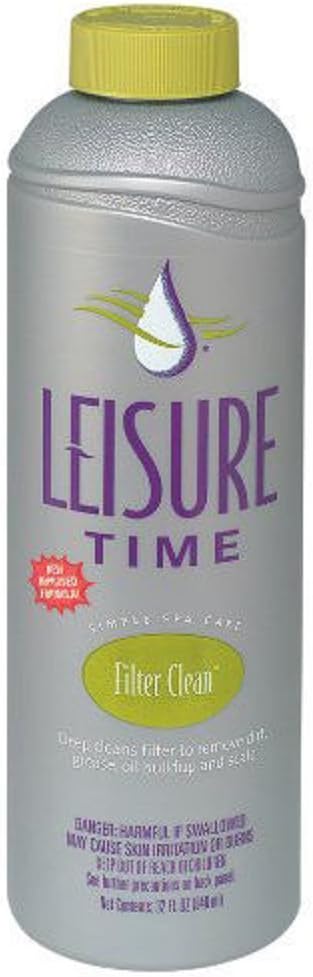
- Chemical Soak: Submerge the filter completely in a dedicated filter cleaner solution or a mixture of one part TSP (trisodium phosphate) to eight parts water in a 5-gallon bucket. Allow the filter to soak for a minimum of 4 hours, preferably overnight. The chemical solution penetrates the fabric fibers and breaks down the oils and biofilm matrix that water alone cannot touch.
- Second Rinse: After soaking, spray the filter again thoroughly to remove the loosened contaminants. You will often see cloudy, greyish water rinsing out—this is the dissolved biofilm being expelled from the filter media.
- Acid Wash (If Needed): If the filter has white, crusty calcium deposits, soak it in a 1:10 muriatic acid and water solution for 30 minutes to dissolve mineral scale. Always add acid to water, never water to acid.
- Final Rinse and Drying: Rinse until the water runs completely clear. Allow the filter to dry completely before reinstalling or storing. A dry filter is a sterile filter; residual moisture promotes mold and bacterial regrowth during storage.
Filter Rotation: The Professional’s Secret
The most effective strategy is to own two filter cartridges. While one is in the tub working, the other is clean, dry, and ready. When your weekly maintenance day arrives, you simply swap the dirty filter for the clean one. This takes 30 seconds. You then have a full week to properly clean and dry the dirty filter at your convenience, rather than rushing through a superficial rinse because you need the filter back in the tub immediately. This rotation system ensures that you are never forced to reinstall a partially cleaned filter, and it extends the lifespan of both cartridges because they are always properly cleaned before reuse. The initial investment of a second filter ($20-$60 for most inflatable models) pays for itself in reduced chemical consumption and cleaner water within the first month.
7. Prevention: Stop It Before It Starts
Once you have purged your tub, how do you stop biofilm from returning? The key is a holistic strategy of starvation, oxidation, and physical removal. You must create an environment that is hostile to bacterial adhesion from the very moment you refill. A clean, biofilm-free tub is a blank slate, and your maintenance routine is the shield that keeps it that way.
Biofilm feeds on organic waste—specifically body oils, lotions, and cosmetics. As noted by Hot Tub Store Canada, starving the bacteria is the best prevention. Every person who enters the tub introduces approximately 100 to 250 milliliters of sweat and significant amounts of skin oils, regardless of how clean they feel. This organic load is the food supply that initiates the conditioning phase of the biofilm lifecycle. Reducing the introduction of these nutrients through pre-soak showering and using a scum absorber is your first and most effective line of defense.
The Pre-Soak Shower: Non-Negotiable Biofilm Prevention
The single most impactful habit you can adopt is a thorough, soap-free rinse shower immediately before entering the hot tub. The goal is not to get “clean” in the traditional sense; it is to remove the layer of sweat, dead skin cells, and personal care products that have accumulated since your last shower. A study by the Centers for Disease Control and Prevention (CDC) on recreational water illness found that each bather introduces approximately 0.14 grams of fecal matter, billions of skin microbes, and significant amounts of nitrogenous waste (sweat and urine) into the water. This is the raw material for biofilm formation. A pre-soak rinse with plain water, without soap (soap residues are themselves a nutrient source and can cause foaming), removes the majority of this organic load before it ever enters the tub. If every person who used a hot tub adopted this single practice, the incidence of biofilm-related water problems would drop by an estimated 60-70%.
Use Scum Absorbers
Scum absorbers float on the surface and soak up the “food” that bacteria eat. They are made of a hydrophobic polymer that attracts and absorbs oils, lotions, and other non-water-soluble organics, effectively removing the primary food source for biofilm-forming bacteria from the water column before it can settle and coat the pipe surfaces.

Scum Ray – Oil Absorbing Sponge (2 Pack)
By absorbing lotions and oils before they enter the filtration system, these sponges starve the biofilm. Replace them once a month or when they get saturated. A saturated sponge will feel heavy, waterlogged, and slimy, and will no longer attract new oils, so timely replacement is a key part of the prevention protocol.
Check Price on AmazonCompare: Best Scum Absorbers of 2025
Enzyme Treatments: The Biological Solution
Enzymes are natural proteins that break down non-living organic waste. Adding a weekly enzyme product digests the oils in the water, leaving nothing for the biofilm to eat. A quality enzyme treatment is like having millions of microscopic PAC-MEN constantly consuming the dead skin cells, soap residues, and cosmetic oils that slip past your scum absorber. They don’t kill bacteria; they eliminate the food that bacteria need to initiate the conditioning layer on your pipes. This is an essential, non-toxic complement to your chemical sanitizer routine. For best results, add an enzyme treatment 24 hours after your weekly shock treatment to allow chlorine levels to drop to normal before introducing the live enzyme culture into the water.
The Role of Filtration and Circulation
Prevention is not just chemical; it’s physical. Even the best enzymes and scum absorbers cannot compensate for poor filtration. Your filter is the mechanical kidney of your hot tub, and it must run long enough to physically capture suspended particles and planktonic bacteria. A minimum of two 4-hour filtration cycles per day is recommended, and for a portable inflatable spa, you may need to run the pump continuously for 8 hours after a purge or heavy use. Deep-cleaning your filter cartridge with a specialized filter soak solution every month dissolves the oily biofilm matrix that coats the fabric fibers—a simple hose spray is not enough. Rotating between two filters, soaking one while the other is in use, ensures you are never reintroducing a bacteria-laden filter into a freshly purged tub.
Stabilized vs. Unstabilized Chlorine: A Strategic Choice
A critical but often overlooked factor in biofilm prevention is the type of chlorine you use. Dichlor is a popular, granular, stabilized chlorine that contains cyanuric acid (CYA). While CYA is beneficial in outdoor pools to protect chlorine from UV degradation, it is a double-edged sword in covered hot tubs. As CYA builds up over weeks of dichlor use, it increasingly reduces the oxidation potential (ORP) of your chlorine. Water with a high CYA level needs a significantly higher Free Chlorine level to be effective, and biofilms thrive in this chemically blunted environment. A strategic prevention plan involves switching to an unstabilized chlorine source, like liquid chlorine (sodium hypochlorite) or plain, unscented laundry bleach, once your CYA reaches 30-50 ppm. This method, known as the “dichlor then bleach” method, maintains the sanitizer’s sharp killing edge without the buildup of the protective CYA molecule, making it far harder for biofilm to establish a foothold.
Ozone and UV-C: The Technological Shield
Modern hot tubs increasingly feature built-in or add-on sanitation technologies that provide continuous, automatic protection against biofilm-forming bacteria. Ozone generators (ozonators) produce ozone gas (O₃), which is a far more powerful oxidizer than chlorine. The ozone is injected into the water as it circulates, where it instantly oxidizes bacteria, viruses, and organic waste on contact. Importantly, ozone has a very short half-life in water (about 15-20 minutes), so it acts at the point of injection—which is typically in the plumbing lines, exactly where biofilm tries to establish. An ozonator running during filtration cycles provides continuous internal pipe sterilization, reducing the sanitizer demand by 50-70%. The residual chlorine in the bulk water then acts as a secondary barrier for anything that survives the ozone treatment. The combination of ozone in the pipes and chlorine in the water is arguably the most robust biofilm prevention system available to residential hot tub owners.
UV-C sanitizers use ultraviolet light at a wavelength of 254 nanometers to destroy the DNA of microorganisms as water passes through a UV chamber. Like ozone, UV-C treatment occurs at a single point in the circulation loop and leaves no residual. UV-C is extremely effective against free-floating bacteria and viruses but does not address biofilm that has already attached to pipe walls. The UV light can only kill what passes through the chamber. For this reason, UV-C is best viewed as a complementary technology that reduces the planktonic bacterial load, giving your sanitizer an easier job. It does not replace the need for periodic purging to remove established biofilm from pipe surfaces.
Saltwater Systems and Biofilm: A Special Case
Saltwater chlorine generators (SWGs) produce chlorine from dissolved salt through electrolysis. This provides a steady, low-level supply of fresh, unstabilized chlorine directly into the water. In theory, this continuous chlorination should suppress biofilm. In practice, the low chlorine output of most hot tub SWGs (designed to maintain 1-3 ppm) is often insufficient to overcome a biofilm infection once established. The chlorine is produced in the SWG cell, which means the plumbing lines between the cell and the tub are protected, but dead-leg areas and low-flow zones can still harbor biofilm. Owners of saltwater tubs should follow the same purge and maintenance schedule as chlorine users. The saltwater system is a convenience feature, not a biofilm cure-all.
The Biofilm Prevention Schedule: Your 4-Week Rolling Plan
A consistent schedule removes the guesswork. Implementing a rolling 4-week plan ensures that biofilm never reaches the irreversible attachment and maturation stages. The key is to interlock three separate actions: heavy oxidation, deep physical cleaning, and continuous biological digestion. This triple-barrier approach leaves no single point of failure. Here is a sustainable protocol for any hot tub owner:
- Weekly (Every 7 Days): Test water, balance pH and Alkalinity. Shock with an unstabilized oxidizer (non-chlorine shock or bleach). Add your maintenance dose of an enzyme clarifier. Rinse your filter with a strong jet of water.
- Bi-Weekly (Every 14 Days): Chemically clean your filter in a filter soak solution for at least 4 hours, or overnight. Rotate in a clean, dry replacement filter. Check and replace your scum absorber if it is saturated and waterlogged.
- Monthly (Every 30 Days): Perform a full line flush and plumbing purge using a biofilm removal product like Ahh-Some, even if the water looks clear. This is a preventative maintenance purge, not an emergency response. Drain and refill the tub. This is the only way to guarantee any biofilm that has started the initial adhesion phase is scrubbed away before it becomes a multi-layered, chlorine-resistant colony.
Following this schedule, the monthly purge becomes a quick, predictable task, not a shocking horror show. You may not see the dramatic brown foam of an infected tub, but you will be proactively removing the microscopic conditioning film that is the precursor to a full-blown infestation. Prevention is always cheaper and easier than cure.
Seasonal Biofilm Considerations: Winter and Summer Strategies
Biofilm risk is not constant throughout the year. Seasonal changes in usage patterns, ambient temperature, and tub operation create different risk profiles that require adjusted prevention strategies.
Winter: In cold climates, hot tubs see their heaviest usage. The combination of more bathers, more frequent cover removal (introducing organic debris from the cover underside), and the natural tendency to linger longer in warm water on cold nights dramatically increases the organic load. Simultaneously, cold ambient temperatures can cause chemical reactions to slow, meaning your sanitizer is less effective just when you need it most. Winter strategy: Increase filtration cycles to 6-8 hours twice daily. Test water twice weekly instead of once. Consider maintaining a slightly higher sanitizer residual (4-5 ppm FC instead of 3 ppm) during periods of heavy use. Keep a closer eye on filter condition, as the increased debris load will clog filters faster.
Summer: In hot weather, or if you drain and store your tub for the summer, a different set of biofilm risks emerge. A drained tub is not a sterile tub. Residual moisture in the plumbing lines, especially in low points and the pump housing, provides an ideal environment for biofilm to develop in stagnant water. When you refill in the fall, you may be starting with a mature colony already present. Summer storage strategy: After draining for storage, use a wet-dry vacuum to blow out all plumbing lines, removing as much residual water as possible. Leave the drain valve open. If possible, store the tub with the plumbing access open to allow air circulation. Before the first refill of the season, perform a full purge cycle with fresh water and a line flush product—even if the tub appears clean. The residual biofilm from summer stagnation must be eliminated before the tub is put back into service.
8. The Microbiology of the Matrix: What Lives in Your Pipes?
The biofilm matrix is not a monoculture. It is a remarkably diverse ecosystem, a microscopic jungle with different species occupying distinct niches. The most talked-about resident is Pseudomonas aeruginosa, the bacterium responsible for hot tub folliculitis. This pathogen is an opportunistic survivor that can thrive in the low-nutrient, warm water environment of a spa. It is a master of forming biofilms and is naturally resistant to many antibiotics and sanitizers. But it does not live alone. Alongside it, you will find Legionella pneumophila, the causative agent of Legionnaires’ disease. This bacterium actually prefers to live inside amoebae that also inhabit the biofilm, using the protozoa as a protective host and a vehicle for transmission. The warm, aerosolizing environment of a hot tub is a perfect transmission vector for Legionella, as the bacteria are inhaled in water droplets. This is why the musty smell is not just an aesthetic issue but a potential warning sign of a complex, multi-species, hazardous biological community thriving right beneath your seat.
Beyond Pseudomonas: The Full Microbial Cast
A mature biofilm community is a complex ecosystem with multiple bacterial species occupying specialized roles. Staphylococcus aureus, including methicillin-resistant strains (MRSA), has been isolated from hot tub biofilms and can cause severe skin infections. Mycobacterium avium, a relative of the tuberculosis bacterium, thrives in the lipid-rich environment of a hot tub biofilm and can cause respiratory illness when aerosolized droplets are inhaled. Escherichia coli and Enterococcus faecalis, indicators of fecal contamination, are introduced by bathers and find refuge in the biofilm when sanitizer levels are inadequate. Candida albicans, a fungus, can also integrate into the biofilm community, contributing to the matrix structure and adding to the challenge of complete removal. This microbial diversity is why biofilm-related illness can present with a wide range of symptoms, from mild skin irritation to serious respiratory or systemic infections. The biofilm is not just a single enemy; it is an entire hostile ecosystem.
How Sanitizer Resistance Actually Works
We often say the biofilm makes bacteria “1000 times more resistant,” but what does that mean chemically? Chlorine kills by penetrating the cell wall and oxidizing the internal enzymes and genetic material of a bacterium. In a planktonic (free-floating) state, this happens in seconds. In a biofilm, the chlorine molecule must first diffuse through the EPS matrix. As it does so, it reacts with the proteins, polysaccharides, and lipids in the matrix itself, getting neutralized in a process called “reaction-diffusion.” The chlorine is actively being consumed by the matrix faster than it can diffuse inward. Furthermore, the bacteria deep inside the biofilm enter a slow-growth, almost dormant “persister” state. Because their metabolic activity is so low, they take up far fewer nutrients and, consequently, far less sanitizer. This combination of a physical, reactive barrier and a dormant cellular state is the secret to the biofilm’s incredible resilience, a defense so effective that simply doubling or tripling your shock dose will not solve the problem and will only damage your tub’s cover and equipment.
Hot Tub Folliculitis: Recognition, Treatment, and Prevention
Hot tub folliculitis (Pseudomonas folliculitis) is the most common illness associated with biofilm-contaminated hot tubs. The rash typically appears 8-48 hours after exposure and presents as an outbreak of itchy, red bumps or pustules, often concentrated in areas where swimsuit fabric held contaminated water against the skin—the buttocks, hips, and under the breasts. The rash can also appear on the torso and limbs. Key diagnostic features: the rash spares the face (which is usually above water), it is intensely pruritic (itchy), and it may be accompanied by mild fever, headache, or malaise. The condition is typically self-limiting, resolving on its own within 7-14 days without treatment, though it can be uncomfortable. For severe cases, a physician may prescribe topical silver sulfadiazine cream or oral antibiotics. Important: If you develop a rash after hot tub use, drain and purge the tub immediately. The rash is a symptom; the biofilm is the cause. Treating your skin without treating the tub guarantees reinfection on the next soak. Any hot tub that causes a rash outbreak should be considered biologically hazardous until it has been successfully purged, refilled, and shown to maintain a stable sanitizer residual.
9. The Economics of Biofilm: What Neglect Actually Costs
It is easy to view the purge products, enzymes, and filter maintenance as “extra” expenses—optional upgrades to basic hot tub care. This perspective is dangerously short-sighted. The true cost of biofilm neglect is not the $10-$20 monthly investment in prevention; it is the cascading costs of a system in failure. Let us quantify the economics to make the case clear.
| Expense Category | With Biofilm Prevention | Without Biofilm Prevention (Neglected Tub) |
|---|---|---|
| Monthly Chemical Cost | $20-30 (purge, enzymes, sanitizer) | $40-60 (excessive shock, pH adjusters, sanitizer overuse) |
| Annual Filter Replacement | $40-60 (2 filters, rotated and properly cleaned) | $120-180 (filters destroyed by biofilm, replaced 3-4 times/year) |
| Water Changes Per Year | 8-12 (monthly purges) | 15-20 (emergency drains when water becomes unmanageable) |
| Heater Element Replacement | Rare (every 3-5 years normal wear) | Common (1-2 years due to corrosion) |
| Pump Seal/Motor Repair | Rare | Common ($200-400 repair) |
| Medical Costs (Rash/Infection) | $0 | $50-200+ (doctor visit, medications) |
| Annual Total (Estimated) | $300-500 | $800-1,500+ |
The financial argument is unambiguous: spending $300-500 annually on proper biofilm prevention saves $500-1,000 in direct costs, not to mention the intangible costs of lost soaking time, frustration, and potential health impacts. Biofilm prevention is not an expense; it is an investment with a guaranteed return.
Conclusion
Biofilm is the invisible enemy of every hot tub owner. If you are constantly fighting cloudy water or high chemical demand, stop shocking and start purging. Understanding that biofilm is a structural colony, not just bacteria in the water, changes your entire approach to hot tub care. You shift from a mindset of disinfection to one of mechanical removal. Regular, scheduled purging, combined with a starvation strategy using enzymes and scum absorbers, is the only sustainable way to maintain a truly clean, safe, and inviting hot tub. The goal is not to kill the biofilm city; it’s to demolish it and prevent its rebuilding from the first brick.
The evidence is overwhelming, the science is clear, and the solutions are accessible. A biofilm-free hot tub is not a matter of luck or expensive equipment; it is a matter of discipline, education, and consistent action. Every time you skip a pre-soak shower, every month you delay a filter cleaning, every season you neglect a plumbing purge, you are laying the foundation for a biofilm colony that will ultimately cost you far more in time, money, and health than the prevention ever would. Take control of your tub’s biology, and you take control of your soaking experience. The water should be clear, odorless, and inviting—not a battlefield invisible to the naked eye.
Ready to upgrade your setup? Check out our guide to the Best Inflatable Hot Tubs of 2025 for models with advanced filtration systems.