Chlorine Granules vs Chlorine Tablets for Hot Tubs: Which One Should You Actually Use?
A no-nonsense breakdown of every meaningful difference — dissolve speed, pH impact, CYA buildup, dosing precision, and the real cost over a full season.
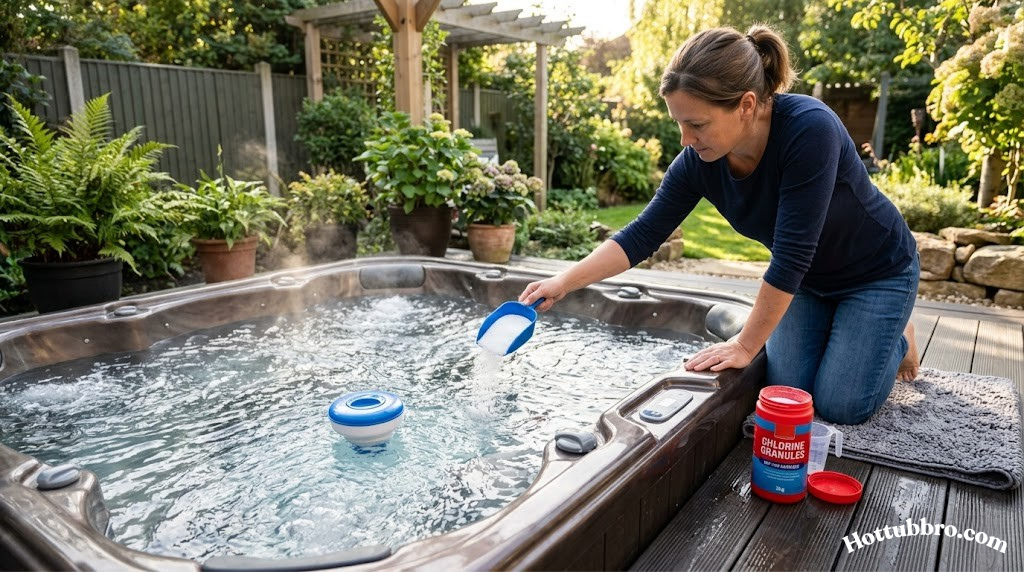
Every hot tub owner hits this fork in the road sooner or later: you’re standing in the pool supply aisle, one hand reaching for a tub of chlorine granules, the other hovering over a bucket of 1-inch tablets — and you have absolutely no idea which one belongs in your spa. Both claim to sanitize. Both smell like chlorine. Both promise crystal-clear water. So why does it matter which one you choose?
It matters more than most guides let on. These two products are not interchangeable. They differ in pH impact, dissolve speed, the way they interact with your water’s chemistry over time, and their suitability for the small, hot, highly-recirculated volume of a spa. Use the wrong one consistently and you’ll spend the rest of the season chasing pH crashes, cloudy water, and mysterious scaling — all while your sanitizer levels sit at zero.
This guide cuts through every piece of conflicting advice you’ve read and gives you a definitive, evidence-backed answer. We’ll cover the chemistry, the costs, the practical routines, and the edge cases — including what changes when you’re running an inflatable spa versus a hard-shell tub.
If you’re also navigating the broader question of which sanitizer system to use in your spa — chlorine versus bromine, for example — our detailed bromine vs chlorine for hot tub guide is a logical companion read. But if you’re committed to chlorine and simply need to choose the right form, you’re in the right place.
What Are Chlorine Granules?
Chlorine granules — also marketed as “chlorine shock,” “granular chlorine,” or “spa shock” — are small crystalline particles of active chlorine compound that dissolve rapidly in water. The most common active ingredient you’ll find is either sodium dichloro-s-triazinetrione (dichlor) or calcium hypochlorite (cal-hypo), and understanding which one you’re buying changes everything about how you use the product.
Dichlor is by far the most popular choice for hot tub owners because it dissolves almost instantly, requires no pre-mixing in most cases, and has a pH of around 6.7 — making it nearly pH-neutral in a well-balanced spa. Cal-hypo, on the other hand, has a very high pH (around 11.0–12.0), should always be pre-dissolved before adding to the spa, and can cause localized bleaching if poured directly onto your shell or liner.
How Granules Work Chemically
When you add granular chlorine to your hot tub, it dissolves and releases hypochlorous acid (HOCl) — the biologically active form of chlorine that kills bacteria, viruses, and algae. The reaction happens within seconds for dichlor and within a couple of minutes for cal-hypo. This immediacy is the granule’s single biggest advantage: you add it, it works.
Dichlor granules also contain cyanuric acid (CYA) as a stabilizer — roughly 57% CYA by weight in most formulas. This stabilizer protects chlorine from degradation under UV light, which matters enormously outdoors. Indoors, it’s less relevant, but the CYA accumulates regardless — a nuance we’ll return to in full in the CYA buildup section.
🧂 Dichlor Granules
pH ~6.7 | ~57% available chlorine | Contains CYA stabilizer | Dissolves in under 60 seconds | No floater needed | Best for shocking and daily dosing
🟡 Cal-Hypo Granules
pH ~11 | ~65% available chlorine | No CYA | Must pre-dissolve | Creates calcium scaling risk | More suited to pools than spas
For virtually every hot tub owner, when someone says “chlorine granules for a hot tub,” they mean dichlor granules. That’s what this article addresses unless otherwise specified. Cal-hypo belongs mostly in the pool world, and its high pH and calcium content make it poorly suited for spa use without careful management.

In The Swim Dichlor Hot Tub Chlorine Granules
Fast-dissolving, pH-neutral formula — one of the most popular spa granules on Amazon.
Check Price on Amazon →✅ Pros of Granules
- Instant or near-instant dissolve — no waiting
- Precise dosing — measure exactly what you need
- Near-neutral pH impact with dichlor formula
- No floater or dispenser required
- Works for both shocking and daily maintenance
- No risk of bleaching shells if dosed correctly
- Easier to use in inflatable hot tubs
- Dissolves fully before bathers enter (30 min)
❌ Cons of Granules
- Must be added manually every 2–4 days
- CYA builds up over time (with dichlor)
- More expensive per ounce than tablets
- Measuring and dosing requires attention
- Less “hands-off” than tablet dispensers
- Risk of underdosing between sessions
What Are Chlorine Tablets?
Chlorine tablets — commonly sold as 1-inch or 3-inch pucks — use trichloro-s-triazinetrione (trichlor) as their active ingredient. They’re designed to dissolve slowly over days, releasing chlorine at a steady, controlled rate. Most spa owners deploy them in a floating dispenser or a dedicated tablet feeder, and the appeal is obvious: drop in a tablet, set the dial, and mostly forget about it for a week.
However, this convenience comes with trade-offs that are far more pronounced in hot tubs than in swimming pools — and understanding those trade-offs is the entire point of this guide.
How Tablets Release Chlorine
Trichlor tablets have a pH of approximately 2.9 to 3.2 — extremely acidic. As each tablet slowly dissolves, it continuously nudges your spa’s pH downward. In a large swimming pool (20,000+ gallons), this acidic contribution is quickly buffered by the sheer volume of water. In a hot tub with 250–500 gallons? The acid load is proportionally massive, and you’ll watch your pH crater toward the danger zone without regular intervention.
Like dichlor, trichlor also contains cyanuric acid — roughly 54% CYA by weight. But because tablets dissolve slowly and are left in the water for days, the CYA contribution per gallon accumulates faster than you’d expect. More on why this becomes a serious operational problem later.
Additionally, the slow-dissolve mechanism means tablets cannot shock your water — they don’t release chlorine fast enough to break through combined chloramines (chlorine bound to ammonia from sweat and body oils) or to kill a bacterial bloom quickly. That function always falls to granules, regardless of your regular sanitizer choice.
✅ Pros of Tablets
- Slow, continuous chlorine release — convenient
- Less frequent manual dosing required
- Cheaper per ounce vs granules
- Easy to find at any pool store or online
- Good for maintaining baseline chlorine level
- Simple dispensing via floater or feeder
❌ Cons of Tablets
- Extremely low pH (2.9–3.2) — acidic impact
- Requires frequent pH balancing
- CYA accumulates rapidly in small spa volumes
- Cannot shock — must supplement with granules
- Undissolved tablets can bleach surfaces
- Floating dispensers can cause hot spots
- Not ideal for inflatable spa liners
- Difficult to dose precisely
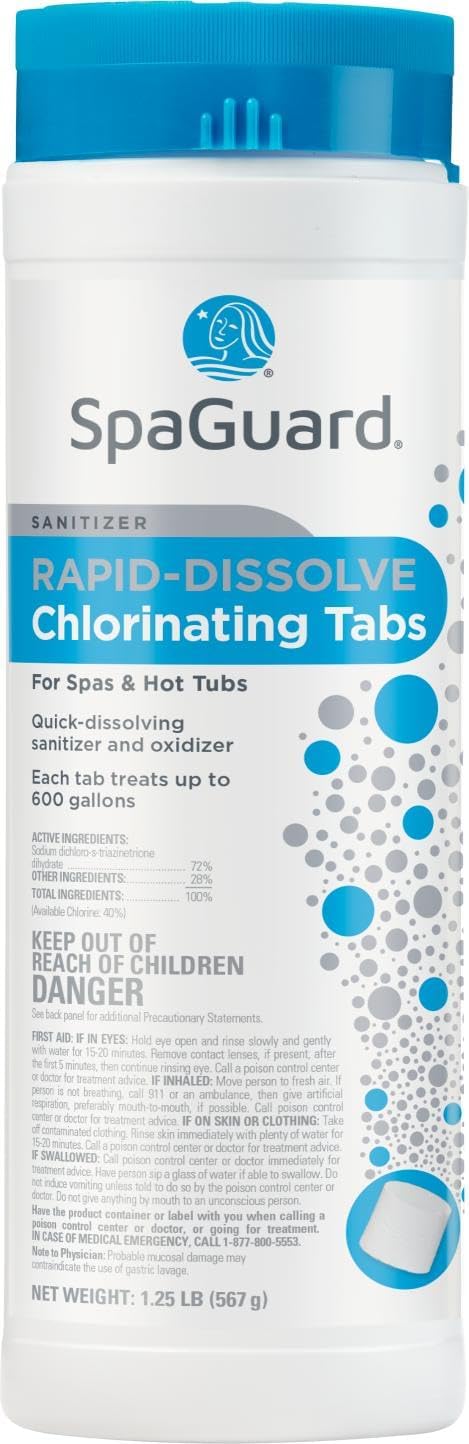
Spa Guard 1″ Chlorinating Tablets for Hot Tubs
1-inch tablets sized for spa floaters — slow-dissolving with stabilizer included.
Check Price on Amazon →Head-to-Head Comparison: Granules vs Tablets
Let’s put both products side by side across every dimension that actually affects your hot tub’s water quality and your maintenance workload. This table covers the full picture.
| Factor | Chlorine Granules (Dichlor) | Chlorine Tablets (Trichlor) |
|---|---|---|
| Active Ingredient | Sodium dichloro-s-triazinetrione | Trichloro-s-triazinetrione |
| pH of Product | ~6.7 (near-neutral) | ~2.9–3.2 (very acidic) |
| Available Chlorine | ~56–62% | ~90% |
| Dissolve Speed | Under 60 seconds | Days (slow-release) |
| CYA Content | ~57% by weight | ~54% by weight |
| CYA Accumulation Risk | Moderate | High (continuous) |
| Can Shock Water? | Yes | No |
| pH Management Required | Minimal | Frequent |
| Dosing Precision | High (measurable) | Low (dial-based) |
| Hands-Off Convenience | Moderate | High |
| Surface Bleaching Risk | Low (if diluted) | Moderate (hot spots) |
| Inflatable Spa Safe? | Yes | Use caution |
| Suitable for Shocking | Yes | No |
| Cost per oz (avg) | Moderate | Lower |
| Requires Floater/Feeder | No | Yes |
The table makes the tradeoffs clear at a glance. If the only thing you care about is minimal effort, tablets have their place — but they come with a management overhead that often cancels out the convenience once you’re scrambling to correct pH every few days or replacing your water early because CYA has climbed past 80 ppm.
For a broader look at how hot tub water chemistry functions as a system, our hot tub chemicals guide walks through every parameter from total hardness to total dissolved solids, and how they all interact.
pH and Alkalinity Impact: The Number That Changes Everything
pH is the most important number in your hot tub, and your sanitizer choice directly influences it with every single dose. Understanding this connection is what separates a spa owner who has crystal-clear water week after week from one who perpetually battles chemistry chaos.
The target pH range for a hot tub is 7.2 to 7.6, with 7.4 being the sweet spot. Below 7.2, water becomes corrosive — it will irritate bathers’ skin and eyes, etch your shell, and corrode metal components including your heater element and jets. Above 7.8, chlorine rapidly loses its effectiveness (at pH 8.0, only about 22% of your chlorine is in the active form; at 7.0, it’s around 73%). Keeping pH in range isn’t just comfort — it’s the engine of your entire sanitization system.
How Granules Affect pH
Dichlor granules have a pH of approximately 6.7, which is slightly acidic. In practice, each dose of granules causes a minor dip in pH that is usually insignificant relative to your total water volume. A standard 1–2 teaspoon dose in a 400-gallon spa moves pH by just a fraction of a unit — easily within your natural buffering range if alkalinity is correctly set between 80–120 ppm. For most spa owners using granules, pH checks every 2–3 days are sufficient, and corrections are modest when needed.
How Tablets Affect pH
Trichlor tablets tell a very different story. With a product pH of 2.9–3.2, every hour a tablet is dissolving it’s injecting acidity into your water. A single 1-inch trichlor tablet in a 250-gallon hot tub can drop pH by 0.3–0.5 units over 24 hours — and that’s on top of the natural pH rise that occurs from aeration and bather load. What often happens is a seesaw: you add base to correct pH, the tablet drives it back down, you add more base, and you’re perpetually fighting the chemistry instead of just enjoying the water.
If you’re already fighting low pH and wondering what’s happening in your spa water at a deeper level, check out our article on why hot tub water gets cloudy — pH imbalance is one of the top culprits behind cloudy, dull water even when chlorine readings look fine on the strip.
| pH Scenario | Granules Behavior | Tablets Behavior |
|---|---|---|
| After first dose | Minor dip (~0.1–0.2 units) | Gradual drop (~0.3–0.5/day) |
| After 1 week | pH stable with minor corrections | Often below 7.0 without intervention |
| Correction frequency | Every 3–5 days typical | Every 1–2 days often needed |
| Base addition needed | Occasional sodium bicarbonate | Frequent sodium carbonate (soda ash) |
| Overall chemistry stability | High | Low to Moderate |
For those dealing specifically with alkalinity management, we have a dedicated resource on how to lower alkalinity in a hot tub and the step-by-step process for raising hot tub alkalinity with baking soda — both of which become more relevant the longer you use tablets.
CYA Buildup: The Hidden Threat That Forces a Full Water Change
Cyanuric acid (CYA) is the most misunderstood parameter in hot tub care. Most beginners ignore it entirely until they notice their chlorine disappearing instantly, their water turning hazy, and their test strips reading near-zero free chlorine no matter how much product they add. At that point, the answer is almost always: your CYA has gone through the roof, and no amount of sanitizer will save you.
What CYA Does (and Why It Exists)
CYA is a stabilizer that forms a bond with chlorine molecules, shielding them from UV degradation. In an outdoor pool, CYA extends the life of your chlorine by several times — a legitimate and valuable function. The recommended outdoor pool range is 30–50 ppm. For hot tubs, most spa chemistry experts recommend keeping CYA below 30–50 ppm and ideally at zero to minimal levels for indoor spas where UV isn’t a factor.
How Fast Does CYA Accumulate?
Both dichlor granules and trichlor tablets contain CYA. However, because granules are added in precise, measured doses only when needed, CYA accumulates more slowly and you have more control. Tablets, by contrast, are releasing CYA continuously every hour they’re in the water — even when your chlorine level is already adequate. The result is that CYA climbs faster with tablets, and you have very little ability to stop it short of removing the tablet.
Once CYA exceeds 80–100 ppm, it begins to “lock up” chlorine in a way that makes it biologically ineffective even at high free chlorine readings. You can have 10 ppm of chlorine on your test strip and your water will still harbor bacteria. This phenomenon is sometimes called chlorine lock, and the only reliable solution is a partial or complete drain and refill. If you’re seeing biofilm despite apparently adequate chlorine levels, CYA overload is often the culprit — and our article on what biofilm is in hot tubs explains how this chemistry failure opens the door to slime colonies in your plumbing.
| CYA Level (ppm) | Effect on Water Safety | Recommended Action |
|---|---|---|
| 0–30 | Ideal for spas; chlorine fully effective | Normal maintenance |
| 30–50 | Acceptable; slight chlorine inhibition | Monitor; consider switching to bleach |
| 50–80 | Elevated; chlorine efficiency reduced 30–40% | Partial drain and refill recommended |
| 80–100 | Problematic; chlorine significantly impaired | 50%+ water change required |
| 100+ | Chlorine lock; water unsafe despite readings | Full drain and refill — no alternative |
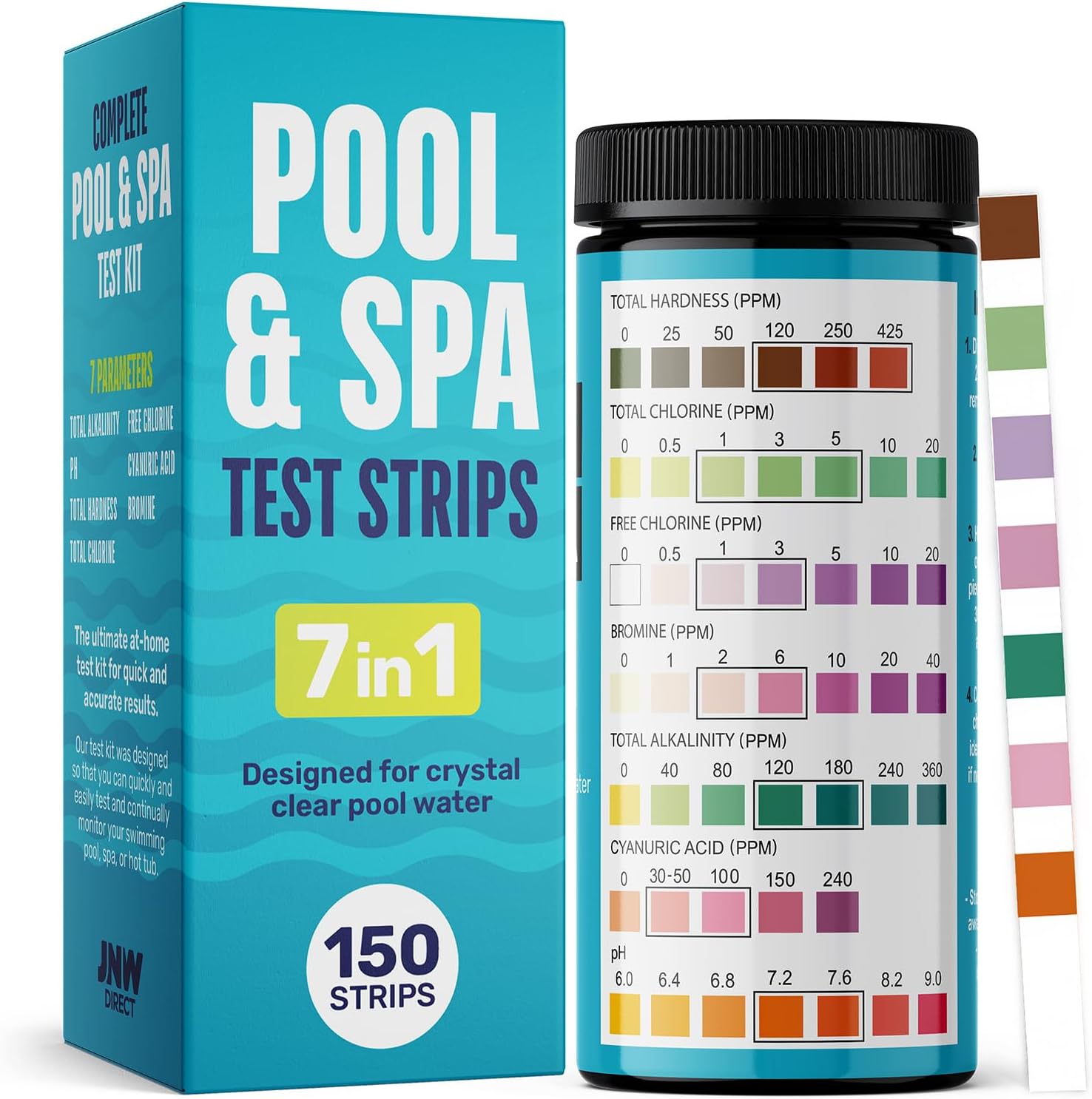
The practical upshot: if you’ve been using tablets exclusively for several months without draining and refilling, test your CYA level. Pick up a proper test kit — not just strips — and check the result. Our guide to the best hot tub water testers will help you find a kit that actually measures CYA accurately, since most test strips don’t.

Taylor Technologies K-2106 Complete Spa Test Kit
Measures free chlorine, pH, alkalinity, CYA, and calcium hardness — the complete picture for any spa owner serious about chemistry.
Check Price on Amazon →Dissolve Speed, Dosing Precision, and Practical Application
One of the most underrated factors in the granules vs tablets debate is how each product behaves at the moment of application — and how much control you actually have over the dose your water receives.
Granule Application: Fast and Precise
Dichlor granules dissolve in under 60 seconds in warm water. The standard application method is simple: with the jets running, pre-dissolve the measured dose in a small bucket of warm spa water, then pour the solution in front of an active jet. Full distribution occurs within minutes. Alternatively, many owners simply sprinkle the granules directly into the water in front of a jet — which works fine for dichlor, though pre-dissolving is technically better practice to avoid any momentary concentration near the shell.
The key word is measured. When you dose with granules, you scoop out a precise volume — say, one level teaspoon — and you know exactly how much chlorine you’re adding to your water. This precision makes it easy to dose according to your test results rather than guessing. If your chlorine reads 1 ppm and you need it at 4 ppm, you calculate the dose, add it, and re-test. Simple.
Tablet Application: Continuous but Imprecise
Tablets in a floating dispenser or inline feeder release chlorine continuously over days, but the release rate is highly variable. It depends on water temperature, flow rate through the feeder, the surface area of exposed tablet, and the number of tablets in the dispenser. Turning up or down the dispenser dial changes the release rate, but there’s no feedback mechanism — you’re essentially flying blind between test strips.
High bather loads spike chlorine demand rapidly, and a tablet can’t respond to that demand spike. Conversely, when the spa sits unused for days, the tablet continues releasing chlorine whether the water needs it or not. This mismatch between supply and demand is why tablet users often see chlorine readings swing between near-zero after a heavy soak session and well above 5 ppm after three days of low use.
Good precision dosing requires good testing. If you’re currently relying on cheap paper strips that can’t distinguish free from combined chlorine, it’s worth upgrading. Our comparison of digital water tester sensors and calibration options covers the modern testing landscape in detail.
Real Cost Analysis: What You Actually Spend Over a Full Season
On the shelf, chlorine tablets appear significantly cheaper than granules — often 30–40% less per pound of product. But cost-per-pound is a deceptive metric for hot tub chemistry, because what you’re paying for is not just the product in the bucket. You’re paying for everything you need to keep your water balanced and your tub healthy. When you run that full accounting, the picture shifts.
The True Cost of Tablets
When you rely primarily on tablets, your ancillary chemical spend increases substantially. You’ll need to purchase pH increaser (soda ash or sodium carbonate) regularly — sometimes multiple times per week if usage is frequent. You’ll likely burn through alkalinity increaser faster. You’ll need to shock with granules after every significant bather load anyway — that’s non-negotiable regardless of your sanitizer routine. And you’ll drain and refill your spa more frequently to manage CYA buildup, which wastes water, water treatment products, and your time.
The True Cost of Granules
Granules cost more per pound, but they replace some of those ancillary costs. Less pH correction is needed. CYA management is easier to control, particularly if you use the dichlor-then-bleach method (switching to liquid chlorine once CYA reaches 30 ppm). Drain and refill intervals can be extended. And because each dose is measured, there’s less waste from overdosing.
| Cost Category | Tablets-First Approach | Granules-First Approach |
|---|---|---|
| Sanitizer product | Low (tablets cheap) | Moderate (granules cost more) |
| pH increaser spend | High (frequent use) | Low to moderate |
| Alkalinity increaser | Elevated | Normal |
| Shock (granules still needed) | Always needed extra | Already using granules |
| Water change frequency | Every 2–3 months (CYA) | Every 3–4 months |
| Water/utility cost | Higher (more refills) | Lower |
| Testing supplies | Same | Same |
| Overall total season cost | Often higher than expected | More predictable |
The honest answer is that the cost difference between the two approaches, when everything is counted, is often negligible — and in many cases granule users end up spending less over a full season despite the higher per-pound price of the product. The variable that matters most is your discipline in following a consistent testing and dosing routine.

Leisure Time Spa pH Balance Kit (pH Up + Down)
The two chemicals you’ll burn through fastest with tablets — having them on hand saves late-night emergency purchases.
Check Price on Amazon →Shocking Your Hot Tub: Why Granules Are Non-Negotiable Here
Regardless of your regular sanitizer choice — granules or tablets — there is one maintenance task that always requires granular product (or liquid chlorine): shocking. And understanding why helps you understand something fundamental about how chlorine works in hot tub conditions.
What Shocking Actually Does
Shocking means adding a large, rapid dose of chlorine (or non-chlorine shock) to your hot tub to break through chloramines — compounds formed when chlorine reacts with ammonia from sweat, body oils, and urine. Chloramines are what cause the “chlorine smell” most people associate with poorly maintained water. They also irritate eyes and skin, and they block your sanitizer from doing its actual job: killing pathogens.
Breaking through chloramines requires a rapid, high-concentration dose — typically raising free chlorine to 10–20 ppm temporarily. A slow-dissolving tablet cannot do this. Only granules (or liquid chlorine) dissolve fast enough to create the temporary shock concentration needed. This is why even die-hard tablet users need to keep dichlor granules in their chemical kit for regular shocking — typically after every 3–4 uses or after any heavy bather load.
How Often Should You Shock?
Most spa care guides recommend shocking a hot tub every 1–2 weeks under regular use, and after any unusually heavy bather session. Our complete guide on how often to shock a hot tub breaks down the frequency question by usage pattern and bather load, and explains the difference between chlorine shock and non-chlorine oxidizer shock (which some owners use as an alternative mid-week between chlorine doses).

Leisure Time Spa Chlorinating Granules — Shock Treatment
Fast-dissolving, per-dose shock packets sized for hot tubs — no measuring needed, easy to keep on hand.
Check Price on Amazon →Chlorine Granules vs Tablets for Inflatable Hot Tubs: Different Rules Apply
If you own an inflatable hot tub — a Coleman SaluSpa, Intex PureSpa, Bestway, MSpa, or any of the popular blow-up spas — the granules vs tablets question carries additional considerations specific to the materials and design of these spas. The short answer: granules are strongly preferred, and undissolved tablets are a legitimate risk to your liner.
Inflatable hot tubs use PVC or similar vinyl-based liners that are more susceptible to localized chemical attack than the hard acrylic or fiberglass shells of traditional spas. An undissolved trichlor tablet sitting on the bottom of your inflatable, resting against the liner, can cause bleaching, softening, or even micro-cracking of the PVC over time. Floating dispensers reduce but don’t eliminate this risk — if the dispenser drifts to the wall or bottom, the same contact damage can occur.
✅ Granules for Inflatables
Dissolve fully before contact with the liner. No floating dispenser needed. Safe for all inflatable hot tub materials. Easier to manage in smaller volumes (150–300 gallons typical). Recommended by most inflatable spa manufacturers.
⚠️ Tablets for Inflatables
Require a floating dispenser to prevent direct liner contact. Continued acidic output can degrade liner material over time. Hard to use in very small volumes without over-saturating. Most manufacturers advise using sparingly if at all.
Coleman SaluSpa, one of the most widely owned inflatable brands, specifically recommends dichlor granules in their chemical guide and cautions against placing tablets directly in the spa without a dispenser. Intex PureSpa documentation follows similar guidance. If you’re looking at inflatable hot tub options and trying to understand ongoing maintenance, our complete inflatable hot tub maintenance guide covers the full chemical and filter routine for these spas.
There’s also the volume question. Many inflatable hot tubs hold just 150–250 gallons. At that scale, a single 1-inch trichlor tablet can add a disproportionate chemical load to the water in a very short period. The dosing challenge alone makes granules the more controllable — and therefore safer — option for most inflatable spa owners.
If you’re curious whether an inflatable hot tub makes sense as a long-term purchase, we break down the question objectively in our article on whether inflatable hot tubs are worth it. And for a look at top current models, our best inflatable hot tubs guide rates options by jet power, size, build quality, and value.

Inflatable Spa Chemical Starter Bundle (Granules + pH Balancer)
A complete beginner kit sized for smaller spa volumes — ideal for Coleman, Intex, and Bestway owners.
Check Price on Amazon →Building a Practical Maintenance Routine Around Your Sanitizer Choice
The best chemical strategy is the one you’ll actually follow consistently. Water care problems don’t come from choosing granules over tablets or vice versa — they come from inconsistency, infrequent testing, and letting small imbalances snowball into expensive chemistry disasters. Here’s how a realistic routine looks for each approach.
The Granule-Based Routine
A granule-first routine asks more of you at each visit — you need to measure and add your dose manually — but it gives you full control and requires less firefighting between sessions. A typical granule routine for regular use (3–4 times per week) looks like this:
Before Every Soak
Test free chlorine, pH, and alkalinity. Add granule dose if chlorine is below 3 ppm. Adjust pH with increaser/decreaser as needed.
After Heavy Use
Shock with 1–2 teaspoons of dichlor per 250 gallons. Run jets for 15 minutes. Leave cover off for 20 minutes to off-gas chloramines.
Weekly
Full chemistry test including CYA, calcium hardness. Rinse filter cartridge. Check and clean scum line if present.
Every 3–4 Months
Full drain, clean, and refill. Deep-clean plumbing with a spa purge product before draining to flush biofilm from lines.
If CYA reaches 30 ppm before your scheduled drain, switch to liquid chlorine (unscented bleach, 6–8% sodium hypochlorite) for daily maintenance. Liquid chlorine adds zero CYA and is highly cost-effective. This is the “dichlor-then-bleach” method favored by spa chemistry professionals, and it dramatically extends your water change interval.
The Tablet-Assisted Routine
If you prefer a tablet-based system for the convenience of baseline maintenance, the most common approach is to use tablets only for background sanitization and rely on granules for all hands-on tasks: shocking, correcting low chlorine after heavy use, and precision dosing. Keep the tablet dispenser set to release just enough to maintain 1–2 ppm of chlorine between soak sessions, then granule-boost before and after use as needed.
Good filter maintenance is inseparable from any chemical routine. A clean filter removes the particulate matter and oils that place extra demand on your sanitizer. If you’re not cleaning filters regularly, you’re essentially pouring money and chemicals into water that the filtration system is working against. Our resource on how often to replace hot tub filters and the deeper guide on how hot tub filters work are essential reading for anyone who wants their chemical routine to actually deliver results.
For cleaning the spa itself — not just the water — our step-by-step hot tub cleaning guide walks through the full drain-and-clean process, including how to deal with waterline scum and the kind of deep liner cleaning that matters most for chemical efficiency.
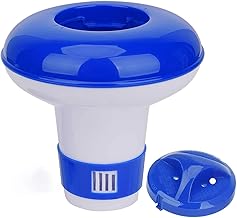
Swimline Floating Spa Tablet Dispenser (1″ Tablets)
Adjustable dial, durable float — if you’re going to use tablets, a proper dispenser is non-negotiable for liner safety.
Check Price on Amazon →Tracking Your Water Age and Chemistry History
One underused habit that dramatically improves water quality over time is keeping a simple log. Note the date of each water change, your CYA test results, and any chemistry events (heavy bather loads, pH crashes, foam events). Patterns emerge quickly — you’ll see whether CYA is climbing too fast for your current routine, whether your pH tends to drift up or down, and whether you’re shocking frequently enough relative to your actual usage. A $2 notebook or a phone note does the job.
For more about maintaining pristine water chemistry on an ongoing basis, our comprehensive hot tub water chemistry guide covers every parameter in depth, including calcium hardness, total dissolved solids, and the relationship between temperature and chemical efficacy.
Alternatives Worth Knowing About: Saltwater, FROG, and UV/Ozone
While this guide focuses on granules vs tablets, it’s worth briefly noting that several alternative sanitization systems exist that change the granules/tablets calculus entirely — or remove it from the equation altogether.
Saltwater Hot Tubs
Saltwater systems use an electrolytic cell to generate chlorine on-demand from dissolved salt. In theory, this reduces or eliminates the need for both granules and tablets for routine maintenance. In practice, you still need chlorine products for shocking and to supplement during high demand. If you’re curious about converting or buying a saltwater spa, our detailed comparison of saltwater vs chlorine systems and our guide to converting your hot tub to saltwater walk through the full setup and ongoing considerations.
FROG @ease and Mineral Systems
FROG @ease and similar mineral/chlorine combination systems pair a mineral cartridge with a chlorine cartridge to maintain lower overall chlorine levels with reduced chemical intervention. These are a legitimate middle-ground for owners who want less hands-on chemistry management. Our dedicated analysis on FROG ease vs chlorine compares the real-world cost and effectiveness in detail. Mineral systems still require granule shocking and periodic pH management.
UV and Ozone Sanitizers
UV and ozone systems act as supplemental sanitizers that pre-treat water before it reaches your primary chemical sanitizer. They reduce the overall chlorine demand, which means you can maintain safe water with lower free chlorine levels — reducing both granule and tablet consumption proportionally. Our breakdown of UV vs ozone hot tub sanitizers explains how each technology works and whether the investment makes sense for your specific setup.
None of these alternatives eliminate the need to understand granules vs tablets — they modify the equation. Even with UV or ozone, you’ll still be adding granular or liquid chlorine for shocking, and the CYA management question remains relevant if you’re using any stabilized chlorine products.

FROG @ease Floating Sanitizing System for Hot Tubs
Combines mineral and SmartChlor technology — one of the most popular reduced-chlorine systems for spa owners.
Check Price on Amazon →Final Verdict: Which Should You Choose?
After walking through every meaningful difference — pH impact, CYA accumulation, dissolve speed, cost, inflatable compatibility, and shocking requirements — the evidence points consistently toward granules as the more appropriate primary sanitizer for hot tub use. Here’s the final summary:
Choose Granules If…
You have an inflatable spa, you want chemistry you can actually control, you care about extending your water’s lifespan, or you’re trying to minimize total chemical spend over a season.
Add Tablets If…
You use the spa infrequently and want a safety net between visits — but limit to one tablet in a proper floating dispenser, monitor CYA monthly, and never stop using granules for shocking.
Avoid Tablets-Only If…
You use your spa frequently, have an inflatable tub, are sensitive to chemistry management, or have had CYA or pH problems in the past. Tablets-only routines are a recipe for ongoing frustration in spas.
The single most important habit regardless of which product you choose: test your water consistently. Good chemistry doesn’t happen by accident — it’s the product of knowing your actual numbers (chlorine, pH, alkalinity, CYA, calcium hardness) and making small, precise corrections before they become large, expensive ones. The water testers and test kits we recommend in our water tester comparison guide take the guesswork out of this entirely.
And if you’re also dealing with broader water quality issues — foam, cloudiness, slime, or off-putting odors — our articles on getting rid of hot tub foam, hot tub slime and whether it’s dangerous, and inflatable hot tub safety and water chemistry risks give you a complete toolkit for diagnosing and resolving the most common spa water problems.

Complete Spa Care Kit — Dichlor Granules + Shock + pH Balance Set
Everything you need to start a granule-first routine: sanitizer, shock, pH up and down — a comprehensive spa chemical kit.
Check Price on Amazon →Frequently Asked Questions
Conclusion: Make the Chemistry Work For You, Not Against You
The granules vs tablets debate has a clear answer when you look at the full picture: for hot tubs, chlorine granules are the more chemically appropriate, more precise, and more versatile primary sanitizer. Tablets serve a supplementary role at best — useful for maintaining a background chlorine level between manual doses, but never sufficient on their own and genuinely problematic in small, hot water volumes if used without careful management.
The most successful hot tub owners aren’t necessarily the ones who choose the “right” product — they’re the ones who test consistently, respond to what the numbers say, and understand what their water needs. A granule user who tests every three days and adjusts promptly will always have better water than a tablet user who checks in monthly and hopes for the best.
Build your routine around dichlor granules as your foundation. Add tablets as a convenience tool if you choose to, but keep a close eye on CYA and pH. Shock weekly. Test everything regularly with a quality kit. And when your water age starts working against you, drain, clean, and start fresh — your health and your equipment depend on it.
For more expert guidance on every aspect of hot tub ownership — from choosing the right model to mastering water care to understanding the health benefits and risks of regular soaking — explore the full library of resources at HotTubBro. We cover hot tub chemicals, inflatable hot tub maintenance, the real health benefits of hot tubs, and much more — all written by people who actually use and test these products.
Get Your Hot Tub Chemistry Right from Day One
Start with the right products, the right testing routine, and the knowledge to keep your water crystal-clear all season long.
Read the Full Hot Tub Chemicals Guide →