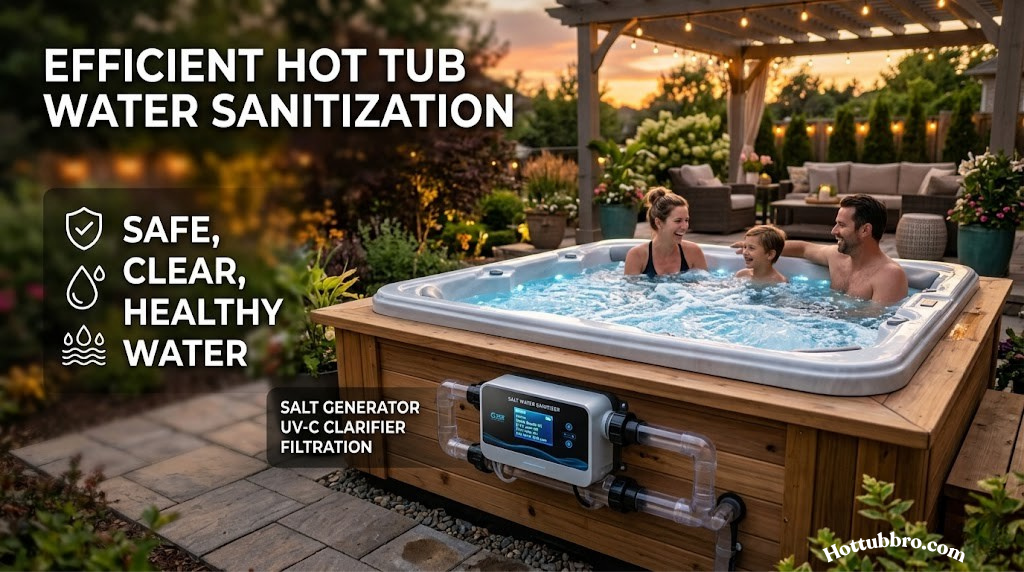
UV vs Ozone Hot Tub Sanitizers: Which System Actually Keeps Your Water Cleaner?
Two technologies promise cleaner water with fewer chemicals — but they work in completely different ways. Here’s everything you need to know before choosing.
You’ve probably seen both listed as features on premium hot tubs — UV sanitizers, ozone generators, or sometimes both running at once. The marketing copy makes them sound interchangeable: “fewer chemicals, cleaner water, healthier soaking.” But UV and ozone are fundamentally different technologies that attack contamination in completely different ways, operate at different points in the plumbing circuit, and come with very different long-term cost profiles.
This isn’t a skim-and-decide comparison. Both technologies have genuine strengths and real limitations that matter in day-to-day hot tub ownership. Whether you’re deciding between pre-installed system options on a new spa, shopping for an aftermarket upgrade to reduce your reliance on hot tub chemicals, or just trying to understand what the box on your equipment bay actually does — this guide will give you a clear, technically grounded picture of both systems before you spend a dollar.
Neither UV nor ozone fully replaces chlorine or bromine. Both systems work as supplemental sanitizers that reduce your chemical load — not eliminate it. Any guide or product claim suggesting otherwise is misleading you.
The Core Problem With Hot Tub Water Chemistry
Before comparing technologies, it helps to understand exactly what you’re fighting. Hot tubs create a uniquely hostile water chemistry environment compared to swimming pools. You’re dealing with a small volume of water — typically 200–500 gallons — held at 100–104°F, used by bathers who introduce oils, sweat, cosmetics, dead skin cells, and microorganisms every single session.
Standard chlorine and bromine sanitization works by maintaining a measurable residual of active disinfectant in the water. When contamination enters, the residual sanitizer neutralizes it — but only if the residual is high enough and the pH is in the right range. The problem is that hot water accelerates chemical reactions dramatically. Sanitizer gets consumed much faster in a hot tub than in a pool. That’s why hot tub maintenance demands more frequent testing and dosing than pool care, and why cloudy water or slime can appear within days of a water change if chemistry goes unchecked.
The high chemical demand creates its own downstream problems: combined chlorine (chloramines) builds up and creates that harsh “chemical” smell and eye irritation that many people mistakenly attribute to “too much chlorine.” Ironically, that odor usually signals too little free chlorine and too much combined chlorine — a sign that the sanitizer is exhausted and fighting a losing battle. That’s why shocking your hot tub regularly is a core part of water maintenance.
This is exactly the gap that UV and ozone systems fill. By handling a large portion of the sanitization burden before contaminants ever build up in the water, both technologies can keep your residual chemical doing its job more efficiently — meaning less of it, used more effectively, with fewer of the byproducts that cause skin irritation and the “chemical spa smell.”
Another major challenge: biofilm — a slimy bacterial colony that colonizes plumbing walls and resists normal sanitizer levels. Both UV and ozone have specific roles in disrupting biofilm formation, which we’ll explore in the maintenance section.
How UV Sanitizers Work in a Hot Tub
UV sanitization uses a very specific type of ultraviolet light — UV-C radiation at a wavelength of approximately 254 nanometers — to destroy microorganisms at the DNA level. When pathogens pass through the UV chamber, this wavelength penetrates their cell walls and disrupts the molecular bonds in their DNA and RNA, rendering them unable to reproduce. Dead microorganisms cannot cause infection.
The Physical Setup
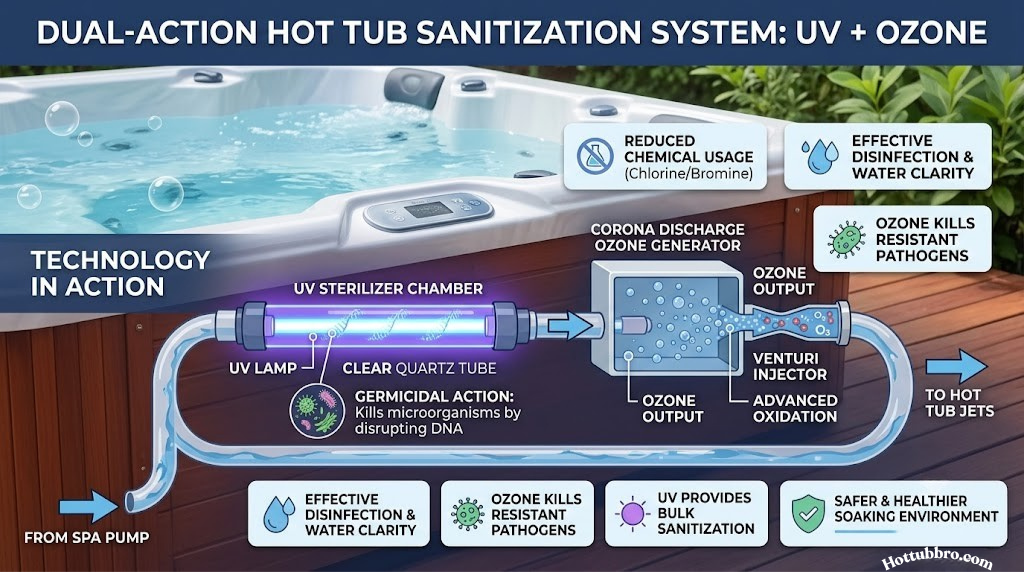
A UV sanitizer for a hot tub consists of a sealed chamber installed inline on the plumbing return line — typically after the filter and before the water returns to the tub. Inside the chamber sits a UV-C lamp (usually a low-pressure mercury vapor or an LED UV-C lamp in newer units) surrounded by a quartz sleeve that keeps water away from the lamp while allowing UV light to pass through. Water circulates through the chamber continuously when the pump runs, exposing every passing volume of water to the UV-C dose.
What UV Actually Kills
UV-C at the correct dose is lethal to a remarkably broad spectrum of pathogens: bacteria including E. coli, Pseudomonas, and Legionella; viruses; algae; and protozoa like Cryptosporidium and Giardia, which are notably resistant to chlorine at normal use levels. This makes UV particularly valuable in systems where people are sensitive to chemical treatments.
The Critical Limitation
UV-C has zero residual effect. The moment treated water leaves the chamber and re-enters the plumbing or the tub, there is nothing preventing re-contamination. Every body that enters the tub, every gust of wind that drops debris into the water, every bather’s skin introduces new biological load that the UV system cannot address until that water completes a full circulation cycle and passes through the chamber again. This is why a low-level chemical residual remains essential.
The effectiveness of a UV system depends directly on how often all the water cycles through the chamber. Most hot tub systems cycle the full water volume every 1–2 hours during filtration cycles. Longer or more frequent filtration programs improve UV effectiveness.

Inline UV-C system designed for spas up to 600 gallons. Installs in minutes, compatible with all major hot tub brands, reduces chemical use by up to 75%.
Check Price on AmazonAs an Amazon Associate, HotTubBro earns from qualifying purchases.
How Ozone Sanitizers Work in a Hot Tub
Ozone (O₃) is a naturally occurring molecule — three oxygen atoms bonded together — that is one of the most powerful oxidizing agents known. It’s the same molecule formed in the upper atmosphere during lightning storms and the same thing that gives that sharp, clean smell after a thunderstorm. In a hot tub context, an ozone generator produces O₃ and injects it directly into the circulating water, where it oxidizes contaminants with extraordinary efficiency before decomposing back into ordinary oxygen.
Two Types of Ozone Generators
There are two common generation methods used in hot tub systems, and understanding the difference matters when evaluating products:
CD (Corona Discharge)
Passes air through a high-voltage electrical field that splits O₂ molecules, which then recombine as O₃. Produces higher concentrations of ozone. Longer lifespan — typically 5+ years with minimal maintenance. The most popular type in premium hot tubs.
UV Ozone (185nm)
Uses a specific UV-C wavelength at 185nm (different from the 254nm germicidal UV) to split oxygen molecules from ambient air. Simpler, quieter, and lower cost — but produces less ozone and has a shorter effective lifespan, typically 12–18 months.
The Injection and Contact Chamber
Ozone doesn’t just float freely through the plumbing — an effective system uses a Venturi injector to pull O₃ into the water flow and, in better-designed systems, routes that ozone-enriched water through a dedicated contact chamber before it returns to the tub. The contact chamber maximizes the time ozone spends in contact with the water, dramatically improving its sanitizing effectiveness and ensuring that most of the ozone has reacted and decomposed before the water reaches the bather.
What Ozone Actually Does to Contaminants
Ozone is a chemical oxidizer, not a disinfectant in the traditional sense. Rather than poisoning microorganisms or disrupting their DNA, O₃ aggressively attacks and breaks apart the organic molecules that contaminants are made of — cell walls, proteins, lipids, and organic compounds like chloramines, cosmetics, body oils, and nitrogen compounds. This makes ozone uniquely effective at what’s called oxidation — essentially burning off the organic load in the water before it can combine with chlorine to form irritating byproducts.
This is why hot tubs with ozone systems often smell noticeably better: the ozone is destroying the very precursors to chloramine formation. If you’ve ever struggled with that harsh chemical smell in your spa, ozone addresses it at the source. Concerns about water chemistry safety are one of the biggest reasons people start looking at supplemental systems like ozone in the first place.

High-output corona discharge unit compatible with most spa systems. Includes Venturi injector and check valve. Dramatically reduces chlorine demand and eliminates chloramine odor.
Check Price on AmazonAs an Amazon Associate, HotTubBro earns from qualifying purchases.
Effectiveness: UV vs Ozone Head-to-Head
Both technologies are genuinely effective at what they do — but they’re effective at different things. This distinction is critical. A system that’s superior at killing a specific pathogen might be completely ineffective at addressing the organic load that causes water to go cloudy or smell. Here’s a detailed breakdown:
| Performance Category | UV-C Sanitizer | Ozone (CD Type) | Ozone (UV Type) |
|---|---|---|---|
| Bacteria kill rate | ★★★★★ Excellent | ★★★★★ Excellent | ★★★★ Very Good |
| Virus inactivation | ★★★★★ Excellent | ★★★★ Very Good | ★★★ Moderate |
| Cryptosporidium (Cl-resistant) | ★★★★★ Excellent | ★★★★ Very Good | ★★★ Moderate |
| Chloramine destruction | ★★ Limited | ★★★★★ Excellent | ★★★★ Very Good |
| Organic compound oxidation | ★★ Limited | ★★★★★ Excellent | ★★★★ Very Good |
| Turbidity / clarity improvement | ★★★ Moderate | ★★★★★ Excellent | ★★★★ Very Good |
| Residual protection in tub | ✕ None | ✕ None | ✕ None |
| Works while pump is off | ✕ No | ✕ No | ✕ No |
| Odor reduction | ★★★ Moderate | ★★★★★ Excellent | ★★★★ Very Good |
| Skin/eye friendliness | ★★★★★ Excellent | ★★★★ Very Good | ★★★★ Very Good |
The headline takeaway: UV excels at pathogen kill, particularly against organisms like Cryptosporidium that are resistant to conventional chemicals. Ozone excels at oxidation — destroying the organic compounds, chloramines, and contaminants that degrade water clarity and cause the unpleasant chemical odor that plagues poorly maintained spas.
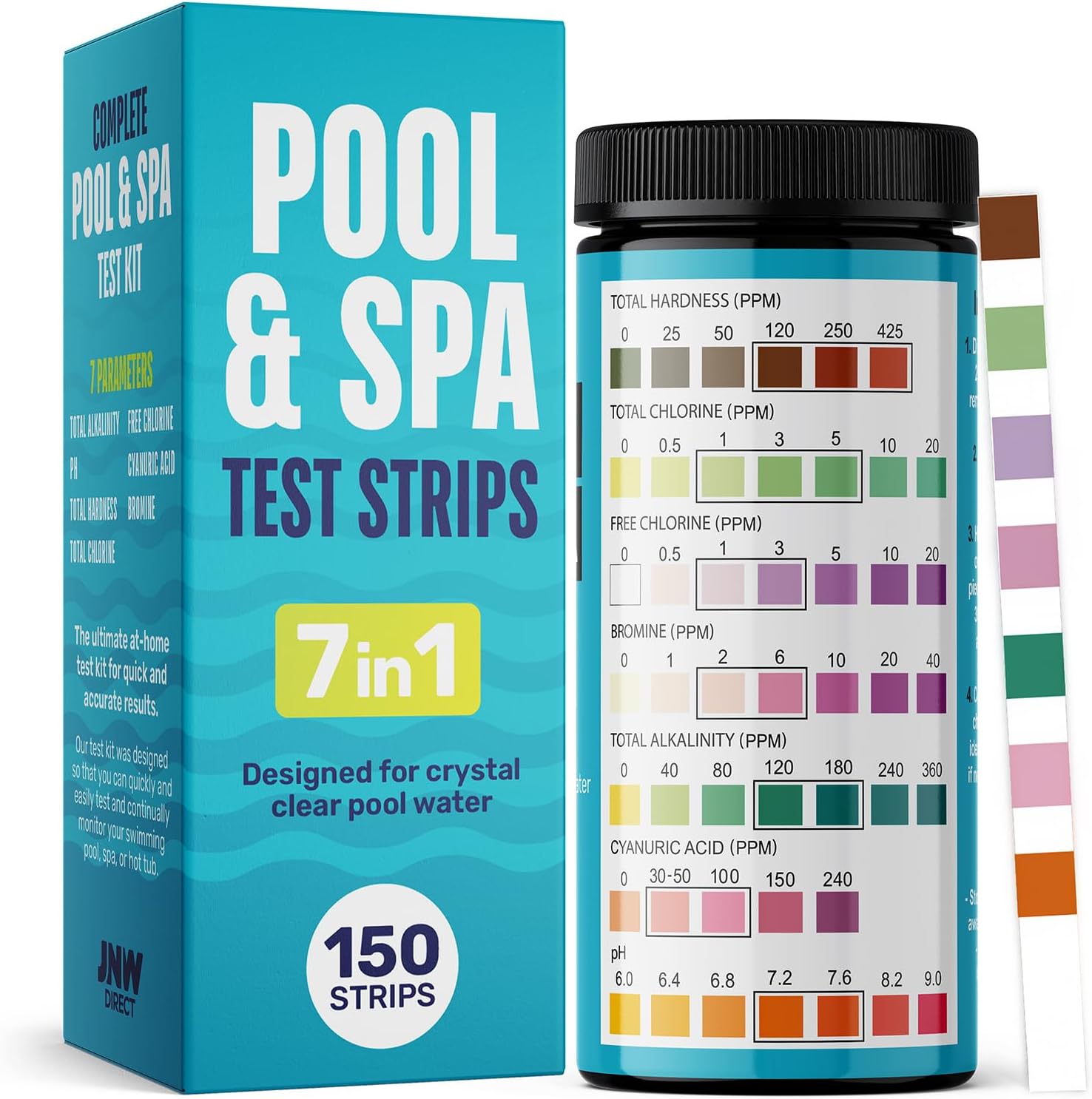
Both UV and ozone require water to be actively circulating through the plumbing to function. This reinforces the necessity of maintaining a chemical residual (chlorine or bromine) that remains active in the tub water at all times, even when the pump is in standby. Using a reliable water tester to monitor residual levels is non-negotiable with either system.
Pathogen Kill Rates in Practice
For context, properly dosed UV-C at 40 mJ/cm² achieves >99.99% inactivation of most waterborne pathogens, including Cryptosporidium parvum — a chlorine-resistant parasite that UV handles with ease. A well-designed ozone system achieves comparable pathogen kill through a combination of direct oxidative destruction and the potent hydroxyl radicals that form when ozone reacts with water. CD ozone systems can achieve ozone concentrations in the contact chamber of 0.5–1.0 ppm, which is highly lethal to most pathogens within seconds.
For typical residential hot tub use, the practical difference in pathogen kill between the two technologies is minimal — both are dramatically more effective than relying on chemical residual alone, particularly against chlorine-resistant organisms. The more meaningful day-to-day difference is ozone’s superior handling of organic load and water clarity, which has a direct impact on how the water looks, feels, and smells during every soak.
UV Sanitizers: The Complete Picture
UV sanitization has been used in municipal water treatment for decades and has an exceptional safety and efficacy track record. For hot tubs, the technology translates into a compact, chemically inert unit that adds a powerful pathogen-kill step without introducing any substances into the water. Here’s the full accounting:
✓ Advantages
- Zero chemical byproducts — UV-C light adds nothing to the water and creates no residual compounds
- Highly effective against chlorine-resistant pathogens like Cryptosporidium
- Completely safe for bathers — no risk of ozone exposure at the water surface
- No impact on water pH, alkalinity, or chemical balance
- Silent operation — no hum, no odor, no visible activity
- Works effectively with salt water systems, bromine, and mineral sanitizers
- Modern LED UV-C lamps last longer and use less energy than traditional mercury lamps
- Compatible with low-chlorine systems like FROG ease
✗ Disadvantages
- No oxidation capability — does nothing to destroy organic compounds, oils, or chloramines
- Zero residual effect — only treats water passing through the chamber
- Lamp requires annual replacement (cost and maintenance burden)
- Quartz sleeve must be kept clean — mineral buildup reduces UV transmission
- Water turbidity (cloudiness) can reduce UV effectiveness before it treats the root cause
- Less effective at improving water clarity and odor compared to ozone
- Higher per-unit cost than basic UV ozone generators
Who UV Works Best For
UV is the ideal choice for bathers who are chemically sensitive or have health conditions that make chemical exposure a concern. It’s also particularly valuable if you already use a low-chemical system like saltwater or mineral sanitizers and want a secondary kill step without adding complexity to the water chemistry equation. If pathogen safety is your primary concern — especially in households with immune-compromised users or young children — UV’s record against resistant organisms like Cryptosporidium is hard to beat.
Ozone Sanitizers: The Complete Picture
Ozone is the more widely deployed of the two technologies in residential hot tubs, and for good reason: its oxidation capability addresses problems that no amount of UV light can touch. The vast majority of the sensory complaints that hot tub owners have about their water — harsh odor, skin irritation, rapid chemical consumption — are rooted in organic load and chloramine buildup that ozone directly destroys.
✓ Advantages
- Powerful oxidizer — destroys oils, cosmetics, nitrogen compounds, and chloramine precursors
- Dramatically improves water clarity and odor by eliminating the source of both problems
- CD ozone systems have no lamp replacement — essentially maintenance-free for 5–10 years
- Reduces chlorine demand by 50–80%, lowering chemical cost and skin exposure
- Works directly in the plumbing lines, combating biofilm formation
- One of the most cost-effective long-term supplemental systems available
- Enhances the effectiveness of whatever residual sanitizer you use
✗ Disadvantages
- Poorly installed systems can allow residual ozone to reach bathers — requires quality check valves and destructor
- UV ozone type has short lifespan (12–18 months) before output degrades significantly
- Ozone is corrosive at high concentrations and can degrade certain gaskets and seals if improperly installed
- High ozone concentrations can irritate airways if the tub cover is lifted while actively treating water
- CD units require clean, dry air input — humidity can reduce ozone output
- Doesn’t match UV’s effectiveness against chlorine-resistant protozoa at equivalent doses
The Safety Question
Ozone’s safety record in properly designed systems is excellent, but the “properly designed” qualifier matters. The risk — confined to low-quality or incorrectly installed systems — is residual ozone off-gassing at the water surface where bathers breathe. A well-engineered ozone system uses an appropriately sized contact chamber to ensure O₃ has fully reacted before water returns to the tub, plus a check valve to prevent backflow. If you’re shopping for an aftermarket unit, those two components are non-negotiables.
Regardless of system quality, it’s a good habit to lift the hot tub cover and let any accumulated ozone dissipate for 30–60 seconds before climbing in — especially if the pump has been running an active filtration cycle. This is standard guidance for any hot tub with an ozone system.
Who Ozone Works Best For
Ozone is the right choice for the majority of hot tub owners who are primarily concerned with water quality as they experience it daily — clarity, odor, feel on the skin, and how long a water fill stays usable before needing a drain and refill. If you’ve ever had a hot tub that smelled like a chemistry lab or left your skin feeling irritated after every use, an ozone system addresses those problems at their source. It’s also the superior choice for high-use hot tubs where bather load is high, since those conditions produce the most organic contamination that ozone is best equipped to handle.

Regardless of which sanitizer system you use, accurate water testing is essential. Monitor free chlorine, pH, alkalinity, and more with a reliable digital tester.
See Our Top Picks →Cost & Installation Breakdown
Both systems represent meaningful up-front investments, but their long-term cost profiles are quite different. Here’s a realistic breakdown based on typical residential use:
| Cost Category | UV-C System | CD Ozone | UV Ozone |
|---|---|---|---|
| Unit purchase cost | $150–$350 | $80–$250 | $40–$100 |
| Professional installation | $75–$150 optional | $75–$150 optional | $50–$100 optional |
| Annual lamp/part replacement | $25–$60 (lamp) | $0 (none needed) | $20–$50 (UV bulb) |
| Unit lifespan | 5–10 years (housing) | 5–10 years | 1–3 years (output degrades) |
| Chemical cost reduction (est.) | 40–60% savings | 50–80% savings | 40–70% savings |
| Estimated 5-year net cost | $250–$650 | $150–$450 | $200–$550 |
Installation Complexity
Both UV and ozone systems install inline on the spa’s plumbing return line — typically a section of 1.5″ or 2″ pipe on the equipment side. Most units come with detailed instructions and are rated for DIY installation. The basic process involves cutting the return line, inserting the unit with slip-fit connections, and providing a 110–120V power supply. If you’re comfortable with basic plumbing and electrical connections, most installations take under two hours. Those who want professional installation can arrange it through most spa service companies. A complete hot tub installation guide walks through the broader equipment bay context.
The average hot tub owner spends $150–$300 per year on chlorine, bromine, shock, pH adjusters, and other chemicals. A system that reduces that by 60% saves $90–$180 annually. A $200 ozone unit pays for itself in 13–26 months on chemical savings alone — before accounting for reduced wear on equipment from lower chemical exposure.
Energy Consumption
Both systems use minimal electricity. A typical UV-C lamp draws 20–65 watts. A CD ozone generator draws 10–30 watts. Neither makes a meaningful contribution to your hot tub’s electricity consumption — the pump and heater dominate by orders of magnitude. If you’re concerned about hot tub electricity use, the sanitizer system is not where to focus.
The Chemical Reduction Reality
The most common selling point for both UV and ozone systems is reduced chemical use. This claim is legitimate — both systems genuinely do reduce the amount of chlorine or bromine you need to maintain safe water — but the mechanism and magnitude differ significantly, and the marketing numbers often deserve scrutiny.
Why Both Systems Reduce Chemical Demand
Here’s the core dynamic to understand: chlorine and bromine in your hot tub get consumed by two different things. First, they kill pathogens — this is their intended job. Second, and far more wasteful, they react with organic compounds (bather waste, body oils, nitrogen compounds) to form chloramines and other combined sanitizer byproducts. This second reaction consumes your sanitizer without producing any useful disinfection, while also creating the byproducts that smell bad and irritate skin.
Ozone eliminates this second demand almost entirely by oxidizing those organic compounds before they can react with chlorine. The chlorine that remains in your water is now almost entirely doing its actual job — disinfecting — rather than being wasted on organic load. This is why ozone systems routinely achieve the highest chemical reductions: 50–80% is a realistic number for high-use tubs. Understanding the broader bromine vs chlorine question is worth reviewing when you’re thinking about what residual to pair with either system.
UV reduces chemical demand primarily by handling the pathogen kill directly — every microorganism destroyed by UV is one that your chlorine doesn’t have to neutralize. The reduction is real but typically more modest: 40–60% for regular-use tubs. UV does nothing to address the organic load that consumes sanitizer through the second pathway described above.
The “Chlorine Free” Claim
Some products are marketed as enabling “chlorine-free” hot tub maintenance when combined with UV or ozone. These claims are technically possible in controlled conditions but practically misleading for most users. Without any residual sanitizer, a pathogen introduced directly into the tub water (rather than through the recirculation system) would face no immediate resistance until the next filtration cycle brings it through the UV or ozone chamber.
What is realistic: using a UV or ozone system alongside chlorine granules or bromine at the absolute minimum effective residual — perhaps 0.5–1.0 ppm free chlorine rather than the standard 3–5 ppm. This genuinely minimal-chemical approach is comfortable for sensitive skin and meets most practical hygiene requirements for residential use in a tub used regularly by the same small group of people.
Pair a sanitizer system with a quality chemical kit. These low-dose maintenance kits are designed to work alongside UV or ozone for maximum water quality with minimum chemical exposure.
Shop on AmazonAs an Amazon Associate, HotTubBro earns from qualifying purchases.
Maintenance Requirements: What You’re Actually Signing Up For
Maintenance is where the two technologies diverge most sharply in day-to-day ownership experience. This section covers what each system actually requires — not the idealized marketing version.
UV-C System Maintenance
The primary maintenance task for a UV system is lamp replacement. A standard UV-C lamp used in hot tub systems maintains germicidal output for approximately 9,000–12,000 hours of operation, which at typical pump runtimes translates to 12–18 months before output degrades to the point of ineffectiveness. The lamp will still visually glow after this point — it’s only the germicidal UV-C output that drops, not visible light. This means you cannot tell by looking at it whether it’s still working. Most systems include an hour meter or replacement reminder, but these require you to track them.
The second maintenance task is quartz sleeve cleaning. The quartz sleeve surrounding the UV lamp allows UV-C light to pass into the water while keeping the lamp dry. In hot tubs with hard water, mineral scale (calcium and magnesium deposits) can build up on the sleeve and significantly reduce UV transmission. The sleeve should be inspected every 3–4 months and cleaned with a dilute white vinegar solution or a dedicated scale remover if deposits are visible. Failing to do this in hard water areas can effectively reduce a UV system to zero effectiveness even with a fresh lamp. This connects to the broader challenge of managing alkalinity in your tub water.
Ozone System Maintenance
The maintenance story for CD ozone systems is dramatically simpler: there is almost none. The corona discharge cell in a quality CD unit is designed to run for years without servicing. The only recommended maintenance is an occasional check of the air inlet (a small filter screen on most units) to ensure it’s free of debris or dust that could reduce ozone output.
UV-type ozone generators have a shorter practical life. The 185nm UV bulb that generates ozone degrades significantly after 12–18 months, and the entire unit typically needs replacement rather than just bulb replacement — most UV ozone units are designed as sealed, disposable modules. This makes the CD type more economical over a multi-year horizon despite its higher initial cost.
Biofilm: Where Ozone Has a Specific Advantage
One maintenance-adjacent benefit of ozone worth highlighting separately: biofilm is one of the most stubborn problems in hot tub ownership. Once a biofilm colony establishes itself in plumbing walls, it’s essentially impervious to normal sanitizer levels and continuously sheds bacteria into the water. Ozone, circulating through the plumbing continuously, is directly hostile to biofilm formation — the oxidative environment that ozone creates in the pipes is actively disruptive to the biological processes that establish and maintain biofilm. UV light, confined to the chamber, has no effect on biofilm anywhere else in the plumbing. For owners who regularly struggle with recurring slime, foam, or mysterious water quality problems despite good chemistry, ozone addresses a root cause that UV cannot.
Neither ozone nor UV eliminates an existing biofilm colony. Before installing either system, it’s best practice to run a dedicated purge treatment followed by a complete drain and clean. Starting with a clean baseline lets the new system prevent future biofilm rather than fighting an established colony.
Overall Maintenance Comparison
| Maintenance Task | UV-C System | CD Ozone | UV Ozone |
|---|---|---|---|
| Annual lamp/unit replacement | Yes — lamp ($25–$60) | No | Yes — full unit ($40–$100) |
| Sleeve/component cleaning | Every 3–4 months | Air filter check annually | None |
| Performance verification | Requires UV meter or tracking hours | Visual check of ozone smell during filtration | Ozone smell check |
| Chemical testing frequency change | No change — still test regularly | No change — still test regularly | No change — still test regularly |
| Plumbing compatibility check | At installation only | At installation only | At installation only |
Regardless of which supplemental system you choose, proper hot tub maintenance routines including filter cleaning, water testing, and regular water changes remain the backbone of water quality. No supplemental sanitizer removes the need for those fundamentals, and replacing your hot tub filters on schedule is part of ensuring maximum water flow through whichever system you install.
Best Use Cases for Each Technology
The choice between UV and ozone is rarely about which technology is “better” in the abstract — it’s about which technology is better for your specific situation. Here’s a structured look at who each system serves best:
Choose UV-C If You Are:
- Highly sensitive to chemical byproducts — UV adds absolutely nothing to the water. It’s the purest supplemental sanitization approach available.
- Already using a low-chemical system — UV pairs seamlessly with saltwater chlorinators, mineral systems, or FROG ease cartridges without creating any chemical interaction.
- Concerned specifically about pathogen safety — UV’s record against Cryptosporidium and other chlorine-resistant organisms is unmatched at equivalent doses.
- Running a tub with infrequent use by many different people — where pathogen introduction risk per session is higher.
- Willing to replace the lamp annually — and committed to tracking and maintaining the system to keep it effective.
- Looking for silent, odorless operation — UV is completely undetectable during operation.
Choose CD Ozone If You Are:
- Prioritizing water quality experience — clarity, odor, skin feel. Ozone delivers the most noticeable real-world improvement in these areas.
- A high-frequency hot tub user — daily use creates significant organic load that ozone is uniquely equipped to handle.
- Dealing with recurring water problems — foam, odor, rapid chemical consumption, or cloudiness that keep returning despite good chemistry practices. These symptoms frequently trace back to elevated organic load that ozone addresses.
- Looking for minimal ongoing maintenance — CD ozone systems are essentially set-and-forget for years.
- Wanting the best long-term value — no lamp replacement costs and maximum chemical reduction make CD ozone the best overall cost per year of operation.
- Hoping to minimize how often you do a complete water change — ozone extends water life significantly by reducing organic load buildup.
The Inflatable Hot Tub Consideration
For owners of inflatable hot tubs, the specific plumbing configuration matters. Inflatable spas typically have simpler plumbing systems with limited equipment bay space. Both UV and ozone systems make aftermarket versions for smaller spa systems, but verify compatibility with your specific tub’s plumbing diameter and pump capacity before purchasing. The Intex PureSpa vs Coleman SaluSpa comparison, for example, shows how different the equipment bays can be even between two popular inflatable models.
For inflatable hot tubs specifically, a UV-type ozone generator (the lower-cost sealed module type) is often the most practical entry point — it connects inline without the complexity of a full contact chamber installation, provides meaningful chemical reduction, and costs little enough that replacement every 18 months is manageable.

Can’t decide? Dual UV-ozone systems combine both technologies in one unit — ozone for oxidation, UV for pathogen kill — delivering the deepest chemical reduction available for residential spas.
View Options on AmazonAs an Amazon Associate, HotTubBro earns from qualifying purchases.
Combining UV and Ozone: The Dual-Sanitization Approach
The most forward-thinking approach to hot tub water treatment isn’t choosing between UV and ozone — it’s using both. Dual-sanitization systems that combine UV-C and ozone are increasingly standard in high-end hot tubs, and the logic is sound: each technology compensates for the other’s exact weaknesses.
Why the Combination Works So Well
In a properly sequenced dual system, water passes through the ozone contact chamber first, where organic load is oxidized. The now-cleared water then passes through the UV-C chamber, where any surviving microorganisms are eliminated. The result: ozone handles everything UV can’t (organic oxidation, odor, chloramine destruction) and UV handles everything ozone struggles with (reliable kill of the most resistant pathogens). The chemical residual that returns to the tub is doing almost pure disinfection work, with minimal waste on organic load, and at far lower concentrations than a single-system approach requires.
Premium hot tub brands like Bullfrog, Jacuzzi, and Hot Spring have offered factory-installed UV/ozone combinations for years precisely because the data supports it as the gold standard in residential water treatment. If you’re buying a new hot tub and have the budget, it’s worth paying for this combination on the factory floor rather than retrofitting later.
A dual UV+ozone system pairs exceptionally well with a saltwater hot tub conversion. The salt chlorine generator produces a constant low-level residual, ozone handles the organic load, and UV covers pathogen kill. This three-layer approach delivers the most comfortable, low-maintenance water quality available at the residential level.
Aftermarket Combo Units
For existing hot tub owners, several manufacturers offer combination units that house both a UV-C lamp and an ozone generator in a single inline module. These are simpler to install than two separate systems and cost less than the sum of two standalone units. Output levels are typically adequate for a residential spa up to 500 gallons. Look for units that use CD ozone generation rather than UV-based ozone — the two UV wavelengths (185nm for ozone, 254nm for germicidal) can be housed in one lamp, but output specifications should confirm both are operating at effective levels.
Final Verdict: Which System Should You Choose?
For most hot tub owners: CD Ozone is the better first choice
The real-world experience improvement from ozone — cleaner-smelling water, better clarity, reduced skin and eye irritation, lower chemical bills — is more immediately noticeable and meaningful for the vast majority of users than the specific pathogen-kill advantage UV offers.
UV’s superiority against chlorine-resistant organisms is real and technically important, but for a household hot tub used by a consistent group of healthy adults, that particular vulnerability is rarely the limiting factor in water quality. Organic load, chloramine buildup, and turbidity are the everyday challenges — and ozone excels at all three.
The only clear win for UV over ozone: immune-compromised users, households with young children, or anyone who has a specific concern about chemical addition to the water (UV adds literally nothing). In those cases, UV’s combination of chemical-free operation and broad-spectrum pathogen kill is genuinely the right choice.
Quick Decision Guide
| Your Situation | Best Choice |
|---|---|
| Primarily want better-smelling, clearer water | CD Ozone |
| Chemically sensitive / want nothing added to water | UV-C |
| Immune-compromised bathers in household | UV-C |
| High-frequency use (daily or near-daily) | CD Ozone |
| Infrequent use, multiple guests | UV-C |
| Recurring foam, odor, rapid chemical loss | CD Ozone |
| Already have saltwater or mineral system | UV-C |
| Want minimum long-term maintenance | CD Ozone |
| Want best-possible water quality, no budget limit | UV-C + CD Ozone (both) |
| Inflatable hot tub, limited budget | UV Ozone module |
Whatever direction you choose, both technologies are genuine improvements over relying on chemical residual alone. The hot tub you soak in a year from now — with less chemical smell, better water clarity, and noticeably softer feel on the skin — will be measurably more enjoyable than what chlorine alone delivers. If you’re still working through the broader question of which inflatable hot tub is worth buying in the first place, the top spa picks guide walks through the hardware decisions before you get to accessory systems.

One of the most trusted names in residential spa ozone. High-output CD technology, no lamp replacements, includes check valve. Works with virtually any hot tub brand up to 600 gallons.
Check Price on AmazonAs an Amazon Associate, HotTubBro earns from qualifying purchases.
Frequently Asked Questions
Making the Right Call for Your Spa
UV and ozone are both excellent technologies that genuinely deliver on their core promise: cleaner water with significantly less chemical use. The choice between them comes down to understanding what problems you most need to solve.
If your hot tub’s water quality is primarily suffering from odor, cloudiness, rapid chemical consumption, or skin irritation — which describes the majority of hot tub water complaints — ozone is your solution. Its oxidation capability tackles those problems at their root. A quality CD ozone system is also the lowest-maintenance, best-value long-term investment in this category.
If pathogen safety is your primary concern, you’re chemically sensitive, or you’re looking for a pure supplemental kill step that adds nothing to the water, UV-C is your solution. It’s exceptionally effective against resistant organisms and creates zero chemical interaction or byproducts.
And if your budget allows and you want the genuinely best-in-class water quality experience: run both. The combination eliminates each technology’s individual weaknesses and delivers water that most owners describe as feeling noticeably softer, cleaner, and more like a luxury spa experience than DIY chemistry alone can achieve.
Whatever you choose, the foundation remains the same: regular testing with accurate water test equipment, consistent maintenance routines, and a clear understanding of your water chemistry fundamentals. A supplemental sanitizer system is a force multiplier on good water care habits — not a replacement for them.
As an Amazon Associate, HotTubBro earns from qualifying purchases.