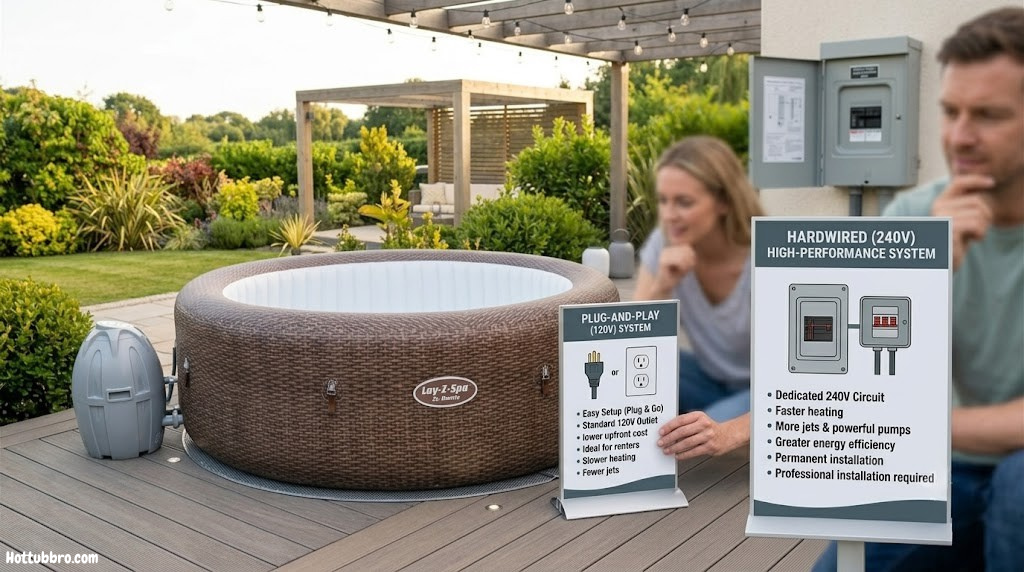
There’s a question every first-time hot tub buyer hits eventually: do I need to run new wiring, or can I just use the outlet in my backyard? The answer determines which category of hot tub you’re shopping in — and the two categories are surprisingly different animals.
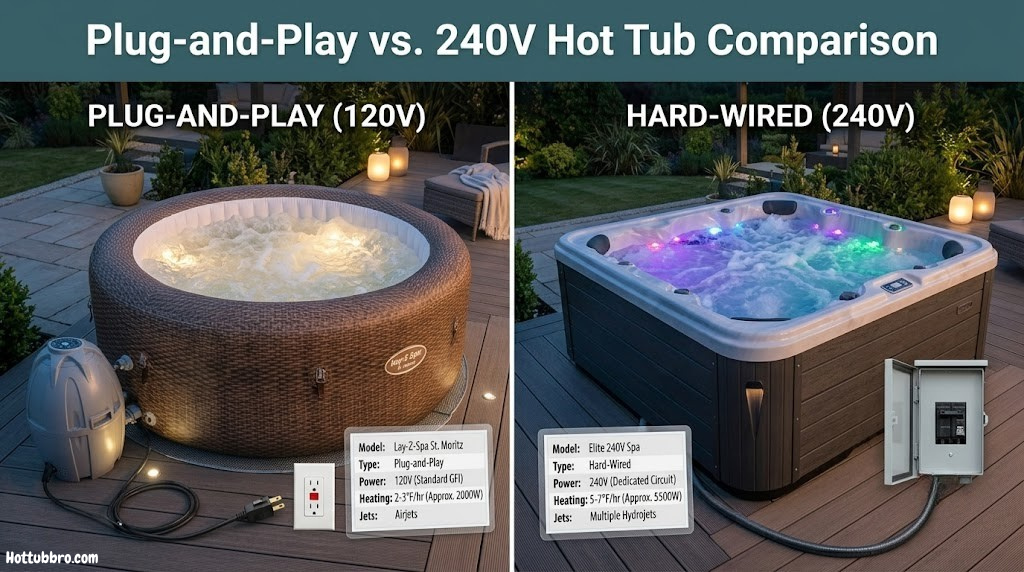
Plug-and-play tubs (also called 110V or 120V tubs) run on the same power your toaster uses. Drop them anywhere near a regular outdoor outlet, fill them up, and you’re soaking by evening. A 240V hardwired hot tub is a different commitment: it needs a dedicated circuit, an electrician, a disconnect box, and usually a permit. But in return it delivers real power — faster heating, more jets, and the ability to hold temperature even when it’s freezing outside.
This guide breaks down every meaningful difference between the two — from the voltage math to the monthly energy bill — so you can make a purchase you’ll still be happy with two winters from now.
What Is a Plug-and-Play Hot Tub?
A plug-and-play hot tub is any spa designed to operate on a standard North American household circuit — typically 110V to 120V at 15 to 20 amps. The name says it all: you plug it into an existing outdoor GFCI outlet, fill it with a garden hose, and it heats itself. No electrician required. No new wiring. No permit in most cases.
These tubs come in both inflatable and hard-shell (acrylic or rotomolded) forms. The inflatable category — brands like Intex, Coleman SaluSpa, and Bestway — is the most popular plug-and-play segment, but hard-sided plug-and-play spas do exist. Essential Hot Tubs, SereneLife, and a handful of other brands make compact acrylic units that still run on 110V power.
What’s Inside a Plug-and-Play Tub?
Because the power supply is limited, the components inside are necessarily modest. You’ll typically find:
- A 1 kW to 1.5 kW heating element — comparable to a hairdryer
- A single pump ranging from 0.5 to 1.5 HP
- 10 to 30 air jets (or water jets in some models)
- A basic digital control panel for temperature and jets
- A simple filtration system with a cartridge filter
The single biggest constraint is that a standard outlet simply cannot deliver enough amperage to run high-powered jets and the heater at the same time. Most 110V tubs are programmed to drop the heater when jets are running at full speed. You heat first, then enjoy. That tradeoff is the defining characteristic of this category, and it’s worth understanding before you buy.
If you’re curious about how the mechanics work under the hood, our guide on how an inflatable hot tub works walks through the full system in plain terms. And if you’ve already been exploring the inflatable side of this market, our best inflatable hot tubs roundup covers the top performers across jet power, build quality, and size categories.
- Zero installation — uses existing outlet
- No electrician, no permit (in most cases)
- Lower purchase price ($400–$2,500)
- Portable — can move between homes
- Good for renters and apartment dwellers
- Easy to store off-season
- Lower barrier to test the hot tub lifestyle
- Slow heating (1–2°F per hour)
- Cannot run heater and jets simultaneously
- Struggles in cold climates below 40°F
- Fewer jets, lower water pressure
- Shorter lifespan (3–7 years for inflatables)
- Lower resale value
- Limited hard-shell options
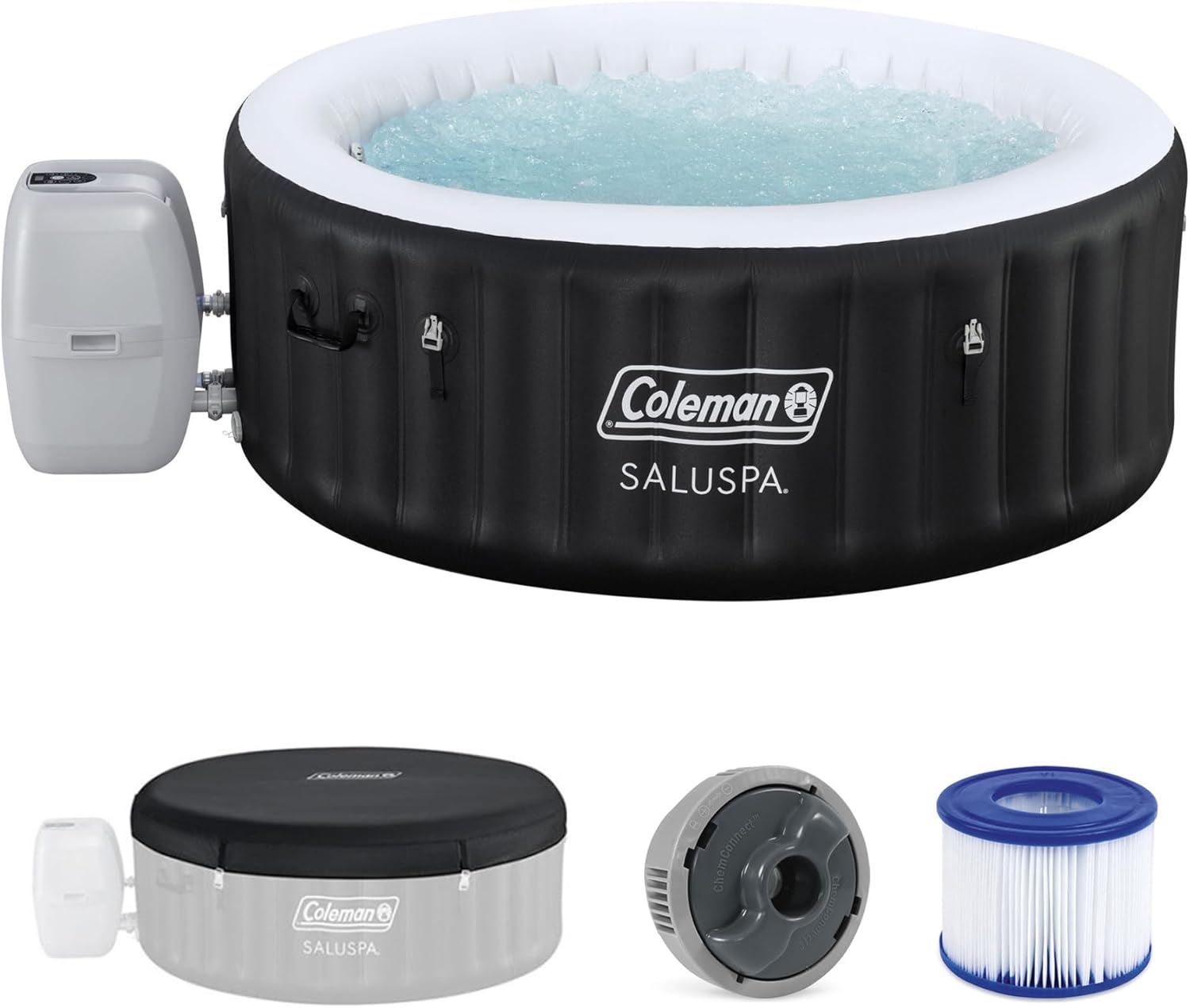
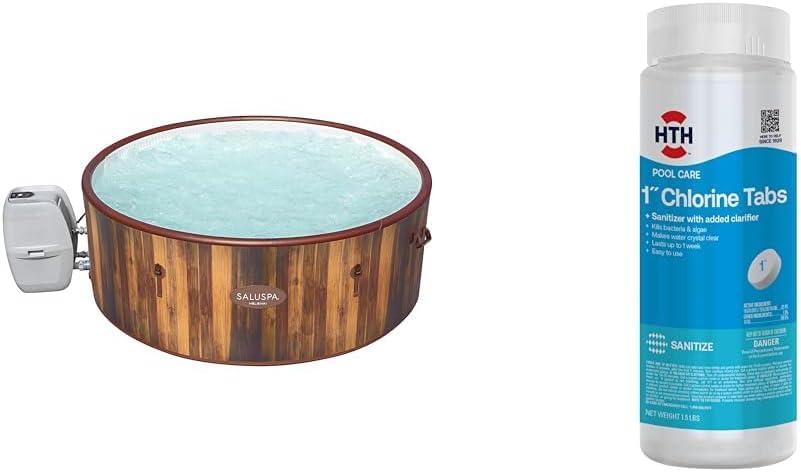
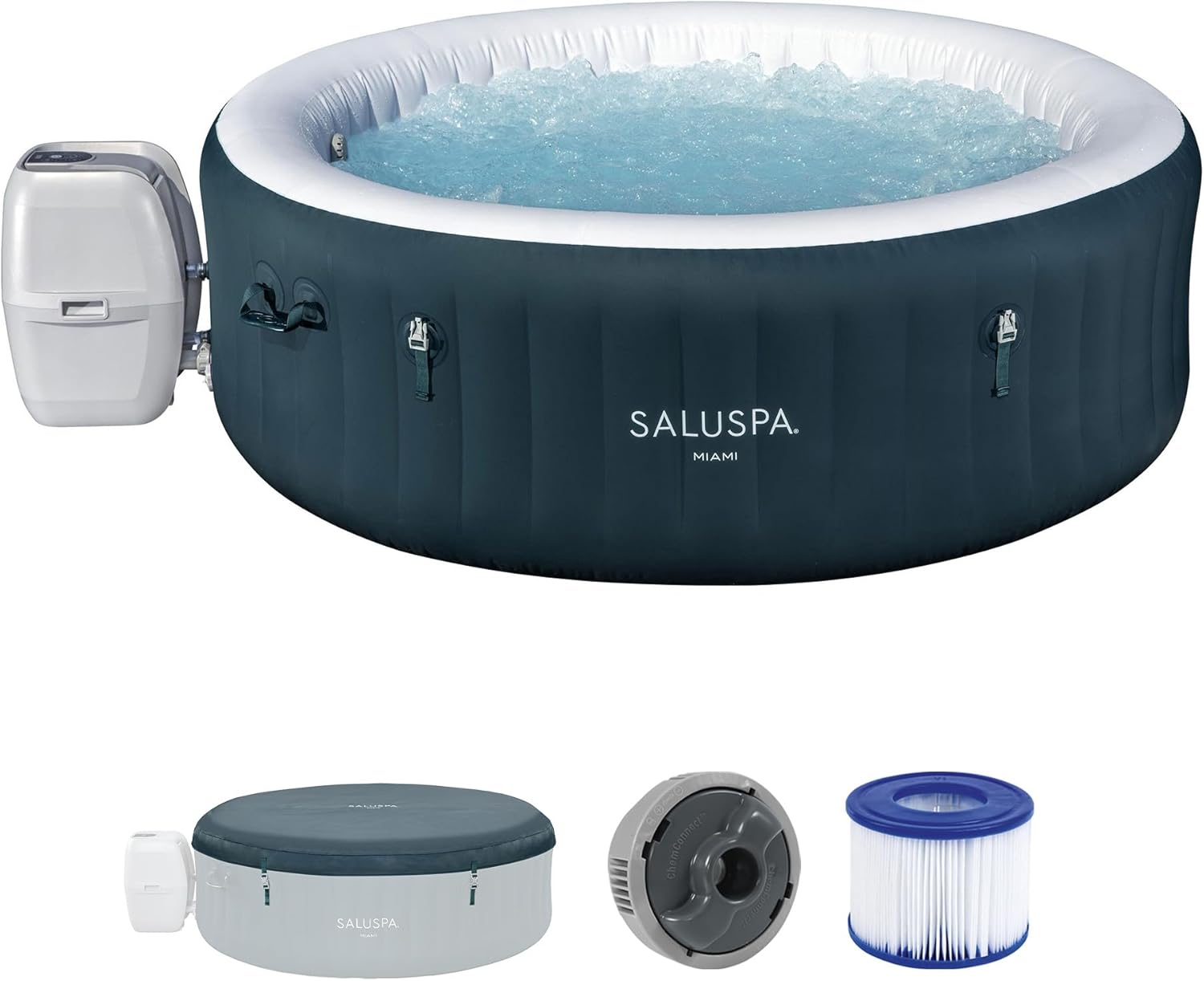
Best Plug-and-Play Pick: Coleman SaluSpa Miami
The most consistently rated 110V inflatable tub — reliable heating, 120 air jets, and no installation hassle whatsoever.
Check Price on AmazonWhat Is a 240V Hot Tub?
A 240V hot tub — often called a hardwired spa or a 240V GFCI spa — runs on the same power level as your electric dryer or range. To operate it, you need a dedicated circuit installed by a licensed electrician, running from your home’s main panel to a disconnect box located near the tub, and from there into the spa’s control pack.
This is the type of hot tub most people picture when they imagine “a real hot tub.” The deep acrylic shell. The built-in speakers. The jets that actually dig into your shoulders. All of those experiences require power that 110V simply cannot deliver — and 240V delivers it in abundance.
What’s Inside a 240V Hot Tub?
With two to four times the available amperage, manufacturers can fit significantly more powerful components into a 240V spa:
- A 5.5 kW to 6 kW titanium heating element (sometimes two)
- Two to four pumps rated at 2–4 HP each
- 30 to 100+ individual therapy jets, targeted at specific muscle groups
- Ozone or UV sanitation systems
- LED lighting, waterfall features, and Bluetooth audio
- Full foam insulation inside the cabinet for energy efficiency
- Digital or touchscreen control systems
Critically, a 240V tub’s heater and pumps can run at the same time without tripping the circuit. You don’t have to choose between heat and jets — you can have both, simultaneously, for as long as you want.
Good to know: Not all 240V tubs are equal. Some entry-level 240V spas draw only 30–40 amps, while high-end models with multiple pumps and heaters can pull 60–80 amps. Always check the spec sheet and match it to your panel’s available capacity before purchasing.
- Heats 4–6× faster than plug-and-play
- Runs heater and jets simultaneously
- Powerful therapeutic jet massage
- Handles cold climates without struggle
- Better insulation = lower long-term energy cost
- 10–20+ year lifespan with proper care
- Higher resale value
- More features: lighting, audio, ozone
- Requires licensed electrician installation
- $500–$2,000+ in electrical work
- Permit required in most areas
- Not portable — permanent installation
- Higher purchase price ($3,000–$20,000+)
- Larger footprint, heavier cabinet
- Not suitable for renters

Top 240V Entry Pick: Essential Hot Tubs Adena (30-Jet)
A genuine 240V hard-shell spa with real jet therapy, full insulation, and a competitive price for the power it delivers.
Check Price on AmazonThe Electrical Difference Explained — Without the Jargon
You don’t need an electrical engineering degree to understand why these two types of tubs behave so differently. The core principle is straightforward: power = voltage × current (P = V × I). More voltage means more available power, assuming you have adequate amperage behind it.
110V Circuit: How It Actually Works
Your standard North American outlet supplies roughly 110–120 volts at 15 or 20 amps. The maximum theoretical power available is around 1,800–2,400 watts. In practice, you can safely draw about 80% of that rated load continuously — meaning your plug-and-play tub is working with a ceiling of roughly 1,400–1,900 watts.
That’s enough to run a modest heater or a modest pump. Not both. Not simultaneously. The control board on a 110V tub knows this and automatically manages the load: when you activate jets above a low speed, the heater is switched off. When jets stop, the heater resumes. It’s a software workaround for a hardware limitation.
240V Circuit: Doubling the Available Power
A dedicated 240V, 50-amp circuit delivers up to 12,000 watts of available power. With continuous draw capped at 80%, you’re working with around 9,600 watts — roughly five to seven times what a 110V circuit delivers. That’s enough for a 5.5 kW heater running at full blast and two high-speed jet pumps running simultaneously, with headroom to spare for lighting and controls.
The practical result of this power gap shows up in two areas above all else: heating speed and simultaneous functionality. Both are covered in depth in the sections below.
Important safety note: Never attempt to run a plug-and-play tub on a 240V outlet by using an adapter. The tub’s components are rated for 110V and will be immediately damaged or destroyed. Always use the correct power source specified by the manufacturer. If you’re unsure about your home’s amperage capacity, see our guide on how many amps a hot tub uses.
Heating Speed: The Gap Is Bigger Than You Think
If you ask most people why they chose a 240V tub over a plug-and-play, heating speed comes up first. The difference isn’t subtle — it’s the kind of gap that changes how you actually use the tub on a day-to-day basis.
The Math Behind the Gap
Heating rate in a hot tub is primarily determined by heater wattage, water volume, and thermal losses through the shell. A plug-and-play tub typically has a 1 kW heater trying to warm 200–300 gallons of water. That yields approximately 1–2°F of temperature rise per hour.
A 240V tub’s 5.5 kW heater working on the same volume of water achieves roughly 5–8°F per hour. Starting from cold tap water at around 55°F, you need to reach 102–104°F for a comfortable soak — that’s a 47–49°F rise. Here’s what that means in practice:
Time to Reach 104°F from 55°F Cold Fill
Based on average 300-gallon tub volume with moderate ambient temperature. Results vary with insulation quality and ambient temperature.
What This Means in Real Life
With a 240V tub, you can decide on a Thursday night that you want a Friday evening soak — flip it on in the morning and it’s ready by the time you’re home from work. With a 110V tub, you need to plan further in advance, often starting the heat cycle the day before.
More critically: in winter, a plug-and-play tub’s heater often can’t outpace heat loss through the shell. On a cold night, the water may actually lose temperature faster than the 1 kW element can replace it. If you’re planning to use a hot tub year-round — or even just through late autumn — the 240V model’s heating advantage becomes close to essential. Our roundup of the best inflatable hot tubs for winter use explores which 110V models cope best with cold weather, but even the best of them hit a ceiling.
Pro tip: Keep your 240V tub at temperature continuously (100°F) rather than heating from cold each time. Modern insulation means the energy cost of maintaining temperature is lower than you’d think — and you’re always ready to soak. For more on energy use patterns, check out our guide on hot tub electricity consumption.
Installation Requirements: One Is Free, One Is a Project
Installation is where the two categories diverge most dramatically — not just in cost, but in complexity, lead time, and permanence.
Plug-and-Play Installation: 4 Steps, 1 Afternoon
Setting up a plug-and-play tub is genuinely uncomplicated. For an inflatable model, the process typically looks like this:
- Unbox and inflate the liner or shell
- Place on a flat, stable surface (patio, deck, or dedicated spa pad)
- Fill with a garden hose
- Plug into a nearby GFCI-protected 15- or 20-amp outdoor outlet
The one non-negotiable is the GFCI outlet. If your outdoor outlet doesn’t have GFCI protection — indicated by the TEST/RESET buttons on the outlet face — you need an electrician to swap it out before connecting any hot tub. That’s a minor fix, typically $50–$150, not a major project. Beyond that, you’re done. For a detailed walkthrough, our inflatable hot tub setup guide covers every step.
240V Hot Tub Installation: The Full Process
Installing a 240V tub is a multi-step project that typically spans one to three weeks by the time permits, scheduling, and inspections are factored in. Here’s what the process actually involves:
The full installation cost depends heavily on how far the panel is from the tub location, whether your panel has capacity for a new 50-amp breaker, and local labor rates. Budget conservatively:
| Installation Item | Typical Cost Range | Notes |
|---|---|---|
| Electrician labor (circuit run) | $400–$1,200 | Varies by wire run distance |
| 50A GFCI breaker | $80–$200 | Installed at main panel |
| Disconnect box | $50–$150 | Required within sight of tub |
| Conduit and wiring | $2–$8 per foot | Underground adds cost |
| Electrical permit | $50–$300 | Municipality-dependent |
| Panel upgrade (if needed) | $1,000–$3,500 | Only if panel is at capacity |
| Typical Total | $600–$2,000+ | Without panel upgrade |
For deeper guidance on the permits side of this equation, our article on whether you need a permit to install a hot tub breaks down the rules by installation type and location.

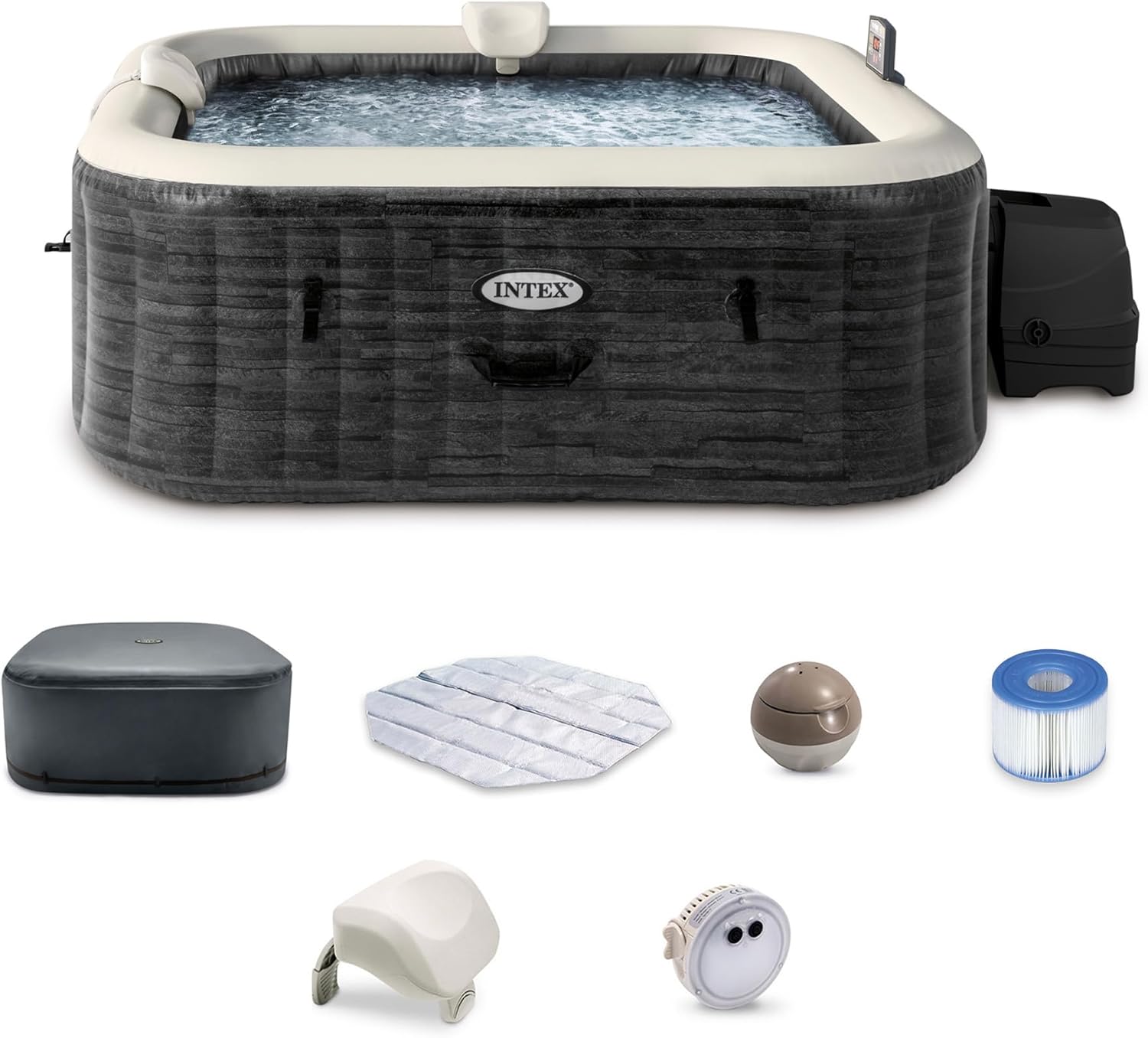
No-Install Pick: Intex PureSpa 4-Person
Simple, affordable, and genuinely capable — a solid choice if you want the hot tub experience without any electrical work.
Check Price on AmazonCost Breakdown: What You Really Pay Over Time
The purchase price is only one line in the true cost equation. To make a fair comparison, you need to account for purchase price, installation, running costs, maintenance, and eventual replacement. When you stack all of those up, the two categories often surprise buyers who expected a simple comparison.
Purchase Price
| Category | Entry Level | Mid Range | Premium |
|---|---|---|---|
| Inflatable Plug-and-Play | $300–$600 | $600–$1,200 | $1,200–$2,500 |
| Hard-Shell Plug-and-Play | $1,500–$2,500 | $2,500–$4,500 | $4,500–$7,000 |
| 240V Entry-Level | $3,000–$5,000 | $5,000–$9,000 | $9,000–$20,000+ |
True 5-Year Cost Comparison
A useful exercise is to model the total cost of ownership over five years. This is where the math often shifts toward 240V being the better value for regular users.
| Cost Factor | 110V Inflatable | 110V Hard-Shell | 240V Mid-Range |
|---|---|---|---|
| Purchase Price | $700 | $3,500 | $7,000 |
| Installation | $0 | $0 | $1,200 |
| Electricity (5 yrs × ~$600/yr) | $2,400 | $2,800 | $4,000 |
| Chemicals (5 yrs × ~$300/yr) | $1,500 | $1,500 | $1,500 |
| Maintenance / Repairs | $400 | $600 | $800 |
| Replacement at Year 5? | Likely — $700 | Possible | No |
| 5-Year Total (est.) | ~$5,700 | ~$8,400 | ~$14,500 |
| Resale Value at Year 5 | ~$0–$100 | ~$500–$1,000 | $2,000–$4,000 |
These are rough figures — real electricity costs vary enormously by local rates, usage frequency, and insulation quality. But the pattern holds: the 240V tub’s higher upfront cost is partially offset by better energy efficiency, much longer lifespan, and meaningful resale value. For buyers who use their tub four or more times per week, the per-use cost of a 240V model can actually become competitive with or lower than a frequently-replaced inflatable.
For a deeper dive into the electricity piece of this, our article on hot tub electricity usage covers exactly how to estimate your actual monthly cost based on your climate, usage habits, and local kWh rate.
Best time to buy a 240V tub: Prices are typically lowest at the end of summer and in early spring when dealers are clearing inventory. Our guide on the best time of year to buy a hot tub covers this in detail — buyers who time their purchase right can save $1,000–$3,000 on mid-range models.
Jets, Pumps, and Hydrotherapy Performance
Hydrotherapy is one of the primary reasons people invest in a hot tub — the targeted water pressure against sore muscles, stiff joints, or tired feet. This is an area where the performance gap between 110V and 240V tubs is felt most directly.
Plug-and-Play Jet Performance
Most 110V inflatable tubs use air jets rather than water jets. Air bubbles rise through the water, creating a fizzy, effervescent sensation that’s pleasant but not therapeutic in the clinical sense. Some higher-end inflatables and plug-and-play hard-shells have genuine water jets, but they’re powered by modest pumps that produce moderate pressure.
For light relaxation and warmth — after a long day, stress relief, casual soaking — air jets work fine. For targeting a specific area of back pain, loosening a tight IT band, or getting the kind of deep tissue stimulation that physical therapists reference when they recommend hydrotherapy, plug-and-play jets fall short.
240V Jet Performance
A 240V tub with two or three 2–4 HP pumps and 50+ jets is a different experience entirely. Individual jets are often adjustable in direction and intensity. Lounger seats position jets against lumbar, shoulder blade, calf, and foot zones simultaneously. Neck and shoulder jets can be dialed in with enough pressure to feel genuinely therapeutic.
This distinction matters particularly for anyone dealing with arthritis, chronic back pain, or post-workout recovery — all areas where the research on hydrotherapy shows real clinical benefit. Our articles on hot tubs and arthritis relief and hot tubs for workout recovery go deeper into the physiology here.
110V Jet Type
Primarily air jets. Some models include hybrid air/water. Gentle, relaxing, not therapeutic in the clinical sense.
240V Jet Type
High-pressure water jets, targeted to specific muscle groups. Multiple speeds and directional adjustment.
Typical Jet Count
110V: 10–30 jets. 240V: 30–100+ jets across multiple pumps and zones.
Pump Power
110V: 0.5–1.5 HP single pump. 240V: 2–4 HP per pump, often 2–3 pumps total.
If your primary use case is soaking and warmth — and you’re not specifically seeking therapeutic jet massage — a plug-and-play tub delivers genuine value. If you’re comparing models in the plug-and-play space, our side-by-side of the Intex PureSpa vs Coleman SaluSpa shows where the performance differences actually land between the top two brands.

Top Air-Jet Pick: Bestway SaluSpa Miami
120 air jets, compact design, and one of the most reliable inflatable builds at this price point. Our full breakdown is available in the Bestway SaluSpa Miami review.
Check Price on AmazonEnergy Use and Efficiency: The Numbers Behind the Bill
Energy cost is consistently one of the top concerns for hot tub buyers — and one of the most misunderstood areas. The intuitive assumption is that bigger power draw equals higher electricity bill. The reality is more nuanced.
Why 110V Can Cost More Than You Expect
A plug-and-play tub’s heater draws less wattage in any given moment — roughly 1 kW vs. a 240V tub’s 5.5 kW. But because its heater is so weak relative to heat loss (especially in cold weather), it runs for far longer to maintain temperature. Additionally, most inflatables have minimal insulation — thin vinyl walls and no foam cabinet — so they lose heat rapidly to the surrounding air.
In cold climates, a plug-and-play tub may run its heater near-continuously in winter, accumulating hours of low-wattage draw that adds up to a meaningful monthly bill — sometimes comparable to a well-insulated 240V model that can heat efficiently and then coast on insulation.
Why 240V Tubs Can Be More Efficient
Modern 240V hot tubs use full-foam insulation — expanding foam injected into every cavity of the cabinet — plus heavily insulated covers. These tubs can hold heat so effectively that once they’ve reached temperature, the heater cycles on only occasionally to top up heat loss. A well-insulated 240V tub in a moderate climate might only cycle the heater for a few hours per day.
| Factor | 110V Inflatable | 110V Hard-Shell | 240V Mid-Range |
|---|---|---|---|
| Heater wattage | 1,000–1,500W | 1,000–1,500W | 5,500–6,000W |
| Insulation quality | Minimal | Moderate | Full-foam |
| Heat retention | Poor–Fair | Fair | Excellent |
| Daily energy use (moderate climate) | 3–6 kWh | 4–7 kWh | 4–8 kWh |
| Monthly cost (est. $0.15/kWh) | $14–$27 | $18–$32 | $18–$36 |
| Monthly cost in winter (cold climate) | $40–$80+ | $50–$90 | $35–$65 |
These numbers vary widely by climate, usage frequency, and how well you maintain the cover. A high-quality insulated cover makes a major difference in daily energy consumption for any tub type — our roundup of the best hot tub covers covers the options that actually move the needle on heat retention.
Winter performance warning: In climates that regularly see temperatures below 40°F (4°C), a plug-and-play inflatable’s heater may simply not keep pace with heat loss, especially overnight. You may wake up to water that has dropped 10–15°F despite the heater running all night. For serious winter use, our guide on using an inflatable hot tub in winter covers what’s actually feasible and what the limits are.
Who Each Type Is Actually Right For
The best way to approach this decision isn’t asking “which is objectively better” — it’s asking which one fits your specific situation. These are genuinely different products for different buyers.
Choose a Plug-and-Play Tub If You:
- Rent your home — You can’t run new wiring in a rental, and a plug-and-play is fully portable when you move.
- Have a tight budget — Getting into the hot tub experience for $400–$800 is a real option with plug-and-play.
- Want to try before committing — Buying a $700 inflatable to see how often you actually use a hot tub is a perfectly rational test before investing $8,000+ in a hardwired spa.
- Live in a mild climate — If temperatures rarely drop below 50°F where you live, a plug-and-play’s heating limitations are far less significant.
- Use it occasionally — For weekend soaks and occasional stress relief rather than daily therapeutic use, plug-and-play delivers solid value per dollar.
- Have limited outdoor space — Inflatable plug-and-play tubs can fit on small balconies or compact decks where a full cabinet spa wouldn’t.
- Need portability — Want to bring it on trips to a vacation cabin? Plug-and-play is the only option.
Choose a 240V Hot Tub If You:
- Own your home — You can make the permanent electrical investment that pays off over years of ownership.
- Plan to use it 3–7 times per week — Daily users see the 240V’s performance advantages and lower per-use cost most clearly.
- Live in a cold climate — Year-round use in freezing temperatures is only viable with a 240V tub.
- Have therapeutic goals — Arthritis, chronic pain, athletic recovery, or insomnia management all benefit from the genuine hydrotherapy a 240V tub delivers. Our article on hot tubs and sleep quality outlines why temperature and timing matter.
- Want to entertain — Four to seven people soaking comfortably requires a full-size 240V tub. Inflatables get cramped.
- Care about long-term value — A 240V tub holds resale value. A used inflatable is essentially worthless.
- Want a premium soaking experience — Lighting, sound, multiple jet zones, waterfall features — these only exist in the 240V segment.
The Bottom Line on Fit
There’s no universally “better” answer — there’s only the right answer for your situation. What we can say clearly is that the decision is usually made by three factors: whether you own your home, how cold your winters get, and how frequently you’ll actually use the tub.
Renter / Occasional Use / Mild Climate
Plug-and-play wins. Lower financial risk, zero installation, and good enough performance for casual use.
Homeowner / Daily Use / Cold Climate
240V wins. The performance, longevity, and therapeutic capability justify the investment for frequent users.
Homeowner on a Budget
Consider a plug-and-play first. If you find you use it constantly, that validates the upgrade path to a hardwired spa.
Health / Therapy Goals
240V is the medically supported choice. The jet pressure and heating consistency matter for genuine hydrotherapy.
Best Models to Consider in Each Category
Rather than a simple list of tubs, the most useful thing here is a framework for evaluating options — combined with a few standout models that consistently deliver on their promises within each category.
Top Plug-and-Play Models
| Model | Capacity | Jets | Heater | Best For |
|---|---|---|---|---|
| Coleman SaluSpa | 4–6 person | 120 air jets | 1,200W | Best all-around inflatable |
| Bestway SaluSpa Miami | 2–4 person | 120 air jets | 1,200W | Small patios, couples |
| Intex PureSpa Plus | 4 person | 140 air jets | 1,100W | Budget-friendly reliability |
| Goplus 4-Person Inflatable | 4 person | 108 air jets | 1,350W | Value, compact footprint |
| SereneLife Inflatable Spa | 4 person | 120 air jets | 1,200W | Quiet pump, reliable brand |
| Essential Hot Tubs Adena | 2 person | 30 water jets | 1,500W | Hard-shell plug-and-play jet therapy |
Top 240V Models (by Value Tier)
| Model / Brand | Capacity | Jets | Circuit | Price Range |
|---|---|---|---|---|
| Essential Hot Tubs (240V) | 2–6 person | 30–90 jets | 50A / 240V | $3,500–$7,000 |
| Lifesmart / Aquarest | 4–6 person | 19–65 jets | 40–50A | $2,800–$5,500 |
| Bullfrog Spas | 2–7 person | 30–80+ jets | 50–60A | $7,000–$15,000 |
| Jacuzzi J-Series | 2–9 person | 20–75 jets | 50–60A | $9,000–$20,000+ |
| Hot Spring Spas | 2–7 person | 19–57 jets | 50–60A | $8,000–$18,000 |
If you’re looking at the used market — which is a legitimate strategy for getting into a quality 240V tub at a lower price — our used hot tub buying guide walks through what to inspect, what questions to ask, and what warning signs to avoid.

Also Worth Considering: Aleko 4-Person Inflatable
A consistently reliable 110V option with solid build quality. Read the full Aleko hot tub review for the detailed breakdown.
Check Price on AmazonMaintenance Differences: More Similar Than You’d Expect
Water chemistry maintenance is one area where plug-and-play and 240V tubs are more similar than different. Both require the same fundamental water care routine: pH balance, sanitizer dosing, alkalinity adjustment, and regular filter cleaning. The protocols are essentially identical regardless of the tub’s power source.
Water Chemistry Basics for Both Types
Regardless of which type you own, you’ll need to maintain:
- pH: 7.2–7.8 (test 2–3× per week)
- Alkalinity: 80–120 ppm
- Sanitizer (chlorine or bromine): 3–5 ppm for chlorine, 3–6 ppm for bromine
- Calcium hardness: 150–250 ppm
- Shock treatment: Weekly or after heavy use
Our complete hot tub chemicals guide covers dosing schedules, product selection, and what to do when parameters go out of range. If you’re debating chlorine versus bromine, the breakdown at bromine vs chlorine for hot tubs covers the tradeoffs clearly.
Where Maintenance Differs
The practical maintenance differences between the two tub types show up in a few specific areas:
| Maintenance Task | 110V Inflatable | 240V Hard-Shell |
|---|---|---|
| Filter cleaning | Weekly rinse, monthly deep clean | Weekly rinse, monthly deep clean |
| Filter replacement | Every 2–4 months | Every 4–6 months (larger filters) |
| Water change | Every 1–3 months | Every 3–4 months |
| Shell cleaning | Each water change; simpler shape | Each water change; more surface area |
| Liner inspection | Monthly for punctures or stress points | N/A — rigid shell |
| Pump / jet maintenance | Minimal — simpler system | Annual service recommended |
| Cover care | Wipe monthly | Condition vinyl quarterly |
| Winterization | Deflate and store if unused | Full winterization procedure required |
The inflatable’s lower complexity is an advantage in maintenance — fewer jets to clean, simpler filtration, and the ability to drain and store it completely if you’re not using it. A 240V tub requires a more involved winterization process if you’re in a freezing climate and plan to shut it down for the season. Our inflatable hot tub maintenance guide and our full filter replacement guide are both useful reference points here.
One area where 240V owners have an advantage is access to better secondary sanitation options. UV and ozone systems, which significantly reduce the chemical load and help keep water cleaner between treatments, are available on most 240V models. If you’re curious about how those systems compare, our breakdown of UV vs ozone hot tub sanitizers is worth reading before you make a choice.
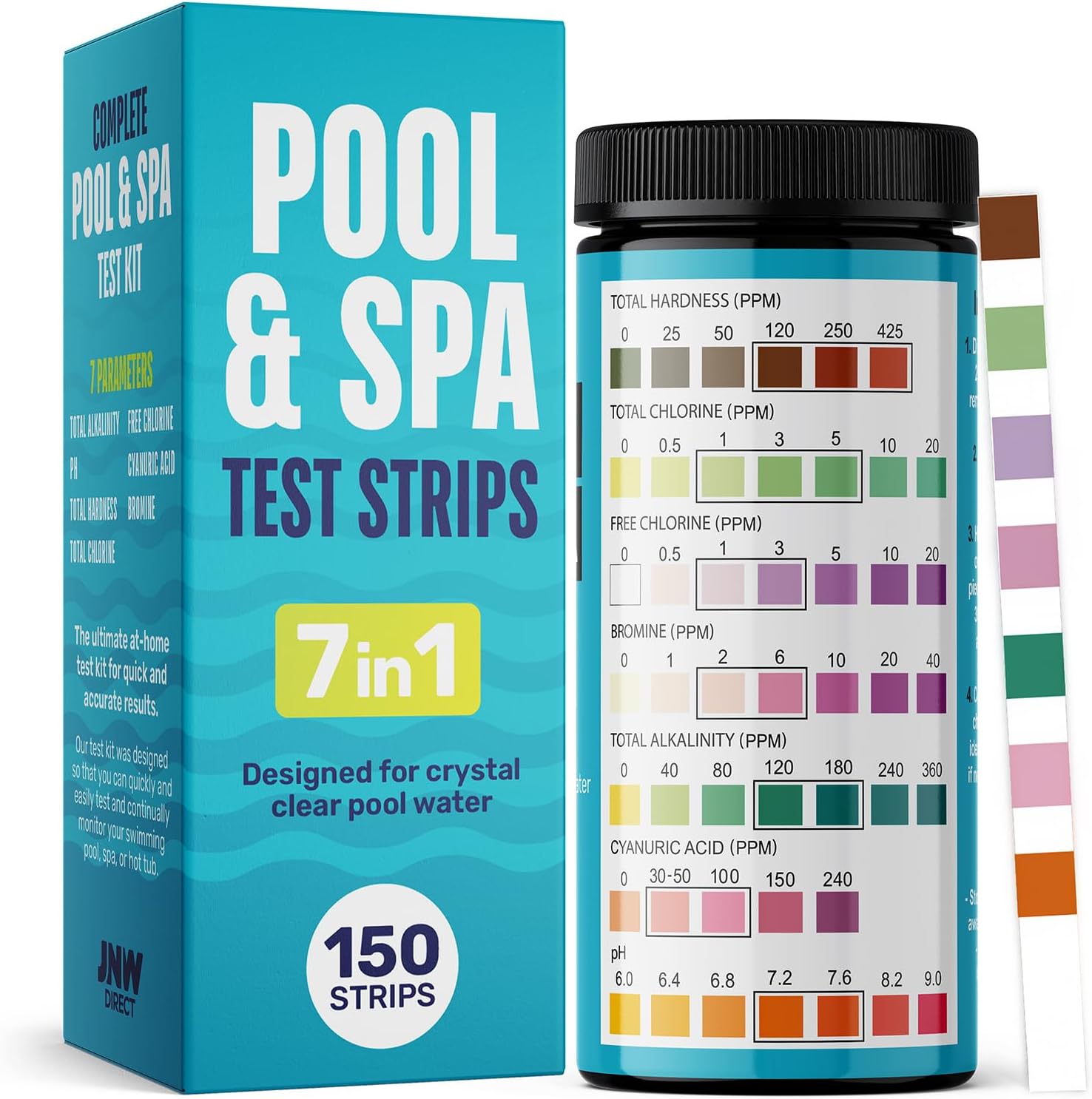
Simplify water testing: Regardless of tub type, a quality digital water tester pays for itself quickly in chemical savings. Our review of the best hot tub water testers identifies the most accurate options across different budget levels.
Full Side-by-Side Comparison and Final Verdict
Here’s the complete head-to-head — every meaningful factor, scored objectively so you can see where each type wins and loses.
| Factor | 110V Plug-and-Play | 240V Hardwired | Winner |
|---|---|---|---|
| Purchase price | $300–$2,500 | $3,000–$20,000+ | 110V |
| Installation cost | $0 | $600–$2,000+ | 110V |
| Heating speed | 1–2°F/hour | 5–8°F/hour | 240V |
| Simultaneous heat + jets | No | Yes | 240V |
| Jet power / therapy | Air jets, low pressure | High-pressure water jets | 240V |
| Cold climate performance | Poor–Fair | Excellent | 240V |
| Portability | Fully portable | Permanent | 110V |
| Renter-friendly | Yes | No | 110V |
| Long-term energy cost | Variable, often higher | Lower with good insulation | 240V |
| Lifespan | 3–7 years (inflatable) | 10–20+ years | 240V |
| Resale value | Minimal | Significant | 240V |
| Features (lighting, audio) | Basic | Premium | 240V |
| Water chemistry complexity | Same as 240V | Same as 110V | Tie |
| Setup time | 1 afternoon | 1–3 weeks (w/ install) | 110V |
| Value for occasional use | High | Overkill | 110V |
| Value for daily use | Lower per-use value | High | 240V |
Our Honest Assessment
Plug-and-play tubs win on accessibility, and that matters enormously for a large portion of the market. The ability to try the hot tub lifestyle without a four-figure installation bill, without a permit, without an electrician — that removes the barrier for renters, for budget-conscious buyers, and for anyone who isn’t yet certain they’ll use a tub regularly enough to justify a major investment.
But for homeowners who are confident they’ll use a hot tub frequently — especially in climates with real winters, and especially for anyone with therapeutic goals — the 240V tub is the better long-term investment. The heating capability, jet performance, longevity, and energy efficiency of a well-insulated 240V spa outperform any plug-and-play alternative once you’re past the first year or two of ownership.
The most common mistake we see is buyers purchasing a 240V tub they rarely use, or buyers stuck with an inflatable that can’t keep up with their needs in winter. Know your usage pattern before you buy. If you’re unsure — start with plug-and-play. If you’re certain — invest in the 240V from the start.

Mid-Tier Inflatable Pick: MSpa Starry
A step up in build quality and insulation from basic inflatables — good for cold-climate plug-and-play use. Read our MSpa Starry review for the full breakdown.
Check Price on AmazonFrequently Asked Questions
Conclusion: Making the Right Call for Your Situation
The plug-and-play vs 240V debate is ultimately a question of where you are right now — in your life, in your home situation, and in your clarity about how a hot tub will fit into your routine.
Plug-and-play tubs earn their place in the market. They’ve brought the hot tub experience to millions of people who otherwise couldn’t access it — renters, budget-conscious buyers, people in apartments, and anyone who just wants to dip a toe in before diving all the way in. If any of that describes you, a quality 110V inflatable is a legitimate and sensible choice.
For homeowners who know they’ll use a hot tub regularly — who want real jet therapy, who live somewhere cold, who see a hot tub as a long-term investment in their health and home — the 240V route is the better path. It asks more of you upfront, but it delivers more for years to come.
Whatever direction you lean, go in with clear expectations. Know what you’re getting and what you’re not. That’s the difference between a purchase you’re still happy with five years from now, and one you regret by winter.