Lay-Z-Spa Helsinki Review: Is This Nordic-Inspired Spa Worth the Hype in 2026?
In the world of home wellness, few things scream luxury quite like a steaming hot tub on a crisp evening. But for many, the permanent commitment of a traditional hard-shell acrylic tub—not to mention the eye-watering price tag—is a significant barrier. Enter the Lay-Z-Spa Helsinki AirJet. With its unique wood-panel print and revolutionary drop-stitch construction, it promises the aesthetics and durability of a permanent fixture with the flexibility of an inflatable.
If you have been researching are inflatable hot tubs worth it, the Helsinki is often the model that tips the scale toward “yes.” It doesn’t look like your standard “balloon” spa. Instead, it offers a slim-walled, sophisticated profile that fits naturally into any garden landscape. In this comprehensive Lay-Z-Spa Helsinki review, we are going deep into the specs, the performance, the winter capabilities, and whether it truly stands up to the rigors of year-round use.

Product Overview: The Nordic Aesthetic Meets Modern Tech
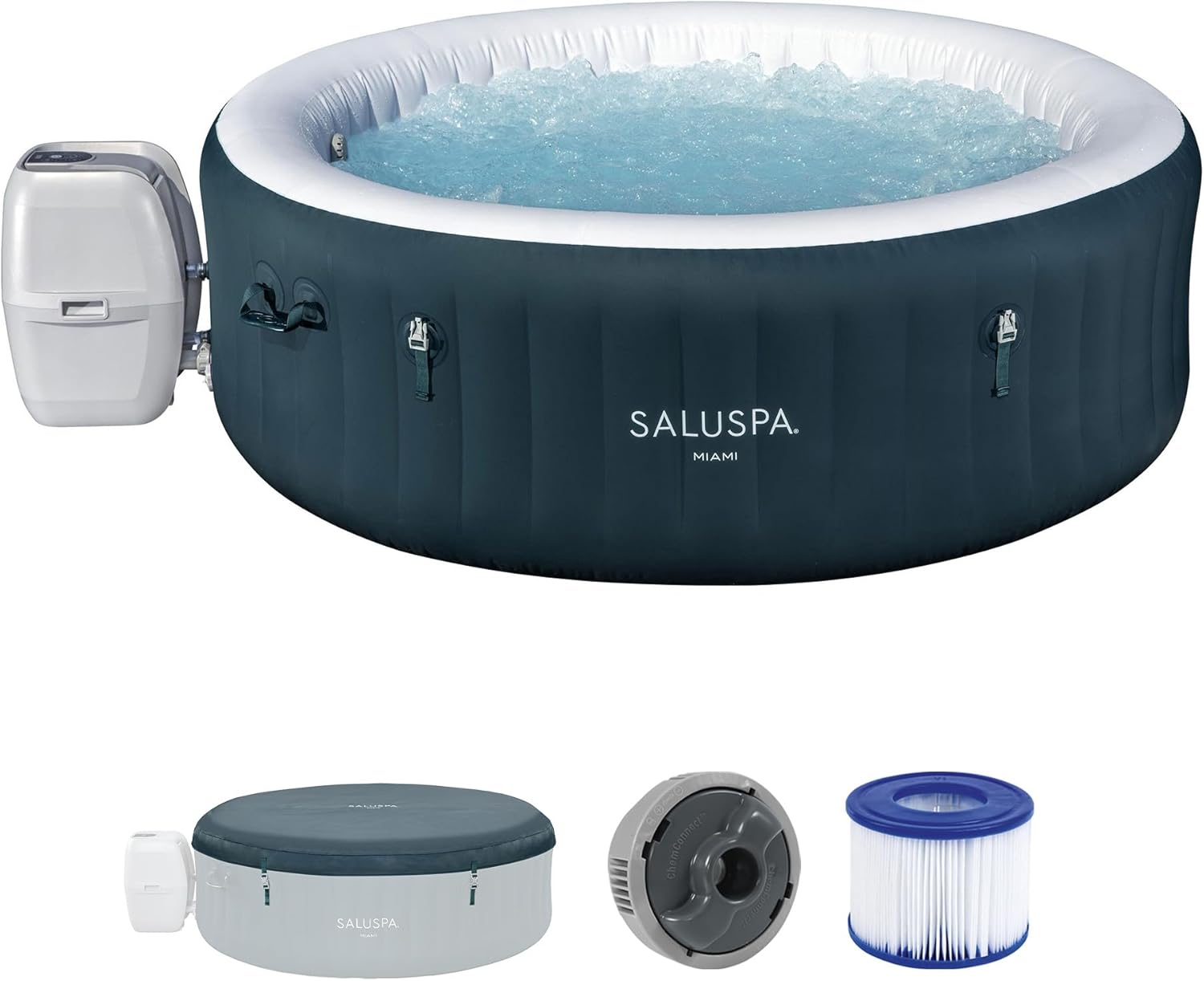
The Helsinki AirJet is part of Bestway’s premium lineup. Unlike the bulky, thick-walled designs found in models like the Bestway SaluSpa Miami, the Helsinki uses “Drop-Stitch” technology. This is the same material used in high-end stand-up paddleboards. Thousands of fine threads connect two pieces of durable material, allowing the tub to be inflated to a very high pressure. The result? Walls that are incredibly thin yet rock-hard to the touch.
Key Specifications
| Feature | Specification |
|---|---|
| Capacity | 5-7 Adults |
| Water Capacity (80%) | 1,123 Litres (297 Gallons) |
| Inflated Size | 1.80m x 66cm (71″ x 26″) |
| Filled Weight | 1,155 kg (2,548 lbs) |
| Heating System | Approx. 1.0-1.5°C/h (2-3°F/h) |
| Max. Heat Capability | 40°C (104°F) |
| Massage System | 180 AirJets |
What immediately sets the Helsinki apart is its footprint. Because the walls are so thin (only about 5cm thick compared to the 20cm+ on standard inflatables), you get a much larger internal soaking area without taking up more space in your garden. This makes it a strong contender for the best 4-person inflatable hot tub category, even though it is technically rated for up to seven people.
Electrical Requirements: Voltage, GFCI, and Circuit Considerations
Because the Helsinki is sold across multiple markets, its electrical requirements aren’t quite one-size-fits-all, and this is one of the most commonly searched practical questions from prospective buyers before they commit to a purchase.
US and Canadian Units (110-120V)
North American versions run on standard 110-120V household current at roughly 13-15 amps, exactly like other Bestway plug-and-play spas. The pump ships with a built-in GFCI (Ground Fault Circuit Interrupter) molded directly into the plug. This is a legally required safety feature for any appliance mixing water and mains electricity, and it should never be bypassed, taped over, or replaced with a non-GFCI plug.
UK and EU Units (220-240V)
European and UK versions run on 220-240V but at a much lower amperage than a hardwired 220V spa in North America, since standard EU household sockets are rated differently. These units still plug into a normal wall socket via an RCD (Residual Current Device)-protected plug, which serves the same protective function as a GFCI. UK buyers should confirm their outdoor socket, if using one, is itself RCD-protected at the consumer unit as an added layer of protection, since UK electrical regulations treat outdoor sockets more strictly than indoor ones.
Dedicated Circuit Recommendation
Regardless of region, avoid sharing the circuit powering the Helsinki with other high-draw appliances such as refrigerators, window air conditioners, or power tools. The Helsinki’s pump draws a fairly steady load while heating, and adding another appliance’s startup surge on the same circuit is the most common cause of nuisance breaker trips reported by owners in the first few weeks of ownership.
No Extension Cords
As with every plug-and-play spa on the market, Bestway explicitly prohibits extension cords. Voltage drop over an extension cord’s length can cause the pump to underperform, run hot, or in worst cases create a fire risk. If your desired location is farther from an outlet than the cord allows, the correct solution is having a qualified electrician install a new outlet closer to the tub, not bridging the distance with a cord.
Deep Dive Review: Construction and Durability
Durability is the number one concern for potential owners. We’ve all seen the cheap versions that sag after a month. The Helsinki addresses this through its Drop-Stitch material. When fully inflated, you can sit on the edge of the tub without it buckling—a feat most inflatable spas cannot achieve. This rigidity also makes it significantly easier to get in and out of, which is a vital consideration if hot tubs are good for arthritis in your specific use case.
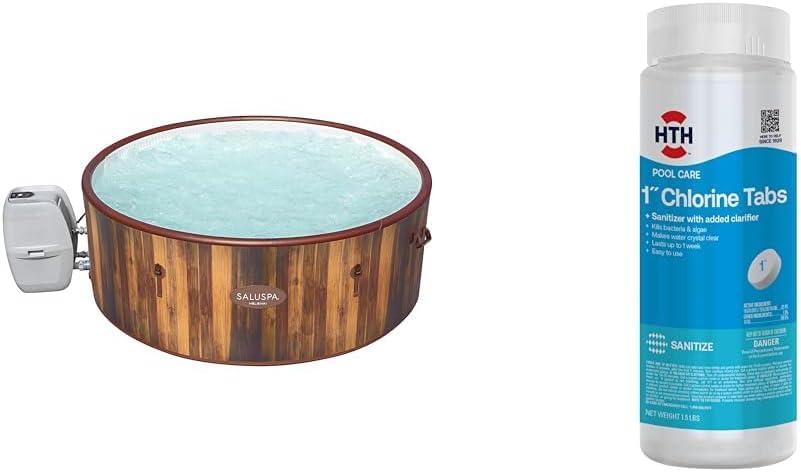
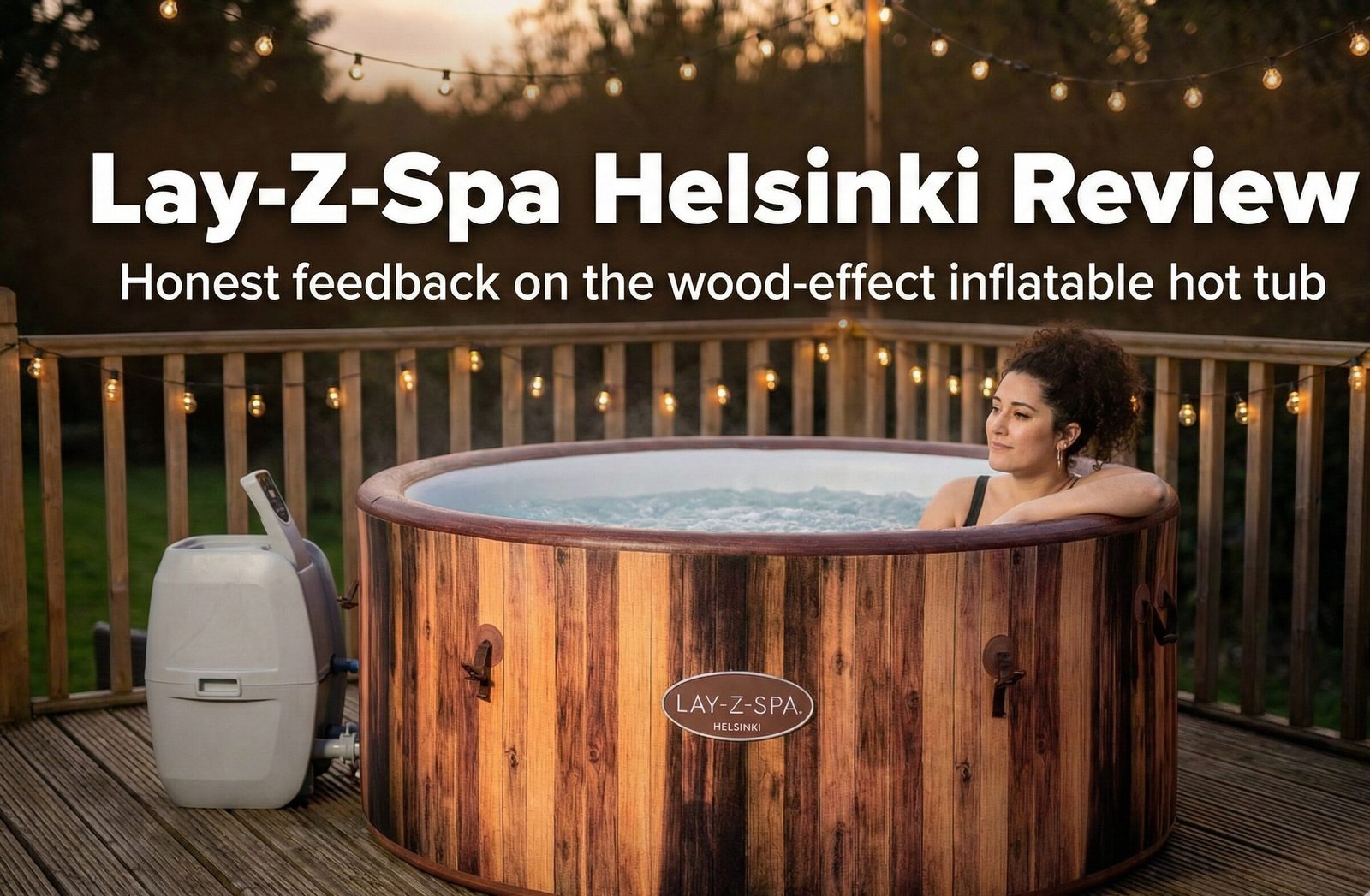
The exterior features a high-definition Nordic wood-effect print. While it’s obviously not real wood, from a distance, it blends seamlessly with decking and outdoor furniture. The internal liner is a clean, crisp white, providing a beautiful contrast when the water is crystal clear and the bubbles are active.
The Freeze Shield™ Technology
One of the biggest selling points of the Helsinki is its year-round capability. Historically, you had to pack your spa away when temperatures dropped below 4°C. The Helsinki features Freeze Shield™, an automatic heating function that prevents water from freezing in the pump or liner. This makes it perhaps the best inflatable hot tub for winter currently on the market. If you’ve ever wondered can you use an inflatable hot tub in the winter, the answer is a resounding yes with this model.
Performance Evaluation: Heating and Massage
The Helsinki utilizes a 180 AirJet system. Unlike the premium hydro-jet models (which feature directional water nozzles), AirJets pump air through the base of the tub to create a vigorous, all-encompassing bubble massage. While it won’t provide a pinpoint deep-tissue massage, the 180 jets are strategically placed around the entire perimeter, ensuring no one in the tub is left out of the relaxation.
Heating is consistent but, like all 110-120V (or 220-240V in the UK/EU) inflatable spas, it takes time. You can expect about 1 to 1.5 degrees Celsius of gain per hour. If you are setting it up for the first time, expect a 24-hour wait before it reaches the maximum 40°C. For those worried about power consumption, you might ask do inflatable hot tubs use a lot of electricity? The Helsinki is relatively efficient due to its insulated cover, but running it in freezing temperatures will definitely reflect on your utility bill.
The Control Pump
The pump unit is the “brain” of the Helsinki. It handles inflation, heating, filtration, and the massage system. The 2026 version features a flip-up digital control panel that is easy to reach while sitting inside the tub. It also includes integrated cup holders—a small but essential “quality of life” feature.
Real Cost Breakdown: Running the Helsinki Day by Day
The FAQ answer of “$1 to $3 per day” is a fair average, but it’s worth breaking down where that cost actually comes from so you can estimate your own situation more precisely.
Initial Heat-Up From Cold Fill
Filling with cold tap water (around 60°F/15°C) and heating to the maximum 104°F/40°C represents roughly a 44°F/24°C rise. At the Helsinki’s typical 1-1.5°C per hour gain, that’s 16-24 hours of continuous heater run time. With a heater rated around 1.2kW-1.5kW, that single heat-up cycle consumes somewhere between 19 and 36 kWh depending on ambient conditions and how close to the top of that time range your specific unit and season fall. At the US national average rate of roughly $0.16/kWh, that works out to approximately $3-$6 for the very first fill.
Ongoing Maintenance Heating
Once at temperature, the heater cycles on and off to hold the set point, similar to a home thermostat. In mild weather with the cover on, expect the heater to run maybe 25-35% of the time, translating to roughly $0.80-$1.60 per day. In cold or windy weather, especially with Freeze Shield keeping the system from freezing overnight, that duty cycle rises substantially, which is where the higher end of the $1-$3/day estimate comes from.
Monthly Estimate Table
| Scenario | Estimated Daily Cost | Estimated Monthly Cost |
|---|---|---|
| Mild climate, cover used consistently | $0.80 – $1.60 | $24 – $48 |
| Cold climate, Freeze Shield active overnight | $2.00 – $3.50 | $60 – $105 |
| Heavy jet use, cover often left off | $3.00 – $4.50 | $90 – $135 |
Jets Barely Move the Needle
The 180 AirJet blower draws far less than the heater—typically a few hundred watts. Running the massage function for 30 minutes a day adds only pennies to a session, confirming that the heater, not the jets, is responsible for nearly all of the running cost discussed above.
Capacity and Seating, Realistically Explained
Bestway advertises the Helsinki for 5-7 people, but as with most inflatable spas, that figure assumes everyone is seated shoulder to shoulder with legs meeting in the center. In practical terms, most owners find 4-5 adults is the sweet spot for a comfortable soak with actual room to stretch out, while 6-7 works for a shorter social gathering rather than a long relaxed soak.
Because the Helsinki has a flat floor rather than molded bench seating, everyone sits at the same water depth, which is part of why the Helsinki’s larger internal diameter (a direct benefit of its thin drop-stitch walls) matters more here than on a standard thick-walled inflatable of the same footprint—there’s simply more usable floor space for the same amount of yard space consumed. This flat-floor design is also why booster seats, mentioned in the cons section, become a popular add-on for shorter adults and children who otherwise sit with water closer to shoulder height than chest height.
Helsinki vs. Other Lay-Z-Spa Models in the Lineup
Bestway sells the Helsinki alongside several other Lay-Z-Spa models, and shoppers often land on the Helsinki’s product page only after starting their search on a different, more familiar name in the lineup.
Helsinki vs. Paris
The Lay-Z-Spa Paris is a round, standard-wall inflatable known for its color-changing LED light show. It’s a strong choice for buyers who want a fun, party-oriented tub with a smaller footprint and lower price point, but it lacks the drop-stitch rigidity, the Nordic wood aesthetic, and the winter-ready Freeze Shield capability that define the Helsinki.
Helsinki vs. Vegas
The Vegas is one of Bestway’s most popular hexagonal models, offering a good balance of capacity and price. It uses standard I-beam wall construction rather than drop-stitch, meaning walls are thicker and the usable internal space is smaller for a similar overall footprint compared to the Helsinki.
Helsinki vs. Milan
The Milan sits closer to the Helsinki in terms of premium positioning, also featuring a wood-effect exterior in some releases, but it typically lacks the full drop-stitch build quality throughout and the specific PSI rigidity that makes the Helsinki’s edge sittable.
Where the Helsinki Fits
Within Bestway’s own catalog, the Helsinki occupies the top tier: premium materials, winter-capable engineering, and the most refined aesthetic, at a correspondingly higher price point than the Paris, Vegas, or standard Miami models.
Pros and Cons: The Honest Truth
What We Love
- Drop-Stitch Construction: Unmatched rigidity and slim profile.
- Aesthetics: The wood print is the best-looking on the market.
- Freeze Shield: Safe to use in temperatures down to -10°C.
- Capacity: Fits 4-5 adults comfortably (7 is a squeeze).
- Easy Setup: No tools required; inflates using the spa pump.
The Drawbacks
- Noise: The AirJet pump is quite loud when active.
- Heating Speed: Slower than permanent hard-shell tubs.
- No Seats: You sit directly on the floor (consider a booster seat).
- Floor Padding: While padded, it benefits from extra hot tub pads underneath.
Setup and Installation Guide
Setting up the Helsinki is surprisingly straightforward, but it requires a bit of prep. First, ensure you have a flat, level surface capable of supporting over 1,100kg. Referencing our inflatable hot tub setup guide, we always recommend a dedicated circuit to avoid tripping breakers.
- Unpack: Lay out the liner and the pump unit. Let the liner warm up if it has been stored in a cold garage.
- Inflate: Connect the hose from the pump to the liner. The Helsinki inflates in about 5-8 minutes.
- Hand Pump Finish: Because it’s drop-stitch, it requires high pressure. Use the included pressure gauge and hand pump to reach the optimal PSI.
- Fill: Use a garden hose. This is the perfect time to check out how to clean an inflatable hot tub to ensure your hose is free of debris.
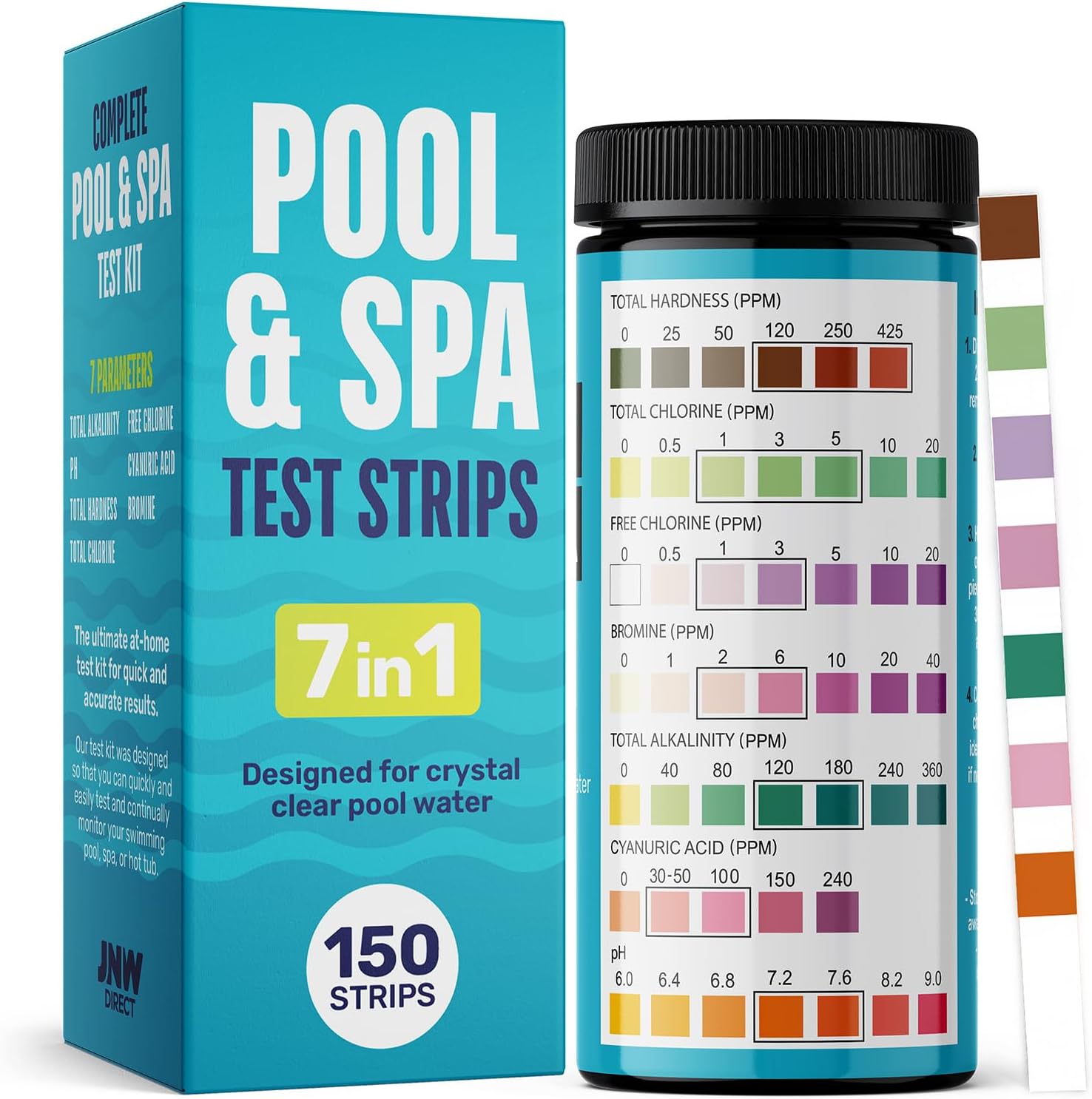
- Chemicals: Once full, add your starter chemicals. You’ll need a hot tub water tester to get the pH and Chlorine levels perfect.
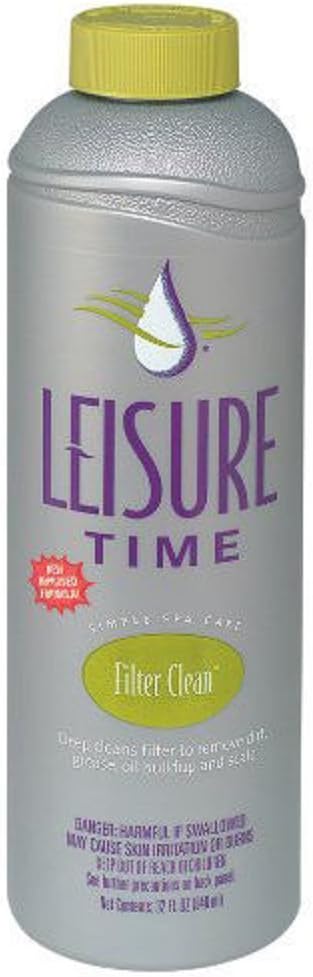
Pro Tip: Don’t forget to buy a spare set of filters!
Buy Lay-Z-Spa Helsinki on AmazonWhere to Place the Helsinki: Surface and Location Requirements
Load-Bearing Surface
At over 1,155kg (2,548 lbs) when filled, the Helsinki needs a surface that can genuinely bear that concentrated weight without settling unevenly. Concrete patios, paver stone, and reinforced decking rated for the load all work well. Ordinary grass or soft, uneven soil is not recommended for anything beyond very short-term placement, since uneven settling under that weight can stress the drop-stitch floor over time.
A Ground Mat Is Not Optional
Even on a hard, flat surface, a ground mat or foam base pad protects the floor of the tub from small stones, grit, or surface imperfections that could otherwise abrade the material during setup and use. The included protector mat is a good starting point, but pairing it with a thicker foam pad adds both puncture protection and a meaningful layer of ground insulation.
Wind Exposure and Freeze Shield
Because Freeze Shield is designed to run through winter, placing the Helsinki somewhere at least partially sheltered from prevailing wind reduces how hard the system has to work to prevent freezing overnight, which in turn reduces the electricity cost discussed above.
Outlet Distance
Plan the final position around the reach of the pump’s cord to a GFCI or RCD-protected outlet without slack pulled taut, and without the cord crossing a walkway where it becomes a trip hazard.
Maintenance and Water Care
Maintenance is the “make or break” for any spa owner. If you neglect the water, you’ll end up wondering why does hot tub water get cloudy? For the Helsinki, the ChemConnect™ dispenser makes this easier by slowly releasing chlorine tablets. However, you still need to be diligent.
Weekly Routine
- Test Water: Use digital hot tub water testers for the most accurate readings of pH, Alkalinity, and Chlorine.
- Clean Filters: Rinse the filter daily if used frequently. Knowing how often to replace hot tub filters (usually every 2-3 weeks) will save your pump from the dreaded E02 error code.
- Shock the Water: Learn how often should you shock a hot tub to kill off bacteria and keep the water sparkling.
Over time, you might notice a slimy film on the walls. This is biofilm. Understanding what is biofilm in hot tubs is crucial for long-term hygiene. We recommend using scum absorbers to soak up body oils and lotions before they clog the filter.
The ChemConnect™ Dispenser: A Closer Look
The ChemConnect™ system is a small floating or in-line dispenser that holds a chlorine or bromine tablet and releases sanitizer gradually as water circulates past it, rather than requiring you to manually dose loose granules every few days.
How to Get the Most From It
Start with the dial or flow adjustment (depending on your specific unit) set to a low release rate and test the water after 24 hours before adjusting further—it’s much easier to increase output gradually than to correct an overshot chlorine level. Replace the tablet before it fully dissolves rather than waiting for the dispenser to run empty, since a period of zero sanitizer output is when algae and bacteria get the opportunity to establish themselves.
ChemConnect Doesn’t Replace Testing
Even with a consistent dispenser running, pH and alkalinity still drift over time and need manual correction with separate pH increaser/decreaser products. The dispenser only automates the sanitizer piece of water chemistry, not the full picture, so a weekly manual test remains necessary regardless of how well the dispenser is working.
Filter System and Replacement Schedule
The Helsinki uses a cartridge-style filter that sits inside the pump housing. A few practical notes go a long way toward avoiding the E02 flow-related error code mentioned in the FAQ.
- Rinse frequency: A quick rinse with a garden hose every few days during heavy use clears surface debris before it compacts into the filter media.
- Full replacement: Every 2-3 weeks under regular use, sooner if the tub sees daily use by multiple people, since body oils and lotions clog cartridge media faster than dirt alone.
- Buy in bulk: Because Helsinki-compatible filters are a specific size, buying a multi-pack at the start of the season avoids a last-minute scramble when a filter fails mid-soak.
- Never run without one: Operating the pump without a filter in place, even briefly, risks debris reaching and damaging the impeller.
Common Error Codes and Troubleshooting
Bestway’s Lay-Z-Spa control panels use a fairly consistent set of error codes across their range, including the Helsinki.
| Code | Likely Cause | First Fix to Try |
|---|---|---|
| E02 | Low flow / restricted circulation | Clean or replace the filter cartridge |
| E01 / SF1 | Temperature sensor issue | Power cycle the unit at the wall |
| E03 / HTR | Heater fault or overheat protection triggered | Check filter, verify water level, allow to cool |
| No power / GFCI tripped | Ground fault detected by the safety plug | Dry the plug and cord, reset once; if it repeats, stop use and contact support |
A clogged filter is the single most common root cause behind several of these codes at once, since restricted flow confuses both the flow sensor and the heater’s temperature reading simultaneously. Ruling out the filter first saves a lot of unnecessary troubleshooting.
How the Helsinki Compares to Alternatives
Choosing between models can be daunting. Let’s look at how the Helsinki stacks up against its biggest rivals.
Helsinki vs. Coleman SaluSpa
The Coleman SaluSpa is the “classic” choice. It’s usually cheaper and features thick, I-beam construction. However, the Helsinki wins on aesthetics and winter performance. If you want a tub that stays out all year, the Helsinki is the clear winner. If you just want a summer “party tub,” the Coleman is a budget-friendly alternative.
Helsinki vs. Intex PureSpa
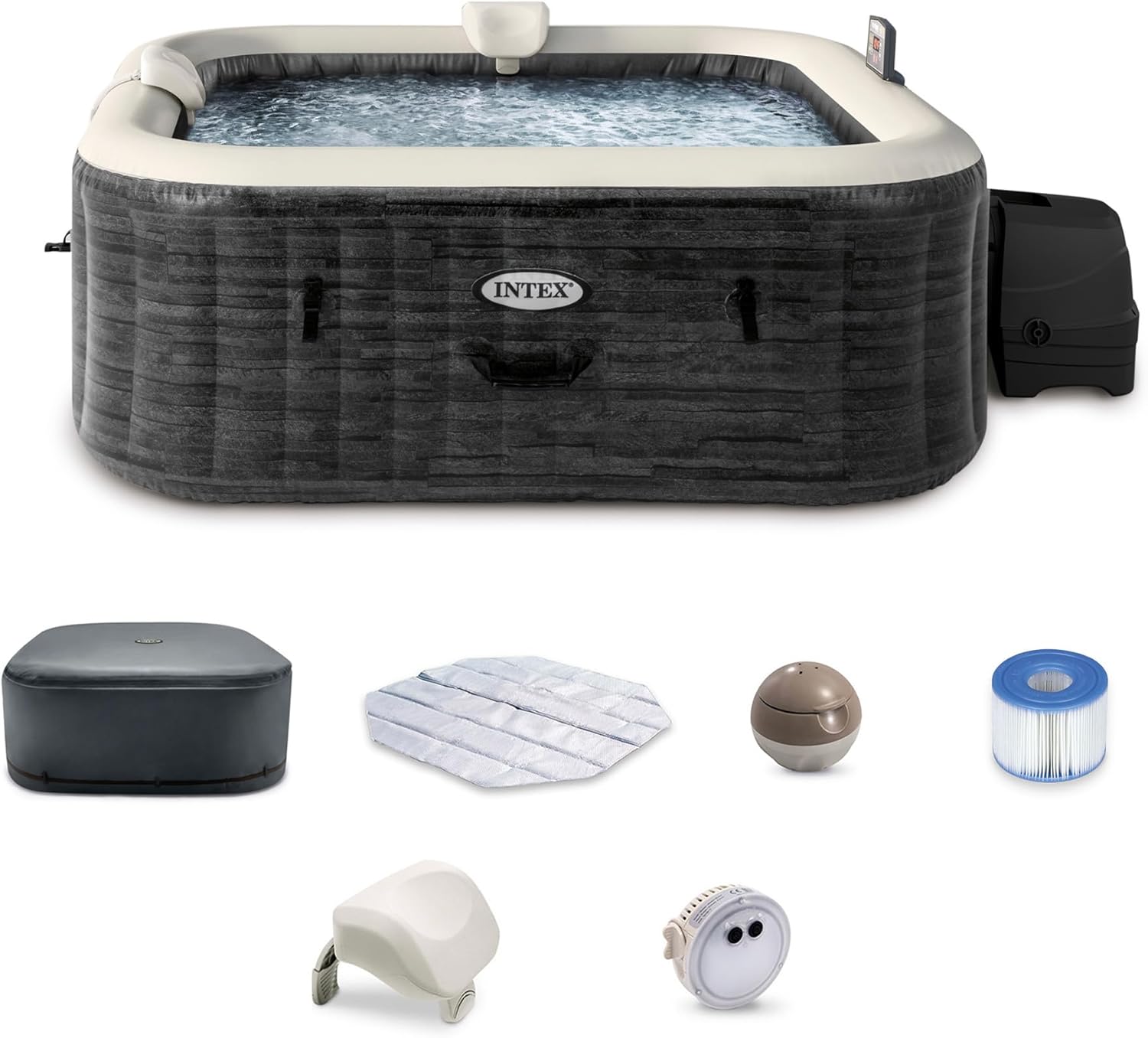
The Intex PureSpa line often features built-in hard water softening systems. In a comparison between Intex and Coleman, Intex usually wins on features. However, the Helsinki’s drop-stitch technology provides a level of wall rigidity that Intex’s Fiber-Tech can’t quite match. The Helsinki also has a much more “adult” and refined look than the tan or grey Intex models.
Full Winterizing and Off-Season Storage Guide
Freeze Shield lets you leave the Helsinki running through winter, but not every owner wants to pay to run it through months of cold weather, or may travel for an extended period where leaving it unattended isn’t ideal. Here’s how to properly store it instead.
Draining
Use the drain valve near the base with a garden hose attached, letting gravity empty the bulk of the water, then tip the unit gently to clear the last few gallons pooled at the low point.
Clearing the Pump Lines
Run the pump briefly after draining (per the manual’s specific guidance) to help clear residual water from internal plumbing, since any water left trapped inside can freeze and crack fittings even in an unheated garage.
Drying Before Folding
The liner must be completely dry, inside and out, before folding for storage. Trapped moisture in the folds over months of storage is one of the most common causes of mildew odor that owners discover the following spring.
Storing the Pump Separately
Store the pump/control unit indoors at a stable, moderate temperature rather than in an unheated shed, since extreme cold can affect seals and internal components over an extended storage period.
Warranty and Expected Lifespan
Bestway typically covers the Helsinki’s pump and electrical components under a limited warranty in the range of 1-2 years, depending on the region of purchase and retailer, with the liner itself sometimes covered separately or for a shorter period against manufacturing defects (not general wear, punctures, or improper storage damage). Registering the product shortly after purchase and retaining your receipt are both worth doing immediately, since most claims require proof of purchase date.
With consistent chemical maintenance, proper winterizing or use of Freeze Shield, and a ground mat protecting the floor, owners commonly report 3-5+ years of service from a Helsinki before the liner or pump needs replacing—toward the higher end of what’s typical for the inflatable category, largely thanks to the drop-stitch construction being more resistant to the sagging and wall fatigue that shortens the life of cheaper standard-wall inflatables.
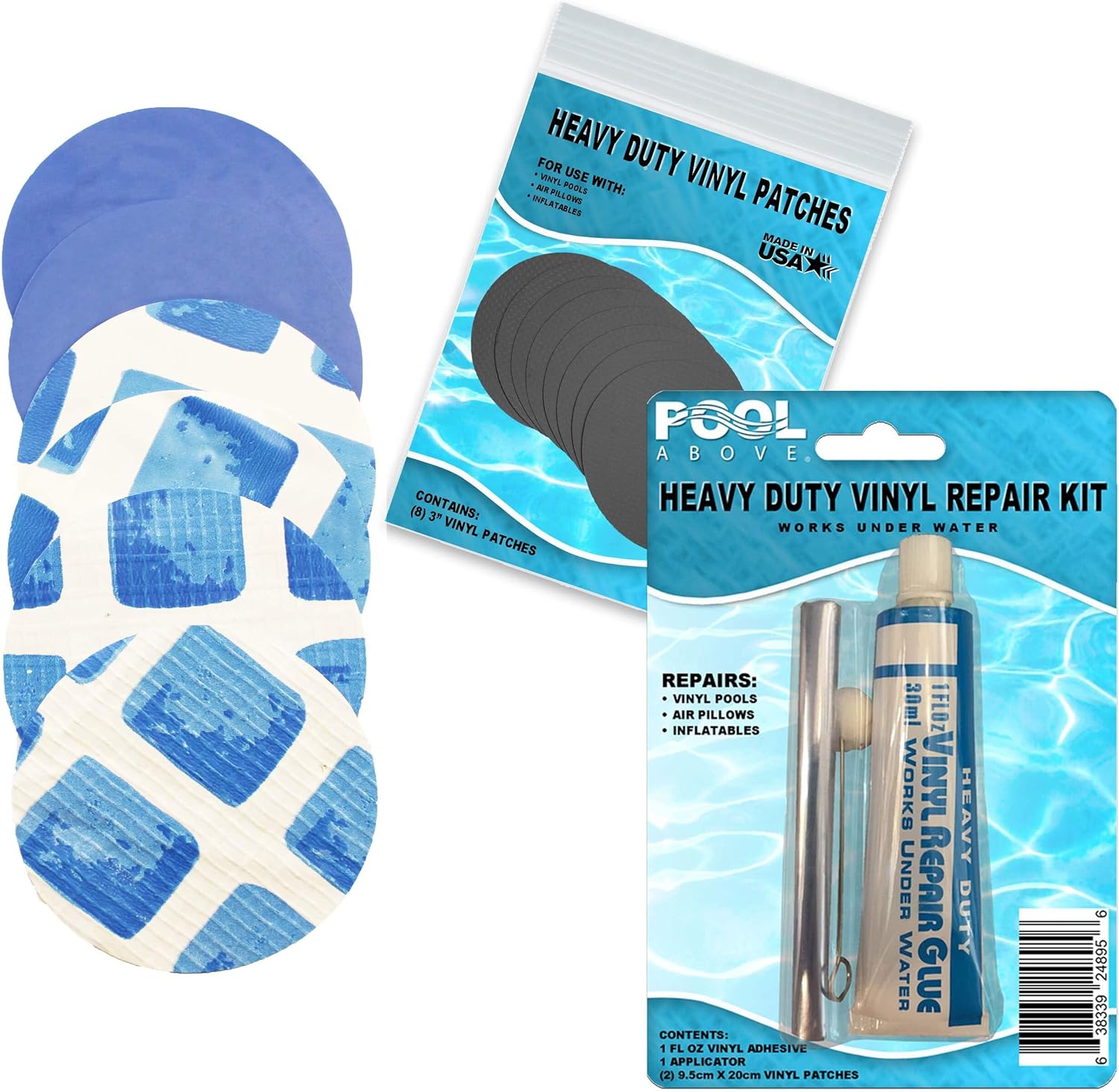
DIY Repairs: Patching the Drop-Stitch Material
Despite being tougher than standard PVC, the Helsinki’s drop-stitch shell can still be punctured by sharp objects, pet claws, or sun-damaged garden furniture edges. The good news is that repairs are straightforward.
- Locate the leak: Spray a soapy water solution over suspect areas; escaping air will create visible bubbles at the puncture site.
- Dry completely: The repair patch will not adhere to a damp surface, so allow the area to dry fully, including deflating that section if water is present inside the wall structure.
- Apply the patch: Use the manufacturer-supplied patch kit (or an approved PVC/drop-stitch repair patch), pressing firmly and holding for the time specified in the instructions.
- Let it cure: Avoid re-inflating fully for several hours to give the adhesive time to bond properly.
A properly applied patch typically holds for years and becomes nearly invisible once cured, especially on the textured wood-print exterior where a small patch blends into the pattern.
Regional Electricity Cost Comparison
Running cost estimates above assume something close to the US national average electricity rate. Your actual cost will shift meaningfully depending on where you live, so it’s worth checking your own utility rate rather than relying purely on national averages.
| Region Type | Typical Rate (per kWh) | Effect on Monthly Cost |
|---|---|---|
| Lower-cost regions | $0.10 – $0.13 | Toward the lower end of the estimates above |
| National average | ~$0.16 | Matches baseline estimates above |
| Higher-cost regions | $0.25 – $0.40+ | Can push costs 50-100% higher than baseline |
UK and EU owners should substitute their local per-kWh rate (often quoted in pence per kWh or euro cents per kWh) into the same wattage-based math to get an equivalent personal estimate, since electricity pricing structures differ meaningfully by country and even by time-of-use tariff.
Resale Value: Does the Helsinki Hold Up Secondhand?
Because inflatable spas are portable, a real secondhand market exists for them, and the Helsinki tends to perform better here than most inflatables due to its premium positioning and rigid construction. Well-maintained units in good cosmetic condition with an intact pump commonly resell for 40-55% of original price within the first couple of years, noticeably higher than the 30-40% typical of standard-wall inflatable competitors, since buyers recognize the drop-stitch build as more durable and are less worried about hidden wall fatigue.
Keeping the original box, manual, and a record of chemical maintenance and any patch repairs improves buyer confidence and resale price when the time comes to sell or upgrade.
Health and Lifestyle Benefits
Owning a Helsinki isn’t just about luxury; it’s about wellness. Many owners find that hot tubs are healthy for you in ways they didn’t expect. The heat increases circulation and helps with muscle recovery. For fitness enthusiasts, using the hot tub after a workout can significantly reduce delayed onset muscle soreness (DOMS).
However, it is important to be aware of the negative effects of hot tubs if used improperly—such as dehydration or overheating. Always stay hydrated and keep your soak times to around 20-30 minutes. If you have specific health conditions, such as pregnancy, consult our guide on can pregnant women use hot tubs before diving in.
Ready to Transform Your Backyard?
Check Today’s Price on AmazonRenters and Apartment/Balcony Considerations
Given its portability, plenty of buyers consider the Helsinki for balconies, patios of rented homes, or courtyards in multi-unit buildings, and a few extra considerations apply in these settings.
Lease and Weight Restrictions
At over 1,150kg filled, the Helsinki’s weight is a genuine structural consideration on a balcony rather than a backyard slab. Confirm with a property manager or the building’s documentation that the balcony is rated for that concentrated load before purchase, not after delivery.
Draining Without a Garden
Without a lawn or garden drain nearby, plan how a full drain will be routed—commonly via a hose to an interior drain or with a small transfer pump—rather than discovering the problem on drain day with 297 gallons of water and nowhere for it to go.
Noise in Shared Buildings
The 180 AirJet blower’s volume, discussed in the FAQ, is more noticeable in a shared-wall environment than in an open yard. Running jets during reasonable daytime hours reduces friction with neighbors in an apartment or townhouse setting.
Essential Accessories for Your Helsinki
To get the most out of your Lay-Z-Spa, you’ll likely want to invest in a few extras. While the box comes with the basics, these items elevate the experience:
- Hot Tub Vacuum: Essential for getting sand and grit off the floor. See our list of best hot tub vacuums.
- Insulated Cover: While the Helsinki comes with a cover, upgrading to best hot tub covers can save significantly on heating costs in the winter.
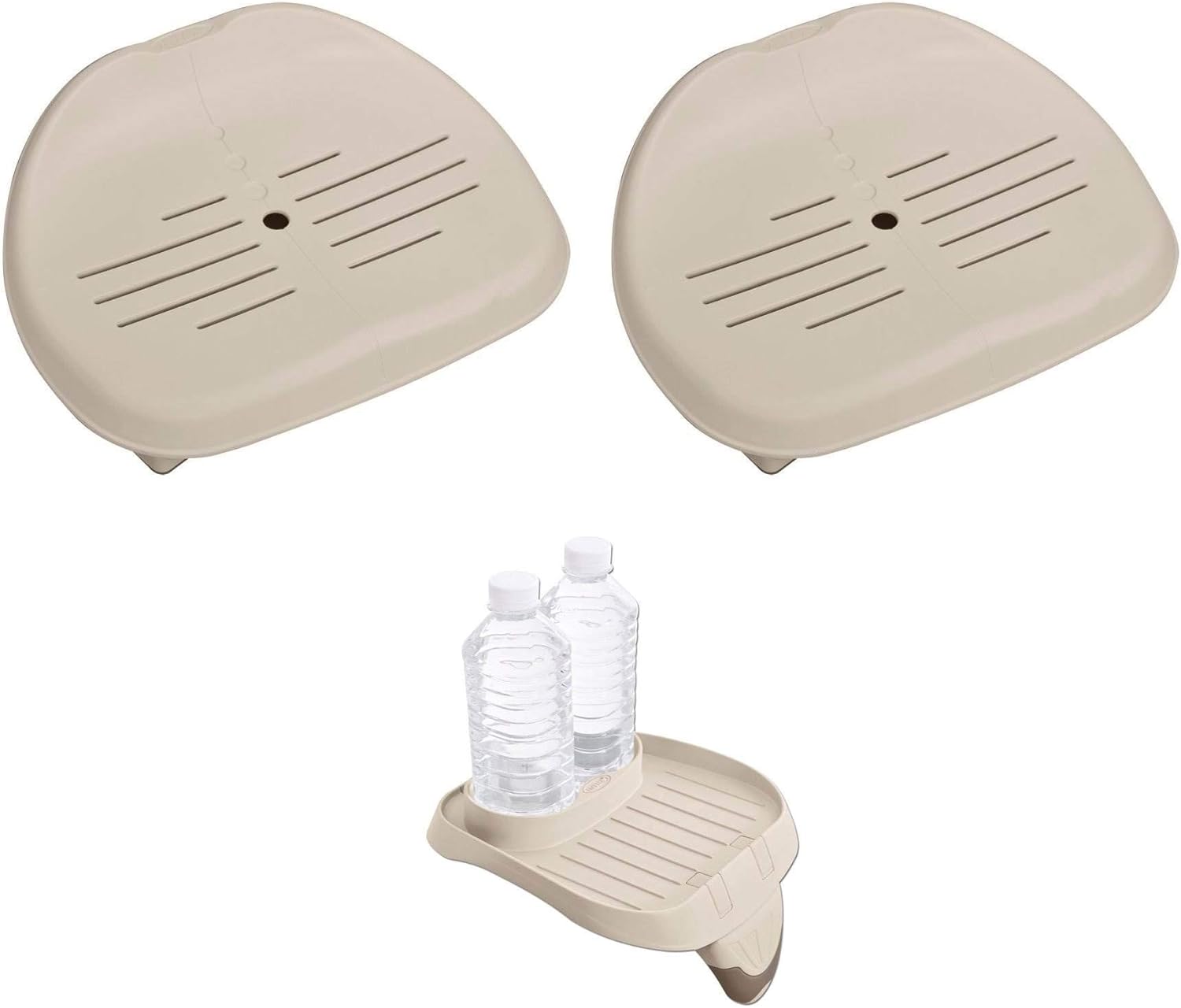
- Booster Seats: Since the Helsinki has a flat floor, shorter users or children might prefer a booster seat.
Buying Checklist: Questions to Answer Before You Order
- Is your surface (patio, deck, or balcony) rated to hold over 1,150kg when filled?
- Is there a GFCI or RCD-protected outlet within reach of the pump’s cord without an extension cord?
- Does your circuit share load with any other high-draw appliance that might trip the breaker?
- Do you plan to run it through winter with Freeze Shield, or drain and store it seasonally?
- Have you budgeted for an insulated cover upgrade and a ground mat in addition to the base price?
- Do you have (or plan to buy) a reliable water testing kit and a stock of spare filters?
- Have you checked your voltage region (110-120V vs 220-240V) matches the unit you’re ordering?
- If on a rented property, have you confirmed lease or HOA rules allow it?
Final Verdict: Should You Buy the Lay-Z-Spa Helsinki?
The Lay-Z-Spa Helsinki is arguably the best-looking inflatable hot tub on the market. It successfully bridges the gap between the temporary feel of an inflatable and the permanence of a hard-shell tub. Its Freeze Shield technology makes it a top-tier choice for those in colder climates, and the Drop-Stitch walls provide a premium feel that is hard to beat.
If you are looking for a spa that you can leave out all year, that looks like a high-end Nordic bath, and that offers enough room for the whole family, the Helsinki is a fantastic investment. It’s durable, stylish, and backed by the most reputable brand in the industry. For many, it is the best inflatable hot tub.
Experience the Helsinki Today
Don’t wait for the next heatwave or cold snap. Start your relaxation journey now.
View on Amazon – Free Shipping AvailableWhat Owners Say After Six Months of Real Use
Marketing pages capture unboxing excitement; longer-term feedback from actual owners tends to cluster around a smaller, more consistent set of themes once the novelty settles.
The Most Common Praise
Owners consistently point to the combination of appearance and rigidity as the reason they’d choose the Helsinki again—the sense that it doesn’t look or feel like a “cheap inflatable” the way a standard-wall model does, even a year or more into ownership.
The Most Common Complaint
The AirJet blower noise, flagged in the cons section and FAQ, is the single most repeated criticism, particularly among owners who placed the tub near a bedroom window or in a small, enclosed courtyard where the sound reflects rather than dissipating into open air.
The Second Most Common Theme
Underestimating the ongoing time commitment of water testing and filter changes comes up often, especially from first-time spa owners who expected something closer to a pool’s more passive maintenance schedule.
Where Satisfaction Is Highest
Owners who researched the heating speed, jet type, and maintenance routine before buying report the highest long-term satisfaction, while those expecting hard-shell-spa performance at an inflatable price point are the most likely to feel let down—reinforcing that expectation-setting, not any single spec, is the biggest factor in long-term happiness with the Helsinki.
What’s in the Box: Full Unboxing Breakdown
Knowing exactly what ships with the Helsinki helps set expectations before the box arrives and avoids a false “missing part” concern on delivery day.
- The inflatable liner: The main drop-stitch tub body with the Nordic wood-effect exterior print.
- Pump/control unit: The combined heater, filtration, and AirJet blower unit that connects to the liner.
- Insulated top cover: A basic insulated cover included as standard, though many owners choose to upgrade this separately.
- Ground protector mat: A thin base layer to protect the tub floor from the surface beneath it.
- Hand pump and pressure gauge: Used for the final high-pressure top-off of the drop-stitch walls after the electric pump does the bulk of the inflation.
- Starter filter cartridge: One filter is included to get you through the first couple of weeks; a spare should be purchased separately before it’s needed.
- ChemConnect™ dispenser: The floating or in-line sanitizer dispenser discussed above.
- Repair patch kit: A small kit for patching minor punctures, discussed in detail in the DIY repairs section.
- Instruction manual: Covers setup, chemical dosing basics, and troubleshooting codes specific to the Helsinki.
Water test strips, additional chemicals, a vacuum, and a booster seat are not included and need to be purchased separately, which is worth budgeting for alongside the tub itself rather than treating as an afterthought.
Cleaning and Algae Prevention Deep Dive
Because the Helsinki’s interior is a bright white liner, any algae or biofilm growth is far more visually obvious than on a similarly affected hard-shell spa with a darker interior, which is both a curse and a blessing—problems show up early, giving you a chance to address them before they get worse.
Early Warning Signs
A faint green or yellow tint appearing anywhere on the white liner, especially in corners with slower water movement, is usually the first visible sign of algae. A slippery, slightly slimy feel on the walls before any discoloration appears is typically biofilm rather than algae, and both call for immediate shock treatment and a full filter change rather than waiting to see if it resolves on its own.
Preventive Routine
- Keep the cover on whenever the tub isn’t in use, since sunlight accelerates algae growth in a way covered water does not.
- Maintain consistent sanitizer levels via ChemConnect™ rather than letting the dispenser run empty for days at a time.
- Shock the water on a regular schedule rather than only after a problem becomes visible.
- Rinse or replace the filter promptly rather than letting a visibly dirty cartridge continue circulating water.
If Algae Does Appear
A full drain, wipe-down with a mild non-abrasive cleaner made for vinyl or drop-stitch surfaces, thorough rinse, and refill with correctly balanced water is the most reliable fix once algae has taken hold, since chemical treatment alone in already-affected water is a slower and less certain process than starting fresh.
Noise Levels in Detail
The FAQ mentions the AirJet blower is “quite loud,” but it’s worth putting a bit more texture on that comparison for readers deciding where to place the tub.
| Component | Approximate Loudness Comparison |
|---|---|
| Circulation pump / heater (idle filtering) | Similar to a refrigerator hum |
| 180 AirJet blower (active massage mode) | Similar to a shop vacuum or window air conditioner on high |
| Freeze Shield cycling in winter | Intermittent, similar to the idle filtering sound above |
Placement near hard, reflective surfaces such as a fence or house wall can amplify perceived noise for neighbors, while placement in a more open part of the yard tends to let sound dissipate more naturally. For anyone particularly noise-sensitive to their surroundings, running the AirJet function during daytime hours and reserving quieter evening soaks for filtration-only mode is a reasonable compromise.
Health Considerations for Specific Groups
The main health and lifestyle section above covers general wellness benefits, but a few specific groups deserve more direct guidance.
Children
Because the Helsinki has a flat floor rather than raised seating, young children sit at a greater relative water depth than in a molded hard-shell spa, which is worth factoring into supervision decisions. Shorter sessions, a booster seat, and constant adult supervision are all sensible precautions.
Pregnancy
As referenced in the linked guide above, elevated water temperature during pregnancy is generally discouraged by medical guidance, particularly in the first trimester. Anyone pregnant should consult their own doctor before use rather than relying on general product guidance.
Cardiovascular Conditions
Hot water immersion causes blood vessels to dilate and can lower blood pressure. For most healthy adults this is simply part of the relaxing sensation, but anyone with a heart condition or on blood pressure medication should check with a doctor before regular use, particularly for longer soak sessions at the Helsinki’s maximum 40°C setting.
Environmental Considerations
The Helsinki’s smaller heater represents a lower peak energy draw compared to a hardwired spa, even though total heating hours run longer. The more meaningful environmental factor in daily use is water consumption: a full drain and refill every 3-4 months, as recommended in the maintenance section, uses a real amount of municipal water over a season. Keeping the cover on to reduce evaporation, maintaining consistent chemistry to stretch the interval between drains, and checking local water-use restrictions during drought conditions are the most practical ways to reduce the tub’s overall water footprint.
Climate Zone Guide: Getting the Most From Freeze Shield
Freeze Shield is the Helsinki’s headline feature, but how much value it delivers depends heavily on where you actually live, and it’s worth setting expectations by climate rather than assuming uniform performance everywhere.
Mild and Temperate Climates
In regions with occasional light frost but no extended deep freezes, Freeze Shield mostly acts as cheap insurance—it rarely needs to kick in for long, and running costs stay close to the lower end of the estimates given earlier in this review.
Cold Climates With Sustained Sub-Freezing Temperatures
In genuinely cold winters, Freeze Shield will cycle the heater and pump more frequently overnight to keep water moving and prevent ice formation in the lines, which is exactly where the higher end of the running-cost range comes from. A wind-sheltered location and a quality insulated cover both meaningfully reduce how hard the system has to work through these stretches.
Extreme Cold: When Draining Makes More Sense
In climates with weeks of severely sub-zero temperatures, even Freeze Shield may struggle to keep pace efficiently, and the running cost of keeping the Helsinki active through that stretch can rival or exceed what a full drain-and-store cycle would cost in time and effort. Owners in the coldest regions often choose to actively use the tub through shoulder-season cold snaps, relying on Freeze Shield, but drain and store it for the deepest part of winter rather than running it continuously for months at the highest duty cycle.
Matching Placement to Your Climate
Regardless of climate, positioning the Helsinki against a wall, fence, or other windbreak, and orienting it to catch available sun during the day, both reduce the workload on Freeze Shield and the heater generally, translating directly into lower running costs across every climate band described above.
Energy-Saving Hacks Beyond the Included Cover
The standard insulated cover included with the Helsinki is a solid starting point, but a handful of additional habits stack together to meaningfully reduce the running costs discussed earlier in this review.
- Add a floating solar cover under the hard cover: Sitting directly on the water’s surface, this cuts evaporative heat loss, one of the largest sources of heat loss in any open-top spa, more effectively than the hard cover alone.
- Minimize cover-open time: Stage towels, drinks, and any chemicals you need before lifting the cover, since every minute it’s off during cold weather lets accumulated heat escape.
- Keep the filter clean: A clogged cartridge forces the pump to work harder and can extend heater cycles as flow-related readings become less accurate, quietly increasing running cost.
- Lower the set temperature slightly between sessions: Dropping the target by 2-3°F when the tub isn’t in active use and letting it reheat before your next soak saves meaningfully over a season without a noticeable difference in soak quality.
- Use off-peak electricity hours where available: If your utility offers time-of-use pricing, scheduling heavier heating during cheaper overnight windows can lower the bill without changing total energy consumed.
Should You Try Before You Commit?
Given the Helsinki’s position at the premium end of the inflatable category, some prospective buyers wonder whether it’s worth testing a cheaper, standard-wall inflatable first before investing in the drop-stitch model.
For anyone who has never owned any hot tub before and is unsure whether the lifestyle—regular water testing, filter changes, seasonal setup—actually suits them, starting with a more affordable standard inflatable like the Coleman SaluSpa is a reasonable way to confirm genuine long-term interest before spending more on the Helsinki’s premium construction. For anyone who has already owned an inflatable spa and knows the routine works for their lifestyle, jumping straight to the Helsinki avoids the “starter tub” detour entirely and gets you to the improved rigidity, aesthetics, and winter capability sooner. The Helsinki’s stronger resale value, discussed earlier, also means that even buyers who do change their mind after a season or two are likely to recover a larger share of their investment than they would with a budget model.
First-Week Troubleshooting: Beyond the Error Codes
Alongside the specific error codes covered earlier, a handful of non-error issues tend to confuse new owners in the first week or two of ownership, and none of them indicate a defective unit.
The Tub Feels Softer Than Expected
Drop-stitch walls need to reach their full rated PSI to achieve the rigidity the Helsinki is known for. If the walls still feel somewhat soft after the electric pump’s automatic inflation cycle finishes, the hand pump top-off step is not optional—many first-time owners skip it, assuming the electric pump alone is sufficient, and end up with a noticeably less rigid tub as a result.
Water Looks Cloudy Right After Filling
Fresh tap water, especially from a well or a municipal supply with slightly higher mineral content, can appear faintly cloudy for the first few hours after filling as the filtration system works through its first full cycle. This typically clears within 12-24 hours once the pump has circulated the full volume several times and initial chemical dosing has taken effect.
The Pump Cycles On and Off Frequently at First
During the initial heat-up phase, especially in cooler weather, it’s normal for the heater to run near-continuously rather than cycling, since it’s working to close a large temperature gap. Once the tub reaches its target temperature, cycling becomes much less frequent, and a pump that seems to “run constantly” during the first day is usually behaving exactly as designed rather than malfunctioning.
A Faint Plastic Smell When New
A mild new-vinyl smell is common with any new inflatable product and typically fades within the first one to two weeks of use, especially if the cover is left off for short periods on dry, sunny days early in ownership to help it air out (with the pump off and the tub otherwise unattended briefly, not during a soak).
AirJet vs. HydroJet: Why the Helsinki Chose Bubbles Over Water Jets
Shoppers comparing spec sheets across the Lay-Z-Spa range and rival brands often notice two different massage technologies: AirJet and HydroJet. Understanding the difference clarifies why the Helsinki’s approach makes sense for its category.
How AirJet Works
AirJet systems, like the 180-jet setup in the Helsinki, push air through small openings around the base and lower walls of the tub, creating a broad field of rising bubbles rather than a targeted stream. This spreads the massage sensation evenly across the whole seating area rather than concentrating it at specific nozzle points.
How HydroJet Works
HydroJet systems use a water pump to push pressurized water through directional nozzles, similar to a traditional hardwired spa’s jets. This delivers a more targeted, firmer massage at specific points on the body (lower back, calves, shoulders depending on nozzle placement) but requires more complex plumbing and a stronger pump.
Why the Trade-off Favors AirJet Here
Because the Helsinki already dedicates its available power budget to the heater and Freeze Shield’s winter performance, an AirJet system is both simpler to maintain (fewer plumbed nozzles that can clog) and more power-efficient than a HydroJet setup would be at the same voltage. Buyers specifically seeking firm, targeted HydroJet-style massage are generally better served by a hard-shell 220V spa than by any inflatable in this price category, AirJet or otherwise.
Total Cost of Ownership: Year One Summary
Pulling together the purchase price, accessories, chemicals, and running costs discussed throughout this review into a single first-year estimate helps set realistic budget expectations before buying.
| Cost Category | Approximate Range |
|---|---|
| Unit purchase price | Varies by retailer and season |
| Recommended accessories (upgraded cover, ground pad, vacuum, booster seat) | $150 – $350 |
| Chemicals and test kit (first year) | $150 – $300 |
| Replacement filters (first year) | $60 – $120 |
| Electricity (running costs, mild-to-moderate climate) | $300 – $700 |
None of these figures include the unit’s purchase price itself, since that varies considerably by retailer, region, and season, but the accessory, chemical, and electricity categories combined give a realistic picture of what ongoing ownership adds on top of the sticker price in year one.
Frequently Asked Questions (FAQ)
How many people can realistically fit in the Helsinki?
While it is advertised for up to 7 people, it is most comfortable for 4-5 adults. 7 people would be very tight with legs overlapping.
Can I leave the Helsinki out in the winter?
Yes! Thanks to Freeze Shield™ technology, the Helsinki is designed to stay out year-round as long as the pump remains plugged in and active.
Is the Helsinki loud?
The heater and filter are very quiet (a low hum). However, the 180 AirJet massage system is quite loud, similar to a powerful vacuum cleaner.
How often should I change the water?
With proper chemical maintenance, you should change the water every 3 to 4 months. If it gets heavy use, you may need to change it more frequently.
How much does it cost to run per day?
This varies by electricity rates and outdoor temperature, but on average, expect to spend between $1 and $3 per day to keep it at 40°C.
Does it come with a ground mat?
Yes, it usually includes a protector mat, but we recommend adding thicker hot tub pads for better insulation and comfort.
Is it easy to puncture?
The Drop-Stitch material is extremely tough and much harder to puncture than standard PVC. However, you should still keep pets with sharp claws away.
Can I use an extension cord?
No, it is highly recommended to plug the Helsinki directly into a grounded wall outlet to prevent fire hazards or damage to the pump.
What’s the difference between the US and UK/EU versions?
The core tub is the same, but the pump is built for the local voltage standard (110-120V in North America, 220-240V in the UK/EU), each with its own region-appropriate safety plug.
How long does the Helsinki typically last?
With proper maintenance and winter care, many owners report 3-5+ years of service, which is toward the higher end for inflatable spas thanks to the drop-stitch construction.
Can the Helsinki be repaired if it gets a small puncture?
Yes, small punctures can be repaired with a patch kit once the area is located, dried, and patched according to the included instructions.
Is the Helsinki suitable for an apartment balcony?
Only if the balcony is structurally rated for the tub’s filled weight of over 1,150kg. Always confirm with a property manager or the building’s documentation first.