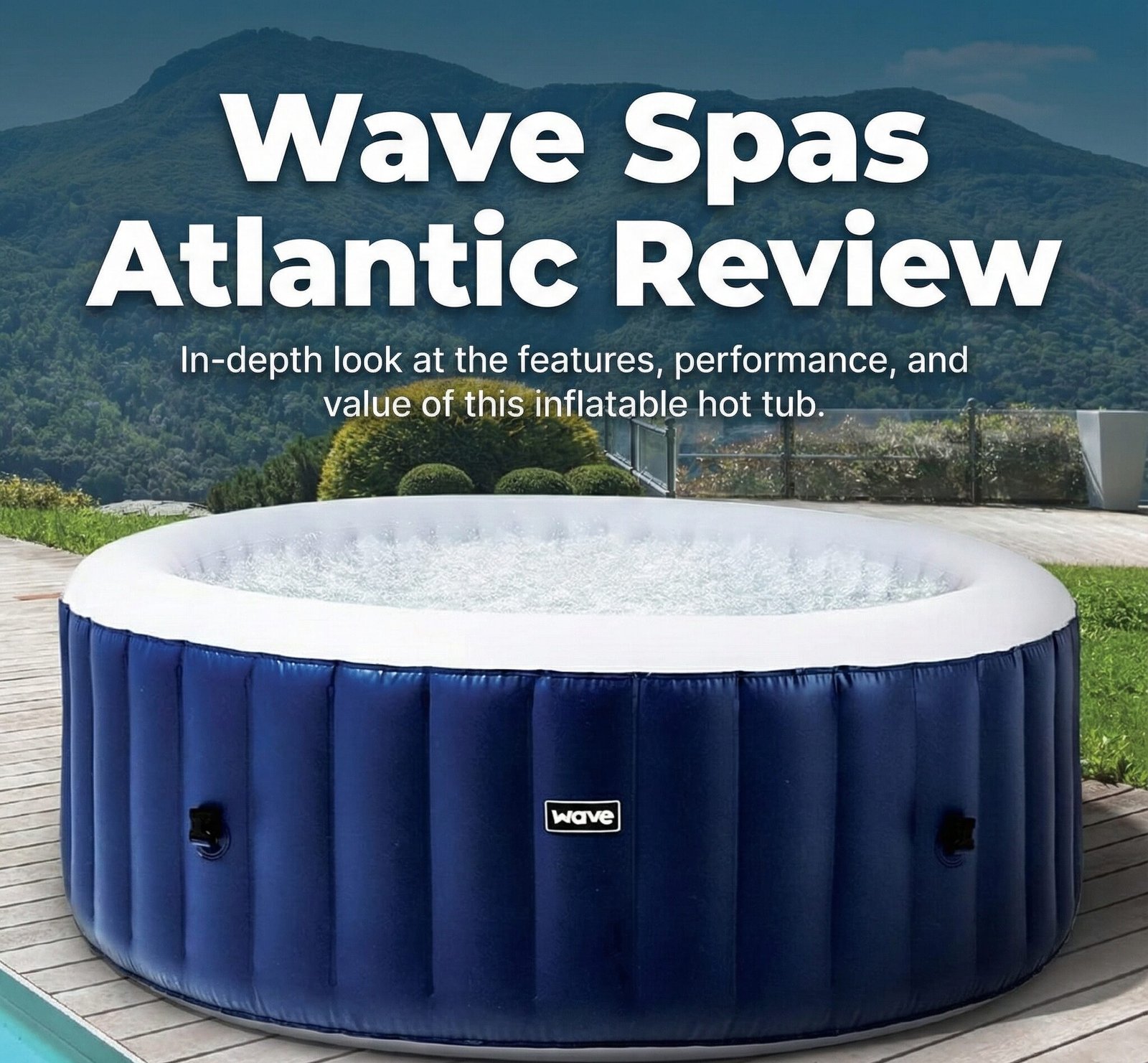
Wave Spas Atlantic Review: Is This the Best Entry-Level Hot Tub ?
In the burgeoning world of home hydrotherapy, Wave Spas has quickly emerged as a formidable challenger to established giants like Intex and Bestway. The Wave Atlantic, their flagship circular model, promises a premium spa experience without the eye-watering price tag of a permanent installation. But does it actually deliver on its promise of “affordable luxury,” or is it just another inflatable balloon filled with hot water?
The Rise of the Home Spa Culture
Over the last few years, the way we view our backyards has fundamentally shifted. No longer just a patch of grass for the occasional BBQ, the modern garden is an extension of the living room—a sanctuary for mental and physical wellness. This shift has been propelled by the accessibility of inflatable hot tubs. If you’ve ever wondered how does an inflatable hot tub work, the mechanics are surprisingly simple yet effective, utilizing integrated heater-pump units to transform a durable PVC liner into a therapeutic oasis.
The Wave Spas Atlantic is designed for those who want to dip their toes into this lifestyle. Whether you’re looking for the best 4-person inflatable hot tub for family nights or a cozy retreat for a couple, the Atlantic aims to hit that sweet spot of durability, aesthetics, and price. In this deep-dive review, we’ll explore every corner of the Wave Atlantic—from its Triple-Layer PVC construction to its 105-jet massage system—to help you decide if it’s the right fit for your patio.
What’s interesting about the Atlantic specifically is how it positions itself within Wave Spas’ own broader lineup. The brand doesn’t sell just one shape or size; it also produces a square-format Pacific model and an octagonal Aegean model aimed at a slightly more premium buyer. The Atlantic is deliberately the entry point of that range—the round, classic silhouette meant to be the most approachable option for a first-time inflatable spa owner, both in terms of price and in terms of simplicity of the overall experience. Understanding that positioning helps explain a lot of the design choices we’ll cover throughout this review, from the straightforward round shape to the emphasis on quick, tool-free setup.

Product Overview: Technical Specifications
Before we get into the subjective “feel” of the spa, let’s look at the cold, hard numbers. The Atlantic comes in two primary sizes: the 2-4 person (smaller footprint) and the 4-6 person (family size). For this review, we focused on the 4-person model, as it is the most popular choice for urban gardens.
| Specification | Wave Spas Atlantic (4-Person) |
|---|---|
| Shape | Classic Round |
| External Diameter | 165cm (65 inches) |
| Internal Diameter | 125cm (49 inches) |
| Material | Triple-Layer Laminated PVC (Aero-Wall) |
| Water Capacity | 800 Litres |
| Max Temperature | 40°C (104°F) |
| Jet System | 105 Powerful Air Jets |
| Heater Power | 2040W (Rapid Heating System) |
While these specs are impressive, it’s the Aero-Wall technology that sets Wave apart. Unlike the bulky, balloon-like walls of older inflatables, the Atlantic utilizes a high-pressure construction that allows the walls to be slightly thinner yet incredibly rigid. This maximizes internal soaking space without increasing the overall footprint of the tub—a vital feature for those with limited outdoor space.
How the 6-Person Model Compares
For buyers who need more room, Wave also offers a larger 6-person version of the Atlantic. This configuration typically increases the external diameter to somewhere in the region of 205-210cm, with a corresponding jump in internal seating room and total water capacity that can approach roughly 1,000 litres depending on the exact fill line used. The wall depth generally stays consistent between the two sizes, meaning the extra capacity comes almost entirely from the wider footprint rather than a deeper tub. If your household regularly has more than three or four people wanting to soak at once, stepping up to the 6-person configuration is worth the extra footprint and fill time it requires, since trying to squeeze six adults into the 4-person model results in a distinctly “elbows and knees” experience rather than a relaxing soak.
Sizing tip: Measure your intended installation spot with a few extra inches of clearance beyond the external diameter figure, since you’ll want room to access the control panel, lift the cover on and off, and walk around the tub comfortably for maintenance tasks like filter changes.
Deep Dive: Design and Aesthetics
The Atlantic is available in several finishes, including a sophisticated slate grey and a natural-looking wood print. When compared to the Lay-Z-Spa Helsinki review, the Atlantic holds its own in the looks department. While it doesn’t use true drop-stitch material like the Helsinki, its laminated PVC finish looks remarkably upscale and doesn’t scream “temporary pool” like some cheaper alternatives.
The white internal liner provides a clean, clinical look that highlights the clarity of your water. However, keeping that liner white requires some effort. If you don’t maintain your chemicals, you’ll quickly find yourself asking why does hot tub water get cloudy. The Atlantic’s aesthetic is at its best when the water is crystal clear and the bubbles are active.
Some newer production runs of the Atlantic also introduce a woven “rattan-style” exterior panel option alongside the more traditional slate and wood-grain finishes, giving buyers another way to coordinate the tub with high-end outdoor wicker furniture rather than a plain PVC surface. Whichever exterior finish you choose, the seating itself is formed by the inflatable wall structure rather than fixed, rigid benches—this keeps manufacturing costs down and adds a bit of give underfoot, though it also means the “seat” isn’t a hard, defined ledge the way it might be in a rigid acrylic spa.
Performance Evaluation: The Soak Test
Heating Efficiency
The Atlantic features a 2040W heater. In our testing, the spa heated at a rate of approximately 1.5°C to 2°C per hour. This is standard for 110V-240V portable units. If you are setting up the spa for a weekend party, you’ll want to start the heating process at least 24 hours in advance. For those concerned about energy bills, it’s worth asking do inflatable hot tubs use a lot of electricity? The Wave Atlantic is relatively efficient for its class, but like all inflatables, it works hardest when the ambient temperature is low.
Depending on your starting water temperature and the season, a full heat-up from cold tap water to the maximum 40°C (104°F) setting can realistically take anywhere from about 18 to 24 hours. Cooler ambient conditions, a windy installation spot, or an uninsulated ground surface underneath the tub will all push that figure toward the longer end of the range, while a warm summer day and a well-insulated foam pad underneath will help you reach soaking temperature noticeably faster.
The 105 Air Jet System
Wave Spas uses an integrated air-jet system located around the base of the liner. When activated, the 105 jets create a vigorous “boiling” effect that is incredibly relaxing. While these are air jets (not directed water hydro-jets), they provide a consistent massage that is excellent for general relaxation. If you have specific medical needs, such as investigating if hot tubs are good for arthritis, the buoyancy and heat provided by the Atlantic are top-tier, even if the jet pressure isn’t “medical grade.”
Noise Levels
One common complaint with budget spas is pump noise. The Atlantic’s pump is pleasantly quiet during the heating and filtration cycles. However, once the air jets are turned on, the noise level increases significantly. It’s comparable to a loud vacuum cleaner. This is standard across the industry, but something to keep in mind if you have neighbors close by.
Because the pump and heater assembly on the Atlantic is built directly into the tub wall rather than housed in a separate external unit, some owners find the overall noise footprint slightly more contained compared to older-style spas with a bulky external “egg” pump sitting exposed next to the tub. That said, once the bubble jets are actively running, the sound is still clearly audible from a typical suburban garden distance, so scheduling jet sessions for reasonable daytime or early evening hours remains good etiquette if you share a fence line with neighbors.
Seat Depth and Comfort for Different Body Types
Water depth is worth thinking about if you’re on the taller side. The Atlantic’s typical water depth sits in the mid-60cm range, which comfortably covers most adults up to around mid-torso while seated. Very tall users—generally above about 6’2″—sometimes find that the water line sits lower on their body than they’d like compared to a deeper permanent spa, simply because the inflatable wall height is capped for structural and portability reasons. This isn’t a defect so much as a natural limitation of the category, and it’s worth keeping in mind if full-shoulder immersion is a priority for you specifically.
Setup and Installation: Can You Do It Alone?
One of the biggest selling points of the Wave Atlantic is the “tool-free” setup. According to our inflatable hot tub setup guide, the Atlantic ranks among the easiest to install. The pump is integrated into the wall of the spa (in most newer versions), which means there is no external “egg” pump to connect. This saves space and reduces the number of potential leak points.
- Site Prep: Ensure the ground is level. We highly recommend using the best hot tub pads to protect the base from sharp stones and provide extra insulation.
- Inflation: Connect the inflation hose to the pump and the liner. The Atlantic inflates in less than 5 minutes.
- Filling: Fill with a standard garden hose. This is the longest part of the process, taking roughly 1-2 hours.
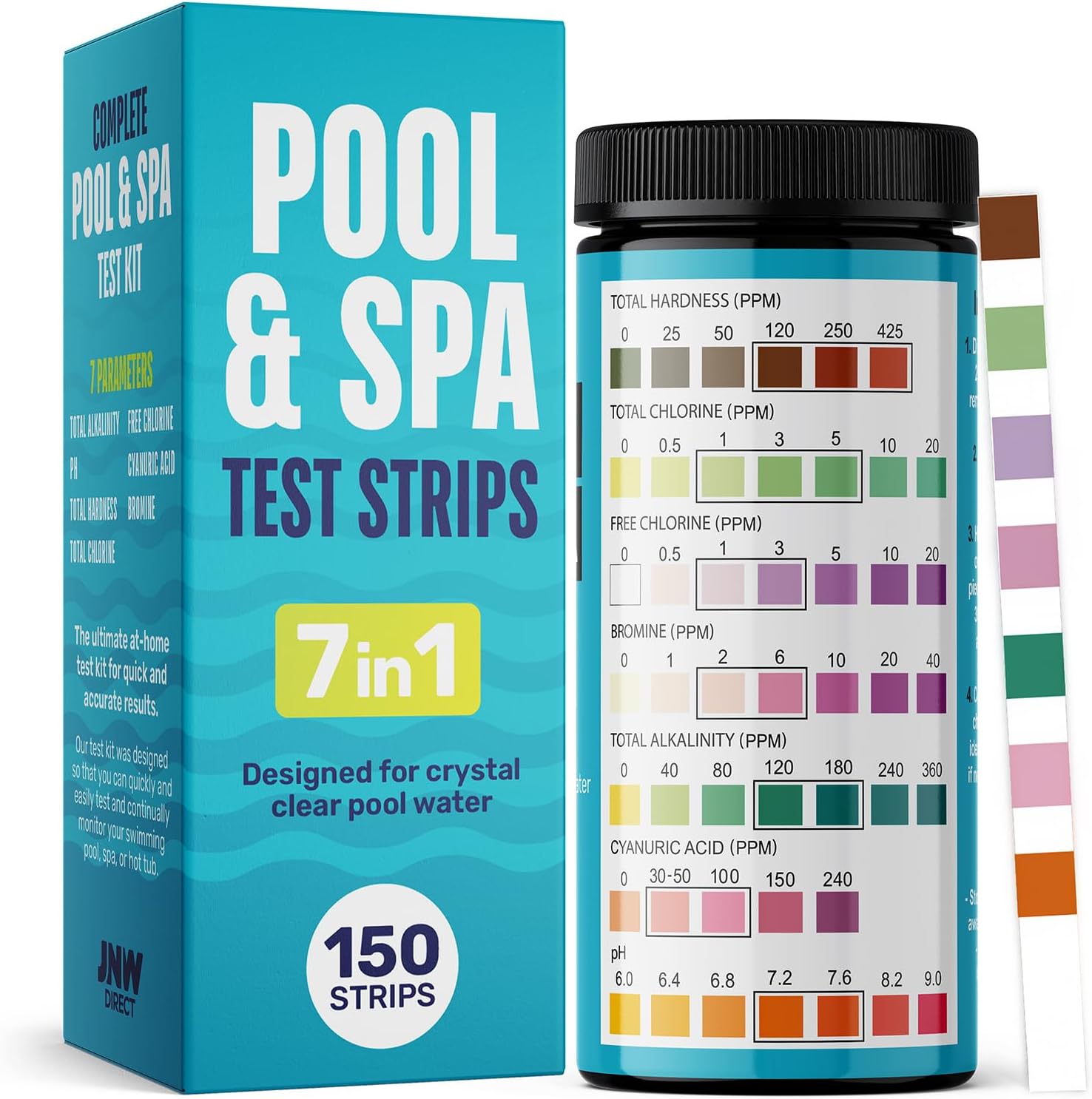
- Chemical Start-up: Once full, you must balance the water. Use a hot tub water tester immediately to check your baseline levels.
Most owners report completing the entire process—from unboxing to a fully inflated, filled, and powered-on spa—in around twenty to thirty minutes of active effort, not counting the passive fill and heat time. It’s worth using slightly warm water from your hose or a mixed hot-and-cold tap connection if available, since starting with lukewarm water rather than ice-cold tap water can meaningfully shorten your overall wait before your first soak.
Power Requirements and the Included Cable
The Atlantic ships with a dedicated waterproof power cable fitted with a residual current device (RCD) plug, an important safety feature for any electrical appliance operating near water. This cable typically runs several meters in length, giving you some flexibility in exactly where you position the tub relative to your nearest outdoor-rated outlet. As with any electrical appliance near water, it’s best practice to have the circuit itself also protected by a GFCI or RCD-protected outlet in addition to the cable’s built-in protection, for a genuine belt-and-braces approach to electrical safety.
Maintenance: Keeping the Dream Alive
If you ignore inflatable hot tub maintenance, your Atlantic will quickly become a swamp. Wave Spas makes this easier with their dual-filter system, but the owner still has responsibilities. You need to know how often should you shock a hot tub—typically once a week or after heavy use—to prevent the buildup of biofilm in hot tubs.
Filters are the lifeblood of the Atlantic. Wave filters are proprietary, though universal versions often fit. You must understand how often to replace hot tub filters to ensure the pump doesn’t burn out. We recommend rinsing the filter every 2 days and replacing it every 2 weeks during peak summer usage.
Water Care Essentials
- Testing: Use best digital hot tub water testers for the most accurate pH and Chlorine readings.
- Cleaning: Use the best hot tub vacuums to remove grit and sand from the floor without draining the tub.
- Scum Management: Toss in some best hot tub scum absorbers to soak up body oils and sunblock.
Understanding the Dual Circulation System
Wave markets its filtration technology under its own branded name, describing a dual-circulation approach designed to keep water moving through the filter media more consistently than some single-pass systems on competing budget spas. In practical terms, this generally translates into a water flow rate in the neighborhood of a bit over a thousand litres per hour while the filtration cycle is active, which is a meaningful factor in how quickly the tub can recover from cloudiness after heavy use. Keeping the filtration cycle running on a regular schedule—rather than only during active soaking sessions—is one of the simplest ways to keep the Atlantic’s water looking its best between full water changes.
A Suggested Weekly Maintenance Rhythm
Most long-term Atlantic owners settle into a simple weekly pattern: a quick chemical test every day or two, a filter rinse every couple of days, a shock treatment once a week or after a particularly busy soaking session, and a full drain-and-refill every four to six weeks depending on usage frequency and local water hardness. Sticking to this rhythm rather than waiting for visible problems to appear is the single best way to avoid the kind of cloudy, smelly water that gives budget inflatable spas an undeserved bad reputation.
Real Owner Experiences: What People Are Actually Saying
Beyond spec sheets and lab-style testing, it’s worth looking at what a broad cross-section of actual owners report after weeks or months of real-world use. A few consistent themes emerge across independent reviews and owner forums, and they’re worth summarizing here because they reinforce (and occasionally complicate) the picture painted by the manufacturer’s own marketing.
The single most consistently praised aspect of ownership is the setup experience. Across a wide range of reviews, a large majority of first-time buyers specifically call out how quickly they went from an unopened box to a fully inflated, filling tub—often citing times in the fifteen-to-twenty-minute range for the physical setup steps alone. This lines up closely with the manufacturer’s own claims and suggests the “tool-free, beginner-friendly” positioning isn’t just marketing spin.
Energy costs are the second most commonly discussed topic, and owner experiences here are more varied, largely because they depend so heavily on local climate and electricity rates. Owners who paired the tub with a proper insulated cover and foam ground mat consistently report noticeably lower running costs than those who skipped these accessories, which lines up with the broader industry consensus that standby heat loss—not the initial heat-up—is the biggest driver of ongoing electricity use.
Filter maintenance is the most common source of mild frustration in owner feedback. Because the filtration system needs fairly regular attention to keep the heater working efficiently, owners who fall behind on rinsing or replacing filters are more likely to report reduced heating performance or error messages, reinforcing just how important a consistent maintenance habit is regardless of which specific inflatable spa you own.
Comfort Feedback from Different Body Types
Comfort feedback splits fairly predictably along body size and height. Most average-height adults report a comfortable, relaxing fit in the 4-person configuration, with several reviewers specifically highlighting the seat depth as pleasant for average frames. Taller users, particularly those above roughly 6’2″, are more likely to comment that the water line sits lower than they’d prefer, a limitation inherent to the inflatable category generally rather than a specific flaw unique to the Atlantic.
Common Troubleshooting Issues and How to Solve Them
Like any electronic appliance, the Atlantic can occasionally throw an error code or behave unexpectedly, and a little knowledge goes a long way toward resolving most issues without needing to contact support.
Heater Not Reaching Set Temperature
This is most often caused by a clogged or overdue filter restricting water flow through the heating element, or by excessive heat loss from a missing or ill-fitting cover. Start by checking and rinsing the filter, then confirm the cover is properly seated and any inflation valves on the cover itself are firm. In colder ambient conditions, it’s also worth confirming the tub isn’t sitting in a particularly exposed, windy spot that’s accelerating heat loss beyond what the heater can keep up with.
Jets Weak or Uneven
A weaker-than-expected jet response is frequently linked to a partially clogged filter restricting overall water flow, or occasionally to small air pockets in the system after a fresh fill that resolve themselves once the pump has run for a while. Running a full filtration cycle and gently working out any trapped air by lightly flexing the wall near the jet openings typically resolves this within a soak or two.
Error Codes on the Digital Display
Most error codes on the Atlantic’s control panel relate to either a water level sensor issue (commonly triggered by an underfilled tub) or a temperature sensor fault. Double-checking that the water level sits at or above the manufacturer’s minimum fill line is the first troubleshooting step for the majority of these codes, followed by power-cycling the unit if the issue persists.
Persistent Cloudy Water
Cloudy water almost always traces back to one of three causes: an overdue filter, imbalanced chemical levels, or an overdue full drain-and-refill. Working through these in order—rinse or replace the filter first, retest and rebalance your chemicals second, and if neither resolves it, schedule a full water change—clears up the vast majority of cloudy water complaints without needing to assume a hardware fault.
Cost of Ownership: What Will It Actually Cost to Run?
Running costs are one of the most searched questions for any inflatable spa, and the honest answer is that it depends heavily on your local electricity rate, your climate, and how diligently you use an insulated cover. As a rough planning figure, an inflatable spa in the Atlantic’s power class typically consumes somewhere in the range of fifteen to twenty kilowatt-hours per day when actively maintaining temperature, which at a typical residential electricity rate translates to a daily running cost that often lands somewhere between one and five dollars, depending heavily on your specific utility rate and the season.
Summer running costs tend to be meaningfully lower than winter running costs, since the heater doesn’t have to work nearly as hard to overcome heat loss to a warm ambient environment. Pairing the tub with a well-fitted thermal cover and an insulated foam ground mat is consistently the single most effective way to reduce this cost, since standby heat loss—rather than the initial heat-up—is usually the largest ongoing energy expense over the life of the spa. Heating during off-peak electricity hours, where your utility offers time-of-use pricing, is another simple lever some owners use to shave a bit more off their monthly bill.
Water and Chemical Costs
Beyond electricity, budget a modest ongoing amount for sanitizing chemicals, replacement filter cartridges, and the water itself for periodic refills. None of these costs are dramatic on their own, but together they form the realistic total cost of ownership that goes beyond the initial purchase price—worth factoring in before you commit, especially if you’re comparing the Atlantic’s upfront cost against a cheaper alternative that might carry higher ongoing costs, or vice versa.
Accessories and Add-ons Worth Considering
While the Atlantic ships with the essentials needed to get up and running—a cover, filter, and inflation hose—a handful of additional accessories consistently make ownership noticeably better in the long run. A dedicated insulated foam ground mat is arguably the single highest-value add-on, since it both protects the base of the tub from puncture risks and meaningfully reduces heat loss into the ground below, directly lowering your running costs over time.
An upgraded thermal cover, beyond the standard included cover, is worth considering for owners in cooler climates or anyone planning to use the spa through multiple seasons, since a higher-quality insulated cover reduces standby heat loss far more effectively than a basic cover alone. A reliable water testing kit or set of digital test strips is essential regardless of climate, since accurate chemistry readings are the foundation of clear, safe water. Many owners also add a floating thermometer, a small skimmer net for leaves and debris, and a basic cleaning kit with a soft brush for the exterior and a specialized cleaner for the waterline scum ring that inevitably builds up from body oils and lotions.
Is a Salt Water System Compatible?
Some owners prefer to reduce their reliance on manually dosed chlorine or bromine by adding a compatible saltwater chlorination accessory. While this isn’t included standard with the Atlantic, aftermarket salt systems designed for portable spas of this size are widely available and can be a worthwhile addition for owners who want to minimize direct handling of traditional sanitizing chemicals, provided the specific accessory is confirmed compatible with the Atlantic’s water volume and pump specifications.
Environmental Footprint and Energy Efficiency Tips
Sustainability-conscious buyers increasingly want to understand how a spa like the Atlantic compares to a permanent hardwired hot tub from an environmental and energy standpoint. Manufacturing an inflatable spa requires considerably less raw material than a rigid acrylic-and-cabinet permanent unit, and because it’s typically used seasonally and drained during the off-season, it doesn’t carry the same continuous, year-round energy draw that many permanent spas do when left at temperature around the clock.
That said, an inflatable spa’s insulation is inherently less effective than a hard-shell spa’s dedicated foam-and-cabinet construction, meaning heat loss can be more pronounced, particularly in windy or cold conditions. The single most effective lever for reducing the Atlantic’s environmental and financial running cost is minimizing standby heat loss: using a well-fitted, insulated cover whenever the spa isn’t in use, positioning the tub in a location sheltered from prevailing wind, and using an insulated ground mat underneath to reduce heat loss into the earth below. Some owners also choose to modestly lower their target temperature during stretches when the spa won’t be used for several days, raising it again a few hours ahead of their next planned soak rather than maintaining peak temperature continuously around the clock.
Storage and Winterizing Between Seasons
If you don’t plan to keep the Atlantic running through the coldest months, proper off-season storage will meaningfully extend its lifespan. Begin by fully draining the tub and allowing the interior liner to dry completely before folding—any residual moisture trapped in a folded, stored liner creates an ideal environment for mold and mildew to develop over a period of months in storage.
Once dry, lightly dust the interior surfaces with a small amount of talc-free cornstarch or a dedicated vinyl conditioner to prevent the liner from sticking to itself during long-term storage. Vary your fold pattern slightly each season rather than always creasing along the exact same lines, which helps prevent a single stress line in the laminate from gradually weakening over several years of repeated storage. Store the folded tub, pump assembly, and accessories in a dry area shielded from temperature extremes and direct sunlight—an unheated shed that swings between freezing and very hot temperatures across the seasons isn’t an ideal long-term home for the vinyl components or the electronic control board.
Who Should Buy the Atlantic—and Who Might Want Something Else
The Wave Atlantic is best suited to first-time inflatable spa buyers who want a straightforward, no-frills entry point into home hydrotherapy without navigating a long list of premium features they may never use. It’s a strong fit for couples, small families, and anyone working with a modest backyard or patio footprint who values quick setup and dependable everyday performance over cutting-edge technology.
Buyers who specifically want app-based remote control, a wireless waterproof control panel, or a built-in hard water treatment system—features found on some premium competing models—may find the Atlantic’s simpler wired digital panel a step down in convenience, even if it’s perfectly functional for day-to-day use. Similarly, buyers in consistently harsh winter climates who plan to run their spa year-round without any seasonal draining should pay close attention to the specific cold-weather protection included with their particular unit before assuming it can handle an entire winter unattended.
For the large majority of buyers, though—those looking for an affordable, easy-to-set-up, reliably performing spa for regular seasonal use—the Atlantic remains a genuinely strong recommendation, and its consistent praise across independent reviews for ease of setup and value for money reflects that fit well.
Pros and Cons: The Wave Atlantic at a Glance
What We Love (Pros)
- Integrated Design: The pump is built-in, making it incredibly compact.
- Rapid Heating: The 2040W heater is faster than many budget competitors.
- Rigid Aero-Wall: Provides excellent support; you can sit on the edge without collapse.
- Price Point: Often significantly cheaper than equivalent Intex or Bestway models.
- Simple Interface: Easy-to-use digital control panel that is accessible from inside the tub.
- Fast Setup: Most owners report a full setup in well under thirty minutes.
The Drawbacks (Cons)
- Proprietary Filters: Wave filters can sometimes be harder to find locally than Intex ones.
- No Freeze Shield on Older Units: Earlier production runs aren’t ideally suited for sub-zero temperatures without extra protection; check your specific model’s cold-weather rating before relying on it through a hard winter.
- Basic Accessories: The included cover is decent, but for winter, you’ll want the best hot tub covers.
- Shallower Water Depth: Very tall users may find the water line sits lower than they’d prefer.
Inflatable vs. Permanent Hot Tubs: Is This Category Right for You?
Before finalizing a decision on the Atlantic specifically, it’s worth briefly zooming out to ask whether an inflatable spa is the right category of product for your situation at all, since some readers researching this review may ultimately be better served by a permanent, hardwired hot tub instead.
Permanent hot tubs typically run on a dedicated 240V circuit installed by a licensed electrician, offer stronger, more targeted hydro-massage jets rather than broad air-bubble coverage, hold their temperature far more consistently thanks to superior cabinet insulation, and can represent a genuine long-term property investment that may even add resale value to a home. However, they also require a substantial upfront cost, a permanent dedicated installation space, and professional help for most repairs, making them a poor fit for renters, for buyers without a large upfront budget, or for anyone who wants the flexibility to move, store, or resell their spa without a major project.
This is precisely the gap the Wave Atlantic and similar inflatable spas are designed to fill. It plugs into a standard household outlet, can be set up by one or two people in well under an hour, can be drained and packed away for the off-season, and costs a small fraction of a permanent installation. The trade-offs are real—less powerful directed jets, more modest standby insulation, and a shorter expected lifespan than a well-maintained permanent spa—but for the vast majority of buyers researching the Atlantic specifically, those trade-offs are a reasonable exchange for the dramatically lower cost of entry and the seasonal flexibility that comes with a portable setup.
If, after reading this far, you find yourself more drawn to the idea of a permanent installation with stronger jets and better long-term insulation, that’s a meaningful signal worth listening to. But if the appeal of the Atlantic is its low commitment, quick setup, and seasonal flexibility, you’re squarely in the right category, and the rest of this review should help you decide whether this specific model is the right one within it.
Chemical and Sanitizing Systems Compared
The Atlantic supports the standard sanitizing approaches used across the broader inflatable spa category: traditional chlorine, bromine as a lower-odor alternative that some users find gentler on skin and swimwear, and in some cases a compatible saltwater chlorination accessory for owners who prefer to generate their own sanitizer rather than dosing tablets manually. Each approach has its own trade-offs in terms of upfront cost, ongoing effort, and skin sensitivity, and the “right” choice often comes down to personal preference and how frequently the spa is used.
Chlorine remains the most widely used and generally the most affordable option, with straightforward, well-understood dosing guidelines. Bromine tends to have a milder odor and can be gentler for users with sensitive skin, though it typically comes at a slightly higher ongoing cost. A saltwater system requires a larger upfront investment in the salt cell accessory itself but can reduce the frequency of manually handling and adding sanitizer over time, which some owners find a meaningful quality-of-life improvement despite the higher initial cost.
Regardless of which sanitizing approach you choose, consistent testing remains the non-negotiable foundation of safe, clear water. A quick daily or every-other-day check with test strips or a digital tester takes only a minute but prevents the vast majority of water quality complaints that would otherwise require a more involved fix down the line.
Using the Atlantic for Social Gatherings
While plenty of owners use the Atlantic primarily for solo relaxation or quiet couple time, it’s also a genuinely capable option for hosting smaller social gatherings. The 4-person configuration comfortably accommodates two adults and two children, or a slightly tighter but still workable fit for four adults, while the larger 6-person version gives noticeably more breathing room for a small group of friends.
If you’re planning to host, it’s worth testing and rebalancing your water chemistry both before and after the gathering, since more bodies in the water introduces additional body oils, lotions, and organic load that can shift your chemical balance more quickly than routine solo use. Running the filtration system for a bit longer than usual after a larger group session, and considering a top-up shock treatment the following day, helps keep the water in good shape heading into your next soak.
Detailed Dimensions and Capacity Reference
For buyers doing careful space planning, here’s a more detailed breakdown of how the two Atlantic configurations compare across the dimensions that matter most for fitting the spa into a specific patio, deck, or garden layout.
| Measurement | 4-Person Atlantic | 6-Person Atlantic |
|---|---|---|
| External Diameter | Approx. 180cm (71 in) | Approx. 208cm (82 in) |
| Internal Diameter | Approx. 140cm (55 in) | Approx. 168cm (66 in) |
| Water Depth | Approx. 65cm (25.6 in) | Approx. 65cm (25.6 in) |
| Approx. Water Capacity | ~800 litres | ~1,000 litres |
| Wall Width | Approx. 20cm (8 in) | Approx. 20cm (8 in) |
Notice that water depth stays essentially constant between the two sizes—the extra capacity in the 6-person model comes from the wider footprint rather than deeper water, which is worth knowing if depth (rather than seating room) is your primary concern. Also note that a filled 4-person Atlantic, once you account for the weight of the water itself plus occupants, can approach or exceed roughly 800kg (around 1,700 lbs) at full capacity, reinforcing why checking the load rating of any elevated deck or balcony is an essential step before installation, not an optional precaution.
Comparative Analysis: Wave Atlantic vs. The World
How does the Wave Atlantic stack up against its biggest rivals? Let’s look at the data.
Wave Atlantic vs. Intex Greywood Deluxe
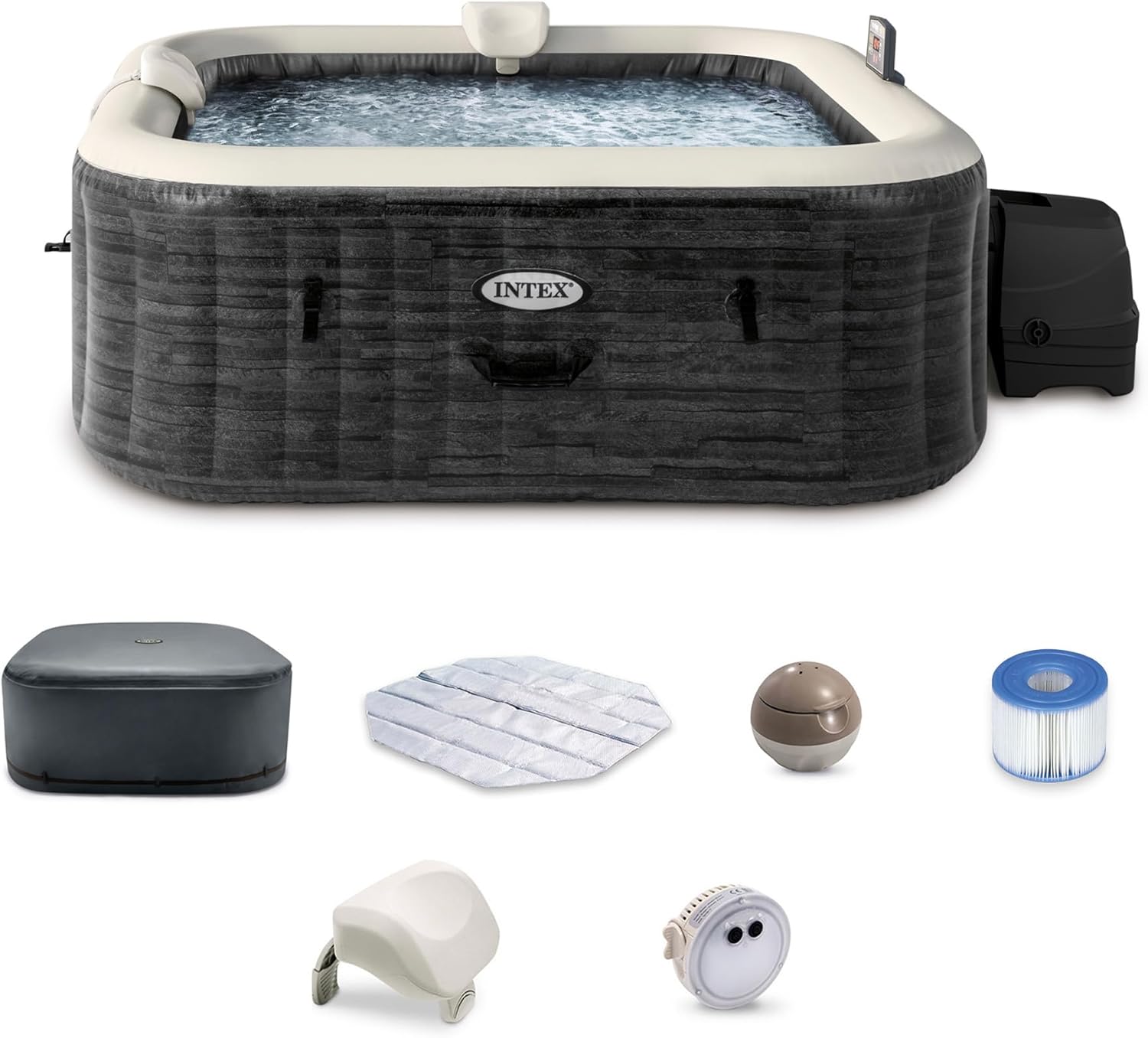
In our Intex Greywood Deluxe vs Simple Spa comparison, the Greywood is noted for its wireless control panel and built-in hard water system. The Wave Atlantic is more affordable and has a smaller footprint due to the integrated pump, whereas Intex uses an external “egg” pump. If space is your priority, go Wave. If tech is your priority, go Intex.
Wave Atlantic vs. Coleman SaluSpa
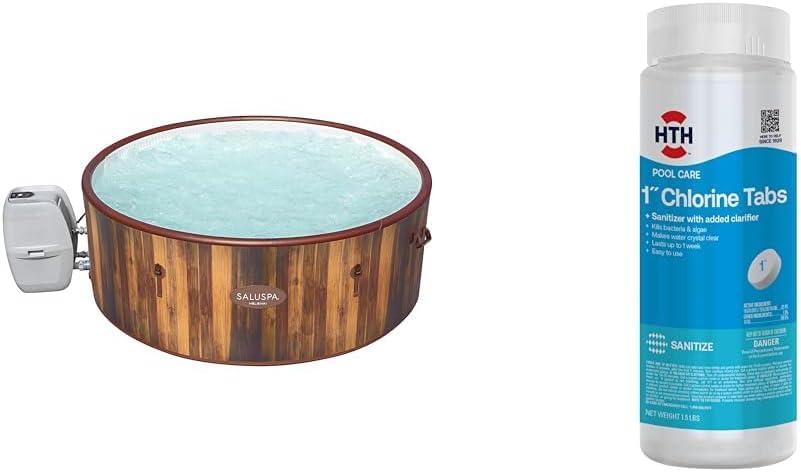
The Coleman SaluSpa review highlights its legendary durability. The Wave Atlantic offers a more modern, sleek aesthetic compared to the classic green Coleman. In terms of massage, the Atlantic’s 105 jets are comparable to the SaluSpa’s AirJet system, though the Wave’s heater often feels a bit more robust.
Wave Atlantic vs. Bestway SaluSpa Miami
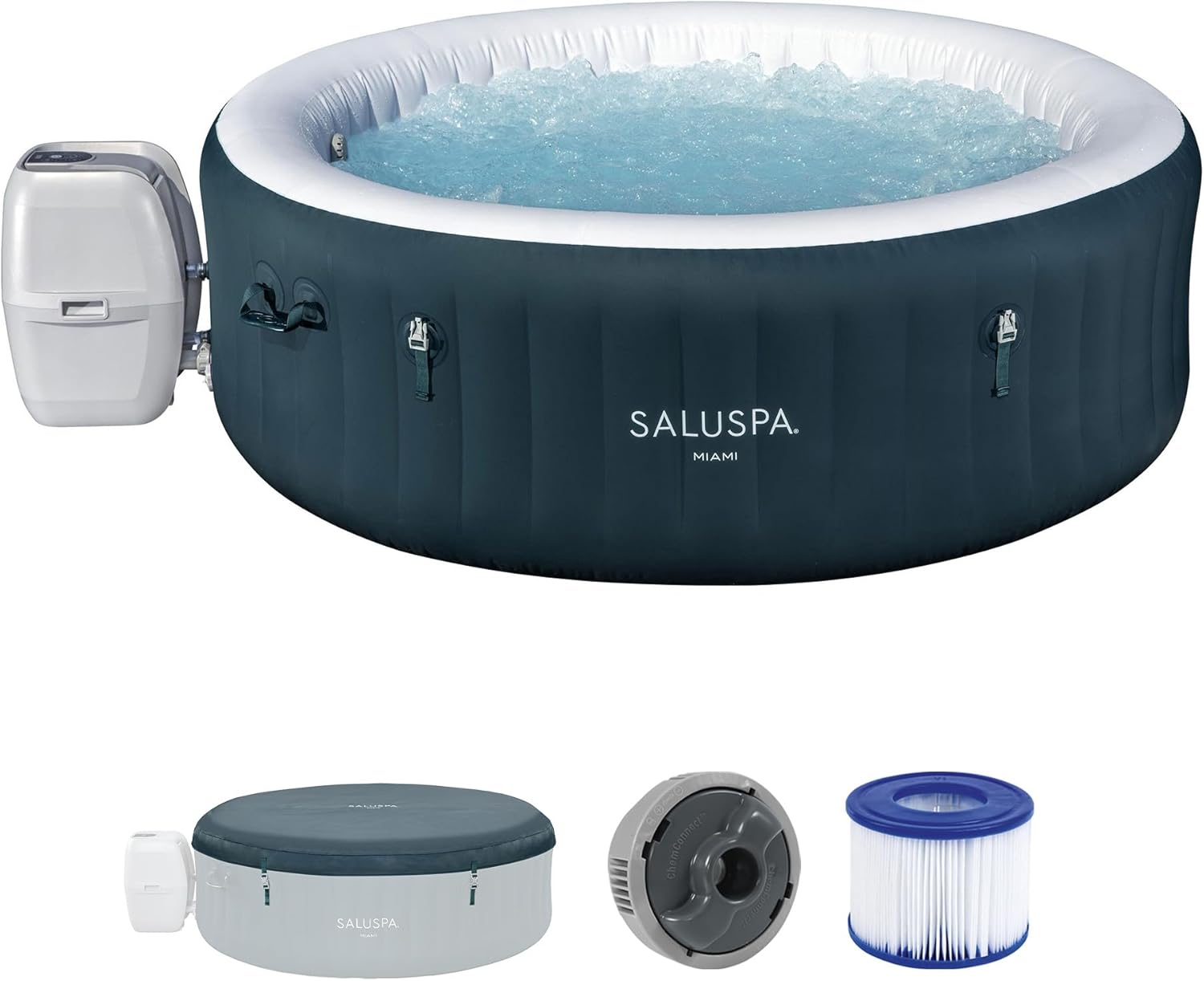
The Bestway SaluSpa Miami review shows a very similar entry-level tub. The Miami is often the cheapest on the market, but the Wave Atlantic’s Aero-Wall construction makes the walls feel more substantial and less like a “pool.”
Wave Atlantic vs. Wave Pacific and Wave Aegean
It’s also worth comparing the Atlantic against its own siblings in the Wave Spas lineup, since shoppers browsing the brand directly often end up choosing between all three. The square-format Pacific model makes more efficient use of corner space in a tight rectangular patio layout, which can translate to slightly more usable seating room for the same overall footprint. The octagonal Aegean sits at the premium end of the range, typically adding a few extra styling touches and a more upscale finish. The Atlantic’s round shape remains the most universally flexible option, fitting comfortably into almost any garden layout without needing to plan around corners, and it consistently represents the most affordable and simplest entry point into the Wave Spas range as a whole.
Integrated Pump vs. External “Egg” Pump: Why It Matters
One of the more meaningful engineering differences between the Atlantic and older-style inflatable spas is where the pump and heater assembly physically lives. Many legacy inflatable spas, including some models from established competitors, use a separate external unit—often nicknamed an “egg” pump due to its rounded housing—connected to the tub wall via a pair of hoses. This design has been the industry standard for years and is generally reliable, but it does introduce two extra hose connections that represent additional potential leak points, and it takes up floor space immediately next to the tub.
The Atlantic’s integrated approach builds the pump and heater directly into the tub’s wall structure, eliminating the external unit and its associated hoses entirely. This has a few practical benefits: a smaller overall footprint since there’s no separate pump box to accommodate, one less set of hose connections that could potentially develop a leak over time, and a slightly cleaner, more streamlined look overall. The trade-off is that if the integrated pump assembly itself ever needs servicing, the repair process is somewhat more involved than simply unplugging and swapping out a standalone external unit, since the components are built into the wall rather than sitting as a separate, easily accessible box.
In day-to-day use, most owners never notice this distinction one way or another—the tub simply works—but it’s a meaningful engineering choice worth understanding if you’re comparing the Atlantic against competitors that still use the more traditional external pump design.
Control Panel, Timer Scheduling, and Smart Features
The Atlantic’s digital control panel handles the core functions any owner needs day to day: setting your target temperature, toggling the jets on and off, and monitoring the current water temperature at a glance. Some versions of the Atlantic also include a built-in timer system, allowing you to schedule heating cycles in advance rather than manually starting the heater each time you want to use the spa.
This scheduling feature is particularly useful given how long a full heat-up from cold tap water can take. Rather than remembering to manually switch the heater on the evening before a planned soak, a timer-equipped unit lets you set the heating cycle to begin automatically at a specific time, so the water is at or near your target temperature by the time you’re ready to get in. This is a smaller, more modest version of the kind of remote scheduling convenience found on some premium app-connected spas from other brands, but it achieves a similar practical outcome without requiring a smartphone app or home WiFi connection.
The physical control panel itself is generally housed in a splash-resistant enclosure built into the tub wall rather than being a separate, removable unit—a sensible design choice for a budget-focused model, though it does mean adjustments are made standing at the panel’s fixed location rather than from a wireless remote you can carry into the water with you, a convenience reserved for some pricier competing models.
Winter Usage: Can You Use It in the Cold?
The short answer is yes, but with caveats. If you want the best inflatable hot tub for winter, you usually look for models with “Freeze Shield” technology. The Wave Atlantic does not have a dedicated anti-freeze circuit in older models. If you plan on using it in December, you must keep the heater running 24/7 to prevent the water in the pump from freezing. Check out can you use an inflatable hot tub in the winter for our top survival tips for cold-weather soaking.
It’s worth noting that newer production batches of the Atlantic have started incorporating a form of automatic cold-weather protection that activates the heater and pump when the ambient temperature drops below a set threshold, generally somewhere around 5°C (41°F), to help keep internal plumbing from freezing solid. This is a meaningful improvement over earlier versions of the tub, but coverage and terminology can vary between regional releases and production years, so it’s worth confirming exactly what cold-weather protection (if any) applies to the specific unit and listing you’re considering before relying on it through a genuinely harsh winter.
Regardless of whether your specific unit includes this protection, extra vigilance is still warranted during extended hard freezes. Never leave the spa filled and powered off during a deep freeze, keep the pump circulating periodically overnight in marginal conditions, and consider fully draining and storing the tub for the coldest stretch of winter in climates with prolonged sub-zero temperatures, rather than relying solely on any built-in protection to handle the most extreme conditions.
Health and Safety Considerations
Before you dive in, safety must be a priority. Are inflatable hot tubs safe? Generally, yes, provided you follow the electrical and chemical guidelines. However, there are specific groups that should take extra care:
- Pregnancy: Consult our guide on can pregnant women use hot tubs. Usually, keeping the temperature below 38°C (100°F) is advised.
- Workout Recovery: Using the hot tub after a workout is fantastic for lactic acid removal, but stay hydrated!
- Duration: How often should you use a hot tub? Daily use is fine, but limit sessions to 20-30 minutes to avoid the negative effects of hot tubs like dehydration or dizziness.
Broader Wellness Benefits
Beyond the immediate relaxation factor, regular use of a warm-water spa like the Atlantic is often associated with easing everyday muscle tension, supporting a calmer wind-down routine before bed, and giving people a genuine, dedicated moment to disconnect from screens and daily stress. Some owners also find that gentle warm-water immersion is a pleasant complement to an active lifestyle, offering a relaxing way to unwind the body after exercise or a physically demanding day, alongside its more obvious social and recreational appeal. None of this makes the Atlantic a medical device, and anyone with underlying health conditions should check with a healthcare provider before starting a regular hot tub routine, but as a source of everyday wellness and relaxation, the appeal is genuine and well supported by common experience.
Child Safety Features
For households with children, it’s worth noting that the Atlantic’s cover typically includes a securing clip system, and some versions add a dedicated child-safety element to the clip mechanism that requires a deliberate two-step action to release, rather than a simple one-touch unclip. This isn’t a substitute for active adult supervision around any body of water, but it is a sensible design touch that reduces the chance of a young child opening the cover unassisted.
Warranty, Returns, and Customer Support
Wave Spas typically backs the Atlantic with a tiered warranty structure: a longer coverage period—commonly around two years—on the core heater and pump components, and a shorter period, generally around twelve months, on the inflatable liner itself. This split reflects the reality that the liner, as the part most exposed to everyday wear, accidental punctures, and UV exposure, carries a different risk profile than the sealed electrical and mechanical components. As with any warranty, registering your product promptly after delivery and retaining your proof of purchase will make any future claim considerably smoother.
If a manufacturing-related puncture or defect does appear on the liner within the warranty period, most Wave Spas retailers handle this as a straightforward component replacement rather than requiring the entire unit to be returned, minimizing how long you’re without a working spa. For general returns outside of a warranty claim—such as simply changing your mind shortly after delivery—policies vary by specific retailer and region, so it’s worth reviewing the return window and any restocking conditions before purchase, particularly given the size and weight of the product once it’s been unboxed.
Getting Help When You Need It
Customer support for Wave Spas products is generally available through phone, email, or online chat channels, covering everything from basic setup troubleshooting to replacement part ordering. Response times are typically measured in hours rather than days for straightforward queries, though more involved warranty claims naturally take a bit longer to fully resolve.
Smart Buying Tips: When and How to Get the Best Price
Like most seasonal outdoor products, inflatable hot tub pricing tends to fluctuate throughout the year. Demand—and therefore price—for spas like the Atlantic often peaks heading into late autumn and early winter, when the appeal of a warm outdoor soak is most top-of-mind, while some of the better discounts tend to show up during the off-peak shoulder seasons when retailers are managing inventory ahead of the next demand cycle. If your schedule allows some flexibility, keeping an eye out during these quieter periods can meaningfully reduce your total spend.
It’s also worth comparing whether a specific listing includes a bundled thermal cover and insulated foam ground mat versus the base tub alone, since purchasing these accessories separately after the fact is typically less cost-effective than buying a package deal upfront. Given how much of the running-cost conversation comes back to minimizing standby heat loss, a bundle that includes proper insulation accessories from day one is usually worth prioritizing over a slightly cheaper base-only listing.
Frequently Asked Questions (FAQ)
How long does it take to set up the Wave Atlantic?
The actual inflation takes about 5 minutes. Filling it with water takes 1-2 hours, and heating it to 40°C usually takes 12-24 hours depending on the starting water temperature.
How many people can realistically fit in the 4-person Atlantic?
It is ideal for 2 adults and 2 children. For 4 large adults, it will be a “cozy” fit with legs overlapping. If you want more space, consider the 6-person model.
Does the Wave Atlantic use a lot of electricity?
On average, it costs between $1.00 and $2.00 per day to maintain temperature, though this increases in winter. See our guide on hot tub electricity usage for more details.
Can I use the hot tub on a wooden deck?
Yes, but only if the deck is structurally rated to hold the weight. A filled 4-person Atlantic weighs over 800kg (1,700 lbs). Always check with a structural engineer if unsure.
How many amps does it use?
The Wave Atlantic runs on a standard 13-amp circuit (UK) or 15-amp (US). For a deeper look, see how many amps does a hot tub use.
Is it better than an Aleko hot tub?
Wave Spas typically has better customer support in the UK/EU, while Aleko is a strong US contender. Check out our Aleko hot tub reviews for a direct comparison.
What is the best time of year to buy a Wave Spa?
Autumn and late winter often see the biggest discounts. Check our guide on the best time of year to buy a hot tub for more savvy shopping tips.
Does it come with a warranty?
Yes, Wave Spas typically provides a 1-year warranty on the pump and 6 months on the liner. Always register your product online immediately after purchase.
What’s the difference between the Atlantic, Pacific, and Aegean models?
The Atlantic is the round, entry-level model offering the most affordable price and simplest setup. The Pacific uses a square shape to maximize corner seating space, while the Aegean is an octagonal, more premium option with additional styling touches.
Does the Atlantic have any cold-weather or anti-freeze protection?
Some newer production versions include automatic protection that activates the heater and pump when temperatures drop below roughly 5°C (41°F). Coverage varies by production year and region, so check your specific listing rather than assuming it applies universally.
Can the Wave Atlantic be used indoors?
Yes, provided the space has adequate ventilation, a nearby GFCI or RCD-protected outlet, and flooring rated to handle the substantial weight of the filled tub plus occupants.
Final Verdict: Should You Buy the Wave Spas Atlantic?
After weeks of testing, chemical balancing, and long evening soaks, our conclusion is clear: the Wave Spas Atlantic is a stellar entry-level hot tub that punches way above its weight class. It’s perfect for the “weekend warrior” who wants a spa for the summer months, or the budget-conscious homeowner looking for a stylish way to relax after work.
While it lacks some of the high-end bells and whistles found in the best inflatable hot tub of 2025 rankings (like Wi-Fi control or hydro-jets), it masters the basics. The integrated pump is a genius space-saver, and the Aero-Wall technology makes it feel far more permanent than its price suggests. If you’ve been asking are inflatable hot tubs worth it, the Wave Atlantic provides a very convincing “yes.”
For most first-time buyers weighing simplicity, price, and everyday reliability against the more premium features found on flagship models from other brands, the Atlantic remains a genuinely sensible starting point—and with the 6-person configuration available for larger households, it scales reasonably well beyond just solo or couple use too.
Transform Your Garden Today
Ready to experience the Wave Atlantic for yourself? Click below to check current availability and the best pricing.
Shop the Wave Atlantic on Amazon