Are 110v Hot Tubs Any Good? The Brutally Honest Truth
The allure of a hot tub is universal—steam rising into the night air, warm water soothing tired muscles, and the promise of relaxation right in your backyard. But for many homeowners, the dream hits a wall when they see the electrical requirements of a traditional spa. Enter the 110v hot tub, often called a “Plug and Play” spa.
But skepticism remains. Can a hot tub that plugs into the same outlet as your toaster actually get hot enough? Is the jet pressure weak? Are you just buying a glorified kiddie pool with a heater?
The short answer is: Yes, 110v hot tubs are surprisingly good, provided you understand their limitations. They have democratized hydrotherapy, making it accessible to renters and budget-conscious buyers. However, they are not a direct replacement for a high-powered 220v system.
In this comprehensive guide, we will break down exactly how these tubs work, the pros and cons, the electrical safety questions people are afraid to ask, real running costs in dollars, and help you decide if a 110v model is the right choice for your lifestyle.
What Exactly Is a 110v “Plug and Play” Hot Tub?
A 110v hot tub is designed to operate on a standard household electrical circuit (in North America). Unlike traditional 220v spas that require a dedicated 50-60 amp breaker and professional hardwiring by an electrician, a 110v tub comes with a GFCI cord that you simply plug into a regular grounded outlet.
This category includes almost all blow-up hot tubs (inflatables) and many entry-level acrylic or roto-molded hard-shell spas. The convenience is unmatched, but the power draw is limited.
Because the tub is limited to roughly 15 amps, it has to manage its resources carefully. You might be wondering how many amps a hot tub uses—in a 110v scenario, the heater and the high-speed pump generally cannot run at the same time. This is the fundamental trade-off.

Simplicity in Design
No drilling, no wiring, no electricians. Just plug it in.
Check Top Rated 110v Tubs on AmazonThe Major Advantages: Why Choose 110v?
There is a reason these tubs are flying off the shelves. For the average user, the benefits often outweigh the raw power difference.
1. Zero Installation Hassle
Installing a 220v hot tub involves hiring an electrician to run heavy-gauge wire from your main breaker panel to a sub-panel near the tub. This can cost anywhere from $800 to $2,500 depending on the distance. With a 110v tub, your installation cost is $0. You just need to know how to set up an inflatable hot tub or position your hard-shell tub near an outlet.
2. Ultimate Portability
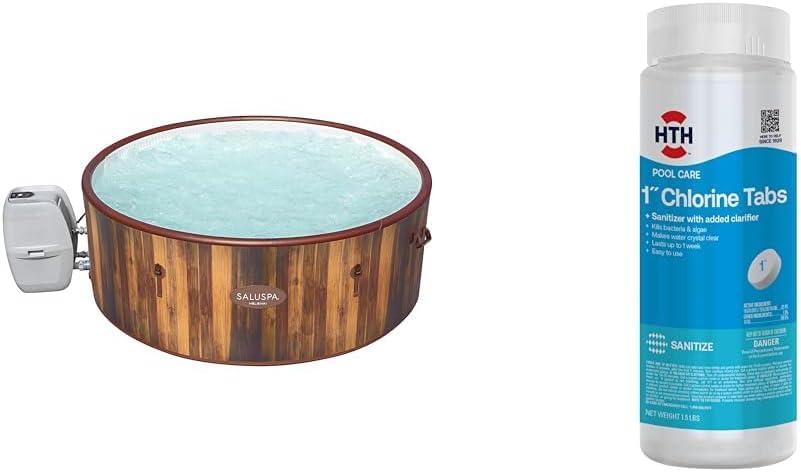
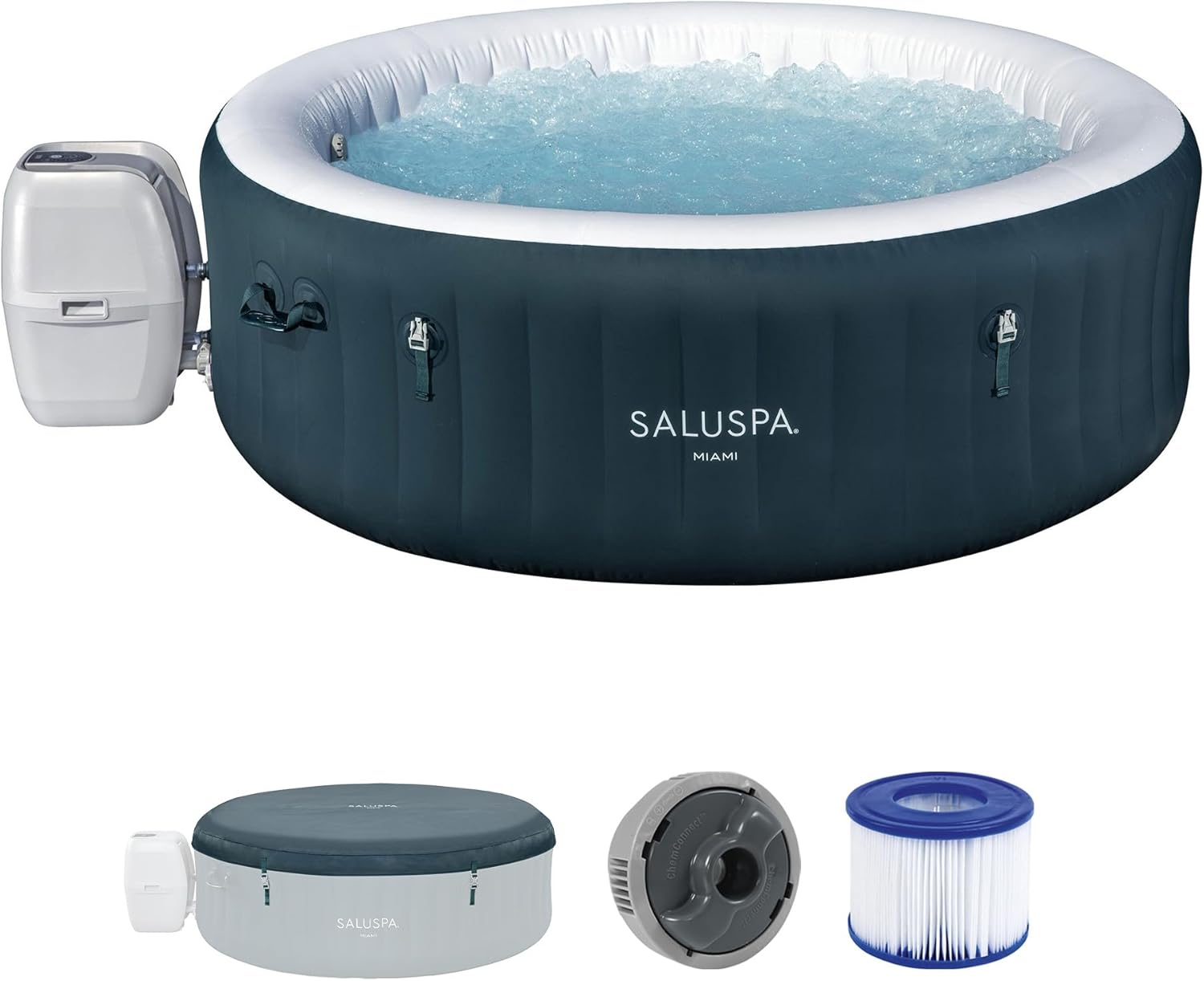
Since they aren’t hardwired, you can unplug them and take them with you. This makes 110v tubs the only option for renters. If you buy a model like the Bestway SaluSpa Miami, you can pack it into a box and move it to a new apartment or store it in the garage during winter.
3. Lower Upfront Cost
The manufacturing complexity is lower for 110v systems. You can find high-quality inflatable options for under $500, and solid hard-shell “plug and play” tubs for under $3,000. Read more about value in our article: Are inflatable hot tubs worth it?
Electrical Requirements: GFCI Cords, Dedicated Circuits, and Breaker Trips
This is the section most buying guides skip, and it’s usually the first thing new owners google after their first week of ownership: “why does my hot tub keep tripping the breaker?” Understanding the electrical side properly will save you a frustrating first month.
Do You Need a Dedicated Circuit?
Technically, no—that’s the entire selling point of a 110v spa. It’s designed to run on a standard 15-amp or 20-amp household circuit shared with other devices. However, “technically possible” and “advisable” are two different things. Most manufacturers strongly recommend that the outlet you use isn’t also feeding a refrigerator, microwave, window AC unit, or anything else with a large startup draw. Two appliances pulling near their maximum on the same 15-amp circuit is the single most common cause of nuisance breaker trips.
If your patio or deck only has one outlet and it also powers string lights, a mini-fridge, or a bug zapper, consider having an electrician add a second dedicated 20-amp outlet nearby. It isn’t required, but it removes 90% of the “my tub randomly shuts off” complaints we hear from readers.
Understanding the Built-In GFCI
Every legitimate 110v hot tub ships with a Ground Fault Circuit Interrupter built directly into the plug or a few feet down the cord. This is a safety device, not a defect, and it’s required by UL and CSA safety standards for any appliance that mixes water and electricity. The GFCI monitors the current flowing out versus the current flowing back. If it detects even a tiny imbalance—which can happen from moisture, a pinhole in the liner, or a failing heater element—it cuts power instantly.
A GFCI that trips once in a while, especially in humid weather or right after refilling, is normal and not a cause for concern. A GFCI that trips every single time you plug it in, or trips within seconds of running the heater, usually indicates a genuine short somewhere in the heating element or pump, and the unit should be inspected or replaced under warranty rather than repeatedly reset.
Can You Use an Extension Cord or a Splitter?
No, and this deserves more emphasis than most articles give it. An extension cord introduces resistance over distance, which causes voltage drop. A hot tub heater and pump pulling 12-15 amps through an undersized or overly long extension cord can generate real heat inside the cord itself—enough to melt insulation in extreme cases. If your outlet isn’t within the length of the cord that ships with the unit (typically 5-15 feet), the correct fix is to have an outlet installed closer to the tub, not to bridge the gap with a cord from the hardware store.
What Amperage Do You Actually Need?
Most 110v inflatable and hard-shell plug-and-play tubs are rated for either 13 amps or 15 amps continuous draw. A standard US household circuit is rated for 15 or 20 amps. Because the National Electrical Code requires continuous loads to not exceed 80% of a circuit’s rating, a 15-amp tub on a 15-amp circuit is already running close to the legal ceiling—another reason to avoid sharing that circuit with anything else.
The Limitations: The “Cold Hard” Truth
While we love them, we have to be honest. If you expect a 110v tub to perform exactly like the commercial Jacuzzi at your local gym, you will be disappointed.
1. The Heater/Pump Compromise
On a 110v circuit, there isn’t enough electricity to power a 1000W heater and a high-powered jet pump simultaneously.
The result: When you turn the bubbles on, the heater usually turns off.
This means the water will slowly cool down while you soak. In summer, this doesn’t matter. But if you are wondering can you use an inflatable hot tub in the winter, this is the biggest hurdle. The water might drop from 104°F to 100°F over a 20-30 minute session in freezing air.
2. Slower Heating Times
A 220v tub with a 4kW heater can raise water temperature by 6-8 degrees per hour. A 110v tub with a 1kW heater typically manages 1-3 degrees per hour. If you fill your tub with cold hose water, you are looking at a 24-hour wait before it’s ready. This requires planning.
3. Jet Power
Most 110v tubs, especially inflatables, rely on “AirJets” (blowers) rather than “HydroJets” (water pumps). While relaxing, they don’t offer the deep-tissue massage of a high-voltage system. However, for general aches, learning how hot tubs help with arthritis shows that heat is the primary healer, not just jet pressure.
Head-to-Head: 110v vs. 220v Hot Tubs
| Feature | 110v (Plug & Play) | 220v (Hardwired) |
|---|---|---|
| Installation Cost | $0 (DIY) | $800 – $2,500 (Electrician) |
| Heater Power | 1.0 kW – 1.5 kW | 4.0 kW – 5.5 kW |
| Heat Up Speed | 1-3°F per hour | 6-8°F per hour |
| Simultaneous Heat & Jets | Rarely (Usually one or other) | Yes (Always) |
| Portability | High (Moveable) | Low (Permanent) |
| Jet Strength | Gentle / Bubbles | Strong / Massage |
Performance Analysis: Do They Get Hot Enough?
Yes. Both 110v and 220v tubs are generally capped at 104°F (40°C) for safety. A 110v tub will get just as hot as a 220v tub; it just takes longer to get there.
To maximize performance, insulation is key. Since the heater is smaller, you need to trap that heat effectively. We highly recommend upgrading your setup with the best hot tub covers available. A thicker cover means the heater works less, saving you money.
What About Energy Costs?
A common myth is that 110v tubs are energy hogs because they run longer to heat up. While true that the heater runs longer, the wattage is lower. The real cost driver is insulation. An inflatable 110v tub will cost more to run than a well-insulated 220v tub simply because it loses heat faster through the thin walls. Check our detailed breakdown: Do inflatable hot tubs use a lot of electricity?

Pro Tip: Insulate!
Using a thermal blanket or upgraded cover is the #1 way to make a 110v tub efficient.
Shop Thermal AccessoriesReal Cost Breakdown: What Will a 110v Hot Tub Add to Your Electric Bill?
Let’s move past vague statements like “it’s affordable to run” and actually do the math, because this is one of the most searched questions on the topic and the one buyers care about most once the novelty of a new tub wears off.
The Heating Phase
Most 110v tubs use a heater rated between 1,000 and 1,500 watts. At the US national average residential electricity rate of roughly $0.16 per kilowatt-hour, running a 1.2kW heater continuously for 24 hours (a full heat-up cycle from cold tap water) costs approximately:
- 1.2 kW × 24 hours = 28.8 kWh
- 28.8 kWh × $0.16 = about $4.60 for a full 24-hour heat-up from cold
If you fill from a warm hose in summer instead of cold groundwater, that cost can drop to $1.50-$2.50 since less total temperature rise is needed.
The Maintenance Phase
Once the water is at temperature, the heater cycles on and off to maintain it rather than running continuously, similar to a home thermostat. In a well-insulated hard-shell tub sitting somewhere sheltered from wind, expect the heater to run maybe 30-40% of the time in mild weather. That works out to roughly $1.00-$2.00 per day in maintenance heating. In a thin-walled inflatable tub during cold, windy weather, that duty cycle can climb toward 70-90%, pushing daily costs closer to $3.00-$4.50.
Monthly Estimate
| Scenario | Estimated Daily Cost | Estimated Monthly Cost |
|---|---|---|
| Hard-shell, mild climate, insulated cover | $1.00 – $1.50 | $30 – $45 |
| Inflatable, mild climate | $1.50 – $2.50 | $45 – $75 |
| Inflatable, cold/windy climate | $3.00 – $4.50 | $90 – $135 |
These figures assume the tub is used a handful of times per week and covered when not in use. Leaving the cover off, or using a thin factory cover instead of a thermal upgrade, can push these numbers substantially higher because you’re essentially heating the outside air as much as the water.
Pump and Jet Costs Are Almost Irrelevant
Compared to the heater, the air blower or water pump draws relatively little—usually 200-400 watts. Running jets for 30 minutes a day adds only a few cents per session. The heater is where nearly all of your operating cost lives, which is exactly why insulation matters more for a 110v tub than for almost any other single upgrade.
How Many People Can Actually Fit? Capacity Guide by Model Type
Marketing copy loves to advertise “6-person” or “4-person” capacity, but those numbers are based on people sitting shoulder to shoulder with legs interlocking in the center, not the comfortable reality most families want.
Inflatable Tubs
A typical round inflatable tub advertised for 4 people comfortably seats 2 adults with legroom, or 3 adults if everyone is on the smaller side and doesn’t mind close contact. The hexagonal and square inflatable models advertised for 6 people realistically fit 4 adults comfortably. Kids count differently—two children can usually share the space of one adult.
Hard-Shell Plug-and-Play Tubs
Hard-shell 110v spas tend to be more honest about capacity because the molded seats are fixed. A “5-person” hard-shell tub typically does fit 4-5 average-sized adults without everyone touching knees, since the bench seating is engineered rather than just a circle of inflated vinyl.
Why Capacity Matters for Heating
There’s a practical side to this too: every person who gets in displaces water and adds body heat, but every person who gets in and out also lets warm air escape and cool air in when the cover comes off. A tub that’s frequently used at or near max capacity will show more temperature swings than one used by one or two people at a time, simply due to more frequent cover-open events.
Noise Levels: Are 110v Hot Tubs Loud?
This question comes up constantly from apartment dwellers, condo owners, and anyone with a small yard close to a neighbor’s window.
The air blower used for bubbles in most inflatable and entry-level hard-shell 110v tubs is the loudest component, typically producing a noise level comparable to a window air conditioner or a box fan on medium speed—noticeable but not disruptive in most outdoor settings. The circulation pump, which runs quietly and continuously to filter the water, is usually much quieter, closer to the hum of a refrigerator.
Hard-shell tubs tend to be noticeably quieter than inflatables because the rigid cabinet and foam insulation muffle pump and motor vibration, whereas an inflatable tub’s thin vinyl walls transmit more mechanical noise directly into the air. If noise is a major concern—say, the tub will sit near a bedroom window or in a townhouse courtyard—a hard-shell model with a full equipment cabinet is the safer choice, and running the tub during daytime hours rather than late at night avoids most complaints before they start.
Safety Certifications to Look For (ETL, CSA, UL)
Because a 110v hot tub combines mains electricity, water, and an unattended heating element, third-party safety certification isn’t a nice-to-have—it’s the difference between a product engineered to a recognized standard and one that simply hasn’t caught fire yet.
- ETL Listed: Indicates the product was tested by Intertek to the same safety standards used by UL. This is the most common mark on imported plug-and-play spas sold in North America.
- UL Listed: Underwriters Laboratories is the longest-established safety testing organization in the US; this mark is more common on higher-end hard-shell models.
- CSA Certified: The Canadian equivalent, required for products sold in Canada, and often listed alongside ETL/UL on units sold across both markets.
Before buying, check the product listing or the label on the control box for one of these marks. A hot tub with no recognizable safety certification at all—common on some ultra-budget marketplace listings—should be treated as a red flag regardless of how good the price looks, since it means the GFCI, wiring, and heater haven’t been independently verified against a recognized electrical safety standard.
Common Error Codes and What They Mean
Almost every 110v hot tub with a digital control panel uses a short list of recurring error codes across brands. Knowing what they mean before you own the tub saves a panicked search later.
| Typical Code | What It Usually Means | First Thing to Check |
|---|---|---|
| E01 / HL | Water level too low | Top off water above the intake line |
| E02 / SN1 | Temperature sensor fault | Power cycle the unit; check sensor connection |
| E03 / HTR | Heater won’t reach or exceeds target temp | Check for airlock in the pump, clean filter |
| E05 / FLO | Flow or circulation fault | Inspect filter for clogging, confirm pump is primed |
| GFCI trip (no code, power cuts out) | Ground fault detected | Dry the plug/cord, reset once; repeated trips need service |
A dirty or clogged filter is behind a surprisingly large share of these faults, since restricted flow confuses both the flow sensor and the heater’s ability to read accurate temperature. This is the first thing to rule out before assuming a component has failed.
Where to Place Your Tub: Surface, Space, and Location Requirements
Surface Requirements
A 110v tub filled with water and people can easily weigh 2,000-4,000 pounds. That weight needs to sit on a flat, level, load-bearing surface—concrete patios, reinforced decks rated for the load, and paver stone are all suitable. Grass, soft soil, or an unreinforced wooden deck can settle unevenly under that weight, which stresses the tub’s frame or liner over time. A simple foam or interlocking foam-tile base under an inflatable tub also protects the floor of the tub from punctures and adds a small amount of insulation from the ground.
Clearance From the Outlet
Since extension cords are off the table, plan the tub’s final position around where the cord can reach a GFCI-protected outlet without any slack pulled taut or running through a doorway or high-traffic path where it becomes a trip hazard.
Sun, Wind, and Wind Breaks
Because the heater on a 110v system is small, ambient conditions matter more here than with a 220v tub. Placing the tub in a location shielded from direct wind—next to a fence, wall, or under a pergola—meaningfully reduces heat loss and the associated running cost. Full sun exposure can also passively help warm the water and reduce the heater’s workload during the day.
Maintenance: Is It Easier?
The maintenance routine for a 110v tub is virtually identical to a larger spa. Water chemistry doesn’t care about voltage. You still need to manage pH, alkalinity, and sanitizer levels.
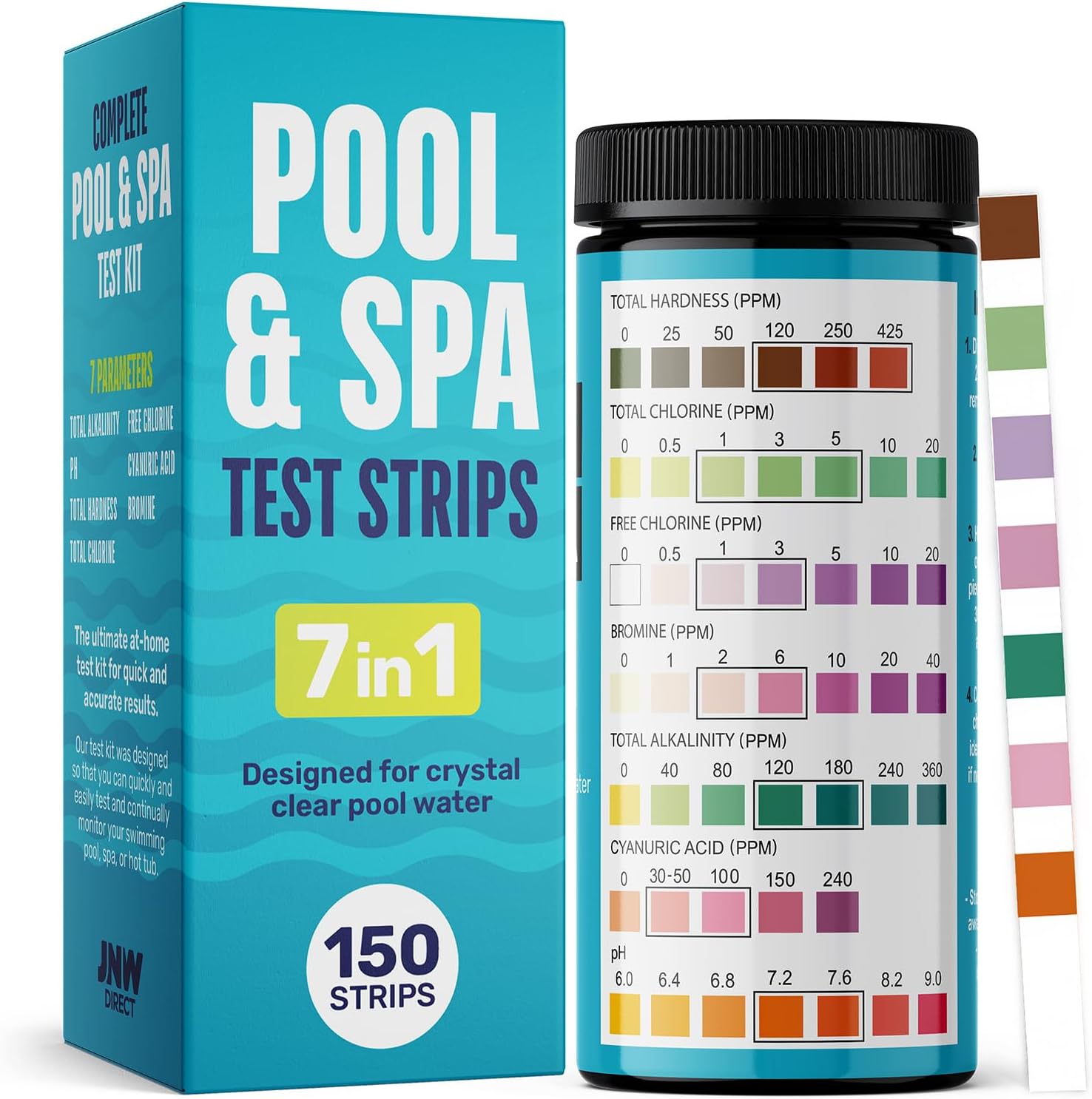
- Testing: You need a reliable kit. See our review of the best hot tub water testers.
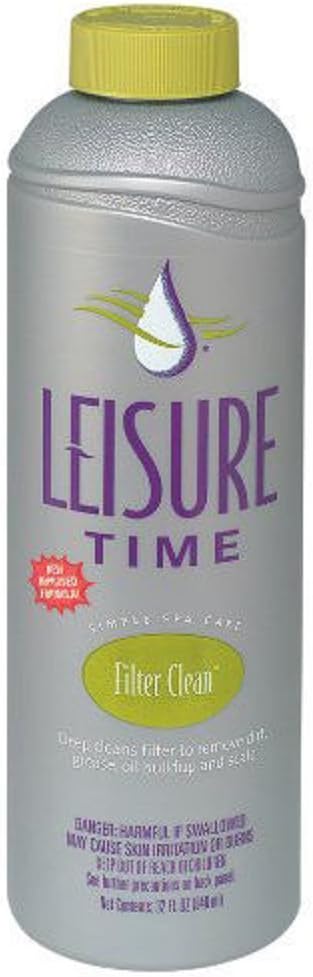
- Filtration: The smaller pumps on 110v tubs mean you shouldn’t neglect the filters. Dirty filters strain the pump. Learn how often to replace hot tub filters to avoid error codes.
- Cleaning: Because the filtration turnover is slower, you might need to vacuum debris manually more often. Check out the best hot tub vacuums for this task.
If the water gets funky, don’t panic. Read our guide on why hot tub water gets cloudy to troubleshoot.
Winterizing and Off-Season Storage
Because portability is one of the biggest selling points of a 110v tub, a large share of owners choose to drain and store the unit for part of the year rather than run it through a harsh winter.
Draining the System
Most models include a drain valve or spigot near the base. Attach a standard garden hose, open the valve, and let gravity do the work. Afterward, run the pump briefly (following your manual’s guidance) to clear residual water from the internal plumbing and heater coil, since trapped water left inside can freeze, expand, and crack fittings even indoors in an unheated garage.
Drying Before Folding (Inflatables)
An inflatable tub must be completely dry, inside and out, before folding for storage. Any residual moisture trapped in the folds encourages mold and mildew over months in storage, which is one of the most common reasons an otherwise fine inflatable tub gets thrown away the following spring.
Storing the Pump and Filter Separately
The pump/heater unit and any cartridge filters should be stored separately in a dry indoor space, ideally at room temperature, rather than left in a cold garage where seals and gaskets can become brittle.
Can You Run It Through Winter Instead?
Yes, provided the model has a freeze-protection or “Freeze Shield” mode that automatically runs the pump periodically to prevent standing water in the lines from freezing. Not all 110v tubs include this feature, so it’s worth confirming before assuming a unit is winter-safe. Models without freeze protection left full and unattended during a hard freeze risk cracked pipes and pump housings.
Expected Lifespan and Warranty Considerations
Longevity is one of the more honest trade-offs of the 110v category, and it’s worth setting expectations correctly before buying.
Inflatable Tubs
With consistent water chemistry maintenance and proper winter storage, a quality inflatable tub typically lasts 3-5 years before the liner, seams, or pump need replacing. Heavy daily use, harsh sun exposure without a cover, or skipping winterization can shorten that considerably.
Hard-Shell Plug-and-Play Tubs
Hard-shell 110v spas are built more like traditional hot tubs and commonly last 8-15 years with proper care, since the acrylic or rotomolded shell doesn’t degrade the way inflatable vinyl does.
What Warranties Typically Cover
Expect coverage in the range of 90 days to 1 year on the pump/heater assembly for inflatables, and 1-3 years on the equipment pack for hard-shell models, with shorter or prorated coverage on the shell/liner itself. Always register the product after purchase, since many manufacturers require registration within a set window to activate the full warranty term, and keep the original receipt, as most claims require proof of purchase date.
110v vs. Saltwater vs. Wood-Fired: A Broader Comparison
Plug-and-play isn’t the only alternative to a traditional hardwired spa. Two other categories come up often enough in reader questions to deserve a direct comparison.
| Type | Power Source | Best For | Main Drawback |
|---|---|---|---|
| 110v Plug & Play | Standard household outlet | Renters, budget buyers, portability | Slow heating, weaker jets |
| Saltwater System (add-on) | Same as base tub (110v or 220v) | Owners who dislike chlorine smell/feel | Higher upfront cost, salt cell maintenance |
| Wood-Fired Tub | None (external fire) | Off-grid use, rustic aesthetic | Manual labor, slow and inconsistent heat |
A saltwater system isn’t really a separate category of tub—it’s a sanitizing method that can be retrofitted onto many hard-shell 110v models, using a low-concentration salt cell instead of manually dosing chlorine or bromine. It doesn’t change any of the electrical trade-offs discussed above, but it does reduce the day-to-day chemical handling involved in upkeep.
Wood-fired tubs, by contrast, need no electricity at all for heating (though some still use a small electric pump for filtration), making them popular for cabins and off-grid properties, but they require tending a fire for hours to reach temperature and offer none of the instant, app-free convenience that makes 110v tubs appealing in the first place.
Accessories That Actually Improve the 110v Experience
A handful of inexpensive add-ons meaningfully offset the core weaknesses of a 110v system.
- Thermal/insulated cover: The single highest-impact upgrade, directly reducing heat loss and heater run time.
- Floating solar cover (bubble blanket): Sits directly on the water’s surface under the hard cover, cutting evaporative heat loss further, especially useful overnight.
- Insulated base pad: Reduces heat loss into the ground or deck surface, particularly helpful for inflatable models with thin floors.
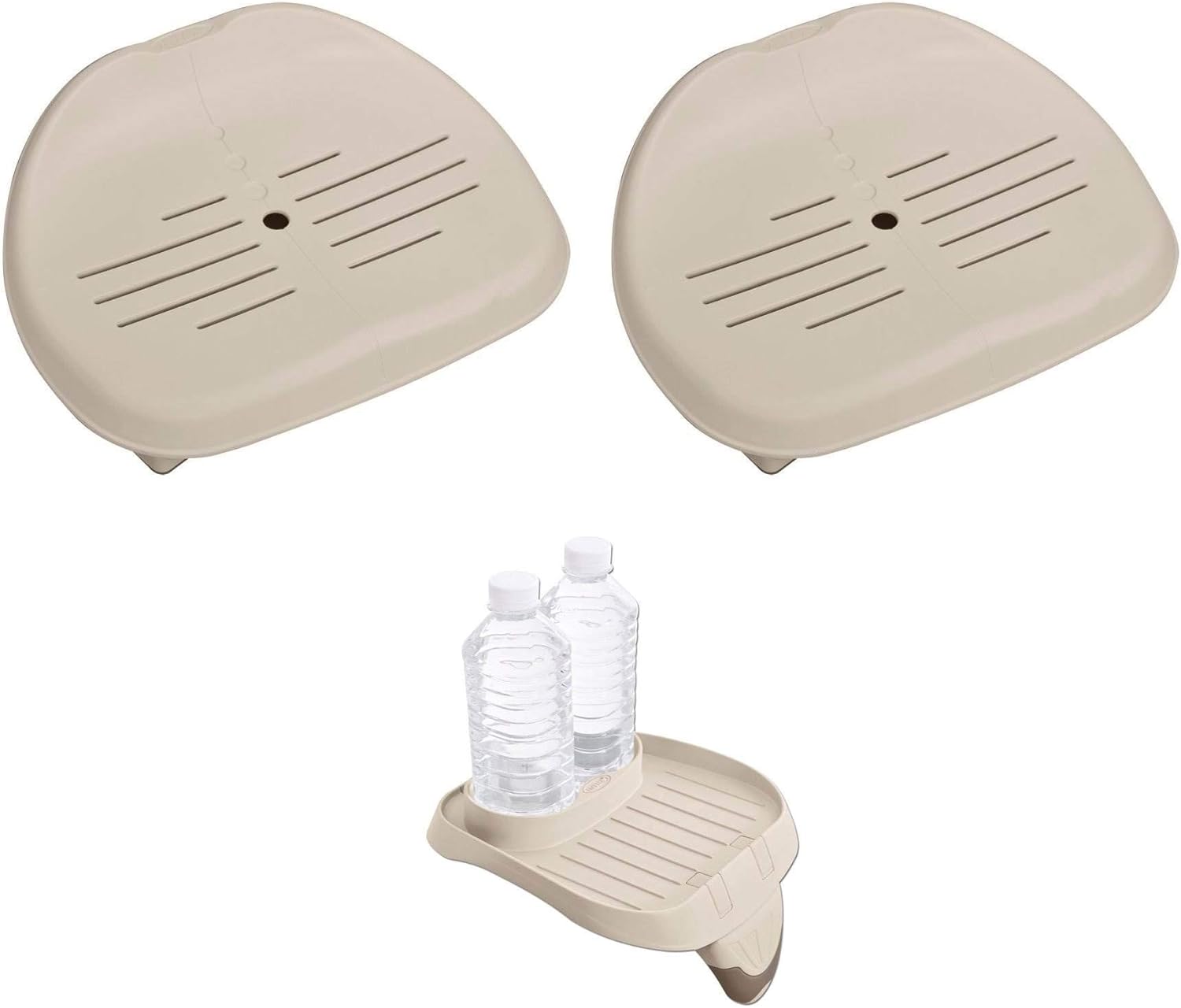
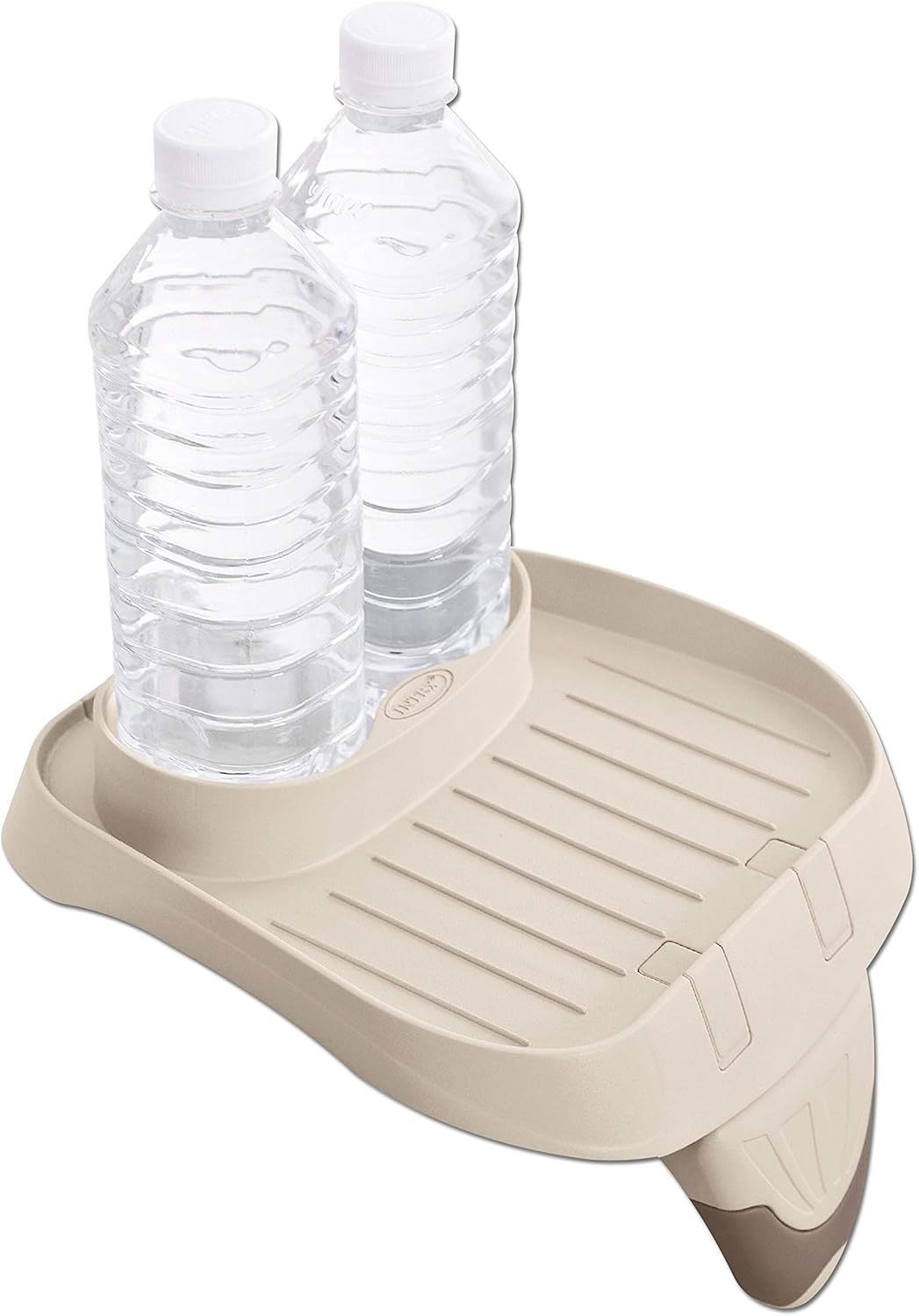
- Cup holder/tray accessories: Purely a comfort upgrade, but a popular one for making the tub feel like a finished backyard feature rather than a temporary pool toy.
- Chemical floater and test strips: Keeps sanitizer levels more consistent between full manual tests.
None of these accessories address the fundamental heater/pump power-sharing limitation, but together they can meaningfully close the practical gap between a 110v tub and its 220v counterpart for most casual users.
Top Rated 110v Hot Tubs for 2025
If you’ve decided that a Plug and Play spa is right for you, here are the heavy hitters in the market.
1. The Inflatable Champion: Coleman SaluSpa
The Coleman series is the gold standard for durability and price. They hold heat well for an inflatable and are incredibly easy to set up. Read our full Coleman SaluSpa review.
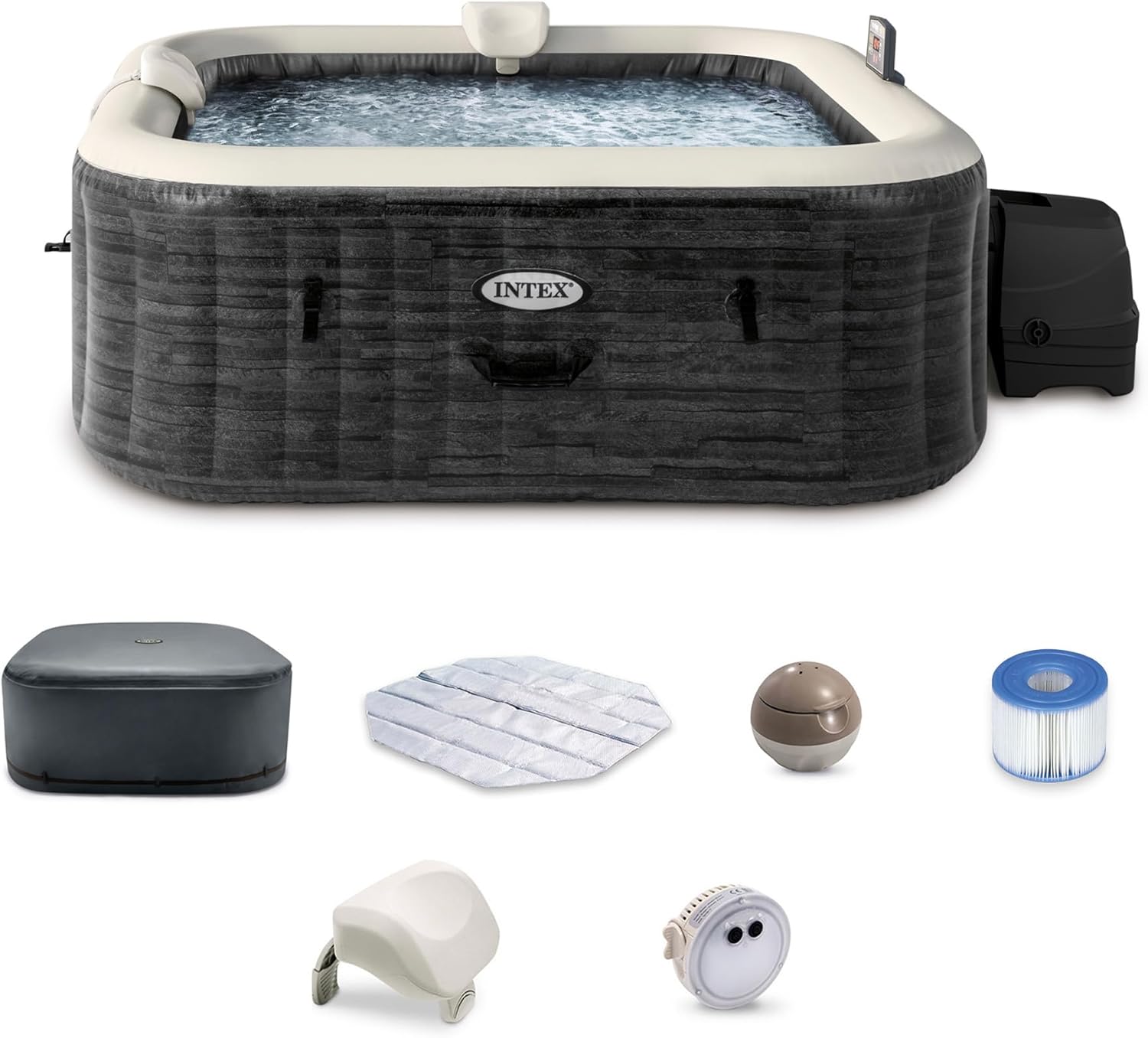
2. The Tech-Forward Pick: Intex PureSpa
Intex uses “Fiber-Tech” construction which makes the walls very rigid. They also often include hard water treatment systems built-in. See how it stacks up in our Intex vs Coleman comparison.
3. The Winter Warrior
If you plan to use a 110v tub in the snow, you need a model with Freeze Shield technology to prevent the pump from icing over. Check our list of the best inflatable hot tubs for winter.

Our Top Pick: Coleman SaluSpa
Reliable, affordable, and easy to maintain. The best entry into 110v hot tubbing.
See Price on AmazonBuying Checklist: 12 Questions to Ask Before You Buy
- Is the unit ETL, UL, or CSA certified, and is that mark visible on the actual listing or spec sheet?
- What is the rated amperage draw, and does your intended outlet sit on its own circuit or a shared one?
- How far is the nearest GFCI-protected outlet from where you want to place the tub, and does the included cord reach it without an extension cord?
- Does the model include Freeze Shield or equivalent freeze protection if you plan to use it through winter?
- What is the realistic seating capacity versus the marketed capacity?
- Is the surface you plan to place it on rated to hold 2,000+ pounds when full?
- Does the warranty cover the pump/heater separately from the shell or liner, and for how long?
- Are replacement filters and liners still being manufactured for this specific model line?
- Does the tub include a hard cover, and is it worth budgeting for a thermal upgrade immediately?
- What’s the manufacturer’s stated heat-up rate, and does it match your climate’s needs?
- Can the unit run jets and heater simultaneously, or does it follow the typical 110v either/or pattern?
- Is there a local dealer or accessible customer support line if a part fails outside the return window?
Summary: Pros and Cons
✅ The Pros
- No electrician required (Plug & Play).
- Significant cost savings upfront.
- Portable (perfect for renters).
- Sufficient heat (104°F) for soaking.
- Easy DIY maintenance.
❌ The Cons
- Slow heating recovery time.
- Heater usually turns off when jets run.
- Less powerful “massage” action.
- Struggles in sub-zero temperatures.
Frequently Asked Questions
No. Most manufacturers strictly forbid this. Extension cords can cause voltage drops that damage the pump motor or lead to overheating and fire hazards. Plug directly into the wall outlet.
Filling takes 1-2 hours depending on water pressure. Heating is the long part. At 2°F per hour, raising water from 60°F to 104°F can take 20-24 hours. See how it works here.
For heat therapy (soaking), yes, they are excellent. For hydrotherapy (massage), they are weaker than 220v tubs. However, many find the bubbles sufficient for stress relief. Read are hot tubs healthy for you.
Some hard-shell “convertible” hot tubs allow this with a simple wiring change and a dip switch adjustment on the board. However, inflatable hot tubs (like Coleman or Intex) cannot be converted.
Absolutely. The voltage doesn’t change the biology. You must use sanitizer (chlorine/bromine) and shock. Without it, you risk biofilm buildup.
Usually because it’s sharing a circuit with another high-draw appliance. Try moving the tub to a dedicated outlet, or unplug nearby devices like a mini-fridge or window AC while the tub heats.
An occasional trip, especially in humid weather, is normal and part of how the safety device is designed to work. Frequent or immediate trips on every use point to a genuine fault that should be checked under warranty.
Expect the real-world comfortable capacity to run about 1-2 people fewer than the marketed number, since advertised capacities assume tightly packed seating.
Inflatable models generally last 3-5 years with proper care, while hard-shell plug-and-play spas can last 8-15 years.
Yes, unless the model has built-in freeze protection. Otherwise, drain it fully, dry it out, and store the pump and filter indoors for the winter.
The air blower is the loudest part, roughly comparable to a window air conditioner. Hard-shell tubs tend to run quieter than inflatables due to their rigid, insulated cabinets.
Step-by-Step First-Time Setup Guide
Unboxing day is where most confusion happens, and a large share of “my tub isn’t heating” complaints in the first week trace back to a skipped setup step rather than a defective unit. Here’s the process laid out in full.
Step 1: Choose and Prepare the Location
Confirm the surface is flat, level, and rated to hold the fully-filled weight of the tub. Use a bubble level across at least two directions on hard-shell models; even a half-inch of slope across an inflatable’s footprint can cause the water line to visibly tilt and stress one side of the liner more than the other. Lay down a foam base pad if you’re using an inflatable model.
Step 2: Inflate or Position the Shell
For inflatable models, use the built-in pump (most units double the air blower as an inflation pump) rather than a shop-vac or bike pump, since over-inflating with the wrong equipment can stress the seams. Inflate the outer wall first, then the floor, following the specific order in your manual—models vary in whether the floor or the walls come first.
Step 3: Connect the Filter and Pump Housing
Insert the cartridge filter into its housing before filling. Running the pump dry, even briefly, without a filter in place or before water is added can damage the impeller on some models, so this step should never be skipped or done out of order.
Step 4: Fill With Water
Run a garden hose to the fill point and fill to the manufacturer’s marked line, not simply “to the top.” Overfilling can cause water to spill out once people get in and displace volume, while underfilling can cause the pump to draw air and trip a low-flow error.
Step 5: Plug In and Prime the Pump
Only plug the unit into the wall outlet after the water is in place. When first powered on, the pump may need a minute or two to fully prime and clear air from the lines—it’s normal to hear some gurgling or see the flow indicator flicker briefly during this stage.
Step 6: Balance the Water Chemistry Before First Use
Test and adjust pH, alkalinity, and add an initial dose of sanitizer before anyone gets in, even though the water isn’t warm yet. Starting with balanced water from day one avoids a scramble later once the tub is in daily use.
Step 7: Set the Target Temperature and Let It Heat
Set the target temperature (commonly capped at 104°F) and put the cover on. This is the point where patience matters most—resist the urge to repeatedly check by removing the cover, since every open-cover check lets accumulated heat escape and resets some of the progress.
Water Chemistry Deep Dive for 110v Tubs
Water chemistry doesn’t change based on voltage, but the smaller water volume and lower flow rate of most 110v tubs do change how forgiving the system is of chemistry mistakes.
Why Smaller Volume Means Less Room for Error
A typical 110v inflatable holds somewhere between 200 and 350 gallons, compared to 300-500+ gallons in many hardwired spas. A given dose of sanitizer or pH adjuster has a proportionally bigger effect in a smaller volume of water, meaning it’s easier to overshoot your target range if you’re used to dosing a larger tub. Always start with half the recommended dose, test, then add the remainder gradually rather than dumping in a full dose at once.
The Core Three Numbers
- pH: Ideally between 7.2 and 7.8. Water outside this range causes skin and eye irritation and makes sanitizer far less effective.
- Total Alkalinity: Ideally between 80 and 120 ppm. This acts as a buffer that keeps pH from swinging wildly; if alkalinity is off, pH will keep drifting no matter how often you adjust it directly.
- Sanitizer (chlorine or bromine): Chlorine is typically kept between 3-5 ppm, bromine between 3-5 ppm as well, though bromine is often preferred in smaller spas because it remains more stable at higher water temperatures.
Why Bromine Is Popular in Plug-and-Play Tubs Specifically
Because 110v tubs often run warmer for longer stretches without a full water change (due to the labor of draining and refilling by hose), bromine’s greater stability at higher, more consistent temperatures makes it a common choice over chlorine for smaller plug-and-play spas, even though chlorine remains cheaper and more widely available.
How Often to Fully Drain and Refill
As a rule of thumb, divide 350 by the number of people who typically use the tub per day—that gives you a rough number of days between full drains. A tub used daily by two people should be drained roughly every 3-4 months; one used occasionally by a family of four might need draining closer to every 6-8 weeks, since more bathers introduce more organic contaminants (oils, lotions, sweat) that sanitizer and filtration alone can’t fully keep pace with indefinitely.
Climate Zone Guide: Matching a 110v Tub to Where You Live
Because heater output is fixed and relatively low across the entire 110v category, your local climate has an outsized effect on how satisfying ownership will feel compared to owning a 220v system.
Warm/Mild Climates (Most of the Southern US, Coastal Regions)
This is where 110v tubs perform closest to their 220v counterparts. Ambient air temperature does much of the heavy lifting, heat loss through the shell is minimal, and the smaller heater rarely struggles to maintain temperature even with jets running intermittently.
Temperate Climates (Much of the Midwest and Northeast, Spring/Fall Everywhere)
Performance is still solid here, but a quality insulated cover stops being optional and becomes essential. Expect slightly longer heat-up times after refills and noticeably more heater run-time overnight.
Cold Climates (Northern US, Mountain Regions, Canada in Winter)
This is the scenario where the fundamental heater/pump trade-off is most noticeable. Water can visibly cool during a session with jets running, and heat-up from a cold fill can stretch past 24 hours. Owners in this climate who still want a plug-and-play tub should prioritize a hard-shell model (better insulated than inflatables), a thermal floating cover under the hard cover, wind-sheltered placement, and realistic expectations that jet sessions may need to be shorter or heater-first, jets-second, in sequence rather than simultaneous.
When Climate Alone Should Push You Toward 220v
If you live somewhere with sustained sub-freezing temperatures for months at a time and want to use the tub multiple times a week through that entire season with strong jets and stable heat, that’s the clearest case where saving for a 220v hardwired install will deliver a meaningfully better experience than any accessory bundle can achieve on a 110v system.
Health and Safety Considerations
A few safety questions come up often enough, particularly from parents and pregnant readers, that they deserve direct answers rather than being buried in a general FAQ.
Children
Most manufacturers and pediatric guidance recommend limiting hot tub time for young children to short sessions (often cited around 10-15 minutes) at reduced temperatures, and supervising them at all times near the water. A locking cover, kept latched whenever the tub is not actively in use, is one of the simplest ways to prevent unsupervised access.
Pregnancy
Elevated water temperature during pregnancy is generally discouraged by medical guidance, particularly in the first trimester, due to concerns about core body temperature increases. Anyone who is pregnant should consult their own doctor before using any hot tub, 110v or otherwise, rather than relying on general guidance from a product review.
Cardiovascular and Blood Pressure Conditions
Hot water immersion causes blood vessels to dilate and can lower blood pressure, which is generally the relaxing sensation people seek, but it can be a genuine concern for anyone with certain heart conditions or blood pressure medications. This is worth a conversation with a doctor rather than guesswork, especially for older adults using a tub for therapeutic purposes.
Slip Hazards
The area immediately around any hot tub gets wet and can become slippery, regardless of voltage. A textured mat or non-slip surface around the entry point reduces one of the most common real-world injuries associated with backyard spa ownership—a slip on wet decking, not anything related to the tub’s electrical system.
Terminology Explained: Spa vs. Hot Tub vs. Jacuzzi vs. Plug-and-Play
These terms get used interchangeably in casual conversation, which causes real confusion when shopping, so it’s worth untangling them.
- Hot tub: The generic term for any heated, jetted soaking vessel, regardless of voltage or construction.
- Spa: Largely synonymous with hot tub in North American usage, though “spa” is sometimes used more specifically for smaller, portable units.
- Jacuzzi: Technically a specific brand name (Jacuzzi Inc.), though it’s become a genericized term the way “Kleenex” refers to facial tissue generally.
- Plug-and-Play: Refers specifically to the 110v category discussed throughout this guide—any unit designed to run on standard household current without professional electrical work.
- Inflatable: A subset of plug-and-play tubs built from reinforced PVC/vinyl that can be deflated for storage, as opposed to “hard-shell,” which uses a rigid acrylic or rotomolded plastic body.
Regional Electricity Cost Comparison
Because running cost is driven almost entirely by your local electricity rate, the same tub can cost noticeably different amounts to run depending on where you live. Rates vary by state and utility, and change over time, so treat the figures below as a starting point for your own calculation rather than a fixed number, and check your latest utility bill for your actual rate per kWh.
| Region Type | Typical Rate Range (per kWh) | Effect on Monthly Running Cost |
|---|---|---|
| Lower-cost regions (parts of the South, Pacific Northwest hydro areas) | $0.10 – $0.13 | Toward the lower end of estimates above |
| National average | ~$0.16 | Matches the baseline estimates above |
| Higher-cost regions (parts of the Northeast, California) | $0.25 – $0.40+ | Can push monthly running costs 50-100% higher than baseline |
Anyone in a higher-cost electricity region has an even stronger financial incentive to invest in a thermal cover and wind-sheltered placement, since the payback period on those accessories shrinks considerably when every kWh saved is worth more.
Resale Value and Depreciation
Because 110v tubs are portable by design, a healthy secondhand market exists for them, unlike hardwired spas which are rarely resold given the cost and hassle of disconnecting and reinstalling them.
Inflatable tubs depreciate quickly—expect to recover perhaps 30-40% of the original price after a year or two of use, largely because buyers are wary of hidden liner damage or pump wear they can’t fully inspect before purchase. Hard-shell plug-and-play models hold value considerably better, often reselling for 50-60% of original price within the first few years, since the rigid shell is easier for a buyer to visually inspect for cracks or damage and the equipment pack is more standardized and serviceable.
Keeping original packaging, the owner’s manual, and a record of chemical maintenance can meaningfully improve resale value and buyer confidence when the time comes to sell.
Energy-Saving Hacks Beyond Insulation
An insulated cover is the headline recommendation, but several smaller habits stack together to meaningfully reduce running costs over a season.
- Minimize cover-open time: Every minute the cover is off during cold weather lets accumulated heat escape; have towels, drinks, and chemicals staged before opening.
- Heat during off-peak hours where time-of-use rates apply: Some utilities charge less overnight; setting the heater to catch up during those windows can lower the bill without changing total energy used.
- Keep the filter clean: A clogged filter forces the pump to work harder and can trigger longer heater cycles as flow-related temperature readings become less accurate.
- Use a floating solar cover under the hard cover: Cuts evaporative heat loss, which is one of the largest sources of heat loss in any open-top spa.
- Position away from prevailing wind: Wind chill affects standing water almost as much as it affects skin; a windbreak of any kind reduces convective heat loss.
- Lower the set temperature slightly when not in active use: Dropping the target by even 2-3°F between sessions and letting the tub reheat before use saves meaningfully over weeks of ownership without a noticeable difference in soak quality.
Troubleshooting Pump Priming and Common First-Week Issues
A pump that won’t prime, or seems to run without circulating water, is one of the most common first-week frustrations, and it’s rarely a defective unit.
Air Trapped in the Lines
This is the most frequent cause. Most manuals recommend loosening (not fully removing) a union fitting near the pump briefly to bleed trapped air, then retightening once water flows steadily from the fitting.
Filter Installed Incorrectly or Missing
A missing, backwards, or improperly seated filter cartridge can prevent the pump from building the pressure needed to trigger its internal flow sensor, which some units interpret as a fault and refuse to run the heater as a result.
Water Level Below the Intake
If the water level has dropped—from evaporation, splash-out, or a slow leak—below the marked fill line, the pump can begin drawing air instead of water, causing it to run noisily without effectively heating or filtering.
Kinked or Pinched Intake Hose (Portable/Hose-Style Models)
On some hard-shell models with external hose connections between the shell and equipment pack, a kink in that connecting hose restricts flow just as effectively as a clogged filter and is worth a visual check before assuming a pump failure.
Environmental Considerations
Compared to a large hardwired spa running a 4-5 kW heater around the clock, a 110v tub’s smaller heater does represent a genuinely lower peak energy draw, even though total running hours are longer. The bigger environmental variable in practice is water usage: full drains and refills every few months consume a meaningful amount of municipal water over a season, and where local water restrictions or drought conditions apply, it’s worth checking whether backyard pool/spa refilling is restricted before planning a fixed maintenance schedule. Choosing bromine or a lower-waste sanitizing method, keeping the cover on to reduce evaporation, and stretching the interval between full drains through diligent chemistry management are the most practical ways to reduce the tub’s overall water footprint.
Renters and Apartment/Balcony-Specific Considerations
The 110v category exists largely because of renters and apartment dwellers, so it’s worth addressing this use case directly rather than assuming a backyard.
Check Your Lease and HOA Rules First
Many leases and condo/HOA agreements restrict what can be placed on a balcony, both for weight and liability reasons. A filled tub’s weight, concentrated on a relatively small footprint, can exceed what some balconies are structurally rated to support—this is worth confirming with a property manager or the building’s structural documentation before buying, not after.
Water Drainage and Neighbor Impact
Splash-out and eventual draining need a plan on a balcony in a way they don’t in a backyard with a lawn or drain nearby. Some renters drain into the shower or a floor drain using a hose and a small pump; dumping water directly off a balcony onto a neighbor’s space below is both inconsiderate and, in most buildings, against the rules.
Outlet Access on Balconies
Many balconies only have a single GFCI outlet, if any at all. Confirming that outlet exists, works, and is close enough to reach without an extension cord is a prerequisite check before ordering a tub for this specific setup, not an afterthought to solve once the box arrives.
Noise and Shared Walls
In multi-unit buildings, the blower noise discussed earlier becomes more relevant, since sound travels differently through shared walls and floors than it does across an open yard. Running the tub during reasonable daytime hours and choosing a quieter hard-shell model where possible reduces friction with neighbors.
DIY Repairs You Can Actually Do Yourself
Not every issue requires a warranty claim or a service call. Several common problems have straightforward home fixes.
Patching a Puncture (Inflatables)
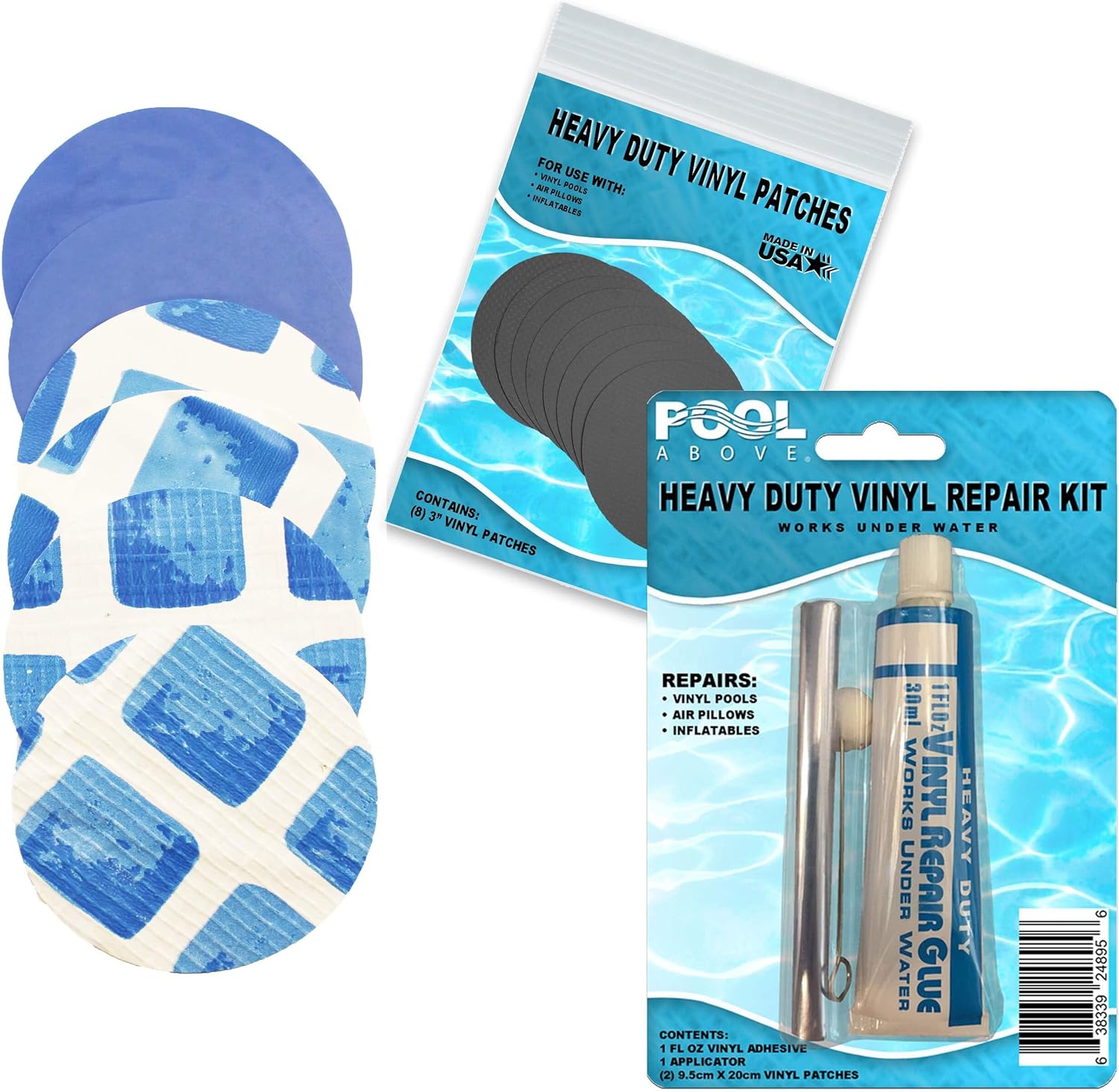
Most inflatable tubs ship with a small repair patch kit. Locate the leak (a soapy water spray will reveal bubbles at the puncture site), dry the area completely, and apply the patch per the included instructions. A properly applied patch on a clean, dry surface can hold for years and is virtually invisible once cured.
Replacing a Cartridge Filter
This is routine maintenance rather than a repair, but it’s worth stating plainly: filters are consumable and should be replaced on the schedule in your manual (commonly every 2-4 weeks of regular use), not run until visibly filthy. A degraded filter reduces flow and can trigger error codes that look like a bigger problem than they are.
Freeing a Jammed Air Valve
Inflation and drain valves can occasionally jam with debris or grit. Most are simple twist-and-pull mechanisms that can be cleaned with a soft brush and mild soap without needing replacement parts.
What NOT to DIY
Opening the sealed control box, attempting to rewire the heater element, or bypassing the GFCI in any way should be left to a qualified technician or handled through a warranty claim. These components involve mains voltage next to water, and amateur repairs here carry real safety risk rather than just a risk of voiding a warranty.
What Owners Actually Say After Six Months
Marketing copy captures day-one excitement; longer-term owner feedback tends to cluster around a smaller, more consistent set of themes once the novelty wears off.
The Most Common Praise
Owners consistently highlight the low barrier to entry—no permits, no electrician, no permanent commitment—as the single biggest reason they’d recommend a 110v tub to a friend on the fence. The ability to use it within a day of purchase, versus weeks of planning for a hardwired install, comes up repeatedly.
The Most Common Complaint
By a wide margin, the most repeated frustration is the heater/jet trade-off discussed throughout this guide—specifically, the surprise of learning it exists after purchase rather than before. Owners who research this limitation ahead of time report far higher satisfaction than those who discover it after the box arrives, which is exactly why we’ve dedicated so much of this guide to explaining it clearly up front.
The Second Most Common Complaint
Underestimating ongoing maintenance time is the other recurring theme—testing water, cleaning filters, and occasionally patching or troubleshooting takes a real, if modest, weekly time commitment that some first-time buyers don’t anticipate when comparing the tub to something more passive like a pool.
The Verdict Owners Tend to Land On
Across most long-term reviews and forum discussions, owners who set realistic expectations before buying—about heat-up time, jet power, and maintenance—report high satisfaction, while owners who expected 220v-equivalent performance at a 110v price point are the ones most likely to regret the purchase. Expectation-setting, more than any single spec, appears to be the deciding factor in long-term happiness with a plug-and-play spa.
Final Verdict: Are They Worth It?
So, are 110v hot tubs any good?
If you are looking for a convenient, affordable way to relax at the end of the day, absolutely. They provide the core experience of hot tubbing—hot water and relaxation—without the headache of construction crews and electrical permits. They are perfect for first-time owners, families, and anyone renting their home.
However, if you live in an extremely cold climate and demand high-pressure massage jets while maintaining temperature for hour-long soaks, you might find a 110v system lacking. In that case, saving up for a 220v installation is the better long-term play.
For the vast majority of people, however, a 110v Plug and Play spa is the “good enough” solution that turns a boring backyard into a private oasis.