Intex PureSpa vs. Coleman SaluSpa: The Ultimate 2026 Showdown
In the world of inflatable hot tubs, two names stand above all others: Intex and Coleman. It’s the ultimate backyard rivalry, the Ford vs. Chevy of affordable relaxation. For years, buyers have debated: which one is truly the best? Are you Team Green (Coleman) or Team Blue (Intex)?
Here at Hot Tub Bro, we’ve gone beyond just reading spec sheets. We’ve owned, inflated, tested, and lived with both. We’ve compared them side-by-side on everything from material toughness to the feel of the bubbles. This is the definitive, hands-on comparison designed to give you a clear answer on which inflatable spa deserves a place in your backyard in 2026.
Before we get into the rounds, it’s worth understanding just how big this category has become. Inflatable hot tubs exploded in popularity over the last decade because they solve a problem that traditional hard-sided spas can’t: cost and commitment. A built-in acrylic spa can run anywhere from $4,000 to $12,000 once you add electrical work, a concrete pad, and delivery. An inflatable spa gets you into hot, bubbling water for a fraction of that price, with no permanent installation and no contractor required. Intex and Coleman have essentially split this entire market between them, and for good reason — both companies have been refining the same basic formula for well over a decade, which means the manufacturing kinks have long since been worked out. That maturity is exactly why the comparison comes down to small, meaningful differences rather than one brand being obviously better than the other.
What You’ll Find In This Guide
- The quick-answer verdict and full comparison table
- Eight head-to-head rounds covering durability, jets, tech, setup, maintenance, and price
- Capacity and size options across the full model lineup
- Noise level and what it’s actually like to sit next to the pump
- Running costs, electricity use, and how to keep your bill down
- Smart features, app control, and digital displays
- Warranty coverage and what customer support actually looks like
- Common problems, error codes, and troubleshooting basics
- Safety considerations for kids and pets
- Portability, storage, and moving your tub between seasons
- A model-by-model breakdown of the most popular SKUs from both brands
- An expanded FAQ covering the questions we get asked most
The Quick Answer: Which One Should You Buy?
For those who want the bottom line right away, here it is:
- The Coleman SaluSpa is the king of value. It delivers a robust, durable, and incredibly satisfying hot tub experience for the absolute best price. It’s our top recommendation for most first-time buyers.
- The Intex PureSpa is the king of features. It often comes with premium upgrades like a built-in hard water treatment system and more sophisticated designs, making it the better choice for those willing to spend a little more for a more refined experience.
| Feature | Coleman SaluSpa | Intex PureSpa | Winner |
|---|---|---|---|
| Durability & Material | Excellent (TriTech™) | Exceptional (Fiber-Tech™) | Intex (Slight Edge) |
| Core Bubble Massage | Relaxing & Full-Bodied | Soothing & Widespread | Tie |
| Pump Features | Simple & Reliable | Advanced (Hard Water System) | Intex |
| Setup Ease | Incredibly Simple | Incredibly Simple | Tie |
| Included Accessories | Good (Cover, ChemConnect) | Often Better (Headrests, etc.) | Intex |
| Price & Overall Value | Industry Leader | Slightly Higher Price | Coleman |
The Main Event: A Round-by-Round Breakdown
Now, let’s dive deep. We’re pitting these two titans against each other in critical rounds. By the end, you’ll know exactly which tub aligns with your priorities.
Durability & Construction
Coleman: The TriTech™ Workhorse
Coleman’s reputation is built on toughness, and the SaluSpa is no exception. It uses a material called TriTech™, which is a 3-ply sandwich of a strong polyester mesh core surrounded by two layers of laminated PVC. In practice, this creates a remarkably puncture-resistant and rigid structure. You can lean against it, and it feels secure. For a product that holds hundreds of gallons of water, this structural integrity is paramount. It’s a proven material that has stood the test of time and is a key reason we feature it in our list of the best inflatable hot tubs of 2026.
Intex: The Fiber-Tech™ Fortress
Intex takes a different, slightly more advanced approach. Their tubs feature patented Fiber-Tech™ Construction. Instead of just relying on air pressure between PVC layers, the interior of the walls is filled with thousands of high-strength polyester fibers that stretch from the inner wall to the outer wall. When inflated, these fibers become taut, creating a wall that is astonishingly firm. You can comfortably sit on the edge of an Intex PureSpa without it significantly buckling. This gives it a feel that’s a step closer to a traditional hard-sided spa.
Verdict: Slight Edge to Intex
This is incredibly close, as both are exceptionally durable. You can’t go wrong with either. However, the Fiber-Tech construction from Intex provides a level of rigidity that is unmatched, giving it a more premium and stable feel. It’s a small difference, but a noticeable one.
The Jet & Massage Experience
Coleman: 140 Invigorating AirJets
The standard Coleman SaluSpa models (like the popular Tahiti or Miami) feature their AirJet system. This consists of 120-140 holes around the bottom perimeter of the tub. When activated, the pump blows heated air through these holes, creating a powerful, fizzy, all-over bubbling massage. The sensation is less about targeted pressure and more about a full-body, effervescent relaxation. It’s fantastic for unwinding and feels like you’re sitting in a giant glass of warm champagne. Our full Coleman SaluSpa review covers this experience in detail.
Intex: 140 Soothing Bubble Jets
Intex’s Bubble Massage system is functionally very similar. Their standard models also feature 120-140 bubble jets lining the interior floor of the spa. They produce a soothing, widespread bubbling action that is equally relaxing. We found the intensity and feel to be nearly identical to the Coleman system. Where Intex diversifies is in their premium models, which sometimes combine bubble jets with powerful, high-pressure HydroJets for a true deep-tissue massage—though these models come at a significantly higher price.
Verdict: Tie
When comparing the standard, most popular models from both brands, the bubble massage experience is a dead heat. Both systems are excellent at creating a relaxing, stress-melting environment. Neither offers a therapeutic deep-tissue massage, but that’s not their purpose. For pure bubble bliss, they are equals.
Pump, Heater & Onboard Tech
Coleman: Simple, Effective, Reliable
The Coleman pump is a model of simplicity and function. The digital control panel flips up from the top and is easy to read and use, even from inside the tub. It controls the jets, heating (up to a max of 104°F), and a useful power-saving timer. The filtration system is effective, and the heater works at the industry-standard rate of about 2-3°F per hour. It’s a no-frills workhorse designed to do its job reliably for years.
Intex: The Feature-Packed Innovator
This is where Intex really pulls ahead. Many of their mid-range and premium models include a game-changing feature: a built-in hard water treatment system. This uses an electromagnetic field to agitate calcium and other minerals in the water, causing them to create suspended crystals that are then caught by the filter. This makes the water feel softer and, more importantly, dramatically reduces the buildup of scale inside the pump and heater—the number one killer of inflatable hot tub pumps. Some models also feature wireless, waterproof touch control panels and included headrests.
Verdict: Clear Winner, Intex
While the Coleman pump is fantastic and reliable, the value of Intex’s built-in hard water treatment system cannot be overstated, especially if you live in an area with hard water. It’s a feature that directly contributes to the longevity of the most critical component of your spa. This is a common topic in our Intex PureSpa troubleshooting guide, and having this system is a huge preventative measure.
Setup and Takedown
Coleman: Tool-Free & Foolproof
The SaluSpa setup is legendary for its simplicity. You lay out the liner, connect three hoses to the pump, attach the inflation hose, and press a button. The pump inflates the entire tub in about 10 minutes. From there, you just fill it with water. The process is intuitive, fast, and requires zero tools. It’s a brilliant piece of user-friendly engineering.
Intex: Quick & Effortless
Intex offers a virtually identical setup experience. Their pump also has an inflation port that inflates the main tub in minutes. The connections are clearly marked and hand-tightened. We found no significant difference in the time or effort required to set up either tub. Both brands have perfected the art of the quick-start spa. For a general walkthrough that applies to both, see our guide on inflatable hot tub setup.
Verdict: Tie
Both companies have made the setup process so simple that it’s a non-factor in the decision. If you can follow basic picture instructions, you can have either tub inflated and ready for water in under 20 minutes.
Long-Term Maintenance
Coleman: Standard & Straightforward
Day-to-day maintenance for a Coleman is simple. It involves testing and balancing water chemistry (chlorine/bromine and pH) and regularly cleaning the filter. Coleman uses Type VI filter cartridges, which are widely available. The included ChemConnect dispenser is a nice touch for passively sanitizing the water with tablets. It’s a standard, easy-to-follow routine outlined in our inflatable hot tub maintenance guide.
Intex: Proactive Protection
The core maintenance for an Intex is the same: balance chemicals, clean filters (they use Type S1 cartridges). However, the hard water system provides a significant long-term maintenance advantage. By preventing scale buildup from the start, it reduces scale buildup strain on the pump and heater, potentially extending their life and maintaining performance. You still need to know how to clean your inflatable hot tub, but the internal components are better protected.
Verdict: Edge to Intex
While daily tasks are the same, Intex’s proactive hard water system is a clear long-term maintenance benefit that protects your investment, giving it the win in this round.
Price and Overall Value
Coleman: The Undisputed Value King
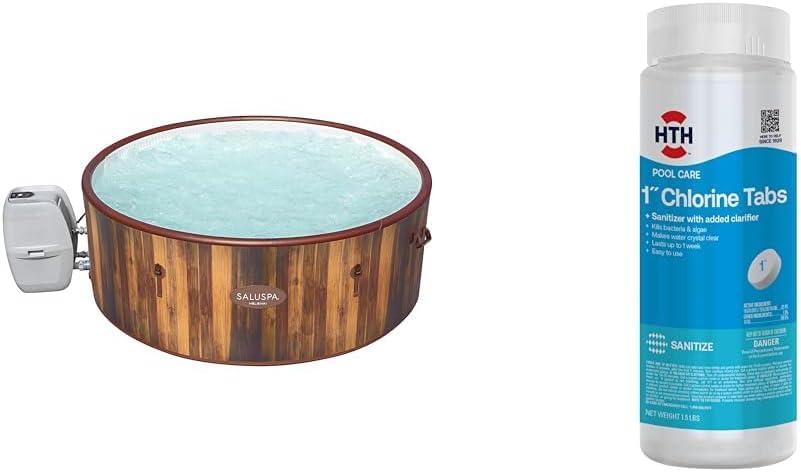
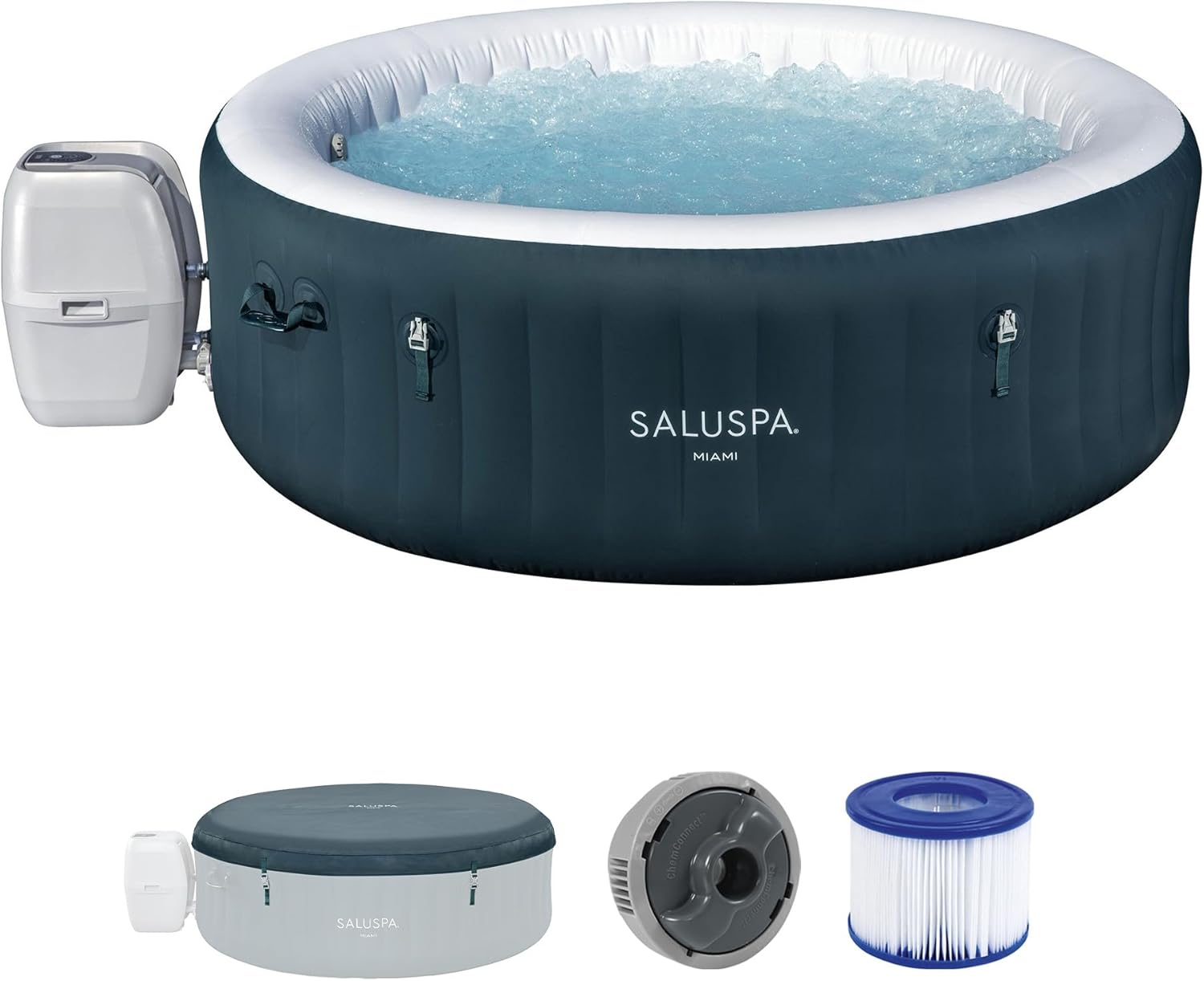
This is Coleman’s knockout punch. Year after year, the SaluSpa line (including its smaller sibling, which we cover in the Bestway SaluSpa Miami review) offers an incredible amount of performance for the price. You get a super-durable, reliable hot tub that performs its core function—heating and bubbling water—flawlessly, often for under $500. For the sheer joy-per-dollar ratio, it is nearly impossible to beat.
Intex: A Premium for a Premium Feel
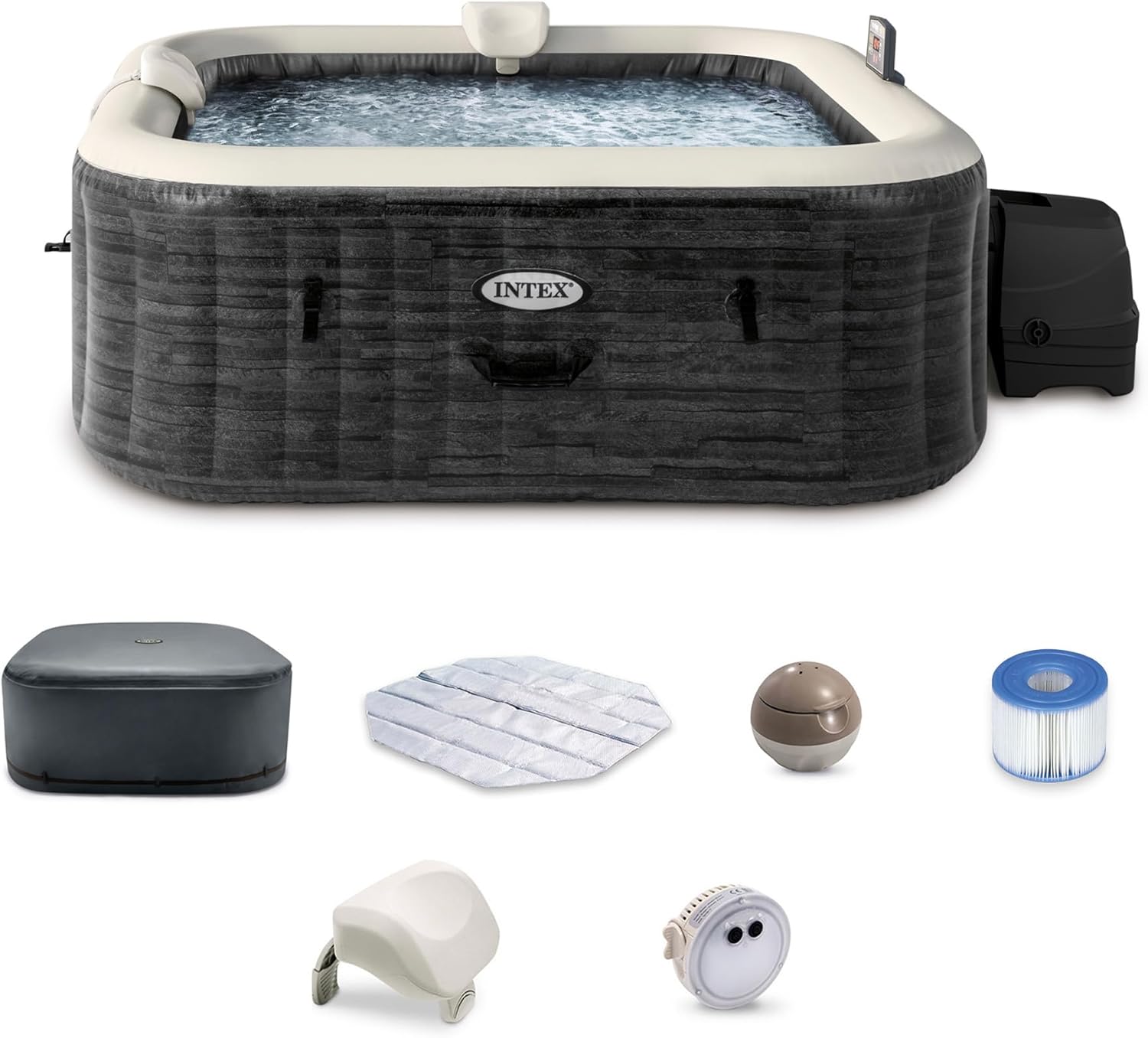
Intex tubs are also an excellent value, but they typically command a slightly higher price—often $50 to $150 more for a comparable size. You are paying for the superior Fiber-Tech construction, the hard water system, and often a more stylish design (like their Greywood or Octagonal models). The value is absolutely there, but it’s positioned as a more premium product compared to Coleman’s value-first approach.
Verdict: Winner, Coleman
While Intex offers great features for its price, Coleman’s mission is to deliver the core hot tub experience at the most competitive price possible, and they nail it. For shoppers whose primary concern is getting the best possible product for the lowest cost, Coleman wins this round decisively.
Capacity & Size Options
Coleman: Consistent, Predictable Sizing
Coleman keeps its lineup fairly simple. The flagship SaluSpa models are round, roughly 77 inches in diameter and about 28 inches deep, holding somewhere in the neighborhood of 240 gallons once filled to the recommended line. Coleman markets this as a 4-to-6-person tub, though in practice it comfortably seats four adults with room to stretch legs, and starts to feel snug once you push toward six. The smaller Miami-branded version trims the diameter down to around 71 inches for a true 4-person footprint, which is a smart pick for couples or small patios where every square foot of deck space matters.
Intex: A Wider Spread of Sizes
Intex spreads its lineup across more distinct size tiers. The entry PureSpa models sit around 77 inches and roughly 210-220 gallons, while the larger 6-person round models stretch to about 85 inches in diameter and can hold closer to 290 gallons. That extra diameter matters more than it sounds — a few inches translates to noticeably more elbow room once four or five adults are actually sitting in the water rather than standing around a spec sheet. Intex also offers square and octagonal shapes in some of its premium lines, which use corner space more efficiently than a perfect circle.
Verdict: Edge to Intex (For Larger Groups)
If you’re shopping for a couple or a small family, the difference in capacity between the two brands is nearly a wash. But if you regularly entertain and want to fit five or six adults without anyone feeling like a sardine, Intex’s larger 85-inch models give you meaningfully more room than Coleman’s largest standard offering.
Noise Level: What It’s Actually Like To Sit Next To The Pump
Coleman: A Familiar Hum
The Coleman pump produces the kind of steady, low mechanical hum you’d expect from any air-blower-based system — think of a box fan running in the next room. It’s not silent, and if your tub sits right outside a bedroom window, you’ll notice it at night. Most owners find it fades into background noise within a few minutes of soaking, especially once conversation or music takes over. The jets themselves add a pleasant fizzing sound that tends to mask the pump noise from inside the tub.
Intex: Comparable, With Model Variation
Intex pumps run at a similar volume to Coleman’s, though owners frequently note that the hard-water-system models hum at a very slightly higher pitch when that feature is actively cycling. It’s a subtle difference and not something most people would notice unless they were switching between the two side by side. Placement matters far more than brand here — putting either pump on a solid, level surface rather than grass or gravel meaningfully reduces vibration-transmitted noise.
Verdict: Tie
Neither brand builds a whisper-quiet pump, and neither is loud enough to be a dealbreaker for most backyards. If noise is a genuine concern — say, you’re close to a neighbor’s fence — a simple foam or rubber pump mat under either unit cuts down on vibration noise more than switching brands ever would.
Running Costs & Energy Efficiency
Coleman: Predictable, Standard Draw
Coleman’s pump/heater unit draws a fairly standard amount of power for this category, typically in the 1,300 to 1,500-watt range while actively heating. Left running continuously, most owners report a monthly electricity cost increase somewhere between $20 and $50, heavily dependent on climate, how often the cover is used, and local electricity rates. The included insulated cover is doing a lot of the heavy lifting here — leaving it off overnight in a cool climate can double your heating costs almost overnight.
Intex: Similar Draw, With a Few Efficiency Perks
Intex pumps draw comparable wattage, and running costs land in roughly the same monthly range as Coleman. Where Intex sometimes pulls ahead is in specific premium models that include better cover insulation and locking clips designed to create a tighter seal, which reduces the rate of heat loss between uses. The hard water treatment system itself uses negligible extra power, so it doesn’t meaningfully change your bill — its savings come indirectly, by keeping the heating element free of scale so it doesn’t have to work harder over time.
Three Ways To Cut Your Bill On Either Brand
- Always use the cover when the tub isn’t in use — this is the single biggest factor in your monthly cost.
- Lower the set temperature by a few degrees during long idle stretches, then bump it back up an hour before you plan to soak.
- Place the tub in a sheltered spot out of direct wind, which slows heat loss through the vinyl walls significantly.
Verdict: Tie
Running costs between the two brands are close enough that your own habits — cover use, set temperature, and climate — will affect your bill far more than which logo is on the pump housing.
Smart Features & Control Panels
Coleman: Physical Buttons, No Frills
Coleman keeps things analog. The flip-up digital panel shows temperature and jet status with simple physical buttons for power, heat, jets, and the timer. There’s no app, no Bluetooth, and no voice control. For a lot of buyers, this is actually a selling point — fewer things to pair, fewer things to glitch, and nothing that requires a firmware update to keep working.
Intex: Wireless Panels on Premium Models
Several of Intex’s higher-tier models step it up with a wireless, waterproof touch control panel that detaches from the pump housing, letting you adjust settings from inside the tub without leaning over the edge. It’s a genuinely nice quality-of-life upgrade. Full app-based smart home integration isn’t standard across the lineup, so don’t expect to fire up your spa from your phone before you get home — the wireless panel is a local convenience feature, not a connected one.
Verdict: Edge to Intex
If a detached, waterproof remote panel sounds appealing, Intex’s premium models deliver a nicer day-to-day experience. If you’d rather have zero electronics to worry about beyond the basics, Coleman’s simplicity is its own reward.
Warranty Coverage & Customer Support
Coleman: Standard Category Coverage
Coleman-branded inflatable spas typically ship with a warranty structure common across this category: roughly a one-year warranty on the pump/heater unit and a shorter period, often around six months, on the vinyl liner itself. Support is generally handled through the manufacturer’s customer service line, and replacement parts like liners and pump units are widely stocked given how popular these models are.
Intex: Comparable Terms, Broader Parts Ecosystem
Intex offers similar warranty terms to Coleman on its spa lines, and because Intex is one of the largest inflatable pool and spa manufacturers in the world, replacement parts — filters, pumps, liners — tend to be easy to find through both the manufacturer directly and third-party retailers.
A Word of Caution on Parts Compatibility
Regardless of which brand you choose, don’t assume parts are interchangeable between brands, or even always between different models from the same brand. Pump units, filter cartridges, and liner patch kits are generally proprietary to the exact model you own. If you develop a leak or a pump failure, check your specific model number before ordering replacement parts, and always register your product after purchase so warranty claims go smoothly if something does go wrong.
Verdict: Tie
Warranty terms and support quality are close enough between the two brands that this shouldn’t be a deciding factor. Keep your receipt, register your product, and you’ll be covered either way.
Common Problems & Troubleshooting
Coleman: Known Quirks
The most common Coleman complaints we come across involve the pump struggling to reach or hold the max temperature in colder climates, since these units aren’t designed to fight freezing overnight air. Error codes typically point to water flow issues — usually a clogged filter, a kinked hose, or a low water level tripping the safety shutoff. A surprising number of “broken pump” complaints turn out to be a dirty filter cartridge restricting flow, which is worth checking first before assuming the worst.
Intex: Known Quirks
Intex units show a similar pattern of flow-related error codes, and the hard water system can occasionally trigger its own fault code if the sensor gets fouled by mineral buildup in extremely hard water areas, which ironically is the exact situation the feature is meant to solve — the fix is usually a simple sensor rinse. Owners in very cold regions also report the same freeze-related struggles as Coleman owners, since neither brand’s standard models are built for winter operation without extra insulation accessories.
Quick Troubleshooting Checklist (Both Brands)
- Won’t heat past a certain temperature? Check the cover fit and ambient air temperature first.
- Error code on the display? Check filter cleanliness and water level before calling support.
- Pump running but no bubbles? Check that the air hose is fully seated and not kinked.
- Losing air pressure overnight? Test seams and valve caps with soapy water to find slow leaks before assuming a major puncture.
Verdict: Tie
Both brands share the same fundamental limitations of air-jet inflatable spa technology. Neither has a meaningfully higher failure rate than the other based on the patterns we’ve seen, and most reported issues are resolved with basic maintenance rather than a warranty claim.
Safety Around Kids & Pets
Coleman: Cover Locks and Standard Precautions
Coleman’s included covers typically use simple buckle-style clips rather than a true child-safety lock, so they should be treated as heat retention accessories rather than a substitute for supervision. As with any hot tub, water temperatures near 104°F are not appropriate for young children, and Coleman’s documentation reflects standard industry guidance around limiting soak time and keeping unsupervised children away from the tub entirely.
Intex: Similar Guidance, Some Locking Cover Options
Some Intex premium models include cover clips specifically designed to be harder for small hands to open, which adds a modest layer of protection, though it’s still not a certified child-safety lock in the way a pool fence or gate latch would be. Intex’s guidance mirrors the broader industry standard: these spas are not designed or recommended for unsupervised use by young children, and high water temperatures pose the same risks regardless of brand.
General Safety Practices Worth Following Regardless of Brand
- Keep the cover secured and consider an additional locking strap if young children have yard access.
- Never leave pets unsupervised in or near the tub — the water temperature and chemical levels aren’t suitable for animals.
- Install a GFCI-protected outlet as instructed in the manual; never use an extension cord not rated for outdoor, high-load appliances.
- Limit soak times and temperatures for children, older adults, and anyone with cardiovascular conditions, consistent with general hot tub safety guidance.
Verdict: Tie
Neither brand’s standard cover should be relied on as a childproofing device on its own. Whichever tub you choose, plan on active supervision and, if needed, a dedicated locking cover strap as an add-on purchase.
Portability & Seasonal Storage
Coleman: Built-In Lift Handles
Empty and deflated, a Coleman SaluSpa is light enough for two people to move without much strain, and several models include built-in lift handles on the pump housing that make repositioning a filled-but-empty tub noticeably easier than wrestling with loose vinyl. When it’s time to pack it away for winter, the whole unit folds down into a manageable bundle that fits in most garages or storage closets.
Intex: Carry Bag Included
Intex takes a different approach to portability, typically including a dedicated carry bag with the tub rather than built-in handles. Once drained, dried, and folded, the whole spa packs into the bag, which is genuinely convenient if you’re storing the unit somewhere other than right next to where it’s used, or if you’re the type to pack it away between uses rather than leaving it set up seasonally.
Verdict: Tie
Both approaches solve the same problem in slightly different ways. If you like the idea of a self-contained storage bag, Intex has the edge; if you prefer solid built-in handles for shifting the tub around your yard while it’s still set up, Coleman’s design works a little better.
Model-by-Model Breakdown: Which Specific SKU Should You Buy?
The “Coleman vs. Intex” debate isn’t really a single choice — each brand sells several distinct models at different price points and sizes. Here’s how the most commonly searched models within each lineup stack up against each other, so you can compare apples to apples rather than just brand to brand.
| Model | Typical Capacity | Approx. Diameter | Standout Feature | Best For |
|---|---|---|---|---|
| Coleman SaluSpa (standard/Tahiti) | 4-6 people | ~77″ | Best price-to-performance ratio in the category | First-time buyers on a budget |
| Coleman SaluSpa Miami | 4 people | ~71″ | Smaller footprint for tight patios | Couples or small decks |
| Coleman SaluSpa Atlantis / Ponderosa (AirJet lines) | 4-6 people | ~77″-79″ | Freeze-resistant heating tech and thermal covers on select units | Cooler climates, extended-season use |
| Intex PureSpa (entry Bubble Massage line) | 4 people | ~77″ | Reliable, well-reviewed entry point into the Intex lineup | Buyers who want Intex build quality at a lower price |
| Intex PureSpa Plus / Greywood Deluxe | 4-6 people | ~77″-85″ | Hard water system, headrests, upgraded control panel | Buyers who want the full premium feature set |
| Intex 6-Person Round PureSpa | 6 people | ~85″ | Largest standard water capacity in either lineup | Larger households or frequent entertaining |
| Intex Octagonal / Square premium models | 4-6 people | Varies | More usable corner space and distinctive styling | Buyers who want a design statement, not just a round tub |
A quick note on naming: both brands also license their names to sibling products in the same factories and product families, which is part of why online reviews sometimes seem to contradict each other — a “SaluSpa Miami” and a similarly-shaped tub sold under a related brand name can be extremely close in construction and specs, even though the marketing and box art look different. If you’re cross-shopping listings that look nearly identical but carry slightly different names, check the exact model number and dimensions rather than relying on the product photo alone.
Choose Coleman If You Want…
- The lowest realistic price for a genuinely durable inflatable spa
- A no-frills control panel with nothing extra to learn
- Built-in handles for easier repositioning
- A model specifically built for cooler-climate extended use (Atlantis/Ponderosa lines)
Choose Intex If You Want…
- The firmest wall construction and most “premium” in-water feel
- Built-in hard water treatment to protect your pump long-term
- The largest available capacity for bigger groups
- A wireless control panel or a more distinctive shape and finish
The Final Showdown: Who Should Buy Which Tub?
After all the rounds, the decision comes down to your personal priorities. It’s not about which tub is “best,” but which tub is best *for you*.
Buy the Coleman SaluSpa If…

- Your #1 priority is value for money.
- You are a first-time hot tub owner and want a low-risk entry point.
- You prefer a product that is simple, rugged, and gets the job done without extra frills.
- You live in an area with soft or moderately hard water.
- You’re looking for one of the best 4-person inflatable hot tubs on a tight budget.
Buy the Intex PureSpa If…

- You live in an area with hard water. (The treatment system is a must-have).
- You appreciate premium features and a more rigid, stable construction.
- You love tech features like wireless controls or are drawn to more stylish designs.
- You’re willing to pay a small premium for features that enhance longevity and comfort.
- You want options for more advanced jet systems (in their premium models).
A Final, Critical Note on Winter Use
It is crucial to understand that neither the standard Coleman SaluSpa nor the standard Intex PureSpa are designed for use in freezing temperatures (below 40°F / 4°C). They lack anti-freeze protection and running them in the cold can cause the pump to freeze and crack, voiding your warranty. If your dream is to soak in the snow, you must invest in a tub with specific winter technology, which we cover in our guide to the best inflatable hot tub for winter.
That said, a handful of models from both brands are built with cold-weather use in mind. Coleman’s Atlantis and Ponderosa AirJet lines, for example, include freeze-resistant heating features and a thicker thermal cover designed to hold heat in near-freezing conditions — worth a look if you live somewhere with real winters and don’t want to drain your spa every October. Neither brand’s cold-weather models are rated for leaving the tub filled and running through a hard freeze unattended, though; they simply extend the usable season rather than making the tub fully four-season without supervision.
How To Decide: A Simple Framework
If you’ve read this far and still feel torn, try answering these three questions in order. The first one you answer decisively usually settles the whole decision.
- Is water hardness a known issue in your area? If yes, lean Intex for the built-in treatment system. If you’re not sure, check your local water utility’s annual quality report — hardness is almost always listed.
- Is the purchase price your primary constraint? If yes, Coleman wins on pure dollars-per-gallon-of-relaxation. The performance gap simply doesn’t justify the price gap for most budget-conscious buyers.
- Do you want the largest possible tub, or the most premium in-water feel? If capacity and finish matter more to you than price, Intex’s larger and premium-tier models pull ahead.
Most buyers who work through this framework land on Coleman for their first tub and consider stepping up to Intex’s premium tier if they upgrade down the road — which tracks with what we hear from readers who’ve owned both over the years.
Frequently Asked Questions: Intex vs. Coleman
Is Intex really more durable than Coleman?
Both are extremely durable and puncture-resistant. The difference is in rigidity. Intex’s Fiber-Tech makes the walls feel more solid, like a piece of furniture, while Coleman’s TriTech feels more like a very firm, high-pressure inflatable. Both will last for years with proper care, but the “sit-on-the-edge” test feels more secure with Intex.
Which brand heats the water faster?
Neither. Both brands use 110/120V pumps that heat water at a similar rate, typically between 2-3°F per hour. The heating speed is more dependent on the tub’s water volume, the starting temperature of your water, and the ambient air temperature than the brand itself.
Can I use Intex filters or parts in a Coleman spa (or vice-versa)?
No, you should not. While some parts might look similar, the threading, sizes, and specifications are proprietary. Using parts from another brand can lead to leaks, improper function, and will void your warranty. Always use the manufacturer-specified parts for your spa (Coleman Type VI filters for SaluSpas, Intex Type S1 for PureSpas).
How much electricity does an inflatable hot tub actually use?
Most owners see their monthly electric bill rise somewhere in the $20-$50 range with regular use, though this varies widely based on climate, how consistently the cover is used, and local electricity rates. The heating element is the biggest draw, not the bubble jets, so keeping the cover on between soaks is the single most effective way to control the cost on either brand.
How many people can actually fit comfortably?
Manufacturer capacity ratings tend to be optimistic. A tub rated for “4-6 people” is genuinely comfortable for four adults with room to stretch, and workable for six only if everyone is fine sitting shoulder-to-shoulder. If you regularly host groups of five or more, size up to Intex’s larger 85-inch models rather than assuming a standard-size tub from either brand will comfortably fit the rated maximum.
Do these hot tubs come with a hard cover or a soft cover?
Both Coleman and Intex include a soft, insulated vinyl cover rather than a rigid hard-shell cover you’d see on a built-in acrylic spa. The soft cover is effective at heat retention and keeping debris out, but it’s not as structurally secure as a hard cover, so it shouldn’t be treated as a load-bearing surface or a childproofing barrier on its own.
Can I run either brand’s hot tub 24/7, or should I turn it off between uses?
Both are designed to be left running continuously with the cover on, and most owners do exactly that rather than powering down and reheating from scratch each time. Continuous operation with the cover secured is generally more energy-efficient than repeatedly draining the heat and reheating, since reheating a full tank from a cold start uses considerably more energy than maintaining an already-warm one.
What surface should I set the tub up on?
A flat, level, debris-free surface is essential for both brands — a wooden deck, concrete patio, or a level patch of grass with a ground cloth underneath all work. Avoid uneven gravel or surfaces with sharp debris, since the weight of a full tub can press small stones or sticks into the vinyl floor over time. Intex tends to include a thermal ground cloth with more of its models, while Coleman owners often purchase one separately, but either can be used with either brand.
Is it normal for the tub walls to bow outward slightly when full?
Some degree of outward bowing is completely normal on both brands once the tub is filled with hundreds of gallons of water — it’s simply the vinyl responding to water pressure. Intex’s Fiber-Tech walls tend to bow noticeably less than Coleman’s TriTech walls thanks to the internal fiber bracing, which is part of why Intex often feels more rigid in person, but a modest amount of flex on either brand is expected and not a sign of a defect.
How long does either brand typically last before needing replacement?
With consistent maintenance — proper winterizing or storage in the off-season, regular filter changes, and prompt repair of small leaks — owners commonly report getting several years of reliable use from either brand. The pump/heater unit is usually the first component to eventually need replacement or repair, which is why keeping it free of mineral scale (where Intex’s hard water system has an advantage) can meaningfully extend the tub’s usable life.
Do I need a dedicated electrical outlet?
Yes, for both brands. These units require a standard 110/120V grounded outlet protected by a GFCI (ground-fault circuit interrupter), which is standard on most modern outdoor and bathroom-adjacent outlets. Check your specific model’s manual for exact amperage requirements, and avoid running the pump through a standard household extension cord not rated for continuous, high-load outdoor use.
Which brand is easier to repair if I get a puncture?
Both brands include a basic vinyl patch kit with the tub, and the repair process is essentially identical — clean the area, apply the patch, and let it cure before refilling. Neither brand has a meaningful edge in repairability; a properly applied patch is durable on either material. Larger patch kits and replacement liners can be ordered directly from each manufacturer if you experience damage beyond what the included kit can handle.
Should I buy directly from the manufacturer or through a retailer like Amazon?
Both brands sell primarily through major retailers rather than direct-to-consumer storefronts, and pricing is often identical or better through retail channels due to seasonal promotions. Buying through a well-known retailer also typically gives you a straightforward return window if the unit arrives damaged, which is worth considering given how large and heavy these boxes are during shipping.