Can You Put a Hot Tub in a Basement? A Complete Guide to Indoor Spas
The idea is incredibly appealing: turning your basement into a private wellness sanctuary. No freezing walks in the winter snow, total privacy from neighbors, and easy access to your fridge. But the question “Can I put a hot tub in my basement?” is followed by a much more important one: “Should I?”
The short answer is Yes, you can put a hot tub in a basement. However, it is exponentially more difficult and expensive than installing one outdoors. You aren’t just buying a tub; you are engineering a wet room.
In this guide, we will walk you through the critical structural, electrical, and ventilation requirements to ensure your dream spa doesn’t turn your home into a moldy nightmare.
The 3 Major Hurdles
Before you start shopping for models, you need to check if your home can physically handle the installation.
- Delivery Access: Traditional acrylic hot tubs are rigid. They do not bend. If you have a standard 30-inch door frame or a staircase with a 90-degree turn, getting a 7-foot square tub into the basement is physically impossible without removing a wall.
- Water Drainage: When you drain the tub (every 3-4 months), where does the water go? You need a floor drain or a sump pump system nearby.
- Electrical: Most full-sized tubs require a 220V/50A hardwired connection. You will need a sub-panel installed. Check our guide on how many amps a hot tub uses to see if your breaker box can handle the load.
Ventilation: The Enemy is Mold
This is where most indoor hot tub projects fail. A hot tub is essentially a giant humidifier. When you open the cover, gallons of water evaporate into the air instantly. If that moisture has nowhere to go, it will soak into your drywall, insulation, and joists.
The Ventilation Checklist:
- Exhaust Fan: A standard bathroom fan is not enough. You need a high-CFM exhaust fan (similar to a kitchen hood) vented directly outdoors.
- Dehumidifier: You must run a commercial-grade dehumidifier constantly to keep humidity below 50%.
- Wall Materials: Drywall is a sponge. You should use Greenboard (moisture-resistant drywall), cedar, or tile for the walls surrounding the spa.

Don’t rely on a small portable unit. This industrial dehumidifier pulls 100+ pints of moisture from the air daily, protecting your home’s structure.
Check Price on AmazonFlooring & Structural Support
Good News: Most basements have concrete slab floors. Concrete is excellent at supporting the massive weight of a filled hot tub (often 4,000+ lbs). If your basement has a raised wood subfloor, you will need a structural engineer to reinforce the joists.
Bad News: Splashing is inevitable. Carpet and laminate are terrible ideas. You need waterproof flooring that provides traction when wet.
- Tile/Stone: Best for waterproofing but can be slippery.
- Rubber Flooring: Excellent grip and waterproof.
- Protection: Always place a specialized mat under the tub to protect the floor and dampen vibration noise. Check out the best hot tub pads for indoor use.
The Solution: Why Inflatables Are Better for Basements
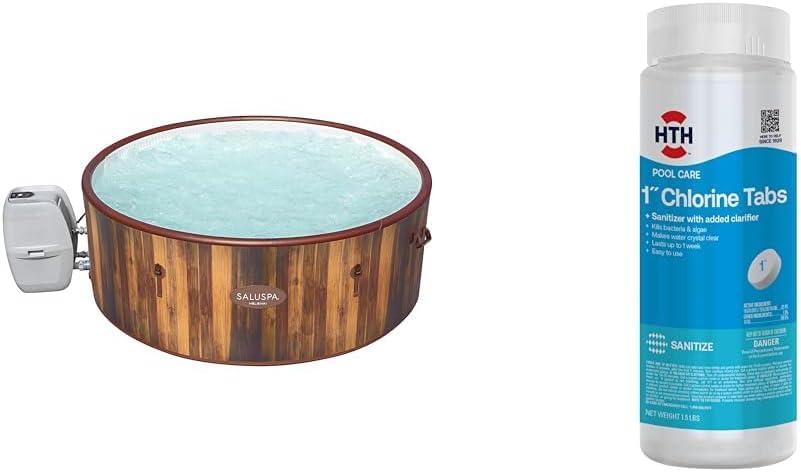
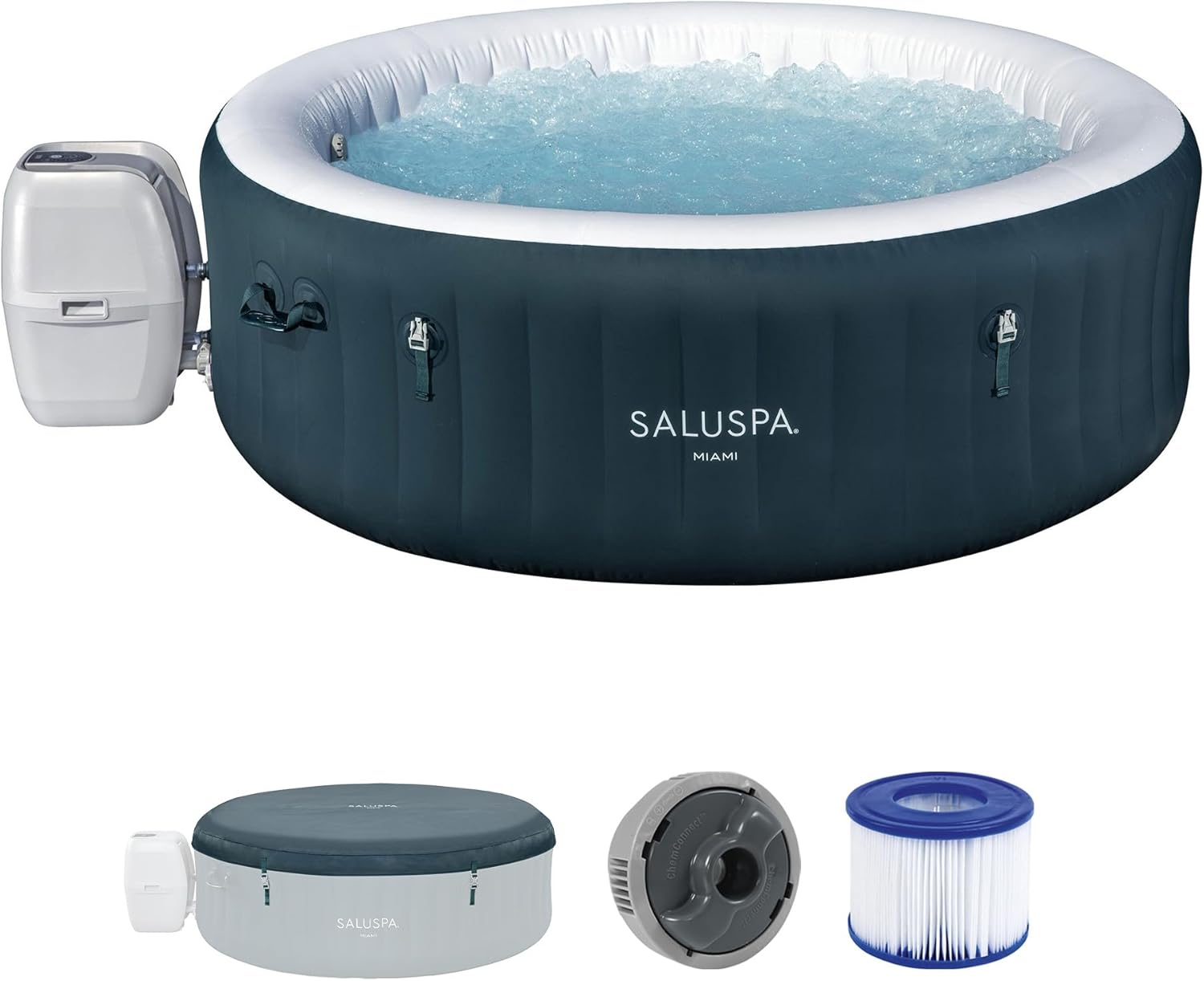
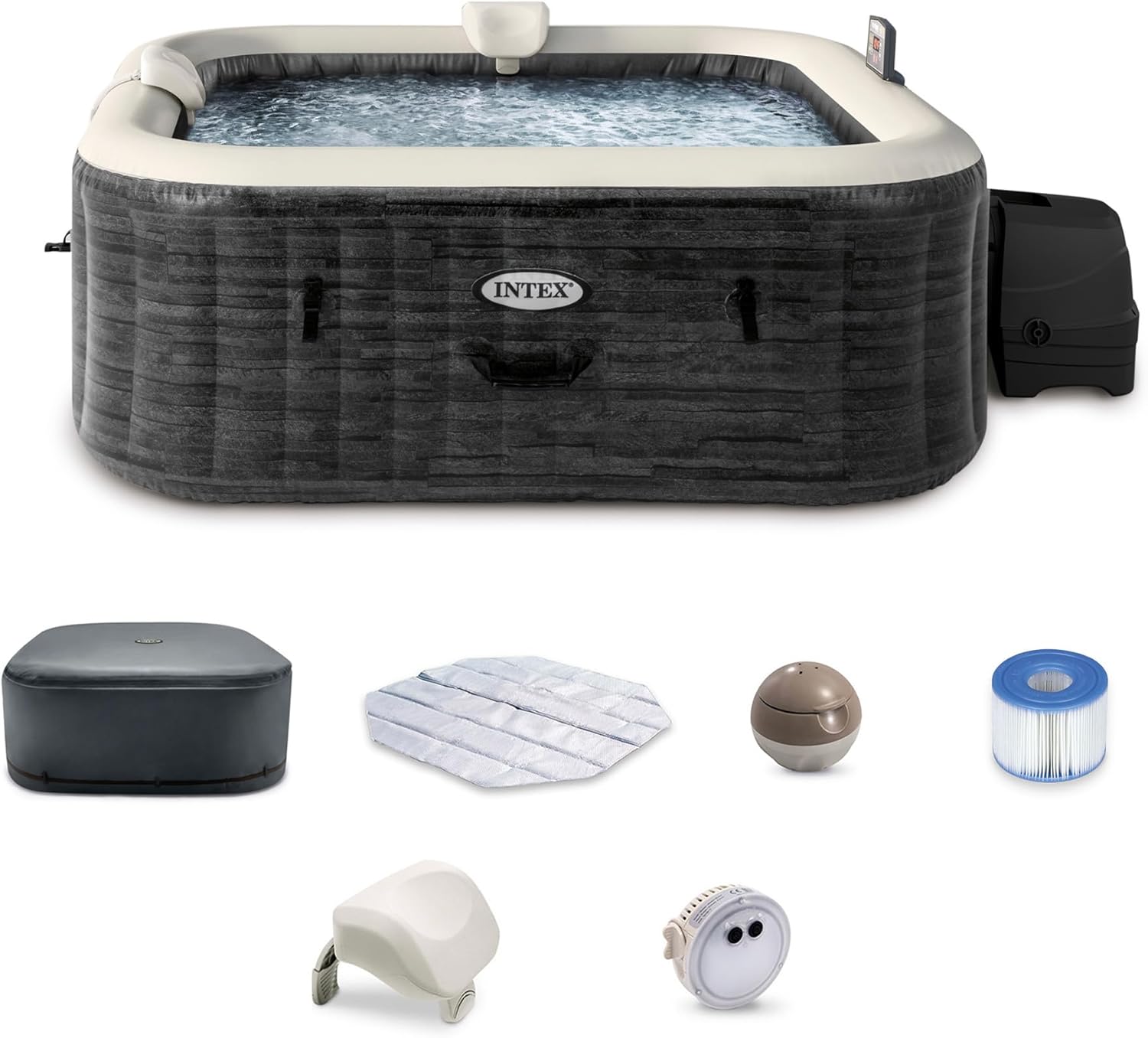
If the idea of tearing out a wall to get a rigid tub downstairs scares you, consider an inflatable hot tub. They solve the two biggest problems:
- Access: They come in a box. You can carry it down the stairs yourself.
- Weight: They are lighter and hold less water, putting less stress on the floor.
- Power: They usually plug into a standard 110V outlet, so no expensive rewiring is needed.
While they don’t have the same jet power as acrylic tubs, the ease of installation makes them the top choice for indoor setups. See our ranking of the best inflatable hot tubs of 2025 to find a model that fits your space.

Portable, durable, and plugs into a standard wall outlet. The easiest way to get a spa into a basement without construction.
Check Price on AmazonFrequently Asked Questions
If you use chlorine, yes, you will likely smell that “pool scent” throughout the basement. Using Bromine (which has less odor) or a saltwater system can help minimize the chemical smell indoors.
It is highly recommended. If you don’t have one, you will need a submersible sump pump and a long garden hose to pump the water up and out a window or into a utility sink when draining.
You need enough clearance to open the cover fully. Usually, 7.5 to 8 feet is the minimum comfortable height. Remember that you step UP into a hot tub, so you don’t want to hit your head on the ceiling joists.
No. Floating floors (like click-lock vinyl) can buckle under the immense weight and moisture. Stick to concrete, tile, or glued-down rubber flooring.