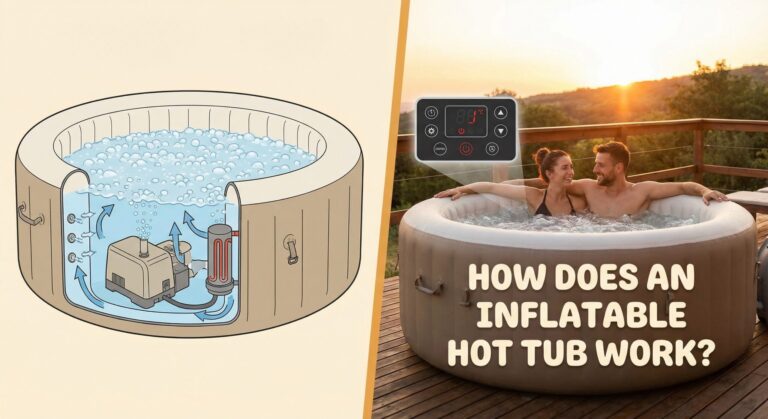
The Engineering Breakdown: A Deep Dive into How an Inflatable Hot Tub Works
The modern inflatable hot tub—be it a Coleman SaluSpa, an Intex PureSpa, or another popular model—is a marvel of accessible fluid mechanics, pneumatic engineering, and low-voltage heating technology. Often dismissed as a simple “blow-up pool with a heater,” these appliances are, in fact, sophisticated, self-contained systems built around five interlocking components. Understanding how these subsystems interact is the key to mastering your spa’s performance, optimizing its energy consumption, and ensuring years of trouble-free operation. This guide goes beyond basic setup to meticulously dissect the functional architecture of the inflatable spa, covering everything from the physics of inflation pressure to the complex chemistry of water sanitation. We’re treating the hot tub not as a consumer item, but as a mini-aquatic system, governed by precise mechanical and thermal laws. Mastering this internal architecture is essential for any owner aiming for peak energy efficiency and water quality.
🔗 **Related Guides to Get Started:**
Inflatable Hot Tub Setup: A Step-by-Step Guide | Best Inflatable Hot Tub 2025: A Comprehensive Buyer’s GuideSystem Architecture Overview (The Five Subsystems)
- Subsystem 1: The Shell and Pneumatic Core (Inflation & Structure)
- Deep Dive: Water Capacity and Fill-Time Hydraulics
- Subsystem 2: The Heating and Filtration Loop (The Engine Room)
- Deep Dive: The Control Electronics and Power Delivery System
- Subsystem 3: The Water Quality Management System (The Chemistry Lab)
- Subsystem 4: The Hydrotherapy System (The Bubble Blower)
- Subsystem 5: The Thermal Envelope (Efficiency & Physics)
- Deep Dive: Material Longevity, UV Degradation, and Winterization
- Deep Dive: Calculating Real-World Running Costs
- Troubleshooting and Optimizing the System
Subsystem 1: The Shell and Pneumatic Core (Inflation & Structure)
The lifeblood of the inflatable spa is its pressurized shell. Unlike traditional hot tubs built with rigid acrylic or fiberglass, the structural integrity of an inflatable model relies entirely on pneumatics—the physics of air pressure. This system must achieve a delicate balance: providing enough rigidity to support the lateral forces of the water (hydrostatic pressure) and the vertical load of the occupants, while remaining flexible enough for quick deflation and storage.
1.1. Core Technology: Drop-Stitch vs. Reinforced PVC
The durability and strength of the shell are dictated by its construction materials, primarily **reinforced PVC** vinyl. Brands like Intex often use a three-ply laminated vinyl, which consists of a polyester mesh core sandwiched between two layers of heavy-gauge PVC. This lamination resists tearing and stretching. However, the true innovation in modern high-end inflatables is **Drop-Stitch technology** (borrowed from paddleboards).
Drop-stitch involves thousands of polyester threads connecting the top and bottom layers of the material. When inflated, these threads pull the layers taut, maintaining a flat, rigid shape rather than ballooning into a sphere. This is the engineering secret behind why some inflatable walls feel almost rock-hard. This rigidity minimizes lateral deformation, which is crucial when two or more people are sitting on the sides. Without this structure, the spa would bulge out excessively, compromising internal space and stability, potentially leading to instability, particularly when users are entering or exiting the tub.
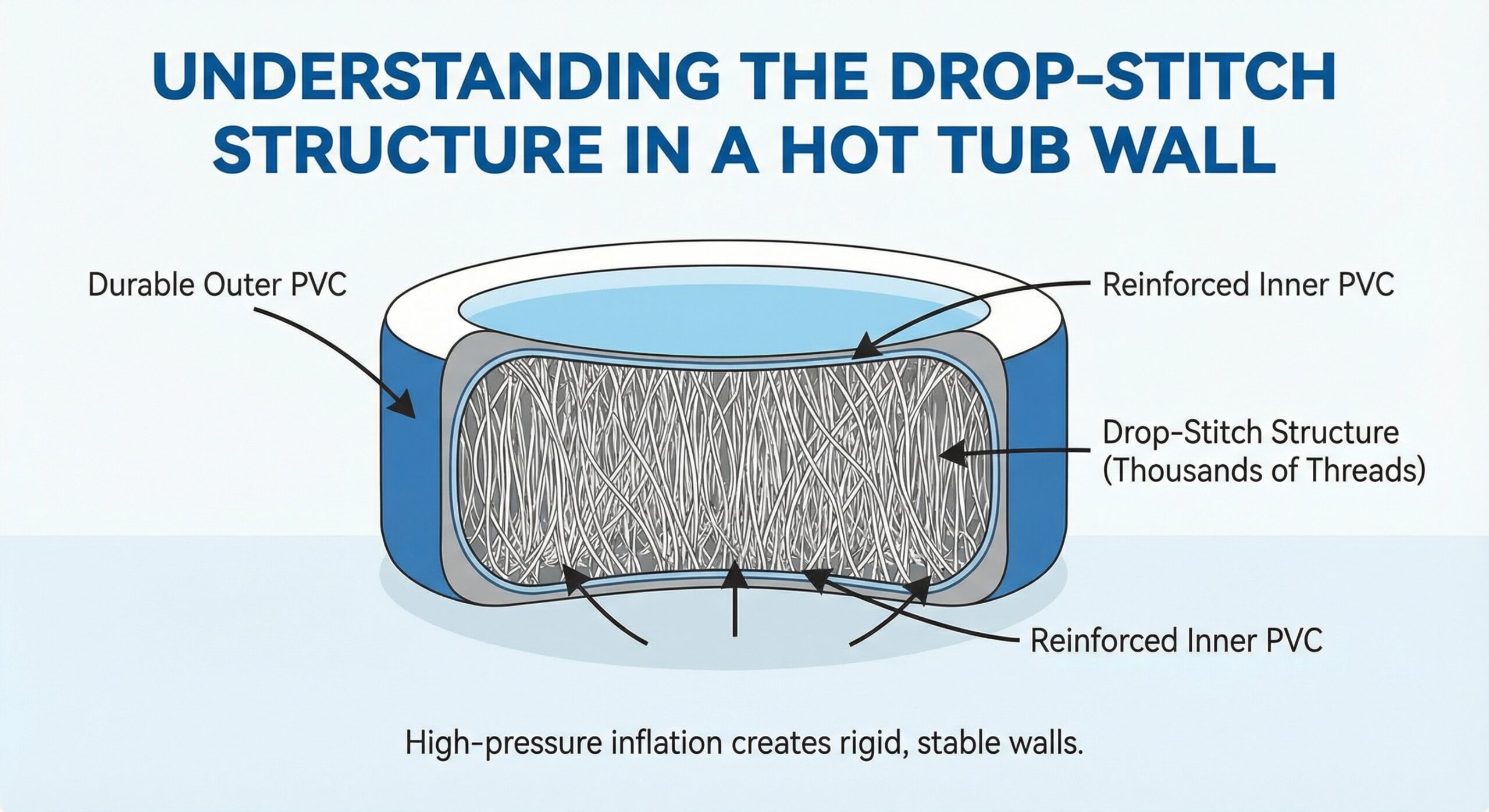
Figure 1: The internal drop-stitch fibers maintain a flat wall profile under immense internal pressure.
1.2. The Inflation Process and Pressure Management
The inflation pump, typically housed within the main control unit, is a low-pressure, high-volume blower. It must reach a precise internal pressure—usually between 0.08 to 0.12 PSI, depending on the model—to ensure structural soundness. Most modern spas, such as those covered in the Best Blow Up Hot Tub Guide, utilize a built-in pressure gauge or an internal sensor to prevent over-inflation. Over-inflation, especially in direct sunlight where air expands (Charles’s Law), can severely stress the seams and is the most common cause of seam failure.
The typical inflation cycle lasts only a few minutes, with the pump also responsible for filling the insulated cover bladder (if included). Once inflated, a one-way valve retains the pressure. Regular pressure checks are vital, particularly if the spa is moved from a cool garage to a hot patio, as ambient temperature changes significantly affect internal pressure.
1.3. Deep Dive: Water Capacity and Fill-Time Hydraulics
One of the most searched practical questions about these spas has nothing to do with heating or chemistry — it is simply “how long does it take to fill?” The answer is governed entirely by basic fluid hydraulics, and understanding the variables lets an owner plan a fill session instead of standing over the tub with a garden hose for three hours wondering why nothing seems to be happening.
A typical four-person inflatable spa holds somewhere between 210 and 290 gallons of water, while six- and eight-person models can approach 350 to 440 gallons. The fill time is a function of two variables working against each other: the volume that needs to be moved, and the flow rate of the source. A standard residential garden hose, unrestricted, delivers roughly 9 to 17 gallons per minute depending on hose diameter, spigot pressure, and any kinks in the line. At the higher end of that range, a 300-gallon spa could theoretically fill in under twenty minutes. In practice, most owners see fill times of ninety minutes to three hours, because household water pressure is rarely at its theoretical maximum, hoses are often narrower than assumed (a standard 5/8-inch hose moves noticeably less water than a 3/4-inch hose at the same pressure), and many owners partially throttle the spigot to avoid splashing.
There is a second, less obvious hydraulic constraint: the spa’s own intake port. Some models allow filling directly through the filter housing, using the circulation pump’s intake as the fill point. This method has the advantage of pre-filtering incoming water for sediment, but it is also flow-limited by the diameter of the intake fitting itself, which can bottleneck an otherwise fast-flowing hose. Filling directly over the wall of the shell, by contrast, is not flow-limited by the tub at all — the only ceiling is the hose and spigot. For owners in areas with low municipal water pressure, filling over the wall rather than through the intake is generally the faster route.
Temperature is the final hidden variable in the fill-time equation. Filling with cold groundwater rather than pre-warmed water adds no time to the fill itself, but it does add significant time to the subsequent heat-up cycle, since the heater must now work across a wider temperature delta. Some owners mitigate this by connecting to an indoor hot water tap when the hose bib allows it, effectively shifting part of the heating burden from the spa’s low-wattage element to the home’s water heater, which is typically far more powerful on a per-BTU basis.
🔗 **Understanding Your Model’s Architecture:**
Subsystem 2: The Heating and Filtration Loop (The Engine Room)
This integrated subsystem is the core mechanical unit, responsible for taking cold, unsanitized water and transforming it into hot, clean, therapeutic water. The entire process relies on a continuous, closed-loop fluid dynamic system managed by a single control unit.
2.1. The Filtration and Particle Capture System
The circulation pump initiates the loop by drawing water into the filter housing. Unlike large permanent spas that use sand or DE filters, inflatable hot tubs rely on high-efficiency, pleated paper cartridge filters (often Type S1 or similar). The efficiency of this stage is crucial: filters capture suspended solids, oils, and other microscopic debris that would otherwise overload the sanitizer (chlorine/bromine).
The process is simple: water is pulled from the spa through the filter cartridges, and clean water is pushed back into the heating element chamber. Due to the high user load relative to the small water volume (e.g., a 4-person tub holds only 200-300 gallons), the filter cartridges must be cleaned and replaced frequently. Neglecting the filter reduces the flow rate, which drastically impacts heating efficiency and can trigger flow-error shutdowns.
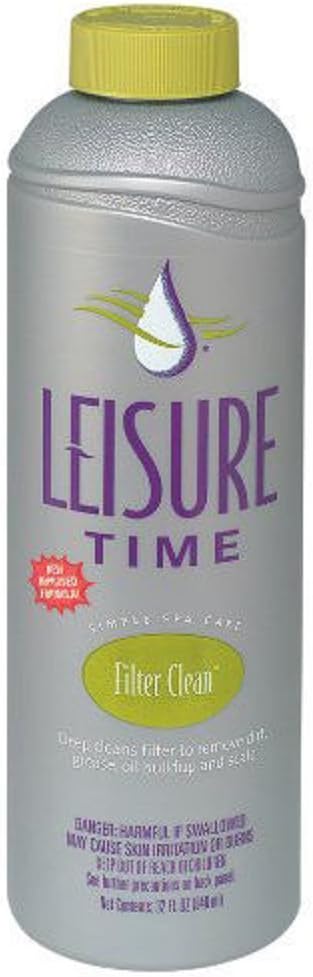
⚙️ Essential Maintenance Tool: Filter Cartridge Cleaner
To maintain flow rate and prevent pump wear, filters should be chemically cleaned every 1-2 weeks. A dedicated chemical filter cleaner or soaking solution (available on Amazon) dissolves trapped oils and calcification far more effectively than a simple hose-off.
View Filter Cleaner Options on Amazon2.2. The Low-Flow, High-Efficiency Heater
Filtered water enters the heater chamber, typically containing a 1,000 to 1,300-watt electric heating element. The low wattage is intentional, often due to constraints of standard residential 120V circuits (requiring current limits below 12 amps). The fundamental challenge is the **speed-to-wattage ratio**. Inflatable spas heat slowly—typically at a rate of 2 to 3 degrees Fahrenheit per hour—because they are restricted to this low wattage.
The control unit employs a **thermal sensor** (often a thermistor) located near the heater output. This sensor constantly monitors the temperature and cuts power precisely when the set temperature is reached, a safety feature that prevents overheating and manages power consumption. This heating inefficiency is precisely why investing in a high-quality, insulating cover is non-negotiable for cost-effective operation. The heater is designed to maintain, not rapidly raise, the temperature.
2.3. Deep Dive: The Control Electronics and Power Delivery System
Every subsystem discussed so far — the pump, the heater, the blower — is ultimately a slave to a small but critical piece of engineering that rarely gets discussed: the power delivery and control electronics package. This is the part of the spa an owner interacts with directly (the digital control panel) and the part that, if wired incorrectly, poses the single greatest safety risk in the entire system.
Almost all inflatable hot tubs are designed as “plug-and-play” appliances, meaning they are engineered to run on a standard 120-volt, 15- or 20-amp household circuit rather than the 240-volt, 40-to-60-amp hardwired circuits required by permanent acrylic spas. This is a deliberate design compromise. A 240-volt system allows a much larger heater — often 4 to 5.5 kilowatts — which heats water dramatically faster. A 120-volt inflatable spa is capped at roughly 1 to 1.5 kilowatts because that is the practical ceiling of what a standard outdoor-rated outlet and its circuit can safely deliver without nuisance tripping. This is the root engineering reason behind the slow 2-3°F-per-hour heat rate discussed above: it is not a design flaw, it is a direct consequence of the voltage and amperage ceiling imposed by using a standard household plug.
The safety layer built on top of this power delivery is the Ground Fault Circuit Interrupter, or GFCI. Because the spa combines mains electricity with a large body of water and wet, bare skin, a conventional circuit breaker is not considered sufficient protection. A standard breaker is designed to trip on an overload or short circuit — it may require 15 to 20 amps of fault current to react. A GFCI, by contrast, is designed to detect a ground fault as small as 4 to 6 milliamps — roughly a thousandth of what a standard breaker would notice — and cut power in a fraction of a second. Every inflatable spa control unit has this GFCI protection built directly into the power cord itself, visible as the box with “Test” and “Reset” buttons a few feet from the plug. This is why inflatable spas should never be run through a standard extension cord: doing so both risks under-delivering voltage across a long, thin conductor (causing the heater to underperform or trip on undervoltage) and, more seriously, can defeat the intended one-to-one relationship between the GFCI and the appliance it is protecting.
Inside the control unit itself, a small microcontroller board reads inputs from the touch panel or button array, drives the relays that switch the pump, heater, and blower on and off, and continuously polls the thermistor and flow sensor. This is also where the spa’s safety interlocks live: most units will refuse to energize the heater at all unless the flow sensor confirms adequate circulation, which is precisely the mechanism behind the flow-error codes discussed later in this guide. The digital display is simply a window into this constant background polling loop — every few seconds the board is checking temperature, flow, and (on some models) water level, and updating the display accordingly.
For owners in regions with unstable grid power or who want to run their spa during a temporary outage, it is worth noting that a whole-home generator can power an inflatable spa provided the generator can comfortably supply the spa’s full running amperage alongside anything else on the circuit; because the spa’s own demand is modest compared to a hardwired 240V unit, this is rarely a limiting factor in practice, but it should still be confirmed against the specific generator’s continuous-duty rating rather than assumed.
🔗 **Deep Dive into System Health:**
Subsystem 3: The Water Quality Management System (The Chemistry Lab)
The smallest, most concentrated volume of water in a hot tub presents the largest chemical challenge. Unlike pools, the high temperature and relatively low volume (less than 300 gallons) cause sanitizers to break down rapidly, and pH levels to fluctuate wildly. This subsystem requires constant user input to maintain balance.
3.1. The Role of Sanitizers and pH Dynamics
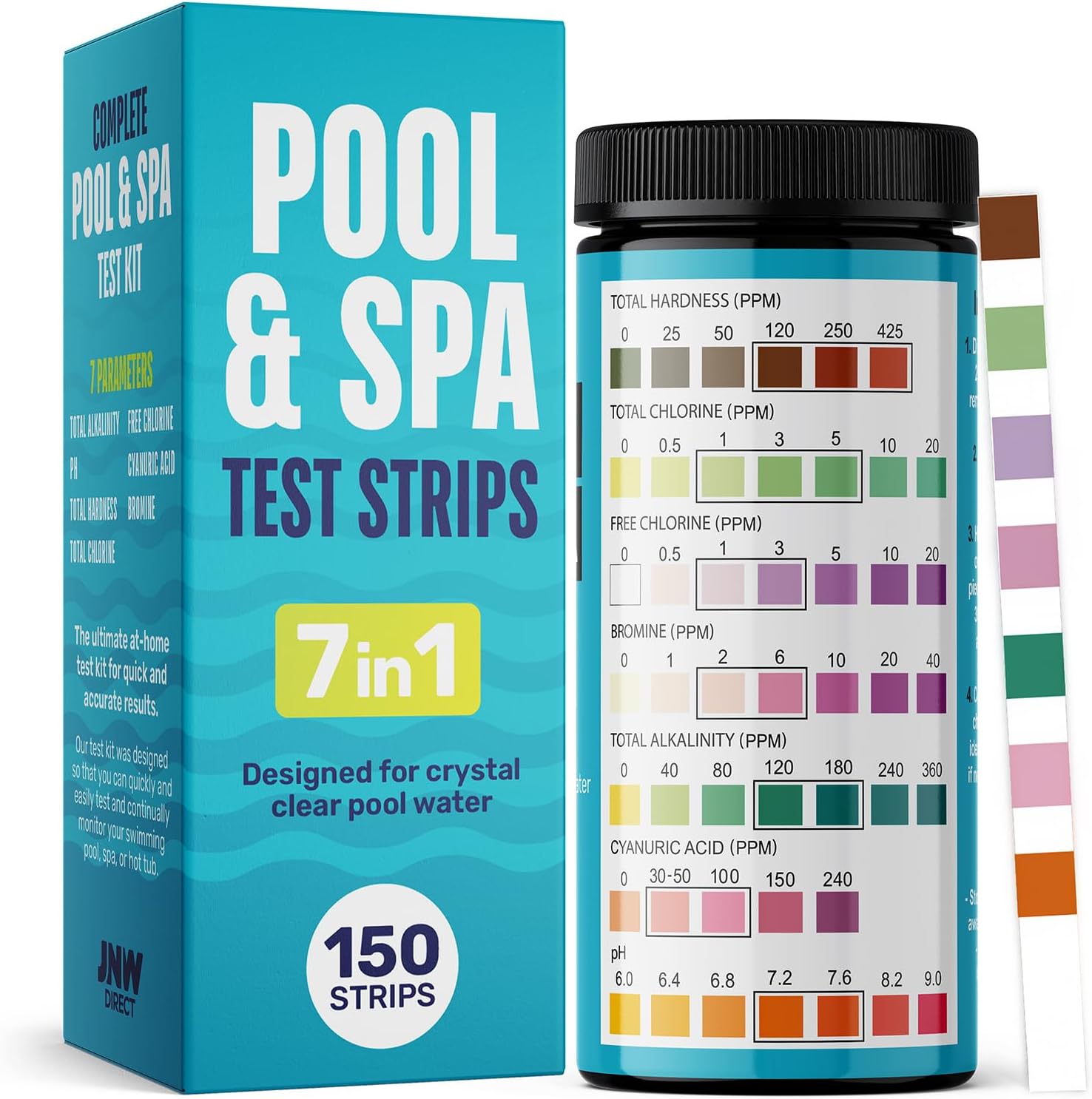
Sanitizers (usually Chlorine or Bromine) are the primary defense against bacterial growth. However, high heat significantly reduces chlorine’s half-life and drives up the water’s pH (making it more alkaline) due to aeration from the bubble system and carbon dioxide off-gassing. High pH drastically reduces the effectiveness of the sanitizer, demanding constant chemical adjustments. The water must be tested daily, especially after heavy use.
🧪 Precision Testing: The Digital Advantage
Relying on color-matching test strips is notoriously imprecise in the low-volume environment of a spa. Investing in a quality digital water tester (like a digital colorimeter or a high-end pH/TDS meter) provides the accuracy needed to manage your chemistry and prevent long-term damage to the pump seals and vinyl liner.
View Digital Water Testers on Amazon3.2. Dealing with Contamination and Total Dissolved Solids (TDS)
Over time, organic matter, body oils, cosmetic residue, and chemical byproducts accumulate, forming Total Dissolved Solids (TDS). High TDS prevents sanitizers from working efficiently and causes cloudy water. While filtering helps, dedicated accessories manage these smaller contaminants.
Ultimately, when TDS levels become too high (usually after 3-4 months of use), the system requires a full reset—a drain, clean, and refill—to maintain sanitary conditions. This is the necessary cycle of the small-volume system.
Subsystem 4: The Hydrotherapy System (The Bubble Blower)
The bubble system is the source of the “therapy” in the hot tub experience, but it is also a source of technical compromise. The system uses the same high-volume air blower that inflated the shell to push ambient air through channels molded into the base of the tub.
4.1. Air Injection vs. True Water Jets: An Important Distinction
One of the most common points of confusion for first-time buyers is the difference between the “bubble jets” of an inflatable spa and the water jets of a hardshell hot tub, and it is a genuine engineering distinction, not just marketing language. A hardshell spa’s jets are true hydro-massage jets: a dedicated pump pressurizes water and pushes it through a nozzle, and a venturi valve alongside the nozzle draws in a small amount of ambient air, which mixes with the pressurized water stream to create a forceful, air-entrained jet aimed directly at a specific muscle group.
An inflatable spa’s “bubble jets,” by contrast, are an air-only system. There is no pressurized water stream at all. Instead, the blower — the same low-pressure, high-volume unit used for inflating the shell — forces ambient air through a manifold and out through dozens of small nozzles arranged in a ring or grid pattern molded into the floor of the tub. The air rises through the water as a broad field of bubbles rather than a targeted stream. This produces a gentler, full-body effervescent sensation rather than the pinpoint muscle-targeting massage of true water jets. It is a legitimate hydrotherapy effect — the physical stimulation of rising air bubbles against the skin does produce a real massaging sensation and helps keep the water gently circulating — but it is mechanically and experientially a different category of system, and expectations should be set accordingly before purchase.
4.2. Blower Specifications and Intensity Control
The blower itself is typically rated in cubic feet per minute (CFM) of air delivery, with most consumer inflatable spa blowers falling in the 40 to 70 CFM range. This figure matters because it directly determines bubble density: a higher-CFM blower produces a more vigorous, denser bubble field, while a lower-CFM unit produces a gentler simmer. Some higher-end models offer multi-speed bubble controls, allowing the user to throttle the blower’s output electronically rather than running it at a single fixed intensity. This is typically achieved either through pulse-width modulation of the blower motor or through a simple multi-tap winding that offers two or three discrete speed settings.
There is an important thermal trade-off inherent to this subsystem: because the blower pushes room-temperature ambient air through the water, running the bubbles for extended periods actively cools the spa, partially undoing the heater’s work. This is why most manufacturers recommend running the bubble system for a defined session (commonly 15 to 30 minutes) rather than continuously, and why the control unit on most models will not run the heater and the blower simultaneously at full output — doing so would mean the heater is fighting a constant influx of cooler air being churned through the water column it is trying to warm.
A second consideration is acoustic: the blower motor is generally the single loudest component in the entire spa, often producing 60 to 70 decibels of operating noise, comparable to a running dishwasher or window air-conditioning unit. Because the motor sits directly on or near the ground beneath the tub, a rigid, hard surface such as concrete or tile can act as a resonant sounding board, amplifying vibration into an audible hum. This is the underlying reason a dedicated foam or closed-cell pad beneath the unit does double duty as both a thermal break and an acoustic dampener, decoupling the vibrating blower housing from a hard, sound-reflective surface.
🔗 **Related Physics and Noise Reduction:**
Subsystem 5: The Thermal Envelope (Efficiency & Physics)
The single most important concept for long-term hot tub ownership is understanding the thermal envelope—the system’s boundary designed to resist heat loss.
5.1. Conduction Control: The Role of the Foundation
Heat loss through conduction occurs directly into the cold ground. This is minimized by insulating the base. **The pad acts as a crucial thermal break.** The denser the pad material and the higher its R-value, the slower the conductive heat transfer. This underscores why proper site preparation, as discussed in our Hot Tub Pad Guide, is an economic necessity.
5.2. Deep Dive: Material Longevity, UV Degradation, and Winterization
The reinforced PVC and drop-stitch materials discussed in Subsystem 1 are engineered for flexibility and pressure retention, but they are not immune to environmental degradation, and understanding the two dominant failure modes — UV exposure and freeze damage — is the difference between a spa that lasts two seasons and one that lasts six or more.
PVC vinyl degrades under prolonged ultraviolet exposure through a process called photodegradation, in which UV photons break down the polymer chains and the plasticizers that keep the vinyl flexible. The visible symptom is a vinyl surface that becomes progressively stiffer, more brittle, and eventually prone to surface cracking, particularly along fold lines and seams where the material is already under the most mechanical stress. This is why manufacturers and experienced owners alike treat a spa cover — or, for units left assembled in a sunny location, a separate UV-blocking solar cover or gazebo — as a durability investment rather than a purely cosmetic one. A cover left off in direct summer sun for extended stretches is very likely the single most common cause of premature vinyl failure, well ahead of chemical damage or mechanical wear from use.
The second major threat is freeze damage, and it is unforgiving in a way UV degradation is not: UV damage is gradual and gives warning signs, while a hard freeze with residual water in the plumbing can crack a pump housing or heater manifold in a single cold night. Any water left inside the pump, heater chamber, or connecting hoses expands as it freezes, and because these components are rigid plastic rather than flexible vinyl, they have nowhere to give. This is the underlying reason every manufacturer’s winterization procedure centers on one goal: getting every drop of water out of the internal plumbing, not just draining the main shell. A full winterization sequence typically involves draining the tub itself, then running the pump briefly with the unit unplugged from its water source so residual water in the intake and output lines is pushed out rather than left sitting, followed by opening any drain plugs on the pump housing itself and allowing the unit to air-dry completely before folding for storage. Skipping the internal plumbing step — assuming that draining the main basin is sufficient — is the most common winterization mistake, and it is precisely the water trapped in the pump’s internal channels that causes the expensive damage.
For owners in genuinely cold climates who want to use their spa through the winter rather than storing it, the thermal envelope calculus changes considerably: a ground-level pad with meaningful R-value stops being optional and becomes the determining factor in whether the heater can keep pace with heat loss at all, since the temperature differential between a heated spa and frozen ground is far larger than the differential in a mild-climate summer setup. In these conditions, doubling up insulation — a foam pad beneath a purpose-built ground cloth, for instance — is common practice, alongside running the bubble system more sparingly, since as established in Subsystem 4, the blower actively introduces cold ambient air into the water column.
🔗 **Maximum Efficiency Architecture:**
Deep Dive: Calculating Real-World Running Costs
Every subsystem covered so far consumes electricity, and one of the most frequently searched practical questions about inflatable spas is simply what they cost to run. The good news is that, unlike chemistry or troubleshooting, running cost is pure arithmetic once the underlying wattage figures are known — and the low-wattage design constraint discussed in Subsystem 2.3 actually works in the inflatable spa’s favor here, even though it works against it on heating speed.
6.1. The Wattage Breakdown and the Basic Formula
The three loads that draw power are the heater (roughly 1,000 to 1,500 watts, running intermittently as the thermostat cycles), the circulation pump (typically 80 to 120 watts, often running continuously or on a scheduled duty cycle), and the bubble blower (roughly 700 to 800 watts, but used only intermittently by most owners). The standard formula for electrical cost is: (Watts ÷ 1000) × Hours Used × Cost per kWh = Cost.
Applying this to a realistic scenario: a spa’s circulation pump running 4 hours per day at 100 watts consumes 0.4 kWh daily. At a national average residential rate of roughly $0.16 per kWh, that is about six cents a day, or under two dollars a month, for circulation alone. The heater is the larger variable, since its runtime depends heavily on ambient temperature, insulation quality, and how often the cover is removed. A well-insulated spa in mild weather might see the heater cycle on for a combined 2 to 3 hours a day to maintain temperature, consuming roughly 3 kWh daily — about forty-eight cents at the same rate, or roughly fifteen dollars a month. A poorly insulated spa, or one maintained through cold weather without a quality cover, can see heater runtime several times higher, since it is fighting continuous conductive and convective heat loss rather than simply topping off small losses.
6.2. Why Insulation Quality Changes the Equation More Than Any Other Factor
The running-cost calculation above illustrates something worth stating plainly: the single biggest lever an owner has over long-term operating cost is not the spa’s temperature setting, it is the quality of the thermal envelope discussed in Subsystem 5. Because the heater element is fixed in wattage — an inflatable spa cannot simply install a bigger heater the way a hardwired 240V unit can — the only way to meaningfully reduce heater runtime is to reduce the rate of heat loss the heater has to fight. A cover with a compromised or missing foam core, or a spa placed directly on cold, uninsulated concrete, can easily double or triple the heater’s daily runtime compared to an identical spa with a quality cover on an insulated pad, even though the water temperature setting and usage pattern are otherwise the same. This is the direct, practical payoff of the physics discussed earlier: the R-value of the pad and the insulating quality of the cover are not comfort features, they are the primary determinants of the monthly electricity bill.
A secondary, smaller lever is bubble system usage. Because the blower draws roughly 700-800 watts and, as established in Subsystem 4.2, actively cools the water while running, an owner who runs the bubbles for a full hour daily is both directly consuming meaningfully more electricity than one who uses them for a short 15-minute session, and indirectly increasing heater runtime afterward to recover the lost heat. Neither of these costs is dramatic in isolation, but together they explain why two identical spas, used differently by two different households, can show electricity costs that differ by a factor of two or three across a full month.
Troubleshooting the System: Common Operational Failures
Knowing how the spa works mechanically allows you to debug it like a system administrator. Most inflatable spa failures are not component breakdowns but are flow or sensor errors.
Coping with Flow Errors (E90, F1/F2, etc.)
When the flow rate is too low, the heater risks burnout, and the controller triggers a safety error. The most common cause is a dirty filter or debris blockage near the intake/output ports. Our troubleshooting guide details the process, but the technical solution is always the same: ensure the intake/outake path is clear for the circulation pump.
Cross-Brand Error Code Patterns: Reading the Logic Behind the Codes
Because different manufacturers — Intex, Coleman (which uses Bestway-manufactured hardware), and other private-label brands — each print their own error code tables, it can look at first glance as though every model has a completely different failure language. In practice, the underlying control-board logic described in Subsystem 2.3 is nearly identical across brands, and once you understand the four categories of fault the system is capable of detecting, translating between a Coleman code and an Intex code becomes straightforward, since both are really just describing the same handful of physical conditions.
The first category is a flow fault, covered above, and it is by far the most common code an owner will ever see across any brand, because it is triggered by the single most common maintenance failure: a dirty or clogged filter. The second category is a temperature-sensor fault, which appears when the thermistor reading is outside the range the board considers physically plausible — either because the sensor itself has failed, or because its connector has come loose during shipping or a filter change. The third category is a high-limit or overheat fault, which the board triggers if the water temperature near the heating element exceeds a safe ceiling, almost always because flow has stopped entirely (a fully blocked filter or a pump that has lost prime) while the heater relay remained energized. The fourth category, seen on models with a water-level sensor, is a low-water fault, which prevents the heater and pump from energizing at all if the sensor does not detect sufficient water covering the intake — a safety feature that exists specifically to prevent the pump from running dry and burning out its seals.
Once a code is placed into one of these four categories, the diagnostic path is largely brand-agnostic: flow faults are resolved by clearing or replacing the filter and confirming the intake grate is unobstructed; sensor faults are resolved by power-cycling the unit and, if the fault persists, checking or reseating the thermistor connector inside the control box; high-limit faults require allowing the unit to fully cool before restarting, followed by an inspection of the flow path for blockage; and low-water faults are resolved simply by topping off the spa above the manufacturer’s marked fill line. This category-based approach is considerably more useful long-term than memorizing a specific model’s code table, since it will continue to apply even if you switch brands.
🔗 **Final Essential Accessories:**
⭐ Final Summary: The Complete Inflatable Spa Cycle
The operation of an inflatable hot tub is a continuous, five-part engineering cycle: **Structure, Circulation, Heating, Sanitization, and Hydrotherapy.** The entire system is managed by the compact control unit, making it a masterpiece of miniaturized technology designed for simple user interaction but underpinned by complex physics and chemistry. Understanding this architecture transforms you from a casual owner into an informed operator, guaranteeing maximum enjoyment and minimum cost from your spa.