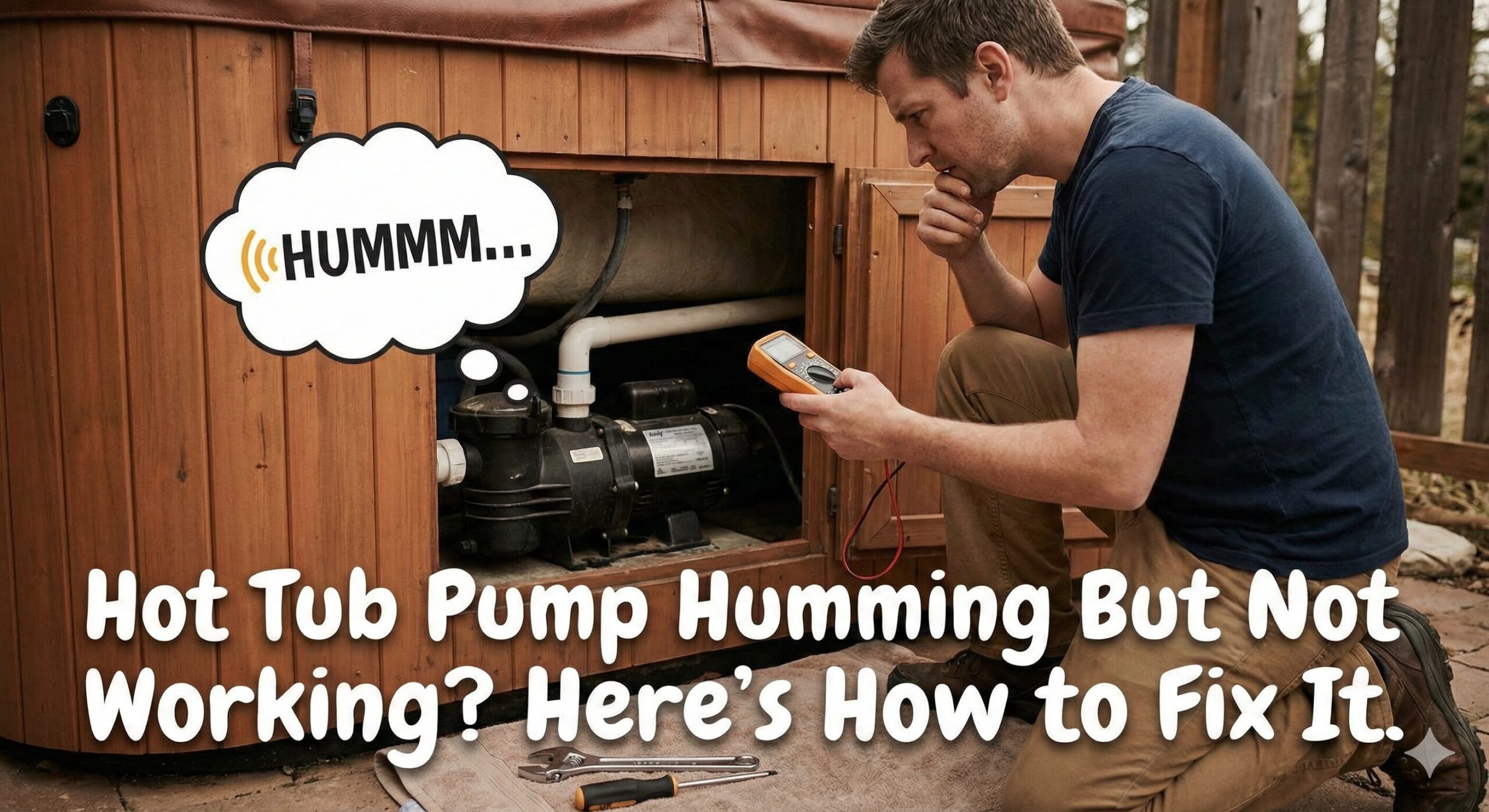
Hot Tub Pump Humming But Not Working? Here’s How to Fix It
There are few things more frustrating for a hot tub owner. You are ready for a soak, you turn on the jets, and instead of the soothing rush of water, you hear it: a low, menacing humming sound.
No water is moving. The jets are dead. But the motor is clearly trying to do something.
When a hot tub pump hums but won’t pump water, it usually means the motor is receiving power but cannot rotate. This is rarely a fatal error for the machine. In fact, in 90% of cases, it comes down to one of three issues: trapped air (an air lock), a jammed impeller, or a bad start capacitor.
Before you spend hundreds of dollars on a replacement pump or call a technician, follow this step-by-step troubleshooting guide. We will start with the easiest fixes and work our way up.
The Diagnostic Matrix: What’s Wrong?
Use this table to quickly identify the likely culprit based on when the problem started.
| Scenario | Likely Cause | Difficulty to Fix |
|---|---|---|
| Just refilled the tub | Air Lock (Trapped Air) | Easy (No tools) |
| Tub sat unused for months | Seized Impeller/Bearings | Medium (Screwdriver needed) |
| Sudden failure / Old Pump | Start Capacitor Failure | Hard (Electrical work) |
| Loud grinding + Humming | Bad Bearings | Hard (Replace pump) |
Solution 1: Fixing an Air Lock (Most Common)
If you recently drained and refilled your hot tub, or if the water level dropped too low, you almost certainly have an air lock. This happens when a bubble of air gets trapped in the plumbing near the pump. The pump’s impeller spins in the air pocket, unable to grab onto water to push it through.
The motor hums because it is spinning freely without resistance, or straining to prime.
How to Bleed the Air
- Turn off the breaker: Never work on the pump while it is running.
- Locate the Union Nut: Find the large plastic nut connecting the plumbing to the intake side of the pump.
- Loosen slightly: Slowly loosen this nut until you hear a hissing sound (air escaping) and see a trickle of water.
- Tighten and Test: Once water flows steadily, hand-tighten the nut and turn the power back on.

Solution 2: Unjamming a Seized Impeller
If your hot tub hasn’t been used in a while, calcium buildup or debris may have “glued” the impeller in place. The humming sound you hear is the magnetic coils inside the motor trying to force the shaft to turn, but it physically can’t.
This is also common if you have neglected water chemistry, leading to scale deposits. Regular care is vital—read our inflatable hot tub maintenance guide to stop buildup before it starts.
The Flathead Screwdriver Trick
Most hot tub pumps have an access point at the rear of the motor specifically for this problem.
- Cut the Power: Ensure the hot tub is completely unplugged or the breaker is off.
- Locate the Rear Shaft: Look at the back center of the motor. You should see a small opening or a plastic cap that can be popped off.
- Insert Screwdriver: Insert a flathead screwdriver into the slot on the end of the motor shaft.
- Spin Manually: Try to turn the shaft. It might be stiff at first. Wiggle it back and forth until it spins freely.
If the shaft spins freely by hand and you don’t have an air lock, the issue is likely the start capacitor.
Solution 3: The Start Capacitor
If the shaft spins freely by hand and you don’t have an air lock, the issue is likely the start capacitor. This is a small black cylinder battery-looking component sitting on top of the motor (usually under a metal hump/cover).
The capacitor acts like a battery that gives the motor a jolt of torque to get it moving. If it fails, the motor doesn’t have the strength to start spinning, so it just sits there and hums.
Signs of a Bad Capacitor:
- The motor hums but doesn’t spin.
- You can manually “jump start” the motor by spinning the shaft with a screwdriver while power is on (DANGER: Do not attempt this unless you are experienced).
- The capacitor looks swollen, bulged, or leaks oil.
Capacitors are cheap ($15–$30) and easy to replace if you are handy with basic tools. However, ensure you discharge the old capacitor before touching the terminals.
Preventing Future Pump Failures
Once you get your hot tub running again, the goal is to keep it that way. Most pump failures are caused by strain on the motor.
1. Clean Your Filters: A clogged filter restricts water flow, causing the pump to work harder. If the pump struggles to pull water, it can overheat or develop air pockets. Learn how often to replace hot tub filters to keep the flow smooth.
2. Balance Your Water: High pH and alkalinity lead to calcium scaling. This scale coats the inside of your pump and heater, eventually seizing the impeller. You should know how often to shock a hot tub to keep organic matter from gumming up the works.

Frequently Asked Questions
No. If the pump is humming, it is drawing high amperage (locked rotor amps). This causes the motor windings to heat up rapidly. If left humming for more than a few minutes, you could permanently burn out the motor or trip your breaker.
A new circulation pump typically costs between $150 and $400 depending on the horsepower. If you hire a professional for installation, expect to pay an additional $100–$200 in labor.
This is the classic symptom of an air lock. When you refilled the tub, air got trapped in the intake hose. Try bleeding the air from the union nut on the pump.
Yes. If the filter is extremely dirty, the pump may starve for water, causing cavitation (which sounds like loud rumbling or gravel) or causing the pump to overheat and seize.